
How to Grow and Care for Japanese Sacred Lily
Rohdea japonica
Written by Emilio Marruso · last checked
At a glance
Looking for a plant that thrives where little else will? This tough perennial loves partial to full shade, even dry shade, and stands up to drought. It forms a neat clump 2 ft tall and wide, grows happily in a pot, and asks only for a little slow-release fertilizer at first, then a top-dressing of compost.
- Sun
Partial to full shade
What the sources say (1)
Light: Partial to full shade
It is best planted in well-drained, rich, loamy soil, and partial to full shade.
— Rohdea japonica (Japanese Sacred Lily, Nippon Lily, Sacred Lily) | North Carolina Extension Gardener Plant Toolbox [1] - Water
Thrives in dry shade and handles drought well
What the sources say (1)
Watering notes: Thrives in dry shade; resistant to drought
They thrive in dry shade. This plant is resistant to heavy shade, deer browsing, and drought.
— Rohdea japonica (Japanese Sacred Lily, Nippon Lily, Sacred Lily) | North Carolina Extension Gardener Plant Toolbox [1] - Cold
Survives winters down to −10 °F (−23.3 °C)
Very hardy · USDA 6a · RHS H7 · Z6
What the sources say (2)
Hardiness, coldest zone: 6a [winter low −23.3 to −20.6 °C (−10 to −5 °F)]
USDA Plant Hardiness Zone: 6a, 6b, 7a, 7b, 8a, 8b, 9a, 9b, 10a, 10b
— Rohdea japonica (Japanese Sacred Lily, Nippon Lily, Sacred Lily) | North Carolina Extension Gardener Plant Toolbox [1] Hardiness, warmest zone: 10b [winter low 1.7 to 4.4 °C (35 to 40 °F)]
USDA Plant Hardiness Zone: 6a, 6b, 7a, 7b, 8a, 8b, 9a, 9b, 10a, 10b
— Rohdea japonica (Japanese Sacred Lily, Nippon Lily, Sacred Lily) | North Carolina Extension Gardener Plant Toolbox [1] - Feeding
Slow-release fertilizer only until it settles in; after that, just a top layer of compost
What the sources say (3)
When: At first, until established; afterwards only compost top-dressing
Feed them with a slow-release fertilizer initially. Once established, they only require top dressing with compost and are drought tolerant.
— Rohdea (Nippon Lily, Sacred Lily) | North Carolina Extension Gardener Plant Toolbox [3] Mineral fertilizers: Slow-release fertilizer, only at first
Feed them with a slow-release fertilizer initially. Once established, they only require top dressing with compost and are drought tolerant.
— Rohdea (Nippon Lily, Sacred Lily) | North Carolina Extension Gardener Plant Toolbox [3] Natural fertilizers: Compost top-dressing once established
Feed them with a slow-release fertilizer initially. Once established, they only require top dressing with compost and are drought tolerant.
— Rohdea (Nippon Lily, Sacred Lily) | North Carolina Extension Gardener Plant Toolbox [3] - Pests
Can get a fungal infection: cut off the sick parts and treat with an antifungal spray
What the sources say (1)
Diseases: Colletotrichum liriope (fungal infection)
The only disease reported is a fungal infection known as Colletotrichum liriope which is treated by removing the infected portions and treating them with an antifungal spray.
— Rohdea japonica (Japanese Sacred Lily, Nippon Lily, Sacred Lily) | North Carolina Extension Gardener Plant Toolbox [1] - Size
2 ft tall and 2 ft wide
What the sources say (2)
Mature height: 61 cm (2 ft)
It is slow growing and reaches a height and width of 2 feet.
— Rohdea japonica (Japanese Sacred Lily, Nippon Lily, Sacred Lily) | North Carolina Extension Gardener Plant Toolbox [1] Mature width: 61 cm (2 ft)
It is slow growing and reaches a height and width of 2 feet.
— Rohdea japonica (Japanese Sacred Lily, Nippon Lily, Sacred Lily) | North Carolina Extension Gardener Plant Toolbox [1] - Propagation
Divide the clumps in early spring, or grow from seed
What the sources say (2)
Propagation: Division (clumps can be divided in early spring); seed
They are best propagated by division since they are so slow growing. Clumps can be divided when they get too large, or new plants can be grown from seed if started in a greenhouse.
— Rohdea japonica (Japanese Sacred Lily, Nippon Lily, Sacred Lily) | North Carolina Extension Gardener Plant Toolbox [1] Clumps can be divided in early spring. They have no serious pests.
— Sacred Lily, Japanese [2] - Containers
Grows in containers too
What the sources say (1)
In containers: Yes
Japanese Sacred Lily looks great planted in border fronts, rock gardens, containers,
— Rohdea japonica (Japanese Sacred Lily, Nippon Lily, Sacred Lily) | North Carolina Extension Gardener Plant Toolbox [1]
Overview
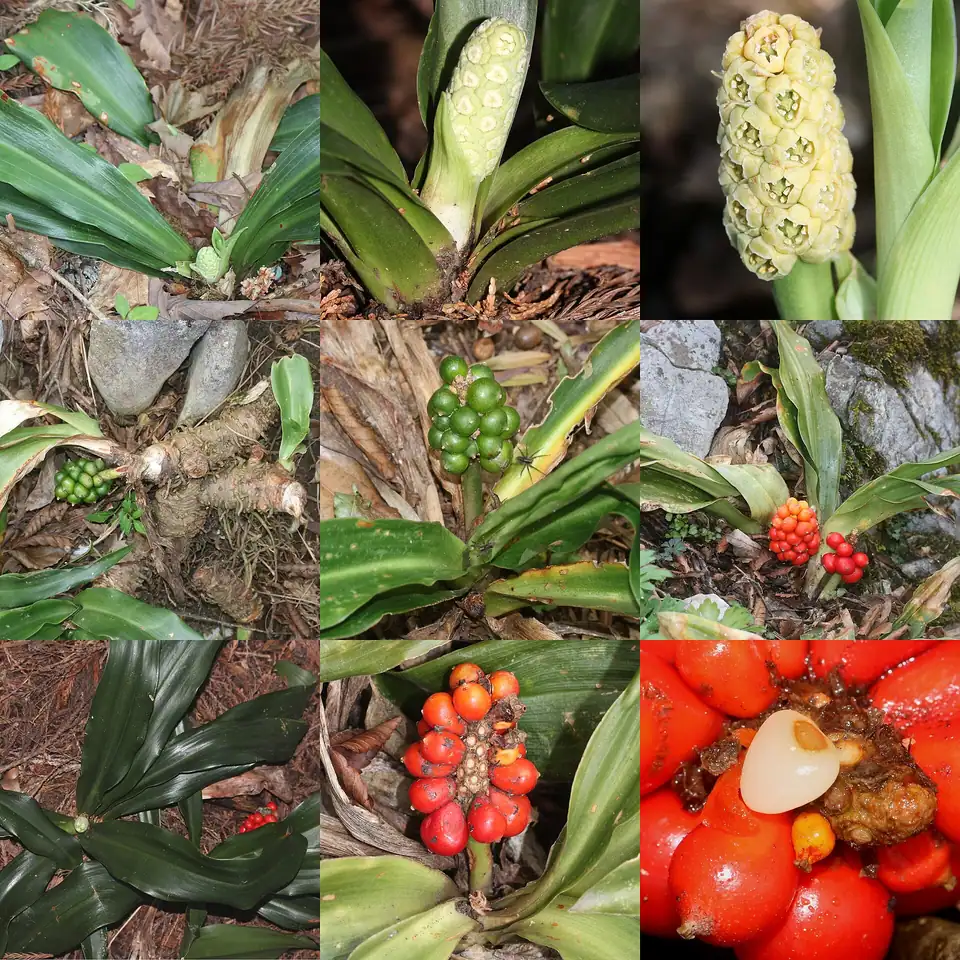
Rohdea japonica is an evergreen herbaceous perennial that produces bright red berries persisting into winter. [1] It is best planted in well-drained, rich, loamy soil in partial to full shade. [1] It is best propagated by division because it grows slowly. [1]
This record is incomplete: the sources we read do not cover every field yet.
Not yet covered by our sources: Watering, Pruning
Japanese Sacred Lily care
How to water Japanese Sacred Lily
Watering
Not stated in the sources we read.
Watering notes
Thrives in dry shade; resistant to drought
What the sources say (1)
They thrive in dry shade. This plant is resistant to heavy shade, deer browsing, and drought.How much light Japanese Sacred Lily needs
Partial to full shade
What the sources say (1)
It is best planted in well-drained, rich, loamy soil, and partial to full shade.How much cold Japanese Sacred Lily can take
Hardiness, coldest zone
6a [winter low −23.3 to −20.6 °C (−10 to −5 °F)]
What the sources say (1)
USDA Plant Hardiness Zone:
6a, 6b, 7a, 7b, 8a, 8b, 9a, 9b, 10a, 10bHardiness, warmest zone
10b [winter low 1.7 to 4.4 °C (35 to 40 °F)]
What the sources say (1)
USDA Plant Hardiness Zone:
6a, 6b, 7a, 7b, 8a, 8b, 9a, 9b, 10a, 10bWhere to grow Japanese Sacred Lily
Yes
What the sources say (1)
Japanese Sacred Lily looks great planted in border fronts, rock gardens, containers,How to propagate Japanese Sacred Lily
Division (clumps can be divided in early spring); seed
What the sources say (2)
They are best propagated by division since they are so slow growing. Clumps can be divided when they get too large, or new plants can be grown from seed if started in a greenhouse.Clumps can be divided in early spring. They have no serious pests.How to grow Japanese Sacred Lily
The plant
Life cycle
perennial
What the sources say (1)
Family:
Asparagaceae
Life Cycle:
Perennial
Recommended Propagation Strategy:
DivisionFamily
Asparagaceae
What the sources say (1)
It is a member of the Asparagaceae or asparagus family.Mature height
61 cm (2 ft)
What the sources say (1)
It is slow growing and reaches a height and width of 2 feet.Mature width
61 cm (2 ft)
What the sources say (1)
It is slow growing and reaches a height and width of 2 feet.Pests and diseases
Diseases
Colletotrichum liriope (fungal infection)
What the sources say (1)
The only disease reported is a fungal infection known as Colletotrichum liriope which is treated by removing the infected portions and treating them with an antifungal spray.Fertilizing
When
At first, until established; afterwards only compost top-dressing
What the sources say (1)
Feed them with a slow-release fertilizer initially. Once established, they only require top dressing with compost and are drought tolerant.Natural fertilizers
Compost top-dressing once established
What the sources say (1)
Feed them with a slow-release fertilizer initially. Once established, they only require top dressing with compost and are drought tolerant.Mineral fertilizers
Slow-release fertilizer, only at first
What the sources say (1)
Feed them with a slow-release fertilizer initially. Once established, they only require top dressing with compost and are drought tolerant.Japanese Sacred Lily pests and problems
Colletotrichum liriope
Symptom: Fungal infection
What to do: Remove the infected portions and treat them with an antifungal spray
What the sources say (1)
The only disease reported is a fungal infection known as Colletotrichum liriope which is treated by removing the infected portions and treating them with an antifungal spray.
— Rohdea japonica (Japanese Sacred Lily, Nippon Lily, Sacred Lily) | North Carolina Extension Gardener Plant Toolbox [1]
Remedies
The sources we checked give no remedies for this plant.
Calendar
Pruning
Not stated in the sources we read.
Months as given by the sources, which are mostly from the United States (northern hemisphere). In the southern hemisphere they shift by about six months.
Similar plants
- Butcher's Broom Ruscus aculeatus
- Cast Iron Plant Aspidistra elatior
- Dwarf Solomon's Seal Polygonatum humile
- Lilyturf Liriope muscari
- Mondo Grass Ophiopogon japonicus
- Palm Lily Cordyline rubra
- Poet's Laurel Danae racemosa
- Spanish Bluebell Hyacinthoides hispanica
Sources
Every value above is quoted from these documents. Links lead to the original publisher.
- Rohdea japonica (Japanese Sacred Lily, Nippon Lily, Sacred Lily) | North Carolina Extension Gardener Plant Toolbox · plants.ces.ncsu.edu, consulted
- Sacred Lily, Japanese · uaex.uada.edu, consulted
- Rohdea (Nippon Lily, Sacred Lily) | North Carolina Extension Gardener Plant Toolbox · plants.ces.ncsu.edu, consulted
Written by Emilio Marruso · last checked