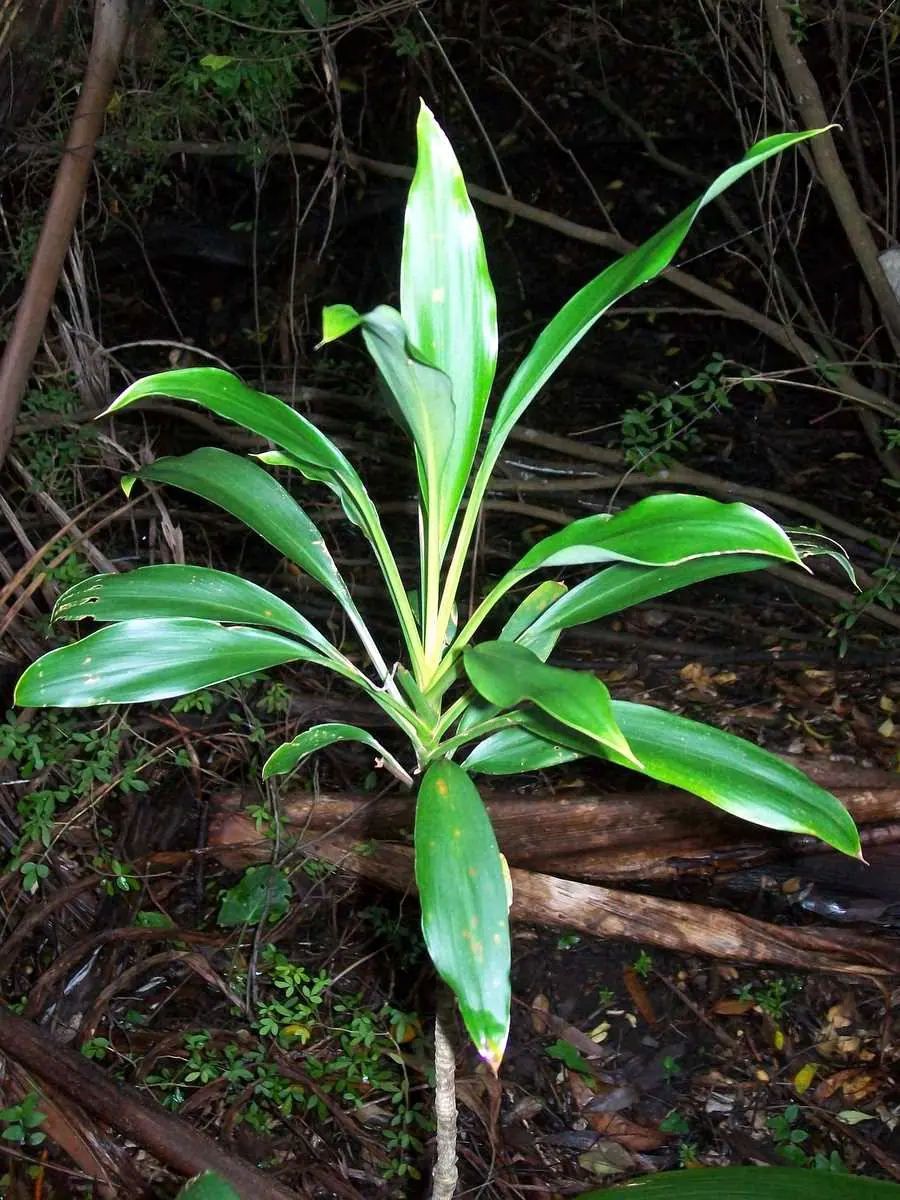


How to Grow and Care for Palm Lily
Cordyline rubra
Written by Emilio Marruso · last checked
Toxic to: Cats, Dogs, Horses, People · Why
At a glance
This palm-lily is a perfect pick for shady spots: it is happy in partial to full shade, indoors or in a container. With regular watering and a slow-release feed in early spring, it can grow 6½–10 ft tall. Once established, it even handles a little drought, so it forgives a busy gardener.
- Sun
Partial to full shade
What the sources say (1)
Light: Partial to full shade
This plant prefers partial to full shade and well-drained, organically rich soil.
— Cordyline rubra (Palm Lily, Red Fruited Palm Lily, Red Palm Lily) | North Carolina Extension Gardener Plant Toolbox [1] - Water
Water regularly; once settled in, it handles some drought
What the sources say (1)
Watering: Regular watering; moderately drought tolerant once established
Regular watering is needed, but It is moderately drought tolerant once it is established.
— Cordyline rubra (Palm Lily, Red Fruited Palm Lily, Red Palm Lily) | North Carolina Extension Gardener Plant Toolbox [1] - Cold
Survives winters down to 30 °F (−1.1 °C)
Half hardy: mild winters or an unheated greenhouse · USDA 10a · RHS H3 · Z10
What the sources say (2)
Hardiness, coldest zone: 10a [winter low −1.1 to 1.7 °C (30 to 35 °F)]
Available Space To Plant: 3 feet-6 feet 6-feet-12 feet USDA Plant Hardiness Zone: 10a, 10b, 11a, 11b, 12a, 12b
— Cordyline rubra (Palm Lily, Red Fruited Palm Lily, Red Palm Lily) | North Carolina Extension Gardener Plant Toolbox [1] Hardiness, warmest zone: 12b [winter low 12.8 to 15.6 °C (55 to 60 °F)]
Available Space To Plant: 3 feet-6 feet 6-feet-12 feet USDA Plant Hardiness Zone: 10a, 10b, 11a, 11b, 12a, 12b
— Cordyline rubra (Palm Lily, Red Fruited Palm Lily, Red Palm Lily) | North Carolina Extension Gardener Plant Toolbox [1] - Feeding
Slow-release fertilizer in early spring
What the sources say (2)
When: Early spring
The plant will benefit from an application of a slow-release fertilizer in the early spring.
— Cordyline rubra (Palm Lily, Red Fruited Palm Lily, Red Palm Lily) | North Carolina Extension Gardener Plant Toolbox [1] Mineral fertilizers: Slow-release fertilizer
The plant will benefit from an application of a slow-release fertilizer in the early spring.
— Cordyline rubra (Palm Lily, Red Fruited Palm Lily, Red Palm Lily) | North Carolina Extension Gardener Plant Toolbox [1] - Pests
Spider mites, mealybugs, scale and root rot; don't overwater and give it good air flow
What the sources say (2)
Pests: spider mites, mealybugs, scale insects
Insects, Diseases, and Other Plant Problems: Monitor for spider mites, mealybugs, and scale insects. Root rot and fungal leaf spot can occur.
— Cordyline rubra (Palm Lily, Red Fruited Palm Lily, Red Palm Lily) | North Carolina Extension Gardener Plant Toolbox [1] Diseases: root rot, fungal leaf spot
Insects, Diseases, and Other Plant Problems: Monitor for spider mites, mealybugs, and scale insects. Root rot and fungal leaf spot can occur.
— Cordyline rubra (Palm Lily, Red Fruited Palm Lily, Red Palm Lily) | North Carolina Extension Gardener Plant Toolbox [1] - Size
6½–10 ft tall and 3–5 ft wide
What the sources say (2)
Mature height: 198.12-304.8 cm (6 ft 6 in - 10 ft 0 in)
Height: 6 ft. 6 in. - 10 ft. 0 in. Width: 3 ft. 0 in. - 5 ft. 3 in.
— Cordyline rubra (Palm Lily, Red Fruited Palm Lily, Red Palm Lily) | North Carolina Extension Gardener Plant Toolbox [1] Mature width: 91.44-160.02 cm (3 ft 0 in - 5 ft 3 in)
Height: 6 ft. 6 in. - 10 ft. 0 in. Width: 3 ft. 0 in. - 5 ft. 3 in.
— Cordyline rubra (Palm Lily, Red Fruited Palm Lily, Red Palm Lily) | North Carolina Extension Gardener Plant Toolbox [1] - Propagation
From root suckers or from seed
What the sources say (1)
Propagation: Root suckering, seeds
Propagation may occur by root suckering and seeds.
— Cordyline rubra (Palm Lily, Red Fruited Palm Lily, Red Palm Lily) | North Carolina Extension Gardener Plant Toolbox [1] - Containers
Grows in containers and indoors too
What the sources say (2)
In containers: Yes
The palm-lily may be used in garden beds, borders, or containers and makes a striking accent plant or houseplant.
— Cordyline rubra (Palm Lily, Red Fruited Palm Lily, Red Palm Lily) | North Carolina Extension Gardener Plant Toolbox [1] Indoors: Yes
It may be used as a houseplant, but it is rare in cultivation.
— Cordyline rubra (Palm Lily, Red Fruited Palm Lily, Red Palm Lily) | North Carolina Extension Gardener Plant Toolbox [1] - Safety
Toxic to people if eaten and irritates skin: wear gloves; non-toxic to dogs, cats and horses
Overview
Cordyline rubra is a palm-like evergreen shrub or small tree known for its red leaves. [1] It prefers partial to full shade and needs regular watering. [1] If ingested it is toxic to humans and causes contact dermatitis. [1]
This record is incomplete: the sources we read do not cover every field yet.
Not yet covered by our sources: Pruning
Palm Lily care
How to water Palm Lily
Regular watering; moderately drought tolerant once established
What the sources say (1)
Regular watering is needed, but It is moderately drought tolerant once it is established.How much light Palm Lily needs
Partial to full shade
What the sources say (1)
This plant prefers partial to full shade and well-drained, organically rich soil.How much cold Palm Lily can take
Hardiness, coldest zone
10a [winter low −1.1 to 1.7 °C (30 to 35 °F)]
What the sources say (1)
Available Space To Plant:
3 feet-6 feet
6-feet-12 feet
USDA Plant Hardiness Zone:
10a, 10b, 11a, 11b, 12a, 12bHardiness, warmest zone
12b [winter low 12.8 to 15.6 °C (55 to 60 °F)]
What the sources say (1)
Available Space To Plant:
3 feet-6 feet
6-feet-12 feet
USDA Plant Hardiness Zone:
10a, 10b, 11a, 11b, 12a, 12bWhere to grow Palm Lily
Indoors
Yes
What the sources say (1)
It may be used as a houseplant, but it is rare in cultivation.In containers
Yes
What the sources say (1)
The palm-lily may be used in garden beds, borders, or containers and makes a striking accent plant or houseplant.How to propagate Palm Lily
Root suckering, seeds
What the sources say (1)
Propagation may occur by root suckering and seeds.How to grow Palm Lily
The plant
Life cycle
perennial
What the sources say (1)
Genus: Cordyline Species: rubra Family: Asparagaceae Uses (Ethnobotany): It is used in medicine and for food. Life Cycle: PerennialFamily
Asparagaceae
What the sources say (1)
It is a member of the asparagus family (Asparagaceae).Mature height
198.12-304.8 cm (6 ft 6 in - 10 ft 0 in)
What the sources say (1)
Height: 6 ft. 6 in. - 10 ft. 0 in. Width: 3 ft. 0 in. - 5 ft. 3 in.Mature width
91.44-160.02 cm (3 ft 0 in - 5 ft 3 in)
What the sources say (1)
Height: 6 ft. 6 in. - 10 ft. 0 in. Width: 3 ft. 0 in. - 5 ft. 3 in.Pests and diseases
Pests
spider mites, mealybugs, scale insects
What the sources say (1)
Insects, Diseases, and Other Plant Problems: Monitor for spider mites, mealybugs, and scale insects. Root rot and fungal leaf spot can occur.Diseases
root rot, fungal leaf spot
What the sources say (1)
Insects, Diseases, and Other Plant Problems: Monitor for spider mites, mealybugs, and scale insects. Root rot and fungal leaf spot can occur.Fertilizing
When
Early spring
What the sources say (1)
The plant will benefit from an application of a slow-release fertilizer in the early spring.Mineral fertilizers
Slow-release fertilizer
What the sources say (1)
The plant will benefit from an application of a slow-release fertilizer in the early spring.Palm Lily pests and problems
Spider mites, mealybugs, scale insects, root rot, fungal leaf spot
What to do: Avoid overwatering and provide good air circulation.
What the sources say (1)
Monitor for spider mites, mealybugs, and scale insects. Root rot and fungal leaf spot can occur. Avoid overwatering and provide good air circulation.
— Cordyline rubra (Palm Lily, Red Fruited Palm Lily, Red Palm Lily) | North Carolina Extension Gardener Plant Toolbox [1]
Remedies
Each remedy shows what official sources say about it; traditional remedies without an official source are marked as such. Harmful ones are listed so you know to avoid them.
First aid
First aid: not a substitute for a doctor
contact dermatitis from sap
cool compress Official source, not independently tested
Monitor children in the presence of this plant and wear gloves when handling this plant.
— Cordyline rubra (Palm Lily, Red Fruited Palm Lily, Red Palm Lily) | North Carolina Extension Gardener Plant Toolbox [1] How: General measures for plant dermatitis: minimise contact with the plant, protective clothing, cool compress.
Minimise contact with the relevant plant - Protective clothing - Remove the implicated plant from the garden - Sun protection - Avoid aggravating the problem with potentially irritating or allergenic topical applications - Cool compress
— dermnetnz.org [5]
Treating the plant
aphids
hosing off with a stream of water Works
How: During warm weather, take infested plants outside and hose them off with a stream of water.
During warm weather, take infested plants outside and hose them off with a stream of water.
— extension.missouri.edu [6] What the evidence says During warm weather, take infested plants outside and hose them off with a stream of water.
— extension.missouri.edu [6]
spider mites
soapy water wash Works
Certain chemicals, including oils and insecticidal soaps, may cause plant injury if used at the wrong stage of plant development or when temperatures are too high.
— extension.missouri.edu [6] How: Wash plants with soapy water (2 teaspoons mild detergent per gallon of water) and a soft brush, making sure to wash the undersides of leaves.
Wash plants with soapy water (2 teaspoons mild detergent per gallon of water) and a soft brush, making sure to wash the undersides of leaves.
— extension.missouri.edu [6] What the evidence says Wash plants with soapy water (2 teaspoons mild detergent per gallon of water) and a soft brush, making sure to wash the undersides of leaves.
— extension.missouri.edu [6]
scale insects
rubbing off by hand or with an alcohol-dipped cotton swab Partly works
How: Scales can be rubbed off plants by hand using garden gloves, a toothbrush or a dry or alcohol-dipped cotton swab.
Scales can be rubbed off plants by hand using garden gloves, a toothbrush or a dry or alcohol-dipped cotton swab. However, this treatment may not be adequate when scale are present in large numbers.
— extension.missouri.edu [6] What the evidence says Scales can be rubbed off plants by hand using garden gloves, a toothbrush or a dry or alcohol-dipped cotton swab. However, this treatment may not be adequate when scale are present in large numbers.
— extension.missouri.edu [6]
Is Palm Lily toxic to pets?
Reported by the source, quoted verbatim. This is not medical or veterinary advice: if a person or an animal may have eaten this plant, contact a poison control centre or a veterinarian.
Animals
The ASPCA reports that this plant is non-toxic to dogs, cats, and horses; however, other plants in this family are toxic to pets.
[1]The source flags the risk for this animal but does not explain why.
People
If ingested, the palm-lily is toxic to humans and causes contact dermatitis. Monitor children in the presence of this plant and wear gloves when handling this plant.
[1]- Poisonous parts
Causes Contact Dermatitis: Yes Poison Part: Leaves Roots Sap/Juice Stems
[1]- Toxic principle
Poison Symptoms: Ingestion can cause nausea, vomiting, and stomach pain. The sap can cause skin irritation. Poison Toxic Principle: Saponins
[1]- Symptoms
Poison Symptoms: Ingestion can cause nausea, vomiting, and stomach pain. The sap can cause skin irritation.
[1]- Severity
Poison Severity: Low Poison Symptoms: Ingestion can cause nausea, vomiting, and stomach pain.
[1]
Calendar
Pruning
Not stated in the sources we read.
Months as given by the sources, which are mostly from the United States (northern hemisphere). In the southern hemisphere they shift by about six months.
Similar plants
- Cabbage Tree Cordyline australis
- Mountain Cabbage Tree Cordyline indivisa
- Ti Plant Cordyline fruticosa
- Butcher's Broom Ruscus aculeatus
- Cast Iron Plant Aspidistra elatior
- Dwarf Solomon's Seal Polygonatum humile
- Japanese Sacred Lily Rohdea japonica
- Lilyturf Liriope muscari
Sources
Every value above is quoted from these documents. Links lead to the original publisher.
- Cordyline rubra (Palm Lily, Red Fruited Palm Lily, Red Palm Lily) | North Carolina Extension Gardener Plant Toolbox · plants.ces.ncsu.edu, consulted
- Cordyline (Palm Lily, Ti) | North Carolina Extension Gardener Plant Toolbox · plants.ces.ncsu.edu, consulted
- Palm Lily - Cordyline | North Carolina Extension Gardener Plant Toolbox · plants.ces.ncsu.edu, consulted
- Red Fruited Palm Lily - Cordyline rubra | North Carolina Extension Gardener Plant Toolbox · plants.ces.ncsu.edu, consulted
- dermnetnz.org · dermnetnz.org
- extension.missouri.edu · extension.missouri.edu
Written by Emilio Marruso · last checked