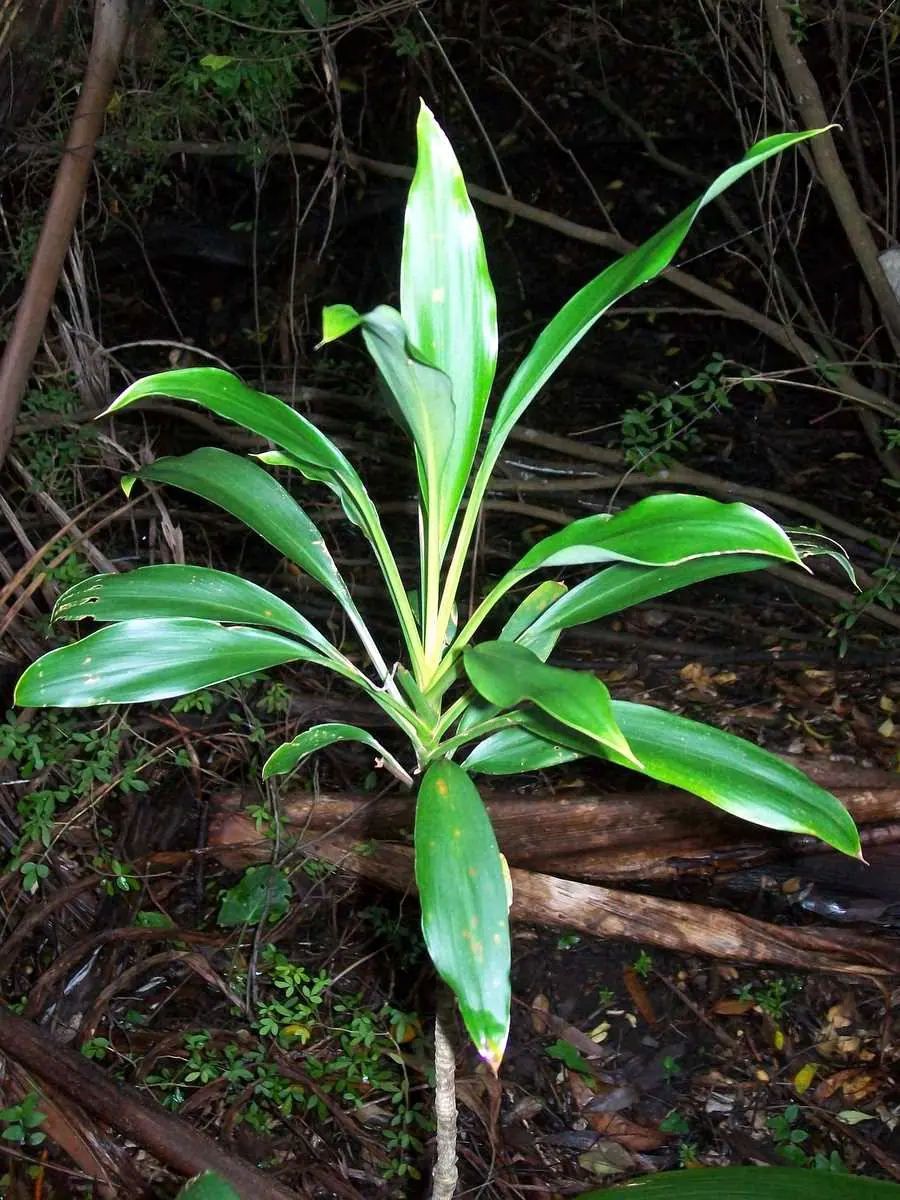


Cómo cultivar y cuidar Palma de Carey
Cordyline rubra
Escrito por Emilio Marruso · última revisión
Tóxica para: Gatos, Perros, Caballos, Personas · Por qué
De un vistazo
Esta cordiline es perfecta para rincones con sombra: vive feliz en semisombra o sombra total, en interior o en maceta. Con riego regular y un abono de liberación lenta a principios de primavera, puede alcanzar 2–3 m de alto. Una vez asentada, aguanta incluso algo de sequía, así que perdona los descuidos de quien tiene poco tiempo.
- Sol
Semisombra o sombra total
Qué dicen las fuentes (1)
Luz: Sombra parcial a sombra completa.
This plant prefers partial to full shade and well-drained, organically rich soil.
— Cordyline rubra (Palm Lily, Red Fruited Palm Lily, Red Palm Lily) | North Carolina Extension Gardener Plant Toolbox [1] - Riego
Riega con regularidad; una vez asentada, aguanta algo de sequía
Qué dicen las fuentes (1)
Riego: Riego regular; moderadamente tolerante a la sequía una vez establecido
Regular watering is needed, but It is moderately drought tolerant once it is established.
— Cordyline rubra (Palm Lily, Red Fruited Palm Lily, Red Palm Lily) | North Carolina Extension Gardener Plant Toolbox [1] - Frío
Aguanta inviernos de hasta −1,1 °C (30 °F)
Semirrústica: inviernos suaves o invernadero sin calefacción · USDA 10a · RHS H3 · Z10
Qué dicen las fuentes (2)
Rusticidad, zona más fría: 10a [mínima invernal de −1,1 a 1,7 °C (de 30 a 35 °F)]
Available Space To Plant: 3 feet-6 feet 6-feet-12 feet USDA Plant Hardiness Zone: 10a, 10b, 11a, 11b, 12a, 12b
— Cordyline rubra (Palm Lily, Red Fruited Palm Lily, Red Palm Lily) | North Carolina Extension Gardener Plant Toolbox [1] Rusticidad, zona más cálida: 12b [mínima invernal de 12,8 a 15,6 °C (de 55 a 60 °F)]
Available Space To Plant: 3 feet-6 feet 6-feet-12 feet USDA Plant Hardiness Zone: 10a, 10b, 11a, 11b, 12a, 12b
— Cordyline rubra (Palm Lily, Red Fruited Palm Lily, Red Palm Lily) | North Carolina Extension Gardener Plant Toolbox [1] - Abonado
Abono de liberación lenta a principios de primavera
Qué dicen las fuentes (2)
Cuándo: Principios de primavera
The plant will benefit from an application of a slow-release fertilizer in the early spring.
— Cordyline rubra (Palm Lily, Red Fruited Palm Lily, Red Palm Lily) | North Carolina Extension Gardener Plant Toolbox [1] Abonos minerales: Fertilizante de liberación lenta
The plant will benefit from an application of a slow-release fertilizer in the early spring.
— Cordyline rubra (Palm Lily, Red Fruited Palm Lily, Red Palm Lily) | North Carolina Extension Gardener Plant Toolbox [1] - Plagas
Araña roja, cochinillas y podredumbre de raíz; no riegues en exceso y dale buena ventilación
Qué dicen las fuentes (2)
Plagas: arañitas rojas, cochinillas harinosas, cochinillas
Insects, Diseases, and Other Plant Problems: Monitor for spider mites, mealybugs, and scale insects. Root rot and fungal leaf spot can occur.
— Cordyline rubra (Palm Lily, Red Fruited Palm Lily, Red Palm Lily) | North Carolina Extension Gardener Plant Toolbox [1] Enfermedades: podredumbre de raíces, mancha foliar por hongos
Insects, Diseases, and Other Plant Problems: Monitor for spider mites, mealybugs, and scale insects. Root rot and fungal leaf spot can occur.
— Cordyline rubra (Palm Lily, Red Fruited Palm Lily, Red Palm Lily) | North Carolina Extension Gardener Plant Toolbox [1] - Tamaño
2–3 m de alto y 0,9–1,6 m de ancho
Qué dicen las fuentes (2)
Altura adulta: 198.12-304.8 cm (6 ft 6 in - 10 ft 0 in)
Height: 6 ft. 6 in. - 10 ft. 0 in. Width: 3 ft. 0 in. - 5 ft. 3 in.
— Cordyline rubra (Palm Lily, Red Fruited Palm Lily, Red Palm Lily) | North Carolina Extension Gardener Plant Toolbox [1] Anchura adulta: 91.44-160.02 cm (3 ft 0 in - 5 ft 3 in)
Height: 6 ft. 6 in. - 10 ft. 0 in. Width: 3 ft. 0 in. - 5 ft. 3 in.
— Cordyline rubra (Palm Lily, Red Fruited Palm Lily, Red Palm Lily) | North Carolina Extension Gardener Plant Toolbox [1] - Multiplicación
Por hijuelos de la raíz o por semillas
Qué dicen las fuentes (1)
Propagación: Chupones de raíz, semillas
Propagation may occur by root suckering and seeds.
— Cordyline rubra (Palm Lily, Red Fruited Palm Lily, Red Palm Lily) | North Carolina Extension Gardener Plant Toolbox [1] - Maceta
Crece también en maceta y en interior
Qué dicen las fuentes (2)
En maceta: Sí
The palm-lily may be used in garden beds, borders, or containers and makes a striking accent plant or houseplant.
— Cordyline rubra (Palm Lily, Red Fruited Palm Lily, Red Palm Lily) | North Carolina Extension Gardener Plant Toolbox [1] En interior: Sí
It may be used as a houseplant, but it is rare in cultivation.
— Cordyline rubra (Palm Lily, Red Fruited Palm Lily, Red Palm Lily) | North Carolina Extension Gardener Plant Toolbox [1] - Seguridad
Tóxica si se come e irrita la piel: usa guantes; no es tóxica para perros, gatos ni caballos
Resumen
Cordyline rubra es un arbusto o árbol pequeño de hoja perenne, similar a una palmera, conocido por sus hojas rojas. [1] Prefiere semisombra a sombra completa y necesita riego regular. [1] Si se ingiere, es tóxico para los humanos y causa dermatitis por contacto. [1]
Citado en inglés, como en la fuente.
Esta ficha está incompleta: las fuentes consultadas aún no cubren todos los campos.
Aún no cubierto por nuestras fuentes: Poda
Cuidados
Riego
Riego regular; moderadamente tolerante a la sequía una vez establecido
Qué dicen las fuentes (1)
Regular watering is needed, but It is moderately drought tolerant once it is established.Luz
Sombra parcial a sombra completa.
Qué dicen las fuentes (1)
This plant prefers partial to full shade and well-drained, organically rich soil.Clima y frío
Rusticidad, zona más fría
10a [mínima invernal de −1,1 a 1,7 °C (de 30 a 35 °F)]
Qué dicen las fuentes (1)
Available Space To Plant:
3 feet-6 feet
6-feet-12 feet
USDA Plant Hardiness Zone:
10a, 10b, 11a, 11b, 12a, 12bRusticidad, zona más cálida
12b [mínima invernal de 12,8 a 15,6 °C (de 55 a 60 °F)]
Qué dicen las fuentes (1)
Available Space To Plant:
3 feet-6 feet
6-feet-12 feet
USDA Plant Hardiness Zone:
10a, 10b, 11a, 11b, 12a, 12bDónde cultivarla
En interior
Sí
Qué dicen las fuentes (1)
It may be used as a houseplant, but it is rare in cultivation.En maceta
Sí
Qué dicen las fuentes (1)
The palm-lily may be used in garden beds, borders, or containers and makes a striking accent plant or houseplant.Propagación
Chupones de raíz, semillas
Qué dicen las fuentes (1)
Propagation may occur by root suckering and seeds.Cultivo
La planta
Ciclo de vida
perenne
Qué dicen las fuentes (1)
Genus: Cordyline Species: rubra Family: Asparagaceae Uses (Ethnobotany): It is used in medicine and for food. Life Cycle: PerennialFamilia
Asparagáceas
Qué dicen las fuentes (1)
It is a member of the asparagus family (Asparagaceae).Altura adulta
198.12-304.8 cm (6 ft 6 in - 10 ft 0 in)
Qué dicen las fuentes (1)
Height: 6 ft. 6 in. - 10 ft. 0 in. Width: 3 ft. 0 in. - 5 ft. 3 in.Anchura adulta
91.44-160.02 cm (3 ft 0 in - 5 ft 3 in)
Qué dicen las fuentes (1)
Height: 6 ft. 6 in. - 10 ft. 0 in. Width: 3 ft. 0 in. - 5 ft. 3 in.Plagas y enfermedades
Plagas
arañitas rojas, cochinillas harinosas, cochinillas
Qué dicen las fuentes (1)
Insects, Diseases, and Other Plant Problems: Monitor for spider mites, mealybugs, and scale insects. Root rot and fungal leaf spot can occur.Enfermedades
podredumbre de raíces, mancha foliar por hongos
Qué dicen las fuentes (1)
Insects, Diseases, and Other Plant Problems: Monitor for spider mites, mealybugs, and scale insects. Root rot and fungal leaf spot can occur.Abonado
Cuándo
Principios de primavera
Qué dicen las fuentes (1)
The plant will benefit from an application of a slow-release fertilizer in the early spring.Abonos minerales
Fertilizante de liberación lenta
Qué dicen las fuentes (1)
The plant will benefit from an application of a slow-release fertilizer in the early spring.Problemas
Arañitas rojas, cochinillas harinosas, cochinillas, pudrición de la raíz, mancha foliar fúngica
Qué hacer: Evita el riego excesivo y proporciona buena circulación de aire.
Qué dicen las fuentes (1)
Monitor for spider mites, mealybugs, and scale insects. Root rot and fungal leaf spot can occur. Avoid overwatering and provide good air circulation.
— Cordyline rubra (Palm Lily, Red Fruited Palm Lily, Red Palm Lily) | North Carolina Extension Gardener Plant Toolbox [1]
Remedios
Cada remedio indica qué dicen las fuentes oficiales; los remedios tradicionales sin fuente oficial aparecen marcados. Los perjudiciales están para que sepas evitarlos.
Primeros auxilios
Primeros auxilios: no sustituyen al médico
dermatitis por contacto con la savia
compresa fría Fuente oficial, sin prueba independiente
Monitor children in the presence of this plant and wear gloves when handling this plant.
— Cordyline rubra (Palm Lily, Red Fruited Palm Lily, Red Palm Lily) | North Carolina Extension Gardener Plant Toolbox [1] Cómo: Medidas generales para la dermatitis por plantas: minimiza el contacto con la planta, ropa protectora, compresa fría.
Minimise contact with the relevant plant - Protective clothing - Remove the implicated plant from the garden - Sun protection - Avoid aggravating the problem with potentially irritating or allergenic topical applications - Cool compress
— dermnetnz.org [5]
Cuidar la planta
pulgones
enjuagando con un chorro de agua Funciona
Cómo: Durante el clima cálido, saca las plantas infestadas al exterior y enjuágalas con un chorro de agua.
During warm weather, take infested plants outside and hose them off with a stream of water.
— extension.missouri.edu [6] Qué dicen las pruebas During warm weather, take infested plants outside and hose them off with a stream of water.
— extension.missouri.edu [6]
ácaros araña
lavado con agua jabonosa Funciona
Certain chemicals, including oils and insecticidal soaps, may cause plant injury if used at the wrong stage of plant development or when temperatures are too high.
— extension.missouri.edu [6] Cómo: Lava las plantas con agua jabonosa (2 cucharaditas de detergente suave por galón de agua) y un cepillo suave, asegurándote de lavar el envés de las hojas.
Wash plants with soapy water (2 teaspoons mild detergent per gallon of water) and a soft brush, making sure to wash the undersides of leaves.
— extension.missouri.edu [6] Qué dicen las pruebas Wash plants with soapy water (2 teaspoons mild detergent per gallon of water) and a soft brush, making sure to wash the undersides of leaves.
— extension.missouri.edu [6]
cochinillas
frotando con la mano o con un hisopo de algodón empapado en alcohol Funciona en parte
Cómo: Las cochinillas se pueden quitar a mano con guantes de jardín, un cepillo de dientes o un hisopo de algodón seco o empapado en alcohol.
Scales can be rubbed off plants by hand using garden gloves, a toothbrush or a dry or alcohol-dipped cotton swab. However, this treatment may not be adequate when scale are present in large numbers.
— extension.missouri.edu [6] Qué dicen las pruebas Scales can be rubbed off plants by hand using garden gloves, a toothbrush or a dry or alcohol-dipped cotton swab. However, this treatment may not be adequate when scale are present in large numbers.
— extension.missouri.edu [6]
Venenosa para los animales
Según la fuente, citada textualmente. No es un consejo médico ni veterinario: si una persona o un animal pudo haber ingerido esta planta, contacta con un centro de toxicología o con un veterinario.
Animales
The ASPCA reports that this plant is non-toxic to dogs, cats, and horses; however, other plants in this family are toxic to pets.
[1]La fuente señala el riesgo para este animal pero no explica por qué.
Personas
If ingested, the palm-lily is toxic to humans and causes contact dermatitis. Monitor children in the presence of this plant and wear gloves when handling this plant.
[1]- Partes venenosas
Causes Contact Dermatitis: Yes Poison Part: Leaves Roots Sap/Juice Stems
[1]- Principio tóxico
Poison Symptoms: Ingestion can cause nausea, vomiting, and stomach pain. The sap can cause skin irritation. Poison Toxic Principle: Saponins
[1]- Síntomas
Poison Symptoms: Ingestion can cause nausea, vomiting, and stomach pain. The sap can cause skin irritation.
[1]- Gravedad
Poison Severity: Low Poison Symptoms: Ingestion can cause nausea, vomiting, and stomach pain.
[1]
Calendario
Poda
No figura en las fuentes consultadas.
Meses tal como los dan las fuentes, en su mayoría de Estados Unidos (hemisferio norte). En el hemisferio sur se desplazan unos seis meses.
Plantas similares
- Palma de Torbay Cordyline australis
- Mountain Cabbage Tree Cordyline indivisa
- Ti Plant Cordyline fruticosa
- Rusco Ruscus aculeatus
- Cast Iron Plant Aspidistra elatior
- Dwarf Solomon's Seal Polygonatum humile
- Japanese Sacred Lily Rohdea japonica
- Lilyturf Liriope muscari
Fuentes
Cada valor anterior se cita de estos documentos. Los enlaces llevan al editor original.
- Cordyline rubra (Palm Lily, Red Fruited Palm Lily, Red Palm Lily) | North Carolina Extension Gardener Plant Toolbox · plants.ces.ncsu.edu, consultado
- Cordyline (Palm Lily, Ti) | North Carolina Extension Gardener Plant Toolbox · plants.ces.ncsu.edu, consultado
- Palm Lily - Cordyline | North Carolina Extension Gardener Plant Toolbox · plants.ces.ncsu.edu, consultado
- Red Fruited Palm Lily - Cordyline rubra | North Carolina Extension Gardener Plant Toolbox · plants.ces.ncsu.edu, consultado
- dermnetnz.org · dermnetnz.org
- extension.missouri.edu · extension.missouri.edu
Escrito por Emilio Marruso · última revisión