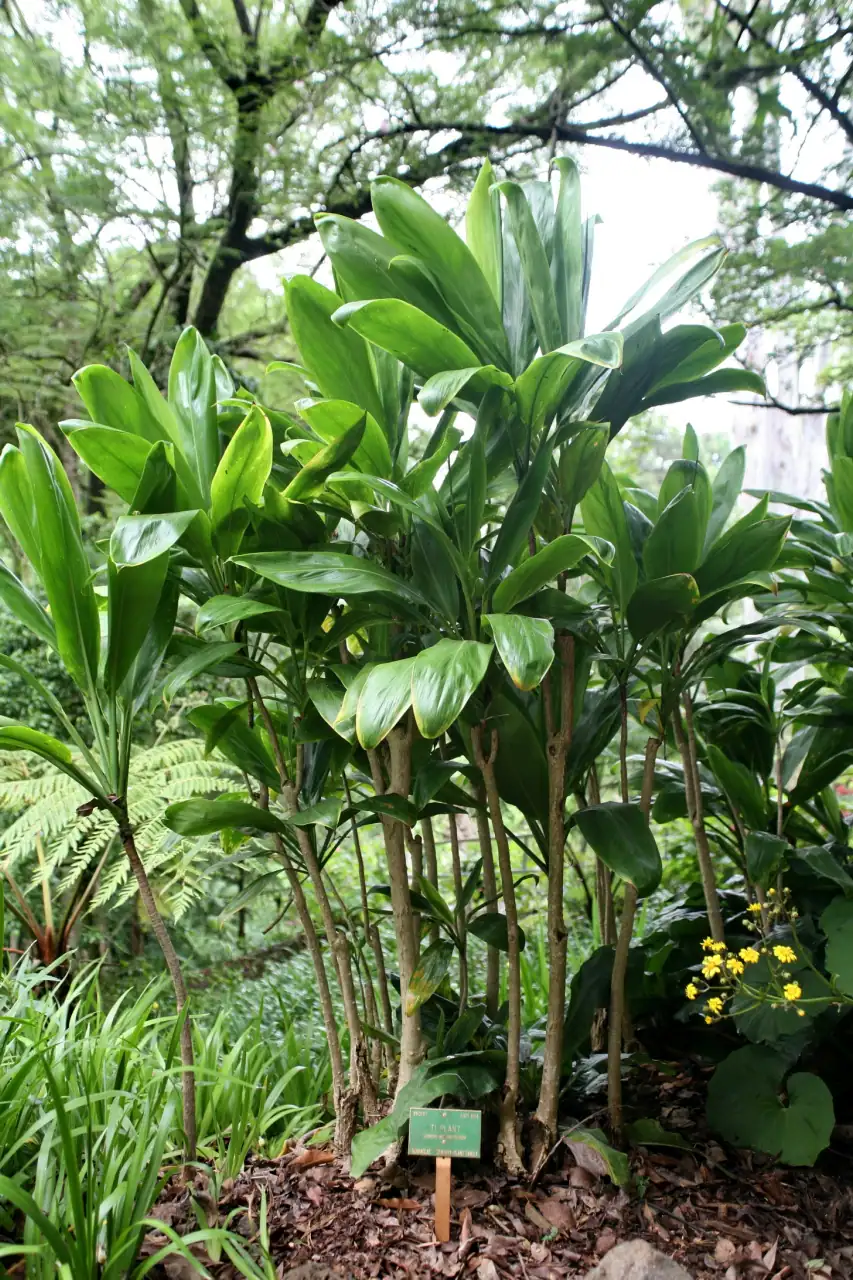


Cómo cultivar y cuidar Ti Plant
Cordyline fruticosa
Escrito por Emilio Marruso · última revisión
Tóxica para: Gatos, Perros, Caballos, Personas · Por qué
De un vistazo
La cordyline llena de color tu casa o tu jardín: crece bien en maceta, vive en interior y le encanta la luz brillante indirecta. Riégala con regularidad, deja que se seque un poco entre riegos y abónala varias veces al año para que sus hojas conserven el color. En la cocina hawaiana, sus hojas incluso sirven para envolver alimentos.
- Sol
Luz brillante indirecta; también tolera sol filtrado o sombra
Qué dicen las fuentes (3)
Luz: Luz indirecta brillante
Según NC State Extension, description: This plant requires bright indirect light to maintain its bright foliage colors.
— Cordyline fruticosa (Baby Doll Ti Plant, Cabbage Palm, Cabbage Tree, Good-Luck Plant, Hawaiian Good Luck Plant, Hawaiian Ti Plant, Hawiian Ti, Ti Plant) | North Carolina Extension Gardener Plant Toolbox [1] Según NC State Extension, cultural conditions: Light: Dappled Sunlight (Shade through upper canopy all day) Deep shade (Less than 2 hours to no direct sunlight)
— Cordyline fruticosa (Baby Doll Ti Plant, Cabbage Palm, Cabbage Tree, Good-Luck Plant, Hawaiian Good Luck Plant, Hawaiian Ti Plant, Hawiian Ti, Ti Plant) | North Carolina Extension Gardener Plant Toolbox [1] This plant requires bright indirect light to maintain its bright foliage colors.
— Cordyline fruticosa (Baby Doll Ti Plant, Cabbage Palm, Cabbage Tree, Good-Luck Plant, Hawaiian Good Luck Plant, Hawaiian Ti Plant, Hawiian Ti, Ti Plant) | North Carolina Extension Gardener Plant Toolbox [1] - Riego
Riega con regularidad y deja que se seque un poco; riega menos de finales de otoño a finales de invierno
Qué dicen las fuentes (2)
Riego: Riega regularmente, dejando que la planta se seque un poco entre riegos
It should be watered regularly, but allow the plant to dry out a bit between watering.
— Cordyline fruticosa (Baby Doll Ti Plant, Cabbage Palm, Cabbage Tree, Good-Luck Plant, Hawaiian Good Luck Plant, Hawaiian Ti Plant, Hawiian Ti, Ti Plant) | North Carolina Extension Gardener Plant Toolbox [1] Notas sobre el riego: Reduce el riego desde finales de otoño hasta finales de invierno
Watering should be reduced from late fall to late winter. This plant prefers high humidity and humidifier may be required when grown indoors.
— Cordyline fruticosa (Baby Doll Ti Plant, Cabbage Palm, Cabbage Tree, Good-Luck Plant, Hawaiian Good Luck Plant, Hawaiian Ti Plant, Hawiian Ti, Ti Plant) | North Carolina Extension Gardener Plant Toolbox [1] - Frío
Aguanta inviernos de hasta −1,1 °C (30 °F)
Semirrústica: inviernos suaves o invernadero sin calefacción · USDA 10a · RHS H3 · Z10
Qué dicen las fuentes (2)
Rusticidad, zona más fría: 10a [mínima invernal de −1,1 a 1,7 °C (de 30 a 35 °F)]
USDA Plant Hardiness Zone: 10a, 10b, 11a, 11b, 12a, 12b
— Cordyline fruticosa (Baby Doll Ti Plant, Cabbage Palm, Cabbage Tree, Good-Luck Plant, Hawaiian Good Luck Plant, Hawaiian Ti Plant, Hawiian Ti, Ti Plant) | North Carolina Extension Gardener Plant Toolbox [1] Rusticidad, zona más cálida: 12b [mínima invernal de 12,8 a 15,6 °C (de 55 a 60 °F)]
USDA Plant Hardiness Zone: 10a, 10b, 11a, 11b, 12a, 12b
— Cordyline fruticosa (Baby Doll Ti Plant, Cabbage Palm, Cabbage Tree, Good-Luck Plant, Hawaiian Good Luck Plant, Hawaiian Ti Plant, Hawiian Ti, Ti Plant) | North Carolina Extension Gardener Plant Toolbox [1] - Abonado
Abona varias veces al año para que las hojas conserven su color
Qué dicen las fuentes (1)
Frecuencia: varias veces al año, lo que ayuda a la planta a mantener los colores de sus hojas
Fertilizing the plant several times a year will also help it to maintain its colors.
— Cordyline fruticosa (Baby Doll Ti Plant, Cabbage Palm, Cabbage Tree, Good-Luck Plant, Hawaiian Good Luck Plant, Hawaiian Ti Plant, Hawiian Ti, Ti Plant) | North Carolina Extension Gardener Plant Toolbox [1] - Cosecha
En la cocina hawaiana, las hojas se usan para envolver alimentos
- Plagas
Pulgón, cochinilla, araña roja y cochinilla algodonosa; evita el encharcamiento para prevenir manchas foliares
Qué dicen las fuentes (2)
Plagas: pulgones, cochinillas, arañas rojas, mosquitos de los hongos, trips, cochinillas harinosas
Monitor for aphids, scale insects, spider mites, fungus gnats, thrips, and mealybugs.
— Cordyline fruticosa (Baby Doll Ti Plant, Cabbage Palm, Cabbage Tree, Good-Luck Plant, Hawaiian Good Luck Plant, Hawaiian Ti Plant, Hawiian Ti, Ti Plant) | North Carolina Extension Gardener Plant Toolbox [1] Enfermedades: mancha foliar y otras enfermedades fúngicas
It may be susceptible to leaf spot and other fungal diseases.
— Cordyline fruticosa (Baby Doll Ti Plant, Cabbage Palm, Cabbage Tree, Good-Luck Plant, Hawaiian Good Luck Plant, Hawaiian Ti Plant, Hawiian Ti, Ti Plant) | North Carolina Extension Gardener Plant Toolbox [1] - Atención
El aire seco tuesta las puntas de las hojas: mantén la humedad alta, también en interior
- Tamaño
De 2,7 a 4,6 m de alto y de 0,9 a 2,4 m de ancho
Qué dicen las fuentes (4)
Altura adulta: 274-457 cm (9 a 15 pies)
Height: 9 ft. 0 in. - 15 ft. 0 in.
— Cordyline fruticosa (Baby Doll Ti Plant, Cabbage Palm, Cabbage Tree, Good-Luck Plant, Hawaiian Good Luck Plant, Hawaiian Ti Plant, Hawiian Ti, Ti Plant) | North Carolina Extension Gardener Plant Toolbox [1] The Ti plant can grow up to 9 to 15 feet tall and 3 to 8 feet wide
— Cordyline fruticosa (Baby Doll Ti Plant, Cabbage Palm, Cabbage Tree, Good-Luck Plant, Hawaiian Good Luck Plant, Hawaiian Ti Plant, Hawiian Ti, Ti Plant) | North Carolina Extension Gardener Plant Toolbox [1] Anchura adulta: 91-244 cm (3 a 8 pies)
Width: 3 ft. 0 in. - 8 ft. 0 in.
— Cordyline fruticosa (Baby Doll Ti Plant, Cabbage Palm, Cabbage Tree, Good-Luck Plant, Hawaiian Good Luck Plant, Hawaiian Ti Plant, Hawiian Ti, Ti Plant) | North Carolina Extension Gardener Plant Toolbox [1] The Ti plant can grow up to 9 to 15 feet tall and 3 to 8 feet wide
— Cordyline fruticosa (Baby Doll Ti Plant, Cabbage Palm, Cabbage Tree, Good-Luck Plant, Hawaiian Good Luck Plant, Hawaiian Ti Plant, Hawiian Ti, Ti Plant) | North Carolina Extension Gardener Plant Toolbox [1] - Multiplicación
Divide la planta o enraíza trozos de tallo
Qué dicen las fuentes (1)
Propagación: División; secciones de tallo (troncos de Ti).
It has a rhizomatous root system and can be propagated by division. The plants can also be grown from stem sections that are available commercially and are known as Ti logs.
— Cordyline fruticosa (Baby Doll Ti Plant, Cabbage Palm, Cabbage Tree, Good-Luck Plant, Hawaiian Good Luck Plant, Hawaiian Ti Plant, Hawiian Ti, Ti Plant) | North Carolina Extension Gardener Plant Toolbox [1] - Maceta
Crece bien en maceta y en interior
Qué dicen las fuentes (2)
En maceta: Sí
This plant may be used for garden borders, as a container planting, or as a houseplant.
— Cordyline fruticosa (Baby Doll Ti Plant, Cabbage Palm, Cabbage Tree, Good-Luck Plant, Hawaiian Good Luck Plant, Hawaiian Ti Plant, Hawiian Ti, Ti Plant) | North Carolina Extension Gardener Plant Toolbox [1] En interior: Sí
The Ti plant is a broadleaf evergreen shrub or small tree with multi-colored leaves and is popular as a houseplant.
— Cordyline fruticosa (Baby Doll Ti Plant, Cabbage Palm, Cabbage Tree, Good-Luck Plant, Hawaiian Good Luck Plant, Hawaiian Ti Plant, Hawiian Ti, Ti Plant) | North Carolina Extension Gardener Plant Toolbox [1] - Seguridad
Tóxica para perros, gatos y caballos; en personas puede causar molestias de estómago si se ingiere
Resumen
La planta Ti es un arbusto de hoja perenne de hoja ancha o un árbol pequeño cultivado por su follaje multicolor y popular como planta de interior. [1] Necesita luz indirecta brillante y riego regular con un ligero secado entre riegos, y es resistente al invierno en las Zonas USDA 10 a 12. [1] Es tóxica para perros, gatos y caballos y tiene baja toxicidad en humanos. [1]
Citado en inglés, como en la fuente.
Cuidados
Riego
Riego
Riega regularmente, dejando que la planta se seque un poco entre riegos
Qué dicen las fuentes (1)
It should be watered regularly, but allow the plant to dry out a bit between watering.Notas sobre el riego
Reduce el riego desde finales de otoño hasta finales de invierno
Qué dicen las fuentes (1)
Watering should be reduced from late fall to late winter. This plant prefers high humidity and humidifier may be required when grown indoors.Luz
Luz indirecta brillante
Lo que dice cada fuente
Según NC State Extension, description: Luz indirecta brillante
Según NC State Extension, cultural conditions: Luz filtrada, sombra profunda, semisombra.
Qué dicen las fuentes (3)
Según NC State Extension, description: This plant requires bright indirect light to maintain its bright foliage colors.Según NC State Extension, cultural conditions: Light: Dappled Sunlight (Shade through upper canopy all day) Deep shade (Less than 2 hours to no direct sunlight)This plant requires bright indirect light to maintain its bright foliage colors.Clima y frío
Rusticidad, zona más fría
10a [mínima invernal de −1,1 a 1,7 °C (de 30 a 35 °F)]
Qué dicen las fuentes (1)
USDA Plant Hardiness Zone:
10a, 10b, 11a, 11b, 12a, 12bRusticidad, zona más cálida
12b [mínima invernal de 12,8 a 15,6 °C (de 55 a 60 °F)]
Qué dicen las fuentes (1)
USDA Plant Hardiness Zone:
10a, 10b, 11a, 11b, 12a, 12bDónde cultivarla
En interior
Sí
Qué dicen las fuentes (1)
The Ti plant is a broadleaf evergreen shrub or small tree with multi-colored leaves and is popular as a houseplant.En maceta
Sí
Qué dicen las fuentes (1)
This plant may be used for garden borders, as a container planting, or as a houseplant.Propagación
División; secciones de tallo (troncos de Ti).
Qué dicen las fuentes (1)
It has a rhizomatous root system and can be propagated by division. The plants can also be grown from stem sections that are available commercially and are known as Ti logs.Cultivo
La planta
Ciclo de vida
perenne
Qué dicen las fuentes (1)
Life Cycle: PerennialFamilia
Asparagáceas
Qué dicen las fuentes (1)
Family: AsparagaceaeAltura adulta
274-457 cm (9 a 15 pies)
Qué dicen las fuentes (2)
Height: 9 ft. 0 in. - 15 ft. 0 in.The Ti plant can grow up to 9 to 15 feet tall and 3 to 8 feet wideAnchura adulta
91-244 cm (3 a 8 pies)
Qué dicen las fuentes (2)
Width: 3 ft. 0 in. - 8 ft. 0 in.The Ti plant can grow up to 9 to 15 feet tall and 3 to 8 feet widePlagas y enfermedades
Plagas
pulgones, cochinillas, arañas rojas, mosquitos de los hongos, trips, cochinillas harinosas
Qué dicen las fuentes (1)
Monitor for aphids, scale insects, spider mites, fungus gnats, thrips, and mealybugs.Enfermedades
mancha foliar y otras enfermedades fúngicas
Qué dicen las fuentes (1)
It may be susceptible to leaf spot and other fungal diseases.Abonado
Frecuencia
varias veces al año, lo que ayuda a la planta a mantener los colores de sus hojas
Qué dicen las fuentes (1)
Fertilizing the plant several times a year will also help it to maintain its colors.Problemas
Plagas y enfermedades fúngicas.
Síntoma: Pulgones, cochinillas, arañitas rojas, mosquitos de los hongos, trips, cochinillas harinosas; mancha foliar y otras enfermedades fúngicas.
Qué hacer: Proporciona buena circulación de aire y evita el riego excesivo o el suelo demasiado húmedo.
Qué dicen las fuentes (2)
Monitor for aphids, scale insects, spider mites, fungus gnats, thrips, and mealybugs. It may be susceptible to leaf spot and other fungal diseases.
— Cordyline fruticosa (Baby Doll Ti Plant, Cabbage Palm, Cabbage Tree, Good-Luck Plant, Hawaiian Good Luck Plant, Hawaiian Ti Plant, Hawiian Ti, Ti Plant) | North Carolina Extension Gardener Plant Toolbox [1] Provide good air circulation and avoid overwatering or soggy wet soil. The leaf tips will turn brown if the air is too dry.
— Cordyline fruticosa (Baby Doll Ti Plant, Cabbage Palm, Cabbage Tree, Good-Luck Plant, Hawaiian Good Luck Plant, Hawaiian Ti Plant, Hawiian Ti, Ti Plant) | North Carolina Extension Gardener Plant Toolbox [1] Puntas de las hojas marrones.
Síntoma: Las puntas de las hojas se vuelven marrones cuando el aire está demasiado seco.
Qué hacer: Mantén la humedad alta; puede ser necesario un humidificador en interiores.
Qué dicen las fuentes (2)
Provide good air circulation and avoid overwatering or soggy wet soil. The leaf tips will turn brown if the air is too dry.
— Cordyline fruticosa (Baby Doll Ti Plant, Cabbage Palm, Cabbage Tree, Good-Luck Plant, Hawaiian Good Luck Plant, Hawaiian Ti Plant, Hawiian Ti, Ti Plant) | North Carolina Extension Gardener Plant Toolbox [1] Watering should be reduced from late fall to late winter. This plant prefers high humidity and humidifier may be required when grown indoors.
— Cordyline fruticosa (Baby Doll Ti Plant, Cabbage Palm, Cabbage Tree, Good-Luck Plant, Hawaiian Good Luck Plant, Hawaiian Ti Plant, Hawiian Ti, Ti Plant) | North Carolina Extension Gardener Plant Toolbox [1]
Remedios
Cada remedio indica qué dicen las fuentes oficiales; los remedios tradicionales sin fuente oficial aparecen marcados. Los perjudiciales están para que sepas evitarlos.
Cuidar la planta
pulgones
chorro fuerte de agua No verificado
Remedio tradicional, no verificado por una fuente oficial.
Cómo: Desaloja pulgones, ácaros y ninfas de espuma con un fuerte chorro de agua.
cinta adhesiva No verificado
Remedio tradicional, no verificado por una fuente oficial.
Cómo: Envuelve un trozo largo de cinta alrededor de tus dedos (con el lado pegajoso hacia afuera) y retira los insectos con toques suaves.
plato amarillo con agua jabonosa No verificado
Remedio tradicional, no verificado por una fuente oficial.
Cómo: Coloca un plato amarillo con agua jabonosa cerca de la planta; los pulgones se sienten atraídos por el color amarillo.
spray de aceite vegetal y jabón para platos Perjudicial
All of these products will kill plants if applied at a high enough concentration and with repeated applications
— extension.usu.edu [5] Cómo: Mezcla 1 taza de aceite vegetal con 1 cucharada de jabón líquido para lavar platos, luego mezcla 1 cucharada de esta mezcla con 1 taza de agua y rocía.
if you mix 1 cup of vegetable oil with 1 Tblsp. of dish washing liquid together and then take 1 Tblsp. of this concoction and mix it with 1 Cup of water, you've created a formula that gets rid of aphids.
— fransorin.com [3] Qué dicen las pruebas spraying home remedies that contain dish detergent on plants on a sunny day can injure the plant, essentially burning it.
— extension.psu.edu [4]
ácaros araña
spray de suero de leche y harina No verificado
Remedio tradicional, no verificado por una fuente oficial.
Cómo: Combina 1/4 de taza de suero de leche y 2 tazas de harina de trigo en 2-1/2 galones de agua, agita bien y rocía sobre tus plantas.
spray de jabón para platos Perjudicial
All of these products will kill plants if applied at a high enough concentration and with repeated applications
— extension.usu.edu [5] Cómo: Mezcla 1 cucharada del jabón líquido para lavar platos con 1 galón de agua.
Mix 1 Tblsp. of the dish washing liquid with 1 gallon of water.
— fransorin.com [3] Qué dicen las pruebas spraying home remedies that contain dish detergent on plants on a sunny day can injure the plant, essentially burning it.
— extension.psu.edu [4] alcohol isopropílico en bolas de algodón No verificado
Remedio tradicional, no verificado por una fuente oficial.
All of these products will kill plants if applied at a high enough concentration and with repeated applications
— extension.usu.edu [5] Cómo: Frota bolas de algodón empapadas en alcohol isopropílico sobre el área infestada; puede tomar varias veces antes de que las plagas desaparezcan.
Venenosa para los animales
Según la fuente, citada textualmente. No es un consejo médico ni veterinario: si una persona o un animal pudo haber ingerido esta planta, contacta con un centro de toxicología o con un veterinario.
Animales
This plant is toxic to dogs, cats, and horses. The Ti plant is considered to have a low toxicity in humans and can cause gastro-intestinal discomfort, if ingested.
[1]- Partes venenosas
Poison Part: Sap/Juice
[1]- Principio tóxico
Poison Toxic Principle: Saponins
[1]- Síntomas
Poison Symptoms: Vomiting (occasionally with blood), diarrhea, lethargy, depression, anorexia, hypersalivation, dilated pupils (cats); Skin irritation or rash can occur with contact of the plant's sap.
[1]- Gravedad
Poison Severity: Low
[1]
Personas
Wear gloves when handling the plant due to the risk of skin irritation.
[1]- Partes venenosas
Poison Part: Sap/Juice
[1]- Principio tóxico
Poison Toxic Principle: Saponins
[1]- Síntomas
Poison Symptoms: Vomiting (occasionally with blood), diarrhea, lethargy, depression, anorexia, hypersalivation, dilated pupils (cats); Skin irritation or rash can occur with contact of the plant's sap.
[1]- Gravedad
Poison Severity: Low
[1]
Comestibilidad
Según la fuente, citada textualmente. No comas una planta basándote solo en esta página: los errores de identificación pueden ser peligrosos.
Used as a medicine, fuel, and food. The leaves are used as a food wrapper in Hawaiian cooking.
[1]
Valores orientativos
Valores de una fuente secundaria, no comprobados palabra por palabra como el resto de esta página. Úselos como punto de partida.
- pH del suelo
- 6-6.5Valor orientativo, adáptalo a tu clima · Fuente secundaria
- Nivel de cuidado
- MedioValor orientativo, adáptalo a tu clima · Fuente secundaria
- Crecimiento
- BajoValor orientativo, adáptalo a tu clima · Fuente secundaria
- Poda
- Febrero, marzo, abrilValor orientativo, adáptalo a tu clima · Fuente secundaria
Plantas similares
- Palma de Torbay Cordyline australis
- Mountain Cabbage Tree Cordyline indivisa
- Palma de Carey Cordyline rubra
- Palma de aguja Yucca flaccida
- African Spear Dracaena angolensis
- Alpine squill Scilla bifolia
- American Agave Agave virginica
- Esparraguera Asparagus officinalis
Fuentes
Cada valor anterior se cita de estos documentos. Los enlaces llevan al editor original.
- Cordyline fruticosa (Baby Doll Ti Plant, Cabbage Palm, Cabbage Tree, Good-Luck Plant, Hawaiian Good Luck Plant, Hawaiian Ti Plant, Hawiian Ti, Ti Plant) | North Carolina Extension Gardener Plant Toolbox · plants.ces.ncsu.edu, consultado
- Ti Plant - Cordyline fruticosa | North Carolina Extension Gardener Plant Toolbox · plants.ces.ncsu.edu, consultado
- fransorin.com · fransorin.com
- extension.psu.edu · extension.psu.edu
- extension.usu.edu · extension.usu.edu
Escrito por Emilio Marruso · última revisión