
Cómo cultivar y cuidar Esparraguera
Asparagus officinalis
Escrito por Emilio Marruso · última revisión
Tóxica para: Personas · Por qué
De un vistazo
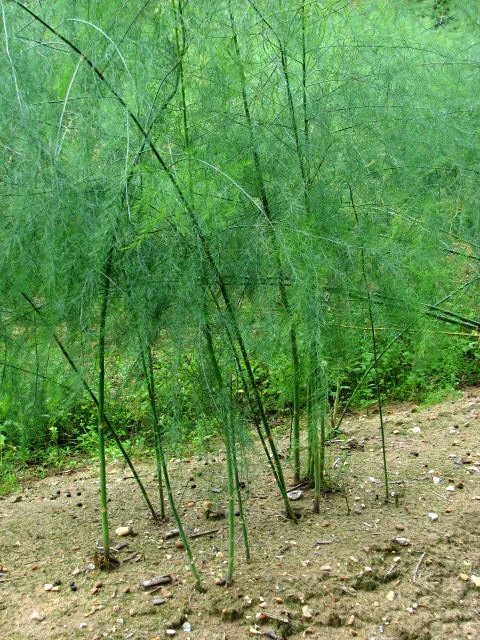
El espárrago es una planta perenne que vuelve cada año y te regala sus brotes jóvenes a principios de primavera. Dale sol pleno y riegos que mojen la tierra al menos 15 cm de profundidad; después solo tienes que cortar o partir los turiones a ras de suelo. Elige variedades solo de plantas macho: dan más turiones y de mejor calidad.
- Sol
Sol pleno
Qué dicen las fuentes (2)
Luz: Pleno sol
Asparagus needs full sun; moist, organic, sandy soil with good drainage; and neutral (6.0-8.0) pH levels.
— Asparagus officinalis (Asparagus, Garden Asparagus) | North Carolina Extension Gardener Plant Toolbox [1] Choose a site for a permanent asparagus bed that has good drainage and full sun.
— Asparagus | Home & Garden Information Center [6] - Riego
Riega a fondo hasta mojar 15 cm de tierra; los riegos ligeros dan raíces superficiales
Qué dicen las fuentes (1)
Riego: Riega lo suficiente para humedecer el suelo a una profundidad de al menos 6 pulgadas [15 cm]; el riego ligero conduce a plantas con raíces superficiales
Water sufficiently to moisten the soil to a depth of at least 6 inches. Light watering will lead to shallow rooted plants.
— Asparagus | Home & Garden Information Center [6] - Frío
Aguanta inviernos de hasta −45,6 °C (−50 °F)
Muy rústica · USDA 2a · RHS H7 · Z2
Qué dicen las fuentes (2)
Rusticidad, zona más fría: 2a [mínima invernal de −45,6 a −42,8 °C (de −50 a −45 °F)]
USDA Plant Hardiness Zone: 2a, 2b, 3a, 3b, 4a, 4b, 5a, 5b, 6a, 6b, 7a, 7b, 8a, 8b, 9a, 9b
— Asparagus officinalis (Asparagus, Garden Asparagus) | North Carolina Extension Gardener Plant Toolbox [1] Rusticidad, zona más cálida: 9b [mínima invernal de −3,9 a −1,1 °C (de 25 a 30 °F)]
USDA Plant Hardiness Zone: 2a, 2b, 3a, 3b, 4a, 4b, 5a, 5b, 6a, 6b, 7a, 7b, 8a, 8b, 9a, 9b
— Asparagus officinalis (Asparagus, Garden Asparagus) | North Carolina Extension Gardener Plant Toolbox [1] - Distancia
38–46 cm entre plantas, 1,2–1,5 m entre zanjas
Qué dicen las fuentes (6)
Distancia de plantación: Coronas para huerto casero: 38.1-45.7 cm (15 a 18 pulgadas de separación); hileras comerciales individuales: 30.5 cm (12 pulgadas) entre plantas en la hilera
huerto casero (coronas): Set the crowns 15 to 18 inches apart and 6 to 8 inches deep.
— Asparagus | Home & Garden Information Center [6] filas individuales comerciales: with 12 inches between plants in the row and 5 to 6 feet between rows
— Asparagus Production [5] Set the crowns 15 to 18 inches apart and 6 to 8 inches deep.
— Asparagus | Home & Garden Information Center [6] with 12 inches between plants in the row and 5 to 6 feet between rows
— Asparagus Production [5] Distancia entre hileras: 122-152 cm (4-5 pies) entre zanjas (huerto familiar)
hileras simples comerciales: 152-183 cm (5-6 pies) entre hileras: Growers generally plant approximately 12,000 to 14,000 plants per acre in single rows, with 12 inches between plants in the row and 5 to 6 feet between rows.
— Asparagus Production [5] The trench is dug 12 to 18 inches wide, with 4 to 5 feet between trenches.
— Asparagus | Home & Garden Information Center [6] - Plantación
Planta las garras a 15–20 cm de profundidad; en climas cálidos, de febrero a mediados de abril
Qué dicen las fuentes (6)
Plantación: Coronas en Carolina del Sur: Piedmont 1 de marzo - 15 de abril, Coastal 1 de febrero - 15 de marzo; la siembra comercial suele hacerse en mayo
Piedmont de Carolina del Sur: Planting Dates for Crowns | Area | Dates | Piedmont | Mar 1 – April 15
— Asparagus | Home & Garden Information Center [6] Zona costera de Carolina del Sur: | Coastal | Feb 1 – March 15
— Asparagus | Home & Garden Information Center [6] siembra comercial (fuente: Penn State Extension): Asparagus usually is planted in May so that extensive foliage (fern) develops before winter.
— Asparagus Production [5] Planting Dates for Crowns | Area | Dates | Piedmont | Mar 1 – April 15 | Coastal | Feb 1 – March 15
— Asparagus | Home & Garden Information Center [6] Asparagus usually is planted in May so that extensive foliage (fern) develops before winter.
— Asparagus Production [5] Profundidad de siembra: 15-20 cm (6-8 pulgadas) (coronas)
Set the crowns 15 to 18 inches apart and 6 to 8 inches deep.
— Asparagus | Home & Garden Information Center [6] - Abonado
Abona cada año a principios de primavera, antes de que salgan los turiones, y otra vez tras la cosecha
Qué dicen las fuentes (7)
Cuándo: Muy temprano en primavera, antes de que emergen los brotes, y un abono lateral después de la cosecha; al plantar, en la zanja
In the absence of a soil test, apply 5 lbs of 5-10-10 per 100 feet of row in the very early spring before spears emerge.
— Asparagus | Home & Garden Information Center [6] Then sidedress with 1½ lbs calcium nitrate (15.5-0-0) per 100 feet of row after harvest.
— Asparagus | Home & Garden Information Center [6] In the absence of soil test results, the recommended N-P-K application rates are 50-100-150 pounds per acre broadcast in the spring of every year before spear emergence.
— Asparagus Production [5] In the absence of a soil test, apply 5 lbs 5-10-10 per 100 feet of row in the trench and cover with at least 2 inches.
— Asparagus | Home & Garden Information Center [6] Frecuencia: Cada año: una vez a principios de primavera y una vez después de la cosecha
In the absence of a soil test, apply 5 lbs of 5-10-10 per 100 feet of row in the very early spring before spears emerge.
— Asparagus | Home & Garden Information Center [6] Then sidedress with 1½ lbs calcium nitrate (15.5-0-0) per 100 feet of row after harvest.
— Asparagus | Home & Garden Information Center [6] In the absence of soil test results, the recommended N-P-K application rates are 50-100-150 pounds per acre broadcast in the spring of every year before spear emergence.
— Asparagus Production [5] - Poda
Corta el follaje seco al final del invierno, antes de que broten los turiones
Qué dicen las fuentes (1)
Poda: Finales de invierno, después de que el follaje se vuelva marrón y antes de que los brotes emerjan en primavera
In all asparagus planting, cut the foliage down to 2-inch stubs in late winter after they turn brown, but before the spears emerge in spring.
— Asparagus | Home & Garden Information Center [6] - Cosecha
Corta los turiones a ras de suelo antes de que se abran las puntas; para cuando sean finos como un lápiz
Qué dicen las fuentes (3)
Cómo cosechar: Corta o rompe los turiones al nivel de la superficie del suelo antes de que las puntas comiencen a separarse; no cortes demasiado profundo, porque dañarías los brotes de la corona que producen los siguientes turiones; deja de cosechar cuando los turiones se reduzcan al tamaño de un lápiz y déjalos crecer hasta su altura completa.
should be cut or snapped off at the soil surface before the tips begin to separate
— Asparagus | Home & Garden Information Center [6] Cutting too deeply can injure the crown buds that produce the next spears.
— Asparagus | Home & Garden Information Center [6] Stop harvesting when the diameter of the spears has been reduced to pencil-size and allow the spear to grow to full height.
— Asparagus | Home & Garden Information Center [6] - Polinización
Hay plantas macho y plantas hembra; las variedades solo macho dan más turiones y mejores
Qué dicen las fuentes (3)
Cuajado: Dioicas: flores masculinas y femeninas en plantas separadas.
Asparagus is dioecious which means that the male and female flowers form on separate plants.
— Asparagus | Home & Garden Information Center [6] Qué necesita: Las plantas masculinas producen más y mejores espárragos, por lo que se prefieren los cultivares totalmente masculinos; las plantas femeninas gastan energía en las semillas y producen menos.
Asparagus plants are either male or female – male plants produce more and better spears, so many modern varieties are all-male.
— [7] The female plants expend more energy to produce seeds; therefore, the female plants will have a much lower yield than the males.
— Asparagus | Home & Garden Information Center [6] - Plagas
Criocero del espárrago, pulgón y gusanos grises; roya y fusariosis: no replantes donde ya hubo espárragos
Qué dicen las fuentes (5)
Plagas: escarabajo del espárrago, escarabajo del espárrago manchado, pulgón del espárrago, gusanos cortadores, escarabajos japoneses
Common insect problems include asparagus beetle, spotted asparagus beetle, and aphids.
— Asparagus officinalis (Asparagus, Garden Asparagus) | North Carolina Extension Gardener Plant Toolbox [1] Asparagus beetles, asparagus aphids, cutworms, and Japanese beetles can all cause crop losses.
— Asparagus Production [5] Enfermedades: fusarium podredumbre de la raíz, roya, tizón de las agujas, phytophthora podredumbre de la corona y la raíz, cercospora mancha foliar
Common disease problems include fusarium, rust, and needle blight.
— Asparagus officinalis (Asparagus, Garden Asparagus) | North Carolina Extension Gardener Plant Toolbox [1] In addition, asparagus is extremely susceptible to Fusarium root rot, a disease caused by a fungus that will weaken the plant.
— Asparagus Production [5] Diseases that may occur in the home garden include rust, phytophthora crown and root rot, and cerospora leaf spot.
— Asparagus | Home & Garden Information Center [6] - Tamaño
46–91 cm de ancho
Qué dicen las fuentes (1)
Anchura adulta: 46-91 cm (1,5-3 pies)
Width: 1 ft. 6 in. - 3 ft. 0 in.
— Asparagus officinalis (Asparagus, Garden Asparagus) | North Carolina Extension Gardener Plant Toolbox [1] - Multiplicación
Por división, garras o plántulas criadas en invernadero
Qué dicen las fuentes (3)
Propagación: División; coronas; trasplantes de invernadero cultivados a partir de semillas
Species: officinalis Family: Asparagaceae Life Cycle: Perennial Recommended Propagation Strategy: Division
— Asparagus officinalis (Asparagus, Garden Asparagus) | North Carolina Extension Gardener Plant Toolbox [1] Start asparagus from 1 to 2 – year-old disease-free crowns .
— Asparagus | Home & Garden Information Center [6] Commercially, asparagus can be started in the greenhouse 8 to 10 weeks prior to transplanting in the field
— Asparagus Production [5] - Siembra
Siembra en invernadero 8–10 semanas antes del trasplante
Qué dicen las fuentes (1)
Siembra: Iniciadas en el invernadero de 8 a 10 semanas antes del trasplante al campo
Commercially, asparagus can be started in the greenhouse 8 to 10 weeks prior to transplanting in the field
— Asparagus Production [5] - Seguridad
No comas las bayas, sientan mal al estómago; usa guantes al tocar los brotes jóvenes crudos
Resumen
El espárrago de jardín es una hortaliza perenne herbácea de larga vida cultivada por sus brotes jóvenes. [1] Necesita pleno sol y suelo bien drenado, y un lecho puede permanecer productivo durante 20-30 años si se ubica adecuadamente. [3] El follaje se poda a fines del invierno, después de que se vuelve marrón y antes de que emerjan los brotes. [6]
Citado en inglés, como en la fuente.
Cuidados
Las medidas entre corchetes son nuestra conversión al otro sistema de unidades; el texto citado no cambia.
Riego
Riego
Riega lo suficiente para humedecer el suelo a una profundidad de al menos 6 pulgadas [15 cm]; el riego ligero conduce a plantas con raíces superficiales
Qué dicen las fuentes (1)
Water sufficiently to moisten the soil to a depth of at least 6 inches. Light watering will lead to shallow rooted plants.Notas sobre el riego
Durante el establecimiento de las plantas, no deben sufrir estrés hídrico ni exceso de riego; se recomienda encarecidamente el riego, y se prefiere el riego por goteo sobre el riego por aspersión.
Qué dicen las fuentes (2)
During the period of stand establishment , they should not be water-stressed or over-watered.Irrigation is highly recommended and will help ensure a more consistent crop from year to year. Trickle irrigation is preferred over overhead irrigationLuz
Pleno sol
Qué dicen las fuentes (2)
Asparagus needs full sun; moist, organic, sandy soil with good drainage; and neutral (6.0-8.0) pH levels.Choose a site for a permanent asparagus bed that has good drainage and full sun.Clima y frío
Rusticidad, zona más fría
2a [mínima invernal de −45,6 a −42,8 °C (de −50 a −45 °F)]
Qué dicen las fuentes (1)
USDA Plant Hardiness Zone:
2a, 2b, 3a, 3b, 4a, 4b, 5a, 5b, 6a, 6b, 7a, 7b, 8a, 8b, 9a, 9bRusticidad, zona más cálida
9b [mínima invernal de −3,9 a −1,1 °C (de 25 a 30 °F)]
Qué dicen las fuentes (1)
USDA Plant Hardiness Zone:
2a, 2b, 3a, 3b, 4a, 4b, 5a, 5b, 6a, 6b, 7a, 7b, 8a, 8b, 9a, 9bSuelo
pH del suelo, mínimo
Las fuentes dan valores distintos según la región, la zona o las condiciones de cultivo.
Lo que dice cada fuente
Según NC State Extension Plant Toolbox: 6.0
Según Penn State Extension: 6.2
Según Clemson HGIC: 6.0
Qué dicen las fuentes (3)
Según NC State Extension Plant Toolbox: Asparagus needs full sun; moist, organic, sandy soil with good drainage; and neutral (6.0-8.0) pH levels.Según Penn State Extension: Soil pH should be between 6.2 and 7.0.Según Clemson HGIC: Follow the results of a soil test to maintain a soil pH between 6.0 and 6.5 and optimal fertility levels.pH del suelo, máximo
Las fuentes dan valores distintos según la región, la zona o las condiciones de cultivo.
Lo que dice cada fuente
Según NC State Extension Plant Toolbox: 8.0
Según Penn State Extension: 7.0
Según Clemson HGIC: 6.5
Qué dicen las fuentes (3)
Según NC State Extension Plant Toolbox: Asparagus needs full sun; moist, organic, sandy soil with good drainage; and neutral (6.0-8.0) pH levels.Según Penn State Extension: Soil pH should be between 6.2 and 7.0.Según Clemson HGIC: Follow the results of a soil test to maintain a soil pH between 6.0 and 6.5 and optimal fertility levels.Dónde cultivarla
Coronas para huerto casero: 38.1-45.7 cm (15 a 18 pulgadas de separación); hileras comerciales individuales: 30.5 cm (12 pulgadas) entre plantas en la hilera
Lo que dice cada fuente
huerto casero (coronas): 38.1-45.7 cm (15 a 18 pulgadas) de separación, coronas a 15.2-20.3 cm (6 a 8 pulgadas) de profundidad
filas individuales comerciales: 30.5 cm (12 pulgadas) entre plantas en la fila, 152.4-182.9 cm (5 a 6 pies) entre filas
Qué dicen las fuentes (4)
huerto casero (coronas): Set the crowns 15 to 18 inches apart and 6 to 8 inches deep.filas individuales comerciales: with 12 inches between plants in the row and 5 to 6 feet between rowsSet the crowns 15 to 18 inches apart and 6 to 8 inches deep.with 12 inches between plants in the row and 5 to 6 feet between rowsPropagación
División; coronas; trasplantes de invernadero cultivados a partir de semillas
Qué dicen las fuentes (3)
Species:
officinalis
Family:
Asparagaceae
Life Cycle:
Perennial
Recommended Propagation Strategy:
DivisionStart asparagus from 1 to 2 – year-old disease-free crowns .Commercially, asparagus can be started in the greenhouse 8 to 10 weeks prior to transplanting in the fieldCultivo
La planta
Ciclo de vida
perenne
Qué dicen las fuentes (2)
Asparagus, in the Asparagaceae family, is a long-lived, herbaceous perennial vegetable that is not a native to the United StatesAsparagus ( Asparagus officinalis ) is a long-lived herbaceous perennial belonging to the newly formed asparagus family.Familia
Asparagáceas
Qué dicen las fuentes (2)
Asparagus, in the Asparagaceae family, is a long-lived, herbaceous perennial vegetableAsparagus ( Asparagus officinalis ) is a member of the asparagus family (Asparagaceae) and one of only a few vegetables that are monocotsAltura adulta
Anchura adulta
46-91 cm (1,5-3 pies)
Qué dicen las fuentes (1)
Width: 1 ft. 6 in. - 3 ft. 0 in.Siembra y crecimiento
Profundidad de siembra
15-20 cm (6-8 pulgadas) (coronas)
Qué dicen las fuentes (1)
Set the crowns 15 to 18 inches apart and 6 to 8 inches deep.Distancia entre hileras
122-152 cm (4-5 pies) entre zanjas (huerto familiar)
Lo que dice cada fuente
hileras simples comerciales: 152-183 cm (5-6 pies) entre hileras:
Qué dicen las fuentes (2)
hileras simples comerciales: 152-183 cm (5-6 pies) entre hileras: Growers generally plant approximately 12,000 to 14,000 plants per acre in single rows, with 12 inches between plants in the row and 5 to 6 feet between rows.The trench is dug 12 to 18 inches wide, with 4 to 5 feet between trenches.Cosecha y conservación
Cómo cosechar
Corta o rompe los turiones al nivel de la superficie del suelo antes de que las puntas comiencen a separarse; no cortes demasiado profundo, porque dañarías los brotes de la corona que producen los siguientes turiones; deja de cosechar cuando los turiones se reduzcan al tamaño de un lápiz y déjalos crecer hasta su altura completa.
Qué dicen las fuentes (3)
should be cut or snapped off at the soil surface before the tips begin to separateCutting too deeply can injure the crown buds that produce the next spears.Stop harvesting when the diameter of the spears has been reduced to pencil-size and allow the spear to grow to full height.Conservación
Enfría o refrigera inmediatamente después de la cosecha; a 0-2 °C (32-36 °F) y 90-95% de humedad relativa mantiene buena calidad durante 7 a 14 días; también se puede congelar o enlatar.
Qué dicen las fuentes (2)
Asparagus that is maintained at 32 to 36°F and 90 to 95 percent relative humidity will retain good quality for approximately 7 to 14 days.After harvest, process or refrigerate immediately. Asparagus can be frozen or canned.Plagas y enfermedades
Plagas
escarabajo del espárrago, escarabajo del espárrago manchado, pulgón del espárrago, gusanos cortadores, escarabajos japoneses
Qué dicen las fuentes (2)
Common insect problems include asparagus beetle, spotted asparagus beetle, and aphids.Asparagus beetles, asparagus aphids, cutworms, and Japanese beetles can all cause crop losses.Enfermedades
fusarium podredumbre de la raíz, roya, tizón de las agujas, phytophthora podredumbre de la corona y la raíz, cercospora mancha foliar
Qué dicen las fuentes (3)
Common disease problems include fusarium, rust, and needle blight.In addition, asparagus is extremely susceptible to Fusarium root rot, a disease caused by a fungus that will weaken the plant.Diseases that may occur in the home garden include rust, phytophthora crown and root rot, and cerospora leaf spot.Abonado
Cuándo
Muy temprano en primavera, antes de que emergen los brotes, y un abono lateral después de la cosecha; al plantar, en la zanja
Qué dicen las fuentes (4)
In the absence of a soil test, apply 5 lbs of 5-10-10 per 100 feet of row in the very early spring before spears emerge.Then sidedress with 1½ lbs calcium nitrate (15.5-0-0) per 100 feet of row after harvest.In the absence of soil test results, the recommended N-P-K application rates are 50-100-150 pounds per acre broadcast in the spring of every year before spear emergence.In the absence of a soil test, apply 5 lbs 5-10-10 per 100 feet of row in the trench and cover with at least 2 inches.Frecuencia
Cada año: una vez a principios de primavera y una vez después de la cosecha
Qué dicen las fuentes (3)
In the absence of a soil test, apply 5 lbs of 5-10-10 per 100 feet of row in the very early spring before spears emerge.Then sidedress with 1½ lbs calcium nitrate (15.5-0-0) per 100 feet of row after harvest.In the absence of soil test results, the recommended N-P-K application rates are 50-100-150 pounds per acre broadcast in the spring of every year before spear emergence.Abonos naturales
Compost o mantillo de hojas incorporado al suelo al 20% por volumen; abono superficial anual de compost al 20% por volumen
Qué dicen las fuentes (2)
Enrich the soil with additions of compost or leaf mold at the rate of 20% by volume.Asparagus also benefits from yearly top-dressing of compost, again at the rate of 20% by volume.Abonos minerales
Sin análisis de suelo, aplica 2.27 kg [5 lb] de 5-10-10 por cada 30.5 m [100 ft] de hilera en la zanja al momento de la plantación y al comienzo de cada primavera. Después de la cosecha, aplica 681 g de nitrato de calcio 15.5-0-0 por cada 30.5 m [100 ft] de hilera
Lo que dice cada fuente
Campos comerciales, sin análisis de suelo.: Nitrógeno, fosfato y potasa a razón de 56, 112 y 168 kg [246,9–370,4 lb]/ha, distribuidos en primavera antes de la aparición de los espárragos.
Qué dicen las fuentes (4)
Campos comerciales, sin análisis de suelo.: In the absence of soil test results, the recommended N-P-K application rates are 50-100-150 pounds per acre broadcast in the spring of every year before spear emergence.In the absence of a soil test, apply 5 lbs 5-10-10 per 100 feet of row in the trench and cover with at least 2 inches.In the absence of a soil test, apply 5 lbs of 5-10-10 per 100 feet of row in the very early spring before spears emerge.Then sidedress with 1½ lbs calcium nitrate (15.5-0-0) per 100 feet of row after harvest.Polinización
Cuajado
Dioicas: flores masculinas y femeninas en plantas separadas.
Qué dicen las fuentes (1)
Asparagus is dioecious which means that the male and female flowers form on separate plants.Qué necesita
Las plantas masculinas producen más y mejores espárragos, por lo que se prefieren los cultivares totalmente masculinos; las plantas femeninas gastan energía en las semillas y producen menos.
Qué dicen las fuentes (2)
Asparagus plants are either male or female – male plants produce more and better spears, so many modern varieties are all-male.The female plants expend more energy to produce seeds; therefore, the female plants will have a much lower yield than the males.Problemas
Escarabajo del espárrago
Síntoma: Los adultos y las larvas se alimentan de los brotes y de los helechos
Qué hacer: Rocía con carbarilo cada 10 a 14 días o con spinosad cada 7 a 10 días
Qué dicen las fuentes (2)
The primary insect pest is the asparagus beetle. Adults and larvae feed on spears and ferns.
— Asparagus | Home & Garden Information Center [6] Asparagus beetles can be controlled by sprays with carbaryl every 10 to 14 days or with spinosad every 7 to 10 days.
— Asparagus | Home & Garden Information Center [6] Pudrición radicular por Fusarium
Síntoma: Enfermedad fúngica que debilita la planta; el hongo puede sobrevivir hasta siete años en suelo infectado
Qué hacer: Evita plantar donde crecieron espárragos en años anteriores; buen drenaje de agua y aire y cultivares resistentes a enfermedades
Qué dicen las fuentes (2)
asparagus is extremely susceptible to Fusarium root rot, a disease caused by a fungus that will weaken the plant.
— Asparagus Production [5] These diseases can be prevented by having good water and air drainage and planting disease-resistant cultivars.
— Asparagus Production [5] Roya
Síntoma: Enfermedad que puede ocurrir en el huerto doméstico
Qué hacer: Rocía con miclobutanil o azufre; usa riego por goteo en lugar de riego por aspersión
Remedios
Cada remedio indica qué dicen las fuentes oficiales; los remedios tradicionales sin fuente oficial aparecen marcados. Los perjudiciales están para que sepas evitarlos.
Cuidar la planta
escarabajos del espárrago
Recoge los escarabajos a mano y sumérgelos en agua jabonosa. Funciona en parte
Cómo: Inspecciona los turiones por la mañana y deja caer los escarabajos y las larvas en agua jabonosa; aplasta los huevos.
Handpick daily: Inspect spears in the morning and drop beetles and larvae into soapy water.
— harvesttotable.com [8] Qué dicen las pruebas In small scale settings (home gardens) diligent scouting combined with squishing of eggs and hand picking of adults (or knocking adults into a container of soapy water) are additional options.
— hort.extension.wisc.edu [9] patos y gallinas Funciona en parte
Cómo: Los depredadores naturales y domésticos como los patos y las gallinas pueden ayudar a frenar el aumento de la población durante el verano.
Natural and domestic predators (ducks, chickens) can help slow population buildup during the summer.
— yardandgarden.extension.iastate.edu [10] Qué dicen las pruebas Natural and domestic predators (ducks, chickens) can help slow population buildup during the summer.
— yardandgarden.extension.iastate.edu [10] Elimina las malezas y los residuos Funciona
Cómo: Mantén las malezas y los restos fuera de las plantaciones de espárragos para reducir los lugares de hibernación de los escarabajos adultos.
Keeping weeds and debris out of asparagus plantings reduces sites for adult beetles to overwinter.
— yardandgarden.extension.iastate.edu [10] Qué dicen las pruebas Keeping weeds and debris out of asparagus plantings reduces sites for adult beetles to overwinter.
— yardandgarden.extension.iastate.edu [10] cubiertas flotantes para hileras Funciona en parte
Cómo: Usa cubiertas flotantes para hileras a principios de primavera para evitar daños a los turiones, y retíralas después de que la cosecha haya terminado.
try using floating row covers early in spring to prevent damage to spears, but remove them after harvest is complete.
— hort.extension.wisc.edu [9] Qué dicen las pruebas try using floating row covers early in spring to prevent damage to spears, but remove them after harvest is complete.
— hort.extension.wisc.edu [9] Aceite de neem y spray de jabón insecticida Funciona en parte
Check the label to be sure the product is labeled for use on asparagus to control asparagus beetle.
— yardandgarden.extension.iastate.edu [10] Cómo: En jardines domésticos, las opciones orgánicas incluyen neem y otros aceites hortícolas y jabón insecticida, para atacar a las larvas.
In small-scale settings (e.g., home gardens), organic options include neem and other horticultural oils and insecticidal soap to target the larvae.
— hort.extension.wisc.edu [9] Qué dicen las pruebas In small-scale settings (e.g., home gardens), organic options include neem and other horticultural oils and insecticidal soap to target the larvae.
— hort.extension.wisc.edu [9]
escarabajo del espárrago manchado
Recolecta y destruye las bayas infestadas. Funciona
Cómo: Recolecta y destruye las bayas infestadas para reducir las larvas del escarabajo del espárrago manchado.
Populations of the spotted asparagus beetle larvae can be reduced by gathering and destroying infested berries.
— yardandgarden.extension.iastate.edu [10] Qué dicen las pruebas Populations of the spotted asparagus beetle larvae can be reduced by gathering and destroying infested berries.
— yardandgarden.extension.iastate.edu [10]
gusanos cortadores
Collares de cartón alrededor de las plantas Funciona
Cómo: Rodea cada planta con collares de cartón o metal presionados una pulgada en el suelo, para hacer vallas que los gusanos cortadores no puedan cruzar.
By encircling individual plants with cardboard or metal "collars" pressed an inch into the soil, gardeners can create "fences" that cutworms cannot cross.
— content.ces.ncsu.edu [11] Qué dicen las pruebas By encircling individual plants with cardboard or metal "collars" pressed an inch into the soil, gardeners can create "fences" that cutworms cannot cross.
— content.ces.ncsu.edu [11]
babosas y caracoles
trampa de cerveza No verificado
Remedio tradicional, no verificado por una fuente oficial.
Cómo: Ahógalos en un recipiente profundo lleno de 1/2 pulgada de cerveza, o agua con azúcar y levadura, hundido de modo que el borde superior quede ligeramente por encima del suelo.
barrera de tierra de diatomeas No verificado
Remedio tradicional, no verificado por una fuente oficial.
Cómo: Aplica una franja de 1 pulgada de ancho de tierra de diatomeas de grado alimentario como barrera.
Pulgones del espárrago
Elimina los helechos muertos y labra en primavera Funciona
Cómo: Retira los helechos muertos durante el otoño o el invierno y labra en primavera.
Removing dead ferns during the fall or winter and tilling in spring often control this pest.
— content.ces.ncsu.edu [11] Qué dicen las pruebas Removing dead ferns during the fall or winter and tilling in spring often control this pest.
— content.ces.ncsu.edu [11]
pulgones
fuerte chorro de agua No verificado
Remedio tradicional, no verificado por una fuente oficial.
Cómo: Elimina los pulgones con un chorro fuerte de agua.
roya
Corta y destruye los helechos enfermos. No verificado
Remedio tradicional, no verificado por una fuente oficial.
Cómo: Corta los helechos enfermos en la corona y destrúyelos.
tizón y mildiu
bicarbonato de sodio, jabón para platos suave y aceite de oliva en spray Perjudicial
The dish detergent label does not provide any directions on how to use it on plants to control insects.
— extension.psu.edu [13] Home remedies often lack specific mix or use rates or identify how often to use them.
— extension.psu.edu [13] Cómo: Mezcla una cucharada de bicarbonato de sodio, 1/2 cucharadita de jabón para platos suave y 2 1/2 cucharadas de aceite de oliva en un galón de agua; agita bien antes de rociar y repite cada semana.
Mix one tablespoon of baking soda, 1/2 teaspoon of a mild dish detergent, and 2 1/2 tablespoons of olive oil in a gallon of water to make a solution
— foodgardening.mequoda.com [12] Qué dicen las pruebas For example, spraying home remedies that contain dish detergent on plants on a sunny day can injure the plant, essentially burning it.
— extension.psu.edu [13]
Toxicidad
Según la fuente, citada textualmente. No es un consejo médico ni veterinario: si una persona o un animal pudo haber ingerido esta planta, contacta con un centro de toxicología o con un veterinario.
Calendario
Siembra
Iniciadas en el invernadero de 8 a 10 semanas antes del trasplante al campo
Qué dicen las fuentes (1)
Commercially, asparagus can be started in the greenhouse 8 to 10 weeks prior to transplanting in the fieldPlantación
Coronas en Carolina del Sur: Piedmont 1 de marzo - 15 de abril, Coastal 1 de febrero - 15 de marzo; la siembra comercial suele hacerse en mayo
Lo que dice cada fuente
Piedmont de Carolina del Sur: 1 de marzo - 15 de abril (coronas)
Zona costera de Carolina del Sur: 1 de febrero - 15 de marzo (coronas)
siembra comercial (fuente: Penn State Extension): Generalmente en mayo
Qué dicen las fuentes (5)
Piedmont de Carolina del Sur: Planting Dates for Crowns | Area | Dates | Piedmont | Mar 1 – April 15Zona costera de Carolina del Sur: | Coastal | Feb 1 – March 15siembra comercial (fuente: Penn State Extension): Asparagus usually is planted in May so that extensive foliage (fern) develops before winter.Planting Dates for Crowns
| Area
| Dates
| Piedmont
| Mar 1 – April 15
| Coastal
| Feb 1 – March 15Asparagus usually is planted in May so that extensive foliage (fern) develops before winter.Cosecha
Las fuentes dan valores distintos según la región, la zona o las condiciones de cultivo.
Lo que dice cada fuente
Según University of Arkansas Extension: Diariamente, desde principios de primavera hasta finales de primavera
Según NC State Extension Plant Toolbox: Principios de primavera, mientras los turiones son muy jóvenes
Qué dicen las fuentes (4)
Según University of Arkansas Extension: Harvesting is a daily affair, beginning in early spring and continuing until late spring.Según NC State Extension Plant Toolbox: Harvest time: collect asparagus spears in the early spring, while very young.Harvesting is a daily affair, beginning in early spring
and continuing until late spring.Harvest young shoots in early spring for edibility.Poda
Finales de invierno, después de que el follaje se vuelva marrón y antes de que los brotes emerjan en primavera
Qué dicen las fuentes (1)
In all asparagus planting, cut the foliage down to 2-inch stubs in late winter after they turn brown, but before the spears emerge in spring.Meses tal como los dan las fuentes, en su mayoría de Estados Unidos (hemisferio norte). En el hemisferio sur se desplazan unos seis meses.
Comestibilidad
Según la fuente, citada textualmente. No comas una planta basándote solo en esta página: los errores de identificación pueden ser peligrosos.
Young spears (shoots). Harvest time: collect asparagus spears in the early spring, while very young.
[1]
Valores orientativos
Valores de una fuente secundaria, no comprobados palabra por palabra como el resto de esta página. Úselos como punto de partida.
- Horas de sol
- 6-8 horasValor orientativo, adáptalo a tu clima · Fuente secundaria
- Nivel de cuidado
- MedioValor orientativo, adáptalo a tu clima · Fuente secundaria
- Crecimiento
- AltaValor orientativo, adáptalo a tu clima · Fuente secundaria
Plantas similares
- Asparagus acutifolius Asparagus acutifolius
- Helecho plumoso Asparagus setaceus
- Asparagus aphyllus Asparagus aphyllus
- Asparagus albus Asparagus albus
- Sprenger's asparagus fern Asparagus densiflorus
- Palma de aguja Yucca flaccida
- American Agave Agave virginica
- Beaked Yucca Yucca rostrata
Fuentes
Cada valor anterior se cita de estos documentos. Los enlaces llevan al editor original.
- Asparagus officinalis (Asparagus, Garden Asparagus) | North Carolina Extension Gardener Plant Toolbox · plants.ces.ncsu.edu, consultado
- Asparagus - Asparagus officinalis | North Carolina Extension Gardener Plant Toolbox · plants.ces.ncsu.edu, consultado
- Asparagus officinalis: Garden Asparagus · uaex.uada.edu, consultado
- Garden Asparagus - Asparagus officinalis | North Carolina Extension Gardener Plant Toolbox · plants.ces.ncsu.edu, consultado
- Asparagus Production · extension.psu.edu, consultado
- Asparagus | Home & Garden Information Center · hgic.clemson.edu, consultado
- rhs.org.uk · rhs.org.uk
- harvesttotable.com · harvesttotable.com
- hort.extension.wisc.edu · hort.extension.wisc.edu
- yardandgarden.extension.iastate.edu · yardandgarden.extension.iastate.edu
- content.ces.ncsu.edu · content.ces.ncsu.edu
- foodgardening.mequoda.com · foodgardening.mequoda.com
- extension.psu.edu · extension.psu.edu
Escrito por Emilio Marruso · última revisión