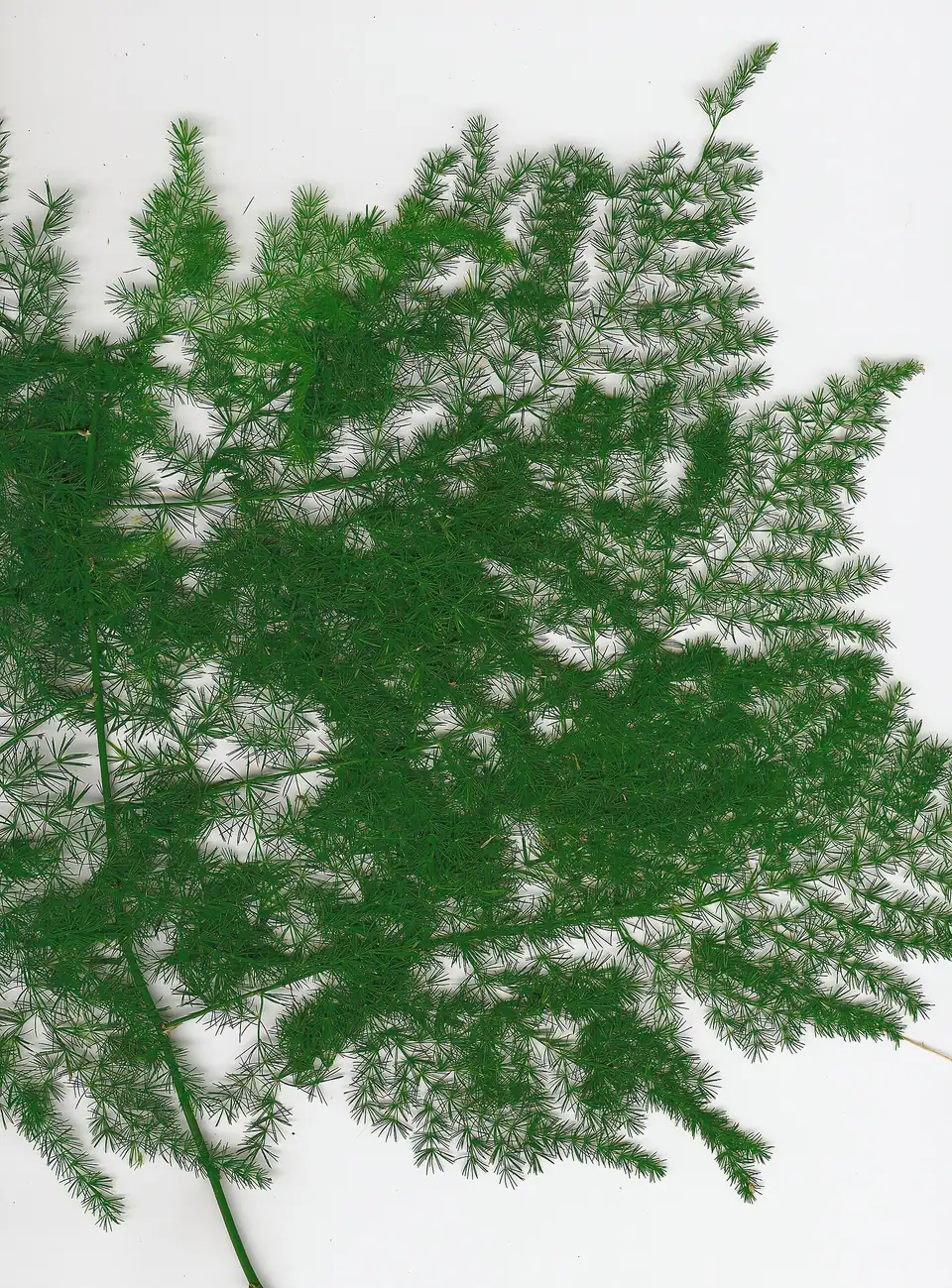
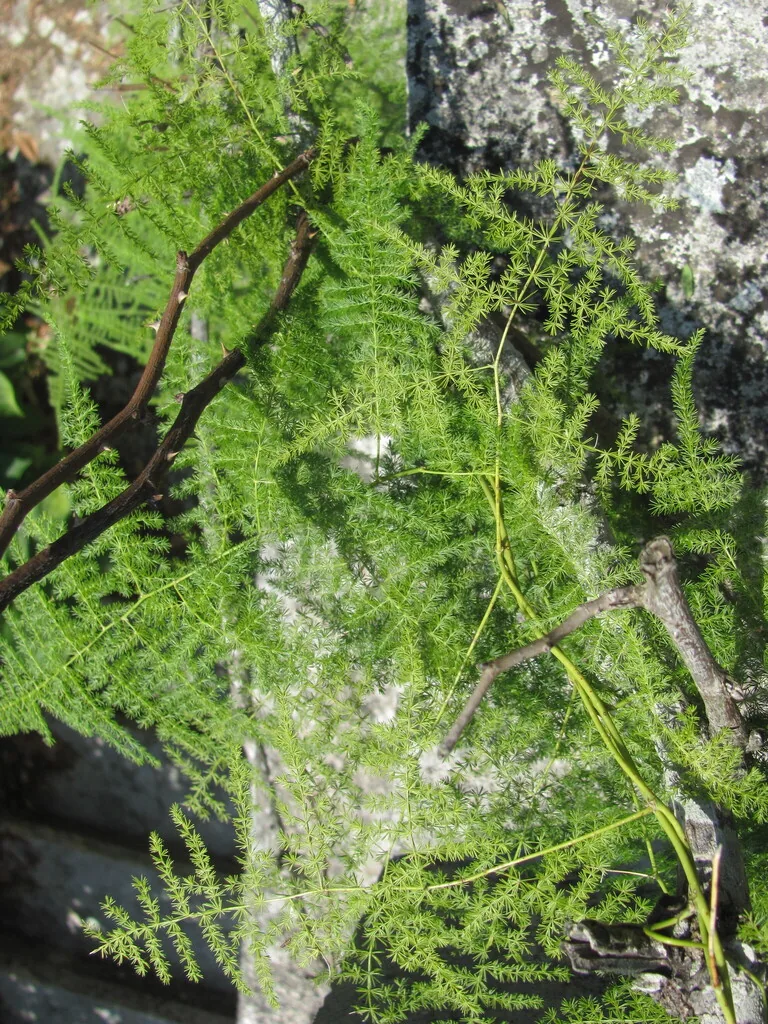

Cómo cultivar y cuidar Helecho plumoso
Asparagus setaceus
Escrito por Emilio Marruso · última revisión
Tóxica para: Gatos, Perros, Personas · Por qué
De un vistazo
La esparraguera plumosa es una planta perenne que crece feliz en interior o en maceta y llena tu casa de verde. Dale luz brillante indirecta, lejos del sol directo, y riégala con regularidad de primavera a otoño, poco en invierno. Alcanza 60–90 cm de alto y de ancho, y puedes sacar nuevas plantas dividiéndola o por semilla.
- Sol
Luz brillante indirecta o semisombra; evita el sol directo
Qué dicen las fuentes (2)
Luz: Luz indirecta brillante; luz filtrada a semisombra; evita la luz solar directa
These plants need bright indirect light and high humidity.
— Asparagus setaceus (Asparagus Fern, Climbing Asparagus, Common Asparagus Fern, Feathered Asparagus Fern, Ferny Asparagus, Lace Fern, Plumosa Fern) | North Carolina Extension Gardener Plant Toolbox [1] It is intolerant of high light intensity; therefore, avoid direct sunlight.
— Asparagus setaceus (Asparagus Fern, Climbing Asparagus, Common Asparagus Fern, Feathered Asparagus Fern, Ferny Asparagus, Lace Fern, Plumosa Fern) | North Carolina Extension Gardener Plant Toolbox [1] - Riego
Riega con regularidad de primavera a otoño y poco en invierno; el exceso de agua pudre las raíces
Qué dicen las fuentes (4)
Riego: Riego regular de primavera a otoño; con moderación en invierno
They prefer regular watering in spring to autumn and sparingly in winter.
— Asparagus setaceus (Asparagus Fern, Climbing Asparagus, Common Asparagus Fern, Feathered Asparagus Fern, Ferny Asparagus, Lace Fern, Plumosa Fern) | North Carolina Extension Gardener Plant Toolbox [1] Notas sobre el riego: Las plantas de interior crecen bien en una mezcla para macetas turbosa, húmeda y con buen drenaje; el exceso de riego puede causar pudrición de raíces; la falta de agua provoca agujas amarillas que se caen
Houseplants grow well in moist, well-drained, peaty potting mix.
— Asparagus setaceus (Asparagus Fern, Climbing Asparagus, Common Asparagus Fern, Feathered Asparagus Fern, Ferny Asparagus, Lace Fern, Plumosa Fern) | North Carolina Extension Gardener Plant Toolbox [1] Potential insect pests include slugs, mealybugs, spider mites, and aphids. Root rot can occur from overwatering. Inadequate air circulation and wet foliage can cause leaf spot. Yellowing of the leaves can be caused by either overwatering or poor drainage.
— Asparagus setaceus (Asparagus Fern, Climbing Asparagus, Common Asparagus Fern, Feathered Asparagus Fern, Ferny Asparagus, Lace Fern, Plumosa Fern) | North Carolina Extension Gardener Plant Toolbox [1] Insufficient light as well as insufficient water will result in yellow needles that drop.
— Asparagus setaceus (Asparagus Fern, Climbing Asparagus, Common Asparagus Fern, Feathered Asparagus Fern, Ferny Asparagus, Lace Fern, Plumosa Fern) | North Carolina Extension Gardener Plant Toolbox [1] - Frío
Aguanta inviernos de hasta −6,7 °C (20 °F)
Rústica en inviernos normales · USDA 9a · RHS H4 · Z9
Qué dicen las fuentes (2)
Rusticidad, zona más fría: 9a [mínima invernal de −6,7 a −3,9 °C (de 20 a 25 °F)]
USDA Plant Hardiness Zone: 9a, 9b, 10a, 10b, 11a, 11b, 12a, 12b
— Asparagus setaceus (Asparagus Fern, Climbing Asparagus, Common Asparagus Fern, Feathered Asparagus Fern, Ferny Asparagus, Lace Fern, Plumosa Fern) | North Carolina Extension Gardener Plant Toolbox [1] Rusticidad, zona más cálida: 12b [mínima invernal de 12,8 a 15,6 °C (de 55 a 60 °F)]
USDA Plant Hardiness Zone: 9a, 9b, 10a, 10b, 11a, 11b, 12a, 12b
— Asparagus setaceus (Asparagus Fern, Climbing Asparagus, Common Asparagus Fern, Feathered Asparagus Fern, Ferny Asparagus, Lace Fern, Plumosa Fern) | North Carolina Extension Gardener Plant Toolbox [1] - Suelo
Sustrato turboso, húmedo y con buen drenaje
Qué dicen las fuentes (3)
Notas sobre el riego: Las plantas de interior crecen bien en una mezcla para macetas turbosa, húmeda y con buen drenaje; el exceso de riego puede causar pudrición de raíces; la falta de agua provoca agujas amarillas que se caen
Houseplants grow well in moist, well-drained, peaty potting mix.
— Asparagus setaceus (Asparagus Fern, Climbing Asparagus, Common Asparagus Fern, Feathered Asparagus Fern, Ferny Asparagus, Lace Fern, Plumosa Fern) | North Carolina Extension Gardener Plant Toolbox [1] Potential insect pests include slugs, mealybugs, spider mites, and aphids. Root rot can occur from overwatering. Inadequate air circulation and wet foliage can cause leaf spot. Yellowing of the leaves can be caused by either overwatering or poor drainage.
— Asparagus setaceus (Asparagus Fern, Climbing Asparagus, Common Asparagus Fern, Feathered Asparagus Fern, Ferny Asparagus, Lace Fern, Plumosa Fern) | North Carolina Extension Gardener Plant Toolbox [1] Insufficient light as well as insufficient water will result in yellow needles that drop.
— Asparagus setaceus (Asparagus Fern, Climbing Asparagus, Common Asparagus Fern, Feathered Asparagus Fern, Ferny Asparagus, Lace Fern, Plumosa Fern) | North Carolina Extension Gardener Plant Toolbox [1] - Plagas
Babosas, cochinillas algodonosas, araña roja y pulgones; con las hojas mojadas aparecen manchas en las hojas
Qué dicen las fuentes (2)
Plagas: babosas, cochinillas, arañas rojas, ácaros
Potential insect pests include slugs, mealybugs, spider mites, and aphids.
— Asparagus setaceus (Asparagus Fern, Climbing Asparagus, Common Asparagus Fern, Feathered Asparagus Fern, Ferny Asparagus, Lace Fern, Plumosa Fern) | North Carolina Extension Gardener Plant Toolbox [1] Enfermedades: pudrición de la raíz, mancha foliar
Root rot can occur from overwatering. Inadequate air circulation and wet foliage can cause leaf spot.
— Asparagus setaceus (Asparagus Fern, Climbing Asparagus, Common Asparagus Fern, Feathered Asparagus Fern, Ferny Asparagus, Lace Fern, Plumosa Fern) | North Carolina Extension Gardener Plant Toolbox [1] - Atención
Las puntas marrones indican aire seco: pon la maceta sobre una bandeja con guijarros y agua
- Tamaño
60–90 cm de alto y de ancho
Qué dicen las fuentes (2)
Altura adulta: 61-91 cm (2-3 pies) como planta de interior
Height: 2 ft. 0 in. - 3 ft. 0 in.
— Asparagus setaceus (Asparagus Fern, Climbing Asparagus, Common Asparagus Fern, Feathered Asparagus Fern, Ferny Asparagus, Lace Fern, Plumosa Fern) | North Carolina Extension Gardener Plant Toolbox [1] Anchura adulta: 61-91 cm (2-3 pies)
Width: 2 ft. 0 in. - 3 ft. 0 in.
— Asparagus setaceus (Asparagus Fern, Climbing Asparagus, Common Asparagus Fern, Feathered Asparagus Fern, Ferny Asparagus, Lace Fern, Plumosa Fern) | North Carolina Extension Gardener Plant Toolbox [1] - Multiplicación
Por división de la mata o por semilla
Qué dicen las fuentes (1)
Propagación: División; semilla
Uses (Ethnobotany): Used to treat medical disorders and also used as a poison. Life Cycle: Perennial Recommended Propagation Strategy: Division Seed
— Asparagus setaceus (Asparagus Fern, Climbing Asparagus, Common Asparagus Fern, Feathered Asparagus Fern, Ferny Asparagus, Lace Fern, Plumosa Fern) | North Carolina Extension Gardener Plant Toolbox [1] - Maceta
Crece bien en maceta y en interior
Qué dicen las fuentes (3)
En maceta: Sí
Landscape Location: Container Hanging Baskets Houseplants Patio Landscape Theme:
— Asparagus setaceus (Asparagus Fern, Climbing Asparagus, Common Asparagus Fern, Feathered Asparagus Fern, Ferny Asparagus, Lace Fern, Plumosa Fern) | North Carolina Extension Gardener Plant Toolbox [1] En interior: Sí
It is one of the fastest-growing, least demanding houseplants.
— Asparagus setaceus (Asparagus Fern, Climbing Asparagus, Common Asparagus Fern, Feathered Asparagus Fern, Ferny Asparagus, Lace Fern, Plumosa Fern) | North Carolina Extension Gardener Plant Toolbox [1] It is also planted as an ornamntal or used as an indoor potted plant.
— | Center for Aquatic and Invasive Plants | University of Florida, IFAS [6] - Seguridad
Las bayas causan vómitos y diarrea a personas y mascotas; los tallos pinchan y la savia irrita la piel
Resumen
El helecho espárrago es una enredadera arbustiva y siempreverde originaria del centro de Etiopía hasta Sudáfrica, utilizada como planta ornamental de interior, cobertura del suelo o enredadera trepadora. [1] Necesita luz indirecta brillante y alta humedad, y prefiere riego regular desde primavera hasta otoño y con moderación en invierno. [1] Las bayas son venenosas si se ingieren y la savia puede causar irritación en la piel; la planta está catalogada como invasora en varias regiones. [1]
Citado en inglés, como en la fuente.
Cuidados
Riego
Riego
Riego regular de primavera a otoño; con moderación en invierno
Qué dicen las fuentes (1)
They prefer regular watering in spring to autumn and sparingly in winter.Notas sobre el riego
Las plantas de interior crecen bien en una mezcla para macetas turbosa, húmeda y con buen drenaje; el exceso de riego puede causar pudrición de raíces; la falta de agua provoca agujas amarillas que se caen
Qué dicen las fuentes (3)
Houseplants grow well in moist, well-drained, peaty potting mix.Potential insect pests include slugs, mealybugs, spider mites, and aphids. Root rot can occur from overwatering. Inadequate air circulation and wet foliage can cause leaf spot. Yellowing of the leaves can be caused by either overwatering or poor drainage.Insufficient light as well as insufficient water will result in yellow needles that drop.Luz
Luz indirecta brillante; luz filtrada a semisombra; evita la luz solar directa
Qué dicen las fuentes (2)
These plants need bright indirect light and high humidity.It is intolerant of high light intensity; therefore, avoid direct sunlight.Clima y frío
Rusticidad, zona más fría
9a [mínima invernal de −6,7 a −3,9 °C (de 20 a 25 °F)]
Qué dicen las fuentes (1)
USDA Plant Hardiness Zone:
9a, 9b, 10a, 10b, 11a, 11b, 12a, 12bRusticidad, zona más cálida
12b [mínima invernal de 12,8 a 15,6 °C (de 55 a 60 °F)]
Qué dicen las fuentes (1)
USDA Plant Hardiness Zone:
9a, 9b, 10a, 10b, 11a, 11b, 12a, 12bDónde cultivarla
En interior
Sí
Qué dicen las fuentes (2)
It is one of the fastest-growing, least demanding houseplants.It is also planted as an ornamntal or used as an indoor potted plant.En maceta
Sí
Qué dicen las fuentes (1)
Landscape Location:
Container
Hanging Baskets
Houseplants
Patio
Landscape Theme:Propagación
División; semilla
Qué dicen las fuentes (1)
Uses (Ethnobotany):
Used to treat medical disorders and also used as a poison.
Life Cycle:
Perennial
Recommended Propagation Strategy:
Division
SeedCultivo
La planta
Ciclo de vida
perenne
Qué dicen las fuentes (1)
Life Cycle: PerennialFamilia
Asparagáceas
Qué dicen las fuentes (1)
Family: AsparagaceaeAltura adulta
61-91 cm (2-3 pies) como planta de interior
Qué dicen las fuentes (1)
Height: 2 ft. 0 in. - 3 ft. 0 in.Anchura adulta
61-91 cm (2-3 pies)
Qué dicen las fuentes (1)
Width: 2 ft. 0 in. - 3 ft. 0 in.Plagas y enfermedades
Plagas
babosas, cochinillas, arañas rojas, ácaros
Qué dicen las fuentes (1)
Potential insect pests include slugs, mealybugs, spider mites, and aphids.Enfermedades
pudrición de la raíz, mancha foliar
Qué dicen las fuentes (1)
Root rot can occur from overwatering. Inadequate air circulation and wet foliage can cause leaf spot.Problemas
Exceso de riego, pudrición de raíces y amarillamiento
Síntoma: Pudrición de raíces; amarillamiento de las hojas por exceso de riego o mal drenaje
Qué hacer: Evita el exceso de riego y asegura un buen drenaje
Qué dicen las fuentes (2)
Potential insect pests include slugs, mealybugs, spider mites, and aphids. Root rot can occur from overwatering. Inadequate air circulation and wet foliage can cause leaf spot. Yellowing of the leaves can be caused by either overwatering or poor drainage.
— Asparagus setaceus (Asparagus Fern, Climbing Asparagus, Common Asparagus Fern, Feathered Asparagus Fern, Ferny Asparagus, Lace Fern, Plumosa Fern) | North Carolina Extension Gardener Plant Toolbox [1] Potential insect pests include slugs, mealybugs, spider mites, and aphids. Root rot can occur from overwatering. Inadequate air circulation and wet foliage can cause leaf spot. Yellowing of the leaves can be caused by either overwatering or poor drainage.
— Asparagus setaceus (Asparagus Fern, Climbing Asparagus, Common Asparagus Fern, Feathered Asparagus Fern, Ferny Asparagus, Lace Fern, Plumosa Fern) | North Carolina Extension Gardener Plant Toolbox [1] Luz o agua insuficientes
Síntoma: Agujas amarillas que se caen; nuevo crecimiento aparece en la línea del suelo una vez que las condiciones son adecuadas
Qué hacer: Proporciona luz y agua adecuadas
Qué dicen las fuentes (1)
Should these conditions damage the plant, the yellow needles will not rejuvenate; however, once proper conditions are met, new growth will appear at the soil line.
— Asparagus setaceus (Asparagus Fern, Climbing Asparagus, Common Asparagus Fern, Feathered Asparagus Fern, Ferny Asparagus, Lace Fern, Plumosa Fern) | North Carolina Extension Gardener Plant Toolbox [1] Baja humedad
Síntoma: Pardeamiento de las puntas de las hojas
Qué hacer: Usa un humidificador o coloca el contenedor sobre una bandeja de piedras llena de agua
Qué dicen las fuentes (2)
Yellowing of the leaves can be caused by either overwatering or poor drainage. If the humidity is to low, browning of the leaf tips can occur.
— Asparagus setaceus (Asparagus Fern, Climbing Asparagus, Common Asparagus Fern, Feathered Asparagus Fern, Ferny Asparagus, Lace Fern, Plumosa Fern) | North Carolina Extension Gardener Plant Toolbox [1] Using a humidifier or setting the plant in a container on a pebble tray filled with water will increase the humidity.
— Asparagus setaceus (Asparagus Fern, Climbing Asparagus, Common Asparagus Fern, Feathered Asparagus Fern, Ferny Asparagus, Lace Fern, Plumosa Fern) | North Carolina Extension Gardener Plant Toolbox [1] Plagas y manchas en las hojas
Síntoma: Babosas, cochinillas harinosas, arañitas rojas y pulgones; manchas en las hojas por follaje húmedo y mala circulación de aire
Qué hacer: No indicado en la fuente
Qué dicen las fuentes (2)
Potential insect pests include slugs, mealybugs, spider mites, and aphids. Root rot can occur from overwatering. Inadequate air circulation and wet foliage can cause leaf spot. Yellowing of the leaves can be caused by either overwatering or poor drainage.
— Asparagus setaceus (Asparagus Fern, Climbing Asparagus, Common Asparagus Fern, Feathered Asparagus Fern, Ferny Asparagus, Lace Fern, Plumosa Fern) | North Carolina Extension Gardener Plant Toolbox [1] Potential insect pests include slugs, mealybugs, spider mites, and aphids. Root rot can occur from overwatering. Inadequate air circulation and wet foliage can cause leaf spot. Yellowing of the leaves can be caused by either overwatering or poor drainage.
— Asparagus setaceus (Asparagus Fern, Climbing Asparagus, Common Asparagus Fern, Feathered Asparagus Fern, Ferny Asparagus, Lace Fern, Plumosa Fern) | North Carolina Extension Gardener Plant Toolbox [1]
Remedios
Cada remedio indica qué dicen las fuentes oficiales; los remedios tradicionales sin fuente oficial aparecen marcados. Los perjudiciales están para que sepas evitarlos.
Cuidar la planta
cochinillas harinosas
aceite de neem Funciona en parte
Despite these being biological pesticides, it is important to read the directions on the label and wear safety equipment.
— extension.illinois.edu [9] Cómo: Las cochinillas y las cochinillas harinosas pueden tratarse con jabón insecticida o aceite de neem.
The two most likely are scale and mealy bugs. these can be treated with an insecticidal soap or, my favorite, neem oil .
— thegreenmadhouse.com [7] Qué dicen las pruebas However, neem oil is not effective against every insect and disease, and often must be frequently reapplied to reach the desired outcome.
— extension.unh.edu [8]
Cómo eliminarla
propagación invasiva
Excava las raíces Funciona
The needle-like leaves complicate control efforts, therefore using gloves and clippers is advised.
— | Center for Aquatic and Invasive Plants | University of Florida, IFAS [6] Cómo: Afloja el suelo con una pala de mano y saca la planta, humedeciendo el suelo primero si es necesario; excava el suelo y retira cualquier trozo de raíces o tubérculos que queden, ya que pueden brotar y dar nuevas plantas.
After removing the plant, dig up the soil where it used to be and pull out any pieces of roots or tubers left behind, as these will sometimes sprout into new asparagus fern plants.
— homeguides.sfgate.com [10] Qué dicen las pruebas Small infestations of common asparagus-fern can be controlled by digging out the roots.
— | Center for Aquatic and Invasive Plants | University of Florida, IFAS [6] siega repetida a ras del suelo Funciona en parte
Cómo: Corta la planta hasta el nivel del suelo repetidamente: esto evita las bayas y las semillas y con el tiempo puede agotar los tubérculos subterráneos.
Doing this repeatedly can help control and get rid of asparagus ferns in several ways.
— homeguides.sfgate.com [10] Qué dicen las pruebas Any regrowth that occurs can be kept under control by regular mowing or digging out.
— | Center for Aquatic and Invasive Plants | University of Florida, IFAS [6] solarización del suelo No verificado
Remedio tradicional, no verificado por una fuente oficial.
Cómo: Siega la zona a ras del suelo, humedece ligeramente la tierra y cúbrela con una lona de plástico transparente con los bordes sujetos con peso; en las semanas más calurosas del verano, después de cuatro a seis semanas la zona queda libre de malezas.
Venenosa para los animales
Según la fuente, citada textualmente. No es un consejo médico ni veterinario: si una persona o un animal pudo haber ingerido esta planta, contacta con un centro de toxicología o con un veterinario.
Animales
Problem for Cats Problem for Children Problem for Dogs
[1]- Síntomas
If the berries are ingested, it can cause abdominal pain, vomiting, and diarrhea in humans and pets.
[1]
Personas
Valores orientativos
Valores de una fuente secundaria, no comprobados palabra por palabra como el resto de esta página. Úselos como punto de partida.
- Horas de sol
- 4-6 horasValor orientativo, adáptalo a tu clima · Fuente secundaria
- Suelo
- Ácido, AlcalinoValor orientativo, adáptalo a tu clima · Fuente secundaria
- pH del suelo
- 6-6.5Valor orientativo, adáptalo a tu clima · Fuente secundaria
- Nivel de cuidado
- MedioValor orientativo, adáptalo a tu clima · Fuente secundaria
- Crecimiento
- BajoValor orientativo, adáptalo a tu clima · Fuente secundaria
- Poda
- Marzo, Abril, Mayo, Junio, Julio, AgostoValor orientativo, adáptalo a tu clima · Fuente secundaria
Plantas similares
- Esparraguera Asparagus officinalis
- Asparagus acutifolius Asparagus acutifolius
- Sprenger's asparagus fern Asparagus densiflorus
- Asparagus albus Asparagus albus
- Asparagus aphyllus Asparagus aphyllus
- American Agave Agave virginica
- Brodiaea Triteleia laxa
- Palma de Torbay Cordyline australis
Fuentes
Cada valor anterior se cita de estos documentos. Los enlaces llevan al editor original.
- Asparagus setaceus (Asparagus Fern, Climbing Asparagus, Common Asparagus Fern, Feathered Asparagus Fern, Ferny Asparagus, Lace Fern, Plumosa Fern) | North Carolina Extension Gardener Plant Toolbox · plants.ces.ncsu.edu, consultado
- Ferny Asparagus - Asparagus setaceus | North Carolina Extension Gardener Plant Toolbox · plants.ces.ncsu.edu, consultado
- Asparagus Fern - Asparagus setaceus | North Carolina Extension Gardener Plant Toolbox · plants.ces.ncsu.edu, consultado
- Common Asparagus Fern - Asparagus setaceus | North Carolina Extension Gardener Plant Toolbox · plants.ces.ncsu.edu, consultado
- Plumosa Fern - Asparagus setaceus | North Carolina Extension Gardener Plant Toolbox · plants.ces.ncsu.edu, consultado
- | Center for Aquatic and Invasive Plants | University of Florida, IFAS · plant-directory.ifas.ufl.edu, consultado
- thegreenmadhouse.com · thegreenmadhouse.com
- extension.unh.edu · extension.unh.edu
- extension.illinois.edu · extension.illinois.edu
- homeguides.sfgate.com · homeguides.sfgate.com
Escrito por Emilio Marruso · última revisión