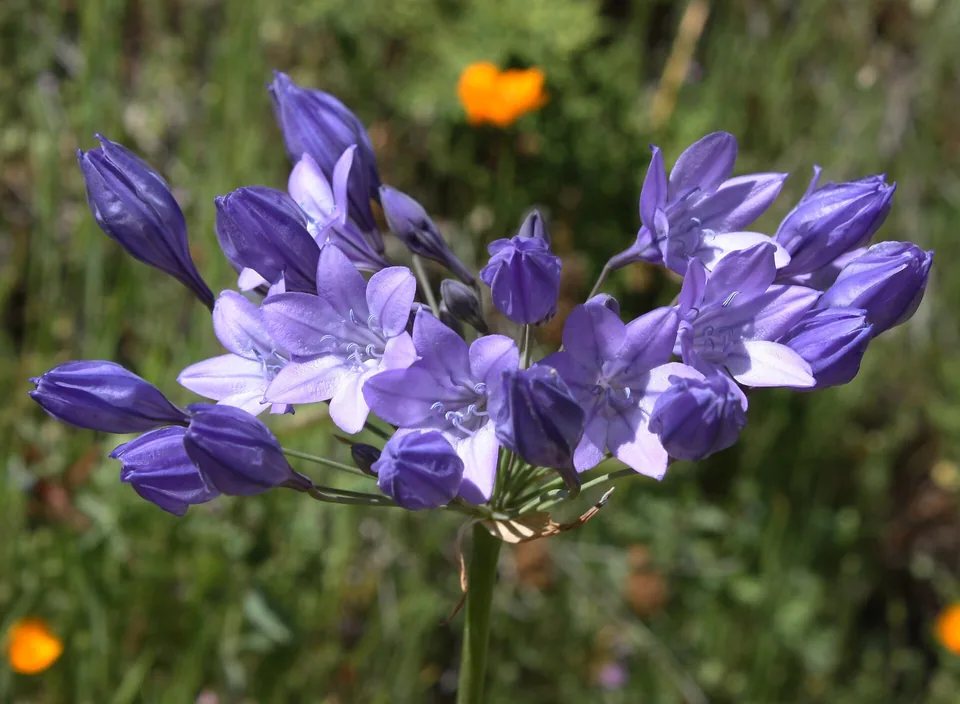


Cómo cultivar y cuidar Brodiaea
Triteleia laxa
Escrito por Emilio Marruso · última revisión
De un vistazo
Esta vivaz agradecida crece a partir de cormos que plantas en otoño, a solo 8–10 cm unos de otros. Dale sol pleno o semisombra y humedad constante de primavera a principios de verano; después de la floración, deja que la tierra se seque. Tolera la sequía, alcanza 38–51 cm de alto y también vive feliz en maceta, así que cabe hasta en un balcón pequeño.
- Sol
Sol pleno o semisombra
Qué dicen las fuentes (1)
Luz: Pleno sol a semisombra
The plant tolerates drought and grows well in rich, well-drained soils and sandy loams in full sun to part shade.
— Triteleia laxa (Brodiaea, Grass Nut, Ithuriel's Spear, Long Rayed Triteleia, Pretty Face, Triplet Lily, Wild Hyacinth) | North Carolina Extension Gardener Plant Toolbox [1] - Riego
Mantén la tierra húmeda de primavera a principios de verano; tras la floración, déjala secar. Tolera la sequía
Qué dicen las fuentes (2)
Riego: Humedad constante desde primavera hasta principios de verano; suelo seco después de la floración hasta la siguiente primavera
For best results, provide the plant with consistent moisture spring to early summer; however, maintain a dry soil after blooming until the following spring.
— Triteleia laxa (Brodiaea, Grass Nut, Ithuriel's Spear, Long Rayed Triteleia, Pretty Face, Triplet Lily, Wild Hyacinth) | North Carolina Extension Gardener Plant Toolbox [1] Notas sobre el riego: Tolera la sequía; crece bien en suelos ricos, bien drenados y en margas arenosas
The plant tolerates drought and grows well in rich, well-drained soils and sandy loams in full sun to part shade.
— Triteleia laxa (Brodiaea, Grass Nut, Ithuriel's Spear, Long Rayed Triteleia, Pretty Face, Triplet Lily, Wild Hyacinth) | North Carolina Extension Gardener Plant Toolbox [1] - Frío
Aguanta inviernos de hasta −28,9 °C (−20 °F)
Muy rústica · USDA 5a · RHS H7 · Z5
Qué dicen las fuentes (2)
Rusticidad, zona más fría: 5a [mínima invernal de −28,9 a −26,1 °C (de −20 a −15 °F)]
USDA Plant Hardiness Zone: 5a, 5b, 6a, 6b, 7a, 7b, 8a, 8b, 9a, 9b
— Triteleia laxa (Brodiaea, Grass Nut, Ithuriel's Spear, Long Rayed Triteleia, Pretty Face, Triplet Lily, Wild Hyacinth) | North Carolina Extension Gardener Plant Toolbox [1] Rusticidad, zona más cálida: 9b [mínima invernal de −3,9 a −1,1 °C (de 25 a 30 °F)]
USDA Plant Hardiness Zone: 5a, 5b, 6a, 6b, 7a, 7b, 8a, 8b, 9a, 9b
— Triteleia laxa (Brodiaea, Grass Nut, Ithuriel's Spear, Long Rayed Triteleia, Pretty Face, Triplet Lily, Wild Hyacinth) | North Carolina Extension Gardener Plant Toolbox [1] - Suelo
Suelo rico o franco arenoso, con buen drenaje
Qué dicen las fuentes (1)
Notas sobre el riego: Tolera la sequía; crece bien en suelos ricos, bien drenados y en margas arenosas
The plant tolerates drought and grows well in rich, well-drained soils and sandy loams in full sun to part shade.
— Triteleia laxa (Brodiaea, Grass Nut, Ithuriel's Spear, Long Rayed Triteleia, Pretty Face, Triplet Lily, Wild Hyacinth) | North Carolina Extension Gardener Plant Toolbox [1] - Distancia
8–10 cm entre cormos
Qué dicen las fuentes (1)
Distancia de plantación: 7.6-10.2 cm (3 a 4 pulgadas de separación)
Plant the corms in the fall 3 to 5 inches deep to the base of the corm and space about 3 to 4 inches apart (9-10 bulbs per square foot).
— Triteleia laxa (Brodiaea, Grass Nut, Ithuriel's Spear, Long Rayed Triteleia, Pretty Face, Triplet Lily, Wild Hyacinth) | North Carolina Extension Gardener Plant Toolbox [1] - Plantación
Planta los cormos en otoño
Qué dicen las fuentes (1)
Plantación: Otoño (bulbos)
Plant the corms in the fall 3 to 5 inches deep to the base of the corm
— Triteleia laxa (Brodiaea, Grass Nut, Ithuriel's Spear, Long Rayed Triteleia, Pretty Face, Triplet Lily, Wild Hyacinth) | North Carolina Extension Gardener Plant Toolbox [1] - Tamaño
38–51 cm de alto y 23–46 cm de ancho
Qué dicen las fuentes (2)
Altura adulta: 38.1-50.8 cm (1 pie 3 pulg. - 1 pie 8 pulg.)
Dimensions: Height: 1 ft. 3 in. - 1 ft. 8 in. Width: 0 ft. 9 in. - 1 ft. 6 in.
— Triplet Lily - Triteleia laxa | North Carolina Extension Gardener Plant Toolbox [2] Anchura adulta: 22.86-45.72 cm (0 pies 9 pulg. - 1 pie 6 pulg.)
Dimensions: Height: 1 ft. 3 in. - 1 ft. 8 in. Width: 0 ft. 9 in. - 1 ft. 6 in.
— Triplet Lily - Triteleia laxa | North Carolina Extension Gardener Plant Toolbox [2] - Multiplicación
Por semilla o dividiendo los cormos; guarda los sobrantes en un lugar seco a 21–25 °C, duran un año
Qué dicen las fuentes (3)
Propagación: Semilla y división de bulbos
Recommended Propagation Strategy: Division Seed
— Triteleia laxa (Brodiaea, Grass Nut, Ithuriel's Spear, Long Rayed Triteleia, Pretty Face, Triplet Lily, Wild Hyacinth) | North Carolina Extension Gardener Plant Toolbox [1] To grow from corms, dig mature corms and divide them and store the corms in a dry space at 70 to 77 degrees F.
— Triteleia laxa (Brodiaea, Grass Nut, Ithuriel's Spear, Long Rayed Triteleia, Pretty Face, Triplet Lily, Wild Hyacinth) | North Carolina Extension Gardener Plant Toolbox [1] Conservación: Guarda los bulbos en un espacio seco a 70 a 77 grados F (21-25 C). Los bulbos duran un año.
Bulb Storage: Store the corms in a dry space at 70 to 77 degrees F. Bulbs last one year.
— Triplet Lily - Triteleia laxa | North Carolina Extension Gardener Plant Toolbox [2] - Siembra
Siembra las semillas a 6 mm de profundidad
Qué dicen las fuentes (1)
Profundidad de siembra: 0.64 cm (1/4 de pulgada)
To plant from seed, sow 1/4 inch deep and thin to 3 to 5 seedlings if necessary by digging dormant cormlets and respacing.
— Triplet Lily - Triteleia laxa | North Carolina Extension Gardener Plant Toolbox [2] - Maceta
Crece también en maceta
Qué dicen las fuentes (1)
En maceta: Sí
Above Zone 5, you can grow the plant in containers that are moved to a dry area after bloom is completed to ensure the soil is dry.
— Triteleia laxa (Brodiaea, Grass Nut, Ithuriel's Spear, Long Rayed Triteleia, Pretty Face, Triplet Lily, Wild Hyacinth) | North Carolina Extension Gardener Plant Toolbox [1]
Resumen
Triteleia laxa es una perenne herbácea cultivada a partir de bulbos y nativa del norte de California. [1] Tolera la sequía y crece a pleno sol o semisombra, y los bulbos se plantan en otoño. [1]
Citado en inglés, como en la fuente.
Esta ficha está incompleta: las fuentes consultadas aún no cubren todos los campos.
Aún no cubierto por nuestras fuentes: Poda
Cuidados
Riego
Riego
Humedad constante desde primavera hasta principios de verano; suelo seco después de la floración hasta la siguiente primavera
Qué dicen las fuentes (1)
For best results, provide the plant with consistent moisture spring to early summer; however, maintain a dry soil after blooming until the following spring.Notas sobre el riego
Tolera la sequía; crece bien en suelos ricos, bien drenados y en margas arenosas
Qué dicen las fuentes (1)
The plant tolerates drought and grows well in rich, well-drained soils and sandy loams in full sun to part shade.Luz
Pleno sol a semisombra
Qué dicen las fuentes (1)
The plant tolerates drought and grows well in rich, well-drained soils and sandy loams in full sun to part shade.Clima y frío
Rusticidad, zona más fría
5a [mínima invernal de −28,9 a −26,1 °C (de −20 a −15 °F)]
Qué dicen las fuentes (1)
USDA Plant Hardiness Zone:
5a, 5b, 6a, 6b, 7a, 7b, 8a, 8b, 9a, 9bRusticidad, zona más cálida
9b [mínima invernal de −3,9 a −1,1 °C (de 25 a 30 °F)]
Qué dicen las fuentes (1)
USDA Plant Hardiness Zone:
5a, 5b, 6a, 6b, 7a, 7b, 8a, 8b, 9a, 9bDónde cultivarla
En maceta
Sí
Qué dicen las fuentes (1)
Above Zone 5, you can grow the plant in containers that are moved to a dry area after bloom is completed to ensure the soil is dry.Distancia de plantación
7.6-10.2 cm (3 a 4 pulgadas de separación)
Qué dicen las fuentes (1)
Plant the corms in the fall 3 to 5 inches deep to the base of the corm and space about 3 to 4 inches apart (9-10 bulbs per square foot).Propagación
Semilla y división de bulbos
Qué dicen las fuentes (2)
Recommended Propagation Strategy:
Division
SeedTo grow from corms, dig mature corms and divide them and store the corms in a dry space at 70 to 77 degrees F.Cultivo
La planta
Ciclo de vida
perenne
Qué dicen las fuentes (1)
Tritelia laxa, formerly Brodiaea laxa , is a species of herbaceous perennial that is grown from corms.Familia
Asparagáceas
Qué dicen las fuentes (1)
Genus:
Triteleia
Species:
laxa
Family:
Asparagaceae
Life Cycle:
Bulb
PerennialAltura adulta
38.1-50.8 cm (1 pie 3 pulg. - 1 pie 8 pulg.)
Qué dicen las fuentes (1)
Dimensions:
Height: 1 ft. 3 in. - 1 ft. 8 in.
Width: 0 ft. 9 in. - 1 ft. 6 in.Anchura adulta
22.86-45.72 cm (0 pies 9 pulg. - 1 pie 6 pulg.)
Qué dicen las fuentes (1)
Dimensions:
Height: 1 ft. 3 in. - 1 ft. 8 in.
Width: 0 ft. 9 in. - 1 ft. 6 in.Siembra y crecimiento
Profundidad de siembra
0.64 cm (1/4 de pulgada)
Qué dicen las fuentes (1)
To plant from seed, sow 1/4 inch deep and thin to 3 to 5 seedlings if necessary by digging dormant cormlets and respacing.Cosecha y conservación
Conservación
Guarda los bulbos en un espacio seco a 70 a 77 grados F (21-25 C). Los bulbos duran un año.
Qué dicen las fuentes (1)
Bulb Storage:
Store the corms in a dry space at 70 to 77 degrees F. Bulbs last one year.Remedios
Cada remedio indica qué dicen las fuentes oficiales; los remedios tradicionales sin fuente oficial aparecen marcados. Los perjudiciales están para que sepas evitarlos.
Cuidar la planta
tuzas
cesta de alambre subterránea Funciona en parte
Cómo: Instala cestas de alambre, que puedes hacer en casa o comprar comercialmente, al mismo tiempo que colocas las plantas en el suelo.
To protect individual plants, install wire baskets, which you can make at home or buy commercially, at the same time you are putting the plants into the ground.
— ipm.ucanr.edu [4] Qué dicen las pruebas This method is not perfect, because persistent gophers can burrow below the wire and the wire can restrict and damage root growth of trees.
— ipm.ucanr.edu [4] ajo plantado como repelente No demostrado
Cómo: Plantas como la euforbia purga, el ricino y el ajo a veces se usan para repeler a las tuzas.
Plants such as gopher purge, castor bean, and garlic haven't been shown to repel gophers from an area.
— ipm.ucanr.edu [4] Qué dicen las pruebas Plants such as gopher purge, castor bean, and garlic haven't been shown to repel gophers from an area.
— ipm.ucanr.edu [4]
babosas
recolección manual Funciona
Cómo: Las babosas y los caracoles se pueden eliminar recogiéndolos a mano.
When found, these pests can be removed by handpicking or by making simple, effective traps.
— hgic.clemson.edu [5] Qué dicen las pruebas When found, these pests can be removed by handpicking or by making simple, effective traps.
— hgic.clemson.edu [5] trampa de cerveza rancia Fuente oficial, sin prueba independiente
Cómo: Atrapa caracoles y babosas en recipientes poco profundos con cerveza rancia, hundidos de modo que el borde del recipiente quede al nivel de la superficie del suelo.
Trap snails and slugs in shallow pans of stale beer sunken so that the lip of the container is even with the soil surface.
— hgic.clemson.edu [5] tierra de diatomeas Funciona
Cómo: Protege las plántulas jóvenes espolvoreando tierra de diatomeas alrededor de las plantas.
Protect young seedlings by sprinkling diatomaceous earth around the plants.
— hgic.clemson.edu [5] Qué dicen las pruebas Diatomaceous earth is very sharp and scratches the skin of these soft-bodied critters, resulting in dehydration and death.
— hgic.clemson.edu [5]
pulgones
chorro fuerte de agua Fuente oficial, sin prueba independiente
Cómo: Elimina los pulgones con una corriente fuerte de agua aplicada regularmente.
Remove aphids with a strong stream of water applied regularly.
— hgic.clemson.edu [6]
Calendario
Plantación
Otoño (bulbos)
Qué dicen las fuentes (1)
Plant the corms in the fall 3 to 5 inches deep to the base of the cormPoda
No figura en las fuentes consultadas.
Meses tal como los dan las fuentes, en su mayoría de Estados Unidos (hemisferio norte). En el hemisferio sur se desplazan unos seis meses.
Plantas similares
- Palma de aguja Yucca flaccida
- American Agave Agave virginica
- Esparraguera Asparagus officinalis
- Helecho plumoso Asparagus setaceus
- Beaked Yucca Yucca rostrata
- Beschorneria Beschorneria yuccoides
- Palma de Torbay Cordyline australis
- Canada Mayflower Maianthemum canadense
Fuentes
Cada valor anterior se cita de estos documentos. Los enlaces llevan al editor original.
- Triteleia laxa (Brodiaea, Grass Nut, Ithuriel's Spear, Long Rayed Triteleia, Pretty Face, Triplet Lily, Wild Hyacinth) | North Carolina Extension Gardener Plant Toolbox · plants.ces.ncsu.edu, consultado
- Triplet Lily - Triteleia laxa | North Carolina Extension Gardener Plant Toolbox · plants.ces.ncsu.edu, consultado
- Ithuriel's Spear - Triteleia laxa | North Carolina Extension Gardener Plant Toolbox · plants.ces.ncsu.edu, consultado
- ipm.ucanr.edu · ipm.ucanr.edu
- hgic.clemson.edu · hgic.clemson.edu
- hgic.clemson.edu · hgic.clemson.edu
Escrito por Emilio Marruso · última revisión