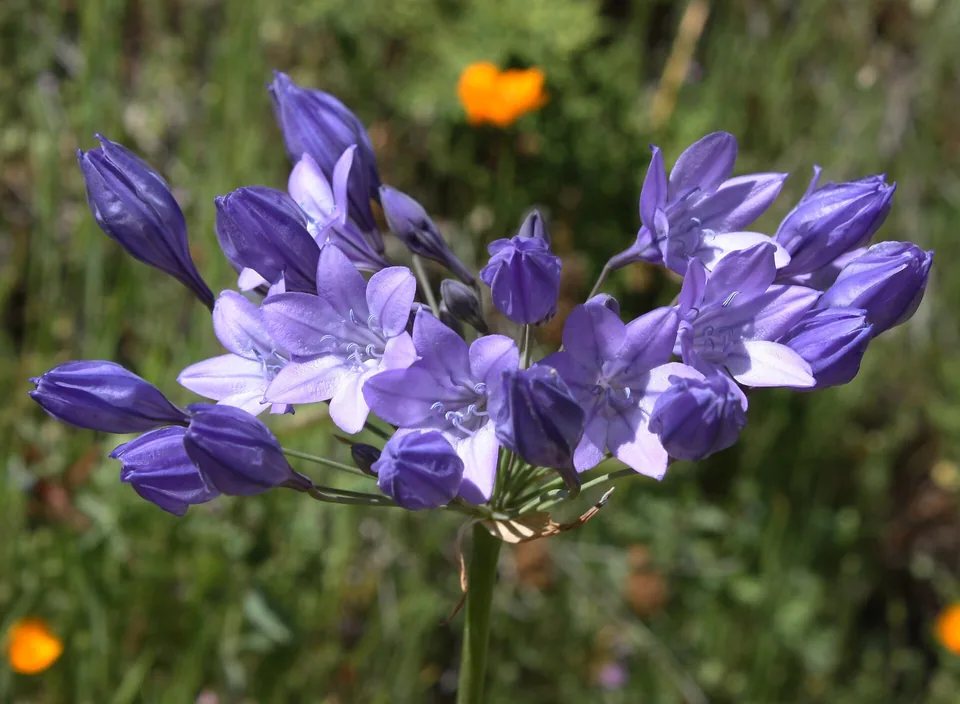


How to Grow and Care for Brodiaea
Triteleia laxa
Written by Emilio Marruso · last checked
At a glance
This easygoing perennial grows from corms you plant in fall, just 3–4 inches apart. Give it full sun to part shade and steady moisture from spring to early summer, then let the soil dry out after blooming. It tolerates drought, grows 15–20 inches tall and is happy in containers too, so even a small balcony can host it.
- Sun
Full sun to part shade
What the sources say (1)
Light: Full sun to part shade
The plant tolerates drought and grows well in rich, well-drained soils and sandy loams in full sun to part shade.
— Triteleia laxa (Brodiaea, Grass Nut, Ithuriel's Spear, Long Rayed Triteleia, Pretty Face, Triplet Lily, Wild Hyacinth) | North Carolina Extension Gardener Plant Toolbox [1] - Water
Keep moist from spring to early summer; let the soil dry after blooming. Tolerates drought
What the sources say (2)
Watering: Consistent moisture from spring to early summer; dry soil after blooming until the following spring
For best results, provide the plant with consistent moisture spring to early summer; however, maintain a dry soil after blooming until the following spring.
— Triteleia laxa (Brodiaea, Grass Nut, Ithuriel's Spear, Long Rayed Triteleia, Pretty Face, Triplet Lily, Wild Hyacinth) | North Carolina Extension Gardener Plant Toolbox [1] Watering notes: Tolerates drought; grows well in rich, well-drained soils and sandy loams
The plant tolerates drought and grows well in rich, well-drained soils and sandy loams in full sun to part shade.
— Triteleia laxa (Brodiaea, Grass Nut, Ithuriel's Spear, Long Rayed Triteleia, Pretty Face, Triplet Lily, Wild Hyacinth) | North Carolina Extension Gardener Plant Toolbox [1] - Cold
Survives winters down to −20 °F (−28.9 °C)
Very hardy · USDA 5a · RHS H7 · Z5
What the sources say (2)
Hardiness, coldest zone: 5a [winter low −28.9 to −26.1 °C (−20 to −15 °F)]
USDA Plant Hardiness Zone: 5a, 5b, 6a, 6b, 7a, 7b, 8a, 8b, 9a, 9b
— Triteleia laxa (Brodiaea, Grass Nut, Ithuriel's Spear, Long Rayed Triteleia, Pretty Face, Triplet Lily, Wild Hyacinth) | North Carolina Extension Gardener Plant Toolbox [1] Hardiness, warmest zone: 9b [winter low −3.9 to −1.1 °C (25 to 30 °F)]
USDA Plant Hardiness Zone: 5a, 5b, 6a, 6b, 7a, 7b, 8a, 8b, 9a, 9b
— Triteleia laxa (Brodiaea, Grass Nut, Ithuriel's Spear, Long Rayed Triteleia, Pretty Face, Triplet Lily, Wild Hyacinth) | North Carolina Extension Gardener Plant Toolbox [1] - Soil
Rich soil or sandy loam that drains well
What the sources say (1)
Watering notes: Tolerates drought; grows well in rich, well-drained soils and sandy loams
The plant tolerates drought and grows well in rich, well-drained soils and sandy loams in full sun to part shade.
— Triteleia laxa (Brodiaea, Grass Nut, Ithuriel's Spear, Long Rayed Triteleia, Pretty Face, Triplet Lily, Wild Hyacinth) | North Carolina Extension Gardener Plant Toolbox [1] - Spacing
3–4 in between corms
What the sources say (1)
Spacing: 7.6-10.2 cm (3 to 4 inches apart)
Plant the corms in the fall 3 to 5 inches deep to the base of the corm and space about 3 to 4 inches apart (9-10 bulbs per square foot).
— Triteleia laxa (Brodiaea, Grass Nut, Ithuriel's Spear, Long Rayed Triteleia, Pretty Face, Triplet Lily, Wild Hyacinth) | North Carolina Extension Gardener Plant Toolbox [1] - Planting
Plant the corms in fall
What the sources say (1)
Planting: Fall (corms)
Plant the corms in the fall 3 to 5 inches deep to the base of the corm
— Triteleia laxa (Brodiaea, Grass Nut, Ithuriel's Spear, Long Rayed Triteleia, Pretty Face, Triplet Lily, Wild Hyacinth) | North Carolina Extension Gardener Plant Toolbox [1] - Size
15–20 in tall and 9–18 in wide
What the sources say (2)
Mature height: 38.1-50.8 cm (1 ft. 3 in. - 1 ft. 8 in.)
Dimensions: Height: 1 ft. 3 in. - 1 ft. 8 in. Width: 0 ft. 9 in. - 1 ft. 6 in.
— Triplet Lily - Triteleia laxa | North Carolina Extension Gardener Plant Toolbox [2] Mature width: 22.86-45.72 cm (0 ft. 9 in. - 1 ft. 6 in.)
Dimensions: Height: 1 ft. 3 in. - 1 ft. 8 in. Width: 0 ft. 9 in. - 1 ft. 6 in.
— Triplet Lily - Triteleia laxa | North Carolina Extension Gardener Plant Toolbox [2] - Propagation
From seed or by dividing the corms; store spare corms dry at 70–77 °F (21–25 °C) for up to a year
What the sources say (3)
Propagation: Seed and division of corms
Recommended Propagation Strategy: Division Seed
— Triteleia laxa (Brodiaea, Grass Nut, Ithuriel's Spear, Long Rayed Triteleia, Pretty Face, Triplet Lily, Wild Hyacinth) | North Carolina Extension Gardener Plant Toolbox [1] To grow from corms, dig mature corms and divide them and store the corms in a dry space at 70 to 77 degrees F.
— Triteleia laxa (Brodiaea, Grass Nut, Ithuriel's Spear, Long Rayed Triteleia, Pretty Face, Triplet Lily, Wild Hyacinth) | North Carolina Extension Gardener Plant Toolbox [1] Storage: Store the corms in a dry space at 70 to 77 degrees F (21-25 C). Bulbs last one year.
Bulb Storage: Store the corms in a dry space at 70 to 77 degrees F. Bulbs last one year.
— Triplet Lily - Triteleia laxa | North Carolina Extension Gardener Plant Toolbox [2] - Sowing
Sow seeds 1/4 inch deep
What the sources say (1)
Sowing depth: 0.64 cm (1/4 inch)
To plant from seed, sow 1/4 inch deep and thin to 3 to 5 seedlings if necessary by digging dormant cormlets and respacing.
— Triplet Lily - Triteleia laxa | North Carolina Extension Gardener Plant Toolbox [2] - Containers
Grows in containers too
What the sources say (1)
In containers: Yes
Above Zone 5, you can grow the plant in containers that are moved to a dry area after bloom is completed to ensure the soil is dry.
— Triteleia laxa (Brodiaea, Grass Nut, Ithuriel's Spear, Long Rayed Triteleia, Pretty Face, Triplet Lily, Wild Hyacinth) | North Carolina Extension Gardener Plant Toolbox [1]
Overview
Triteleia laxa is a herbaceous perennial grown from corms and native to northern California. [1] It tolerates drought and grows in full sun to part shade, and corms are planted in the fall. [1]
This record is incomplete: the sources we read do not cover every field yet.
Not yet covered by our sources: Pruning
Brodiaea care
How to water Brodiaea
Watering
Consistent moisture from spring to early summer; dry soil after blooming until the following spring
What the sources say (1)
For best results, provide the plant with consistent moisture spring to early summer; however, maintain a dry soil after blooming until the following spring.Watering notes
Tolerates drought; grows well in rich, well-drained soils and sandy loams
What the sources say (1)
The plant tolerates drought and grows well in rich, well-drained soils and sandy loams in full sun to part shade.How much light Brodiaea needs
Full sun to part shade
What the sources say (1)
The plant tolerates drought and grows well in rich, well-drained soils and sandy loams in full sun to part shade.How much cold Brodiaea can take
Hardiness, coldest zone
5a [winter low −28.9 to −26.1 °C (−20 to −15 °F)]
What the sources say (1)
USDA Plant Hardiness Zone:
5a, 5b, 6a, 6b, 7a, 7b, 8a, 8b, 9a, 9bHardiness, warmest zone
9b [winter low −3.9 to −1.1 °C (25 to 30 °F)]
What the sources say (1)
USDA Plant Hardiness Zone:
5a, 5b, 6a, 6b, 7a, 7b, 8a, 8b, 9a, 9bWhere to grow Brodiaea
In containers
Yes
What the sources say (1)
Above Zone 5, you can grow the plant in containers that are moved to a dry area after bloom is completed to ensure the soil is dry.Spacing
7.6-10.2 cm (3 to 4 inches apart)
What the sources say (1)
Plant the corms in the fall 3 to 5 inches deep to the base of the corm and space about 3 to 4 inches apart (9-10 bulbs per square foot).How to propagate Brodiaea
Seed and division of corms
What the sources say (2)
Recommended Propagation Strategy:
Division
SeedTo grow from corms, dig mature corms and divide them and store the corms in a dry space at 70 to 77 degrees F.How to grow Brodiaea
The plant
Life cycle
perennial
What the sources say (1)
Tritelia laxa, formerly Brodiaea laxa , is a species of herbaceous perennial that is grown from corms.Family
Asparagaceae
What the sources say (1)
Genus:
Triteleia
Species:
laxa
Family:
Asparagaceae
Life Cycle:
Bulb
PerennialMature height
38.1-50.8 cm (1 ft. 3 in. - 1 ft. 8 in.)
What the sources say (1)
Dimensions:
Height: 1 ft. 3 in. - 1 ft. 8 in.
Width: 0 ft. 9 in. - 1 ft. 6 in.Mature width
22.86-45.72 cm (0 ft. 9 in. - 1 ft. 6 in.)
What the sources say (1)
Dimensions:
Height: 1 ft. 3 in. - 1 ft. 8 in.
Width: 0 ft. 9 in. - 1 ft. 6 in.Sowing and growth
Sowing depth
0.64 cm (1/4 inch)
What the sources say (1)
To plant from seed, sow 1/4 inch deep and thin to 3 to 5 seedlings if necessary by digging dormant cormlets and respacing.Harvest and storage
Storage
Store the corms in a dry space at 70 to 77 degrees F (21-25 C). Bulbs last one year.
What the sources say (1)
Bulb Storage:
Store the corms in a dry space at 70 to 77 degrees F. Bulbs last one year.Remedies
Each remedy shows what official sources say about it; traditional remedies without an official source are marked as such. Harmful ones are listed so you know to avoid them.
Treating the plant
pocket gophers
underground wire basket Partly works
How: Install wire baskets, which you can make at home or buy commercially, at the same time you are putting the plants into the ground.
To protect individual plants, install wire baskets, which you can make at home or buy commercially, at the same time you are putting the plants into the ground.
— ipm.ucanr.edu [4] What the evidence says This method is not perfect, because persistent gophers can burrow below the wire and the wire can restrict and damage root growth of trees.
— ipm.ucanr.edu [4] garlic planted as repellent Not proven
How: Plants such as gopher purge, castor bean, and garlic are sometimes used to repel gophers.
Plants such as gopher purge, castor bean, and garlic haven't been shown to repel gophers from an area.
— ipm.ucanr.edu [4] What the evidence says Plants such as gopher purge, castor bean, and garlic haven't been shown to repel gophers from an area.
— ipm.ucanr.edu [4]
slugs
handpicking Works
How: Slugs and snails can be removed by handpicking.
When found, these pests can be removed by handpicking or by making simple, effective traps.
— hgic.clemson.edu [5] What the evidence says When found, these pests can be removed by handpicking or by making simple, effective traps.
— hgic.clemson.edu [5] stale beer trap Official source, not independently tested
How: Trap snails and slugs in shallow pans of stale beer sunken so that the lip of the container is even with the soil surface.
Trap snails and slugs in shallow pans of stale beer sunken so that the lip of the container is even with the soil surface.
— hgic.clemson.edu [5] diatomaceous earth Works
How: Protect young seedlings by sprinkling diatomaceous earth around the plants.
Protect young seedlings by sprinkling diatomaceous earth around the plants.
— hgic.clemson.edu [5] What the evidence says Diatomaceous earth is very sharp and scratches the skin of these soft-bodied critters, resulting in dehydration and death.
— hgic.clemson.edu [5]
aphids
strong stream of water Official source, not independently tested
How: Remove aphids with a strong stream of water applied regularly.
Remove aphids with a strong stream of water applied regularly.
— hgic.clemson.edu [6]
Calendar
Planting
Fall (corms)
What the sources say (1)
Plant the corms in the fall 3 to 5 inches deep to the base of the cormPruning
Not stated in the sources we read.
Months as given by the sources, which are mostly from the United States (northern hemisphere). In the southern hemisphere they shift by about six months.
Similar plants
- Adam's Needle Yucca flaccida
- American Agave Agave virginica
- Asparagus Asparagus officinalis
- Asparagus Fern Asparagus setaceus
- Beaked Yucca Yucca rostrata
- Beschorneria Beschorneria yuccoides
- Cabbage Tree Cordyline australis
- Canada Mayflower Maianthemum canadense
Sources
Every value above is quoted from these documents. Links lead to the original publisher.
- Triteleia laxa (Brodiaea, Grass Nut, Ithuriel's Spear, Long Rayed Triteleia, Pretty Face, Triplet Lily, Wild Hyacinth) | North Carolina Extension Gardener Plant Toolbox · plants.ces.ncsu.edu, consulted
- Triplet Lily - Triteleia laxa | North Carolina Extension Gardener Plant Toolbox · plants.ces.ncsu.edu, consulted
- Ithuriel's Spear - Triteleia laxa | North Carolina Extension Gardener Plant Toolbox · plants.ces.ncsu.edu, consulted
- ipm.ucanr.edu · ipm.ucanr.edu
- hgic.clemson.edu · hgic.clemson.edu
- hgic.clemson.edu · hgic.clemson.edu
Written by Emilio Marruso · last checked