

How to Grow and Care for Beschorneria
Beschorneria yuccoides
Written by Emilio Marruso · last checked
At a glance
This sun-loving perennial asks for very little: give it full sun and just a little water, and it will come back year after year. It grows 4–6 ft tall and just as wide, and it is happy in a container or even indoors. When you want more plants, simply divide a clump or sow its seeds.
- Sun
Full sun
What the sources say (1)
Light: Full sun
Light: Full sun (6 or more hours of direct sunlight a day)
— Beschorneria yuccoides (Amole, Beschorneria, Mexican Lily, Patleamole, Sisi) | North Carolina Extension Gardener Plant Toolbox [1] - Water
Needs little water
What the sources say (1)
Watering: Requires little water
The plant requires little water. This species is native to Mexico where it often is found on rocky slopes.
— Beschorneria yuccoides (Amole, Beschorneria, Mexican Lily, Patleamole, Sisi) | North Carolina Extension Gardener Plant Toolbox [1] - Cold
Survives winters down to 10 °F (−12.2 °C)
Hardy in cold winters · USDA 8a · RHS H5 · Z8
What the sources say (2)
Hardiness, coldest zone: 8a [winter low −12.2 to −9.4 °C (10 to 15 °F)]
USDA Plant Hardiness Zone: 8a, 8b, 9a, 9b, 10a, 10b, 11a, 11b
— Beschorneria yuccoides (Amole, Beschorneria, Mexican Lily, Patleamole, Sisi) | North Carolina Extension Gardener Plant Toolbox [1] Hardiness, warmest zone: 11b [winter low 7.2 to 10 °C (45 to 50 °F)]
USDA Plant Hardiness Zone: 8a, 8b, 9a, 9b, 10a, 10b, 11a, 11b
— Beschorneria yuccoides (Amole, Beschorneria, Mexican Lily, Patleamole, Sisi) | North Carolina Extension Gardener Plant Toolbox [1] - Size
4–6 ft tall and 4–6 ft wide
What the sources say (2)
Mature height: 121.92-182.88 cm (4-6 ft)
Dimensions: Height: 4 ft. 0 in. - 6 ft. 0 in. Width: 4 ft. 0 in. - 6 ft. 0 in.
— Beschorneria yuccoides (Amole, Beschorneria, Mexican Lily, Patleamole, Sisi) | North Carolina Extension Gardener Plant Toolbox [1] Mature width: 121.92-182.88 cm (4-6 ft)
Dimensions: Height: 4 ft. 0 in. - 6 ft. 0 in. Width: 4 ft. 0 in. - 6 ft. 0 in.
— Beschorneria yuccoides (Amole, Beschorneria, Mexican Lily, Patleamole, Sisi) | North Carolina Extension Gardener Plant Toolbox [1] - Propagation
Divide the plant or grow new ones from seed
What the sources say (1)
Propagation: Division, seed
Life Cycle: Perennial Woody Recommended Propagation Strategy: Division Seed
— Beschorneria yuccoides (Amole, Beschorneria, Mexican Lily, Patleamole, Sisi) | North Carolina Extension Gardener Plant Toolbox [1] - Containers
Grows in containers too, and even indoors
What the sources say (2)
In containers: Yes
It is native to northern Mexico and works well in containers or planted in small groups along a shrub border.
— Beschorneria yuccoides (Amole, Beschorneria, Mexican Lily, Patleamole, Sisi) | North Carolina Extension Gardener Plant Toolbox [1] Indoors: Yes
In North Carolina, it can be grown under glass or indoors. The plant requires little water.
— Beschorneria yuccoides (Amole, Beschorneria, Mexican Lily, Patleamole, Sisi) | North Carolina Extension Gardener Plant Toolbox [1]
Overview
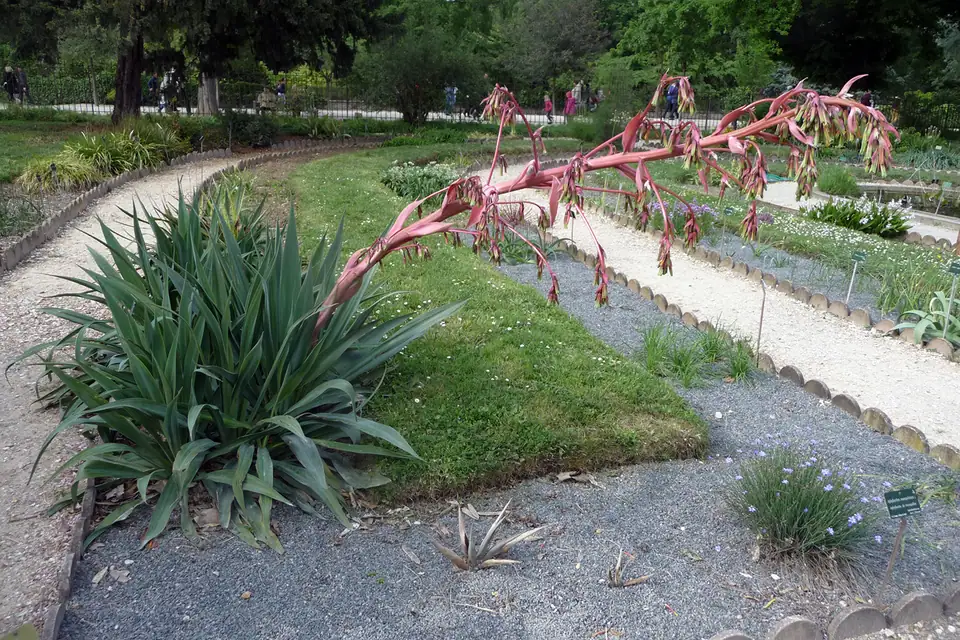
Beschorneria yuccoides is a clump-forming, stemless, semi-woody yucca relative with gray-green leathery leaves. [1] It does not tolerate frosts and is best grown in warm, sheltered sites in full sun. [1]
This record is incomplete: the sources we read do not cover every field yet.
Not yet covered by our sources: Pruning
Beschorneria care
How to water Beschorneria
Requires little water
What the sources say (1)
The plant requires little water. This species is native to Mexico where it often is found on rocky slopes.How much light Beschorneria needs
Full sun
What the sources say (1)
Light:
Full sun (6 or more hours of direct sunlight a day)How much cold Beschorneria can take
Hardiness, coldest zone
8a [winter low −12.2 to −9.4 °C (10 to 15 °F)]
What the sources say (1)
USDA Plant Hardiness Zone:
8a, 8b, 9a, 9b, 10a, 10b, 11a, 11bHardiness, warmest zone
11b [winter low 7.2 to 10 °C (45 to 50 °F)]
What the sources say (1)
USDA Plant Hardiness Zone:
8a, 8b, 9a, 9b, 10a, 10b, 11a, 11bWhere to grow Beschorneria
Indoors
Yes
What the sources say (1)
In North Carolina, it can be grown under glass or indoors. The plant requires little water.In containers
Yes
What the sources say (1)
It is native to northern Mexico and works well in containers or planted in small groups along a shrub border.How to propagate Beschorneria
Division, seed
What the sources say (1)
Life Cycle:
Perennial
Woody
Recommended Propagation Strategy:
Division
SeedHow to grow Beschorneria
The plant
Life cycle
perennial
What the sources say (1)
Genus:
Beschorneria
Species:
yuccoides
Family:
Asparagaceae
Life Cycle:
Perennial
WoodyFamily
Asparagaceae
What the sources say (1)
Genus:
Beschorneria
Species:
yuccoides
Family:
Asparagaceae
Life Cycle:
Perennial
WoodyMature height
121.92-182.88 cm (4-6 ft)
What the sources say (1)
Dimensions:
Height: 4 ft. 0 in. - 6 ft. 0 in.
Width: 4 ft. 0 in. - 6 ft. 0 in.Mature width
121.92-182.88 cm (4-6 ft)
What the sources say (1)
Dimensions:
Height: 4 ft. 0 in. - 6 ft. 0 in.
Width: 4 ft. 0 in. - 6 ft. 0 in.Remedies
The sources we checked give no remedies for this plant.
Calendar
Pruning
Not stated in the sources we read.
Months as given by the sources, which are mostly from the United States (northern hemisphere). In the southern hemisphere they shift by about six months.
Similar plants
- Adam's Needle Yucca flaccida
- American Agave Agave virginica
- Asparagus Asparagus officinalis
- Beaked Yucca Yucca rostrata
- Brodiaea Triteleia laxa
- Cabbage Tree Cordyline australis
- Century Plant Agave salmiana
- Coastal agave Agave shawii
Sources
Every value above is quoted from these documents. Links lead to the original publisher.
- Beschorneria yuccoides (Amole, Beschorneria, Mexican Lily, Patleamole, Sisi) | North Carolina Extension Gardener Plant Toolbox · plants.ces.ncsu.edu, consulted
- Amole - Beschorneria yuccoides | North Carolina Extension Gardener Plant Toolbox · plants.ces.ncsu.edu, consulted
- Mexican Lily - Beschorneria yuccoides | North Carolina Extension Gardener Plant Toolbox · plants.ces.ncsu.edu, consulted
Written by Emilio Marruso · last checked