
How to Grow and Care for Cabbage Tree
Cordyline australis
Written by Emilio Marruso · last checked
Toxic to: Cats, Dogs, Horses · Why
At a glance
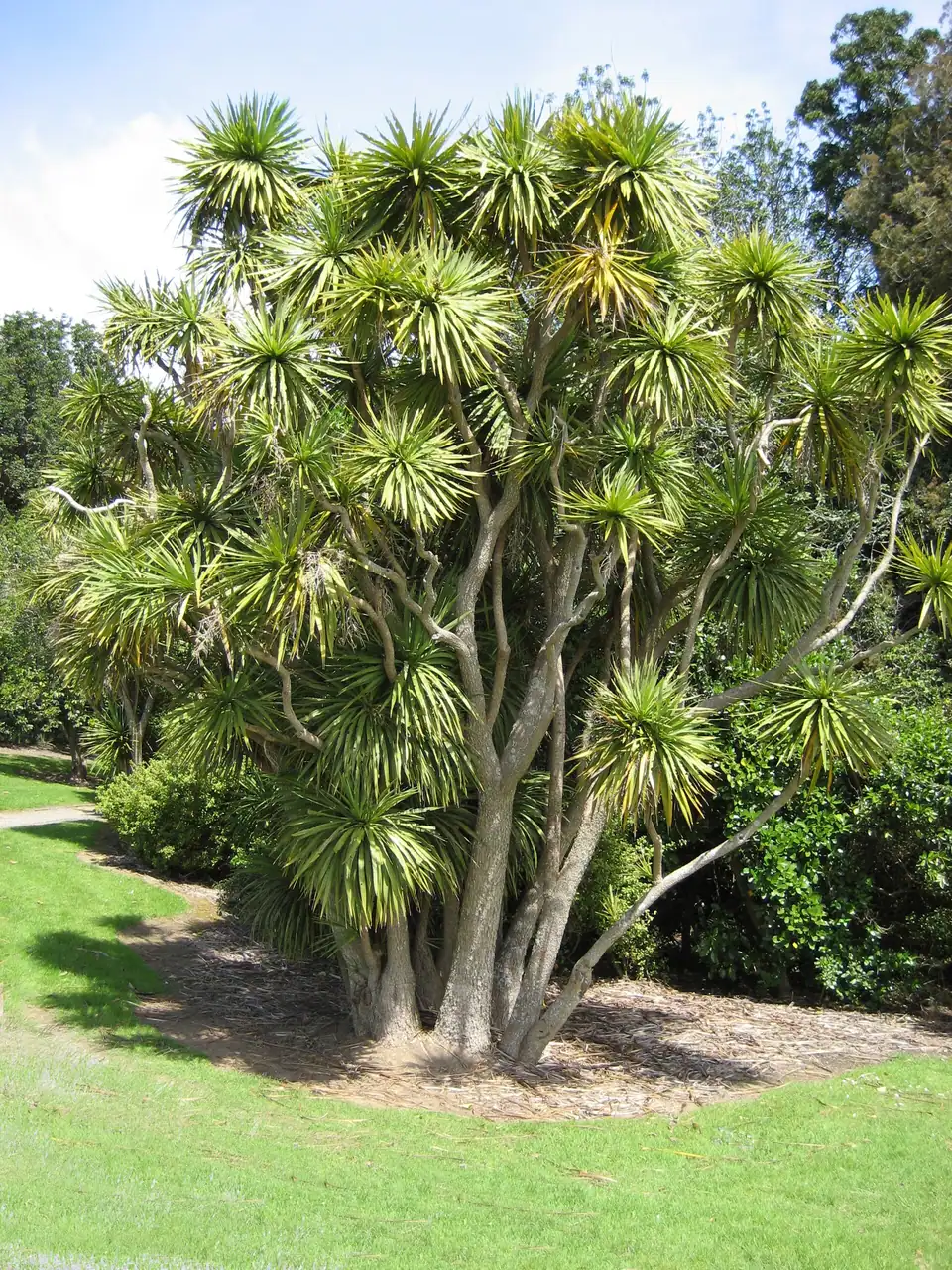
Cordyline brings a tropical feel to the garden or the home: outdoors it can grow 6 to 30 feet tall, and it is happy in a container too. It takes full sun to part shade, puts up with wet or dry soil and needs no feeding in the ground. Indoors, give it a bright, sunny spot and keep the soil moist in summer.
- Sun
Full sun to part shade outdoors; a bright, sunny spot indoors
What the sources say (3)
Light: Full sun to part shade
grown outdoors: If grown outdoors, it does best in moist, fertile, organically rich, well-drained soils in full sun to part shade.
— Cordyline australis (Cabbage Palm, Cabbage Tree, Cornish Palm, Giant Dracaena, New Zealand Cabbage Tree, Torbay Palm, Torquay Palm) | North Carolina Extension Gardener Plant Toolbox [1] grown in a container, in the home or greenhouse: site the plant in bright sunny spots in the home or greenhouse
— Cordyline australis (Cabbage Palm, Cabbage Tree, Cornish Palm, Giant Dracaena, New Zealand Cabbage Tree, Torbay Palm, Torquay Palm) | North Carolina Extension Gardener Plant Toolbox [1] If grown outdoors, it does best in moist, fertile, organically rich, well-drained soils in full sun to part shade.
— Cordyline australis (Cabbage Palm, Cabbage Tree, Cornish Palm, Giant Dracaena, New Zealand Cabbage Tree, Torbay Palm, Torquay Palm) | North Carolina Extension Gardener Plant Toolbox [1] - Water
In pots, keep the soil moist in summer and water less indoors in winter
What the sources say (3)
Watering: Container-grown: keep soil consistently moist in summer, reduce moisture indoors in winter
grown in a container: If grown in a container, keep soils consistently moist in summer but reduce moisture indoors in winter
— Cordyline australis (Cabbage Palm, Cabbage Tree, Cornish Palm, Giant Dracaena, New Zealand Cabbage Tree, Torbay Palm, Torquay Palm) | North Carolina Extension Gardener Plant Toolbox [1] grown outdoors: If grown outdoors, it does best in moist, fertile, organically rich, well-drained soils in full sun to part shade.
— Cordyline australis (Cabbage Palm, Cabbage Tree, Cornish Palm, Giant Dracaena, New Zealand Cabbage Tree, Torbay Palm, Torquay Palm) | North Carolina Extension Gardener Plant Toolbox [1] If grown in a container, keep soils consistently moist in summer but reduce moisture indoors in winter
— Cordyline australis (Cabbage Palm, Cabbage Tree, Cornish Palm, Giant Dracaena, New Zealand Cabbage Tree, Torbay Palm, Torquay Palm) | North Carolina Extension Gardener Plant Toolbox [1] - Cold
Survives winters down to 20 °F (−6.7 °C)
Hardy in average winters · USDA 9a · RHS H4 · Z9
What the sources say (2)
Hardiness, coldest zone: 9a [winter low −6.7 to −3.9 °C (20 to 25 °F)]
USDA Plant Hardiness Zone: 9a, 9b, 10a, 10b, 11a, 11b
— Cordyline australis (Cabbage Palm, Cabbage Tree, Cornish Palm, Giant Dracaena, New Zealand Cabbage Tree, Torbay Palm, Torquay Palm) | North Carolina Extension Gardener Plant Toolbox [1] Hardiness, warmest zone: 11b [winter low 7.2 to 10 °C (45 to 50 °F)]
USDA Plant Hardiness Zone: 9a, 9b, 10a, 10b, 11a, 11b
— Cordyline australis (Cabbage Palm, Cabbage Tree, Cornish Palm, Giant Dracaena, New Zealand Cabbage Tree, Torbay Palm, Torquay Palm) | North Carolina Extension Gardener Plant Toolbox [1] - Soil
Handles wet to dry soil, but does best in moist soil that drains well
What the sources say (2)
Watering notes: Tolerates soils from wet boggy to dry; outdoors does best in moist, well-drained soils
Cabbage Tree tolerates a wide range of soils ranging from wet boggy conditions to dry ones.
— Cordyline australis (Cabbage Palm, Cabbage Tree, Cornish Palm, Giant Dracaena, New Zealand Cabbage Tree, Torbay Palm, Torquay Palm) | North Carolina Extension Gardener Plant Toolbox [1] If grown outdoors, it does best in moist, fertile, organically rich, well-drained soils in full sun to part shade.
— Cordyline australis (Cabbage Palm, Cabbage Tree, Cornish Palm, Giant Dracaena, New Zealand Cabbage Tree, Torbay Palm, Torquay Palm) | North Carolina Extension Gardener Plant Toolbox [1] - Feeding
No feeding needed when grown in the ground
What the sources say (1)
How often: Not needed in the ground
Cordylines growing in the ground shouldn’t need feeding. - Those in containers can be given a balanced, liquid fertiliser from spring to late summer.
— [2] - Harvest
The leaves are eaten raw; the sugary stems and roots are used as a sweetener
- Pests
Mealybugs, scale and spider mites, especially on indoor plants
What the sources say (1)
Pests: mealybugs, scale, spider mites
Mealybugs, scale and spider mites are possible, particularly on indoor plants. The plant is toxic for dogs and cats.
— Cordyline australis (Cabbage Palm, Cabbage Tree, Cornish Palm, Giant Dracaena, New Zealand Cabbage Tree, Torbay Palm, Torquay Palm) | North Carolina Extension Gardener Plant Toolbox [1] - Size
6 to 30 ft tall and 3 to 6 ft wide
What the sources say (2)
Mature height: 183-914 cm (6 to 30 feet)
Dimensions: Height: 6 ft. 0 in. - 30 ft. 0 in. Width: 3 ft. 0 in. - 6 ft. 0 in.
— Cordyline australis (Cabbage Palm, Cabbage Tree, Cornish Palm, Giant Dracaena, New Zealand Cabbage Tree, Torbay Palm, Torquay Palm) | North Carolina Extension Gardener Plant Toolbox [1] Mature width: 91-183 cm (3 to 6 feet)
Dimensions: Height: 6 ft. 0 in. - 30 ft. 0 in. Width: 3 ft. 0 in. - 6 ft. 0 in.
— Cordyline australis (Cabbage Palm, Cabbage Tree, Cornish Palm, Giant Dracaena, New Zealand Cabbage Tree, Torbay Palm, Torquay Palm) | North Carolina Extension Gardener Plant Toolbox [1] - Propagation
Grow new plants from seed or stem cuttings
What the sources say (1)
Propagation: Seed, stem cutting
Life Cycle: Perennial Recommended Propagation Strategy: Seed Stem Cutting
— Cordyline australis (Cabbage Palm, Cabbage Tree, Cornish Palm, Giant Dracaena, New Zealand Cabbage Tree, Torbay Palm, Torquay Palm) | North Carolina Extension Gardener Plant Toolbox [1] - Containers
Grows in containers and indoors, but potted plants rarely flower
What the sources say (2)
In containers: Yes
It can also be grown as an ornamental in a container and, in that environment, will slowly develop a cane-like trunk
— Cordyline australis (Cabbage Palm, Cabbage Tree, Cornish Palm, Giant Dracaena, New Zealand Cabbage Tree, Torbay Palm, Torquay Palm) | North Carolina Extension Gardener Plant Toolbox [1] Indoors: Yes
it can be brought in over the winter or grown indoors year-round as a houseplant
— Cordyline australis (Cabbage Palm, Cabbage Tree, Cornish Palm, Giant Dracaena, New Zealand Cabbage Tree, Torbay Palm, Torquay Palm) | North Carolina Extension Gardener Plant Toolbox [1] - Safety
Poisonous to dogs and cats: it can cause vomiting and drooling
Overview
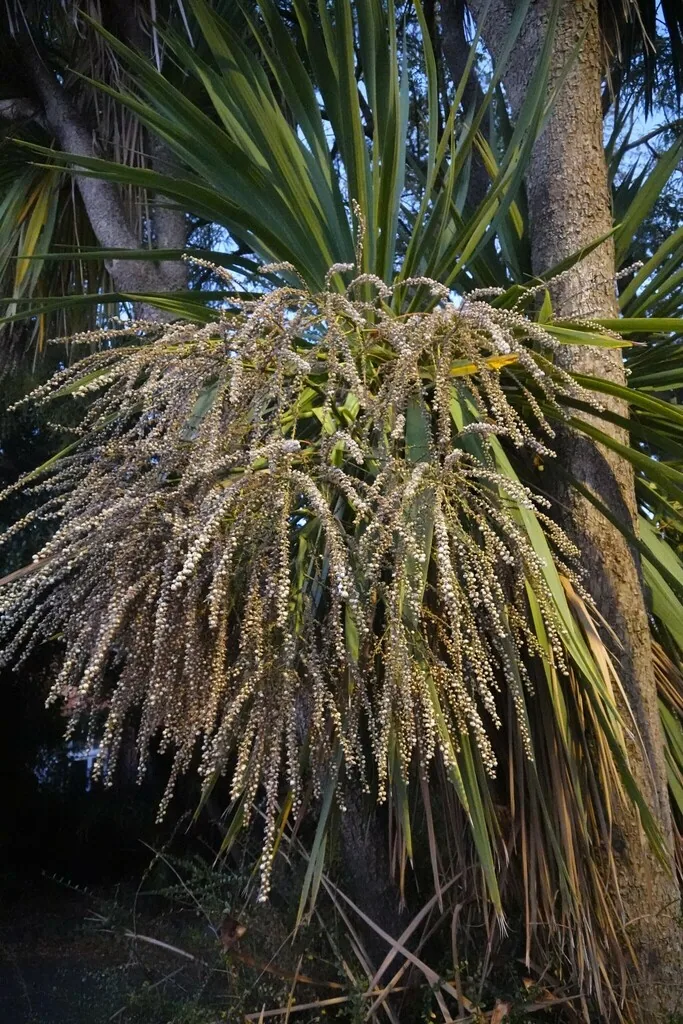
Cabbage tree is an evergreen, single or multi-trunked tree from New Zealand that can also be grown as an ornamental in a container. [1] Outdoors it does best in moist, fertile, well-drained soils in full sun to part shade. [1] The plant is toxic for dogs and cats. [1]
This record is incomplete: the sources we read do not cover every field yet.
Not yet covered by our sources: Pruning
Cabbage Tree care
How to water Cabbage Tree
Watering
Container-grown: keep soil consistently moist in summer, reduce moisture indoors in winter
What each source says
grown in a container: Keep soils consistently moist in summer; reduce moisture indoors in winter
grown outdoors: Does best in moist, well-drained soils
What the sources say (3)
grown in a container: If grown in a container, keep soils consistently moist in summer but reduce moisture indoors in wintergrown outdoors: If grown outdoors, it does best in moist, fertile, organically rich, well-drained soils in full sun to part shade.If grown in a container, keep soils consistently moist in summer but reduce moisture indoors in winterWatering notes
Tolerates soils from wet boggy to dry; outdoors does best in moist, well-drained soils
What the sources say (2)
Cabbage Tree tolerates a wide range of soils ranging from wet boggy conditions to dry ones.If grown outdoors, it does best in moist, fertile, organically rich, well-drained soils in full sun to part shade.How much light Cabbage Tree needs
Full sun to part shade
What each source says
grown outdoors: Full sun to part shade
grown in a container, in the home or greenhouse: Bright sunny spots
What the sources say (3)
grown outdoors: If grown outdoors, it does best in moist, fertile, organically rich, well-drained soils in full sun to part shade.grown in a container, in the home or greenhouse: site the plant in bright sunny spots in the home or greenhouseIf grown outdoors, it does best in moist, fertile, organically rich, well-drained soils in full sun to part shade.How much cold Cabbage Tree can take
Hardiness, coldest zone
9a [winter low −6.7 to −3.9 °C (20 to 25 °F)]
What the sources say (1)
USDA Plant Hardiness Zone:
9a, 9b, 10a, 10b, 11a, 11bHardiness, warmest zone
11b [winter low 7.2 to 10 °C (45 to 50 °F)]
What the sources say (1)
USDA Plant Hardiness Zone:
9a, 9b, 10a, 10b, 11a, 11bWhere to grow Cabbage Tree
Indoors
Yes
What the sources say (1)
it can be brought in over the winter or grown indoors year-round as a houseplantIn containers
Yes
What the sources say (1)
It can also be grown as an ornamental in a container and, in that environment, will slowly develop a cane-like trunkHow to propagate Cabbage Tree
Seed, stem cutting
What the sources say (1)
Life Cycle:
Perennial
Recommended Propagation Strategy:
Seed
Stem CuttingHow to grow Cabbage Tree
The plant
Life cycle
perennial
What the sources say (1)
Life Cycle: Perennial Recommended Propagation Strategy: Seed Stem Cutting Country Or Region Of Origin: New ZelandFamily
Asparagaceae
What the sources say (1)
Genus: Cordyline Species: australis Family: Asparagaceae Uses (Ethnobotany): The tree is used as food and medicineMature height
183-914 cm (6 to 30 feet)
What the sources say (1)
Dimensions: Height: 6 ft. 0 in. - 30 ft. 0 in. Width: 3 ft. 0 in. - 6 ft. 0 in.Mature width
91-183 cm (3 to 6 feet)
What the sources say (1)
Dimensions: Height: 6 ft. 0 in. - 30 ft. 0 in. Width: 3 ft. 0 in. - 6 ft. 0 in.Pests and diseases
Pests
mealybugs, scale, spider mites
What the sources say (1)
Mealybugs, scale and spider mites are possible, particularly on indoor plants. The plant is toxic for dogs and cats.Fertilizing
When
The sources give different values depending on region, zone or growing conditions.
What each source says
in containers: Spring to late summer
after pruning: Spring
What the sources say (2)
in containers: Cordylines growing in the ground shouldn’t need feeding.
- Those in containers can be given a balanced, liquid fertiliser from spring to late summer.after pruning: After pruning, apply a balanced fertiliser in spring to encourage new growth.How often
Not needed in the ground
What the sources say (1)
Cordylines growing in the ground shouldn’t need feeding.
- Those in containers can be given a balanced, liquid fertiliser from spring to late summer.Natural fertilizers
The sources give different values depending on region, zone or growing conditions.
What each source says
permanently in containers: Spring top-dressing: remove the top 5 cm [2 in] of old compost
What the sources say (1)
permanently in containers: If growing a cordyline permanently in a container, top-dress in spring – remove 5cm (2in) of old compostMineral fertilizers
The sources give different values depending on region, zone or growing conditions.
What each source says
in containers: Balanced liquid fertilizer
after pruning: Balanced fertilizer
What the sources say (2)
in containers: Cordylines growing in the ground shouldn’t need feeding.
- Those in containers can be given a balanced, liquid fertiliser from spring to late summer.after pruning: After pruning, apply a balanced fertiliser in spring to encourage new growth.Cabbage Tree pests and problems
Mealybugs, scale and spider mites
Symptom: Possible pests, particularly on indoor plants.
What to do: Not stated in the source.
What the sources say (1)
Mealybugs, scale and spider mites are possible, particularly on indoor plants.
— Cordyline australis (Cabbage Palm, Cabbage Tree, Cornish Palm, Giant Dracaena, New Zealand Cabbage Tree, Torbay Palm, Torquay Palm) | North Carolina Extension Gardener Plant Toolbox [1] Container plants rarely flower
Symptom: Container-grown plants rarely flower.
What to do: Not stated in the source.
What the sources say (1)
Also note that container-grown plants rarely flower. Cabbage
— Cordyline australis (Cabbage Palm, Cabbage Tree, Cornish Palm, Giant Dracaena, New Zealand Cabbage Tree, Torbay Palm, Torquay Palm) | North Carolina Extension Gardener Plant Toolbox [1]
Remedies
Each remedy shows what official sources say about it; traditional remedies without an official source are marked as such. Harmful ones are listed so you know to avoid them.
Treating the plant
spider-mites
strong blast of water Not verified
Traditional remedy, not verified by an official source.
How: dislodging aphids, mites and spittle-bug nymphs with a strong blast of water
Is Cabbage Tree toxic to pets?
Reported by the source, quoted verbatim. This is not medical or veterinary advice: if a person or an animal may have eaten this plant, contact a poison control centre or a veterinarian.
Mealybugs, scale and spider mites are possible, particularly on indoor plants. The plant is toxic for dogs and cats.
[1]- Poisonous parts
Poison Part: Fruits Leaves Download Print-Friendly QR Code
[1]- Toxic principle
Poison Toxic Principle: Saponins Causes Contact Dermatitis: No
[1]- Symptoms
Poisonous to dogs and cats. Can cause vomiting (occasionally with blood), hypersalivation, dilated pupils (cats).
[1]- Severity
Poison Severity: Low Poison Symptoms: Poisonous to dogs
[1]
Poisonous to dogs and cats. Can cause vomiting (occasionally with blood), hypersalivation, dilated pupils (cats).
[1]- Poisonous parts
Poison Part: Fruits Leaves Download Print-Friendly QR Code
[1]- Toxic principle
Poison Toxic Principle: Saponins Causes Contact Dermatitis: No
[1]- Symptoms
Poisonous to dogs and cats. Can cause vomiting (occasionally with blood), hypersalivation, dilated pupils (cats).
[1]- Severity
Poison Severity: Low Poison Symptoms: Poisonous to dogs
[1]
#problem for horses #problem for dogs #problem for cats #tropical feel
[1]
Calendar
Pruning
Not stated in the sources we read.
Months as given by the sources, which are mostly from the United States (northern hemisphere). In the southern hemisphere they shift by about six months.
Edibility
Reported by the source, quoted verbatim. Do not eat a plant on the basis of this page alone: identification mistakes can be dangerous.
Indicative values
Values from a secondary source, not checked word for word like the rest of this page. Use them as a starting point.
- Hours of sun
- 6-8 hoursIndicative value, adapt it to your climate · Secondary source · Data for the variety Cordyline australis 'Salsa'
- Soil pH
- 6-6.5Indicative value, adapt it to your climate · Secondary source · Data for the variety Cordyline australis 'Salsa'
- Care level
- MediumIndicative value, adapt it to your climate · Secondary source · Data for the variety Cordyline australis 'Salsa'
- Growth rate
- ModerateIndicative value, adapt it to your climate · Secondary source · Data for the variety Cordyline australis 'Salsa'
- Pruning
- March, April, February, March, April, MayIndicative value, adapt it to your climate · Secondary source · Data for the variety Cordyline australis 'Salsa'
Similar plants
- Mountain Cabbage Tree Cordyline indivisa
- Palm Lily Cordyline rubra
- Ti Plant Cordyline fruticosa
- Adam's Needle Yucca flaccida
- American Agave Agave virginica
- Asparagus Asparagus officinalis
- Asparagus Fern Asparagus setaceus
- Beaked Yucca Yucca rostrata
Sources
Every value above is quoted from these documents. Links lead to the original publisher.
- Cordyline australis (Cabbage Palm, Cabbage Tree, Cornish Palm, Giant Dracaena, New Zealand Cabbage Tree, Torbay Palm, Torquay Palm) | North Carolina Extension Gardener Plant Toolbox · plants.ces.ncsu.edu, consulted
- rhs.org.uk · rhs.org.uk
Written by Emilio Marruso · last checked