
How to Grow and Care for Adam's Needle
Yucca flaccida
Written by Emilio Marruso · last checked
Toxic to: Cats, Dogs, Horses, People · Why
At a glance
This tough yucca loves full sun and thrives where other plants struggle, in poor, dry soil with good drainage. It shrugs off drought, grows in containers too, and gives back more than good looks: its fruit, flowers and stem are all edible, raw or cooked, and you can eat the stem just like asparagus.
- Sun
Full sun
What the sources say (1)
Light: Full sun
Light: Full sun (6 or more hours of direct sunlight a day) Soil Texture: Sand Shallow Rocky
— Yucca flaccida (Adam's Needle, Flaccid Leaf Yucca, Floppy Yucca, Weakleaf Yucca) | North Carolina Extension Gardener Plant Toolbox [1] - Water
Handles drought well: it needs very little water
What the sources say (2)
Watering: Drought tolerant; grows best in poor, dry soil
Grows best in poor, dry, sandy loam or rocky soil, but will adapt to other soils.
— Yucca flaccida (Adam's Needle, Flaccid Leaf Yucca, Floppy Yucca, Weakleaf Yucca) | North Carolina Extension Gardener Plant Toolbox [1] Resistance To Challenges: Deer Drought Dry Soil Poor Soil Problems: Problem for Cats Problem for Dogs Problem for Horses
— Yucca flaccida (Adam's Needle, Flaccid Leaf Yucca, Floppy Yucca, Weakleaf Yucca) | North Carolina Extension Gardener Plant Toolbox [1] - Cold
Survives winters down to −30 °F (−34.4 °C)
Very hardy · USDA 4a · RHS H7 · Z4
What the sources say (2)
Hardiness, coldest zone: 4a [winter low −34.4 to −31.7 °C (−30 to −25 °F)]
USDA Plant Hardiness Zone: 4a, 4b, 5a, 5b, 6a, 6b, 7a, 7b, 8a, 8b, 9a, 9b
— Yucca flaccida (Adam's Needle, Flaccid Leaf Yucca, Floppy Yucca, Weakleaf Yucca) | North Carolina Extension Gardener Plant Toolbox [1] Hardiness, warmest zone: 9b [winter low −3.9 to −1.1 °C (25 to 30 °F)]
USDA Plant Hardiness Zone: 4a, 4b, 5a, 5b, 6a, 6b, 7a, 7b, 8a, 8b, 9a, 9b
— Yucca flaccida (Adam's Needle, Flaccid Leaf Yucca, Floppy Yucca, Weakleaf Yucca) | North Carolina Extension Gardener Plant Toolbox [1] - Soil
Grows best in poor, dry soil that drains well
What the sources say (4)
Watering: Drought tolerant; grows best in poor, dry soil
Grows best in poor, dry, sandy loam or rocky soil, but will adapt to other soils.
— Yucca flaccida (Adam's Needle, Flaccid Leaf Yucca, Floppy Yucca, Weakleaf Yucca) | North Carolina Extension Gardener Plant Toolbox [1] Resistance To Challenges: Deer Drought Dry Soil Poor Soil Problems: Problem for Cats Problem for Dogs Problem for Horses
— Yucca flaccida (Adam's Needle, Flaccid Leaf Yucca, Floppy Yucca, Weakleaf Yucca) | North Carolina Extension Gardener Plant Toolbox [1] Watering notes: Does not grow well in locations with moist climates; needs good drainage
Insects, Diseases, and Other Plant Problems: Does not grow well in locations with moist climates.
— Yucca flaccida (Adam's Needle, Flaccid Leaf Yucca, Floppy Yucca, Weakleaf Yucca) | North Carolina Extension Gardener Plant Toolbox [1] Soil Drainage: Good Drainage Occasionally Wet Very Dry Available Space To Plant:
— Yucca flaccida (Adam's Needle, Flaccid Leaf Yucca, Floppy Yucca, Weakleaf Yucca) | North Carolina Extension Gardener Plant Toolbox [1] - Harvest
Fruit, flowers and stem are edible raw or cooked; eat the stem like asparagus
- Watch out
Does not do well in damp, humid climates
What the sources say (2)
Watering notes: Does not grow well in locations with moist climates; needs good drainage
Insects, Diseases, and Other Plant Problems: Does not grow well in locations with moist climates.
— Yucca flaccida (Adam's Needle, Flaccid Leaf Yucca, Floppy Yucca, Weakleaf Yucca) | North Carolina Extension Gardener Plant Toolbox [1] Soil Drainage: Good Drainage Occasionally Wet Very Dry Available Space To Plant:
— Yucca flaccida (Adam's Needle, Flaccid Leaf Yucca, Floppy Yucca, Weakleaf Yucca) | North Carolina Extension Gardener Plant Toolbox [1] - Propagation
Divide the plant, sow seeds or take stem cuttings
What the sources say (1)
Propagation: Division, seed, stem cutting
Recommended Propagation Strategy: Division Seed Stem Cutting Country Or Region Of Origin:
— Yucca flaccida (Adam's Needle, Flaccid Leaf Yucca, Floppy Yucca, Weakleaf Yucca) | North Carolina Extension Gardener Plant Toolbox [1] - Containers
Grows in containers too
What the sources say (1)
In containers: Yes
Landscape Location: Container Patio Vertical Spaces Walkways Landscape Theme: Drought Tolerant Garden
— Yucca flaccida (Adam's Needle, Flaccid Leaf Yucca, Floppy Yucca, Weakleaf Yucca) | North Carolina Extension Gardener Plant Toolbox [1] - Safety
The roots are mildly poisonous; a problem for cats, dogs and horses
Overview
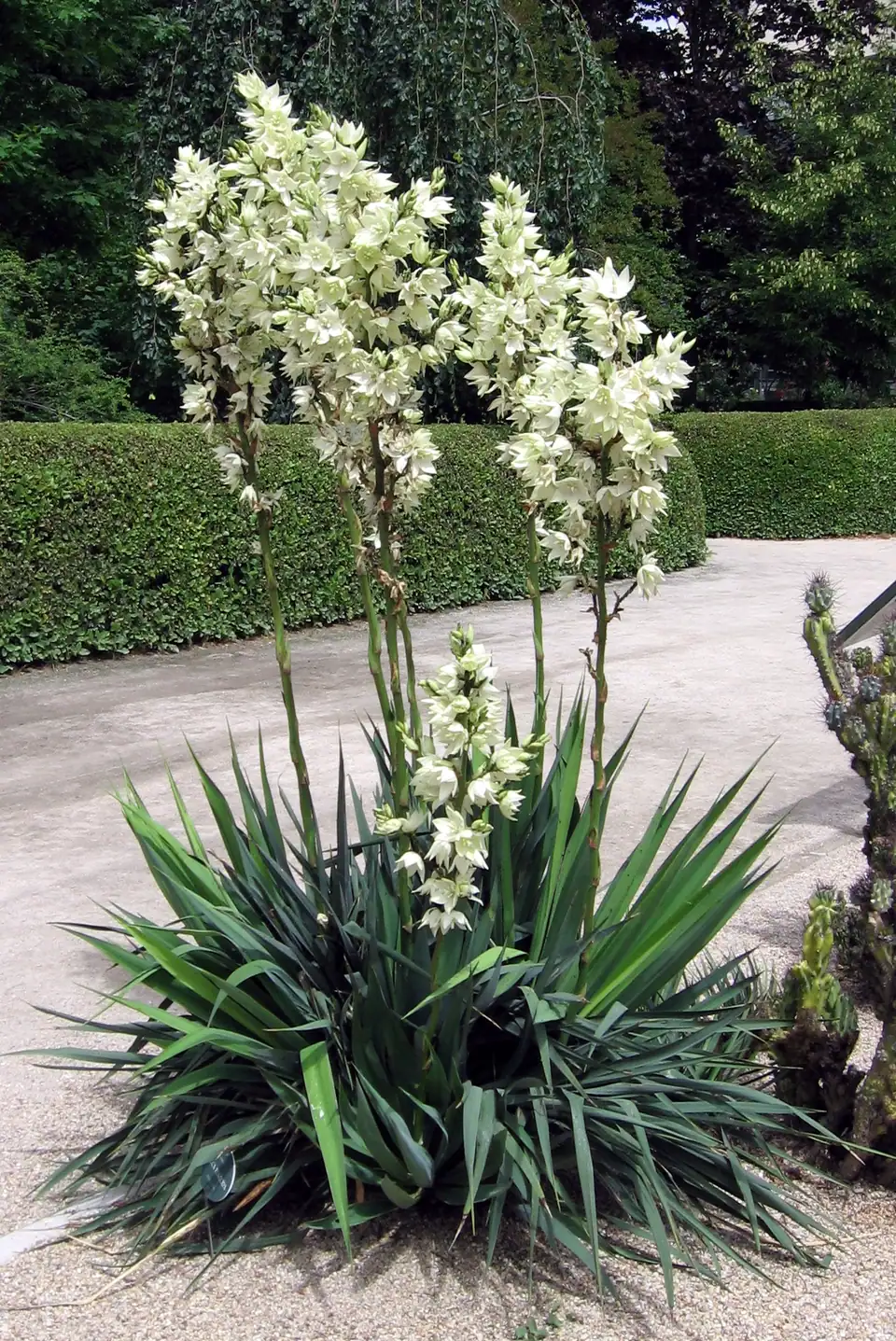
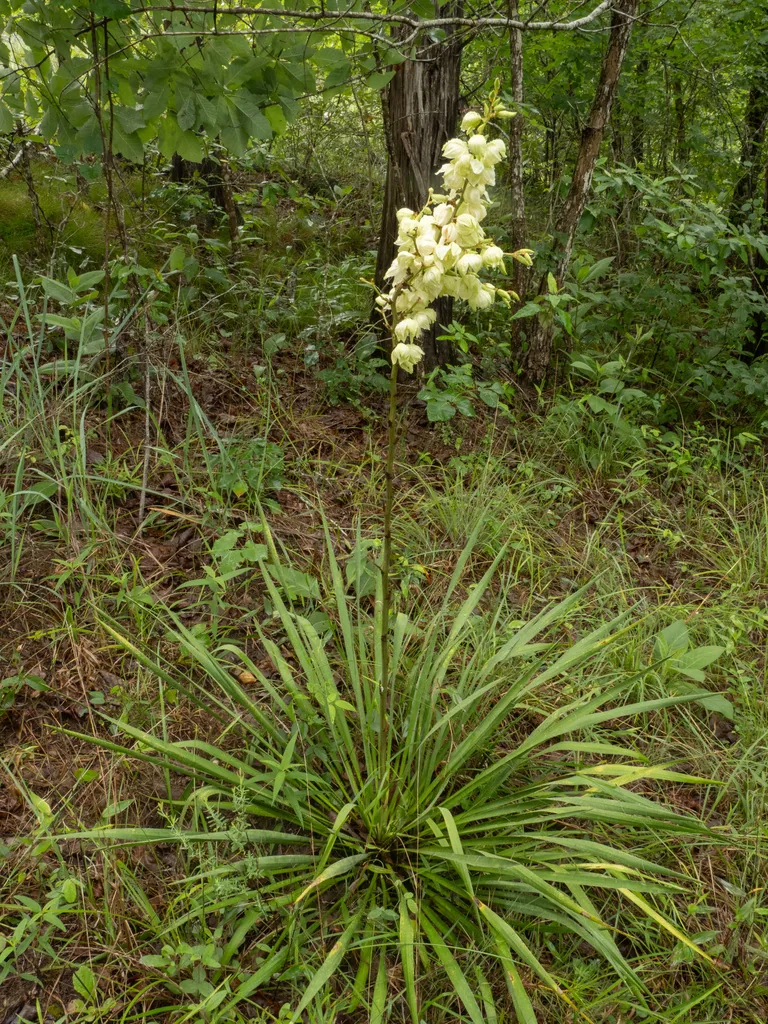
Yucca flaccida is an evergreen shrub of the asparagus family native to eastern North America, forming rosettes of spear-shaped leaves and suckering into small colonies. [1] It grows best in poor, dry, sandy or rocky soil in full sun and does not do well in moist climates. [1] The fruit, flowers and stem are edible, while the roots contain poisonous saponins. [1]
This record is incomplete: the sources we read do not cover every field yet.
Not yet covered by our sources: Pruning
Adam's Needle care
How to water Adam's Needle
Watering
Drought tolerant; grows best in poor, dry soil
What the sources say (2)
Grows best in poor, dry, sandy loam or rocky soil, but will adapt to other soils.Resistance To Challenges:
Deer
Drought
Dry Soil
Poor Soil
Problems:
Problem for Cats
Problem for Dogs
Problem for HorsesWatering notes
Does not grow well in locations with moist climates; needs good drainage
What the sources say (2)
Insects, Diseases, and Other Plant Problems: Does not grow well in locations with moist climates.Soil Drainage:
Good Drainage
Occasionally Wet
Very Dry
Available Space To Plant:How much light Adam's Needle needs
Full sun
What the sources say (1)
Light:
Full sun (6 or more hours of direct sunlight a day)
Soil Texture:
Sand
Shallow RockyHow much cold Adam's Needle can take
Hardiness, coldest zone
4a [winter low −34.4 to −31.7 °C (−30 to −25 °F)]
What the sources say (1)
USDA Plant Hardiness Zone:
4a, 4b, 5a, 5b, 6a, 6b, 7a, 7b, 8a, 8b, 9a, 9bHardiness, warmest zone
9b [winter low −3.9 to −1.1 °C (25 to 30 °F)]
What the sources say (1)
USDA Plant Hardiness Zone:
4a, 4b, 5a, 5b, 6a, 6b, 7a, 7b, 8a, 8b, 9a, 9bWhere to grow Adam's Needle
Yes
What the sources say (1)
Landscape Location:
Container
Patio
Vertical Spaces
Walkways
Landscape Theme:
Drought Tolerant GardenHow to propagate Adam's Needle
Division, seed, stem cutting
What the sources say (1)
Recommended Propagation Strategy:
Division
Seed
Stem Cutting
Country Or Region Of Origin:How to grow Adam's Needle
The plant
Life cycle
perennial
What the sources say (1)
Family:
Asparagaceae
Life Cycle:
Perennial
Recommended Propagation Strategy:
Division
Seed
Stem CuttingFamily
Asparagaceae
What the sources say (1)
This evergreen shrub in the asparagus family (Asparagaceae) that is native to portions of eastern North America (including NC) produces rosettes of spear-shaped leavesAdam's Needle pests and problems
Moist climates
Symptom: Does not grow well in locations with moist climates
What the sources say (1)
Does not grow well in locations with moist climates.
— Yucca flaccida (Adam's Needle, Flaccid Leaf Yucca, Floppy Yucca, Weakleaf Yucca) | North Carolina Extension Gardener Plant Toolbox [1]
Remedies
Each remedy shows what official sources say about it; traditional remedies without an official source are marked as such. Harmful ones are listed so you know to avoid them.
Treating the plant
aphids
water spray from a hose Not verified
Traditional remedy, not verified by an official source.
How: Spray the aphids with water from a hose daily until the colony is destroyed.
mealybugs
water spray from a hose Not verified
Traditional remedy, not verified by an official source.
How: Blast the mealybugs with water from the garden hose; ant colonies that tend them need to be baited to prevent reinfestation.
yucca plant bug
insecticidal soap Works
Because a product is organic and/or natural does not mean that it is safe to use
— extension.psu.edu [5] Spray needs to contact insects in order to be effective.
— portal.ct.gov [6] How: Several applications of insecticidal soap applied directly to the pest.
Several applications of insecticidal soap applied directly to the pest will take care of them in a few weeks.
— gardeningknowhow.com [4] What the evidence says For example, insecticidal soap is a safe, effective organic insecticide with minimal environmental impact.
— extension.psu.edu [5]
spider mites
insecticidal soap Works
Because a product is organic and/or natural does not mean that it is safe to use
— extension.psu.edu [5] How: Apply several times according to the package directions.
smother the mites with neem oil or an insecticidal soap applied several times according to the package directions.
— gardeningknowhow.com [4] What the evidence says For example, insecticidal soap is a safe, effective organic insecticide with minimal environmental impact.
— extension.psu.edu [5] neem oil Not verified
Traditional remedy, not verified by an official source.
Despite these being biological pesticides, it is important to read the directions on the label and wear safety equipment.
— extension.illinois.edu [7] How: Apply several times according to the package directions.
scale
neem oil Not verified
Traditional remedy, not verified by an official source.
Despite these being biological pesticides, it is important to read the directions on the label and wear safety equipment.
— extension.illinois.edu [7] How: Repeated treatments, depending on the size of the colony.
leaf spot
removing infected leaves Official source, not independently tested
How: Remove infected leaves; avoid overhead irrigation.
If you are having problems with one of the leaf spot diseases, remove infected leaves.
— hyg.ipm.illinois.edu [8]
stalk borer
burning old stalks and destroying weeds at garden edges Official source, not independently tested
How: Burn all the old stalks, if allowed, and destroy weeds at the edges of the garden.
Burning all the old stalks, if allowed, and destroying weeds at the edges of the garden helps control this insect.
— portal.ct.gov [6]
Is Adam's Needle toxic to pets?
Reported by the source, quoted verbatim. This is not medical or veterinary advice: if a person or an animal may have eaten this plant, contact a poison control centre or a veterinarian.
Animals
Problems: Problem for Cats Problem for Dogs Problem for Horses - Poisonous to Humans: Poison Severity: Low
[1]- Poisonous parts
Poison Toxic Principle: Saponins Causes Contact Dermatitis: No Poison Part: Roots
[1]- Toxic principle
Poison Toxic Principle: Saponins Causes Contact Dermatitis: No Poison Part: Roots
[1]- Symptoms
Poison Symptoms: Dogs, cats: Vomiting; Horses: liver disease, dermatitis Poison Toxic Principle: Saponins
[1]- Severity
This plant has low severity poison characteristics. See below Description
[1]
People
The roots contain saponins, which are poisonous. Saponins have a bitter taste and are not absorbed by the human body, so most will pass without causing harm.
[1]
Calendar
Pruning
Not stated in the sources we read.
Months as given by the sources, which are mostly from the United States (northern hemisphere). In the southern hemisphere they shift by about six months.
Edibility
Reported by the source, quoted verbatim. Do not eat a plant on the basis of this page alone: identification mistakes can be dangerous.
Similar plants
- Beaked Yucca Yucca rostrata
- Curlyleaf Yucca Yucca filamentosa
- Giant Yucca Yucca gigantea
- Mound Lily Yucca Yucca gloriosa
- Soapweed Yucca Yucca glauca
- Spanish Bayonet Yucca aloifolia
- Yucca brevifolia Yucca brevifolia
- American Agave Agave virginica
Sources
Every value above is quoted from these documents. Links lead to the original publisher.
- Yucca flaccida (Adam's Needle, Flaccid Leaf Yucca, Floppy Yucca, Weakleaf Yucca) | North Carolina Extension Gardener Plant Toolbox · plants.ces.ncsu.edu, consulted
- Adam's Needle - Yucca flaccida | North Carolina Extension Gardener Plant Toolbox · plants.ces.ncsu.edu, consulted
- Yucca | Home & Garden Information Center · hgic.clemson.edu, consulted
- gardeningknowhow.com · gardeningknowhow.com
- extension.psu.edu · extension.psu.edu
- portal.ct.gov · portal.ct.gov
- extension.illinois.edu · extension.illinois.edu
- hyg.ipm.illinois.edu · hyg.ipm.illinois.edu
Written by Emilio Marruso · last checked