
How to Grow and Care for Spanish Bayonet
Yucca aloifolia
Written by Emilio Marruso · last checked
Toxic to: Cats, Dogs, Horses, People · Why
At a glance
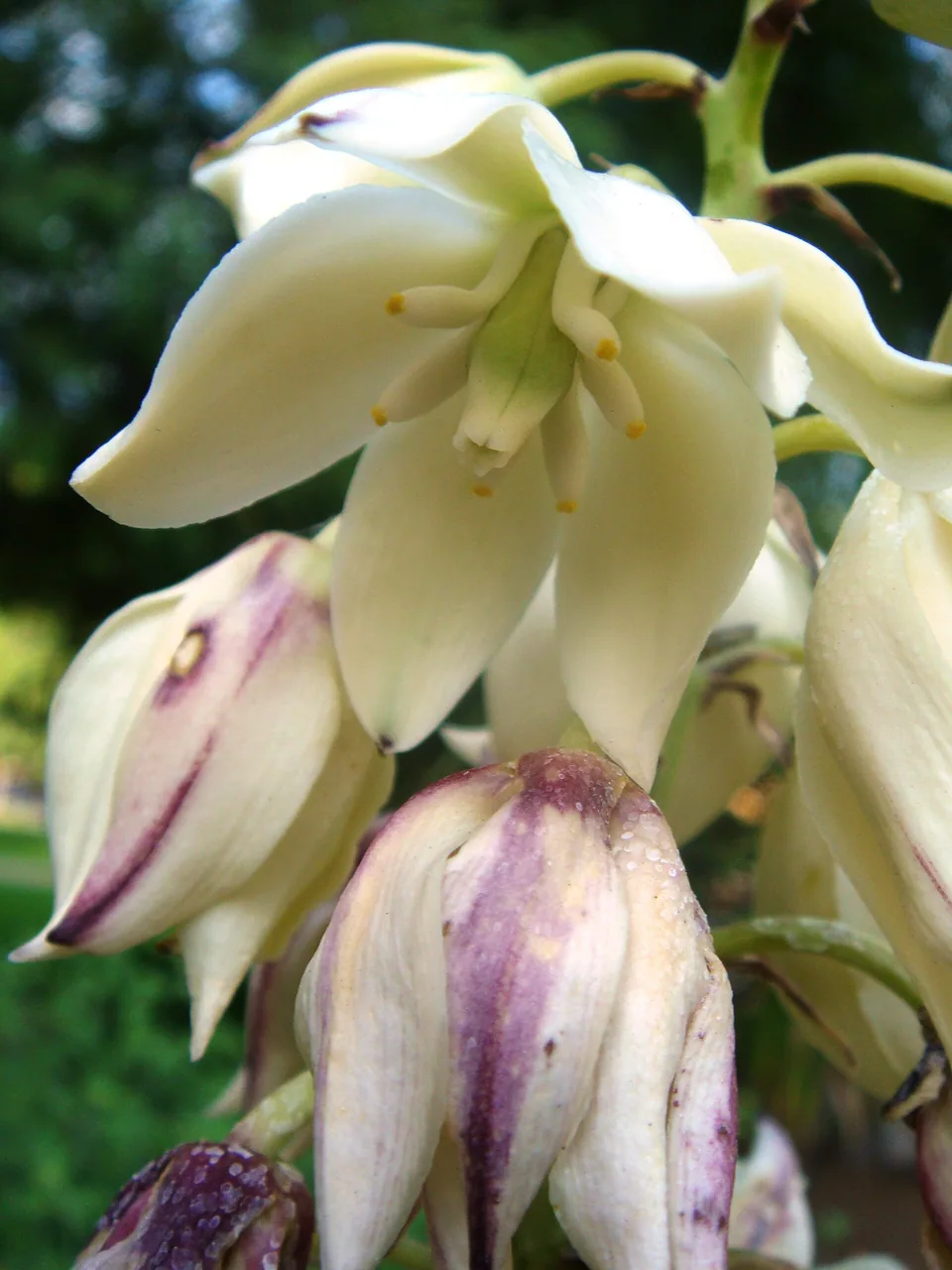
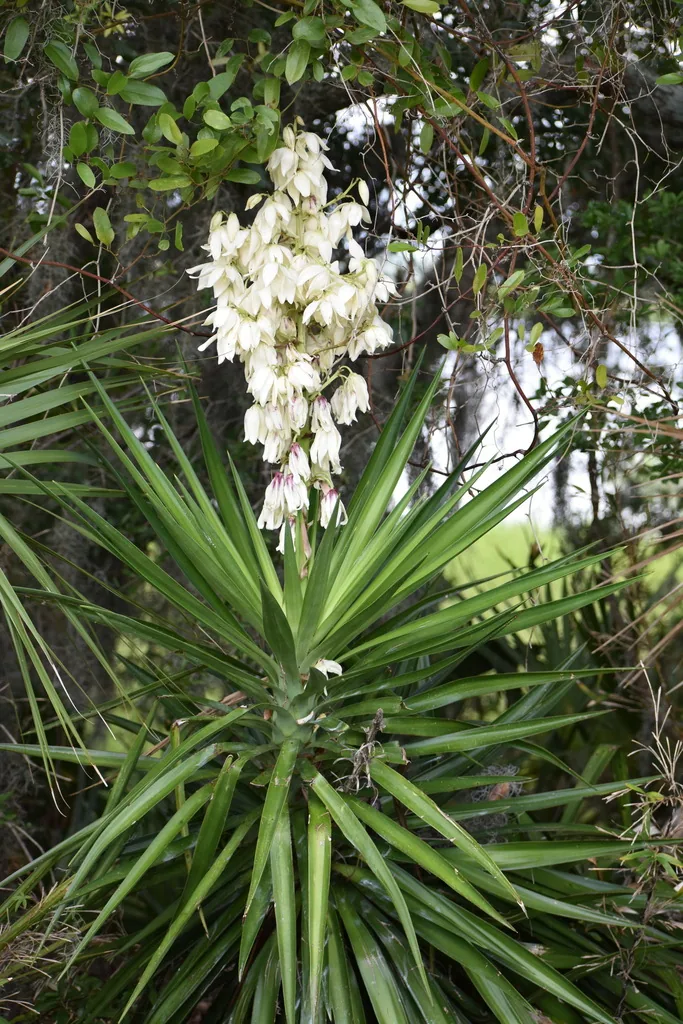
This yucca shrugs off drought: once established, it needs almost no extra watering. Give it full sun to partial shade and well-drained sandy soil, and it can grow 10–15 feet tall. Its flowers are edible in salads, and from October to December the fruit can be eaten raw or cooked down into jellies and pies.
- Sun
Full sun to partial shade
What the sources say (2)
Light: Full sun to partial shade
It grows best in full sun to partial shade, but can tolerate nearly full shade.
— Spanish Bayonet – Gardening Solutions [5] Light: Full sun (6 or more hours of direct sunlight a day) Partial Shade (Direct sunlight only part of the day, 2-6 hours)
— Yucca aloifolia (Aloe Yucca, Dagger Plant, Spanish Bayonet, Spanish Dagger) | North Carolina Extension Gardener Plant Toolbox [1] - Water
Very drought tolerant: once established, it needs almost no extra water
What the sources say (1)
Watering: Highly drought tolerant; once established requires almost no supplemental irrigation
it’s highly drought tolerant and once established, requires almost no supplemental irrigation.
— Spanish Bayonet – Gardening Solutions [5] - Cold
Survives winters down to −10 °F (−23.3 °C)
Very hardy · USDA 6a · RHS H7 · Z6
What the sources say (4)
Hardiness, coldest zone: 6a [winter low −23.3 to −20.6 °C (−10 to −5 °F)]
According to NC State Extension: USDA Plant Hardiness Zone: 6a, 6b, 7a, 7b, 8a, 8b, 9a, 9b, 10a, 10b, 11a, 11b
— Yucca aloifolia (Aloe Yucca, Dagger Plant, Spanish Bayonet, Spanish Dagger) | North Carolina Extension Gardener Plant Toolbox [1] Florida: Spanish bayonet can be incorporated into any Florida landscape (zones 6-11b)
— Spanish Bayonet – Gardening Solutions [5] USDA Plant Hardiness Zone: 6a, 6b, 7a, 7b, 8a, 8b, 9a, 9b, 10a, 10b, 11a, 11b
— Yucca aloifolia (Aloe Yucca, Dagger Plant, Spanish Bayonet, Spanish Dagger) | North Carolina Extension Gardener Plant Toolbox [1] Hardiness, warmest zone: 11b [winter low 7.2 to 10 °C (45 to 50 °F)]
USDA Plant Hardiness Zone: 6a, 6b, 7a, 7b, 8a, 8b, 9a, 9b, 10a, 10b, 11a, 11b
— Yucca aloifolia (Aloe Yucca, Dagger Plant, Spanish Bayonet, Spanish Dagger) | North Carolina Extension Gardener Plant Toolbox [1] - Soil
Best in very well-drained sandy soil, but it tolerates other soils
What the sources say (1)
Watering notes: Needs very well-drained sandy soils but tolerates other soils
They need very well-drained sandy soils but will tolerate other soils.
— Yucca aloifolia (Aloe Yucca, Dagger Plant, Spanish Bayonet, Spanish Dagger) | North Carolina Extension Gardener Plant Toolbox [1] - Planting
Plant potted plants from spring through fall
What the sources say (1)
Planting: Spring through fall (potted plants)
Set out potted plants from spring through fall.
— Yucca | Home & Garden Information Center [4] - Pruning
Cut off the flower stalks after blooming
What the sources say (1)
Pruning: After blooming (remove flower stalks)
Little maintenance is required. Remove the flower stalks after blooming.
— Yucca | Home & Garden Information Center [4] - Harvest
Fruit from October to December, raw or cooked; the flowers are good in salads
What the sources say (1)
Harvest: October to December (fruit)
1–3-inch-long, ovoid or ellipsoid, blackish, gooey fruit are produced from October to December.
— Yucca aloifolia (Aloe Yucca, Dagger Plant, Spanish Bayonet, Spanish Dagger) | North Carolina Extension Gardener Plant Toolbox [1] - Pests
Yucca plant bugs and black aphids; leaf spots in wet weather
What the sources say (3)
Pests: yucca plant bug, black aphids
No serious insect or disease problems. Yucca plant bug sometimes causes cosmetic damage.
— Yucca aloifolia (Aloe Yucca, Dagger Plant, Spanish Bayonet, Spanish Dagger) | North Carolina Extension Gardener Plant Toolbox [1] Black aphids on flower stalks may ruin the flowers.
— Yucca | Home & Garden Information Center [4] Diseases: leaf-spotting fungi
Plants are susceptible to leaf-spotting fungi during wet periods.
— Yucca | Home & Garden Information Center [4] - Watch out
Needle-sharp leaf tips: plant it away from paths, children and pets
- Size
10–15 ft tall and 3–5 ft wide
What the sources say (3)
Mature height: 304.8-457.2 cm (10-15 ft)
Height: 10 ft. 0 in. - 15 ft. 0 in. Width: 3 ft. 0 in. - 5 ft. 0 in.
— Yucca aloifolia (Aloe Yucca, Dagger Plant, Spanish Bayonet, Spanish Dagger) | North Carolina Extension Gardener Plant Toolbox [1] Mature height of Spanish bayonet is between 10 and 15 feet, and its spread will vary.
— Spanish Bayonet – Gardening Solutions [5] Mature width: 91.44-152.4 cm (3-5 ft)
Height: 10 ft. 0 in. - 15 ft. 0 in. Width: 3 ft. 0 in. - 5 ft. 0 in.
— Yucca aloifolia (Aloe Yucca, Dagger Plant, Spanish Bayonet, Spanish Dagger) | North Carolina Extension Gardener Plant Toolbox [1] - Propagation
From offsets and suckers, root or stem cuttings, or seed
What the sources say (3)
Propagation: Division (offsets, suckers), root cuttings, stem cuttings, seed
Recommended Propagation Strategy: Division Root Cutting Seed Country Or Region Of Origin:
— Yucca aloifolia (Aloe Yucca, Dagger Plant, Spanish Bayonet, Spanish Dagger) | North Carolina Extension Gardener Plant Toolbox [1] The plant can be grown from seeds, stem cuttings, and offsets from mature plants.
— Native Fruits: Aloe Yucca - Alabama Cooperative Extension System [2] Propagation is by division of the suckers, by cuttings, and occasionally by seed
— Spanish Bayonet – Gardening Solutions [5] - Safety
Harmful to cats, dogs, horses and children
Overview
Spanish bayonet is a slow-growing evergreen shrub with stiff, sharp-tipped leaves, used as an accent or security plant. [5] It does best in full sun in well-drained sandy soil, tolerates salt spray and drought, and its flowers and fruit are edible. [1]
Spanish Bayonet care
How to water Spanish Bayonet
Watering
Highly drought tolerant; once established requires almost no supplemental irrigation
What the sources say (1)
it’s highly drought tolerant and once established, requires almost no supplemental irrigation.Watering notes
Needs very well-drained sandy soils but tolerates other soils
What the sources say (1)
They need very well-drained sandy soils but will tolerate other soils.How much light Spanish Bayonet needs
Full sun to partial shade
What the sources say (2)
It grows best in full sun to partial shade, but can tolerate nearly full shade.Light:
Full sun (6 or more hours of direct sunlight a day)
Partial Shade (Direct sunlight only part of the day, 2-6 hours)How much cold Spanish Bayonet can take
Hardiness, coldest zone
6a [winter low −23.3 to −20.6 °C (−10 to −5 °F)]
What each source says
According to NC State Extension: 6a-11b [winter low −23.3 to 10 °C (−10 to 50 °F)]
Florida: 6-11b [winter low −23.3 to 10 °C (−10 to 50 °F)]
What the sources say (3)
According to NC State Extension: USDA Plant Hardiness Zone:
6a, 6b, 7a, 7b, 8a, 8b, 9a, 9b, 10a, 10b, 11a, 11bFlorida: Spanish bayonet can be incorporated into any Florida landscape (zones 6-11b)USDA Plant Hardiness Zone:
6a, 6b, 7a, 7b, 8a, 8b, 9a, 9b, 10a, 10b, 11a, 11bHardiness, warmest zone
11b [winter low 7.2 to 10 °C (45 to 50 °F)]
What the sources say (1)
USDA Plant Hardiness Zone:
6a, 6b, 7a, 7b, 8a, 8b, 9a, 9b, 10a, 10b, 11a, 11bHow to propagate Spanish Bayonet
Division (offsets, suckers), root cuttings, stem cuttings, seed
What the sources say (3)
Recommended Propagation Strategy:
Division
Root Cutting
Seed
Country Or Region Of Origin:The plant can be grown from seeds, stem cuttings, and offsets from mature plants.Propagation is by division of the suckers, by cuttings, and occasionally by seedHow to grow Spanish Bayonet
The plant
Life cycle
perennial
What the sources say (1)
Also known as Spanish dagger or Spanish bayonet, aloe yucca is a long-lived perennial shrub.Family
Asparagaceae
What the sources say (1)
Spanish bayonet is native to the Atlantic and Gulf Coasts of the United States from southern Virginia south to Florida and west to the Texas Gulf Coast. It is a member of the asparagus family (Asparagaceae).Mature height
304.8-457.2 cm (10-15 ft)
What the sources say (2)
Height: 10 ft. 0 in. - 15 ft. 0 in.
Width: 3 ft. 0 in. - 5 ft. 0 in.Mature height of Spanish bayonet is between 10 and 15 feet, and its spread will vary.Mature width
91.44-152.4 cm (3-5 ft)
What the sources say (1)
Height: 10 ft. 0 in. - 15 ft. 0 in.
Width: 3 ft. 0 in. - 5 ft. 0 in.Pests and diseases
Pests
yucca plant bug, black aphids
What the sources say (2)
No serious insect or disease problems. Yucca plant bug sometimes causes cosmetic damage.Black aphids on flower stalks may ruin the flowers.Diseases
leaf-spotting fungi
What the sources say (1)
Plants are susceptible to leaf-spotting fungi during wet periods.Spanish Bayonet pests and problems
Yucca plant bug
Symptom: Cosmetic damage; stippling on the leaves.
What to do: Not specified in the source.
What the sources say (1)
No serious insect or disease problems. Yucca plant bug sometimes causes cosmetic damage.
— Yucca aloifolia (Aloe Yucca, Dagger Plant, Spanish Bayonet, Spanish Dagger) | North Carolina Extension Gardener Plant Toolbox [1] Leaf spot and aphids
Symptom: Leaf-spotting fungi in wet periods; black areas on leaf margins from too much moisture; black aphids on flower stalks.
What to do: Not specified in the source.
What the sources say (1)
Plants are susceptible to leaf-spotting fungi during wet periods. Too much moisture may result in black areas on the leaf margins. Black aphids on flower stalks may ruin the flowers.
— Yucca | Home & Garden Information Center [4] Sharp leaf tips
Symptom: Needle-like leaf tips pierce even thick clothing.
What to do: Plant away from walkways and areas where people or pets could come into contact with the plant.
What the sources say (1)
These spiked leaves have been known to pierce through even thick clothing, so select a planting location away from walkways and areas where people or pets could come into contact with the plant.
— Spanish Bayonet – Gardening Solutions [5]
Remedies
Each remedy shows what official sources say about it; traditional remedies without an official source are marked as such. Harmful ones are listed so you know to avoid them.
Treating the plant
yucca plant bug
insecticidal soap spray Works
For example, spraying home remedies that contain dish detergent on plants on a sunny day can injure the plant, essentially burning it.
— extension.psu.edu [8] How: Apply foliar sprays to contact the insects when needed.
Among the compounds registered for control of this pest in Connecticut are insecticidal soap, ultrafine horticultural oil or malathion. When needed, apply foliar sprays to contact the insects.
— portal.ct.gov [6] What the evidence says For example, insecticidal soap is a safe, effective organic insecticide with minimal environmental impact.
— extension.psu.edu [7]
mealybugs
insecticidal soap spray Works
For example, spraying home remedies that contain dish detergent on plants on a sunny day can injure the plant, essentially burning it.
— extension.psu.edu [8] How: When needed, mealybugs can be controlled with insecticidal soap; the spray needs to contact the insects.
When needed, they can be controlled with the use of insecticidal soap, ultrafine horticultural oil or malathion, which are among the compounds registered for control of this pest in Connecticut.
— portal.ct.gov [6] What the evidence says For example, insecticidal soap is a safe, effective organic insecticide with minimal environmental impact.
— extension.psu.edu [7]
stalk borer
burn old stalks and destroy edge weeds Partly works
How: Burn all the old stalks, if allowed, and destroy weeds at the edges of the garden.
Burning all the old stalks, if allowed, and destroying weeds at the edges of the garden helps control this insect.
— portal.ct.gov [6] What the evidence says Burning all the old stalks, if allowed, and destroying weeds at the edges of the garden helps control this insect.
— portal.ct.gov [6]
leaf spot
clip and dispose of diseased plant parts Partly works
How: Remove infected leaves and avoid overhead watering.
Like brown leaf spot, tip necrosis affects older leaves, and treatment and management are the same. Remove infected leaves, avoid overhead watering and apply a fungicide, according to label directions.
— gardenguides.com [9] What the evidence says Many insect and disease issues can be solved in the home garden by hand-picking insects or clipping and disposing of diseased plant parts.
— extension.unh.edu [10]
root rot
improve drainage with sand Not verified
Traditional remedy, not verified by an official source.
How: Fix drainage problems by amending the soil with sand.
sharp leaf tips
snip off the sharp leaf tips Not verified
Traditional remedy, not verified by an official source.
How: Gardeners sometimes snip off the sharp tips of the foliage to prevent injuries.
Getting rid of it
unwanted plant
dig up the plant and roots Not verified
Traditional remedy, not verified by an official source.
These spiked leaves have been known to pierce through even thick clothing
— Spanish Bayonet – Gardening Solutions [5] How: Cut the trunk to ground level, remove the root system with a spade, and dig up new shoots as they appear.
smother with cardboard or newspaper and compost Not verified
Traditional remedy, not verified by an official source.
These spiked leaves have been known to pierce through even thick clothing
— Spanish Bayonet – Gardening Solutions [5] How: Cut the trunk to ground level, cover the root area with thick cardboard or newspaper layers and compost, and leave for about a year.
Is Spanish Bayonet toxic to pets?
Reported by the source, quoted verbatim. This is not medical or veterinary advice: if a person or an animal may have eaten this plant, contact a poison control centre or a veterinarian.
Animals
Problems: Problem for Cats Problem for Children Problem for Dogs Problem for Horses
[1]The source flags the risk for this animal but does not explain why.
People
Resistance To Challenges: Deer Drought Dry Soil Salt Problems: Problem for Cats Problem for Children
[1]
Calendar
Spring through fall (potted plants)
What the sources say (1)
Set out potted plants from spring through fall.October to December (fruit)
What the sources say (1)
1–3-inch-long, ovoid or ellipsoid, blackish, gooey fruit are produced from October to December.After blooming (remove flower stalks)
What the sources say (1)
Little maintenance is required. Remove the flower stalks after blooming.Months as given by the sources, which are mostly from the United States (northern hemisphere). In the southern hemisphere they shift by about six months.
Edibility
Reported by the source, quoted verbatim. Do not eat a plant on the basis of this page alone: identification mistakes can be dangerous.
The flowers can be served as a salad or cooked.
[1]The flowers can be served as a salad or cooked. Fruit can be eaten raw or cooked.
[1]The blossoms are edible, making a crisp addition to salads raw, or served battered and deep-fried.
[5]the fruits can be enjoyed raw or incorporated into a variety of dishes, such as cooked down for jellies, pies, and cobblers and blended into ice cream.
[2]
Indicative values
Values from a secondary source, not checked word for word like the rest of this page. Use them as a starting point.
- Hours of sun
- 6-8 hoursIndicative value, adapt it to your climate · Secondary source
- Drought tolerant
- yesIndicative value, adapt it to your climate · Secondary source
- Soil pH
- 6-7.5Indicative value, adapt it to your climate · Secondary source
- Care level
- LowIndicative value, adapt it to your climate · Secondary source
- Growth rate
- LowIndicative value, adapt it to your climate · Secondary source
Similar plants
- Adam's Needle Yucca flaccida
- Beaked Yucca Yucca rostrata
- Curlyleaf Yucca Yucca filamentosa
- Giant Yucca Yucca gigantea
- Mound Lily Yucca Yucca gloriosa
- Soapweed Yucca Yucca glauca
- Yucca brevifolia Yucca brevifolia
- American Agave Agave virginica
Sources
Every value above is quoted from these documents. Links lead to the original publisher.
- Yucca aloifolia (Aloe Yucca, Dagger Plant, Spanish Bayonet, Spanish Dagger) | North Carolina Extension Gardener Plant Toolbox · plants.ces.ncsu.edu, consulted
- Native Fruits: Aloe Yucca - Alabama Cooperative Extension System · aces.edu, consulted
- Spanish Dagger - Yucca aloifolia | North Carolina Extension Gardener Plant Toolbox · plants.ces.ncsu.edu, consulted
- Yucca | Home & Garden Information Center · hgic.clemson.edu, consulted
- Spanish Bayonet – Gardening Solutions · gardeningsolutions.ifas.ufl.edu, consulted
- portal.ct.gov · portal.ct.gov
- extension.psu.edu · extension.psu.edu
- extension.psu.edu · extension.psu.edu
- gardenguides.com · gardenguides.com
- extension.unh.edu · extension.unh.edu
Written by Emilio Marruso · last checked