
How to Grow and Care for Soapweed Yucca
Yucca glauca
Written by Emilio Marruso · last checked
Toxic to: Cats, Dogs, Horses · Why
At a glance
This tough perennial yucca loves full sun and asks for little more than soil that drains fast, since it cannot survive in waterlogged ground. Its fruit, flowers, flower buds, stem and seedpods can all be eaten. You can start new plants from seed, stem cuttings, rhizomes or offsets, so one plant can soon become many.
- Sun
Full sun
What the sources say (1)
Light: Full sun
Success with soapweed yucca means giving it sharp drainage and full sun. It is very tolerant of poor or rocky soils but cannot survive in waterlogged conditions.
— Yucca glauca (Great Plains Yucca, Narrowleaf Yucca, Plains Yucca, Small Soapweed, Soapweed Yucca) | North Carolina Extension Gardener Plant Toolbox [1] - Water
Never let it sit in soggy soil: it cannot survive waterlogging
What the sources say (1)
Watering notes: Needs sharp drainage; cannot survive in waterlogged conditions
Success with soapweed yucca means giving it sharp drainage and full sun. It is very tolerant of poor or rocky soils but cannot survive in waterlogged conditions.
— Yucca glauca (Great Plains Yucca, Narrowleaf Yucca, Plains Yucca, Small Soapweed, Soapweed Yucca) | North Carolina Extension Gardener Plant Toolbox [1] - Cold
Survives winters down to −30 °F (−34.4 °C)
Very hardy · USDA 4a · RHS H7 · Z4
What the sources say (2)
Hardiness, coldest zone: 4a [winter low −34.4 to −31.7 °C (−30 to −25 °F)]
USDA Plant Hardiness Zone: 4a, 4b, 5a, 5b, 6a, 6b, 7a, 7b, 8a, 8b
— Yucca glauca (Great Plains Yucca, Narrowleaf Yucca, Plains Yucca, Small Soapweed, Soapweed Yucca) | North Carolina Extension Gardener Plant Toolbox [1] Hardiness, warmest zone: 8b [winter low −9.4 to −6.7 °C (15 to 20 °F)]
USDA Plant Hardiness Zone: 4a, 4b, 5a, 5b, 6a, 6b, 7a, 7b, 8a, 8b
— Yucca glauca (Great Plains Yucca, Narrowleaf Yucca, Plains Yucca, Small Soapweed, Soapweed Yucca) | North Carolina Extension Gardener Plant Toolbox [1] - Soil
Soil that drains very fast
What the sources say (1)
Watering notes: Needs sharp drainage; cannot survive in waterlogged conditions
Success with soapweed yucca means giving it sharp drainage and full sun. It is very tolerant of poor or rocky soils but cannot survive in waterlogged conditions.
— Yucca glauca (Great Plains Yucca, Narrowleaf Yucca, Plains Yucca, Small Soapweed, Soapweed Yucca) | North Carolina Extension Gardener Plant Toolbox [1] - Harvest
Fruit, flowers, flower buds, stem and seedpods can be eaten
- Propagation
From seed kept cold first, stem cuttings, rhizomes or offsets
What the sources say (1)
Propagation: Seed (cold stratified), stem cuttings, rhizomes, offsets
Propagation can be accomplished from seeds that have been given a winter cold treatment (cold stratified). Stem cuttings, rhizomes, and offsets are additional means of propagation.
— Yucca glauca (Great Plains Yucca, Narrowleaf Yucca, Plains Yucca, Small Soapweed, Soapweed Yucca) | North Carolina Extension Gardener Plant Toolbox [1] - Safety
Keep pets away: it makes dogs and cats vomit and harms horses' liver and skin
Overview
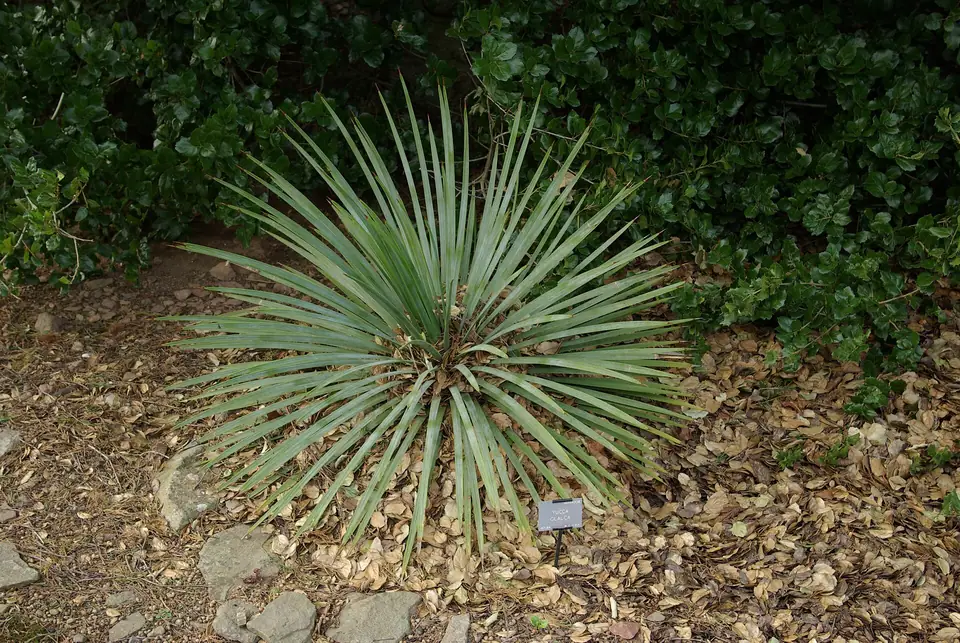
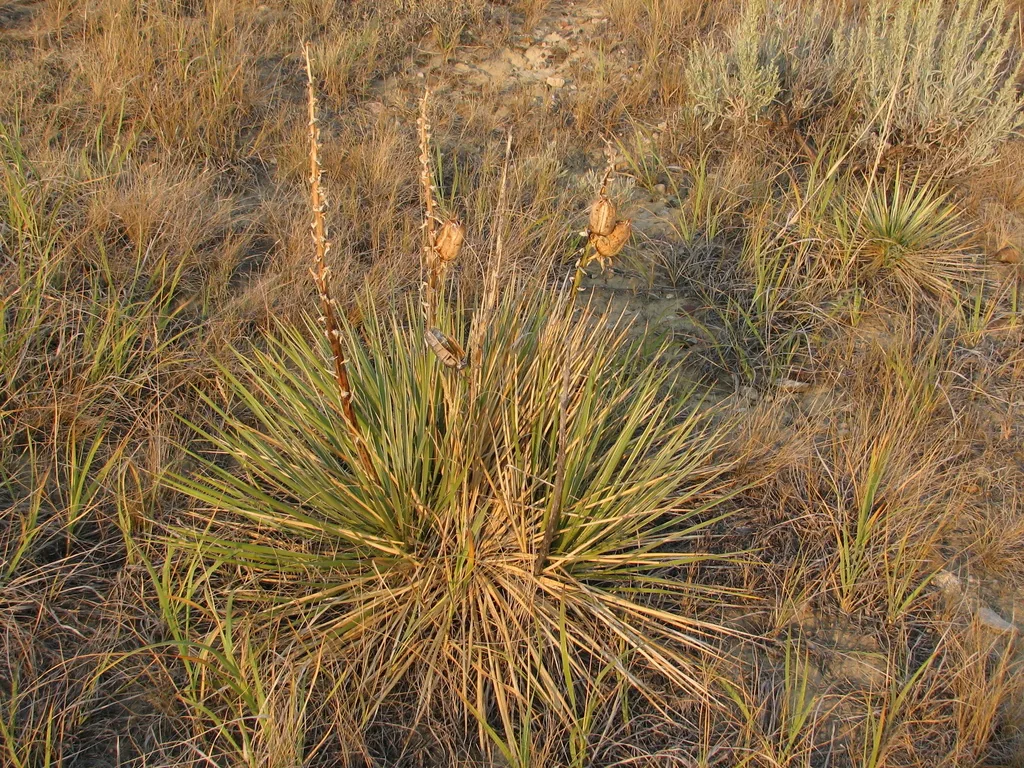
Soapweed yucca is a woody-stemmed perennial with long, narrow leaves in rosettes, native to the Great Plains. [1] It needs sharp drainage and full sun and cannot survive in waterlogged conditions. [1] It is propagated by seed, stem cuttings, rhizomes and offsets, and is a problem for dogs, cats and horses. [1]
This record is incomplete: the sources we read do not cover every field yet.
Not yet covered by our sources: Watering, Pruning
Soapweed Yucca care
How to water Soapweed Yucca
Watering
Not stated in the sources we read.
Watering notes
Needs sharp drainage; cannot survive in waterlogged conditions
What the sources say (1)
Success with soapweed yucca means giving it sharp drainage and full sun. It is very tolerant of poor or rocky soils but cannot survive in waterlogged conditions.How much light Soapweed Yucca needs
Full sun
What the sources say (1)
Success with soapweed yucca means giving it sharp drainage and full sun. It is very tolerant of poor or rocky soils but cannot survive in waterlogged conditions.How much cold Soapweed Yucca can take
Hardiness, coldest zone
4a [winter low −34.4 to −31.7 °C (−30 to −25 °F)]
What the sources say (1)
USDA Plant Hardiness Zone:
4a, 4b, 5a, 5b, 6a, 6b, 7a, 7b, 8a, 8bHardiness, warmest zone
8b [winter low −9.4 to −6.7 °C (15 to 20 °F)]
What the sources say (1)
USDA Plant Hardiness Zone:
4a, 4b, 5a, 5b, 6a, 6b, 7a, 7b, 8a, 8bHow to propagate Soapweed Yucca
Seed (cold stratified), stem cuttings, rhizomes, offsets
What the sources say (1)
Propagation can be accomplished from seeds that have been given a winter cold treatment (cold stratified). Stem cuttings, rhizomes, and offsets are additional means of propagation.How to grow Soapweed Yucca
The plant
Life cycle
perennial
What the sources say (1)
A member of the agave family, the soapweed yucca is a woody-stemmed perennial with long and narrow leaves in rosettes.Family
Asparagaceae
What the sources say (1)
Genus: Yucca Species: glauca Family: Asparagaceae Uses (Ethnobotany): Used for cordage by Native Americans.Soapweed Yucca pests and problems
Waterlogged soil
Symptom: Cannot survive in waterlogged conditions.
What to do: Give it sharp drainage and full sun.
What the sources say (1)
Success with soapweed yucca means giving it sharp drainage and full sun. It is very tolerant of poor or rocky soils but cannot survive in waterlogged conditions.
— Yucca glauca (Great Plains Yucca, Narrowleaf Yucca, Plains Yucca, Small Soapweed, Soapweed Yucca) | North Carolina Extension Gardener Plant Toolbox [1]
Remedies
Each remedy shows what official sources say about it; traditional remedies without an official source are marked as such. Harmful ones are listed so you know to avoid them.
Treating the plant
yucca plant bugs
insecticidal soap spray Works
Consult the label for dosage rates and safety precautions.
— portal.ct.gov [4] How: Several applications of insecticidal soap applied directly to the pest.
Several applications of insecticidal soap applied directly to the pest will take care of them in a few weeks.
— gardeningknowhow.com [3] What the evidence says Among the compounds registered for control of this pest in Connecticut are insecticidal soap, ultrafine horticultural oil or malathion.
— portal.ct.gov [4]
aphids
water spray from a hose Not verified
Traditional remedy, not verified by an official source.
How: Spray the colony with water from a hose daily until it is destroyed.
mealybugs
water blasts from a hose Not verified
Traditional remedy, not verified by an official source.
How: Blast the mealybugs with water from the garden hose and bait the ant colonies that care for them to prevent reinfestation.
scale
neem oil Not verified
Traditional remedy, not verified by an official source.
How: Repeated treatments with neem oil can destroy the insects.
spider mites
neem oil or insecticidal soap Works
How: Smother the mites with neem oil or an insecticidal soap applied several times according to the package directions.
For best results, smother the mites with neem oil or an insecticidal soap applied several times according to the package directions.
— gardeningknowhow.com [3] What the evidence says Among the compounds registered for control of this pest in Connecticut are insecticidal soap, ultrafine horticultural oil or malathion.
— portal.ct.gov [4]
Getting rid of it
unwanted plant
digging out the whole root system Not verified
Traditional remedy, not verified by an official source.
How: Cut the trunk down to ground level, remove the root system with a spade starting at the perimeter, dig down about 4-5 feet, remove leftover root pieces, and dig up new shoots as they appear.
smothering with cardboard and compost Not verified
Traditional remedy, not verified by an official source.
How: Cut the trunk down to ground level, cover the root area with thick cardboard or 5-6 layers of newspaper, add a thick layer of compost (or weighted thick plastic) and leave it in place for about a year.
removing new sprouts as they appear Not verified
Traditional remedy, not verified by an official source.
How: After digging, check the area periodically and dig up young sprouts as they appear, because every piece of root left behind produces a new plant.
mowed or shredded Partly works
How: Yucca can be mowed or shredded with high powered equipment, but it regrows from rhizomes and taproot.
Yucca can be mowed or shredded with high powered equipment; however, the long-term success of this practice is limited since yucca can regrow from the rhizomes and taproot.
— extensionpubs.unl.edu [5] What the evidence says Yucca can be mowed or shredded with high powered equipment; however, the long-term success of this practice is limited since yucca can regrow from the rhizomes and taproot.
— extensionpubs.unl.edu [5]
Is Soapweed Yucca toxic to pets?
Reported by the source, quoted verbatim. This is not medical or veterinary advice: if a person or an animal may have eaten this plant, contact a poison control centre or a veterinarian.
Poison Symptoms: Dogs, cats: Vomiting; Horses: liver disease, dermatitis
[1]- Poisonous parts
Poison Toxic Principle: Saponins Causes Contact Dermatitis: No Poison Part: Roots
[1]- Toxic principle
Poison Toxic Principle: Saponins Causes Contact Dermatitis: No
[1]- Symptoms
Poison Symptoms: Dogs, cats: Vomiting; Horses: liver disease, dermatitis
[1]- Severity
This plant has low severity poison characteristics. See below
[1]
Calendar
Pruning
Not stated in the sources we read.
Months as given by the sources, which are mostly from the United States (northern hemisphere). In the southern hemisphere they shift by about six months.
Edibility
Reported by the source, quoted verbatim. Do not eat a plant on the basis of this page alone: identification mistakes can be dangerous.
Edibility: The fruit, flowers, flower buds, stem and seedpods can be eaten.
[1]
Similar plants
- Adam's Needle Yucca flaccida
- Beaked Yucca Yucca rostrata
- Curlyleaf Yucca Yucca filamentosa
- Giant Yucca Yucca gigantea
- Mound Lily Yucca Yucca gloriosa
- Spanish Bayonet Yucca aloifolia
- Yucca brevifolia Yucca brevifolia
- American Agave Agave virginica
Sources
Every value above is quoted from these documents. Links lead to the original publisher.
- Yucca glauca (Great Plains Yucca, Narrowleaf Yucca, Plains Yucca, Small Soapweed, Soapweed Yucca) | North Carolina Extension Gardener Plant Toolbox · plants.ces.ncsu.edu, consulted
- Narrowleaf Yucca - Yucca glauca | North Carolina Extension Gardener Plant Toolbox · plants.ces.ncsu.edu, consulted
- gardeningknowhow.com · gardeningknowhow.com
- portal.ct.gov · portal.ct.gov
- extensionpubs.unl.edu · extensionpubs.unl.edu
Written by Emilio Marruso · last checked