
How to Grow and Care for Beaked Yucca
Yucca rostrata
Written by Emilio Marruso · last checked
Toxic to: Cats, Dogs, Horses · Why
At a glance
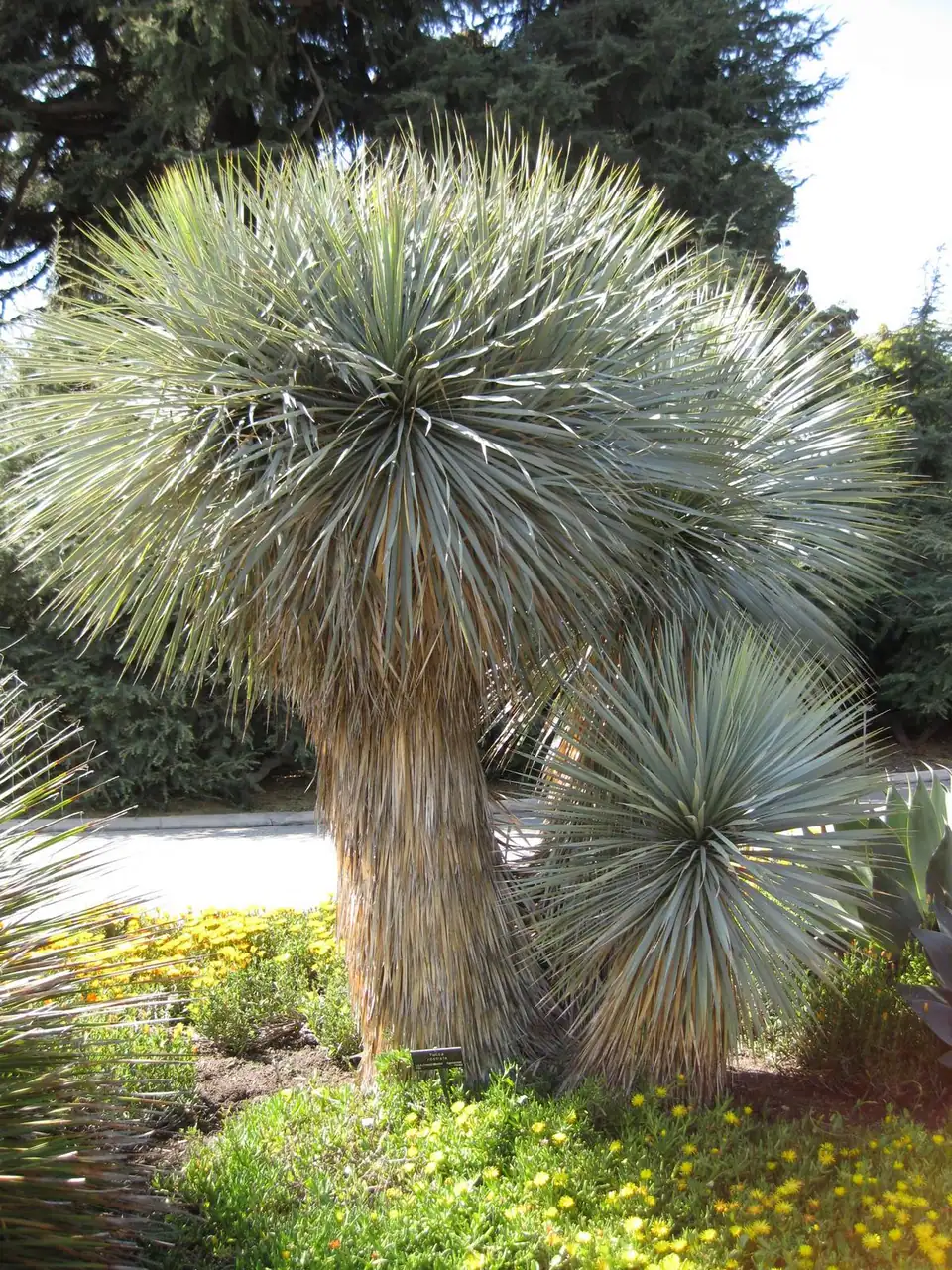
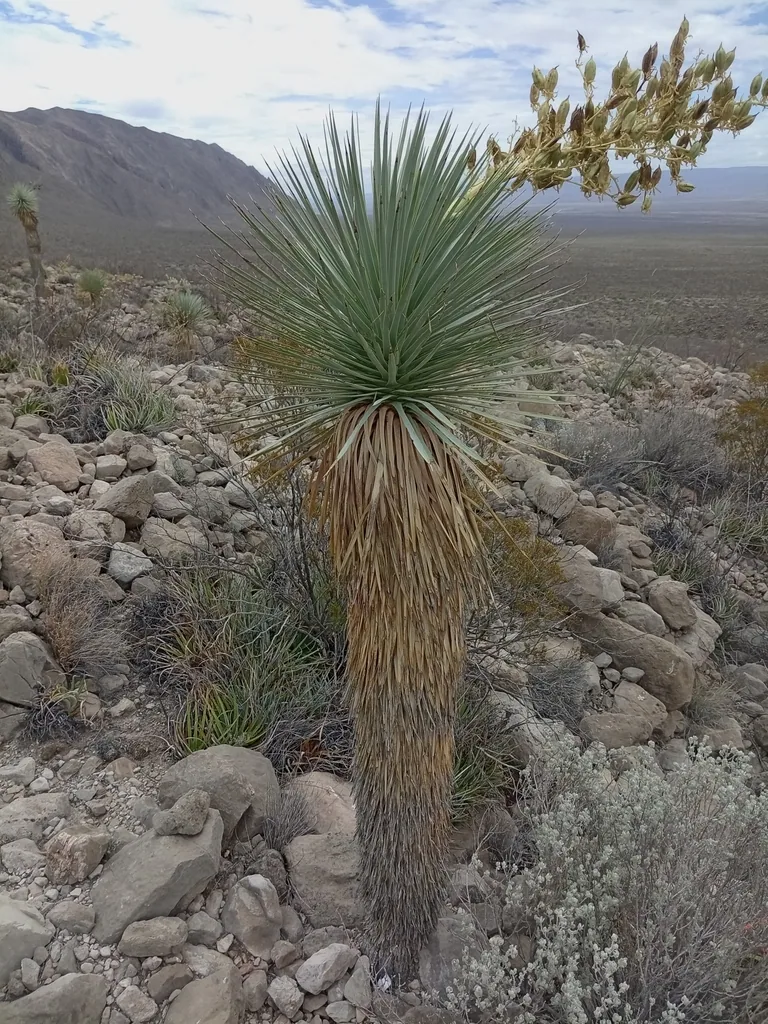
This yucca is a perennial that grows into a striking plant 5 to 15 feet tall and 4 to 10 feet wide. Give it at least half a day of full sun and a spot that drains well, and go easy on the water. It even grows in containers, and you can start new plants from seed or cuttings.
- Sun
At least half a day of full sun
What the sources say (1)
Light: At least half a day of full sun
This yucca needs well-drained, sandy soil and at least half a day of full sun.
— Yucca rostrata (Adam's Yucca, Beaked Blue Yucca, Beaked Yucca, Big Bend Yucca, Silver Yucca) | North Carolina Extension Gardener Plant Toolbox [1] - Water
Don't overwater: too much water rots the roots
What the sources say (1)
Watering notes: Avoid planting in locations with poor drainage; overwatering can lead to root rot
Avoid planting in locations having poor drainage. Overwatering can lead to root rot.
— Yucca rostrata (Adam's Yucca, Beaked Blue Yucca, Beaked Yucca, Big Bend Yucca, Silver Yucca) | North Carolina Extension Gardener Plant Toolbox [1] - Cold
Survives winters down to −20 °F (−28.9 °C)
Very hardy · USDA 5a · RHS H7 · Z5
What the sources say (2)
Hardiness, coldest zone: 5a [winter low −28.9 to −26.1 °C (−20 to −15 °F)]
USDA Plant Hardiness Zone: 5a, 5b, 7a, 7b, 8a, 8b, 9a, 9b, 10a, 10b, 11a, 11b, 12a, 12b
— Yucca rostrata (Adam's Yucca, Beaked Blue Yucca, Beaked Yucca, Big Bend Yucca, Silver Yucca) | North Carolina Extension Gardener Plant Toolbox [1] Hardiness, warmest zone: 12b [winter low 12.8 to 15.6 °C (55 to 60 °F)]
USDA Plant Hardiness Zone: 5a, 5b, 7a, 7b, 8a, 8b, 9a, 9b, 10a, 10b, 11a, 11b, 12a, 12b
— Yucca rostrata (Adam's Yucca, Beaked Blue Yucca, Beaked Yucca, Big Bend Yucca, Silver Yucca) | North Carolina Extension Gardener Plant Toolbox [1] - Soil
Plant it where water drains away well, never in soggy spots
What the sources say (1)
Watering notes: Avoid planting in locations with poor drainage; overwatering can lead to root rot
Avoid planting in locations having poor drainage. Overwatering can lead to root rot.
— Yucca rostrata (Adam's Yucca, Beaked Blue Yucca, Beaked Yucca, Big Bend Yucca, Silver Yucca) | North Carolina Extension Gardener Plant Toolbox [1] - Pests
Spider mites, mealybugs, scale and aphids; root rot if the soil stays wet
What the sources say (2)
Pests: red spiders, spider mites, mealybugs, scale, aphids
No serious problems. Minor issues with red spiders, spider mites, mealybugs, scale and aphids. Avoid planting in locations having poor drainage. Overwatering can lead to root rot.
— Yucca rostrata (Adam's Yucca, Beaked Blue Yucca, Beaked Yucca, Big Bend Yucca, Silver Yucca) | North Carolina Extension Gardener Plant Toolbox [1] Diseases: root rot
No serious problems. Minor issues with red spiders, spider mites, mealybugs, scale and aphids. Avoid planting in locations having poor drainage. Overwatering can lead to root rot.
— Yucca rostrata (Adam's Yucca, Beaked Blue Yucca, Beaked Yucca, Big Bend Yucca, Silver Yucca) | North Carolina Extension Gardener Plant Toolbox [1] - Size
5 to 15 ft tall and 4 to 10 ft wide
What the sources say (2)
Mature height: 152-457 cm (5 to 15 feet)
Dimensions: Height: 5 ft. 0 in. - 15 ft. 0 in. Width: 4 ft. 0 in. - 10 ft. 0 in.
— Yucca rostrata (Adam's Yucca, Beaked Blue Yucca, Beaked Yucca, Big Bend Yucca, Silver Yucca) | North Carolina Extension Gardener Plant Toolbox [1] Mature width: 122-305 cm (4 to 10 feet)
Dimensions: Height: 5 ft. 0 in. - 15 ft. 0 in. Width: 4 ft. 0 in. - 10 ft. 0 in.
— Yucca rostrata (Adam's Yucca, Beaked Blue Yucca, Beaked Yucca, Big Bend Yucca, Silver Yucca) | North Carolina Extension Gardener Plant Toolbox [1] - Propagation
From seed, stem cuttings or root cuttings
What the sources say (1)
Propagation: Root cutting, seed, stem cutting
Recommended Propagation Strategy: Root Cutting Seed Stem Cutting Country Or Region Of Origin:
— Yucca rostrata (Adam's Yucca, Beaked Blue Yucca, Beaked Yucca, Big Bend Yucca, Silver Yucca) | North Carolina Extension Gardener Plant Toolbox [1] - Containers
Grows in containers too
What the sources say (1)
In containers: Yes
Landscape Location: Container Patio Landscape Theme: Drought Tolerant Garden
— Yucca rostrata (Adam's Yucca, Beaked Blue Yucca, Beaked Yucca, Big Bend Yucca, Silver Yucca) | North Carolina Extension Gardener Plant Toolbox [1] - Safety
Harmful to cats, dogs and horses
Overview
Beaked yucca is a slow-growing, tree-like evergreen native to Texas and adjacent northeastern Mexico. [1] It needs well-drained, sandy soil and at least half a day of full sun. [1] It is propagated by root cutting, seed or stem cutting. [1]
This record is incomplete: the sources we read do not cover every field yet.
Not yet covered by our sources: Watering, Pruning
Beaked Yucca care
How to water Beaked Yucca
Watering
Not stated in the sources we read.
Watering notes
Avoid planting in locations with poor drainage; overwatering can lead to root rot
What the sources say (1)
Avoid planting in locations having poor drainage. Overwatering can lead to root rot.How much light Beaked Yucca needs
At least half a day of full sun
What the sources say (1)
This yucca needs well-drained, sandy soil and at least half a day of full sun.How much cold Beaked Yucca can take
Hardiness, coldest zone
5a [winter low −28.9 to −26.1 °C (−20 to −15 °F)]
What the sources say (1)
USDA Plant Hardiness Zone:
5a, 5b, 7a, 7b, 8a, 8b, 9a, 9b, 10a, 10b, 11a, 11b, 12a, 12b Hardiness, warmest zone
12b [winter low 12.8 to 15.6 °C (55 to 60 °F)]
What the sources say (1)
USDA Plant Hardiness Zone:
5a, 5b, 7a, 7b, 8a, 8b, 9a, 9b, 10a, 10b, 11a, 11b, 12a, 12b Where to grow Beaked Yucca
Yes
What the sources say (1)
Landscape Location:
Container
Patio
Landscape Theme:
Drought Tolerant GardenHow to propagate Beaked Yucca
Root cutting, seed, stem cutting
What the sources say (1)
Recommended Propagation Strategy:
Root Cutting
Seed
Stem Cutting
Country Or Region Of Origin:How to grow Beaked Yucca
The plant
Life cycle
perennial
What the sources say (1)
Attributes: Genus: Yucca Species: rostrata Family: Asparagaceae Life Cycle: Perennial Woody Recommended Propagation Strategy: Root Cutting Seed Stem CuttingFamily
Asparagaceae
What the sources say (1)
Beaked yucca is native to Texas and adjacent northeastern Mexico. It is a member of the asparagus family (Asparagaceae).Mature height
152-457 cm (5 to 15 feet)
What the sources say (1)
Dimensions: Height: 5 ft. 0 in. - 15 ft. 0 in. Width: 4 ft. 0 in. - 10 ft. 0 in.Mature width
122-305 cm (4 to 10 feet)
What the sources say (1)
Dimensions: Height: 5 ft. 0 in. - 15 ft. 0 in. Width: 4 ft. 0 in. - 10 ft. 0 in.Pests and diseases
Pests
red spiders, spider mites, mealybugs, scale, aphids
What the sources say (1)
No serious problems. Minor issues with red spiders, spider mites, mealybugs, scale and aphids. Avoid planting in locations having poor drainage. Overwatering can lead to root rot.Diseases
root rot
What the sources say (1)
No serious problems. Minor issues with red spiders, spider mites, mealybugs, scale and aphids. Avoid planting in locations having poor drainage. Overwatering can lead to root rot.Beaked Yucca pests and problems
Minor pests and root rot
Symptom: Minor issues with red spiders, spider mites, mealybugs, scale and aphids; overwatering can lead to root rot.
What to do: Avoid planting in locations having poor drainage.
What the sources say (2)
No serious problems. Minor issues with red spiders, spider mites, mealybugs, scale and aphids.
— Yucca rostrata (Adam's Yucca, Beaked Blue Yucca, Beaked Yucca, Big Bend Yucca, Silver Yucca) | North Carolina Extension Gardener Plant Toolbox [1] Avoid planting in locations having poor drainage. Overwatering can lead to root rot.
— Yucca rostrata (Adam's Yucca, Beaked Blue Yucca, Beaked Yucca, Big Bend Yucca, Silver Yucca) | North Carolina Extension Gardener Plant Toolbox [1]
Remedies
Each remedy shows what official sources say about it; traditional remedies without an official source are marked as such. Harmful ones are listed so you know to avoid them.
Treating the plant
mealybugs
strong water spray Not verified
Traditional remedy, not verified by an official source.
How: Blasts of water from the garden hose; any ants tending the mealybugs need to be baited to prevent reinfestation.
rubbing alcohol swab Partly works
Make sure to test the soap and alcohol mixtures on a small portion of the plant prior to full application because some plants may be sensitive to soap or alcohol.
— planttalk.colostate.edu [6] How: Dab the insects with a cotton swab dipped in rubbing alcohol and repeat every week until the bugs are gone.
For smaller infestations, dab the insects with a cotton swab dipped in rubbing alcohol. Repeat this procedure every week until the bugs are gone.
— planttalk.colostate.edu [6] What the evidence says For heavy infestations, spray a mixture of 10 percent rubbing alcohol and 90 percent water directly onto the insects.
— planttalk.colostate.edu [6] insecticidal soap spray Works
Spray needs to contact insects in order to be effective.
— portal.ct.gov [7] How: Spray so that it contacts the insects.
These pests may also be controlled with insecticidal soap.
— planttalk.colostate.edu [6] What the evidence says These pests may also be controlled with insecticidal soap.
— planttalk.colostate.edu [6]
scale
neem oil Not verified
Traditional remedy, not verified by an official source.
How: Repeated treatments depending on the size of the colony.
spider mites
neem oil or insecticidal soap Not verified
Traditional remedy, not verified by an official source.
How: Smother the mites, applying several times according to the package directions.
aphids
strong water spray Not verified
Traditional remedy, not verified by an official source.
How: Spray daily until the colony is destroyed.
root rot
trim rotted roots and replant Not verified
Traditional remedy, not verified by an official source.
How: Inspect the roots, trim mushy blackened tissue with sanitized pruners and replant in well-draining mix.
fungal leaf spot
prune affected leaves Not verified
Traditional remedy, not verified by an official source.
How: Prune away affected leaves and discard them; do not compost diseased material.
Is Beaked Yucca toxic to pets?
Reported by the source, quoted verbatim. This is not medical or veterinary advice: if a person or an animal may have eaten this plant, contact a poison control centre or a veterinarian.
Problems: Problem for Cats Problem for Dogs Problem for Horses
[1]The source flags the risk for this animal but does not explain why.
Calendar
Pruning
Not stated in the sources we read.
Months as given by the sources, which are mostly from the United States (northern hemisphere). In the southern hemisphere they shift by about six months.
Indicative values
Values from a secondary source, not checked word for word like the rest of this page. Use them as a starting point.
- Watering
- MinimumIndicative value, adapt it to your climate · Secondary source · Data for the variety Yucca rostrata 'Sapphire Skies'
- Drought tolerant
- yesIndicative value, adapt it to your climate · Secondary source · Data for the variety Yucca rostrata 'Sapphire Skies'
- Soil pH
- 6-7.5Indicative value, adapt it to your climate · Secondary source · Data for the variety Yucca rostrata 'Sapphire Skies'
- Care level
- ModerateIndicative value, adapt it to your climate · Secondary source · Data for the variety Yucca rostrata 'Sapphire Skies'
- Growth rate
- HighIndicative value, adapt it to your climate · Secondary source · Data for the variety Yucca rostrata 'Sapphire Skies'
- Pruning
- March, April, May, MayIndicative value, adapt it to your climate · Secondary source · Data for the variety Yucca rostrata 'Sapphire Skies'
Similar plants
- Adam's Needle Yucca flaccida
- Curlyleaf Yucca Yucca filamentosa
- Giant Yucca Yucca gigantea
- Mound Lily Yucca Yucca gloriosa
- Soapweed Yucca Yucca glauca
- Spanish Bayonet Yucca aloifolia
- Yucca brevifolia Yucca brevifolia
- American Agave Agave virginica
Sources
Every value above is quoted from these documents. Links lead to the original publisher.
- Yucca rostrata (Adam's Yucca, Beaked Blue Yucca, Beaked Yucca, Big Bend Yucca, Silver Yucca) | North Carolina Extension Gardener Plant Toolbox · plants.ces.ncsu.edu, consulted
- Beaked Blue Yucca - Yucca rostrata | North Carolina Extension Gardener Plant Toolbox · plants.ces.ncsu.edu, consulted
- Beaked Yucca - Yucca rostrata | North Carolina Extension Gardener Plant Toolbox · plants.ces.ncsu.edu, consulted
- Big Bend Yucca - Yucca rostrata | North Carolina Extension Gardener Plant Toolbox · plants.ces.ncsu.edu, consulted
- Silver Yucca - Yucca rostrata | North Carolina Extension Gardener Plant Toolbox · plants.ces.ncsu.edu, consulted
- planttalk.colostate.edu · planttalk.colostate.edu
- portal.ct.gov · portal.ct.gov
Written by Emilio Marruso · last checked