
How to Grow and Care for Asparagus Fern
Asparagus setaceus
Written by Emilio Marruso · last checked
Toxic to: Cats, Dogs, People · Why
At a glance
Asparagus fern is a perennial that grows happily indoors or in a pot, bringing fresh green to your home. Give it bright indirect light, away from direct sun, and water regularly from spring to fall, sparingly in winter. It reaches 2–3 ft tall and wide, and you can make new plants by dividing it or from seed.
- Sun
Bright indirect light or partial shade; keep it out of direct sun
What the sources say (2)
Light: Bright indirect light; dappled sunlight to partial shade; avoid direct sunlight
These plants need bright indirect light and high humidity.
— Asparagus setaceus (Asparagus Fern, Climbing Asparagus, Common Asparagus Fern, Feathered Asparagus Fern, Ferny Asparagus, Lace Fern, Plumosa Fern) | North Carolina Extension Gardener Plant Toolbox [1] It is intolerant of high light intensity; therefore, avoid direct sunlight.
— Asparagus setaceus (Asparagus Fern, Climbing Asparagus, Common Asparagus Fern, Feathered Asparagus Fern, Ferny Asparagus, Lace Fern, Plumosa Fern) | North Carolina Extension Gardener Plant Toolbox [1] - Water
Water regularly from spring to fall, sparingly in winter; too much water rots the roots
What the sources say (4)
Watering: Regular watering in spring to autumn; sparingly in winter
They prefer regular watering in spring to autumn and sparingly in winter.
— Asparagus setaceus (Asparagus Fern, Climbing Asparagus, Common Asparagus Fern, Feathered Asparagus Fern, Ferny Asparagus, Lace Fern, Plumosa Fern) | North Carolina Extension Gardener Plant Toolbox [1] Watering notes: Houseplants grow well in moist, well-drained, peaty potting mix; root rot can occur from overwatering; insufficient water results in yellow needles that drop
Houseplants grow well in moist, well-drained, peaty potting mix.
— Asparagus setaceus (Asparagus Fern, Climbing Asparagus, Common Asparagus Fern, Feathered Asparagus Fern, Ferny Asparagus, Lace Fern, Plumosa Fern) | North Carolina Extension Gardener Plant Toolbox [1] Potential insect pests include slugs, mealybugs, spider mites, and aphids. Root rot can occur from overwatering. Inadequate air circulation and wet foliage can cause leaf spot. Yellowing of the leaves can be caused by either overwatering or poor drainage.
— Asparagus setaceus (Asparagus Fern, Climbing Asparagus, Common Asparagus Fern, Feathered Asparagus Fern, Ferny Asparagus, Lace Fern, Plumosa Fern) | North Carolina Extension Gardener Plant Toolbox [1] Insufficient light as well as insufficient water will result in yellow needles that drop.
— Asparagus setaceus (Asparagus Fern, Climbing Asparagus, Common Asparagus Fern, Feathered Asparagus Fern, Ferny Asparagus, Lace Fern, Plumosa Fern) | North Carolina Extension Gardener Plant Toolbox [1] - Cold
Survives winters down to 20 °F (−6.7 °C)
Hardy in average winters · USDA 9a · RHS H4 · Z9
What the sources say (2)
Hardiness, coldest zone: 9a [winter low −6.7 to −3.9 °C (20 to 25 °F)]
USDA Plant Hardiness Zone: 9a, 9b, 10a, 10b, 11a, 11b, 12a, 12b
— Asparagus setaceus (Asparagus Fern, Climbing Asparagus, Common Asparagus Fern, Feathered Asparagus Fern, Ferny Asparagus, Lace Fern, Plumosa Fern) | North Carolina Extension Gardener Plant Toolbox [1] Hardiness, warmest zone: 12b [winter low 12.8 to 15.6 °C (55 to 60 °F)]
USDA Plant Hardiness Zone: 9a, 9b, 10a, 10b, 11a, 11b, 12a, 12b
— Asparagus setaceus (Asparagus Fern, Climbing Asparagus, Common Asparagus Fern, Feathered Asparagus Fern, Ferny Asparagus, Lace Fern, Plumosa Fern) | North Carolina Extension Gardener Plant Toolbox [1] - Soil
Moist, well-drained, peaty potting mix
What the sources say (3)
Watering notes: Houseplants grow well in moist, well-drained, peaty potting mix; root rot can occur from overwatering; insufficient water results in yellow needles that drop
Houseplants grow well in moist, well-drained, peaty potting mix.
— Asparagus setaceus (Asparagus Fern, Climbing Asparagus, Common Asparagus Fern, Feathered Asparagus Fern, Ferny Asparagus, Lace Fern, Plumosa Fern) | North Carolina Extension Gardener Plant Toolbox [1] Potential insect pests include slugs, mealybugs, spider mites, and aphids. Root rot can occur from overwatering. Inadequate air circulation and wet foliage can cause leaf spot. Yellowing of the leaves can be caused by either overwatering or poor drainage.
— Asparagus setaceus (Asparagus Fern, Climbing Asparagus, Common Asparagus Fern, Feathered Asparagus Fern, Ferny Asparagus, Lace Fern, Plumosa Fern) | North Carolina Extension Gardener Plant Toolbox [1] Insufficient light as well as insufficient water will result in yellow needles that drop.
— Asparagus setaceus (Asparagus Fern, Climbing Asparagus, Common Asparagus Fern, Feathered Asparagus Fern, Ferny Asparagus, Lace Fern, Plumosa Fern) | North Carolina Extension Gardener Plant Toolbox [1] - Pests
Slugs, mealybugs, spider mites and aphids; wet leaves can get leaf spot
What the sources say (2)
Pests: slugs, mealybugs, spider mites, aphids
Potential insect pests include slugs, mealybugs, spider mites, and aphids.
— Asparagus setaceus (Asparagus Fern, Climbing Asparagus, Common Asparagus Fern, Feathered Asparagus Fern, Ferny Asparagus, Lace Fern, Plumosa Fern) | North Carolina Extension Gardener Plant Toolbox [1] Diseases: root rot, leaf spot
Root rot can occur from overwatering. Inadequate air circulation and wet foliage can cause leaf spot.
— Asparagus setaceus (Asparagus Fern, Climbing Asparagus, Common Asparagus Fern, Feathered Asparagus Fern, Ferny Asparagus, Lace Fern, Plumosa Fern) | North Carolina Extension Gardener Plant Toolbox [1] - Watch out
Brown leaf tips mean dry air: set the pot on a tray of pebbles and water
- Size
2–3 ft tall and wide
What the sources say (2)
Mature height: 61-91 cm (2-3 ft) as a houseplant
Height: 2 ft. 0 in. - 3 ft. 0 in.
— Asparagus setaceus (Asparagus Fern, Climbing Asparagus, Common Asparagus Fern, Feathered Asparagus Fern, Ferny Asparagus, Lace Fern, Plumosa Fern) | North Carolina Extension Gardener Plant Toolbox [1] Mature width: 61-91 cm (2-3 ft)
Width: 2 ft. 0 in. - 3 ft. 0 in.
— Asparagus setaceus (Asparagus Fern, Climbing Asparagus, Common Asparagus Fern, Feathered Asparagus Fern, Ferny Asparagus, Lace Fern, Plumosa Fern) | North Carolina Extension Gardener Plant Toolbox [1] - Propagation
By division or from seed
What the sources say (1)
Propagation: Division; seed
Uses (Ethnobotany): Used to treat medical disorders and also used as a poison. Life Cycle: Perennial Recommended Propagation Strategy: Division Seed
— Asparagus setaceus (Asparagus Fern, Climbing Asparagus, Common Asparagus Fern, Feathered Asparagus Fern, Ferny Asparagus, Lace Fern, Plumosa Fern) | North Carolina Extension Gardener Plant Toolbox [1] - Containers
Grows well in pots and indoors
What the sources say (3)
In containers: Yes
Landscape Location: Container Hanging Baskets Houseplants Patio Landscape Theme:
— Asparagus setaceus (Asparagus Fern, Climbing Asparagus, Common Asparagus Fern, Feathered Asparagus Fern, Ferny Asparagus, Lace Fern, Plumosa Fern) | North Carolina Extension Gardener Plant Toolbox [1] Indoors: Yes
It is one of the fastest-growing, least demanding houseplants.
— Asparagus setaceus (Asparagus Fern, Climbing Asparagus, Common Asparagus Fern, Feathered Asparagus Fern, Ferny Asparagus, Lace Fern, Plumosa Fern) | North Carolina Extension Gardener Plant Toolbox [1] It is also planted as an ornamntal or used as an indoor potted plant.
— | Center for Aquatic and Invasive Plants | University of Florida, IFAS [6] - Safety
Berries cause vomiting and diarrhea in people and pets; spiny stems and sap can irritate skin
Overview
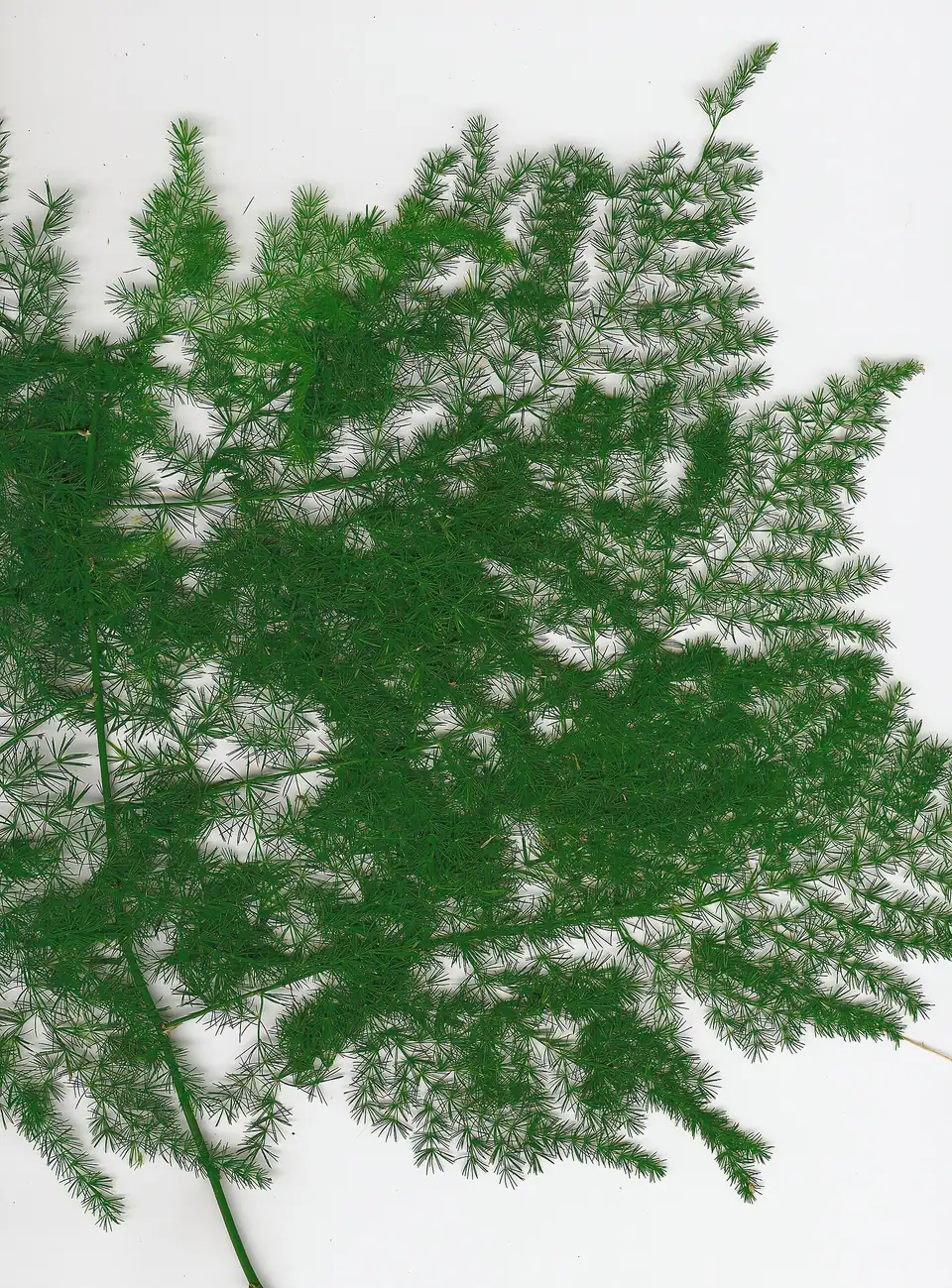
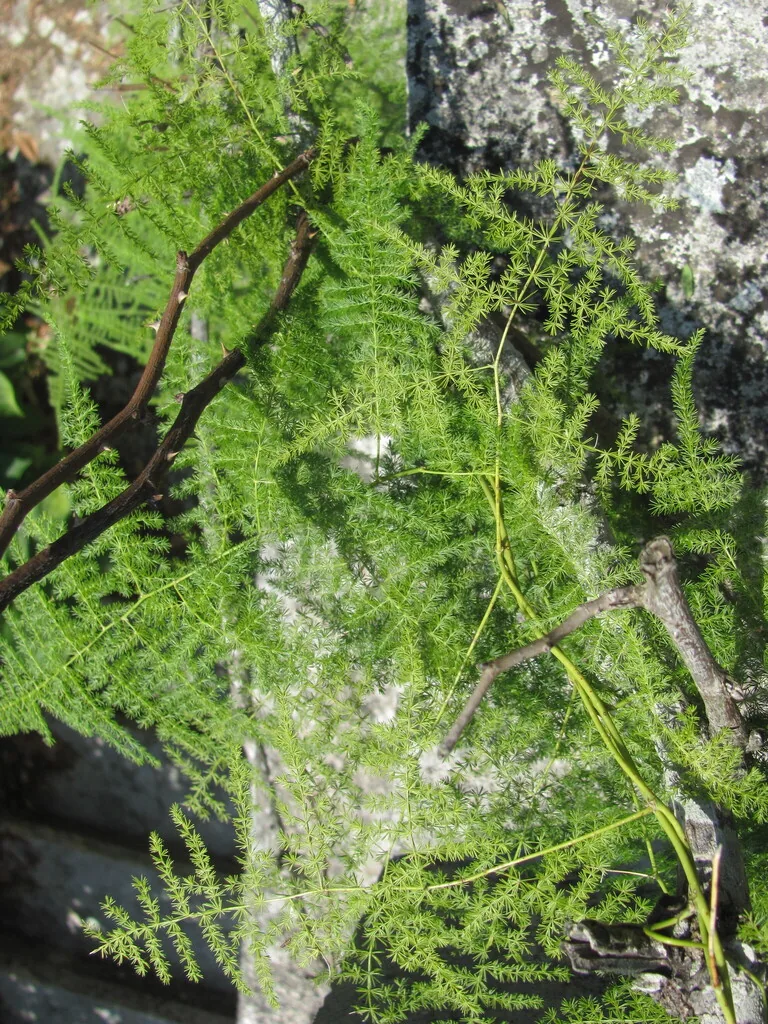
Asparagus fern is a bushy evergreen twining vine native from central Ethiopia to South Africa, used as an ornamental houseplant, ground cover or climbing vine. [1] It needs bright indirect light and high humidity, and prefers regular watering from spring to autumn and sparingly in winter. [1] The berries are poisonous if ingested and the sap may cause skin irritation; the plant is listed as invasive in several regions. [1]
Asparagus Fern care
How to water Asparagus Fern
Watering
Regular watering in spring to autumn; sparingly in winter
What the sources say (1)
They prefer regular watering in spring to autumn and sparingly in winter.Watering notes
Houseplants grow well in moist, well-drained, peaty potting mix; root rot can occur from overwatering; insufficient water results in yellow needles that drop
What the sources say (3)
Houseplants grow well in moist, well-drained, peaty potting mix.Potential insect pests include slugs, mealybugs, spider mites, and aphids. Root rot can occur from overwatering. Inadequate air circulation and wet foliage can cause leaf spot. Yellowing of the leaves can be caused by either overwatering or poor drainage.Insufficient light as well as insufficient water will result in yellow needles that drop.How much light Asparagus Fern needs
Bright indirect light; dappled sunlight to partial shade; avoid direct sunlight
What the sources say (2)
These plants need bright indirect light and high humidity.It is intolerant of high light intensity; therefore, avoid direct sunlight.How much cold Asparagus Fern can take
Hardiness, coldest zone
9a [winter low −6.7 to −3.9 °C (20 to 25 °F)]
What the sources say (1)
USDA Plant Hardiness Zone:
9a, 9b, 10a, 10b, 11a, 11b, 12a, 12bHardiness, warmest zone
12b [winter low 12.8 to 15.6 °C (55 to 60 °F)]
What the sources say (1)
USDA Plant Hardiness Zone:
9a, 9b, 10a, 10b, 11a, 11b, 12a, 12bWhere to grow Asparagus Fern
Indoors
Yes
What the sources say (2)
It is one of the fastest-growing, least demanding houseplants.It is also planted as an ornamntal or used as an indoor potted plant.In containers
Yes
What the sources say (1)
Landscape Location:
Container
Hanging Baskets
Houseplants
Patio
Landscape Theme:How to propagate Asparagus Fern
Division; seed
What the sources say (1)
Uses (Ethnobotany):
Used to treat medical disorders and also used as a poison.
Life Cycle:
Perennial
Recommended Propagation Strategy:
Division
SeedHow to grow Asparagus Fern
The plant
Life cycle
perennial
What the sources say (1)
Life Cycle: PerennialFamily
Asparagaceae
What the sources say (1)
Family: AsparagaceaeMature height
61-91 cm (2-3 ft) as a houseplant
What the sources say (1)
Height: 2 ft. 0 in. - 3 ft. 0 in.Mature width
61-91 cm (2-3 ft)
What the sources say (1)
Width: 2 ft. 0 in. - 3 ft. 0 in.Pests and diseases
Pests
slugs, mealybugs, spider mites, aphids
What the sources say (1)
Potential insect pests include slugs, mealybugs, spider mites, and aphids.Diseases
root rot, leaf spot
What the sources say (1)
Root rot can occur from overwatering. Inadequate air circulation and wet foliage can cause leaf spot.Asparagus Fern pests and problems
Overwatering, root rot and yellowing
Symptom: Root rot; yellowing of leaves from overwatering or poor drainage
What to do: Avoid overwatering and ensure good drainage
What the sources say (2)
Potential insect pests include slugs, mealybugs, spider mites, and aphids. Root rot can occur from overwatering. Inadequate air circulation and wet foliage can cause leaf spot. Yellowing of the leaves can be caused by either overwatering or poor drainage.
— Asparagus setaceus (Asparagus Fern, Climbing Asparagus, Common Asparagus Fern, Feathered Asparagus Fern, Ferny Asparagus, Lace Fern, Plumosa Fern) | North Carolina Extension Gardener Plant Toolbox [1] Potential insect pests include slugs, mealybugs, spider mites, and aphids. Root rot can occur from overwatering. Inadequate air circulation and wet foliage can cause leaf spot. Yellowing of the leaves can be caused by either overwatering or poor drainage.
— Asparagus setaceus (Asparagus Fern, Climbing Asparagus, Common Asparagus Fern, Feathered Asparagus Fern, Ferny Asparagus, Lace Fern, Plumosa Fern) | North Carolina Extension Gardener Plant Toolbox [1] Insufficient light or water
Symptom: Yellow needles that drop; new growth appears at the soil line once conditions are right
What to do: Provide proper light and water
What the sources say (1)
Should these conditions damage the plant, the yellow needles will not rejuvenate; however, once proper conditions are met, new growth will appear at the soil line.
— Asparagus setaceus (Asparagus Fern, Climbing Asparagus, Common Asparagus Fern, Feathered Asparagus Fern, Ferny Asparagus, Lace Fern, Plumosa Fern) | North Carolina Extension Gardener Plant Toolbox [1] Low humidity
Symptom: Browning of leaf tips
What to do: Use a humidifier or set the container on a pebble tray filled with water
What the sources say (2)
Yellowing of the leaves can be caused by either overwatering or poor drainage. If the humidity is to low, browning of the leaf tips can occur.
— Asparagus setaceus (Asparagus Fern, Climbing Asparagus, Common Asparagus Fern, Feathered Asparagus Fern, Ferny Asparagus, Lace Fern, Plumosa Fern) | North Carolina Extension Gardener Plant Toolbox [1] Using a humidifier or setting the plant in a container on a pebble tray filled with water will increase the humidity.
— Asparagus setaceus (Asparagus Fern, Climbing Asparagus, Common Asparagus Fern, Feathered Asparagus Fern, Ferny Asparagus, Lace Fern, Plumosa Fern) | North Carolina Extension Gardener Plant Toolbox [1] Pests and leaf spot
Symptom: Slugs, mealybugs, spider mites and aphids; leaf spot from wet foliage and poor air circulation
What to do: Not stated in source
What the sources say (2)
Potential insect pests include slugs, mealybugs, spider mites, and aphids. Root rot can occur from overwatering. Inadequate air circulation and wet foliage can cause leaf spot. Yellowing of the leaves can be caused by either overwatering or poor drainage.
— Asparagus setaceus (Asparagus Fern, Climbing Asparagus, Common Asparagus Fern, Feathered Asparagus Fern, Ferny Asparagus, Lace Fern, Plumosa Fern) | North Carolina Extension Gardener Plant Toolbox [1] Potential insect pests include slugs, mealybugs, spider mites, and aphids. Root rot can occur from overwatering. Inadequate air circulation and wet foliage can cause leaf spot. Yellowing of the leaves can be caused by either overwatering or poor drainage.
— Asparagus setaceus (Asparagus Fern, Climbing Asparagus, Common Asparagus Fern, Feathered Asparagus Fern, Ferny Asparagus, Lace Fern, Plumosa Fern) | North Carolina Extension Gardener Plant Toolbox [1]
Remedies
Each remedy shows what official sources say about it; traditional remedies without an official source are marked as such. Harmful ones are listed so you know to avoid them.
Treating the plant
mealybugs
neem oil Partly works
Despite these being biological pesticides, it is important to read the directions on the label and wear safety equipment.
— extension.illinois.edu [9] How: Scale and mealybugs can be treated with insecticidal soap or neem oil.
The two most likely are scale and mealy bugs. these can be treated with an insecticidal soap or, my favorite, neem oil .
— thegreenmadhouse.com [7] What the evidence says However, neem oil is not effective against every insect and disease, and often must be frequently reapplied to reach the desired outcome.
— extension.unh.edu [8]
Getting rid of it
invasive spread
digging out the roots Works
The needle-like leaves complicate control efforts, therefore using gloves and clippers is advised.
— | Center for Aquatic and Invasive Plants | University of Florida, IFAS [6] How: Loosen the soil with a trowel and pull the plant out, moistening the soil first if needed; dig up the soil and remove any pieces of roots or tubers left behind, as these can sprout into new plants.
After removing the plant, dig up the soil where it used to be and pull out any pieces of roots or tubers left behind, as these will sometimes sprout into new asparagus fern plants.
— homeguides.sfgate.com [10] What the evidence says Small infestations of common asparagus-fern can be controlled by digging out the roots.
— | Center for Aquatic and Invasive Plants | University of Florida, IFAS [6] repeated mowing to the ground Partly works
How: Cut the plant down to the soil level repeatedly: this prevents berries and seeds and over time can starve the underground tubers.
Doing this repeatedly can help control and get rid of asparagus ferns in several ways.
— homeguides.sfgate.com [10] What the evidence says Any regrowth that occurs can be kept under control by regular mowing or digging out.
— | Center for Aquatic and Invasive Plants | University of Florida, IFAS [6] soil solarization Not verified
Traditional remedy, not verified by an official source.
How: Mow the patch to the ground, moisten the soil lightly, cover with a clear plastic tarp weighed down at the edges; in the hottest weeks of summer, after four to six weeks the area is free of weeds.
Is Asparagus Fern toxic to pets?
Reported by the source, quoted verbatim. This is not medical or veterinary advice: if a person or an animal may have eaten this plant, contact a poison control centre or a veterinarian.
Animals
Problem for Cats Problem for Children Problem for Dogs
[1]- Symptoms
If the berries are ingested, it can cause abdominal pain, vomiting, and diarrhea in humans and pets.
[1]
People
Indicative values
Values from a secondary source, not checked word for word like the rest of this page. Use them as a starting point.
- Hours of sun
- 4-6 hoursIndicative value, adapt it to your climate · Secondary source
- Soil
- Acidic, AlkalineIndicative value, adapt it to your climate · Secondary source
- Soil pH
- 6-6.5Indicative value, adapt it to your climate · Secondary source
- Care level
- MediumIndicative value, adapt it to your climate · Secondary source
- Growth rate
- LowIndicative value, adapt it to your climate · Secondary source
- Pruning
- March, April, May, June, July, AugustIndicative value, adapt it to your climate · Secondary source
Similar plants
- Asparagus Asparagus officinalis
- Asparagus acutifolius Asparagus acutifolius
- Sprenger's asparagus fern Asparagus densiflorus
- Asparagus albus Asparagus albus
- Asparagus aphyllus Asparagus aphyllus
- American Agave Agave virginica
- Brodiaea Triteleia laxa
- Cabbage Tree Cordyline australis
Sources
Every value above is quoted from these documents. Links lead to the original publisher.
- Asparagus setaceus (Asparagus Fern, Climbing Asparagus, Common Asparagus Fern, Feathered Asparagus Fern, Ferny Asparagus, Lace Fern, Plumosa Fern) | North Carolina Extension Gardener Plant Toolbox · plants.ces.ncsu.edu, consulted
- Ferny Asparagus - Asparagus setaceus | North Carolina Extension Gardener Plant Toolbox · plants.ces.ncsu.edu, consulted
- Asparagus Fern - Asparagus setaceus | North Carolina Extension Gardener Plant Toolbox · plants.ces.ncsu.edu, consulted
- Common Asparagus Fern - Asparagus setaceus | North Carolina Extension Gardener Plant Toolbox · plants.ces.ncsu.edu, consulted
- Plumosa Fern - Asparagus setaceus | North Carolina Extension Gardener Plant Toolbox · plants.ces.ncsu.edu, consulted
- | Center for Aquatic and Invasive Plants | University of Florida, IFAS · plant-directory.ifas.ufl.edu, consulted
- thegreenmadhouse.com · thegreenmadhouse.com
- extension.unh.edu · extension.unh.edu
- extension.illinois.edu · extension.illinois.edu
- homeguides.sfgate.com · homeguides.sfgate.com
Written by Emilio Marruso · last checked