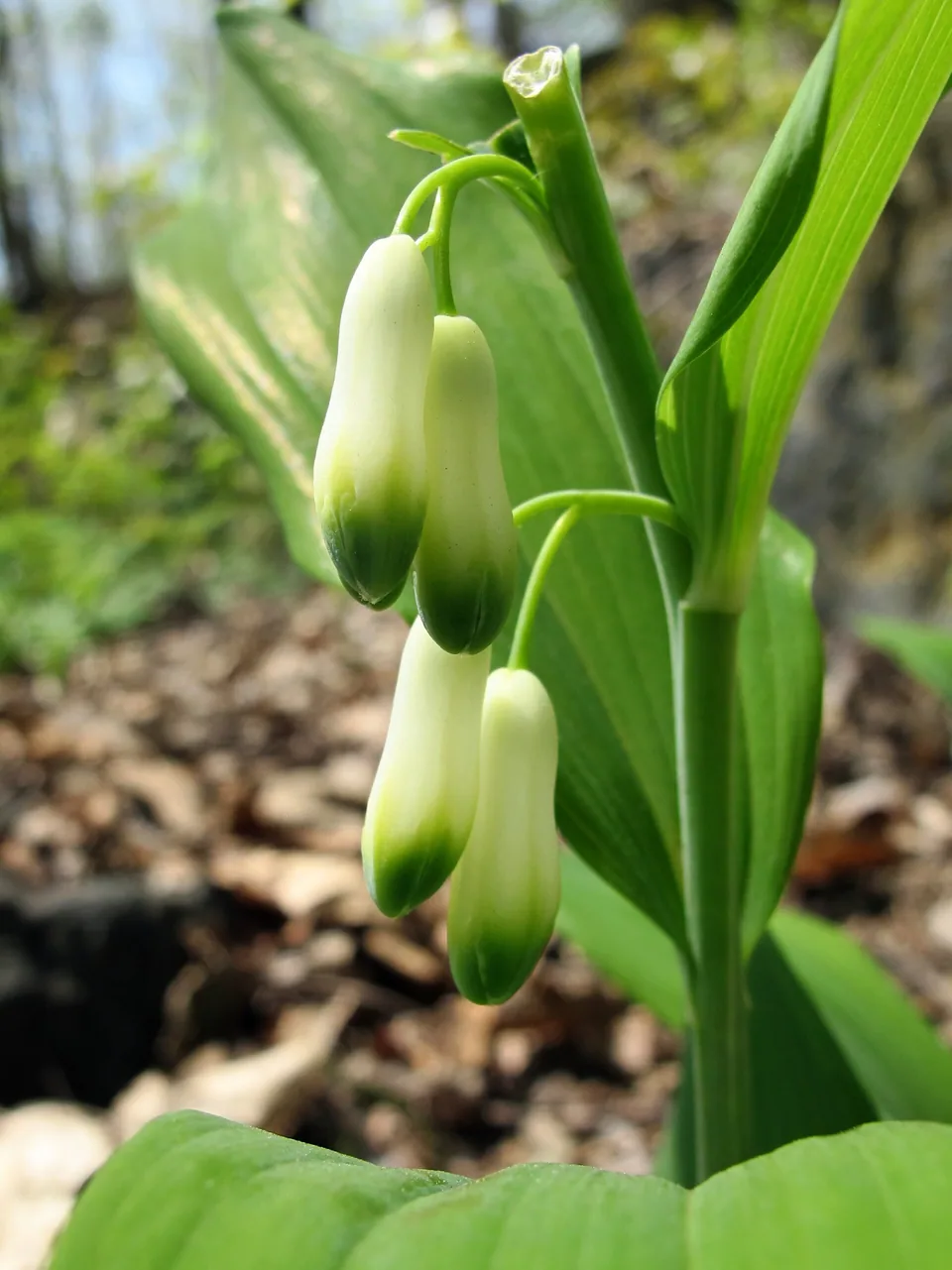


Cómo cultivar y cuidar Sello de Salomón
Polygonatum biflorum
Escrito por Emilio Marruso · última revisión
Tóxica para: Personas · Por qué
De un vistazo
El sello de Salomón llena de vida los rincones sombríos del jardín, de semisombra a sombra total. Esta vivaz alcanza 0,9–1,8 m de alto y, una vez establecida, tolera la sequía. Dale un suelo húmedo y rico en materia orgánica, cúbrelo con hojas caídas y disfruta de sus vistosas bayas negroazuladas: son solo para mirar, no se comen.
- Sol
De semisombra a sombra total
Qué dicen las fuentes (2)
Luz: Sombra parcial a sombra completa.
Según University of Illinois Extension: Exposure/Light Requirements Full Shade
— Solomon's Seal (Polygonatum biflorum)-Hort Answers - University of Illinois Extension [3] Plant it in medium to wet average soil in partial to full shade, though it does best with some sun.
— Polygonatum biflorum (Great Solomon's Seal, Smooth Solomon's Seal, Solomon's Seal) | North Carolina Extension Gardener Plant Toolbox [1] - Riego
Humedad constante sin encharcar; riega la tierra, no las hojas; ya establecida tolera la sequía
Qué dicen las fuentes (4)
Riego: Humedad constante, no excesivamente mojada; tolera la sequía una vez establecido
This perennial prefers to grow in consistent, but not overly wet, moisture. Yet, once established, it tolerates drought.
— Shade Elegance with Solomon's Seal | University of Vermont… [4] Culture Shade; consistently moist soils.
— Solomon's Seal (Polygonatum biflorum)-Hort Answers - University of Illinois Extension [3] Notas sobre el riego: Prefiere suelo húmedo y bien drenado rico en materia orgánica; evita el riego por aspersión debido a los nematodos foliares y la mancha foliar.
Although it prefers a moist well-drained soil rich in organic matter, it is not fussy.
— Shade Elegance with Solomon's Seal | University of Vermont… [4] Do not use over-head irrigation on Solomon’s-seal, as the splashing of water may allow for the movement of the nematodes to additional leaves.
— Solomon’s-seals | Home & Garden Information Center [2] - Frío
Aguanta inviernos de hasta −40 °C (−40 °F)
Muy rústica · USDA 3a · RHS H7 · Z3
Qué dicen las fuentes (2)
Rusticidad, zona más fría: 3a [mínima invernal de −40 a −37,2 °C (de −40 a −35 °F)]
USDA Plant Hardiness Zone: 3a, 3b, 4a, 4b, 5a, 5b, 6a, 6b, 7a, 7b, 8a, 8b, 9a, 9b
— Polygonatum biflorum (Great Solomon's Seal, Smooth Solomon's Seal, Solomon's Seal) | North Carolina Extension Gardener Plant Toolbox [1] Rusticidad, zona más cálida: 9b [mínima invernal de −3,9 a −1,1 °C (de 25 a 30 °F)]
USDA Plant Hardiness Zone: 3a, 3b, 4a, 4b, 5a, 5b, 6a, 6b, 7a, 7b, 8a, 8b, 9a, 9b
— Polygonatum biflorum (Great Solomon's Seal, Smooth Solomon's Seal, Solomon's Seal) | North Carolina Extension Gardener Plant Toolbox [1] - Suelo
Suelo húmedo, bien drenado y rico en materia orgánica
Qué dicen las fuentes (2)
Notas sobre el riego: Prefiere suelo húmedo y bien drenado rico en materia orgánica; evita el riego por aspersión debido a los nematodos foliares y la mancha foliar.
Although it prefers a moist well-drained soil rich in organic matter, it is not fussy.
— Shade Elegance with Solomon's Seal | University of Vermont… [4] Do not use over-head irrigation on Solomon’s-seal, as the splashing of water may allow for the movement of the nematodes to additional leaves.
— Solomon’s-seals | Home & Garden Information Center [2] - Distancia
46 cm entre trozos de raíz
Qué dicen las fuentes (1)
Distancia de plantación: 45.7 cm (18 pulgadas) entre secciones de rizoma
Place the sections horizontally in the soil, buds up, 18 inches apart and one inch deep.
— Shade Elegance with Solomon's Seal | University of Vermont… [4] - Abonado
Abono orgánico en el hoyo de plantación; hojas caídas como acolchado y compost
Qué dicen las fuentes (3)
Cuándo: Al plantar, en el hoyo de plantación
To improve the nutritionally quality of the soil and to give a boost to root growth, amend the planting holes for these and other perennials with an organic fertilizer
— Solomon’s-seals | Home & Garden Information Center [2] Abonos naturales: Fertilizante orgánico en el hoyo de plantación, preferiblemente uno que contenga bacterias beneficiosas del suelo; hojas caídas como mantillo y compost
amend the planting holes for these and other perennials with an organic fertilizer, especially one that is labeled to contain beneficial soil bacteria.
— Solomon’s-seals | Home & Garden Information Center [2] In addition, its sturdy stems do not require staking. Fallen leaves provide an ideal mulch and compost material for the plant.
— Shade Elegance with Solomon's Seal | University of Vermont… [4] - Cosecha
Los brotes tiernos y las raíces solo se comen hervidos; las bayas no son comestibles
- Plagas
Babosas, caracoles, nematodos foliares y manchas en las hojas; retira enseguida las hojas afectadas
Qué dicen las fuentes (3)
Plagas: babosas, caracoles, nematodos foliares
No serious problems. Watch for slugs and snails.
— Polygonatum biflorum (Great Solomon's Seal, Smooth Solomon's Seal, Solomon's Seal) | North Carolina Extension Gardener Plant Toolbox [1] Foliar nematodes can severely damage the leaves of Solomon’s-seal.
— Solomon’s-seals | Home & Garden Information Center [2] Enfermedades: Mancha foliar por Phyllosticta cruenta
Phyllosticta cruenta is a fungal foliar pathogen that makes small tan spots with reddish-brown halos on Solomon’s-seal leaves.
— Solomon’s-seals | Home & Garden Information Center [2] - Tamaño
De 0,9 a 1,8 m de alto y de 0,6 a 1,2 m de ancho
Qué dicen las fuentes (2)
Altura adulta: 91.44-182.88 cm (3-6 pies)
Solomon's seal grows 3 to 6 feet in height. and 2 to 4 feet wide.
— Polygonatum biflorum (Great Solomon's Seal, Smooth Solomon's Seal, Solomon's Seal) | North Carolina Extension Gardener Plant Toolbox [1] Anchura adulta: 60.96-121.92 cm (2-4 pies)
Solomon's seal grows 3 to 6 feet in height. and 2 to 4 feet wide.
— Polygonatum biflorum (Great Solomon's Seal, Smooth Solomon's Seal, Solomon's Seal) | North Carolina Extension Gardener Plant Toolbox [1] - Multiplicación
Por división, esquejes de raíz o semilla
Qué dicen las fuentes (2)
Propagación: División, esquejes de raíz, semilla
Recommended Propagation Strategy: Division Root Cutting Seed
— Polygonatum biflorum (Great Solomon's Seal, Smooth Solomon's Seal, Solomon's Seal) | North Carolina Extension Gardener Plant Toolbox [1] Solomon’s seal is easily propagated by division when the plant is dormant in spring or fall.
— Shade Elegance with Solomon's Seal | University of Vermont… [4] - Siembra
Siembra en septiembre; las semillas necesitan dos meses de frío y humedad para germinar
Qué dicen las fuentes (3)
Siembra: Septiembre (semillas recolectadas y sembradas)
The seed should be collected and sown in September.
— Polygonatum biflorum (Great Solomon's Seal, Smooth Solomon's Seal, Solomon's Seal) | North Carolina Extension Gardener Plant Toolbox [1] Guardar semillas: recoge el fruto azul maduro, retira las semillas y desecha la pulpa; las semillas necesitan un tratamiento frío y húmedo durante dos meses.
Collect the ripe, blue fruit, remove the seeds, and discard the pulp.
— Solomon’s-seals | Home & Garden Information Center [2] Propagation by seed requires a cold, moist treatment for two months.
— Solomon’s-seals | Home & Garden Information Center [2] - Seguridad
Tóxica para las personas
Resumen
Polygonatum biflorum es una flor silvestre herbácea perenne nativa de las áreas boscosas húmedas del este de América del Norte. [1] Prospera en sombra o semisombra en suelos húmedos, bien drenados y ricos en materia orgánica, y tolera la sequía una vez establecida. [4] Sus bayas se consideran venenosas con baja severidad, mientras que los brotes jóvenes y rizomas cocidos son comestibles. [1][4]
Citado en inglés, como en la fuente.
Esta ficha está incompleta: las fuentes consultadas aún no cubren todos los campos.
Aún no cubierto por nuestras fuentes: Poda
Cuidados
Riego
Riego
Humedad constante, no excesivamente mojada; tolera la sequía una vez establecido
Qué dicen las fuentes (2)
This perennial prefers to grow in consistent, but not overly wet, moisture. Yet, once established, it tolerates drought.Culture
Shade; consistently moist soils.Notas sobre el riego
Prefiere suelo húmedo y bien drenado rico en materia orgánica; evita el riego por aspersión debido a los nematodos foliares y la mancha foliar.
Qué dicen las fuentes (2)
Although it prefers a moist well-drained soil rich in organic matter, it is not fussy.Do not use over-head irrigation on Solomon’s-seal, as the splashing of water may allow for the movement of the nematodes to additional leaves.Luz
Sombra parcial a sombra completa.
Lo que dice cada fuente
Según University of Illinois Extension: Sombra completa
Qué dicen las fuentes (2)
Según University of Illinois Extension: Exposure/Light Requirements
Full ShadePlant it in medium to wet average soil in partial to full shade, though it does best with some sun.Clima y frío
Rusticidad, zona más fría
3a [mínima invernal de −40 a −37,2 °C (de −40 a −35 °F)]
Qué dicen las fuentes (1)
USDA Plant Hardiness Zone:
3a, 3b, 4a, 4b, 5a, 5b, 6a, 6b, 7a, 7b, 8a, 8b, 9a, 9bRusticidad, zona más cálida
9b [mínima invernal de −3,9 a −1,1 °C (de 25 a 30 °F)]
Qué dicen las fuentes (1)
USDA Plant Hardiness Zone:
3a, 3b, 4a, 4b, 5a, 5b, 6a, 6b, 7a, 7b, 8a, 8b, 9a, 9bDónde cultivarla
45.7 cm (18 pulgadas) entre secciones de rizoma
Qué dicen las fuentes (1)
Place the sections horizontally in the soil, buds up, 18 inches apart and one inch deep.Propagación
División, esquejes de raíz, semilla
Qué dicen las fuentes (2)
Recommended Propagation Strategy:
Division
Root Cutting
SeedSolomon’s seal is easily propagated by division when the plant is dormant in spring or fall.Cultivo
La planta
Ciclo de vida
perenne
Qué dicen las fuentes (1)
Solomon's seal is a native herbaceous perennial wildflower found in moist forested areas and roadbanks in the eastern U.S.A. and Canada in the asparagus family (Asparagaceae).Familia
Las fuentes no coinciden:
Solomon's seal is a native herbaceous perennial wildflower found in moist forested areas and roadbanks in the eastern U.S.A. and Canada in the asparagus family (Asparagaceae).
[1]Solomon’s-seals belong to the plant family Ruscaceae, which also includes lily-of-the-valley, mondo grass, and liriope.
[2]
Altura adulta
91.44-182.88 cm (3-6 pies)
Qué dicen las fuentes (1)
Solomon's seal grows 3 to 6 feet in height. and 2 to 4 feet wide.Anchura adulta
60.96-121.92 cm (2-4 pies)
Qué dicen las fuentes (1)
Solomon's seal grows 3 to 6 feet in height. and 2 to 4 feet wide.Cosecha y conservación
Guardar semillas
recoge el fruto azul maduro, retira las semillas y desecha la pulpa; las semillas necesitan un tratamiento frío y húmedo durante dos meses.
Plagas y enfermedades
Plagas
babosas, caracoles, nematodos foliares
Qué dicen las fuentes (2)
No serious problems. Watch for slugs and snails.Foliar nematodes can severely damage the leaves of Solomon’s-seal.Enfermedades
Mancha foliar por Phyllosticta cruenta
Qué dicen las fuentes (1)
Phyllosticta cruenta is a fungal foliar pathogen that makes small tan spots with reddish-brown halos on Solomon’s-seal leaves.Abonado
Cuándo
Al plantar, en el hoyo de plantación
Qué dicen las fuentes (1)
To improve the nutritionally quality of the soil and to give a boost to root growth, amend the planting holes for these and other perennials with an organic fertilizerAbonos naturales
Fertilizante orgánico en el hoyo de plantación, preferiblemente uno que contenga bacterias beneficiosas del suelo; hojas caídas como mantillo y compost
Qué dicen las fuentes (2)
amend the planting holes for these and other perennials with an organic fertilizer, especially one that is labeled to contain beneficial soil bacteria.In addition, its sturdy stems do not require staking. Fallen leaves provide an ideal mulch and compost material for the plant.Problemas
Babosas y caracoles
Síntoma: Se enumeran como las plagas a las que prestar atención.
Qué dicen las fuentes (1)
No serious problems. Watch for slugs and snails.
— Polygonatum biflorum (Great Solomon's Seal, Smooth Solomon's Seal, Solomon's Seal) | North Carolina Extension Gardener Plant Toolbox [1] Nematodos foliares
Síntoma: Franjas marrones entre las nervaduras paralelas de las hojas.
Qué hacer: Eliminación y desecho inmediato del follaje infestado; evita el riego por aspersión.
Qué dicen las fuentes (1)
There are no consumer pesticide treatments; therefore, prompt removal and disposal of infested foliage is the best means of control.
— Solomon’s-seals | Home & Garden Information Center [2] Mancha foliar por Phyllosticta cruenta
Síntoma: Pequeñas manchas color canela con halos marrón rojizo; los centros de las hojas pueden rasgarse.
Qué hacer: Eliminación inmediata del follaje infectado; evita el riego por aspersión.
Qué dicen las fuentes (1)
Prompt removal of the initially infected foliage may eliminate or slow the progression of the disease.
— Solomon’s-seals | Home & Garden Information Center [2]
Remedios
Cada remedio indica qué dicen las fuentes oficiales; los remedios tradicionales sin fuente oficial aparecen marcados. Los perjudiciales están para que sepas evitarlos.
Cuidar la planta
mosca sierra del sello de Salomón
Recoge las larvas a mano. Fuente oficial, sin prueba independiente
Cómo: revisa las plantas regularmente desde finales de mayo en adelante para detectar larvas y retíralas a mano cuando sea práctico
Remove by hand if required and where practical
— rhs.org.uk [8] Fomenta depredadores naturales No verificado
Remedio tradicional, no verificado por una fuente oficial.
Cómo: fomenta los escarabajos terrestres (con acolchado) y las aves como depredadores naturales en lugar del control químico
babosas y caracoles
trampa de cerveza No verificado
Remedio tradicional, no verificado por una fuente oficial.
Cómo: coloca bandejas poco profundas llenas de cerveza en y alrededor de las zonas problemáticas; renueva las bandejas cada tres días o hasta que las babosas estén bajo control
nematodos foliares
Eliminación del follaje infestado Funciona
Cómo: retira y desecha rápidamente el follaje infestado; evita el riego por aspersión
There are no consumer pesticide treatments; therefore, prompt removal and disposal of infested foliage is the best means of control.
— Solomon’s-seals | Home & Garden Information Center [2] Qué dicen las pruebas There are no consumer pesticide treatments; therefore, prompt removal and disposal of infested foliage is the best means of control.
— Solomon’s-seals | Home & Garden Information Center [2]
mancha foliar
eliminación del follaje infectado Funciona en parte
Cómo: retira rápidamente el follaje inicialmente infectado; no riegues con aspersión
Prompt removal of the initially infected foliage may eliminate or slow the progression of the disease.
— Solomon’s-seals | Home & Garden Information Center [2] Qué dicen las pruebas Prompt removal of the initially infected foliage may eliminate or slow the progression of the disease.
— Solomon’s-seals | Home & Garden Information Center [2]
Toxicidad
Según la fuente, citada textualmente. No es un consejo médico ni veterinario: si una persona o un animal pudo haber ingerido esta planta, contacta con un centro de toxicología o con un veterinario.
Calendario
Septiembre (semillas recolectadas y sembradas)
Qué dicen las fuentes (1)
The seed should be collected and sown in September.No figura en las fuentes consultadas.
Meses tal como los dan las fuentes, en su mayoría de Estados Unidos (hemisferio norte). En el hemisferio sur se desplazan unos seis meses.
Comestibilidad
Según la fuente, citada textualmente. No comas una planta basándote solo en esta página: los errores de identificación pueden ser peligrosos.
Valores orientativos
Valores de una fuente secundaria, no comprobados palabra por palabra como el resto de esta página. Úselos como punto de partida.
- Horas de sol
- 4-6 horasValor orientativo, adáptalo a tu clima · Fuente secundaria
- pH del suelo
- 5-7Valor orientativo, adáptalo a tu clima · Fuente secundaria
- Nivel de cuidado
- MedioValor orientativo, adáptalo a tu clima · Fuente secundaria
- Crecimiento
- AltaValor orientativo, adáptalo a tu clima · Fuente secundaria
- Poda
- Febrero, marzo, abril, mayoValor orientativo, adáptalo a tu clima · Fuente secundaria
Plantas similares
- Beatamaría Polygonatum odoratum
- Dwarf Solomon's Seal Polygonatum humile
- Hairy Solomon's Seal Polygonatum pubescens
- Sello de Salomón Polygonatum multiflorum
- Abraham Trachystemon orientalis
- Cempasúchil Tagetes erecta
- Alabama Croton Croton alabamensis
- Grosellero silvestre Ribes alpinum
Fuentes
Cada valor anterior se cita de estos documentos. Los enlaces llevan al editor original.
- Polygonatum biflorum (Great Solomon's Seal, Smooth Solomon's Seal, Solomon's Seal) | North Carolina Extension Gardener Plant Toolbox · plants.ces.ncsu.edu, consultado
- Solomon’s-seals | Home & Garden Information Center · hgic.clemson.edu, consultado
- Solomon's Seal (Polygonatum biflorum)-Hort Answers - University of Illinois Extension · web.extension.illinois.edu, consultado
- Shade Elegance with Solomon's Seal | University of Vermont… · uvm.edu, consultado
- Solomon's Seal, Giant · uaex.uada.edu, consultado
- Solomon’s Seal, Polygonatum spp. – Wisconsin Horticulture · hort.extension.wisc.edu, consultado
- Polygonatum (Solomon's Seal) | North Carolina Extension Gardener Plant Toolbox · plants.ces.ncsu.edu, consultado
- rhs.org.uk · rhs.org.uk
Escrito por Emilio Marruso · última revisión