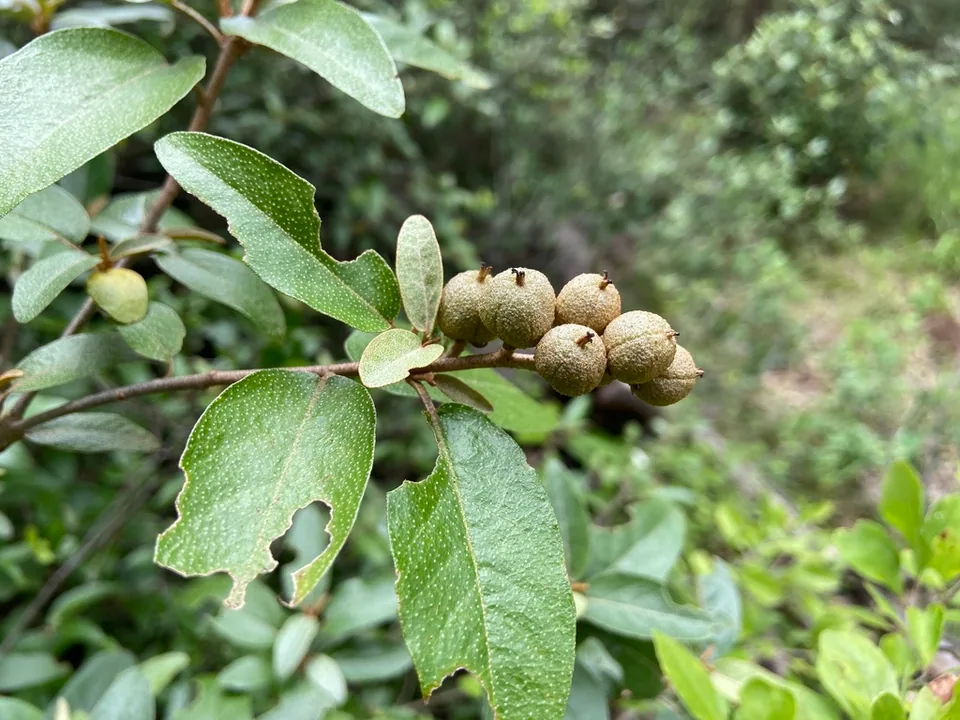
How to Grow and Care for Alabama Croton
Croton alabamensis
Written by Emilio Marruso · last checked
At a glance
Alabama croton is a shrub for the shady corners of your garden, happy anywhere from partial to deep shade. It forgives a little neglect and some dryness, though it does best in moist, well-drained soil rich in organic matter. It grows 6 to 10 feet tall and wide, and you can easily make new plants from seed, cuttings or layering.
- Sun
Partial shade to deep shade
What the sources say (2)
Light: Partial shade to deep shade
Light: Deep shade (Less than 2 hours to no direct sunlight) Partial Shade (Direct sunlight only part of the day, 2-6 hours)
— Croton alabamensis (Alabama Croton) | North Carolina Extension Gardener Plant Toolbox [1] semi-shade with moist but well-drained organic soils are optimal conditions.
— Alabama croton - Extension Gardener | NC State Extension [2] - Water
Handles some dryness and neglect, but likes moist soil best
What the sources say (1)
Watering: Tolerates some neglect and dryness; optimal in moist but well-drained organic soils
Alabama croton tolerates some degree of neglect and dryness, but semi-shade with moist but well-drained organic soils are optimal conditions.
— Alabama croton - Extension Gardener | NC State Extension [2] - Cold
Survives winters down to −10 °F (−23.3 °C)
Very hardy · USDA 6a · RHS H7 · Z6
What the sources say (2)
Hardiness, coldest zone: 6a [winter low −23.3 to −20.6 °C (−10 to −5 °F)]
USDA Plant Hardiness Zone: 6a, 6b, 7a, 7b, 8a, 8b
— Croton alabamensis (Alabama Croton) | North Carolina Extension Gardener Plant Toolbox [1] Hardiness, warmest zone: 8b [winter low −9.4 to −6.7 °C (15 to 20 °F)]
USDA Plant Hardiness Zone: 6a, 6b, 7a, 7b, 8a, 8b
— Croton alabamensis (Alabama Croton) | North Carolina Extension Gardener Plant Toolbox [1] - Soil
Moist, well-drained soil rich in organic matter, pH 6.0–8.0
What the sources say (3)
Soil pH, minimum: 6.0
Soil Texture: High Organic Matter Soil pH: Neutral (6.0-8.0)
— Croton alabamensis (Alabama Croton) | North Carolina Extension Gardener Plant Toolbox [1] Soil pH, maximum: 8.0
Soil Texture: High Organic Matter Soil pH: Neutral (6.0-8.0)
— Croton alabamensis (Alabama Croton) | North Carolina Extension Gardener Plant Toolbox [1] Watering: Tolerates some neglect and dryness; optimal in moist but well-drained organic soils
Alabama croton tolerates some degree of neglect and dryness, but semi-shade with moist but well-drained organic soils are optimal conditions.
— Alabama croton - Extension Gardener | NC State Extension [2] - Watch out
Keep stronger shrubs and vines from growing over it
- Size
6 to 10 ft tall and wide
What the sources say (2)
Mature height: 182.88-304.8 cm (6-10 ft)
Height: 6 ft. 0 in. - 10 ft. 0 in. Width: 6 ft. 0 in. - 10 ft. 0 in.
— Croton alabamensis (Alabama Croton) | North Carolina Extension Gardener Plant Toolbox [1] Mature width: 182.88-304.8 cm (6-10 ft)
Height: 6 ft. 0 in. - 10 ft. 0 in. Width: 6 ft. 0 in. - 10 ft. 0 in.
— Croton alabamensis (Alabama Croton) | North Carolina Extension Gardener Plant Toolbox [1] - Propagation
From seed, stem cuttings or layering
What the sources say (2)
Propagation: Layering, seed, stem cutting
Life Cycle: Woody Recommended Propagation Strategy: Layering Seed Stem Cutting
— Croton alabamensis (Alabama Croton) | North Carolina Extension Gardener Plant Toolbox [1] Low branches that a left to touch the ground can form roots when contact with the ground is made.
— Croton alabamensis (Alabama Croton) | North Carolina Extension Gardener Plant Toolbox [1]
Overview
Alabama croton is a rare southeastern native shrub, loose and open, about 6 feet [1.8 m] tall, with a spreading, mounding habit. [2] It tolerates some neglect and dryness but does best in semi-shade with moist, well-drained organic soil. [2] The main cultivation challenge is keeping more aggressive shrubs and vines from overgrowing it. [2]
This record is incomplete: the sources we read do not cover every field yet.
Not yet covered by our sources: Pruning
Alabama Croton care
Measurements in square brackets are our conversion into the other unit system; the quoted text is unchanged.
How to water Alabama Croton
Tolerates some neglect and dryness; optimal in moist but well-drained organic soils
What the sources say (1)
Alabama croton tolerates some degree of neglect and dryness, but semi-shade with moist but well-drained organic soils are optimal conditions.How much light Alabama Croton needs
Partial shade to deep shade
What the sources say (2)
Light:
Deep shade (Less than 2 hours to no direct sunlight)
Partial Shade (Direct sunlight only part of the day, 2-6 hours)semi-shade with moist but well-drained organic soils are optimal conditions.How much cold Alabama Croton can take
Hardiness, coldest zone
6a [winter low −23.3 to −20.6 °C (−10 to −5 °F)]
What the sources say (1)
USDA Plant Hardiness Zone:
6a, 6b, 7a, 7b, 8a, 8bHardiness, warmest zone
8b [winter low −9.4 to −6.7 °C (15 to 20 °F)]
What the sources say (1)
USDA Plant Hardiness Zone:
6a, 6b, 7a, 7b, 8a, 8bBest soil for Alabama Croton
Soil pH, minimum
6.0
What the sources say (1)
Soil Texture:
High Organic Matter
Soil pH:
Neutral (6.0-8.0)Soil pH, maximum
8.0
What the sources say (1)
Soil Texture:
High Organic Matter
Soil pH:
Neutral (6.0-8.0)How to propagate Alabama Croton
Layering, seed, stem cutting
What the sources say (2)
Life Cycle:
Woody
Recommended Propagation Strategy:
Layering
Seed
Stem CuttingLow branches that a left to touch the ground can form roots when contact with the ground is made.How to grow Alabama Croton
The plant
Family
Euphorbiaceae
What the sources say (1)
The small, yellow-green flowers are similar to those of poinsettia (minus the large colorful bracts), and both belong to the spurge family (Euphorbiaceae).Mature height
182.88-304.8 cm (6-10 ft)
What the sources say (1)
Height: 6 ft. 0 in. - 10 ft. 0 in.
Width: 6 ft. 0 in. - 10 ft. 0 in.Mature width
182.88-304.8 cm (6-10 ft)
What the sources say (1)
Height: 6 ft. 0 in. - 10 ft. 0 in.
Width: 6 ft. 0 in. - 10 ft. 0 in.Alabama Croton pests and problems
Overgrowth by aggressive shrubs and vines
Symptom: More aggressive shrubs and vines overgrow the plant
What to do: Keep aggressive shrubs and vines from overgrowing it
What the sources say (1)
Your biggest challenge in cultivating this plant will be keeping more aggressive shrubs and vines from overgrowing it.
— Alabama croton - Extension Gardener | NC State Extension [2]
Remedies
The sources we checked give no remedies for this plant.
Calendar
Pruning
Not stated in the sources we read.
Months as given by the sources, which are mostly from the United States (northern hemisphere). In the southern hemisphere they shift by about six months.
Indicative values
Values from a secondary source, not checked word for word like the rest of this page. Use them as a starting point.
- Life cycle
- PerennialIndicative value, adapt it to your climate · Secondary source
- Hours of sun
- 4-6 hoursIndicative value, adapt it to your climate · Secondary source
- Care level
- MediumIndicative value, adapt it to your climate · Secondary source
- Growth rate
- LowIndicative value, adapt it to your climate · Secondary source
- Pruning
- February, March, AprilIndicative value, adapt it to your climate · Secondary source
Similar plants
- Hogwort Croton capitatus
- Cassava Manihot esculenta
- Chenille Plant Acalypha hispida
- Chinese tallow tree Triadica sebifera
- Crown of Thorns Euphorbia milii
- Cushion Spurge Euphorbia epithymoides
- Graceful Spurge Euphorbia hypericifolia
- Snow on the Mountain Euphorbia marginata
Sources
Every value above is quoted from these documents. Links lead to the original publisher.
- Croton alabamensis (Alabama Croton) | North Carolina Extension Gardener Plant Toolbox · plants.ces.ncsu.edu, consulted
- Alabama croton - Extension Gardener | NC State Extension · extensiongardener.ces.ncsu.edu, consulted
Written by Emilio Marruso · last checked