
How to Grow and Care for Cassava
Manihot esculenta
Written by Emilio Marruso · last checked
Toxic to: People · Why
At a glance
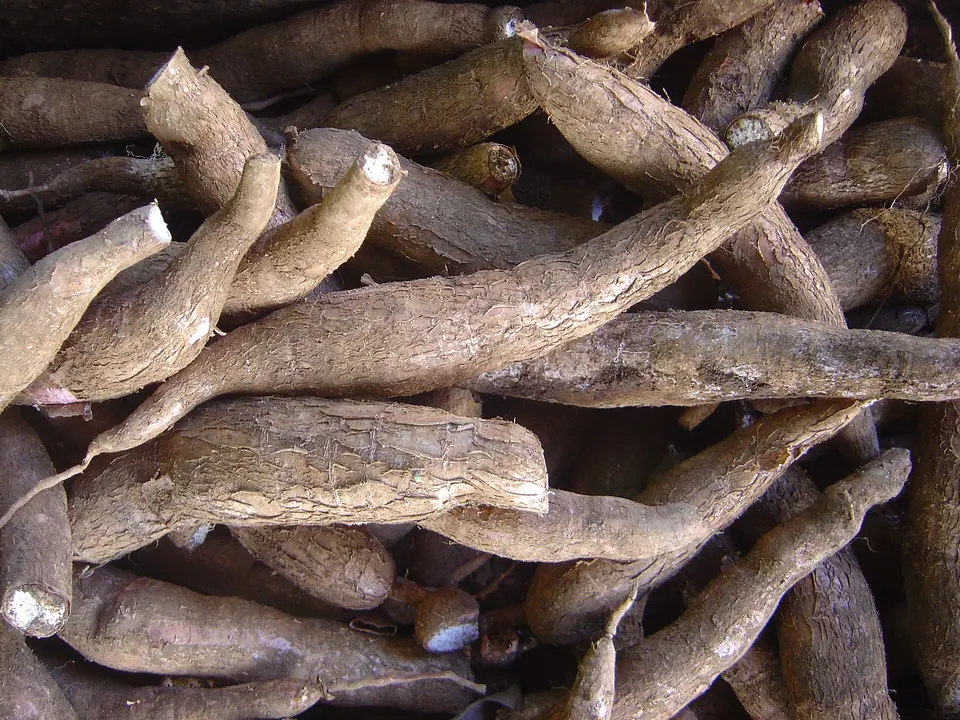
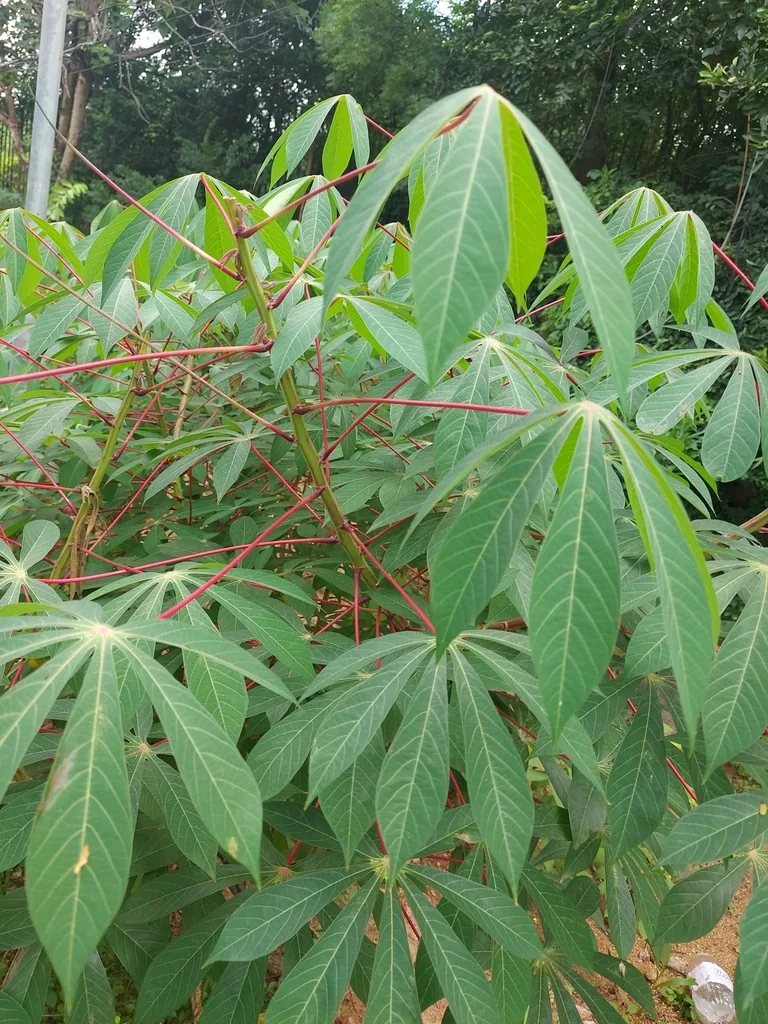
Cassava is a tropical root crop that grows into a bold 6- to 10-foot plant in full sun or partial shade. Start it from simple stem cuttings in moist, sandy soil, and after eight to 11 frost-free months you can dig up its roots, boil them well and enjoy them, or turn them into tapioca. It even grows happily in a pot.
- Sun
Full sun to partial shade
What the sources say (1)
Light: Full sun to partial shade
Cassava grows best under full sun or partial shade, in moist, fertile, sandy well-drained soil.
— Manihot esculenta (Bitter Casava, Cassava, Manioc, Tapioca, Yuca) | North Carolina Extension Gardener Plant Toolbox [1] - Water
Drought tolerant, but very dry soil gives small roots; best in moist, sandy soil
What the sources say (2)
Watering: Quite drought tolerant, but extremely dry conditions result in small tuberous roots
It will grow in acidic or alkaline soils and is quite drought tolerant, but extremely dry conditions result in small tuberous roots.
— Cassava [3] Watering notes: Grows best in moist, fertile, sandy well-drained soil
Cassava grows best under full sun or partial shade, in moist, fertile, sandy well-drained soil.
— Manihot esculenta (Bitter Casava, Cassava, Manioc, Tapioca, Yuca) | North Carolina Extension Gardener Plant Toolbox [1] - Cold
Frost kills it to the ground; grow it in a pot and bring it indoors for winter
What the sources say (2)
In containers: Yes
Alternatively, Cassava can be grown in a container and be overwintered indoors.
— Manihot esculenta (Bitter Casava, Cassava, Manioc, Tapioca, Yuca) | North Carolina Extension Gardener Plant Toolbox [1] Indoors: Yes
Landscape Location: Container Houseplants Landscape Theme: Edible Garden
— Manihot esculenta (Bitter Casava, Cassava, Manioc, Tapioca, Yuca) | North Carolina Extension Gardener Plant Toolbox [1] - Soil
Moist, fertile, sandy well-drained soil
What the sources say (1)
Watering notes: Grows best in moist, fertile, sandy well-drained soil
Cassava grows best under full sun or partial shade, in moist, fertile, sandy well-drained soil.
— Manihot esculenta (Bitter Casava, Cassava, Manioc, Tapioca, Yuca) | North Carolina Extension Gardener Plant Toolbox [1] - Spacing
4 ft apart in rows 4 ft apart
What the sources say (2)
Spacing: 121.9 cm (4 ft) apart in rows 121.9 cm (4 ft) apart
Plants should be spaced 4 feet apart in rows that are spaced at intervals of 4 feet.
— Cassava – Gardening Solutions [2] Row spacing: 122 cm (4 ft)
Plants should be spaced 4 feet apart in rows that are spaced at intervals of 4 feet.
— Cassava – Gardening Solutions [2] - Harvest
Harvest after 8–11 frost-free months; use roots soon, they spoil fast
What the sources say (9)
Harvest: After eight to 11 frost-free months; roots are dug or pulled and used soon after harvesting because they deteriorate rapidly
According to UF/IFAS Gardening Solutions: These plants need eight to 11 frost-free months in order to produce edible roots.
— Cassava – Gardening Solutions [2] cooler climates (NC State Extension): It can be grown in cooler climates as long as it has 8 to 9 months without a frost or temperatures below 60 degrees F.
— Manihot esculenta (Bitter Casava, Cassava, Manioc, Tapioca, Yuca) | North Carolina Extension Gardener Plant Toolbox [1] According to University of Arkansas Extension: At least eight months of frost free weather is needed for the plant to produce usable tubers;
— Cassava [3] poor tropical soils: in poor tropical soils crops may grow three years before they’re harvested.
— Cassava [3] These plants need eight to 11 frost-free months in order to produce edible roots.
— Cassava – Gardening Solutions [2] To harvest, roots are dug or pulled and used soon after harvesting since they deteriorate rapidly.
— Cassava – Gardening Solutions [2] Days to maturity: 8 to 11 frost-free months to produce edible roots
These plants need eight to 11 frost-free months in order to produce edible roots.
— Cassava – Gardening Solutions [2] At least eight months of frost free weather is needed for the plant to produce usable tubers
— Cassava [3] How to harvest: Roots are dug or pulled and used soon after harvesting, since they deteriorate rapidly.
To harvest, roots are dug or pulled and used soon after harvesting since they deteriorate rapidly.
— Cassava – Gardening Solutions [2] - Pests
Watch for red spider mites
What the sources say (1)
Pests: red spider mites
Diseases, Insect Pests, and Other Plant Problems: No significant diseases or insect pests. Watch for red spider mites.
— Manihot esculenta (Bitter Casava, Cassava, Manioc, Tapioca, Yuca) | North Carolina Extension Gardener Plant Toolbox [1] - Size
6–10 ft tall and wide
What the sources say (2)
Mature height: 183-305 cm (6 to 10 ft)
Height: 6 ft. 0 in. - 10 ft. 0 in.
— Manihot esculenta (Bitter Casava, Cassava, Manioc, Tapioca, Yuca) | North Carolina Extension Gardener Plant Toolbox [1] Mature width: 183-305 cm (6 to 10 ft)
Width: 6 ft. 0 in. - 10 ft. 0 in.
— Manihot esculenta (Bitter Casava, Cassava, Manioc, Tapioca, Yuca) | North Carolina Extension Gardener Plant Toolbox [1] - Propagation
Grow from stem cuttings
What the sources say (1)
Propagation: Stem cuttings
Plant short 10-inch sections of the stem 2 to 4 inches deep in the soil.
— Cassava – Gardening Solutions [2] - Safety
Raw roots, peels and leaves are highly toxic and can kill; peel, wash and cook well before eating
Overview
Cassava is a shrubby perennial grown for its starchy tuberous roots, which are highly toxic when raw and edible once properly prepared and cooked. [1][2] It grows best in full sun or partial shade in moist, fertile, sandy well-drained soil and needs eight to 11 frost-free months to produce edible roots. [1][2] New plants are started from stem cuttings. [2]
This record is incomplete: the sources we read do not cover every field yet.
Not yet covered by our sources: Sowing / Planting
Cassava care
Measurements in square brackets are our conversion into the other unit system; the quoted text is unchanged.
How to water Cassava
Watering
Quite drought tolerant, but extremely dry conditions result in small tuberous roots
What the sources say (1)
It will grow in acidic or alkaline soils and is quite
drought tolerant, but extremely dry conditions result in small tuberous roots.Watering notes
Grows best in moist, fertile, sandy well-drained soil
What the sources say (1)
Cassava grows best under full sun or partial shade, in moist, fertile, sandy well-drained soil.How much light Cassava needs
Full sun to partial shade
What the sources say (1)
Cassava grows best under full sun or partial shade, in moist, fertile, sandy well-drained soil.How much cold Cassava can take
Hardiness, coldest zone
The sources give different values depending on region, zone or growing conditions.
What each source says
evergreen in USDA zones 10 to 12: 10a [winter low −1.1 to 1.7 °C (30 to 35 °F)]
overwinters, freezes back to the ground each year: 8b [winter low −9.4 to −6.7 °C (15 to 20 °F)]
What the sources say (3)
evergreen in USDA zones 10 to 12: USDA Plant Hardiness Zone: 10a, 10b, 11a, 11b, 12a, 12boverwinters, freezes back to the ground each year: It will overwinter as far north as zone 8b, but there it freezes back to the ground each year.USDA Plant Hardiness Zone:
10a, 10b, 11a, 11b, 12a, 12bHardiness, warmest zone
12b [winter low 12.8 to 15.6 °C (55 to 60 °F)]
What the sources say (1)
USDA Plant Hardiness Zone:
10a, 10b, 11a, 11b, 12a, 12bWhere to grow Cassava
Indoors
Yes
What the sources say (1)
Landscape Location:
Container
Houseplants
Landscape Theme:
Edible GardenIn containers
Yes
What the sources say (1)
Alternatively, Cassava can be grown in a container and be overwintered indoors.Spacing
121.9 cm (4 ft) apart in rows 121.9 cm (4 ft) apart
What the sources say (1)
Plants should be spaced 4 feet apart in rows that are spaced at intervals of 4 feet.How to propagate Cassava
Stem cuttings
What the sources say (1)
Plant short 10-inch sections of the stem 2 to 4 inches deep in the soil.How to grow Cassava
The plant
Life cycle
perennial, often grown as an annual
What the sources say (1)
It is a perennial, but is often grown as an annual because of its intolerance of frost.Family
Euphorbiaceae
What the sources say (1)
Species: esculenta Family: Euphorbiaceae Uses (Ethnobotany): Extensively cultivated root crop in tropical and subtropical regions.Mature height
183-305 cm (6 to 10 ft)
What the sources say (1)
Height: 6 ft. 0 in. - 10 ft. 0 in.Mature width
183-305 cm (6 to 10 ft)
What the sources say (1)
Width: 6 ft. 0 in. - 10 ft. 0 in.Sowing and growth
Sowing depth
Stem sections 25 cm (10 in) long planted 5-10 cm (2 to 4 in) deep; or laid horizontally in a trench and covered with 7.6 cm (3 in) of sandy soil
Row spacing
122 cm (4 ft)
What the sources say (1)
Plants should be spaced 4 feet apart in rows that are spaced at intervals of 4 feet.Days to maturity
8 to 11 frost-free months to produce edible roots
Harvest and storage
How to harvest
Roots are dug or pulled and used soon after harvesting, since they deteriorate rapidly.
What the sources say (1)
To harvest, roots are dug or pulled and used soon after harvesting since they deteriorate rapidly.Storage
Roots deteriorate rapidly and are used soon after harvesting.
What the sources say (1)
To harvest, roots are dug or pulled and used soon after harvesting since they deteriorate rapidly.Pests and diseases
Pests
red spider mites
What the sources say (1)
Diseases, Insect Pests, and Other Plant Problems: No significant diseases or insect pests. Watch for red spider mites.Cassava pests and problems
Frost damage
Symptom: Plant dies back to the ground without producing edible roots suitable for harvest; it will sprout again in the spring.
What to do: Provide 8 to 9 months without a frost or temperatures below 60 degrees F, or grow in a container and overwinter indoors.
What the sources say (1)
A frost will cause the plant to die back to the ground without producing edible roots suitable for harvest.
— Manihot esculenta (Bitter Casava, Cassava, Manioc, Tapioca, Yuca) | North Carolina Extension Gardener Plant Toolbox [1] Red spider mites
Symptom: Pest to watch for; no significant diseases or insect pests otherwise.
What to do: Not stated in the documents.
What the sources say (1)
Diseases, Insect Pests, and Other Plant Problems: No significant diseases or insect pests. Watch for red spider mites.
— Manihot esculenta (Bitter Casava, Cassava, Manioc, Tapioca, Yuca) | North Carolina Extension Gardener Plant Toolbox [1] Small roots in dry conditions
Symptom: Extremely dry conditions result in small tuberous roots.
What to do: Not stated in the documents.
What the sources say (1)
It will grow in acidic or alkaline soils and is quite drought tolerant, but extremely dry conditions result in small tuberous roots.
— Cassava [3]
Remedies
Each remedy shows what official sources say about it; traditional remedies without an official source are marked as such. Harmful ones are listed so you know to avoid them.
Treating the plant
red spider mites
strong water jet Works
How: Spray plants with a strong jet of water to reduce the buildup of spider mite populations.
Spraying plants with a strong jet of water can help reduce buildup of spider mite populations; if mites become problematic apply insecticidal soap to plants
— plantvillage.psu.edu [4] What the evidence says Spraying plants with a strong jet of water can help reduce buildup of spider mite populations; if mites become problematic apply insecticidal soap to plants
— plantvillage.psu.edu [4] insecticidal soap spray Works
How: If mites become problematic, apply insecticidal soap to the plants.
Spraying plants with a strong jet of water can help reduce buildup of spider mite populations; if mites become problematic apply insecticidal soap to plants
— plantvillage.psu.edu [4] What the evidence says For example, insecticidal soap is a safe, effective organic insecticide with minimal environmental impact.
— extension.psu.edu [5]
whiteflies and mealybugs
soapy water spray Works
How: Spray the plants with soapy water.
Whitefly and mealybug numbers can also be reduced with sticky traps and by spraying plants with soapy water.
— plantvillage.psu.edu [6] What the evidence says Whitefly and mealybug numbers can also be reduced with sticky traps and by spraying plants with soapy water.
— plantvillage.psu.edu [6] sticky traps Works
How: Use sticky traps to reduce numbers.
Whitefly and mealybug numbers can also be reduced with sticky traps and by spraying plants with soapy water.
— plantvillage.psu.edu [6] What the evidence says Whitefly and mealybug numbers can also be reduced with sticky traps and by spraying plants with soapy water.
— plantvillage.psu.edu [6] neem seed oil extract Works
How: Biopesticide recommended for controlling whiteflies, mealybugs and variegated grasshoppers.
Biopesticides, such as extract of neem seed oil, are recommended for controlling whiteflies, mealybugs and variegated grasshoppers.
— plantvillage.psu.edu [6] What the evidence says Biopesticides, such as extract of neem seed oil, are recommended for controlling whiteflies, mealybugs and variegated grasshoppers.
— plantvillage.psu.edu [6]
mealybugs
removing and burning infested parts Official source, not independently tested
How: Remove and burn the infested parts of plants.
Remove and burn the infested parts of plants
— plantvillage.psu.edu [6]
grasshoppers
handpicking and destroying egg pods Official source, not independently tested
How: Hand pick any grasshoppers found on plants; locate any egg pods around the field and destroy them.
Hand pick any grasshoppers found on plants; locate any egg pods around cassava field and destroy to reduce grasshopper populations
— plantvillage.psu.edu [4] neem products Works
How: Products containing neem have given good control of variegated grasshoppers.
products containing neem have also given good control of variegated grasshoppers
— plantvillage.psu.edu [4] What the evidence says products containing neem have also given good control of variegated grasshoppers
— plantvillage.psu.edu [4]
root rot
ashes and dry leaves with healthy stakes and cowpea intercropping Official source, not independently tested
How: Plant stakes taken only from healthy mother plants, use a mixture of ashes and dry leaves as a soil amendment and fertilizer during planting, and intercrop cassava with cowpeas.
They planted stakes taken only from healthy mother plants, used a mixture of ashes and dry leaves as a soil amendment and fertilizer during planting, and intercropped cassava with cowpeas
— plantvillage.psu.edu [6] hot water soak of stakes Works
How: If no disease-free planting material is available, immerse stakes in hot water for around 50 minutes.
If no disease-free planting material is available, immerse stakes in hot water for around 50minutes
— plantvillage.psu.edu [6] What the evidence says As an extra precaution, stakes can be soaked in hot water to kill pests or disease-causing organisms that might be present.
— plantvillage.psu.edu [6] burning crop debris Official source, not independently tested
How: Remove and destroy all crop debris by burning and sanitize all tools after use.
remove and destroy all crop debris by burning; sanitize all tools after use
— plantvillage.psu.edu [4]
bacterial blight
intercropping Official source, not independently tested
How: Intercrop cassava with other species to reduce plant-to-plant dissemination caused by rain-splash.
Intercrop cassava with other species to reduce plant-to-plant dissemination of bacterial blight caused by rain-splash
— plantvillage.psu.edu [6]
nematodes
soil solarization Works
How: Solarize the soil to reduce nematode populations.
solarizing soil can reduce nematode populations in the soil and levels of inoculum of many other pathogens
— plantvillage.psu.edu [4] What the evidence says solarizing soil can reduce nematode populations in the soil and levels of inoculum of many other pathogens
— plantvillage.psu.edu [4]
cassava mosaic disease
uprooting infected plants Official source, not independently tested
There is no agrochemical agent or organic treatment for this disease.
— plantvillage.psu.edu [4] How: Inspect plants regularly and remove and destroy any showing symptoms; do not plant cuttings from plants with symptoms.
Do not plant cuttings from plants with symptoms of disease; inspect plants regularly for symptoms of disease and remove and destroy any showing symptoms.
— plantvillage.psu.edu [4]
weeds
thick mulch Official source, not independently tested
How: Cover the soil with a thick layer of mulch such as rice straw or maize residues.
To prevent weed emergence, the soil should be covered with a thick layer of mulch, such as rice straw or maize residues.
— plantvillage.psu.edu [6]
Is Cassava poisonous?
Reported by the source, quoted verbatim. This is not medical or veterinary advice: if a person or an animal may have eaten this plant, contact a poison control centre or a veterinarian.
The tuberous roots are highly toxic when raw, but are edible once properly prepared and cooked.
[1]HIGHLY TOXIC, MAY BE FATAL IF EATEN! Raw tubers and root peelings cause weak and irregular breathing, weakness, excitement, depression, staggering, pupil dilation, spasms, convulsions, and coma of short duration.
[1]This bark contains the toxin hydrocyanic (prussic) acid, which must be removed by washing, scraping, and heating.
[2]Leaves can also be boiled and eaten; they should not be eaten raw because they also contain the toxic prussic acid.
[2]All parts of cassava contain a high concentration of cyanogenic glucosides (read cyanide) and are poisonous until processed.
[3]
Calendar
Sowing
Not stated in the sources we read.
Planting
Not stated in the sources we read.
Harvest
After eight to 11 frost-free months; roots are dug or pulled and used soon after harvesting because they deteriorate rapidly
What each source says
According to UF/IFAS Gardening Solutions: Eight to 11 frost-free months needed to produce edible roots
cooler climates (NC State Extension): 8 to 9 months without a frost or temperatures below 60 degrees F [16 °C]
According to University of Arkansas Extension: At least eight months of frost free weather
poor tropical soils: crops may grow three years before they are harvested
What the sources say (6)
According to UF/IFAS Gardening Solutions: These plants need eight to 11 frost-free months in order to produce edible roots.cooler climates (NC State Extension): It can be grown in cooler climates as long as it has 8 to 9 months without a frost or temperatures below 60 degrees F.According to University of Arkansas Extension: At least eight months of frost free weather is needed for the plant to produce usable tubers;poor tropical soils: in poor tropical soils crops may grow three years before they’re harvested.These plants need eight to 11 frost-free months in order to produce edible roots.To harvest, roots are dug or pulled and used soon after harvesting since they deteriorate rapidly.Months as given by the sources, which are mostly from the United States (northern hemisphere). In the southern hemisphere they shift by about six months.
Edibility
Reported by the source, quoted verbatim. Do not eat a plant on the basis of this page alone: identification mistakes can be dangerous.
Tubers are boiled and eaten or made into tapioca. Planted as an annual root crop in tropical areas around the world
[1]The roots of the sweet type contain only a small amount of prussic acid and are prepared boiled as a vegetable.
[2]Leaves can also be boiled and eaten; they should not be eaten raw because they also contain the toxic prussic acid.
[2]
Indicative values
Values from a secondary source, not checked word for word like the rest of this page. Use them as a starting point.
- Hours of sun
- 4-6 hoursIndicative value, adapt it to your climate · Secondary source
- Drought tolerant
- yesIndicative value, adapt it to your climate · Secondary source
- Soil pH
- 5.5-6.5Indicative value, adapt it to your climate · Secondary source
- Care level
- MediumIndicative value, adapt it to your climate · Secondary source
- Growth rate
- HighIndicative value, adapt it to your climate · Secondary source
- Pruning
- March, April, AugustIndicative value, adapt it to your climate · Secondary source
Similar plants
- Alabama Croton Croton alabamensis
- Barbados nut Jatropha curcas
- Buddha Belly Jatropha podagrica
- Castor Bean Ricinus communis
- Chenille Plant Acalypha hispida
- Chinese tallow tree Triadica sebifera
- Copperleaf Acalypha wilkesiana
- Crown of Thorns Euphorbia milii
Sources
Every value above is quoted from these documents. Links lead to the original publisher.
- Manihot esculenta (Bitter Casava, Cassava, Manioc, Tapioca, Yuca) | North Carolina Extension Gardener Plant Toolbox · plants.ces.ncsu.edu, consulted
- Cassava – Gardening Solutions · gardeningsolutions.ifas.ufl.edu, consulted
- Cassava · uaex.uada.edu, consulted
- plantvillage.psu.edu · plantvillage.psu.edu
- extension.psu.edu · extension.psu.edu
- plantvillage.psu.edu · plantvillage.psu.edu
Written by Emilio Marruso · last checked