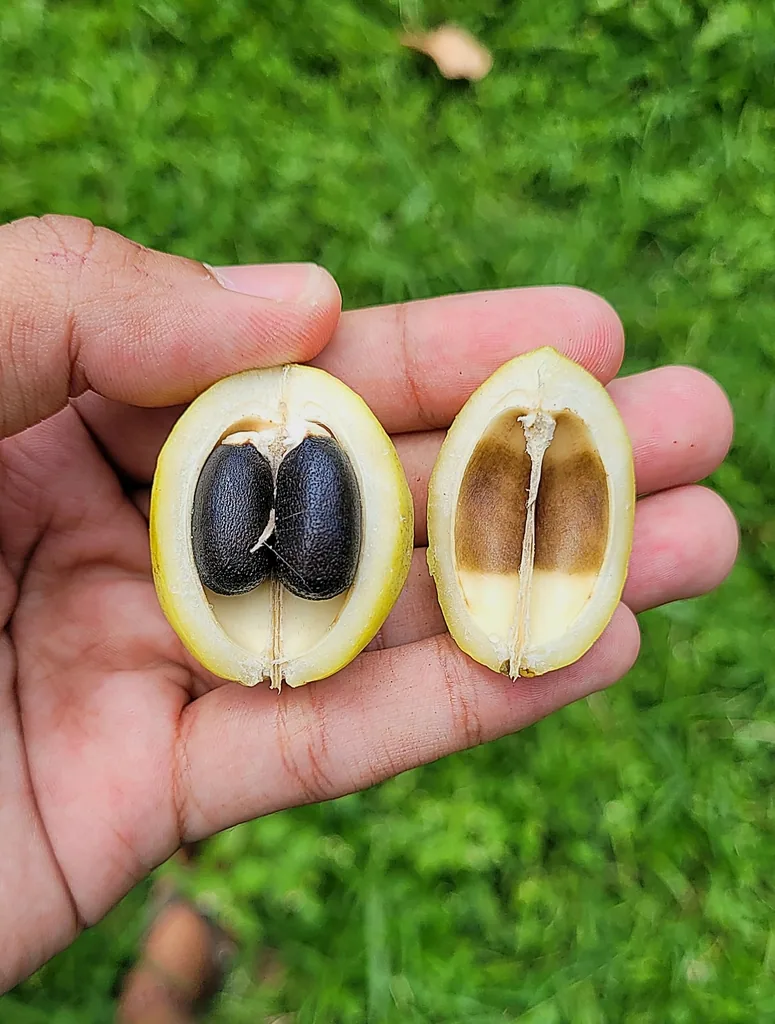
How to Grow and Care for Barbados nut
Jatropha curcas
Written by Emilio Marruso · last checked
Toxic to: People · Why
At a glance
Jatropha is a true survivor: it can go as long as 2 years without water and grow back when the rains return. Give it full sun or light shade, one feeding a year and very little watering, and it grows 6 to 18 feet tall. It's easy to start from seed or cuttings, and the seeds sprout in just 7–10 days.
- Sun
Full sun or light shade for part of the day
What the sources say (1)
Light: Full sun or light, part-day shade
Prefers a position in full sun or light, part-day shade
— Jatropha curcas - Useful Tropical Plants [4] - Water
Needs little water: every 20–25 days if needed; it survives long dry spells
What the sources say (2)
Watering: Low water requirement; irrigation at intervals of 20 to 25 days as needed after the first irrigation
In general, the water requirement of the species is low. The crop requires a life irrigation on the third day after field planting. After this, irrigation at an interval of 20 to 25 days may be done based upon need.
— Special Technologies :: Bio-Fuels [5] Watering notes: Can stand long periods without water (as long as 2 years) and regrow when rains return
Jatropha can also stand for long periods without water (as long as 2 years) and regrow when rains return.
— Archival copy: for current recommendations see http://edis.ifas.ufl.edu or your local extension office. [1] - Planting
Plant at the start of the rainy season: June–July or October–November where monsoons fall
What the sources say (1)
Planting: June-July and October-November (monsoon seasons)
For better establishment of seedlings, monsoon seasons may be preferred for field planting (June-July and October-November).
— Special Technologies :: Bio-Fuels [5] - Feeding
Once a year after it settles in: cow manure or a complete fertilizer
What the sources say (4)
How often: Once a year
Aft er transplant and establishment, cow manure and N-P-K fertilizer can be applied annually (PSO 2010).
— Archival copy: for current recommendations see http://edis.ifas.ufl.edu or your local extension office. [1] Natural fertilizers: Cow manure, applied yearly after establishment
Aft er transplant and establishment, cow manure and N-P-K fertilizer can be applied annually (PSO 2010).
— Archival copy: for current recommendations see http://edis.ifas.ufl.edu or your local extension office. [1] Mineral fertilizers: N-P-K fertilizer, applied yearly after establishment; on poor soils, fertilizers also supplying calcium, magnesium and sulfur raise yields
Aft er transplant and establishment, cow manure and N-P-K fertilizer can be applied annually (PSO 2010).
— Archival copy: for current recommendations see http://edis.ifas.ufl.edu or your local extension office. [1] Higher yields can be obtained on poor-quality soils if fertilizers are applied containing N, phosphorus (P), potassium (K), calcium (Ca), magnesium (Mg), and sulfur (S) (Table 2).
— Archival copy: for current recommendations see http://edis.ifas.ufl.edu or your local extension office. [1] - Pests
Watch out for root rot
What the sources say (1)
Diseases: Pythium root rot
heavy rains and water-logged soils caused defoliation and promoted the development of Pythium root rot, which severely injured or killed many plants.
— Archival copy: for current recommendations see http://edis.ifas.ufl.edu or your local extension office. [1] - Size
6 to 18 ft tall; up to 30 ft in good conditions
What the sources say (1)
Mature height: 180-550 cm (1.8–5.5 m); up to 920 (9.2 m [30.2 ft]) in favorable conditions
Generally, the tree can grow between 6.0 and 18.0 ft (1.8–5.5 m) in height, but it can grow to 30.0 ft (9.2 m) given favorable conditions.
— Archival copy: for current recommendations see http://edis.ifas.ufl.edu or your local extension office. [1] - Propagation
Grow new plants from seed or cuttings
What the sources say (2)
Propagation: Seed; cuttings; transplanting; tissue culture
Several propagation methods can be used, such as direct seeding, transplanting, direct planting (cutting), or tissue culture
— Archival copy: for current recommendations see http://edis.ifas.ufl.edu or your local extension office. [1] Cuttings of half-ripe wood. Cuttings can be planted directly in situ, a practice often carried out when establishing a hedge
— Jatropha curcas - Useful Tropical Plants [4] - Sowing
Seeds sprout in 7–10 days
What the sources say (1)
Days to germination: 7-10
Germination normally takes 7–10 days with optimum moisture conditions.
— Archival copy: for current recommendations see http://edis.ifas.ufl.edu or your local extension office. [1] - Safety
Poisonous, all parts: the seeds are the worst, even though they taste pleasant
Overview
Physic nut is a succulent, drought-adapted shrub or small tree grown across the tropics as a biofuel crop, living fence and medicinal plant. [4] The seeds are poisonous, containing curcin and phorbol esters, and ingestion causes vomiting, severe diarrhoea and in severe cases death. [2] It can be propagated by direct seeding, transplanting, cuttings or tissue culture. [1]
This record is incomplete: the sources we read do not cover every field yet.
Not yet covered by our sources: Hardiness, coldest zone, Hardiness, warmest zone
Barbados nut care
Measurements in square brackets are our conversion into the other unit system; the quoted text is unchanged.
How to water Barbados nut
Watering
Low water requirement; irrigation at intervals of 20 to 25 days as needed after the first irrigation
What the sources say (1)
In general, the water requirement of the species is low. The crop requires a life irrigation on the third day after field planting. After this, irrigation at an interval of 20 to 25 days may be done based upon need.Watering notes
Can stand long periods without water (as long as 2 years) and regrow when rains return
What the sources say (1)
Jatropha can also stand for long periods without water (as long as 2 years) and regrow when rains return.How much light Barbados nut needs
Full sun or light, part-day shade
What the sources say (1)
Prefers a position in full sun or light, part-day shadeHow much cold Barbados nut can take
Hardiness, coldest zone
Not stated in the sources we read.
Hardiness, warmest zone
Not stated in the sources we read.
Best soil for Barbados nut
Soil pH, minimum
The sources disagree:
Prefers a pH in the range 5.5 - 7.5, tolerating 5 - 8
[4]
Soil pH, maximum
The sources give different values depending on region, zone or growing conditions.
What each source says
According to theferns (preferred range): 7.5
According to UF/IFAS Extension: 9.0
What the sources say (2)
According to theferns (preferred range): Prefers a pH in the range 5.5 - 7.5, tolerating 5 - 8According to UF/IFAS Extension: It can grow in pH ranging from 5.5 to 9.0Where to grow Barbados nut
The sources give different values depending on region, zone or growing conditions.
What each source says
rainfed conditions: 200 x 200 cm (2 x 2 m [6.6 ft])
irrigated conditions: 300 x 200 cm [79 in] or 300 x 300 cm (3 x 2 or 3 x 3 m [9.8 ft])
According to UF/IFAS Extension: 180 x 180 cm (5.9 by 5.9 ft) or 270 x 270 cm (8.8 by 8.8 ft)
What the sources say (3)
rainfed conditions: An espacement of 2 x 2 m is generally recommended under rainfed condition for this species (NOVOD Board).irrigated conditions: Since the canopy closes within two years under irrigated conditions, a wider spacing of 3 x 2 or 3 x 3 m is preferable to facilitate tractor ploughing.According to UF/IFAS Extension: Plant spacing of 5.9 by 5.9 ft or 8.8 by 8.8 ft (1.8 by 1.8 m or 2.7 by 2.7 m, respectively) is acceptable with plant densities of 1,012 plants.acre-1 (2,500 plants. ha-1).How to propagate Barbados nut
Seed; cuttings; transplanting; tissue culture
What the sources say (2)
Several propagation methods can be used, such as direct seeding, transplanting, direct planting (cutting), or tissue cultureCuttings of half-ripe wood. Cuttings can be planted directly in situ, a practice often carried out when establishing a hedgeHow to grow Barbados nut
The plant
Family
Euphorbiaceae
What the sources say (1)
Jatropha curcas L. belongs to the Euphorbiaceae family. Jatropha is a multipurpose plant that originated in Central AmericaMature height
180-550 cm (1.8–5.5 m); up to 920 (9.2 m [30.2 ft]) in favorable conditions
What the sources say (1)
Generally, the tree can grow between 6.0 and 18.0 ft (1.8–5.5 m) in height, but it can grow to 30.0 ft (9.2 m) given favorable conditions.Sowing and growth
Days to germination
7-10
What the sources say (1)
Germination normally takes 7–10 days with optimum moisture conditions.Pests and diseases
Diseases
Pythium root rot
What the sources say (1)
heavy rains and water-logged soils caused defoliation and promoted the development of Pythium root rot, which severely injured or killed many plants.Fertilizing
When
Each year after transplanting and establishment (plantations)
What the sources say (1)
Aft er transplant and establishment, cow manure and N-P-K fertilizer can be applied annually (PSO 2010).How often
Once a year
What the sources say (1)
Aft er transplant and establishment, cow manure and N-P-K fertilizer can be applied annually (PSO 2010).Natural fertilizers
Cow manure, applied yearly after establishment
What the sources say (1)
Aft er transplant and establishment, cow manure and N-P-K fertilizer can be applied annually (PSO 2010).Mineral fertilizers
N-P-K fertilizer, applied yearly after establishment; on poor soils, fertilizers also supplying calcium, magnesium and sulfur raise yields
What the sources say (2)
Aft er transplant and establishment, cow manure and N-P-K fertilizer can be applied annually (PSO 2010).Higher yields can be obtained on poor-quality soils if fertilizers are applied containing N, phosphorus (P), potassium (K), calcium (Ca), magnesium (Mg), and sulfur (S) (Table 2).Micronutrients
Calcium, magnesium and sulfur, together with N, P and K, on poor soils
What the sources say (1)
Higher yields can be obtained on poor-quality soils if fertilizers are applied containing N, phosphorus (P), potassium (K), calcium (Ca), magnesium (Mg), and sulfur (S) (Table 2).Remedies
Each remedy shows what official sources say about it; traditional remedies without an official source are marked as such. Harmful ones are listed so you know to avoid them.
First aid
First aid: not a substitute for a doctor
skin contact with poison
remove touched clothing and rinse skin with running water Official source, not independently tested
For poison that has been swallowed, do not give the person activated charcoal. Do not give children ipecac syrup. Do not give the person anything before talking with the Poison Control Center.
— medlineplus.gov [9] How: For poison on the skin, take off any clothing touched by the poison. Rinse the person's skin with running water for 15 to 20 minutes.
For poison on the skin, take off any clothing touched by the poison. Rinse the person's skin with running water for 15 to 20 minutes.
— medlineplus.gov [9]
eye contact with poison
rinse eyes with running water Official source, not independently tested
If the person has passed out, call 911 or the local emergency number right away.
— medlineplus.gov [9] How: For poison in the eyes, rinse the person's eyes with running water for 15 to 20 minutes.
For poison in the eyes, rinse the person's eyes with running water for 15 to 20 minutes.
— medlineplus.gov [9]
Is Barbados nut poisonous?
Reported by the source, quoted verbatim. This is not medical or veterinary advice: if a person or an animal may have eaten this plant, contact a poison control centre or a veterinarian.
POISONOUS PARTS Seeds. 4 ## TOXICITY - ## Toxic Constituents Curcin and phorbol esters . 5–7
[2]- Poisonous parts
POISONOUS PARTS Seeds. 4 ## TOXICITY - ## Toxic Constituents Curcin and phorbol esters . 5–7
[2]- Toxic principle
POISONOUS PARTS Seeds. 4 ## TOXICITY - ## Toxic Constituents Curcin and phorbol esters . 5–7
[2]- Symptoms
Poisoning Features Nausea , vomiting , severe diarrhoea , abdominal pain , vertigo , delirium , muscle twitching , convulsion and haemolysis . Respiratory failure , circulatory failure and death in severe cases.
[2]- Severity
Toxic Dose 3 seeds can be toxic. Reported lethal dose: 7–8 seeds.
[2]
All parts of the plant are extremely purgative and poisonous[
[4]El alcaloide curcina está presente en sus semillas y les confiere alta toxicidad, a pesar de que tienen un sabor agradable.
[7]- Poisonous parts
El alcaloide curcina está presente en sus semillas y les confiere alta toxicidad, a pesar de que tienen un sabor agradable.
[7]- Toxic principle
El alcaloide curcina está presente en sus semillas y les confiere alta toxicidad, a pesar de que tienen un sabor agradable.
[7]- Symptoms
Comer dos o tres de ellas crudas produce un efecto purgante. Si se comen más ocasionan vómito y diarrea y puede resultar mortal, en especial para niños
[7]
Calendar
June-July and October-November (monsoon seasons)
What the sources say (1)
For better establishment of seedlings, monsoon seasons may be preferred for field planting (June-July and October-November).The sources give different values depending on region, zone or growing conditions.
What each source says
According to UF/IFAS Extension: December to January
According to TNAU (India): 6 to 8 months after planting or just before flowering
What the sources say (2)
According to UF/IFAS Extension: From December to January, the top of the plants at 0.80 ft (25 cm) tall or higher need to be toppedAccording to TNAU (India): Early pruning at 6 to 8 months after planting or just before flowering is advisable.Months as given by the sources, which are mostly from the United States (northern hemisphere). In the southern hemisphere they shift by about six months.
Edibility
Reported by the source, quoted verbatim. Do not eat a plant on the basis of this page alone: identification mistakes can be dangerous.
Tender young shoots - cooked and used as a vegetable[
[4]
Indicative values
Values from a secondary source, not checked word for word like the rest of this page. Use them as a starting point.
- Life cycle
- PerennialIndicative value, adapt it to your climate · Secondary source
- Hours of sun
- 6-8 hoursIndicative value, adapt it to your climate · Secondary source
- Drought tolerant
- yesIndicative value, adapt it to your climate · Secondary source
- USDA hardiness zones
- 9-11 [winter low −6.7 to 10 °C (20 to 50 °F)]Indicative value, adapt it to your climate · Secondary source
- Growth rate
- HighIndicative value, adapt it to your climate · Secondary source
Similar plants
- Buddha Belly Jatropha podagrica
- Coralbush Jatropha multifida
- Cassava Manihot esculenta
- Castor Bean Ricinus communis
- Chinese tallow tree Triadica sebifera
- Crown of Thorns Euphorbia milii
- Cushion Spurge Euphorbia epithymoides
- Cypress Spurge Euphorbia cyparissias
Sources
Every value above is quoted from these documents. Links lead to the original publisher.
- Archival copy: for current recommendations see http://edis.ifas.ufl.edu or your local extension office. · journals.flvc.org, consulted
- Atlas of Poisonous Plants in Hong Kong - A Clinical Toxicology Perspective 香港有毒植物圖鑑 - 臨床毒理學透視 · www3.ha.org.hk, consulted
- Agroforestree Species profile · apps.worldagroforestry.org, consulted
- Jatropha curcas - Useful Tropical Plants · tropical.theferns.info, consulted
- Special Technologies :: Bio-Fuels · agritech.tnau.ac.in, consulted
- Jatropha | George Washington's Mount Vernon · mountvernon.org, consulted
- 140 · rngr.net, consulted
- Data sheet · ecocrop.apps.fao.org, consulted
- medlineplus.gov · medlineplus.gov
Written by Emilio Marruso · last checked