
How to Grow and Care for Coralbush
Jatropha multifida
Written by Emilio Marruso · last checked
Toxic to: People · Why
At a glance
This jatropha is an easygoing plant that is happy in full sun or partial shade, and it grows in containers too. You can start new plants from cuttings, or simply watch for the seedlings it sows on its own at its base. In winter, give potted plants less water, because roots that stay too wet can rot.
- Sun
Full sun to partial shade
- Water
Water less in winter if it's in a pot; too much water rots the roots
What the sources say (2)
Watering notes: Reduce water for container plants in winter; overly wet plants may develop root rot
Container plants should have water reduced in winter.
— Care Of Coral Plant: Learn How To Grow A Coral Plant | Gardening Know How [3] Overly wet plants and those that receive splashed mud on the foliage may experience root rot or leaf spot .
— Care Of Coral Plant: Learn How To Grow A Coral Plant | Gardening Know How [3] - Cold
Survives winters down to 30 °F (−1.1 °C)
Half hardy: mild winters or an unheated greenhouse · USDA 10 · RHS H3 · Z10
What the sources say (2)
Hardiness, coldest zone: 10 [winter low −1.1 to 4.4 °C (30 to 40 °F)]
suitable for United States Department of Agriculture zones 10 to 12 only
— Care Of Coral Plant: Learn How To Grow A Coral Plant | Gardening Know How [3] Hardiness, warmest zone: 12 [winter low 10 to 15.6 °C (50 to 60 °F)]
suitable for United States Department of Agriculture zones 10 to 12 only
— Care Of Coral Plant: Learn How To Grow A Coral Plant | Gardening Know How [3] - Propagation
Grow new plants from cuttings; it also sows itself at its base
What the sources say (1)
Propagation: Cuttings; self-seeds at the base of the plant
The species tends to self-seed at the base of the plant and can also be propagated by cuttings .
— Care Of Coral Plant: Learn How To Grow A Coral Plant | Gardening Know How [3] - Containers
Grows in containers too
What the sources say (1)
In containers: Yes
In cool zones, plant the specimen in a large container with a gritty houseplant soil.
— Care Of Coral Plant: Learn How To Grow A Coral Plant | Gardening Know How [3] - Safety
Toxic if eaten: it upsets the stomach and gut
Overview
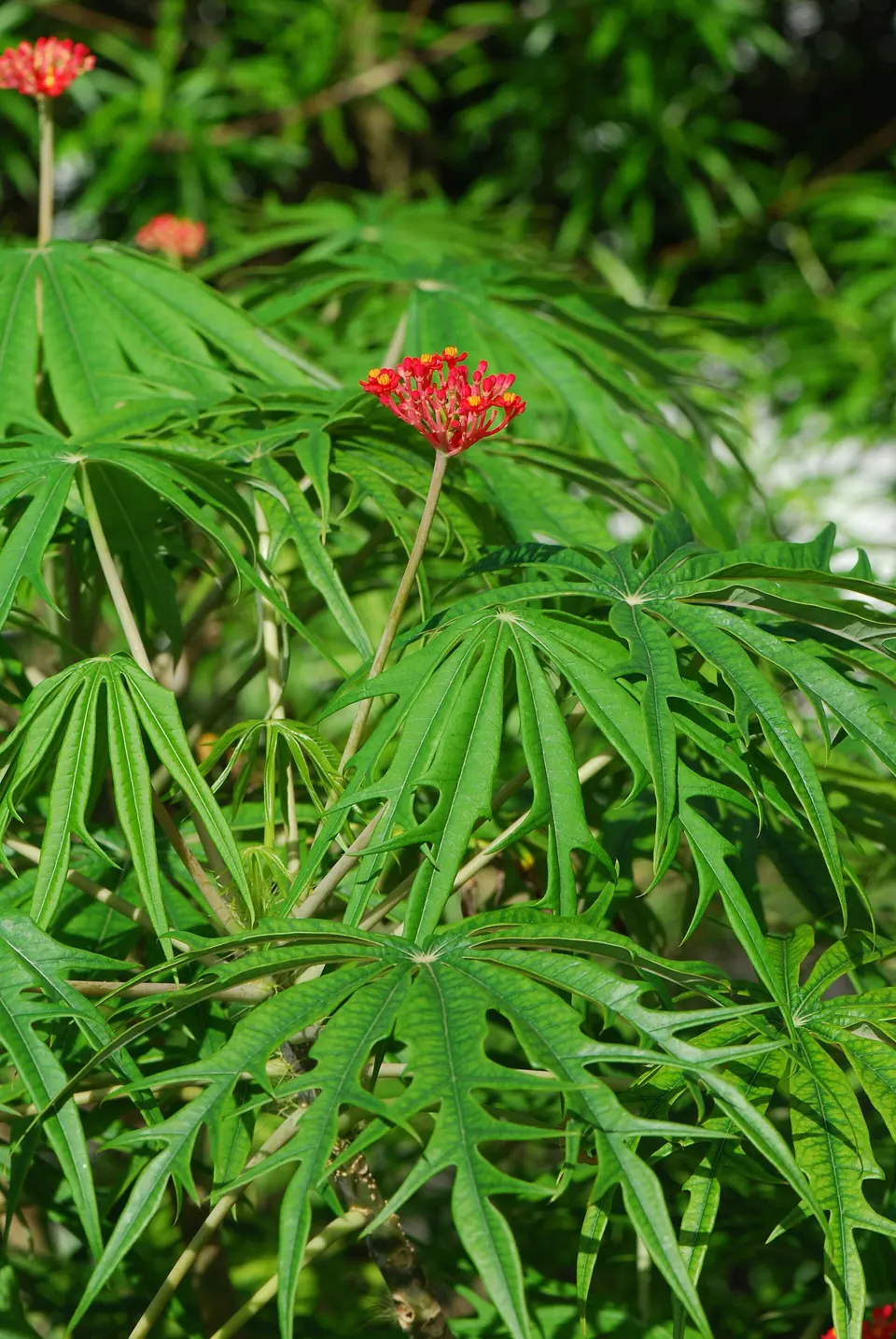
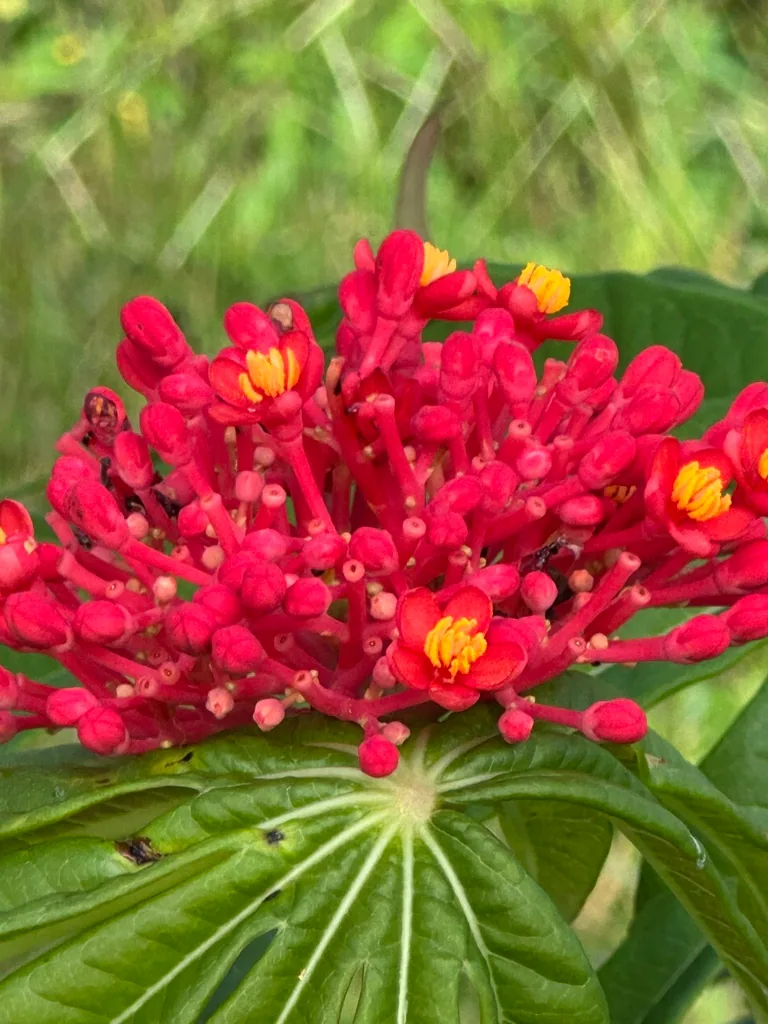
Coral plant is an ornamental shrub or small tree with deeply lobed leaves and bright coral-red flowers. [2][4] It is frost sensitive and tolerates some drought once established, preferring excellent drainage. [3] All parts are toxic, in particular the seeds. [1]
This record is incomplete: the sources we read do not cover every field yet.
Not yet covered by our sources: Pruning
Coralbush care
How to water Coralbush
Watering
The sources give different values depending on region, zone or growing conditions.
What each source says
According to NParks: Little water
According to Gardening Know How: Some drought tolerance once established; best with regular watering
What the sources say (2)
According to NParks: Water Preference
| Little WaterAccording to Gardening Know How: It has some drought tolerance once established but performs best with regular watering in a full sun situation.Watering notes
Reduce water for container plants in winter; overly wet plants may develop root rot
What the sources say (2)
Container plants should have water reduced in winter.Overly wet plants and those that receive splashed mud on the foliage may experience root rot or leaf spot .How much light Coralbush needs
How much cold Coralbush can take
Hardiness, coldest zone
10 [winter low −1.1 to 4.4 °C (30 to 40 °F)]
What the sources say (1)
suitable for United States Department of Agriculture zones 10 to 12 onlyHardiness, warmest zone
12 [winter low 10 to 15.6 °C (50 to 60 °F)]
What the sources say (1)
suitable for United States Department of Agriculture zones 10 to 12 onlyWhere to grow Coralbush
Yes
What the sources say (1)
In cool zones, plant the specimen in a large container with a gritty houseplant soil.How to propagate Coralbush
Cuttings; self-seeds at the base of the plant
What the sources say (1)
The species tends to self-seed at the base of the plant and can also be propagated by cuttings .Remedies
Each remedy shows what official sources say about it; traditional remedies without an official source are marked as such. Harmful ones are listed so you know to avoid them.
First aid
First aid: not a substitute for a doctor
skin contact with sap
wash with running water and soap Official source, not independently tested
How: Wash the area thoroughly with plenty of running water and soap.
Wash the area thoroughly with plenty of running water and soap.
— poison.org [8]
sap on the skin
wash quickly with running water Official source, not independently tested
How: If you know you have plant material, juices, or sap on your skin, wash quickly with plenty of running water.
If you know you have plant material, juices, or sap on your skin, wash quickly with plenty of running water.
— poison.org [8]
Treating the plant
aphids
strong spray of water Works
How: Dislodge aphids with a strong spray of water.
Aphids are fragile insects that often can be dislodged from the plant with a strong spray of water. Insecticidal soaps registered for use in the interiorscape provide good control, especially for spot treatments.
— uaf.edu [9] What the evidence says Aphids are fragile insects that often can be dislodged from the plant with a strong spray of water.
— uaf.edu [9] insecticidal soap Works
Do not use on crown of thorns; test spray other euphorbias, jade plants, palms and delicate ferns before making full application.
— uaf.edu [9] How: Insecticidal soaps provide good control, especially for spot treatments; mix per label and spray both leaf surfaces.
Insecticidal soaps registered for use in the interiorscape provide good control, especially for spot treatments.
— uaf.edu [9] What the evidence says Insecticidal soaps registered for use in the interiorscape provide good control, especially for spot treatments.
— uaf.edu [9]
mealybugs
cotton swab with rubbing alcohol Works
How: Individual mealybugs can be removed with a cotton swab dipped in rubbing alcohol or by removing infested plant parts.
Individual mealybugs can be removed with a cotton swab dipped in rubbing alcohol or by removing infested plant parts.
— uaf.edu [9] What the evidence says Individual mealybugs can be removed with a cotton swab dipped in rubbing alcohol or by removing infested plant parts.
— uaf.edu [9]
scale insects
strong jet of water Partly works
How: Spraying the plant with a strong jet of water can dislodge young crawlers.
Spraying the plant with a strong jet of water can dislodge young crawlers.
— uaf.edu [9] What the evidence says Spraying the plant with a strong jet of water can dislodge young crawlers.
— uaf.edu [9]
Is Coralbush poisonous?
Reported by the source, quoted verbatim. This is not medical or veterinary advice: if a person or an animal may have eaten this plant, contact a poison control centre or a veterinarian.
Symptoms are largely those associated with gastro-intestinal irritation.
[1]- Poisonous parts
All parts are considered toxic but in particular the seeds.
[1]- Toxic principle
Contains a purgative oil and a phytotoxin or toxalbumin (curcin) similar to ricin in Ricinis.
[1]- Symptoms
There is acute abdominal pain and a burning sensation in the throat about half an hour after ingestion of the seeds, followed by nausea, vomiting and diarrhoea.
[1]
Calendar
Pruning
Not stated in the sources we read.
Months as given by the sources, which are mostly from the United States (northern hemisphere). In the southern hemisphere they shift by about six months.
Indicative values
Values from a secondary source, not checked word for word like the rest of this page. Use them as a starting point.
- Life cycle
- PerennialIndicative value, adapt it to your climate · Secondary source
- Mature height
- 182.9-304.8 cm (6-10 ft)Indicative value, adapt it to your climate · Secondary source
- Hours of sun
- 6-8 hoursIndicative value, adapt it to your climate · Secondary source
- Drought tolerant
- yesIndicative value, adapt it to your climate · Secondary source
- Soil pH
- 6-7.5Indicative value, adapt it to your climate · Secondary source
- Care level
- MediumIndicative value, adapt it to your climate · Secondary source
- Growth rate
- LowIndicative value, adapt it to your climate · Secondary source
- Pruning
- March, April, FebruaryIndicative value, adapt it to your climate · Secondary source
Similar plants
- Barbados nut Jatropha curcas
- Buddha Belly Jatropha podagrica
- Abies grandis Abies grandis
- Abraham Trachystemon orientalis
- Abyssinian banana Ensete ventricosum
- Acacia longifolia Acacia longifolia
- Acanthus hungaricus Acanthus hungaricus
- Aconite Aconitum napellus
Sources
Every value above is quoted from these documents. Links lead to the original publisher.
- Jatropha multifida (PIM 646) · inchem.org, consulted
- Coral plant (Jatropha multifida) | Queensland Poisons Information Centre · poisonsinfo.health.qld.gov.au, consulted
- Care Of Coral Plant: Learn How To Grow A Coral Plant | Gardening Know How · gardeningknowhow.com, consulted
- NParks | Jatropha multifida · nparks.gov.sg, consulted
- Jatropha multifida · llifle.com, consulted
- Jatropha multifida Eupborbiaceae · apps.worldagroforestry.org, consulted
- Jatropha multifida - Leon Levy Native Plant Preserve · levypreserve.org, consulted
- poison.org · poison.org
- uaf.edu · uaf.edu
Written by Emilio Marruso · last checked