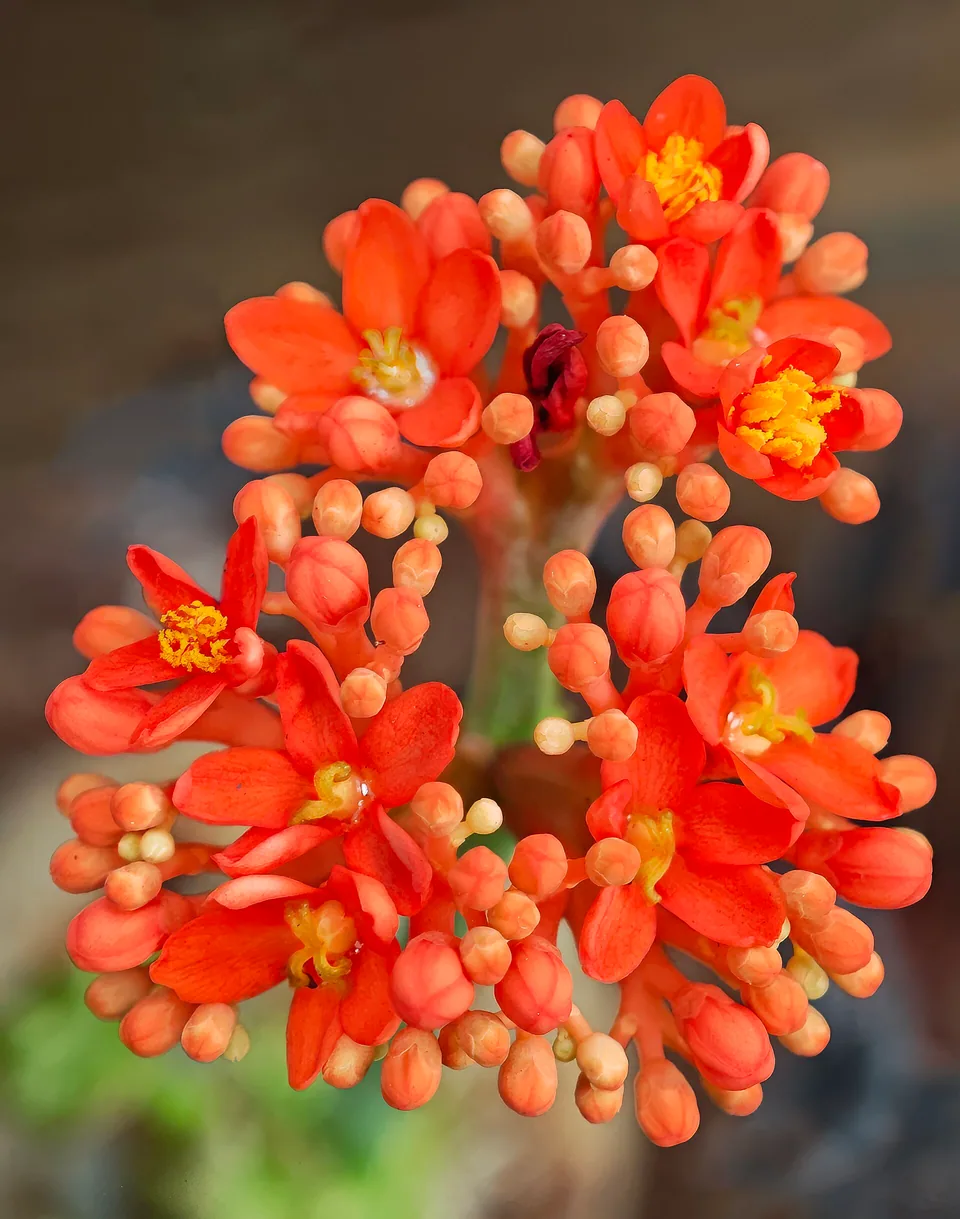


How to Grow and Care for Buddha Belly
Jatropha podagrica
Written by Emilio Marruso · last checked
Toxic to: People · Why
At a glance
This easygoing perennial grows happily in a pot, indoors or out, in full sun or partial shade. It stays compact at 2–3 feet tall and 1–2 feet wide, and all it asks is that you let the soil dry between waterings, giving it even less water in winter. You can even start new plants yourself from seed or a stem cutting.
- Sun
Full sun to partial shade
What the sources say (1)
Light: Full sun to partial shade
Light: Full sun (6 or more hours of direct sunlight a day) Partial Shade (Direct sunlight only part of the day, 2-6 hours)
— Jatropha podagrica (Bottle Euphorbia, Buddha Belly, Buddha Belly Plant, Gout Plant) | North Carolina Extension Gardener Plant Toolbox [1] - Water
Let the soil dry between waterings; water less in winter
What the sources say (2)
Watering: Allow the soil to dry between waterings
Allow the soil to dry between waterings. In fall the leaves will begin to drop off and the plant should be brought inside.
— Jatropha podagrica (Bottle Euphorbia, Buddha Belly, Buddha Belly Plant, Gout Plant) | North Carolina Extension Gardener Plant Toolbox [1] Watering notes: Reduce watering in the winter
Allow the soil to dry between waterings. In fall the leaves will begin to drop off and the plant should be brought inside. Reduce watering in the winter.
— Jatropha podagrica (Bottle Euphorbia, Buddha Belly, Buddha Belly Plant, Gout Plant) | North Carolina Extension Gardener Plant Toolbox [1] - Cold
Survives winters down to 30 °F (−1.1 °C)
Half hardy: mild winters or an unheated greenhouse · USDA 10a · RHS H3 · Z10
What the sources say (2)
Hardiness, coldest zone: 10a [winter low −1.1 to 1.7 °C (30 to 35 °F)]
USDA Plant Hardiness Zone: 10a, 10b, 11a, 11b
— Jatropha podagrica (Bottle Euphorbia, Buddha Belly, Buddha Belly Plant, Gout Plant) | North Carolina Extension Gardener Plant Toolbox [1] Hardiness, warmest zone: 11b [winter low 7.2 to 10 °C (45 to 50 °F)]
USDA Plant Hardiness Zone: 10a, 10b, 11a, 11b
— Jatropha podagrica (Bottle Euphorbia, Buddha Belly, Buddha Belly Plant, Gout Plant) | North Carolina Extension Gardener Plant Toolbox [1] - Pests
Watch for mealybugs, aphids, spider mites and scale; soggy soil brings root rot
What the sources say (2)
Pests: mealybugs, aphids, spider mites, scale, thrips, whiteflies
Monitor for mealybugs, aphids, spider mites, scale, thrips, and whiteflies.
— Jatropha podagrica (Bottle Euphorbia, Buddha Belly, Buddha Belly Plant, Gout Plant) | North Carolina Extension Gardener Plant Toolbox [1] Diseases: root rot, red leaf spot, botrytis, southern blight
Potential plant diseases include root rot, red leaf spot, botrytis, and southern blight.
— Jatropha podagrica (Bottle Euphorbia, Buddha Belly, Buddha Belly Plant, Gout Plant) | North Carolina Extension Gardener Plant Toolbox [1] - Size
2–3 ft tall and 1–2 ft wide
What the sources say (2)
Mature height: 61-91 cm (2-3 ft)
Dimensions: Height: 2 ft. 0 in. - 3 ft. 0 in. Width: 1 ft. 0 in. - 2 ft. 0 in.
— Jatropha podagrica (Bottle Euphorbia, Buddha Belly, Buddha Belly Plant, Gout Plant) | North Carolina Extension Gardener Plant Toolbox [1] Mature width: 30-61 cm (1-2 ft)
Height: 2 ft. 0 in. - 3 ft. 0 in. Width: 1 ft. 0 in. - 2 ft. 0 in.
— Jatropha podagrica (Bottle Euphorbia, Buddha Belly, Buddha Belly Plant, Gout Plant) | North Carolina Extension Gardener Plant Toolbox [1] - Propagation
From seed or stem cuttings; cover seed pods with small net bags to catch the seeds
What the sources say (2)
Propagation: Seed, stem cutting
Recommended Propagation Strategy: Seed Stem Cutting Country Or Region Of Origin:
— Jatropha podagrica (Bottle Euphorbia, Buddha Belly, Buddha Belly Plant, Gout Plant) | North Carolina Extension Gardener Plant Toolbox [1] Saving seeds: cover the seed capsules with small net baggies to catch the seeds
If you want to collect seeds for new plants, you will need to cover the capsules. Small net baggies work well for this.
— Jatropha podagrica (Bottle Euphorbia, Buddha Belly, Buddha Belly Plant, Gout Plant) | North Carolina Extension Gardener Plant Toolbox [1] - Containers
Grows well in containers and indoors
What the sources say (2)
In containers: Yes
Grow this plant in sun to partial shade in well-drained soils in a pot with several drainage holes.
— Jatropha podagrica (Bottle Euphorbia, Buddha Belly, Buddha Belly Plant, Gout Plant) | North Carolina Extension Gardener Plant Toolbox [1] Indoors: Yes
Grow as a house plant in North Carolina.
— Jatropha podagrica (Bottle Euphorbia, Buddha Belly, Buddha Belly Plant, Gout Plant) | North Carolina Extension Gardener Plant Toolbox [1] - Safety
All parts are poisonous and the sap irritates skin: wear gloves, keep away from kids and pets
Overview
Buddha belly plant is a tropical succulent shrub from the tropical Americas grown as a houseplant in North Carolina. [1] All parts of the plant are poisonous and the sap can cause contact dermatitis. [1]
Buddha Belly care
How to water Buddha Belly
Watering
Allow the soil to dry between waterings
What the sources say (1)
Allow the soil to dry between waterings. In fall the leaves will begin to drop off and the plant should be brought inside.Watering notes
Reduce watering in the winter
What the sources say (1)
Allow the soil to dry between waterings. In fall the leaves will begin to drop off and the plant should be brought inside. Reduce watering in the winter.How much light Buddha Belly needs
Full sun to partial shade
What the sources say (1)
Light:
Full sun (6 or more hours of direct sunlight a day)
Partial Shade (Direct sunlight only part of the day, 2-6 hours)How much cold Buddha Belly can take
Hardiness, coldest zone
10a [winter low −1.1 to 1.7 °C (30 to 35 °F)]
What the sources say (1)
USDA Plant Hardiness Zone:
10a, 10b, 11a, 11bHardiness, warmest zone
11b [winter low 7.2 to 10 °C (45 to 50 °F)]
What the sources say (1)
USDA Plant Hardiness Zone:
10a, 10b, 11a, 11bWhere to grow Buddha Belly
Indoors
Yes
What the sources say (1)
Grow as a house plant in North Carolina.In containers
Yes
What the sources say (1)
Grow this plant in sun to partial shade in well-drained soils in a pot with several drainage holes.How to propagate Buddha Belly
Seed, stem cutting
What the sources say (1)
Recommended Propagation Strategy:
Seed
Stem Cutting
Country Or Region Of Origin:How to grow Buddha Belly
The plant
Life cycle
perennial
What the sources say (1)
The plant has been used in herbal medicine
Life Cycle:
PerennialFamily
Euphorbiaceae
What the sources say (1)
Buddha Belly Plant is an unusual tropical succulent shrub in the euphorbia family (Euphorbiaceae) from the tropical Americas.Mature height
61-91 cm (2-3 ft)
What the sources say (1)
Dimensions:
Height: 2 ft. 0 in. - 3 ft. 0 in.
Width: 1 ft. 0 in. - 2 ft. 0 in.Mature width
30-61 cm (1-2 ft)
What the sources say (1)
Height: 2 ft. 0 in. - 3 ft. 0 in.
Width: 1 ft. 0 in. - 2 ft. 0 in.Harvest and storage
Saving seeds
cover the seed capsules with small net baggies to catch the seeds
What the sources say (1)
If you want to collect seeds for new plants, you will need to cover the capsules. Small net baggies work well for this.Pests and diseases
Pests
mealybugs, aphids, spider mites, scale, thrips, whiteflies
What the sources say (1)
Monitor for mealybugs, aphids, spider mites, scale, thrips, and whiteflies.Diseases
root rot, red leaf spot, botrytis, southern blight
What the sources say (1)
Potential plant diseases include root rot, red leaf spot, botrytis, and southern blight.Buddha Belly pests and problems
Pests
Symptom: Mealybugs, aphids, spider mites, scale, thrips and whiteflies
What to do: Monitor for these pests
What the sources say (1)
Monitor for mealybugs, aphids, spider mites, scale, thrips, and whiteflies.
— Jatropha podagrica (Bottle Euphorbia, Buddha Belly, Buddha Belly Plant, Gout Plant) | North Carolina Extension Gardener Plant Toolbox [1] Diseases
Symptom: Root rot, red leaf spot, botrytis and southern blight
What to do: Allow the soil to dry between waterings
What the sources say (1)
Potential plant diseases include root rot, red leaf spot, botrytis, and southern blight.
— Jatropha podagrica (Bottle Euphorbia, Buddha Belly, Buddha Belly Plant, Gout Plant) | North Carolina Extension Gardener Plant Toolbox [1]
Remedies
Each remedy shows what official sources say about it; traditional remedies without an official source are marked as such. Harmful ones are listed so you know to avoid them.
Treating the plant
mealybugs
cotton ball soaked in alcohol Not verified
Traditional remedy, not verified by an official source.
How: Mealybugs can be removed manually with a cotton ball soaked in alcohol.
Is Buddha Belly poisonous?
Reported by the source, quoted verbatim. This is not medical or veterinary advice: if a person or an animal may have eaten this plant, contact a poison control centre or a veterinarian.
All parts of this plant are poisonous. Exercise caution around children and pets.
[1]- Poisonous parts
Potential plant diseases include root rot, red leaf spot, botrytis, and southern blight. All parts of this plant are poisonous.
[1]
The sap from the plant can cause skin irritation. Wear gloves when handling this plant. The sap can cause contact dermatitis.
[1]
Similar plants
- Barbados nut Jatropha curcas
- Coralbush Jatropha multifida
- Cassava Manihot esculenta
- Castor Bean Ricinus communis
- Chenille Plant Acalypha hispida
- Chinese tallow tree Triadica sebifera
- Copperleaf Acalypha wilkesiana
- Crown of Thorns Euphorbia milii
Sources
Every value above is quoted from these documents. Links lead to the original publisher.
- Jatropha podagrica (Bottle Euphorbia, Buddha Belly, Buddha Belly Plant, Gout Plant) | North Carolina Extension Gardener Plant Toolbox · plants.ces.ncsu.edu, consulted
Written by Emilio Marruso · last checked