
How to Grow and Care for Chenille Plant
Acalypha hispida
Written by Emilio Marruso · last checked
Toxic to: People · Why
At a glance
This tender perennial is happy in full sun or partial shade, and it grows just as well in a container or indoors. Set it outside for the summer once all danger of frost has passed, feed it through the growing season, and prune it after flowering. It's safe for cats, dogs and horses, and new plants start easily from stem cuttings in spring.
- Sun
Full sun to partial shade
What the sources say (2)
Light: Full sun to partial shade
The plant can grow 4-6 feet tall and wide and prefers full sun to partial shade.
— Acalypha hispida (Bristly Copperleaf, Chenille Plant, Foxtail, Philippines Medusa, Red Hot Cat's Tail, Red-Hot Cattail, Red-hot Cat Tail) | North Carolina Extension Gardener Plant Toolbox [1] It should have full sun, routine fertilization during the growing season to keep new growth coming, and normal watering frequency.
— Acalypha hispida; Chenille Plant [4] - Water
Water the soil and keep water off the flowers to prevent disease
What the sources say (2)
Watering notes: Keep water off the flowers to prevent disease; avoid poorly drained soils
If possible, keep water off the flowers in order to prevent disease.
— Chenille Plant, Acalypha hispida – Wisconsin Horticulture [2] requires moderate moisture but not poorly drained soils. It has some drought tolerance once established but poor salt tolerance.
— Acalypha hispida (Bristly Copperleaf, Chenille Plant, Foxtail, Philippines Medusa, Red Hot Cat's Tail, Red-Hot Cattail, Red-hot Cat Tail) | North Carolina Extension Gardener Plant Toolbox [1] - Cold
Survives winters down to 30 °F (−1.1 °C)
Half hardy: mild winters or an unheated greenhouse · USDA 10a · RHS H3 · Z10
What the sources say (2)
Hardiness, coldest zone: 10a [winter low −1.1 to 1.7 °C (30 to 35 °F)]
USDA Plant Hardiness Zone: 10a, 10b, 11a, 11b
— Acalypha hispida (Bristly Copperleaf, Chenille Plant, Foxtail, Philippines Medusa, Red Hot Cat's Tail, Red-Hot Cattail, Red-hot Cat Tail) | North Carolina Extension Gardener Plant Toolbox [1] Hardiness, warmest zone: 11b [winter low 7.2 to 10 °C (45 to 50 °F)]
USDA Plant Hardiness Zone: 10a, 10b, 11a, 11b
— Acalypha hispida (Bristly Copperleaf, Chenille Plant, Foxtail, Philippines Medusa, Red Hot Cat's Tail, Red-Hot Cattail, Red-hot Cat Tail) | North Carolina Extension Gardener Plant Toolbox [1] - Soil
Needs soil that drains well; avoid soggy ground
What the sources say (2)
Watering notes: Keep water off the flowers to prevent disease; avoid poorly drained soils
If possible, keep water off the flowers in order to prevent disease.
— Chenille Plant, Acalypha hispida – Wisconsin Horticulture [2] requires moderate moisture but not poorly drained soils. It has some drought tolerance once established but poor salt tolerance.
— Acalypha hispida (Bristly Copperleaf, Chenille Plant, Foxtail, Philippines Medusa, Red Hot Cat's Tail, Red-Hot Cattail, Red-hot Cat Tail) | North Carolina Extension Gardener Plant Toolbox [1] - Planting
Move it outdoors for the summer once all danger of frost has passed
What the sources say (1)
Planting: Outdoors for the summer after all danger of frost has passed
It may revive in the spring when better conditions prevail and it can be moved outside for the summer after all danger of frost has passed.
— Chenille Plant, Acalypha hispida – Wisconsin Horticulture [2] - Feeding
Feed spring through summer, less in winter; it is a heavy feeder when forming flowers
What the sources say (4)
When: Throughout the growing season, spring through summer; reduced in winter
indoor plants: Indoor plants should be fed monthly from spring through summer and need temperatures above 60 degrees F and high humidity.
— Acalypha hispida (Bristly Copperleaf, Chenille Plant, Foxtail, Philippines Medusa, Red Hot Cat's Tail, Red-Hot Cattail, Red-hot Cat Tail) | North Carolina Extension Gardener Plant Toolbox [1] It should have full sun, routine fertilization during the growing season to keep new growth coming, and normal watering frequency.
— Acalypha hispida; Chenille Plant [4] It needs as much light and humidity as possible during the winter, when water and fertilizer should be reduced.
— Chenille Plant, Acalypha hispida – Wisconsin Horticulture [2] Mineral fertilizers: Diluted water-soluble fertilizer at regular waterings, or a slow-release granular fertilizer; a heavy feeder when forming flowers
Fertilize container-grown plants frequently, as this is a heavy feeder when forming flowers. Use either diluted water soluble fertilizer in regular waterings or use a slow release granular product.
— Chenille Plant, Acalypha hispida – Wisconsin Horticulture [2] - Pruning
Prune after flowering
What the sources say (1)
Pruning: After flowering
Prune after flowering to maintain the desired size. Indoor plants should be fed monthly from spring through summer
— Acalypha hispida (Bristly Copperleaf, Chenille Plant, Foxtail, Philippines Medusa, Red Hot Cat's Tail, Red-Hot Cattail, Red-hot Cat Tail) | North Carolina Extension Gardener Plant Toolbox [1] - Pests
Watch for mealybugs, scale, spider mites and whiteflies
What the sources say (2)
Pests: mealybugs, scale, spider mites, whiteflies
Mostly trouble-free but mealybugs, scale, and red spider mites are occasional problems.
— Acalypha hispida (Bristly Copperleaf, Chenille Plant, Foxtail, Philippines Medusa, Red Hot Cat's Tail, Red-Hot Cattail, Red-hot Cat Tail) | North Carolina Extension Gardener Plant Toolbox [1] This plant has few pests, but spider mites, whiteflies and mealybugs can be a problem.
— Chenille Plant, Acalypha hispida – Wisconsin Horticulture [2] - Size
Spreads 5 to 8 ft wide
What the sources say (2)
Mature width: 152-244 cm (5-8 ft)
Dimensions: Height: 4 ft. 0 in. - 6 ft. 0 in. Width: 5 ft. 0 in. - 8 ft. 0 in.
— Acalypha hispida (Bristly Copperleaf, Chenille Plant, Foxtail, Philippines Medusa, Red Hot Cat's Tail, Red-Hot Cattail, Red-hot Cat Tail) | North Carolina Extension Gardener Plant Toolbox [1] This evergreen plant can grow to 15 feet tall and 8 feet wide
— Chenille Plant, Acalypha hispida – Wisconsin Horticulture [2] - Propagation
Root 4–6 inch stem cuttings with at least two leaves in spring; seed also works
What the sources say (2)
Propagation: Stem cuttings (4 to 6 inch [10–15 cm] long, with at least two leaves, in spring); also seed
Propagate chenille plant by taking 4 to 6 inch long cuttings with at least two leaves in spring .
— Chenille Plant, Acalypha hispida – Wisconsin Horticulture [2] Plants can also be grown from seed, but will take a while to flower and you may end up with non-showy male plants.
— Chenille Plant, Acalypha hispida – Wisconsin Horticulture [2] - Containers
Grows well in containers and indoors
What the sources say (2)
In containers: Yes
It is vigorous and easy to grow as a container plant or seasonally in the landscape
— Chenille Plant, Acalypha hispida – Wisconsin Horticulture [2] Indoors: Yes
Because it is only hardy to zone 10a, it is usually grown as a houseplant or seasonal annual for its unusual tassel-like flowers
— Chenille Plant, Acalypha hispida – Wisconsin Horticulture [2] - Safety
Safe for cats, dogs and horses; the sap can irritate skin, so keep it away from children
Overview
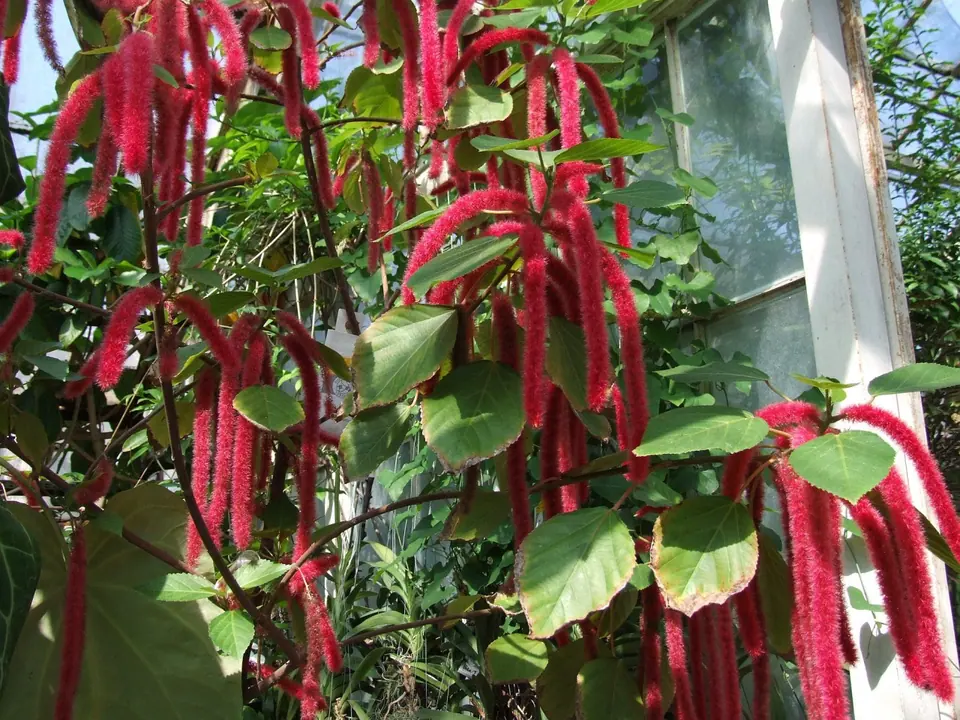
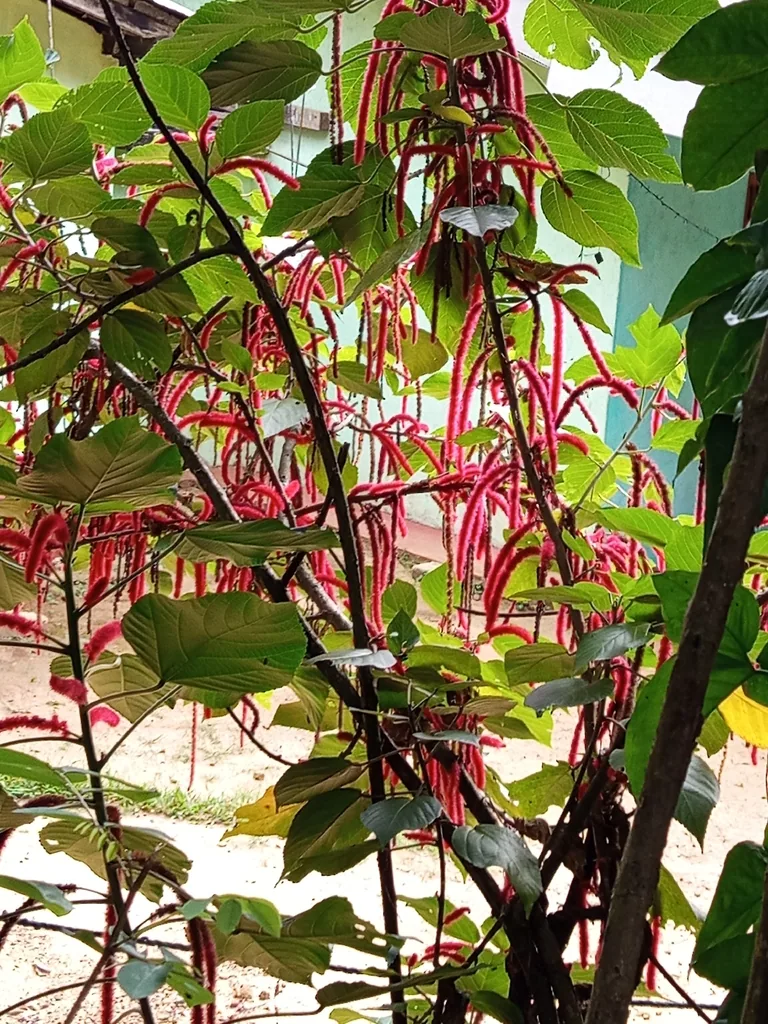
Chenille plant is a vigorous tropical shrub in the spurge family, grown for pendulous red to pink flower clusters. [1] It prefers full sun to partial shade and needs moisture but not poorly drained soils. [1] It is usually grown as a houseplant or seasonal annual outside its hardiness range. [2]
Chenille Plant care
Measurements in square brackets are our conversion into the other unit system; the quoted text is unchanged.
How to water Chenille Plant
Watering
The sources give different values depending on region, zone or growing conditions.
What each source says
According to NC State Extension: Moderate moisture; some drought tolerance once established
According to University of Wisconsin-Madison Extension: Keep moist but not wet; never allow to dry out completely
According to University of Arkansas Division of Agriculture: Normal watering frequency
What the sources say (5)
According to NC State Extension: requires moderate moisture but not poorly drained soils. It has some drought tolerance once establishedAccording to University of Wisconsin-Madison Extension: It also needs to be kept moist, but not wet, and never be allowed to dry out completely.According to University of Arkansas Division of Agriculture: routine fertilization
during the growing season to keep new growth coming, and normal watering frequency.requires moderate moisture but not poorly drained soils. It has some drought tolerance once established but poor salt tolerance.It also needs to be kept moist, but not wet, and never be allowed to dry out completely.Watering notes
Keep water off the flowers to prevent disease; avoid poorly drained soils
What the sources say (2)
If possible, keep water off the flowers in order to prevent disease.requires moderate moisture but not poorly drained soils. It has some drought tolerance once established but poor salt tolerance.How much light Chenille Plant needs
Full sun to partial shade
What the sources say (2)
The plant can grow 4-6 feet tall and wide and prefers full sun to partial shade.It should have full sun, routine fertilization
during the growing season to keep new growth coming, and normal watering frequency.How much cold Chenille Plant can take
Hardiness, coldest zone
10a [winter low −1.1 to 1.7 °C (30 to 35 °F)]
What the sources say (1)
USDA Plant Hardiness Zone:
10a, 10b, 11a, 11bHardiness, warmest zone
11b [winter low 7.2 to 10 °C (45 to 50 °F)]
What the sources say (1)
USDA Plant Hardiness Zone:
10a, 10b, 11a, 11bWhere to grow Chenille Plant
Indoors
Yes
What the sources say (1)
Because it is only hardy to zone 10a, it is usually grown as a houseplant or seasonal annual for its unusual tassel-like flowersIn containers
Yes
What the sources say (1)
It is vigorous and easy to grow as a container plant or seasonally in the landscapeHow to propagate Chenille Plant
Stem cuttings (4 to 6 inch [10–15 cm] long, with at least two leaves, in spring); also seed
What the sources say (2)
Propagate chenille plant by taking 4 to 6 inch long cuttings with at least two leaves in spring .Plants can also be grown from seed, but will take a while to flower and you may end up with non-showy male plants.How to grow Chenille Plant
The plant
Life cycle
perennial (tender; often grown as an annual)
What the sources say (1)
Chenille plant is often grown as an annual, but since it is a tender perennial it can be brought indoors to be kept over the winter as a houseplant.Family
Euphorbiaceae
What the sources say (1)
Chenille Plant is a vigorous tropical shrub in the spurge family (Euphorbiaceae) that is native to tropical areasMature height
Mature width
152-244 cm (5-8 ft)
What the sources say (2)
Dimensions: Height: 4 ft. 0 in. - 6 ft. 0 in. Width: 5 ft. 0 in. - 8 ft. 0 in.This evergreen plant can grow to 15 feet tall and 8 feet widePests and diseases
Pests
mealybugs, scale, spider mites, whiteflies
What the sources say (2)
Mostly trouble-free but mealybugs, scale, and red spider mites are occasional problems.This plant has few pests, but spider mites, whiteflies and mealybugs can be a problem.Fertilizing
When
Throughout the growing season, spring through summer; reduced in winter
What each source says
indoor plants: Monthly from spring through summer
What the sources say (3)
indoor plants: Indoor plants should be fed monthly from spring through summer and need temperatures above 60 degrees F and high humidity.It should have full sun, routine fertilization during the growing season to keep new growth coming, and normal watering frequency.It needs as much light and humidity as possible during the winter, when water and fertilizer should be reduced.How often
The sources give different values depending on region, zone or growing conditions.
What each source says
indoor plants: Monthly
in containers: Frequently, with diluted fertilizer at regular waterings
What the sources say (2)
indoor plants: Indoor plants should be fed monthly from spring through summer and need temperatures above 60 degrees F and high humidity.in containers: Fertilize container-grown plants frequently, as this is a heavy feeder when forming flowers. Use either diluted water soluble fertilizer in regular waterings or use a slow release granular product.Mineral fertilizers
Diluted water-soluble fertilizer at regular waterings, or a slow-release granular fertilizer; a heavy feeder when forming flowers
What the sources say (1)
Fertilize container-grown plants frequently, as this is a heavy feeder when forming flowers. Use either diluted water soluble fertilizer in regular waterings or use a slow release granular product.Chenille Plant pests and problems
Mealybugs, scale and red spider mites
Symptom: Occasional problems; otherwise mostly trouble-free.
What to do: Not given in the sources.
What the sources say (1)
Mostly trouble-free but mealybugs, scale, and red spider mites are occasional problems.
— Acalypha hispida (Bristly Copperleaf, Chenille Plant, Foxtail, Philippines Medusa, Red Hot Cat's Tail, Red-Hot Cattail, Red-hot Cat Tail) | North Carolina Extension Gardener Plant Toolbox [1] Spider mites, whiteflies and mealybugs
Symptom: Can be a problem on a plant that otherwise has few pests.
What to do: Not given in the sources.
What the sources say (1)
This plant has few pests, but spider mites, whiteflies and mealybugs can be a problem.
— Chenille Plant, Acalypha hispida – Wisconsin Horticulture [2] Cold damage
Symptom: Damaged by temperatures below 50 F; needs temperatures above 60 F for growth.
What to do: Bring indoors to overwinter in colder areas.
What the sources say (1)
As a tropical plant, it can be damaged by temperatures below 50 °F, and requires temperatures above 60 °F for growth.
— Chenille Plant, Acalypha hispida – Wisconsin Horticulture [2]
Remedies
Each remedy shows what official sources say about it; traditional remedies without an official source are marked as such. Harmful ones are listed so you know to avoid them.
Treating the plant
spider mites
soapy water wash Works
How: Wash plants with soapy water (2 teaspoons mild detergent per gallon of water) and a soft brush, making sure to wash the undersides of leaves.
Wash plants with soapy water (2 teaspoons mild detergent per gallon of water) and a soft brush, making sure to wash the undersides of leaves.
— extension.missouri.edu [9] What the evidence says Wash plants with soapy water (2 teaspoons mild detergent per gallon of water) and a soft brush, making sure to wash the undersides of leaves.
— extension.missouri.edu [9] forceful water spray Works
How: Hosing tough plants with a forceful spray of water knocks off mites and destroys their webs.
Hosing tough plants with a forceful spray of water knocks off mites and destroys their webs.
— extension.missouri.edu [9] What the evidence says Hosing tough plants with a forceful spray of water knocks off mites and destroys their webs.
— extension.missouri.edu [9] showering the plant Works
How: Showering your houseplants once or twice a month will help control these tiny pests.
Showering your houseplants once or twice a month will help control these tiny pests.
— extension.okstate.edu [10] What the evidence says Showering your houseplants once or twice a month will help control these tiny pests.
— extension.okstate.edu [10]
mealybugs and scale
alcohol-soaked cotton swab Partly works
How: Where only a few plants are involved, an alcohol-soaked cotton swab can be used to wipe off aphids, mealybugs, and scale insects.
Where only a few plants are involved, an alcohol-soaked cotton swab can be used to wipe off any aphids, mealybugs, and scale insects.
— extension.okstate.edu [10] What the evidence says Scales can be rubbed off plants by hand using garden gloves, a toothbrush or a dry or alcohol-dipped cotton swab. However, this treatment may not be adequate when scale are present in large numbers.
— extension.missouri.edu [9]
aphids
squashing by hand Official source, not independently tested
How: Control small populations of aphids by squashing the soft-bodied insects with your fingers.
Control small populations of aphids by squashing the soft-bodied insects with your fingers.
— extension.missouri.edu [9]
Is Chenille Plant poisonous?
Reported by the source, quoted verbatim. This is not medical or veterinary advice: if a person or an animal may have eaten this plant, contact a poison control centre or a veterinarian.
Animals
#non-toxic for cats #non-toxic for horses #non-toxic for dogs #tropical feel #container plant
[1]The source flags the risk for this animal but does not explain why.
People
Calendar
Planting
Outdoors for the summer after all danger of frost has passed
What the sources say (1)
It may revive in the spring when better conditions prevail and it can be moved outside for the summer after all danger of frost has passed.Pruning
After flowering
What the sources say (1)
Prune after flowering to maintain the desired size. Indoor plants should be fed monthly from spring through summerMonths as given by the sources, which are mostly from the United States (northern hemisphere). In the southern hemisphere they shift by about six months.
Relative to frost
Less precise estimate: there is no weather station within 300 km.
Find frost dates by ZIP code or city
Transplant: around the last frost
it can be moved outside for the summer after all danger of frost has passed.
— Chenille Plant, Acalypha hispida – Wisconsin Horticulture [2]
Count from the average frost dates where you live.
Indicative values
Values from a secondary source, not checked word for word like the rest of this page. Use them as a starting point.
- Hours of sun
- 6-8 hoursIndicative value, adapt it to your climate · Secondary source
- Soil
- Well-drainedIndicative value, adapt it to your climate · Secondary source
- Soil pH
- 6-7.5Indicative value, adapt it to your climate · Secondary source
- Care level
- MediumIndicative value, adapt it to your climate · Secondary source
- Growth rate
- HighIndicative value, adapt it to your climate · Secondary source
Similar plants
- Copperleaf Acalypha wilkesiana
- Slender Threeseed Mercury Acalypha gracilens
- Common Three-Seed Mercury Acalypha rhomboidea
- Virginia Copperleaf Acalypha virginica
- Alabama Croton Croton alabamensis
- Buddha Belly Jatropha podagrica
- Cassava Manihot esculenta
- Castor Bean Ricinus communis
Sources
Every value above is quoted from these documents. Links lead to the original publisher.
- Acalypha hispida (Bristly Copperleaf, Chenille Plant, Foxtail, Philippines Medusa, Red Hot Cat's Tail, Red-Hot Cattail, Red-hot Cat Tail) | North Carolina Extension Gardener Plant Toolbox · plants.ces.ncsu.edu, consulted
- Chenille Plant, Acalypha hispida – Wisconsin Horticulture · hort.extension.wisc.edu, consulted
- Bristly Copperleaf - Acalypha hispida | North Carolina Extension Gardener Plant Toolbox · plants.ces.ncsu.edu, consulted
- Acalypha hispida; Chenille Plant · uaex.uada.edu, consulted
- Big Seed Copperleaf - Acalypha | North Carolina Extension Gardener Plant Toolbox · plants.ces.ncsu.edu, consulted
- Virginia Copperleaf - Acalypha | North Carolina Extension Gardener Plant Toolbox · plants.ces.ncsu.edu, consulted
- Slender Three Seed Mercury - Acalypha | North Carolina Extension Gardener Plant Toolbox · plants.ces.ncsu.edu, consulted
- Rough Pod Copperleaf - Acalypha | North Carolina Extension Gardener Plant Toolbox · plants.ces.ncsu.edu, consulted
- extension.missouri.edu · extension.missouri.edu
- extension.okstate.edu · extension.okstate.edu
Written by Emilio Marruso · last checked