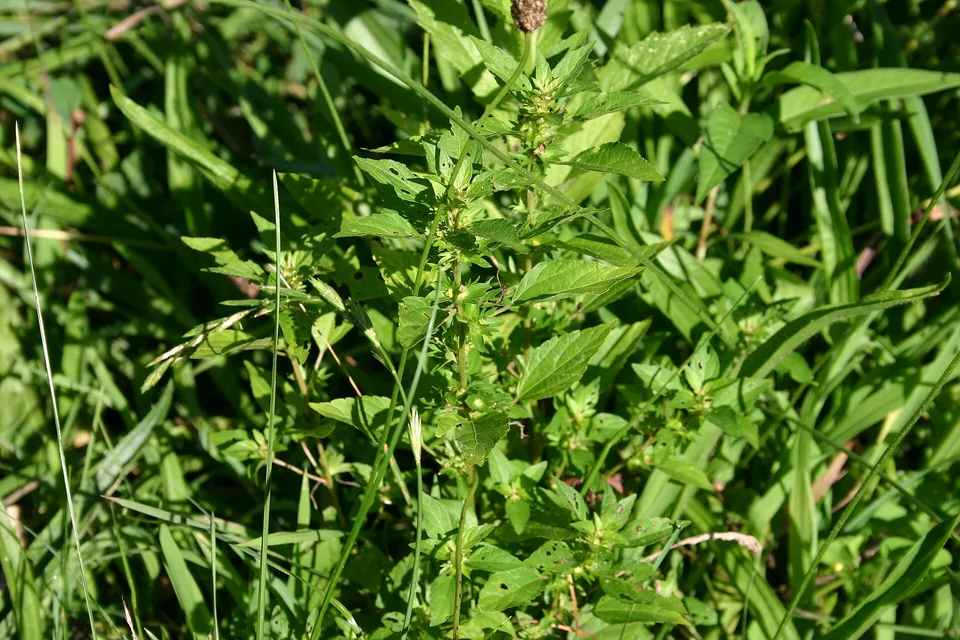


How to Grow and Care for Common Three-Seed Mercury
Acalypha rhomboidea
Written by Emilio Marruso · last checked
Toxic to: People · Why
At a glance
This easygoing annual grows happily in sun or light shade and settles into moist or dry clay, loam or rocky soil. It stays small, just 1 to 2 feet tall, and sows itself freely from seed, so it comes back on its own year after year. Wear gloves when you handle it, since the sap can irritate skin.
- Sun
Sun to light shade
What the sources say (1)
Light: Sun to light shade
It prefers sun to light shade and will grow in moist to dry clay, loam or rocky soils.
— Acalypha rhomboidea (Common Three-Seed Mercury, Copperleaf, Rhomboid Mercury, Virginia Three-Seed Mercury) | North Carolina Extension Gardener Plant Toolbox [1] - Soil
Clay, loam or rocky soil, moist to dry
What the sources say (1)
Watering notes: Grows in moist to dry clay, loam or rocky soils
It prefers sun to light shade and will grow in moist to dry clay, loam or rocky soils.
— Acalypha rhomboidea (Common Three-Seed Mercury, Copperleaf, Rhomboid Mercury, Virginia Three-Seed Mercury) | North Carolina Extension Gardener Plant Toolbox [1] - Watch out
Self-seeds freely and can turn weedy: pull extras in early summer before seeds form
What the sources say (2)
Propagation: Seed; freely self-seeds
This plant has tiny flowers with large lobed bracts in summer to fall and freely self-seeds.
— Acalypha rhomboidea (Common Three-Seed Mercury, Copperleaf, Rhomboid Mercury, Virginia Three-Seed Mercury) | North Carolina Extension Gardener Plant Toolbox [1] Recommended Propagation Strategy: Seed
— Acalypha rhomboidea (Common Three-Seed Mercury, Copperleaf, Rhomboid Mercury, Virginia Three-Seed Mercury) | North Carolina Extension Gardener Plant Toolbox [1] - Size
1 to 2 ft tall
What the sources say (2)
Mature height: 30-61 cm (1-2 ft)
It has a deep tap root, grows 1-2 feet tall and rarely branches
— Acalypha rhomboidea (Common Three-Seed Mercury, Copperleaf, Rhomboid Mercury, Virginia Three-Seed Mercury) | North Carolina Extension Gardener Plant Toolbox [1] Three seeded mercury is an annual weed growing 12- to 24 inches tall that belongs to the spurge (Euphorbia) family but with clear, not milky sap.
— Three Seeded Mercury [4] - Propagation
Annual that grows from seed and sows itself
What the sources say (3)
Propagation: Seed; freely self-seeds
This plant has tiny flowers with large lobed bracts in summer to fall and freely self-seeds.
— Acalypha rhomboidea (Common Three-Seed Mercury, Copperleaf, Rhomboid Mercury, Virginia Three-Seed Mercury) | North Carolina Extension Gardener Plant Toolbox [1] Recommended Propagation Strategy: Seed
— Acalypha rhomboidea (Common Three-Seed Mercury, Copperleaf, Rhomboid Mercury, Virginia Three-Seed Mercury) | North Carolina Extension Gardener Plant Toolbox [1] Life cycle: annual
Common Three-seed Mercury is an annual native herbaceous plant in the spurge family (Euphorbiaceae) and occurs in all areas of NC.
— Acalypha rhomboidea (Common Three-Seed Mercury, Copperleaf, Rhomboid Mercury, Virginia Three-Seed Mercury) | North Carolina Extension Gardener Plant Toolbox [1] - Safety
Mildly poisonous if eaten; wear gloves, the sap can irritate skin
Overview
Common three-seed mercury is an annual native herbaceous plant in the spurge family. [1] It is generally considered a weed of disturbed sites and is easily removed by hand. [2][4] It is considered mildly poisonous to humans if ingested, and the sap may cause contact dermatitis. [2]
This record is incomplete: the sources we read do not cover every field yet.
Not yet covered by our sources: Hardiness, coldest zone, Hardiness, warmest zone
Common Three-Seed Mercury care
How to water Common Three-Seed Mercury
Grows in moist to dry clay, loam or rocky soils
What the sources say (1)
It prefers sun to light shade and will grow in moist to dry clay, loam or rocky soils.How much light Common Three-Seed Mercury needs
Sun to light shade
What the sources say (1)
It prefers sun to light shade and will grow in moist to dry clay, loam or rocky soils.How much cold Common Three-Seed Mercury can take
Hardiness, coldest zone
Not stated in the sources we read.
Hardiness, warmest zone
Not stated in the sources we read.
How to propagate Common Three-Seed Mercury
Seed; freely self-seeds
What the sources say (2)
This plant has tiny flowers with large lobed bracts in summer to fall and freely self-seeds.Recommended Propagation Strategy:
SeedHow to grow Common Three-Seed Mercury
The plant
Life cycle
annual
What the sources say (1)
Common Three-seed Mercury is an annual native herbaceous plant in the spurge family (Euphorbiaceae) and occurs in all areas of NC.Family
Euphorbiaceae
What the sources say (1)
Common Three-seed Mercury is an annual native herbaceous plant in the spurge family (Euphorbiaceae) and occurs in all areas of NC.Mature height
30-61 cm (1-2 ft)
What the sources say (2)
It has a deep tap root, grows 1-2 feet tall and rarely branchesThree seeded mercury is an annual weed growing 12- to 24 inches tall that belongs
to the spurge (Euphorbia) family but with clear, not milky sap.Common Three-Seed Mercury pests and problems
Weediness
Symptom: Weed of disturbed areas; freely self-seeds
What to do: Hand weed early in summer before seed matures (shallow taproot, easy to pull); mulching in late spring prevents seed germination
What the sources say (1)
As with most such weeds it should be removed early in the summer instead of waiting for the seed to mature as the season progresses. Mulching in late spring does an effective job of preventing seed germination.
— Three Seeded Mercury [4] Contact dermatitis
Symptom: The sap may cause contact dermatitis
What to do: Wear gloves while weeding
What the sources say (1)
It is recommended that the gardener wear gloves while weeding as the sap may cause contact dermatitis.
— Virginia Three-seed Mercury: Are They a Weed or a Wildflower? [2]
Remedies
Each remedy shows what official sources say about it; traditional remedies without an official source are marked as such. Harmful ones are listed so you know to avoid them.
First aid
First aid: not a substitute for a doctor
sap contact dermatitis
wash the skin with soap and warm water Official source, not independently tested
The rash affects your face, lips, eyes, or genitals.
— medlineplus.gov [5] How: Wash the skin thoroughly with soap and warm water. Because the plant oil enters skin quickly, try to wash it off within 30 minutes.
Wash the skin thoroughly with soap and warm water. Because the plant oil enters skin quickly, try to wash it off within 30 minutes.
— medlineplus.gov [5] lukewarm oatmeal bath Official source, not independently tested
How: Bathing in lukewarm water with an oatmeal bath product, available in drugstores, may soothe itchy skin.
Bathing in lukewarm water with an oatmeal bath product, available in drugstores, may soothe itchy skin.
— medlineplus.gov [5]
Getting rid of it
weed
hand weeding Works
It is recommended that the gardener wear gloves while weeding as the sap may cause contact dermatitis.
— Virginia Three-seed Mercury: Are They a Weed or a Wildflower? [2] How: Pull it easily by hand, early in the summer instead of waiting for the seed to mature.
As weeds go it is not as obnoxious as many because it can be pulled easily without stooping over or spending a lot of time grubbing it out by its roots.
— Three Seeded Mercury [4] What the evidence says They are not considered invasive and may be managed easily by hand weeding as they have easy-to-remove shallow tap roots.
— Virginia Three-seed Mercury: Are They a Weed or a Wildflower? [2] mulching Works
How: Mulching in late spring prevents seed germination.
Mulching in late spring does an effective job of preventing seed germination.
— Three Seeded Mercury [4] What the evidence says Mulching in late spring does an effective job of preventing seed germination.
— Three Seeded Mercury [4] boiling water Partly works
Be careful not to splash or burn yourself with the boiling water, and remember the boiling water will kill both weeds and desirable plants.
— yardandgarden.extension.iastate.edu [6] How: Pour boiling water directly on the weed with a tea kettle, using plenty of water and retreating 7-10 days later.
Pouring boiling water on weeds can be effective, especially when no other plants are nearby, or when weeds are newly emerged seedlings.
— yardandgarden.extension.iastate.edu [6] What the evidence says Pouring boiling water on weeds can be effective, especially when no other plants are nearby, or when weeds are newly emerged seedlings.
— yardandgarden.extension.iastate.edu [6]
Is Common Three-Seed Mercury poisonous?
Reported by the source, quoted verbatim. This is not medical or veterinary advice: if a person or an animal may have eaten this plant, contact a poison control centre or a veterinarian.
Both plants are considered mildly poisonous to humans and, if ingested, may cause vomiting and diarrhea.
[2]It is recommended that the gardener wear gloves while weeding as the sap may cause contact dermatitis.
[2]- Poisonous parts
It is recommended that the gardener wear gloves while weeding as the sap may cause contact dermatitis.
[2]
Indicative values
Values from a secondary source, not checked word for word like the rest of this page. Use them as a starting point.
- Watering
- FrequentIndicative value, adapt it to your climate · Secondary source
- Soil
- Humus EnrichedIndicative value, adapt it to your climate · Secondary source
- Soil pH
- 6-7.5Indicative value, adapt it to your climate · Secondary source
- Care level
- MediumIndicative value, adapt it to your climate · Secondary source
- Growth rate
- LowIndicative value, adapt it to your climate · Secondary source
- Pruning
- March, AprilIndicative value, adapt it to your climate · Secondary source
Similar plants
- Slender Threeseed Mercury Acalypha gracilens
- Virginia Copperleaf Acalypha virginica
- Chenille Plant Acalypha hispida
- Copperleaf Acalypha wilkesiana
- Barbados nut Jatropha curcas
- Buddha Belly Jatropha podagrica
- Cassava Manihot esculenta
- Castor Bean Ricinus communis
Sources
Every value above is quoted from these documents. Links lead to the original publisher.
- Acalypha rhomboidea (Common Three-Seed Mercury, Copperleaf, Rhomboid Mercury, Virginia Three-Seed Mercury) | North Carolina Extension Gardener Plant Toolbox · plants.ces.ncsu.edu, consulted
- Virginia Three-seed Mercury: Are They a Weed or a Wildflower? · extension.psu.edu, consulted
- Virginia Three-Seed Mercury - Acalypha rhomboidea | North Carolina Extension Gardener Plant Toolbox · plants.ces.ncsu.edu, consulted
- Three Seeded Mercury · uaex.uada.edu, consulted
- medlineplus.gov · medlineplus.gov
- yardandgarden.extension.iastate.edu · yardandgarden.extension.iastate.edu
Written by Emilio Marruso · last checked