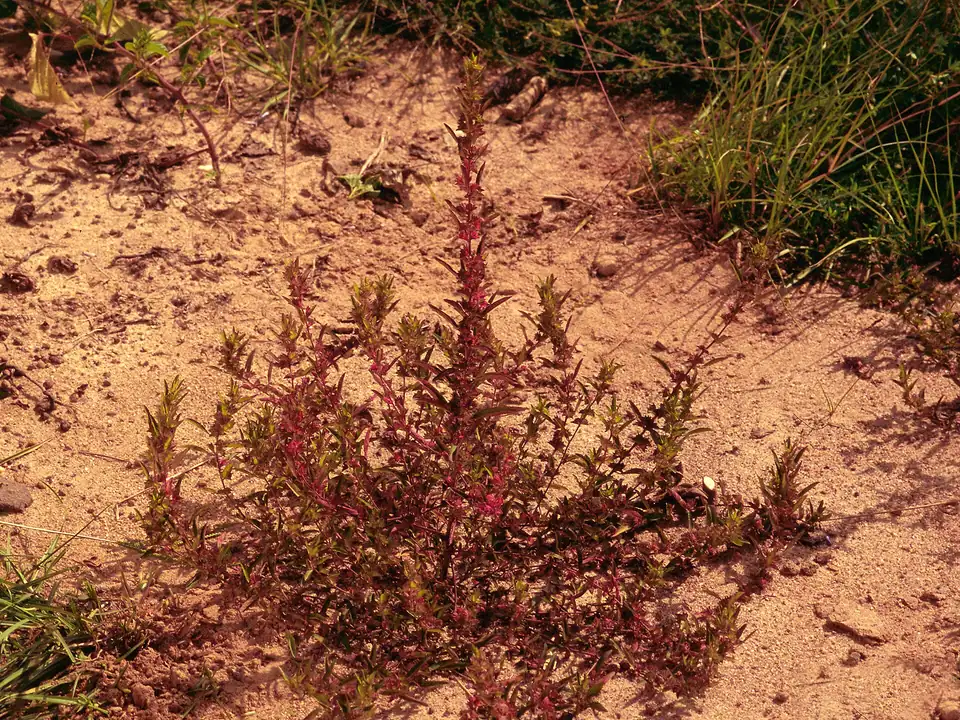


How to Grow and Care for Slender Threeseed Mercury
Acalypha gracilens
Written by Emilio Marruso · last checked
At a glance
This easygoing annual is happy anywhere from full sun to partial shade, growing 1 to 3 feet tall and just as wide. It spreads almost anywhere on its own, so starting it from seed is easy. Just remove the flowers before they set seed, and you stay in charge of where it pops up next.
- Sun
Full sun to partial shade
What the sources say (1)
Light: Full sun to partial shade
Light: Full sun (6 or more hours of direct sunlight a day) Partial Shade (Direct sunlight only part of the day, 2-6 hours)
— Acalypha gracilens (Shortsalk Copperleaf, Slender Copperleaf, Slender Threeseed Mercury, Three-seeded Mercury) | North Carolina Extension Gardener Plant Toolbox [1] - Pruning
Remove the flowers before they set seed
What the sources say (1)
Pruning: Before seed is set (deadhead the flowers)
deadhead the flowers before seed is set or dig out the plant while it is still small.
— Acalypha gracilens (Shortsalk Copperleaf, Slender Copperleaf, Slender Threeseed Mercury, Three-seeded Mercury) | North Carolina Extension Gardener Plant Toolbox [1] - Watch out
Spreads almost anywhere and has a deep root: dig it out while it is still small
- Size
1–3 ft tall and 1–3 ft wide
What the sources say (2)
Mature height: 30.5-91.4 cm (1-3 ft)
Dimensions: Height: 1 ft. 0 in. - 3 ft. 0 in. Width: 1 ft. 0 in. - 3 ft. 0 in.
— Acalypha gracilens (Shortsalk Copperleaf, Slender Copperleaf, Slender Threeseed Mercury, Three-seeded Mercury) | North Carolina Extension Gardener Plant Toolbox [1] Mature width: 30.5-91.4 cm (1-3 ft)
Dimensions: Height: 1 ft. 0 in. - 3 ft. 0 in. Width: 1 ft. 0 in. - 3 ft. 0 in.
— Acalypha gracilens (Shortsalk Copperleaf, Slender Copperleaf, Slender Threeseed Mercury, Three-seeded Mercury) | North Carolina Extension Gardener Plant Toolbox [1] - Propagation
Grows from seed
What the sources say (1)
Propagation: Seed
Recommended Propagation Strategy: Seed
— Acalypha gracilens (Shortsalk Copperleaf, Slender Copperleaf, Slender Threeseed Mercury, Three-seeded Mercury) | North Carolina Extension Gardener Plant Toolbox [1]
Overview
Slender threeseed mercury is a native herbaceous annual wildflower of the eastern United States. [1] It is considered a weed with a deep taproot that is difficult to dislodge once established. [1]
This record is incomplete: the sources we read do not cover every field yet.
Not yet covered by our sources: Hardiness, coldest zone, Hardiness, warmest zone
Slender Threeseed Mercury care
How much light Slender Threeseed Mercury needs
Full sun to partial shade
What the sources say (1)
Light:
Full sun (6 or more hours of direct sunlight a day)
Partial Shade (Direct sunlight only part of the day, 2-6 hours)How much cold Slender Threeseed Mercury can take
Hardiness, coldest zone
Not stated in the sources we read.
Hardiness, warmest zone
Not stated in the sources we read.
How to propagate Slender Threeseed Mercury
Seed
What the sources say (1)
Recommended Propagation Strategy:
SeedHow to grow Slender Threeseed Mercury
The plant
Life cycle
annual
What the sources say (1)
Genus:
Acalypha
Species:
gracilens
Family:
Euphorbiaceae
Life Cycle:
AnnualFamily
Euphorbiaceae
What the sources say (1)
Genus:
Acalypha
Species:
gracilens
Family:
Euphorbiaceae
Life Cycle:
AnnualMature height
30.5-91.4 cm (1-3 ft)
What the sources say (1)
Dimensions:
Height: 1 ft. 0 in. - 3 ft. 0 in.
Width: 1 ft. 0 in. - 3 ft. 0 in.Mature width
30.5-91.4 cm (1-3 ft)
What the sources say (1)
Dimensions:
Height: 1 ft. 0 in. - 3 ft. 0 in.
Width: 1 ft. 0 in. - 3 ft. 0 in.Slender Threeseed Mercury pests and problems
Weediness
Symptom: Spreads almost anywhere, deep taproot
What to do: Deadhead flowers before seed is set or dig out the plant while small
What the sources say (1)
A better strategy to avoid continuous weeding is to deadhead the flowers before seed is set or dig out the plant while it is still small.
— Acalypha gracilens (Shortsalk Copperleaf, Slender Copperleaf, Slender Threeseed Mercury, Three-seeded Mercury) | North Carolina Extension Gardener Plant Toolbox [1]
Remedies
Each remedy shows what official sources say about it; traditional remedies without an official source are marked as such. Harmful ones are listed so you know to avoid them.
Getting rid of it
weeds
deadheading before seed set Official source, not independently tested
How: Deadhead the flowers before seed is set, or dig out the plant while it is still small.
A better strategy to avoid continuous weeding is to deadhead the flowers before seed is set or dig out the plant while it is still small.
— Acalypha gracilens (Shortsalk Copperleaf, Slender Copperleaf, Slender Threeseed Mercury, Three-seeded Mercury) | North Carolina Extension Gardener Plant Toolbox [1]
Calendar
Pruning
Before seed is set (deadhead the flowers)
What the sources say (1)
deadhead the flowers before seed is set or dig out the plant while it is still small.Months as given by the sources, which are mostly from the United States (northern hemisphere). In the southern hemisphere they shift by about six months.
Similar plants
- Common Three-Seed Mercury Acalypha rhomboidea
- Virginia Copperleaf Acalypha virginica
- Chenille Plant Acalypha hispida
- Copperleaf Acalypha wilkesiana
- Castor Bean Ricinus communis
- Chinese tallow tree Triadica sebifera
- Cypress Spurge Euphorbia cyparissias
- Graceful Spurge Euphorbia hypericifolia
Sources
Every value above is quoted from these documents. Links lead to the original publisher.
- Acalypha gracilens (Shortsalk Copperleaf, Slender Copperleaf, Slender Threeseed Mercury, Three-seeded Mercury) | North Carolina Extension Gardener Plant Toolbox · plants.ces.ncsu.edu, consulted
- Slender Copperleaf - Acalypha gracilens | North Carolina Extension Gardener Plant Toolbox · plants.ces.ncsu.edu, consulted
- Three-seeded Mercury - Acalypha | North Carolina Extension Gardener Plant Toolbox · plants.ces.ncsu.edu, consulted
- Find a Plant | North Carolina Extension Gardener Plant Toolbox · plants.ces.ncsu.edu, consulted
- Three-seeded Mercury - Acalypha gracilens | North Carolina Extension Gardener Plant Toolbox · plants.ces.ncsu.edu, consulted
Written by Emilio Marruso · last checked