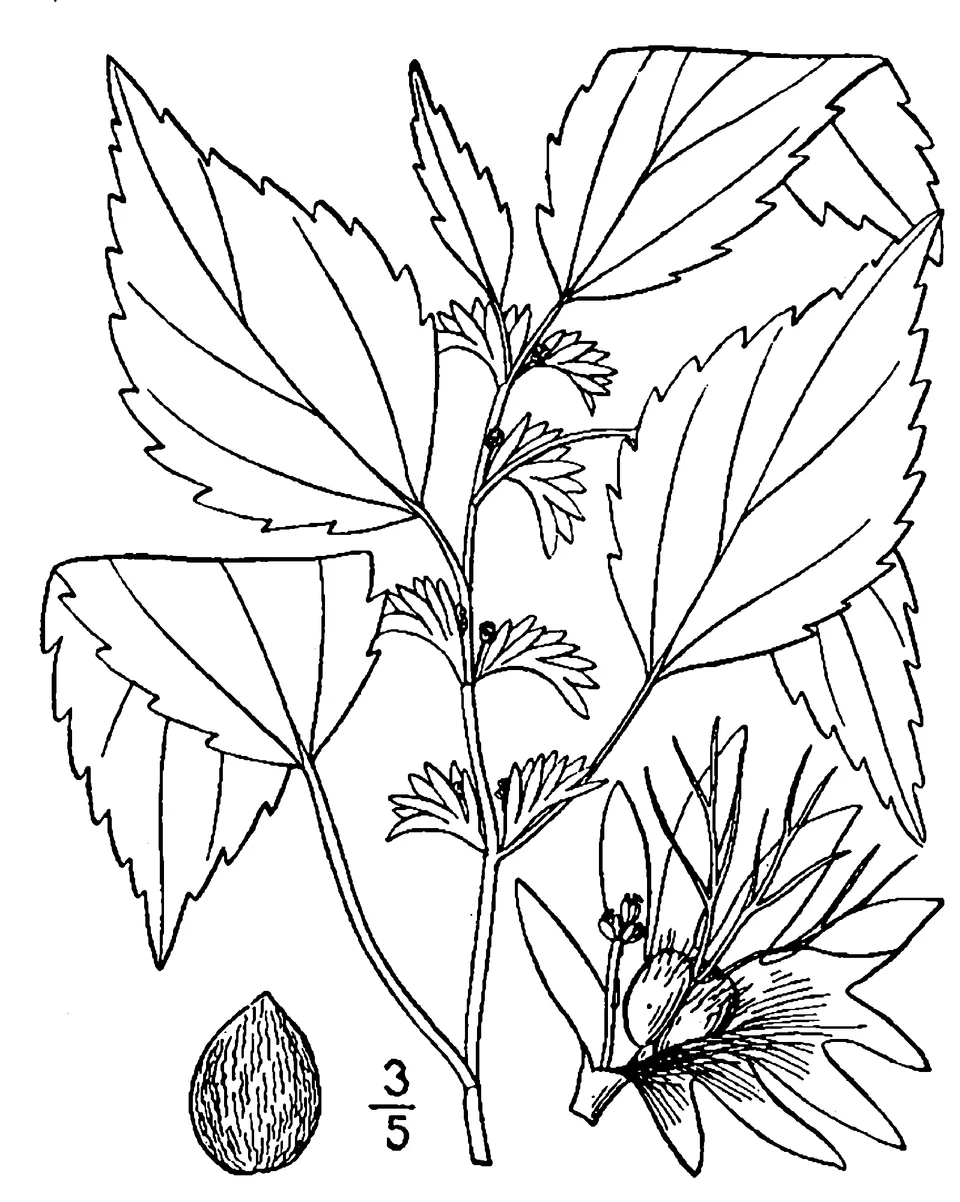


How to Grow and Care for Virginia Copperleaf
Acalypha virginica
Written by Emilio Marruso · last checked
Toxic to: People · Why
At a glance
This easygoing annual from the spurge family grows from seed and sows itself freely, so it can come back year after year all on its own. Birds love its seeds and help spread it around. To keep it where you want it, pull young plants up by the root and use mulch. Just handle it with care, because the sap can irritate skin.
- Watch out
Self-seeds and spreads: pull it up by the root, mulch, and don't let it set seed
- Propagation
Grows from seed
What the sources say (2)
Propagation: Seed
Recommended Propagation Strategy: Seed Country Or Region Of Origin: Central and Eastern U.S.A.
— Acalypha virginica (Virginia Copperleaf, Virginia Threeseed Mercury) | North Carolina Extension Gardener Plant Toolbox [1] It will grow up to 2 feet tall and self-seeds.
— Acalypha virginica (Virginia Copperleaf, Virginia Threeseed Mercury) | North Carolina Extension Gardener Plant Toolbox [1] - Safety
Mildly poisonous: eating it causes vomiting and diarrhea; the sap can irritate skin
Overview
Virginia copperleaf is a native summer annual weed in the spurge family that self-seeds. [1] It is not recommended for home gardens and is best left to its native habitat. [1] The plant is considered mildly poisonous to humans, and its sap may cause contact dermatitis. [2]
This record is incomplete: the sources we read do not cover every field yet.
Not yet covered by our sources: Hardiness, coldest zone, Hardiness, warmest zone
Virginia Copperleaf care
How much light Virginia Copperleaf needs
The sources give different values depending on region, zone or growing conditions.
What each source says
According to NC State Extension: Full sun to partial shade
According to Clemson Extension: Sunny to part shade locations
Florida (Nassau County): Partial shade; does not tolerate full afternoon sun
What the sources say (3)
According to NC State Extension: Full sun (6 or more hours of direct sunlight a day)According to Clemson Extension: Virginia copperleaf grows in sunny to part shade locations.Florida (Nassau County): Three-seed mercury plants grow in partial shade and will not tolerate full, afternoon sun.How much cold Virginia Copperleaf can take
Hardiness, coldest zone
Not stated in the sources we read.
Hardiness, warmest zone
Not stated in the sources we read.
How to propagate Virginia Copperleaf
Seed
What the sources say (2)
Recommended Propagation Strategy:
Seed
Country Or Region Of Origin:
Central and Eastern U.S.A.It will grow up to 2 feet tall and self-seeds.How to grow Virginia Copperleaf
The plant
Life cycle
annual
What the sources say (1)
Virginia Copperleaf is a summer annual weed in the spurge familyFamily
Euphorbiaceae
What the sources say (1)
Both are native to eastern and central North America and are members of the spurge family (Euphorbiaceae).Virginia Copperleaf pests and problems
Weedy self-seeding
Symptom: Self-seeds and spreads; birds eat the seeds and aid further spread
What to do: Hand weeding by pulling up the taproot, mulch, and preventing seed production
What the sources say (2)
Management includes hand weeding by pulling up the taproot and applying mulch. Prevention of seed production will help decrease the spread of the plant.
— Acalypha virginica (Virginia Copperleaf, Virginia Threeseed Mercury) | North Carolina Extension Gardener Plant Toolbox [1] A three-inch layer of mulch will help to control Virginia copperleaf and other weeds in flowerbeds.
— Weed of the Month – Virginia Copperleaf | Home & Garden Information Center [3]
Remedies
Each remedy shows what official sources say about it; traditional remedies without an official source are marked as such. Harmful ones are listed so you know to avoid them.
First aid
First aid: not a substitute for a doctor
contact dermatitis from sap
cool wet cloth on the skin Official source, not independently tested
See your health care provider if: - The rash is so itchy that you can't sleep or go about your day - The rash is severe or widespread
— mayoclinic.org [6] How: Soothe the skin with a cool, wet cloth and other self-care steps.
You can try soothing your skin with a cool, wet cloth and other self-care steps.
— mayoclinic.org [6]
Getting rid of it
weedy self-seeding
taproot pulled up Works
It is recommended that the gardener wear gloves while weeding as the sap may cause contact dermatitis.
— Virginia Three-seed Mercury: Are They a Weed or a Wildflower? [2] How: The taproot is easily pulled up for control.
The weed has a taproot , but it is easily pulled up for control.
— Weed of the Month – Virginia Copperleaf | Home & Garden Information Center [3] What the evidence says The weed has a taproot , but it is easily pulled up for control.
— Weed of the Month – Virginia Copperleaf | Home & Garden Information Center [3] mulch Works
How: A three-inch layer of mulch in flowerbeds.
A three-inch layer of mulch will help to control Virginia copperleaf and other weeds in flowerbeds.
— Weed of the Month – Virginia Copperleaf | Home & Garden Information Center [3] What the evidence says A three-inch layer of mulch will help to control Virginia copperleaf and other weeds in flowerbeds.
— Weed of the Month – Virginia Copperleaf | Home & Garden Information Center [3] boiling water Partly works
Be careful not to splash or burn yourself with the boiling water, and remember the boiling water will kill both weeds and desirable plants.
— yardandgarden.extension.iastate.edu [7] How: Pouring boiling water on weeds, plenty of water, retreat 7-10 days later.
Pouring boiling water on weeds can be effective, especially when no other plants are nearby, or when weeds are newly emerged seedlings.
— yardandgarden.extension.iastate.edu [7] What the evidence says Pouring boiling water on weeds can be effective, especially when no other plants are nearby, or when weeds are newly emerged seedlings.
— yardandgarden.extension.iastate.edu [7]
Is Virginia Copperleaf poisonous?
Reported by the source, quoted verbatim. This is not medical or veterinary advice: if a person or an animal may have eaten this plant, contact a poison control centre or a veterinarian.
Similar plants
- Common Three-Seed Mercury Acalypha rhomboidea
- Slender Threeseed Mercury Acalypha gracilens
- Chenille Plant Acalypha hispida
- Copperleaf Acalypha wilkesiana
- Barbados nut Jatropha curcas
- Buddha Belly Jatropha podagrica
- Cassava Manihot esculenta
- Castor Bean Ricinus communis
Sources
Every value above is quoted from these documents. Links lead to the original publisher.
- Acalypha virginica (Virginia Copperleaf, Virginia Threeseed Mercury) | North Carolina Extension Gardener Plant Toolbox · plants.ces.ncsu.edu, consulted
- Virginia Three-seed Mercury: Are They a Weed or a Wildflower? · extension.psu.edu, consulted
- Weed of the Month – Virginia Copperleaf | Home & Garden Information Center · hgic.clemson.edu, consulted
- Virginia Copperleaf - Acalypha | North Carolina Extension Gardener Plant Toolbox · plants.ces.ncsu.edu, consulted
- Q: What is the name of this weed? - UF/IFAS Extension Nassau County · blogs.ifas.ufl.edu, consulted
- mayoclinic.org · mayoclinic.org
- yardandgarden.extension.iastate.edu · yardandgarden.extension.iastate.edu
Written by Emilio Marruso · last checked