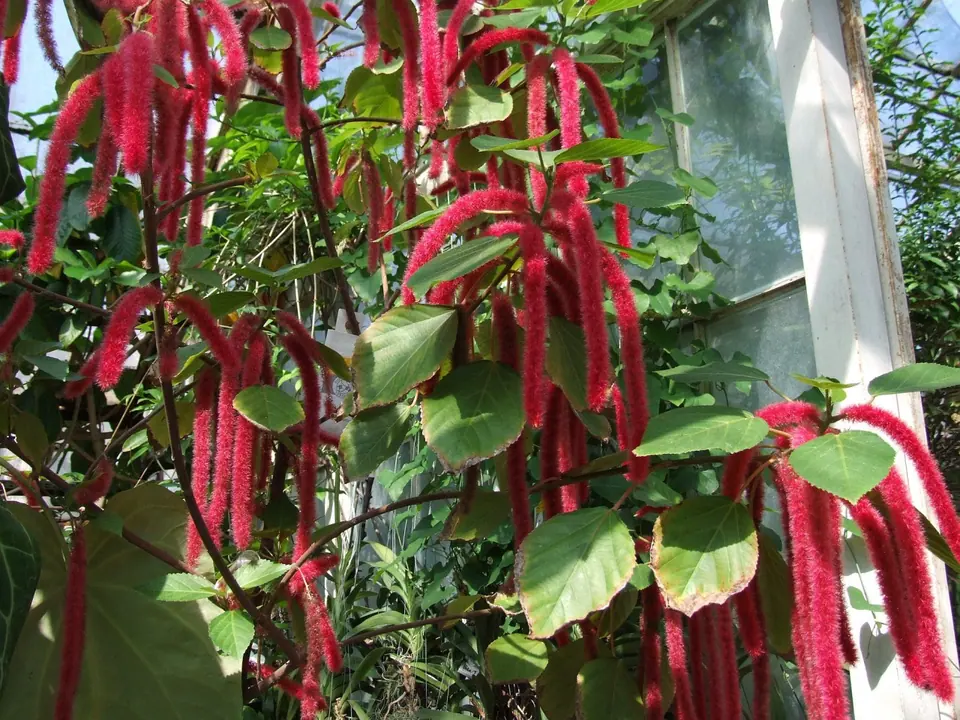
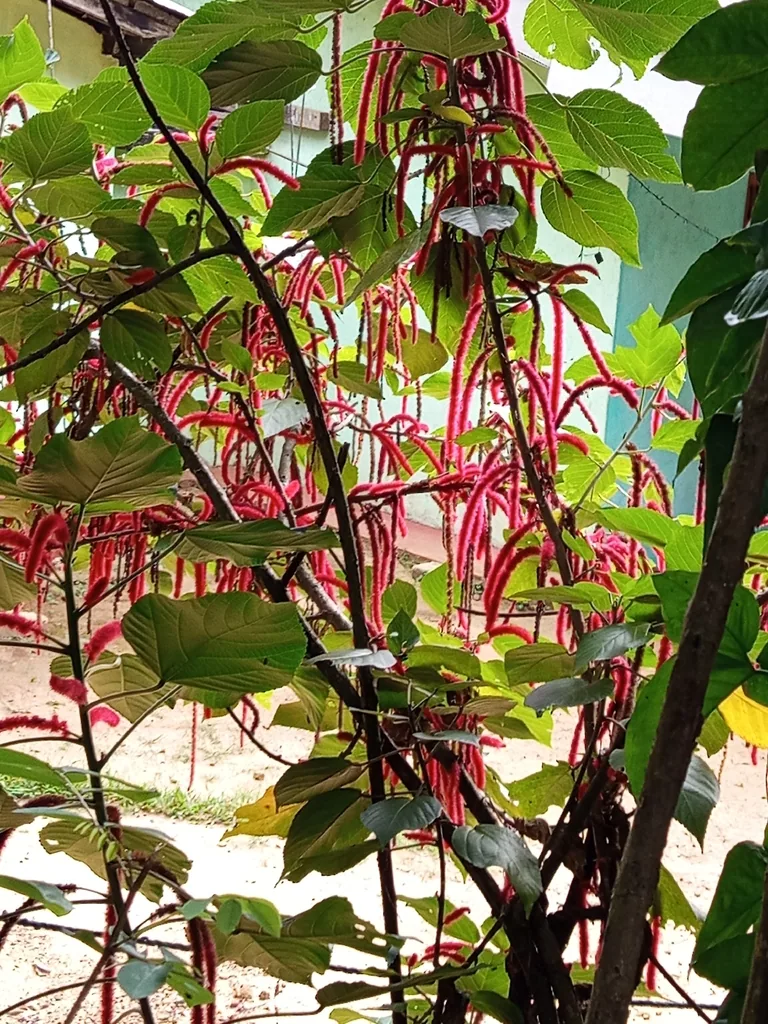

Cómo cultivar y cuidar Moco de pavo
Acalypha hispida
Escrito por Emilio Marruso · última revisión
Tóxica para: Personas · Por qué
De un vistazo
Esta vivaz delicada está a gusto a pleno sol o en semisombra, y crece igual de bien en maceta que en interior. Sácala al exterior en verano cuando ya no haya riesgo de heladas, abónala durante toda la temporada de crecimiento y pódala después de la floración. No es tóxica para gatos, perros ni caballos, y se multiplica fácilmente por esquejes en primavera.
- Sol
Pleno sol o semisombra
Qué dicen las fuentes (2)
Luz: Pleno sol a semisombra
The plant can grow 4-6 feet tall and wide and prefers full sun to partial shade.
— Acalypha hispida (Bristly Copperleaf, Chenille Plant, Foxtail, Philippines Medusa, Red Hot Cat's Tail, Red-Hot Cattail, Red-hot Cat Tail) | North Carolina Extension Gardener Plant Toolbox [1] It should have full sun, routine fertilization during the growing season to keep new growth coming, and normal watering frequency.
— Acalypha hispida; Chenille Plant [4] - Riego
Riega la tierra y no mojes las flores, para evitar enfermedades
Qué dicen las fuentes (2)
Notas sobre el riego: Evita el agua sobre las flores para prevenir enfermedades; evita suelos con mal drenaje
If possible, keep water off the flowers in order to prevent disease.
— Chenille Plant, Acalypha hispida – Wisconsin Horticulture [2] requires moderate moisture but not poorly drained soils. It has some drought tolerance once established but poor salt tolerance.
— Acalypha hispida (Bristly Copperleaf, Chenille Plant, Foxtail, Philippines Medusa, Red Hot Cat's Tail, Red-Hot Cattail, Red-hot Cat Tail) | North Carolina Extension Gardener Plant Toolbox [1] - Frío
Aguanta inviernos de hasta −1,1 °C (30 °F)
Semirrústica: inviernos suaves o invernadero sin calefacción · USDA 10a · RHS H3 · Z10
Qué dicen las fuentes (2)
Rusticidad, zona más fría: 10a [mínima invernal de −1,1 a 1,7 °C (de 30 a 35 °F)]
USDA Plant Hardiness Zone: 10a, 10b, 11a, 11b
— Acalypha hispida (Bristly Copperleaf, Chenille Plant, Foxtail, Philippines Medusa, Red Hot Cat's Tail, Red-Hot Cattail, Red-hot Cat Tail) | North Carolina Extension Gardener Plant Toolbox [1] Rusticidad, zona más cálida: 11b [mínima invernal de 7,2 a 10 °C (de 45 a 50 °F)]
USDA Plant Hardiness Zone: 10a, 10b, 11a, 11b
— Acalypha hispida (Bristly Copperleaf, Chenille Plant, Foxtail, Philippines Medusa, Red Hot Cat's Tail, Red-Hot Cattail, Red-hot Cat Tail) | North Carolina Extension Gardener Plant Toolbox [1] - Suelo
Necesita un suelo que drene bien; evita la tierra encharcada
Qué dicen las fuentes (2)
Notas sobre el riego: Evita el agua sobre las flores para prevenir enfermedades; evita suelos con mal drenaje
If possible, keep water off the flowers in order to prevent disease.
— Chenille Plant, Acalypha hispida – Wisconsin Horticulture [2] requires moderate moisture but not poorly drained soils. It has some drought tolerance once established but poor salt tolerance.
— Acalypha hispida (Bristly Copperleaf, Chenille Plant, Foxtail, Philippines Medusa, Red Hot Cat's Tail, Red-Hot Cattail, Red-hot Cat Tail) | North Carolina Extension Gardener Plant Toolbox [1] - Plantación
Sácala al exterior en verano, cuando ya no haya riesgo de heladas
Qué dicen las fuentes (1)
Plantación: Al aire libre durante el verano después de que haya pasado todo peligro de heladas
It may revive in the spring when better conditions prevail and it can be moved outside for the summer after all danger of frost has passed.
— Chenille Plant, Acalypha hispida – Wisconsin Horticulture [2] - Abonado
Abona de primavera a verano y menos en invierno; necesita mucho alimento cuando forma las flores
Qué dicen las fuentes (4)
Cuándo: Durante toda la temporada de crecimiento, de primavera a verano; se reduce en invierno
plantas de interior: Indoor plants should be fed monthly from spring through summer and need temperatures above 60 degrees F and high humidity.
— Acalypha hispida (Bristly Copperleaf, Chenille Plant, Foxtail, Philippines Medusa, Red Hot Cat's Tail, Red-Hot Cattail, Red-hot Cat Tail) | North Carolina Extension Gardener Plant Toolbox [1] It should have full sun, routine fertilization during the growing season to keep new growth coming, and normal watering frequency.
— Acalypha hispida; Chenille Plant [4] It needs as much light and humidity as possible during the winter, when water and fertilizer should be reduced.
— Chenille Plant, Acalypha hispida – Wisconsin Horticulture [2] Abonos minerales: Fertilizante soluble en agua diluido en los riegos regulares, o fertilizante granulado de liberación lenta; es un gran consumidor cuando forma flores
Fertilize container-grown plants frequently, as this is a heavy feeder when forming flowers. Use either diluted water soluble fertilizer in regular waterings or use a slow release granular product.
— Chenille Plant, Acalypha hispida – Wisconsin Horticulture [2] - Poda
Poda después de la floración
Qué dicen las fuentes (1)
Poda: Después de la floración
Prune after flowering to maintain the desired size. Indoor plants should be fed monthly from spring through summer
— Acalypha hispida (Bristly Copperleaf, Chenille Plant, Foxtail, Philippines Medusa, Red Hot Cat's Tail, Red-Hot Cattail, Red-hot Cat Tail) | North Carolina Extension Gardener Plant Toolbox [1] - Plagas
Vigila la cochinilla algodonosa, la cochinilla, la araña roja y la mosca blanca
Qué dicen las fuentes (2)
Plagas: cochinillas harinosas, cochinillas, arañitas rojas, moscas blancas
Mostly trouble-free but mealybugs, scale, and red spider mites are occasional problems.
— Acalypha hispida (Bristly Copperleaf, Chenille Plant, Foxtail, Philippines Medusa, Red Hot Cat's Tail, Red-Hot Cattail, Red-hot Cat Tail) | North Carolina Extension Gardener Plant Toolbox [1] This plant has few pests, but spider mites, whiteflies and mealybugs can be a problem.
— Chenille Plant, Acalypha hispida – Wisconsin Horticulture [2] - Tamaño
Llega a ocupar de 1,5 a 2,4 m de ancho
Qué dicen las fuentes (2)
Anchura adulta: 152-244 cm (5-8 pies)
Dimensions: Height: 4 ft. 0 in. - 6 ft. 0 in. Width: 5 ft. 0 in. - 8 ft. 0 in.
— Acalypha hispida (Bristly Copperleaf, Chenille Plant, Foxtail, Philippines Medusa, Red Hot Cat's Tail, Red-Hot Cattail, Red-hot Cat Tail) | North Carolina Extension Gardener Plant Toolbox [1] This evergreen plant can grow to 15 feet tall and 8 feet wide
— Chenille Plant, Acalypha hispida – Wisconsin Horticulture [2] - Multiplicación
Enraíza en primavera esquejes de tallo de 10–15 cm con al menos dos hojas; también por semilla
Qué dicen las fuentes (2)
Propagación: Esquejes de tallo (de 4 a 6 pulgadas [10–15 cm] de largo, con al menos dos hojas, en primavera); también semilla
Propagate chenille plant by taking 4 to 6 inch long cuttings with at least two leaves in spring .
— Chenille Plant, Acalypha hispida – Wisconsin Horticulture [2] Plants can also be grown from seed, but will take a while to flower and you may end up with non-showy male plants.
— Chenille Plant, Acalypha hispida – Wisconsin Horticulture [2] - Maceta
Crece bien en maceta y en interior
Qué dicen las fuentes (2)
En maceta: Sí
It is vigorous and easy to grow as a container plant or seasonally in the landscape
— Chenille Plant, Acalypha hispida – Wisconsin Horticulture [2] En interior: Sí
Because it is only hardy to zone 10a, it is usually grown as a houseplant or seasonal annual for its unusual tassel-like flowers
— Chenille Plant, Acalypha hispida – Wisconsin Horticulture [2] - Seguridad
No es tóxica para gatos, perros ni caballos; la savia puede irritar la piel, mantenla lejos de los niños
Resumen
La planta de chenille es un arbusto tropical vigoroso de la familia de las euforbiáceas, cultivado por sus racimos colgantes de flores rojas a rosadas. [1] Prefiere pleno sol a semisombra y necesita humedad, pero no suelos con mal drenaje. [1] Por lo general se cultiva como planta de interior o anual de temporada fuera de su rango de resistencia. [2]
Citado en inglés, como en la fuente.
Cuidados
Las medidas entre corchetes son nuestra conversión al otro sistema de unidades; el texto citado no cambia.
Riego
Riego
Las fuentes dan valores distintos según la región, la zona o las condiciones de cultivo.
Lo que dice cada fuente
Según NC State Extension: Humedad moderada; cierta tolerancia a la sequía una vez establecida
Según University of Wisconsin-Madison Extension: Mantén húmedo pero no mojado; nunca dejes que se seque por completo
Según University of Arkansas Division of Agriculture: Frecuencia de riego normal
Qué dicen las fuentes (5)
Según NC State Extension: requires moderate moisture but not poorly drained soils. It has some drought tolerance once establishedSegún University of Wisconsin-Madison Extension: It also needs to be kept moist, but not wet, and never be allowed to dry out completely.Según University of Arkansas Division of Agriculture: routine fertilization
during the growing season to keep new growth coming, and normal watering frequency.requires moderate moisture but not poorly drained soils. It has some drought tolerance once established but poor salt tolerance.It also needs to be kept moist, but not wet, and never be allowed to dry out completely.Notas sobre el riego
Evita el agua sobre las flores para prevenir enfermedades; evita suelos con mal drenaje
Qué dicen las fuentes (2)
If possible, keep water off the flowers in order to prevent disease.requires moderate moisture but not poorly drained soils. It has some drought tolerance once established but poor salt tolerance.Luz
Pleno sol a semisombra
Qué dicen las fuentes (2)
The plant can grow 4-6 feet tall and wide and prefers full sun to partial shade.It should have full sun, routine fertilization
during the growing season to keep new growth coming, and normal watering frequency.Clima y frío
Rusticidad, zona más fría
10a [mínima invernal de −1,1 a 1,7 °C (de 30 a 35 °F)]
Qué dicen las fuentes (1)
USDA Plant Hardiness Zone:
10a, 10b, 11a, 11bRusticidad, zona más cálida
11b [mínima invernal de 7,2 a 10 °C (de 45 a 50 °F)]
Qué dicen las fuentes (1)
USDA Plant Hardiness Zone:
10a, 10b, 11a, 11bDónde cultivarla
En interior
Sí
Qué dicen las fuentes (1)
Because it is only hardy to zone 10a, it is usually grown as a houseplant or seasonal annual for its unusual tassel-like flowersEn maceta
Sí
Qué dicen las fuentes (1)
It is vigorous and easy to grow as a container plant or seasonally in the landscapePropagación
Esquejes de tallo (de 4 a 6 pulgadas [10–15 cm] de largo, con al menos dos hojas, en primavera); también semilla
Qué dicen las fuentes (2)
Propagate chenille plant by taking 4 to 6 inch long cuttings with at least two leaves in spring .Plants can also be grown from seed, but will take a while to flower and you may end up with non-showy male plants.Cultivo
La planta
Ciclo de vida
perenne (tierna; a menudo cultivada como anual)
Qué dicen las fuentes (1)
Chenille plant is often grown as an annual, but since it is a tender perennial it can be brought indoors to be kept over the winter as a houseplant.Familia
Euphorbiaceae
Qué dicen las fuentes (1)
Chenille Plant is a vigorous tropical shrub in the spurge family (Euphorbiaceae) that is native to tropical areasAltura adulta
Anchura adulta
152-244 cm (5-8 pies)
Qué dicen las fuentes (2)
Dimensions: Height: 4 ft. 0 in. - 6 ft. 0 in. Width: 5 ft. 0 in. - 8 ft. 0 in.This evergreen plant can grow to 15 feet tall and 8 feet widePlagas y enfermedades
Plagas
cochinillas harinosas, cochinillas, arañitas rojas, moscas blancas
Qué dicen las fuentes (2)
Mostly trouble-free but mealybugs, scale, and red spider mites are occasional problems.This plant has few pests, but spider mites, whiteflies and mealybugs can be a problem.Abonado
Cuándo
Durante toda la temporada de crecimiento, de primavera a verano; se reduce en invierno
Lo que dice cada fuente
plantas de interior: Mensual desde primavera hasta verano
Qué dicen las fuentes (3)
plantas de interior: Indoor plants should be fed monthly from spring through summer and need temperatures above 60 degrees F and high humidity.It should have full sun, routine fertilization during the growing season to keep new growth coming, and normal watering frequency.It needs as much light and humidity as possible during the winter, when water and fertilizer should be reduced.Frecuencia
Las fuentes dan valores distintos según la región, la zona o las condiciones de cultivo.
Lo que dice cada fuente
plantas de interior: Mensual
en contenedores: Frecuentemente, con fertilizante diluido en los riegos regulares
Qué dicen las fuentes (2)
plantas de interior: Indoor plants should be fed monthly from spring through summer and need temperatures above 60 degrees F and high humidity.en contenedores: Fertilize container-grown plants frequently, as this is a heavy feeder when forming flowers. Use either diluted water soluble fertilizer in regular waterings or use a slow release granular product.Abonos minerales
Fertilizante soluble en agua diluido en los riegos regulares, o fertilizante granulado de liberación lenta; es un gran consumidor cuando forma flores
Qué dicen las fuentes (1)
Fertilize container-grown plants frequently, as this is a heavy feeder when forming flowers. Use either diluted water soluble fertilizer in regular waterings or use a slow release granular product.Problemas
Cochinillas harinosas, cochinillas y arañitas rojas
Síntoma: Problemas ocasionales; por lo demás, casi sin problemas.
Qué hacer: No se indica en las fuentes.
Qué dicen las fuentes (1)
Mostly trouble-free but mealybugs, scale, and red spider mites are occasional problems.
— Acalypha hispida (Bristly Copperleaf, Chenille Plant, Foxtail, Philippines Medusa, Red Hot Cat's Tail, Red-Hot Cattail, Red-hot Cat Tail) | North Carolina Extension Gardener Plant Toolbox [1] Arañitas rojas, moscas blancas y cochinillas harinosas
Síntoma: Puede ser un problema en una planta que por lo demás tiene pocas plagas.
Qué hacer: No se indica en las fuentes.
Qué dicen las fuentes (1)
This plant has few pests, but spider mites, whiteflies and mealybugs can be a problem.
— Chenille Plant, Acalypha hispida – Wisconsin Horticulture [2] Daño por frío
Síntoma: Se daña con temperaturas por debajo de 50 F; necesita temperaturas por encima de 60 F para crecer.
Qué hacer: Llévala al interior para pasar el invierno en zonas más frías.
Qué dicen las fuentes (1)
As a tropical plant, it can be damaged by temperatures below 50 °F, and requires temperatures above 60 °F for growth.
— Chenille Plant, Acalypha hispida – Wisconsin Horticulture [2]
Remedios
Cada remedio indica qué dicen las fuentes oficiales; los remedios tradicionales sin fuente oficial aparecen marcados. Los perjudiciales están para que sepas evitarlos.
Cuidar la planta
ácaros araña
lavado con agua jabonosa Funciona
Cómo: Lava las plantas con agua jabonosa (2 cucharaditas de detergente suave por galón de agua) y un cepillo suave, asegurándote de lavar el envés de las hojas.
Wash plants with soapy water (2 teaspoons mild detergent per gallon of water) and a soft brush, making sure to wash the undersides of leaves.
— extension.missouri.edu [9] Qué dicen las pruebas Wash plants with soapy water (2 teaspoons mild detergent per gallon of water) and a soft brush, making sure to wash the undersides of leaves.
— extension.missouri.edu [9] chorro de agua fuerte Funciona
Cómo: Rocía las plantas resistentes con un chorro de agua fuerte para desalojar los ácaros y destruir sus telarañas.
Hosing tough plants with a forceful spray of water knocks off mites and destroys their webs.
— extension.missouri.edu [9] Qué dicen las pruebas Hosing tough plants with a forceful spray of water knocks off mites and destroys their webs.
— extension.missouri.edu [9] duchando la planta Funciona
Cómo: Duchar tus plantas de interior una o dos veces al mes ayudará a controlar estas pequeñas plagas.
Showering your houseplants once or twice a month will help control these tiny pests.
— extension.okstate.edu [10] Qué dicen las pruebas Showering your houseplants once or twice a month will help control these tiny pests.
— extension.okstate.edu [10]
cochinillas harinosas y cochinillas
hisopo de algodón empapado en alcohol Funciona en parte
Cómo: Cuando solo hay pocas plantas afectadas, se puede usar un hisopo de algodón empapado en alcohol para limpiar pulgones, cochinillas harinosas y cochinillas.
Where only a few plants are involved, an alcohol-soaked cotton swab can be used to wipe off any aphids, mealybugs, and scale insects.
— extension.okstate.edu [10] Qué dicen las pruebas Scales can be rubbed off plants by hand using garden gloves, a toothbrush or a dry or alcohol-dipped cotton swab. However, this treatment may not be adequate when scale are present in large numbers.
— extension.missouri.edu [9]
pulgones
Aplasta a mano. Fuente oficial, sin prueba independiente
Cómo: Controla poblaciones pequeñas de pulgones aplastando los insectos de cuerpo blando con los dedos.
Control small populations of aphids by squashing the soft-bodied insects with your fingers.
— extension.missouri.edu [9]
Toxicidad
Según la fuente, citada textualmente. No es un consejo médico ni veterinario: si una persona o un animal pudo haber ingerido esta planta, contacta con un centro de toxicología o con un veterinario.
Animales
#non-toxic for cats #non-toxic for horses #non-toxic for dogs #tropical feel #container plant
[1]La fuente señala el riesgo para este animal pero no explica por qué.
Personas
Calendario
Plantación
Al aire libre durante el verano después de que haya pasado todo peligro de heladas
Qué dicen las fuentes (1)
It may revive in the spring when better conditions prevail and it can be moved outside for the summer after all danger of frost has passed.Poda
Después de la floración
Qué dicen las fuentes (1)
Prune after flowering to maintain the desired size. Indoor plants should be fed monthly from spring through summerMeses tal como los dan las fuentes, en su mayoría de Estados Unidos (hemisferio norte). En el hemisferio sur se desplazan unos seis meses.
Respecto a las heladas
Estimación menos precisa: no hay ninguna estación meteorológica a menos de 300 km.
Busca las fechas de heladas por código postal o ciudad
Trasplante: hacia la última helada
it can be moved outside for the summer after all danger of frost has passed.
— Chenille Plant, Acalypha hispida – Wisconsin Horticulture [2]
Cuenta desde las fechas medias de las heladas de tu zona.
Valores orientativos
Valores de una fuente secundaria, no comprobados palabra por palabra como el resto de esta página. Úselos como punto de partida.
- Horas de sol
- 6-8 horasValor orientativo, adáptalo a tu clima · Fuente secundaria
- Suelo
- Bien drenadoValor orientativo, adáptalo a tu clima · Fuente secundaria
- pH del suelo
- 6-7.5Valor orientativo, adáptalo a tu clima · Fuente secundaria
- Nivel de cuidado
- MedioValor orientativo, adáptalo a tu clima · Fuente secundaria
- Crecimiento
- AltaValor orientativo, adáptalo a tu clima · Fuente secundaria
Plantas similares
- Copperleaf Acalypha wilkesiana
- Slender Threeseed Mercury Acalypha gracilens
- Common Three-Seed Mercury Acalypha rhomboidea
- Virginia Copperleaf Acalypha virginica
- Alabama Croton Croton alabamensis
- Buddha Belly Jatropha podagrica
- Yuca Manihot esculenta
- Ricino Ricinus communis
Fuentes
Cada valor anterior se cita de estos documentos. Los enlaces llevan al editor original.
- Acalypha hispida (Bristly Copperleaf, Chenille Plant, Foxtail, Philippines Medusa, Red Hot Cat's Tail, Red-Hot Cattail, Red-hot Cat Tail) | North Carolina Extension Gardener Plant Toolbox · plants.ces.ncsu.edu, consultado
- Chenille Plant, Acalypha hispida – Wisconsin Horticulture · hort.extension.wisc.edu, consultado
- Bristly Copperleaf - Acalypha hispida | North Carolina Extension Gardener Plant Toolbox · plants.ces.ncsu.edu, consultado
- Acalypha hispida; Chenille Plant · uaex.uada.edu, consultado
- Big Seed Copperleaf - Acalypha | North Carolina Extension Gardener Plant Toolbox · plants.ces.ncsu.edu, consultado
- Virginia Copperleaf - Acalypha | North Carolina Extension Gardener Plant Toolbox · plants.ces.ncsu.edu, consultado
- Slender Three Seed Mercury - Acalypha | North Carolina Extension Gardener Plant Toolbox · plants.ces.ncsu.edu, consultado
- Rough Pod Copperleaf - Acalypha | North Carolina Extension Gardener Plant Toolbox · plants.ces.ncsu.edu, consultado
- extension.missouri.edu · extension.missouri.edu
- extension.okstate.edu · extension.okstate.edu
Escrito por Emilio Marruso · última revisión