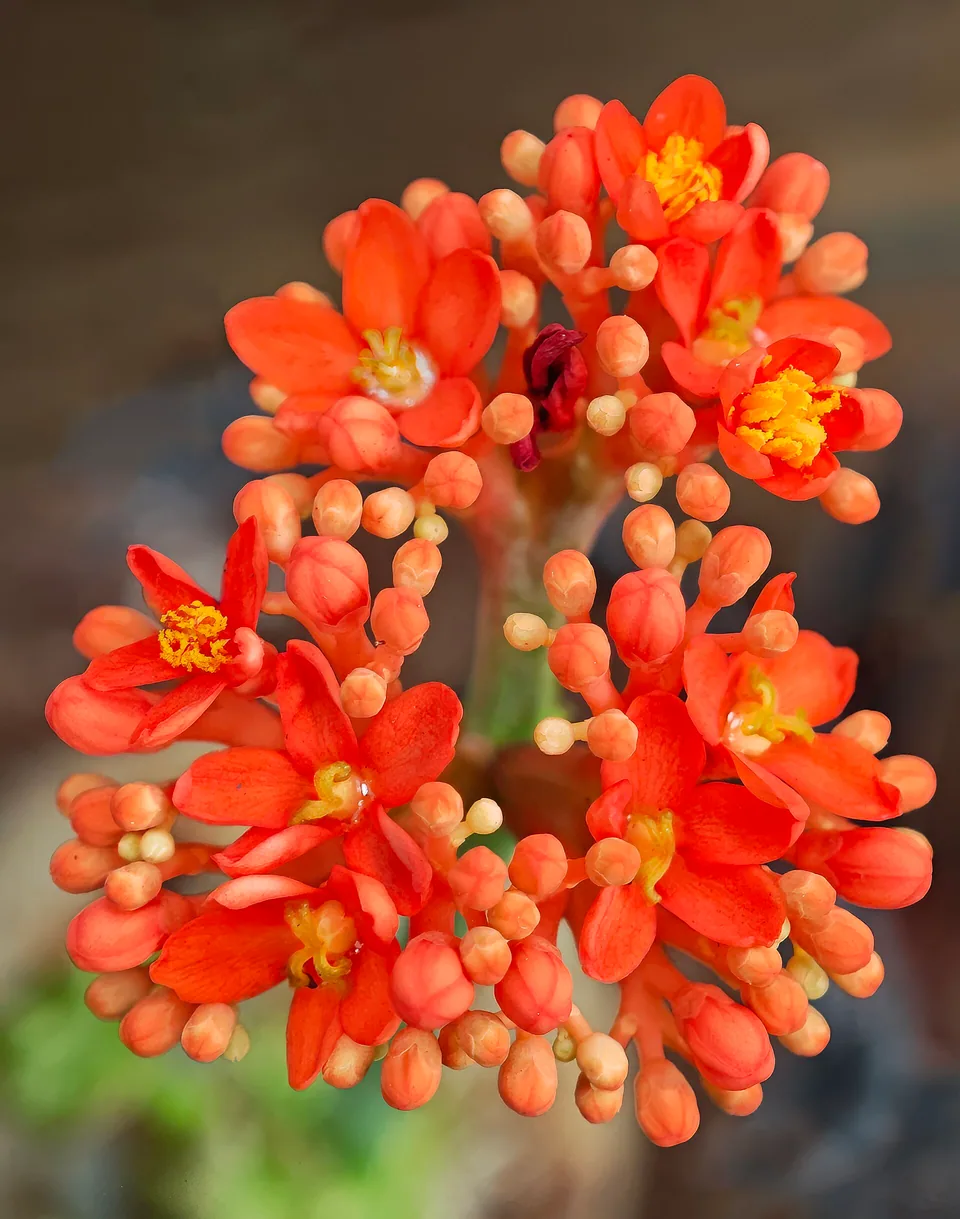


Cómo cultivar y cuidar Buddha Belly
Jatropha podagrica
Escrito por Emilio Marruso · última revisión
Tóxica para: Personas · Por qué
De un vistazo
Esta perenne agradecida crece a gusto en maceta, dentro o fuera de casa, a pleno sol o en semisombra. Se mantiene compacta, con 60–90 cm de alto y 30–60 cm de ancho, y solo te pide que dejes secar la tierra entre riegos, regando aún menos en invierno. Además, puedes conseguir plantas nuevas tú mismo por semilla o por esqueje de tallo.
- Sol
De pleno sol a semisombra
Qué dicen las fuentes (1)
Luz: Pleno sol a semisombra
Light: Full sun (6 or more hours of direct sunlight a day) Partial Shade (Direct sunlight only part of the day, 2-6 hours)
— Jatropha podagrica (Bottle Euphorbia, Buddha Belly, Buddha Belly Plant, Gout Plant) | North Carolina Extension Gardener Plant Toolbox [1] - Riego
Deja secar la tierra entre riegos; riega menos en invierno
Qué dicen las fuentes (2)
Riego: Deja que el suelo se seque entre riegos
Allow the soil to dry between waterings. In fall the leaves will begin to drop off and the plant should be brought inside.
— Jatropha podagrica (Bottle Euphorbia, Buddha Belly, Buddha Belly Plant, Gout Plant) | North Carolina Extension Gardener Plant Toolbox [1] Notas sobre el riego: Reduce el riego en invierno
Allow the soil to dry between waterings. In fall the leaves will begin to drop off and the plant should be brought inside. Reduce watering in the winter.
— Jatropha podagrica (Bottle Euphorbia, Buddha Belly, Buddha Belly Plant, Gout Plant) | North Carolina Extension Gardener Plant Toolbox [1] - Frío
Aguanta inviernos de hasta −1,1 °C (30 °F)
Semirrústica: inviernos suaves o invernadero sin calefacción · USDA 10a · RHS H3 · Z10
Qué dicen las fuentes (2)
Rusticidad, zona más fría: 10a [mínima invernal de −1,1 a 1,7 °C (de 30 a 35 °F)]
USDA Plant Hardiness Zone: 10a, 10b, 11a, 11b
— Jatropha podagrica (Bottle Euphorbia, Buddha Belly, Buddha Belly Plant, Gout Plant) | North Carolina Extension Gardener Plant Toolbox [1] Rusticidad, zona más cálida: 11b [mínima invernal de 7,2 a 10 °C (de 45 a 50 °F)]
USDA Plant Hardiness Zone: 10a, 10b, 11a, 11b
— Jatropha podagrica (Bottle Euphorbia, Buddha Belly, Buddha Belly Plant, Gout Plant) | North Carolina Extension Gardener Plant Toolbox [1] - Plagas
Vigila cochinillas, pulgones y araña roja; el exceso de agua provoca podredumbre de raíz
Qué dicen las fuentes (2)
Plagas: cochinillas harinosas, pulgones, arañitas rojas, cochinillas, trips, moscas blancas
Monitor for mealybugs, aphids, spider mites, scale, thrips, and whiteflies.
— Jatropha podagrica (Bottle Euphorbia, Buddha Belly, Buddha Belly Plant, Gout Plant) | North Carolina Extension Gardener Plant Toolbox [1] Enfermedades: pudrición de raíz, mancha roja en las hojas, botritis, añublo sureño
Potential plant diseases include root rot, red leaf spot, botrytis, and southern blight.
— Jatropha podagrica (Bottle Euphorbia, Buddha Belly, Buddha Belly Plant, Gout Plant) | North Carolina Extension Gardener Plant Toolbox [1] - Tamaño
60–90 cm de alto y 30–60 cm de ancho
Qué dicen las fuentes (2)
Altura adulta: 61-91 cm (2-3 pies)
Dimensions: Height: 2 ft. 0 in. - 3 ft. 0 in. Width: 1 ft. 0 in. - 2 ft. 0 in.
— Jatropha podagrica (Bottle Euphorbia, Buddha Belly, Buddha Belly Plant, Gout Plant) | North Carolina Extension Gardener Plant Toolbox [1] Anchura adulta: 30-61 cm (1-2 pies)
Height: 2 ft. 0 in. - 3 ft. 0 in. Width: 1 ft. 0 in. - 2 ft. 0 in.
— Jatropha podagrica (Bottle Euphorbia, Buddha Belly, Buddha Belly Plant, Gout Plant) | North Carolina Extension Gardener Plant Toolbox [1] - Multiplicación
Por semilla o esqueje de tallo; cubre las cápsulas con bolsitas de red para recoger las semillas
Qué dicen las fuentes (2)
Propagación: Semilla, esqueje de tallo
Recommended Propagation Strategy: Seed Stem Cutting Country Or Region Of Origin:
— Jatropha podagrica (Bottle Euphorbia, Buddha Belly, Buddha Belly Plant, Gout Plant) | North Carolina Extension Gardener Plant Toolbox [1] Guardar semillas: cubre las cápsulas de semillas con bolsitas de malla pequeñas para atrapar las semillas
If you want to collect seeds for new plants, you will need to cover the capsules. Small net baggies work well for this.
— Jatropha podagrica (Bottle Euphorbia, Buddha Belly, Buddha Belly Plant, Gout Plant) | North Carolina Extension Gardener Plant Toolbox [1] - Maceta
Crece bien en maceta y en interior
Qué dicen las fuentes (2)
En maceta: Sí
Grow this plant in sun to partial shade in well-drained soils in a pot with several drainage holes.
— Jatropha podagrica (Bottle Euphorbia, Buddha Belly, Buddha Belly Plant, Gout Plant) | North Carolina Extension Gardener Plant Toolbox [1] En interior: Sí
Grow as a house plant in North Carolina.
— Jatropha podagrica (Bottle Euphorbia, Buddha Belly, Buddha Belly Plant, Gout Plant) | North Carolina Extension Gardener Plant Toolbox [1] - Seguridad
Toda la planta es venenosa y la savia irrita la piel: usa guantes y aléjala de niños y mascotas
Resumen
La planta de panza de Buda es un arbusto suculento tropical de las Américas tropicales que se cultiva como planta de interior en Carolina del Norte. [1] Todas las partes de la planta son venenosas y la savia puede causar dermatitis por contacto. [1]
Citado en inglés, como en la fuente.
Cuidados
Riego
Riego
Deja que el suelo se seque entre riegos
Qué dicen las fuentes (1)
Allow the soil to dry between waterings. In fall the leaves will begin to drop off and the plant should be brought inside.Notas sobre el riego
Reduce el riego en invierno
Qué dicen las fuentes (1)
Allow the soil to dry between waterings. In fall the leaves will begin to drop off and the plant should be brought inside. Reduce watering in the winter.Luz
Pleno sol a semisombra
Qué dicen las fuentes (1)
Light:
Full sun (6 or more hours of direct sunlight a day)
Partial Shade (Direct sunlight only part of the day, 2-6 hours)Clima y frío
Rusticidad, zona más fría
10a [mínima invernal de −1,1 a 1,7 °C (de 30 a 35 °F)]
Qué dicen las fuentes (1)
USDA Plant Hardiness Zone:
10a, 10b, 11a, 11bRusticidad, zona más cálida
11b [mínima invernal de 7,2 a 10 °C (de 45 a 50 °F)]
Qué dicen las fuentes (1)
USDA Plant Hardiness Zone:
10a, 10b, 11a, 11bDónde cultivarla
En interior
Sí
Qué dicen las fuentes (1)
Grow as a house plant in North Carolina.En maceta
Sí
Qué dicen las fuentes (1)
Grow this plant in sun to partial shade in well-drained soils in a pot with several drainage holes.Propagación
Semilla, esqueje de tallo
Qué dicen las fuentes (1)
Recommended Propagation Strategy:
Seed
Stem Cutting
Country Or Region Of Origin:Cultivo
La planta
Ciclo de vida
perenne
Qué dicen las fuentes (1)
The plant has been used in herbal medicine
Life Cycle:
PerennialFamilia
Euphorbiaceae
Qué dicen las fuentes (1)
Buddha Belly Plant is an unusual tropical succulent shrub in the euphorbia family (Euphorbiaceae) from the tropical Americas.Altura adulta
61-91 cm (2-3 pies)
Qué dicen las fuentes (1)
Dimensions:
Height: 2 ft. 0 in. - 3 ft. 0 in.
Width: 1 ft. 0 in. - 2 ft. 0 in.Anchura adulta
30-61 cm (1-2 pies)
Qué dicen las fuentes (1)
Height: 2 ft. 0 in. - 3 ft. 0 in.
Width: 1 ft. 0 in. - 2 ft. 0 in.Cosecha y conservación
Guardar semillas
cubre las cápsulas de semillas con bolsitas de malla pequeñas para atrapar las semillas
Qué dicen las fuentes (1)
If you want to collect seeds for new plants, you will need to cover the capsules. Small net baggies work well for this.Plagas y enfermedades
Plagas
cochinillas harinosas, pulgones, arañitas rojas, cochinillas, trips, moscas blancas
Qué dicen las fuentes (1)
Monitor for mealybugs, aphids, spider mites, scale, thrips, and whiteflies.Enfermedades
pudrición de raíz, mancha roja en las hojas, botritis, añublo sureño
Qué dicen las fuentes (1)
Potential plant diseases include root rot, red leaf spot, botrytis, and southern blight.Problemas
Plagas
Síntoma: Cochinillas harinosas, pulgones, arañitas rojas, cochinillas, trips y moscas blancas
Qué hacer: Vigila estas plagas
Qué dicen las fuentes (1)
Monitor for mealybugs, aphids, spider mites, scale, thrips, and whiteflies.
— Jatropha podagrica (Bottle Euphorbia, Buddha Belly, Buddha Belly Plant, Gout Plant) | North Carolina Extension Gardener Plant Toolbox [1] Enfermedades
Síntoma: Pudrición de la raíz, mancha foliar roja, botrytis y tizón sureño
Qué hacer: Deja que el suelo se seque entre riegos
Qué dicen las fuentes (1)
Potential plant diseases include root rot, red leaf spot, botrytis, and southern blight.
— Jatropha podagrica (Bottle Euphorbia, Buddha Belly, Buddha Belly Plant, Gout Plant) | North Carolina Extension Gardener Plant Toolbox [1]
Remedios
Cada remedio indica qué dicen las fuentes oficiales; los remedios tradicionales sin fuente oficial aparecen marcados. Los perjudiciales están para que sepas evitarlos.
Cuidar la planta
cochinillas harinosas
bola de algodón empapada en alcohol No verificado
Remedio tradicional, no verificado por una fuente oficial.
Cómo: Las cochinillas harinosas se pueden eliminar manualmente con una bola de algodón empapada en alcohol.
Toxicidad
Según la fuente, citada textualmente. No es un consejo médico ni veterinario: si una persona o un animal pudo haber ingerido esta planta, contacta con un centro de toxicología o con un veterinario.
All parts of this plant are poisonous. Exercise caution around children and pets.
[1]- Partes venenosas
Potential plant diseases include root rot, red leaf spot, botrytis, and southern blight. All parts of this plant are poisonous.
[1]
The sap from the plant can cause skin irritation. Wear gloves when handling this plant. The sap can cause contact dermatitis.
[1]
Plantas similares
- Piñón de tempate Jatropha curcas
- Coralbush Jatropha multifida
- Yuca Manihot esculenta
- Ricino Ricinus communis
- Moco de pavo Acalypha hispida
- Árbol de sebo Triadica sebifera
- Copperleaf Acalypha wilkesiana
- Corona de Cristo Euphorbia milii
Fuentes
Cada valor anterior se cita de estos documentos. Los enlaces llevan al editor original.
- Jatropha podagrica (Bottle Euphorbia, Buddha Belly, Buddha Belly Plant, Gout Plant) | North Carolina Extension Gardener Plant Toolbox · plants.ces.ncsu.edu, consultado
Escrito por Emilio Marruso · última revisión