
Cómo cultivar y cuidar Coralbush
Jatropha multifida
Escrito por Emilio Marruso · última revisión
Tóxica para: Personas · Por qué
De un vistazo
Esta jatrofa es una planta agradecida que vive feliz a pleno sol o en semisombra, y también crece en maceta. Puedes sacar plantas nuevas de esquejes o aprovechar las plántulas que nacen solas a su pie. En invierno, riega menos las plantas en maceta, porque si las raíces se quedan demasiado húmedas pueden pudrirse.
- Sol
Pleno sol o semisombra
- Riego
En maceta, riega menos en invierno; el exceso de agua pudre las raíces
Qué dicen las fuentes (2)
Notas sobre el riego: Reduce el agua para las plantas en maceta en invierno; las plantas demasiado húmedas pueden desarrollar pudrición de raíces
Container plants should have water reduced in winter.
— Care Of Coral Plant: Learn How To Grow A Coral Plant | Gardening Know How [3] Overly wet plants and those that receive splashed mud on the foliage may experience root rot or leaf spot .
— Care Of Coral Plant: Learn How To Grow A Coral Plant | Gardening Know How [3] - Frío
Aguanta inviernos de hasta −1,1 °C (30 °F)
Semirrústica: inviernos suaves o invernadero sin calefacción · USDA 10 · RHS H3 · Z10
Qué dicen las fuentes (2)
Rusticidad, zona más fría: 10 [mínima invernal de −1,1 a 4,4 °C (de 30 a 40 °F)]
suitable for United States Department of Agriculture zones 10 to 12 only
— Care Of Coral Plant: Learn How To Grow A Coral Plant | Gardening Know How [3] Rusticidad, zona más cálida: 12 [mínima invernal de 10 a 15,6 °C (de 50 a 60 °F)]
suitable for United States Department of Agriculture zones 10 to 12 only
— Care Of Coral Plant: Learn How To Grow A Coral Plant | Gardening Know How [3] - Multiplicación
Se multiplica por esquejes; además se siembra sola a su pie
Qué dicen las fuentes (1)
Propagación: Esquejes; se autosiembra en la base de la planta
The species tends to self-seed at the base of the plant and can also be propagated by cuttings .
— Care Of Coral Plant: Learn How To Grow A Coral Plant | Gardening Know How [3] - Maceta
Crece también en maceta
Qué dicen las fuentes (1)
En maceta: Sí
In cool zones, plant the specimen in a large container with a gritty houseplant soil.
— Care Of Coral Plant: Learn How To Grow A Coral Plant | Gardening Know How [3] - Seguridad
Tóxica si se ingiere: irrita el estómago y el intestino
Resumen
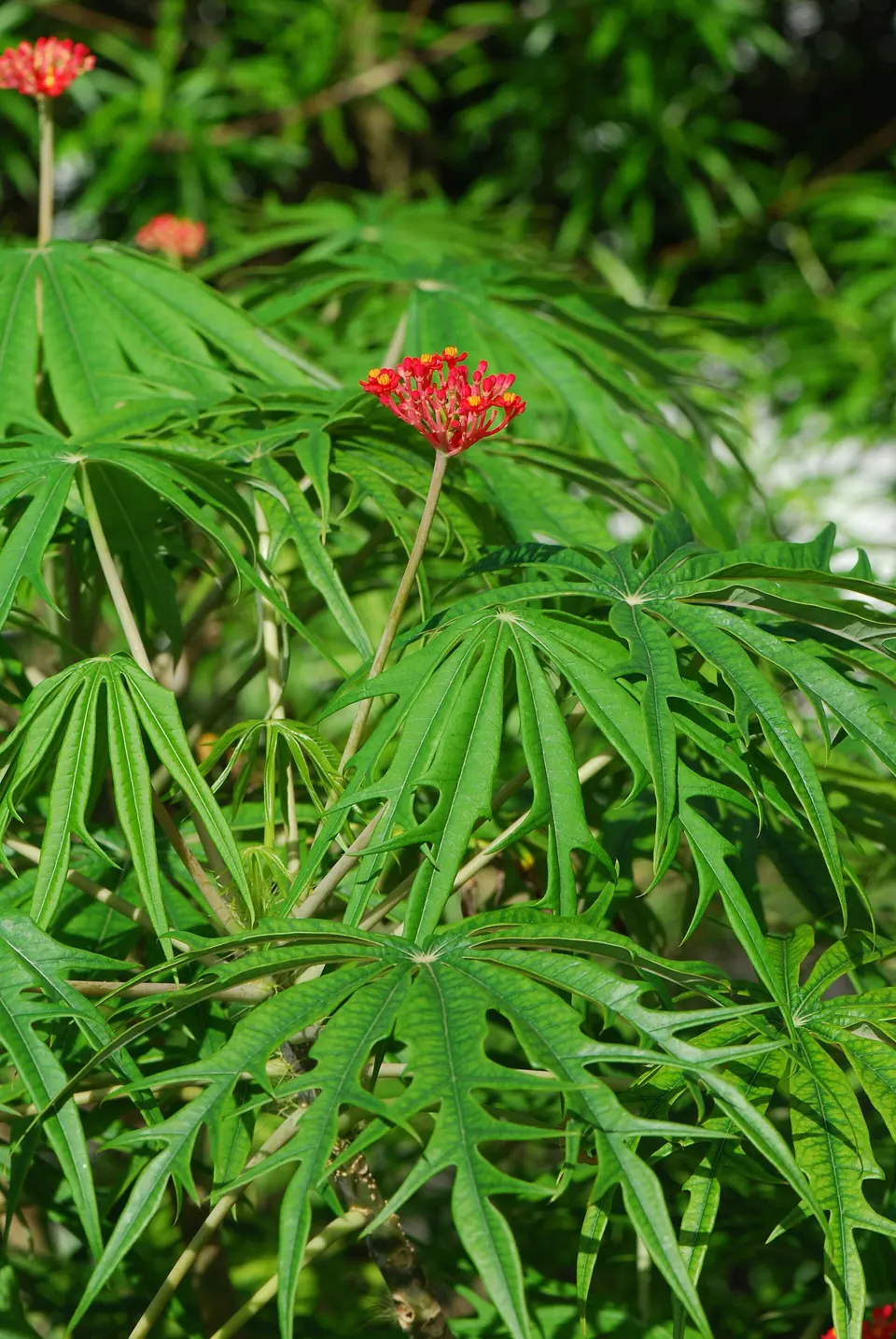
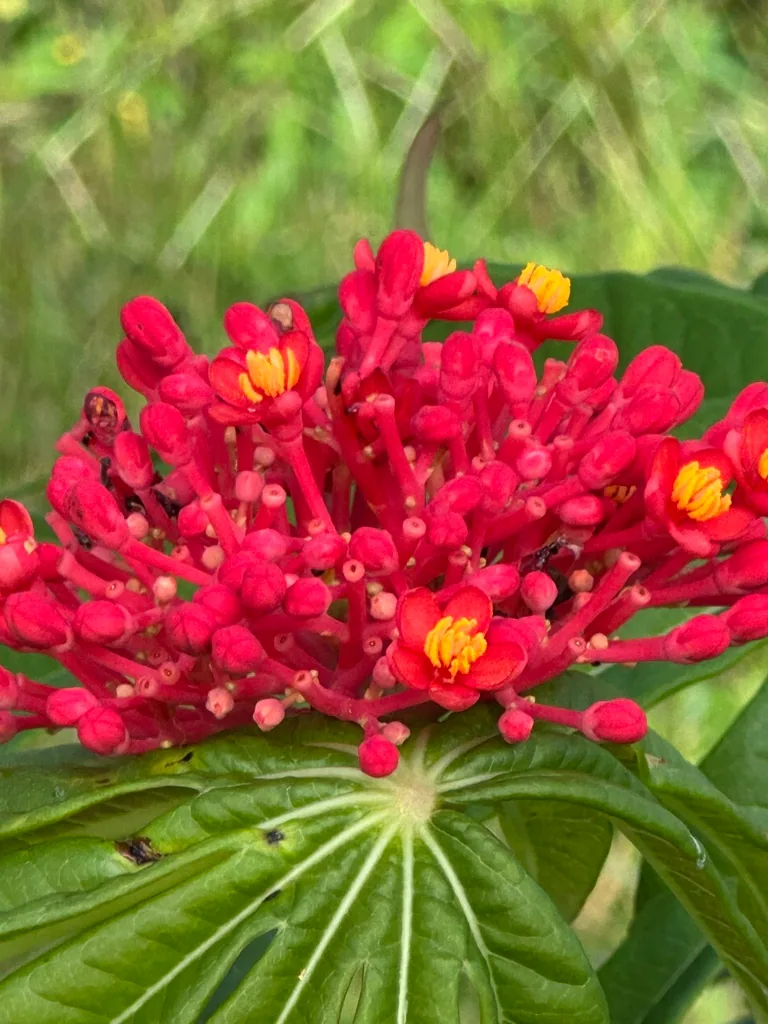
La planta de coral es un arbusto ornamental o árbol pequeño con hojas profundamente lobuladas y flores de color rojo coral brillante. [2][4] Es sensible a las heladas y tolera algo de sequía una vez establecida, prefiriendo un drenaje excelente. [3] Todas las partes son tóxicas, en particular las semillas. [1]
Citado en inglés, como en la fuente.
Esta ficha está incompleta: las fuentes consultadas aún no cubren todos los campos.
Aún no cubierto por nuestras fuentes: Poda
Cuidados
Riego
Riego
Las fuentes dan valores distintos según la región, la zona o las condiciones de cultivo.
Lo que dice cada fuente
Según NParks: Poca agua.
Según Gardening Know How: Algo de tolerancia a la sequía una vez establecida; mejor con riego regular
Qué dicen las fuentes (2)
Según NParks: Water Preference
| Little WaterSegún Gardening Know How: It has some drought tolerance once established but performs best with regular watering in a full sun situation.Notas sobre el riego
Reduce el agua para las plantas en maceta en invierno; las plantas demasiado húmedas pueden desarrollar pudrición de raíces
Qué dicen las fuentes (2)
Container plants should have water reduced in winter.Overly wet plants and those that receive splashed mud on the foliage may experience root rot or leaf spot .Luz
Clima y frío
Rusticidad, zona más fría
10 [mínima invernal de −1,1 a 4,4 °C (de 30 a 40 °F)]
Qué dicen las fuentes (1)
suitable for United States Department of Agriculture zones 10 to 12 onlyRusticidad, zona más cálida
12 [mínima invernal de 10 a 15,6 °C (de 50 a 60 °F)]
Qué dicen las fuentes (1)
suitable for United States Department of Agriculture zones 10 to 12 onlyDónde cultivarla
Sí
Qué dicen las fuentes (1)
In cool zones, plant the specimen in a large container with a gritty houseplant soil.Propagación
Esquejes; se autosiembra en la base de la planta
Qué dicen las fuentes (1)
The species tends to self-seed at the base of the plant and can also be propagated by cuttings .Remedios
Cada remedio indica qué dicen las fuentes oficiales; los remedios tradicionales sin fuente oficial aparecen marcados. Los perjudiciales están para que sepas evitarlos.
Primeros auxilios
Primeros auxilios: no sustituyen al médico
contacto de la piel con la savia
Lava con agua corriente y jabón. Fuente oficial, sin prueba independiente
Cómo: Lava bien la zona con abundante agua corriente y jabón.
Wash the area thoroughly with plenty of running water and soap.
— poison.org [8]
savia en la piel
lava rápidamente con agua corriente Fuente oficial, sin prueba independiente
Cómo: Si sabes que tienes material vegetal, jugos o savia en la piel, lávate rápidamente con abundante agua corriente.
If you know you have plant material, juices, or sap on your skin, wash quickly with plenty of running water.
— poison.org [8]
Cuidar la planta
pulgones
chorro fuerte de agua Funciona
Cómo: Desaloja los pulgones con un chorro fuerte de agua.
Aphids are fragile insects that often can be dislodged from the plant with a strong spray of water. Insecticidal soaps registered for use in the interiorscape provide good control, especially for spot treatments.
— uaf.edu [9] Qué dicen las pruebas Aphids are fragile insects that often can be dislodged from the plant with a strong spray of water.
— uaf.edu [9] jabón insecticida Funciona
Do not use on crown of thorns; test spray other euphorbias, jade plants, palms and delicate ferns before making full application.
— uaf.edu [9] Cómo: Los jabones insecticidas brindan un buen control, especialmente para tratamientos puntuales; mezcla según la etiqueta y rocía ambas caras de las hojas.
Insecticidal soaps registered for use in the interiorscape provide good control, especially for spot treatments.
— uaf.edu [9] Qué dicen las pruebas Insecticidal soaps registered for use in the interiorscape provide good control, especially for spot treatments.
— uaf.edu [9]
cochinillas harinosas
hisopo de algodón con alcohol isopropílico Funciona
Cómo: Las cochinillas individuales se pueden eliminar con un hisopo de algodón humedecido en alcohol isopropílico o quitando las partes infestadas de la planta.
Individual mealybugs can be removed with a cotton swab dipped in rubbing alcohol or by removing infested plant parts.
— uaf.edu [9] Qué dicen las pruebas Individual mealybugs can be removed with a cotton swab dipped in rubbing alcohol or by removing infested plant parts.
— uaf.edu [9]
cochinillas
fuerte chorro de agua Funciona en parte
Cómo: Rocía la planta con un chorro fuerte de agua para desalojar a las crías jóvenes.
Spraying the plant with a strong jet of water can dislodge young crawlers.
— uaf.edu [9] Qué dicen las pruebas Spraying the plant with a strong jet of water can dislodge young crawlers.
— uaf.edu [9]
Toxicidad
Según la fuente, citada textualmente. No es un consejo médico ni veterinario: si una persona o un animal pudo haber ingerido esta planta, contacta con un centro de toxicología o con un veterinario.
Symptoms are largely those associated with gastro-intestinal irritation.
[1]- Partes venenosas
All parts are considered toxic but in particular the seeds.
[1]- Principio tóxico
Contains a purgative oil and a phytotoxin or toxalbumin (curcin) similar to ricin in Ricinis.
[1]- Síntomas
There is acute abdominal pain and a burning sensation in the throat about half an hour after ingestion of the seeds, followed by nausea, vomiting and diarrhoea.
[1]
Calendario
Poda
No figura en las fuentes consultadas.
Meses tal como los dan las fuentes, en su mayoría de Estados Unidos (hemisferio norte). En el hemisferio sur se desplazan unos seis meses.
Valores orientativos
Valores de una fuente secundaria, no comprobados palabra por palabra como el resto de esta página. Úselos como punto de partida.
- Ciclo de vida
- PerenneValor orientativo, adáptalo a tu clima · Fuente secundaria
- Altura adulta
- 182.9-304.8 cm (6-10 pies)Valor orientativo, adáptalo a tu clima · Fuente secundaria
- Horas de sol
- 6-8 horasValor orientativo, adáptalo a tu clima · Fuente secundaria
- Resiste la sequía
- SíValor orientativo, adáptalo a tu clima · Fuente secundaria
- pH del suelo
- 6-7.5Valor orientativo, adáptalo a tu clima · Fuente secundaria
- Nivel de cuidado
- MedioValor orientativo, adáptalo a tu clima · Fuente secundaria
- Crecimiento
- BajoValor orientativo, adáptalo a tu clima · Fuente secundaria
- Poda
- marzo, abril, febreroValor orientativo, adáptalo a tu clima · Fuente secundaria
Plantas similares
- Piñón de tempate Jatropha curcas
- Buddha Belly Jatropha podagrica
- Abeto de Vancuver Abies grandis
- Abraham Trachystemon orientalis
- Bananero de Etiopía Ensete ventricosum
- Acacia longifolia Acacia longifolia
- Acanthus hungaricus Acanthus hungaricus
- Acónito común Aconitum napellus
Fuentes
Cada valor anterior se cita de estos documentos. Los enlaces llevan al editor original.
- Jatropha multifida (PIM 646) · inchem.org, consultado
- Coral plant (Jatropha multifida) | Queensland Poisons Information Centre · poisonsinfo.health.qld.gov.au, consultado
- Care Of Coral Plant: Learn How To Grow A Coral Plant | Gardening Know How · gardeningknowhow.com, consultado
- NParks | Jatropha multifida · nparks.gov.sg, consultado
- Jatropha multifida · llifle.com, consultado
- Jatropha multifida Eupborbiaceae · apps.worldagroforestry.org, consultado
- Jatropha multifida - Leon Levy Native Plant Preserve · levypreserve.org, consultado
- poison.org · poison.org
- uaf.edu · uaf.edu
Escrito por Emilio Marruso · última revisión