

How to Grow and Care for Hogwort
Croton capitatus
Written by Emilio Marruso · last checked
Toxic to: Cats, Dogs, Horses, Livestock, People · Why
At a glance
Hogwort is a sun-loving annual that grows from seed and reaches 2 to 3 feet tall while staying slender, just 3 to 6 inches wide, so it fits into narrow spots. Give it full sun and let it grow. Just wear gloves when you handle it, since it irritates skin and eyes, and keep it away from children, pets and grazing animals.
- Sun
Full sun
What the sources say (1)
Light: Full sun
Prefers full sun and well-drained to dry loam, sand, or rock soils.
— Croton capitatus (Capitate Croton, Doveweed, Goatweed, Hogweed, Hogwort, Texas Goatweed, Woolly Croton) | North Carolina Extension Gardener Plant Toolbox [1] - Cold
Survives winters down to −30 °F (−34.4 °C)
Very hardy · USDA 4a · RHS H7 · Z4
What the sources say (2)
Hardiness, coldest zone: 4a [winter low −34.4 to −31.7 °C (−30 to −25 °F)]
USDA Plant Hardiness Zone: 4a, 4b, 5a, 5b, 6a, 6b, 7a, 7b
— Croton capitatus (Capitate Croton, Doveweed, Goatweed, Hogweed, Hogwort, Texas Goatweed, Woolly Croton) | North Carolina Extension Gardener Plant Toolbox [1] Hardiness, warmest zone: 7b [winter low −15 to −12.2 °C (5 to 10 °F)]
USDA Plant Hardiness Zone: 4a, 4b, 5a, 5b, 6a, 6b, 7a, 7b
— Croton capitatus (Capitate Croton, Doveweed, Goatweed, Hogweed, Hogwort, Texas Goatweed, Woolly Croton) | North Carolina Extension Gardener Plant Toolbox [1] - Watch out
Wear gloves and long sleeves when handling it: it irritates skin and eyes
- Size
2 to 3 ft tall and only 3 to 6 in wide
What the sources say (2)
Mature height: 61-91 cm (2 to 3 ft)
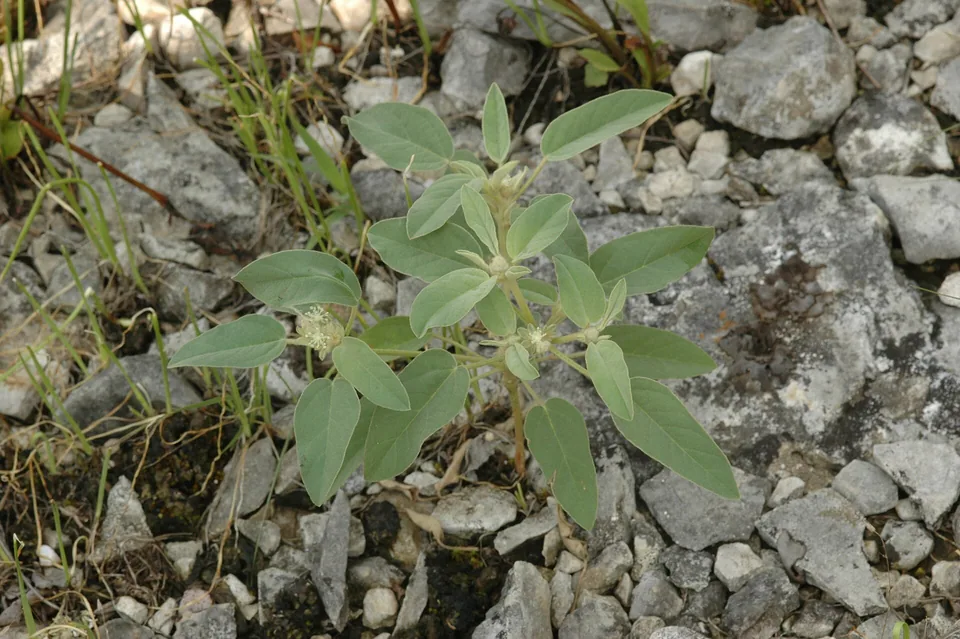
It grows 2 to 3 feet tall and 3 to 6 inches wide with grayish-green, fuzzy leaves and small, inconspicuous white male and female flowers.
— Croton capitatus (Capitate Croton, Doveweed, Goatweed, Hogweed, Hogwort, Texas Goatweed, Woolly Croton) | North Carolina Extension Gardener Plant Toolbox [1] Mature width: 8-15 cm (3 to 6 in)
It grows 2 to 3 feet tall and 3 to 6 inches wide with grayish-green, fuzzy leaves and small, inconspicuous white male and female flowers.
— Croton capitatus (Capitate Croton, Doveweed, Goatweed, Hogweed, Hogwort, Texas Goatweed, Woolly Croton) | North Carolina Extension Gardener Plant Toolbox [1] - Propagation
An annual that grows from seed
What the sources say (2)
Propagation: Seed
Prefers full sun and well-drained to dry loam, sand, or rock soils. Propagated by seeds.
— Croton capitatus (Capitate Croton, Doveweed, Goatweed, Hogweed, Hogwort, Texas Goatweed, Woolly Croton) | North Carolina Extension Gardener Plant Toolbox [1] Life cycle: annual
Hogwort is a warm-season, annual, broadleaf weed in the spurge family (Euphrobiaceae)
— Croton capitatus (Capitate Croton, Doveweed, Goatweed, Hogweed, Hogwort, Texas Goatweed, Woolly Croton) | North Carolina Extension Gardener Plant Toolbox [1] - Safety
Toxic if eaten by people, pets, horses or livestock; remove it where animals graze
Overview
Hogwort is a warm-season annual broadleaf weed that grows 2 to 3 feet [61–91 cm] tall and prefers full sun. [1] It is propagated by seed and its seeds feed ground-feeding birds. [1] The plant is toxic if ingested and can irritate skin and eyes. [1]
Hogwort care
Measurements in square brackets are our conversion into the other unit system; the quoted text is unchanged.
How much light Hogwort needs
Full sun
What the sources say (1)
Prefers full sun and well-drained to dry loam, sand, or rock soils.How much cold Hogwort can take
Hardiness, coldest zone
4a [winter low −34.4 to −31.7 °C (−30 to −25 °F)]
What the sources say (1)
USDA Plant Hardiness Zone:
4a, 4b, 5a, 5b, 6a, 6b, 7a, 7bHardiness, warmest zone
7b [winter low −15 to −12.2 °C (5 to 10 °F)]
What the sources say (1)
USDA Plant Hardiness Zone:
4a, 4b, 5a, 5b, 6a, 6b, 7a, 7bHow to propagate Hogwort
Seed
What the sources say (1)
Prefers full sun and well-drained to dry loam, sand, or rock soils. Propagated by seeds.How to grow Hogwort
The plant
Life cycle
annual
What the sources say (1)
Hogwort is a warm-season, annual, broadleaf weed in the spurge family (Euphrobiaceae)Family
Euphorbiaceae
What the sources say (1)
Genus:
Croton
Species:
capitatus
Family:
Euphorbiaceae
Life Cycle:
AnnualMature height
61-91 cm (2 to 3 ft)
What the sources say (1)
It grows 2 to 3 feet tall and 3 to 6 inches wide with grayish-green, fuzzy leaves and small, inconspicuous white male and female flowers.Mature width
8-15 cm (3 to 6 in)
What the sources say (1)
It grows 2 to 3 feet tall and 3 to 6 inches wide with grayish-green, fuzzy leaves and small, inconspicuous white male and female flowers.Hogwort pests and problems
Skin and eye irritation
Symptom: Skin irritation and eye irritation when handling the plant.
What to do: Protective gloves and clothing are recommended when handling this plant.
What the sources say (1)
Protective gloves and clothing are recommended when handling this plant due to skin irritation and eye irritation.
— Croton capitatus (Capitate Croton, Doveweed, Goatweed, Hogweed, Hogwort, Texas Goatweed, Woolly Croton) | North Carolina Extension Gardener Plant Toolbox [1]
Remedies
The sources we checked give no remedies for this plant.
Is Hogwort toxic to pets?
Reported by the source, quoted verbatim. This is not medical or veterinary advice: if a person or an animal may have eaten this plant, contact a poison control centre or a veterinarian.
Animals
Toxic if ingested by livestock, humans, horses, and pets. The plant needs to be destroyed in areas where animals may graze.
[1]- Severity
This plant has low severity poison characteristics. See below
[1]
#problem for dogs #annual weed #warm season weed #problem for cats
[1]- Severity
This plant has low severity poison characteristics. See below
[1]
People
Hogwort is toxic if ingested by livestock, humans, or pets.
[1]- Poisonous parts
Poison Part: Bark Flowers Fruits Leaves Roots Sap/Juice Seeds Stems
[1]- Toxic principle
Poison Toxic Principle: Croton oil Causes Contact Dermatitis: Yes
[1]- Symptoms
Vomiting, diarrhea, colic, nervousness, and skin irritation with blisters.
[1]- Severity
Poison Severity: Low Poison Symptoms: TOXIC ONLY IF LARGE QUANTITIES ARE EATEN.
[1]
Protective gloves and clothing are recommended when handling this plant due to skin irritation and eye irritation.
[1]- Symptoms
SKIN IRRITATION MINOR, OR LASTING ONLY FOR A FEW MINUTES.
[1]
Similar plants
- Alabama Croton Croton alabamensis
- Barbados nut Jatropha curcas
- Buddha Belly Jatropha podagrica
- Cassava Manihot esculenta
- Castor Bean Ricinus communis
- Chinese tallow tree Triadica sebifera
- Crown of Thorns Euphorbia milii
- Cushion Spurge Euphorbia epithymoides
Sources
Every value above is quoted from these documents. Links lead to the original publisher.
- Croton capitatus (Capitate Croton, Doveweed, Goatweed, Hogweed, Hogwort, Texas Goatweed, Woolly Croton) | North Carolina Extension Gardener Plant Toolbox · plants.ces.ncsu.edu, consulted
Written by Emilio Marruso · last checked