

How to Grow and Care for Basil
Ocimum basilicum
Written by Emilio Marruso · last checked
Not toxic to cats and dogs, according to the sources · Sources
At a glance
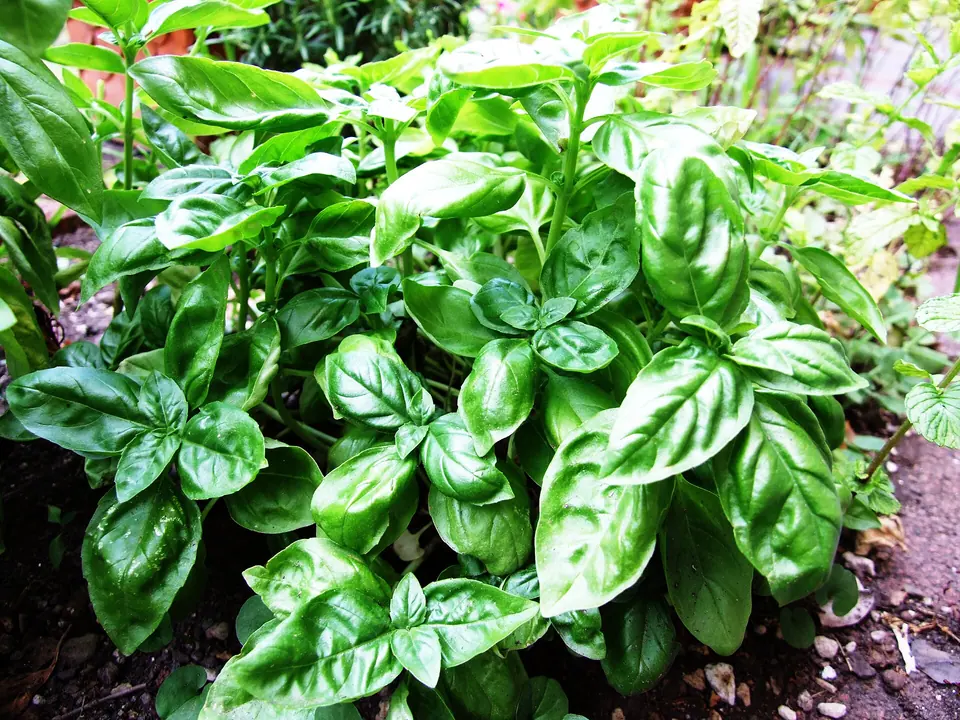
Basil loves warmth: it thrives in hot weather and grows in full sun to partial shade. Sow the seeds 1/4 inch deep, plant outdoors once frost has passed, and keep picking fragrant leaves all season for soups, tomato dishes and herb butters. Cut a stem above a pair of leaves and new growth appears within a week.
- Sun
Full sun to partial shade
What the sources say (1)
Light: Full sun to partial shade
Light: Full sun (6 or more hours of direct sunlight a day) Partial Shade (Direct sunlight only part of the day, 2-6 hours)
— Ocimum basilicum (Basil, Genovese Basil, Purple Basil, Saint Joseph's Wort, Sweet Basil, Thai Basil) | North Carolina Extension Gardener Plant Toolbox [1] - Water
At least once a week, more often when it's hot; water at the base, not the leaves
What the sources say (4)
Watering: Water at least once a week, and more often when temperatures are hot
Depending on rainfall and temperatures, plan to water basil at least once a week, and more often when temperatures are hot.
— Growing Basil in Your Backyard | Flowers, Fruits, and Frass | Illinois Extension | Illinois [8] Watering notes: Water at the base of the plant or use drip irrigation to keep foliage dry; mulch 2-3 in (5-7.6 cm) around the base to retain moisture; container plants dry out faster than in-ground
When watering basil, water at the base of the plant or use drip-irrigation, or drip hoses to ensure the foliage stays dry.
— Growing Basil in Your Backyard | Flowers, Fruits, and Frass | Illinois Extension | Illinois [8] Apply two to three inches of mulch around the base of basil to retain water moisture and reduce weeds around the plant.
— Growing Basil in Your Backyard | Flowers, Fruits, and Frass | Illinois Extension | Illinois [8] Plants grown in containers will dry out faster than in-ground.
— Growing Basil in Your Backyard | Flowers, Fruits, and Frass | Illinois Extension | Illinois [8] - Cold
Survives winters down to 30 °F (−1.1 °C)
Half hardy: mild winters or an unheated greenhouse · USDA 10a · RHS H3 · Z10
What the sources say (2)
Hardiness, coldest zone: 10a [winter low −1.1 to 1.7 °C (30 to 35 °F)]
NC Region: Coastal Mountains Piedmont USDA Plant Hardiness Zone: 10a, 10b
— Ocimum basilicum (Basil, Genovese Basil, Purple Basil, Saint Joseph's Wort, Sweet Basil, Thai Basil) | North Carolina Extension Gardener Plant Toolbox [1] Hardiness, warmest zone: 10b [winter low 1.7 to 4.4 °C (35 to 40 °F)]
NC Region: Coastal Mountains Piedmont USDA Plant Hardiness Zone: 10a, 10b
— Ocimum basilicum (Basil, Genovese Basil, Purple Basil, Saint Joseph's Wort, Sweet Basil, Thai Basil) | North Carolina Extension Gardener Plant Toolbox [1] - Planting
Plant outdoors once the chance of frost has passed
What the sources say (1)
Planting: Outdoors after the chance of frost has passed
Basil is cold sensitive so it must be planted outdoors after the chance of frost has passed.
— Growing Basil in Your Backyard | Flowers, Fruits, and Frass | Illinois Extension | Illinois [8] - Feeding
Liquid feed every 3–4 weeks when growth slows; too much nitrogen spoils the flavor
What the sources say (4)
When: When growth slows and foliage turns paler green
If plant growth is reduced and the foliage has become a paler green color, basil can be cut back fertilized every three to four weeks with a liquid fertilizer, following directions on the manufacturer label.
— Growing Basil in Your Backyard | Flowers, Fruits, and Frass | Illinois Extension | Illinois [8] How often: Every three to four weeks
If plant growth is reduced and the foliage has become a paler green color, basil can be cut back fertilized every three to four weeks with a liquid fertilizer, following directions on the manufacturer label.
— Growing Basil in Your Backyard | Flowers, Fruits, and Frass | Illinois Extension | Illinois [8] Mineral fertilizers: Liquid fertilizer at label rates
If plant growth is reduced and the foliage has become a paler green color, basil can be cut back fertilized every three to four weeks with a liquid fertilizer, following directions on the manufacturer label.
— Growing Basil in Your Backyard | Flowers, Fruits, and Frass | Illinois Extension | Illinois [8] Avoid: Heavy nitrogen fertilization, which affects flavor
Plant in full sun with moist, well-drained soils and avoid heavy nitrogen fertilization. Too much nitrogen affects its flavor.
— Growing Basil in the Home Garden | Yard and Garden [6] - Pruning
Once seedlings have six leaves, pinch above the second pair so it branches out
What the sources say (2)
Pruning: Pinch in mid-spring to promote branching; once seedlings have their first six leaves, pinch above the second set
Plants can benefit from pinching in mid-spring to promote branching.
— Growing Basil in the Home Garden | Yard and Garden [6] After the seedlings have their first six leaves, prune (or pinch) them above the second set.
— Basil, A Summer Favorite [7] - Harvest
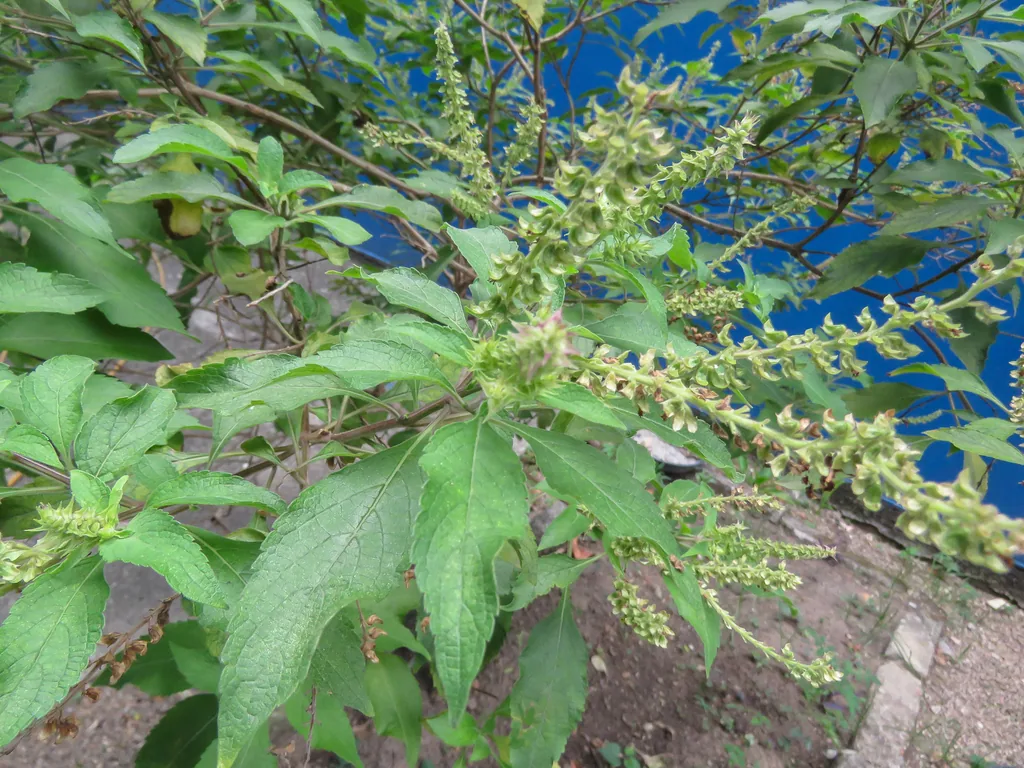
Cut stems above a pair of leaves, before it flowers, ideally in the morning
What the sources say (3)
Harvest: Throughout the growing season, before flowers bloom, preferably in the morning
Harvest the leaves and stems throughout the growing season, before flowers bloom, preferably in the morning.
— Herb Garden Plants: Basil [5] How to harvest: Cut the whole stem just above a pair of leaves, leaving at least half of the plant; new growth appears at the cut point within a week. Harvest leaves and stems throughout the growing season, before flowers bloom, preferably in the morning.
When harvesting the foliage, cut the whole stem just above a pair of leaves, leaving at least half of the plants. New growth will appear at the cut point within a week.
— Growing Basil in Your Backyard | Flowers, Fruits, and Frass | Illinois Extension | Illinois [8] Harvest the leaves and stems throughout the growing season, before flowers bloom, preferably in the morning.
— Herb Garden Plants: Basil [5] - Pests
Japanese beetles, aphids, slugs and snails; downy mildew yellows and blackens the leaves
What the sources say (6)
Pests: Japanese beetles, aphids, slugs, snails, thrips
Aphids and Japanese beetles are occasional insect problems.
— Ocimum basilicum (Basil, Genovese Basil, Purple Basil, Saint Joseph's Wort, Sweet Basil, Thai Basil) | North Carolina Extension Gardener Plant Toolbox [1] Occasionally, slugs and snails can eat holes in leaves, especially in plantings with too much shade or that are overly wet or crowded. Thrips may cause some leaf discoloration on occasion.
— Growing Basil in the Home Garden | Yard and Garden [6] Pests and Diseases: Japanese beetles, fungal root rot, fusarium wilt, and downy mildew (DM).
— Herb Garden Plants: Basil [5] Diseases: basil downy mildew, fusarium wilt, fungal root rot, gray mold, leaf spots
Fusarium wilt and basil downy mildew are disease problems.
— Ocimum basilicum (Basil, Genovese Basil, Purple Basil, Saint Joseph's Wort, Sweet Basil, Thai Basil) | North Carolina Extension Gardener Plant Toolbox [1] Pests and Diseases: Japanese beetles, fungal root rot, fusarium wilt, and downy mildew (DM).
— Herb Garden Plants: Basil [5] While pests and diseases are not always a problem when growing basil, some common issues to watch out for are gray mold, leaf spots, and Japanese beetles.
— Growing Basil in Your Backyard | Flowers, Fruits, and Frass | Illinois Extension | Illinois [8] - Propagation
From seed, or from tip cuttings that root easily in water
What the sources say (4)
Propagation: Seed; stem cuttings
Cuttings are easily rooted in water. Sterile cultivars are from stem cuttings or purchased as transplants.
— Herb Garden Plants: Basil [5] However, plants can also be propagated by cuttings and can successfully be grown indoors on a sunny windowsill.
— Growing Basil in the Home Garden | Yard and Garden [6] Cuttings: Tip cuttings, also from overwintered plants, root easily in water; sterile cultivars are propagated from stem cuttings.
Basil is easily grown from seed or from tip cuttings of overwintered plants.
— Basil | Herbs | Illinois Extension | Illinois [2] Easy to grow from seeds. - Cuttings are easily rooted in water. Sterile cultivars are from stem cuttings or purchased as transplants.
— Herb Garden Plants: Basil [5] - Sowing
Sow 1/4 inch deep in soil at 70 °F (21 °C) or warmer; sprouts in 5–14 days
What the sources say (4)
Sowing depth: 0.6 cm (1/4 in)
Plant seeds about ¼-inch deep and thin to 10 to 12 inches apart.
— Basil, A Summer Favorite [7] Sow seed ¼ inch deep outdoors in late spring to early summer after the risk of frost has passed
— Herb Garden Plants: Basil [5] Germination: Germinates and grows best at a media temperature of at least 21.1 °C [70 °F]; seeds germinate in 5 to 14 days.
Because basil is sensitive to cold temperatures, seeds germinate and grow best when the media temperature is at least 70 degrees. Seeds will germinate in about 5 to 7 days.
— Basil | Herbs | Illinois Extension | Illinois [2] Seeds germinate in 1 to 2 weeks. Move seedlings outside when night temperatures are above 60°F
— Herb Garden Plants: Basil [5] - Containers
Grows in pots, even indoors; pots dry out faster than garden soil
What the sources say (7)
In containers: Yes
It can also grow well in containers or raised beds that have adequate drainage.
— Growing Basil in Your Backyard | Flowers, Fruits, and Frass | Illinois Extension | Illinois [8] Basil is well-suited for growing in containers. It can also be grown indoors in a sunny window.
— Growing Basil in the Home Garden | Yard and Garden [6] Indoors: Yes
Basil is easily grown as a window sill herb for fall, winter and early spring harvest.
— Basil | Herbs | Illinois Extension | Illinois [2] Can be grown in containers, both outdoors and indoors under lights.
— Herb Garden Plants: Basil [5] Watering notes: Water at the base of the plant or use drip irrigation to keep foliage dry; mulch 2-3 in (5-7.6 cm) around the base to retain moisture; container plants dry out faster than in-ground
When watering basil, water at the base of the plant or use drip-irrigation, or drip hoses to ensure the foliage stays dry.
— Growing Basil in Your Backyard | Flowers, Fruits, and Frass | Illinois Extension | Illinois [8] Apply two to three inches of mulch around the base of basil to retain water moisture and reduce weeds around the plant.
— Growing Basil in Your Backyard | Flowers, Fruits, and Frass | Illinois Extension | Illinois [8] Plants grown in containers will dry out faster than in-ground.
— Growing Basil in Your Backyard | Flowers, Fruits, and Frass | Illinois Extension | Illinois [8] - Safety
Not toxic to cats or dogs; the leaves are edible
Overview
Sweet basil is a tender annual herb grown for its fragrant edible leaves. [2][1] It prefers full sun and moist, well-drained soil and is planted outdoors after the last frost. [1] Basil downy mildew is the most serious disease, and resistant cultivars are available. [6]
Basil care
Measurements in square brackets are our conversion into the other unit system; the quoted text is unchanged.
How to water Basil
Watering
Water at least once a week, and more often when temperatures are hot
What the sources say (1)
Depending on rainfall and temperatures, plan to water basil at least once a week, and more often when temperatures are hot.Watering notes
Water at the base of the plant or use drip irrigation to keep foliage dry; mulch 2-3 in (5-7.6 cm) around the base to retain moisture; container plants dry out faster than in-ground
What the sources say (3)
When watering basil, water at the base of the plant or use drip-irrigation, or drip hoses to ensure the foliage stays dry.Apply two to three inches of mulch around the base of basil to retain water moisture and reduce weeds around the plant.Plants grown in containers will dry out faster than in-ground.How much light Basil needs
Full sun to partial shade
What the sources say (1)
Light:
Full sun (6 or more hours of direct sunlight a day)
Partial Shade (Direct sunlight only part of the day, 2-6 hours)How much cold Basil can take
Hardiness, coldest zone
10a [winter low −1.1 to 1.7 °C (30 to 35 °F)]
What the sources say (1)
NC Region:
Coastal
Mountains
Piedmont
USDA Plant Hardiness Zone:
10a, 10bHardiness, warmest zone
10b [winter low 1.7 to 4.4 °C (35 to 40 °F)]
What the sources say (1)
NC Region:
Coastal
Mountains
Piedmont
USDA Plant Hardiness Zone:
10a, 10bWhere to grow Basil
Indoors
Yes
In containers
Yes
What the sources say (2)
It can also grow well in containers or raised beds that have adequate drainage.Basil is well-suited for growing in containers. It can also be grown indoors in a sunny window.Spacing
The sources give different values depending on region, zone or growing conditions.
What each source says
According to Penn State Extension (Herb Garden Plants): 30.5-45.7 cm (12-18 in)
According to Penn State Extension (Basil, A Summer Favorite): 25.4-30.5 cm (10-12 in)
According to Illinois Extension: At least 61.0 cm (2 ft)
What the sources say (3)
According to Penn State Extension (Herb Garden Plants): Space 12 to 18 inches apart for good airflow.According to Penn State Extension (Basil, A Summer Favorite): Plant seeds about ¼-inch deep and thin to 10 to 12 inches apart.According to Illinois Extension: Space plants at least 2 feet apart.How to propagate Basil
Seed; stem cuttings
What the sources say (2)
Cuttings are easily rooted in water. Sterile cultivars are from stem cuttings or purchased as transplants.However, plants can also be propagated by cuttings and can successfully be grown indoors on a sunny windowsill.How to grow Basil
The plant
Life cycle
annual
What the sources say (2)
Basil is one of the most popular and widely used culinary herb. It is a tender annual, aromatic plant with a spicy odor and flavor.Basil is a tender annual that will need to be replanted every season.Family
Lamiaceae (mint family)
What the sources say (2)
Sweet basil is an herb in the Lamiaceae (mint) family and native to the tropical regions of Africa and Asia.Botanical Name: Ocimum basilicum (OH-sih-mum bass-IL-ih-kum) Family: Lamiaceae (lay-mee-AY-see-ee); mintMature height
Sowing and growth
Days to germination
The sources disagree:
Sowing depth
0.6 cm (1/4 in)
Days to maturity
28-35 (4 to 5 weeks from sowing, indoor pot culture)
What the sources say (1)
Sow several seeds in a small pot filled with a prepared potting media. Keep moist and place in a full sun location. Harvesting can begin in about 4 to 5 weeks.Harvest and storage
How to harvest
Cut the whole stem just above a pair of leaves, leaving at least half of the plant; new growth appears at the cut point within a week. Harvest leaves and stems throughout the growing season, before flowers bloom, preferably in the morning.
What the sources say (2)
When harvesting the foliage, cut the whole stem just above a pair of leaves, leaving at least half of the plants. New growth will appear at the cut point within a week.Harvest the leaves and stems throughout the growing season, before flowers bloom, preferably in the morning.Storage
Hold cut stems for a few days in a glass of water at room temperature; for longer storage, freeze chopped leaves in ice cube trays with water, or dry them
What the sources say (3)
Basil picked for use in the kitchen is best held in a glass of water at room temperature.Place whole leaves in a freezer-quality plastic bag, remove the air, and freeze. Alternatively, chop leaves into an ice cube tray and add either a little water or olive oilDrying basil on racks or trays is the preferred method, rather than tying it in bunches and hanging it.Pests and diseases
Pests
Japanese beetles, aphids, slugs, snails, thrips
What the sources say (3)
Aphids and Japanese beetles are occasional insect problems.Occasionally, slugs and snails can eat holes in leaves, especially in plantings with too much shade or that are overly wet or crowded. Thrips may cause some leaf discoloration on occasion.Pests and Diseases: Japanese beetles, fungal root rot, fusarium wilt, and downy mildew (DM).Diseases
basil downy mildew, fusarium wilt, fungal root rot, gray mold, leaf spots
What the sources say (3)
Fusarium wilt and basil downy mildew are disease problems.Pests and Diseases: Japanese beetles, fungal root rot, fusarium wilt, and downy mildew (DM).While pests and diseases are not always a problem when growing basil, some common issues to watch out for are gray mold, leaf spots, and Japanese beetles.Fertilizing
When
When growth slows and foliage turns paler green
What the sources say (1)
If plant growth is reduced and the foliage has become a paler green color, basil can be cut back fertilized every three to four weeks with a liquid fertilizer, following directions on the manufacturer label.How often
Every three to four weeks
What the sources say (1)
If plant growth is reduced and the foliage has become a paler green color, basil can be cut back fertilized every three to four weeks with a liquid fertilizer, following directions on the manufacturer label.Mineral fertilizers
Liquid fertilizer at label rates
What the sources say (1)
If plant growth is reduced and the foliage has become a paler green color, basil can be cut back fertilized every three to four weeks with a liquid fertilizer, following directions on the manufacturer label.Avoid
Heavy nitrogen fertilization, which affects flavor
What the sources say (1)
Plant in full sun with moist, well-drained soils and avoid heavy nitrogen fertilization. Too much nitrogen affects its flavor.Signs of deficiency
Slow, reduced growth, paler green foliage and less flavorful leaves
What the sources say (2)
If plant growth is reduced and the foliage has become a paler green color, basil can be cut back fertilizedPoorly prepared soils that are low in nutrients result in slow growing basil that is not very flavorful.Signs of excess
Poorer flavor from too much nitrogen
What the sources say (1)
Plant in full sun with moist, well-drained soils and avoid heavy nitrogen fertilization. Too much nitrogen affects its flavor.Spacing
Between plants
The sources disagree:
Move seedlings outside when night temperatures are above 60°F and daytime temperatures are in the 80's. Space 12 to 18 inches apart for good airflow.
[5]Do not rush basil. Without heat, this herb won't grow. Plant seeds about ¼-inch deep and thin to 10 to 12 inches apart.
[7]When planting basil, proper spacing is crucial to provide good air circulation between the plants and decrease the likelihood of disease. Space plants at least 2 feet apart.
[8]
Propagation
Germination
Germinates and grows best at a media temperature of at least 21.1 °C [70 °F]; seeds germinate in 5 to 14 days.
What the sources say (2)
Because basil is sensitive to cold temperatures, seeds germinate and grow best when the media temperature is at least 70 degrees. Seeds will germinate in about 5 to 7 days.Seeds germinate in 1 to 2 weeks. Move seedlings outside when night temperatures are above 60°FCuttings
Tip cuttings, also from overwintered plants, root easily in water; sterile cultivars are propagated from stem cuttings.
What the sources say (2)
Basil is easily grown from seed or from tip cuttings of overwintered plants.Easy to grow from seeds. - Cuttings are easily rooted in water. Sterile cultivars are from stem cuttings or purchased as transplants.After harvest
Storage
Below 4.4 °C [40 °F] the leaves discolor; cut stems are best held in a glass of water at room temperature.
What each source says
cut stems, at home: A few days in a glass of water at room temperature
What the sources say (2)
cut stems, at home: Store cut basil stems for a few days in a glass of water at room temperature or up to a week in the refrigerator in a plastic bag wrapped in a paper towel.Temperatures below 40°F will discolor leaves, which is why stems of basil picked for use in the kitchen are best held in a glass of water at room temperatureHeat and drought
Heat
Thrives in hot weather and does not grow without warmth.
What each source says
cultivar 'Genovese': Slow to bolt
What the sources say (3)
cultivar 'Genovese': an Italian strain, regarded as the best variety for pesto and garlic dishes. Dark green leaves up to 2 inches long. Slow to bolt.Learn more about growing basil, an herb that thrives in hot weather and has many culinary uses.Basil germinates around 70°F. Do not rush basil. Without heat, this herb won't grow.Basil pests and problems
Basil downy mildew
Symptom: Yellowing between the veins and gray fuzzy growth on the leaf underside; leaves then blacken and die
What to do: Bag and remove plants immediately; plant resistant varieties, avoid overcrowding and overhead irrigation
What the sources say (2)
The first noticeable symptoms are yellowing between the veins, possibly imitating a nutritional deficiency.
— Growing Basil in the Home Garden | Yard and Garden [6] If you suspect downy mildew on your basil or find fuzzy growth on leaf undersides, bag and remove the plants immediately.
— Growing Basil in the Home Garden | Yard and Garden [6] Japanese beetles
Symptom: Skeletonized foliage for 4-6 weeks in summer
What to do: Hand-pick from the plants and drop in a bucket of soapy water
What the sources say (1)
Japanese beetles can skeletonize the foliage for 4-6 weeks during the summer. They should be hand-picked from the plants and dropped in a bucket of soapy water.
— Growing Basil in Your Backyard | Flowers, Fruits, and Frass | Illinois Extension | Illinois [8] Fusarium wilt
Symptom: Wilt disease problematic where the pathogen is prevalent
What to do: Resistant cultivars such as Nufar and Elidia
What the sources say (2)
Fusarium wilt can also be problematic in settings where the pathogen is prevalent.
— Growing Basil in the Home Garden | Yard and Garden [6] 'Nufar' | resistant to Fusarium wilt - 'Elidia' | compact habit and resistant to Fusarium wilt
— Growing Basil in the Home Garden | Yard and Garden [6]
Remedies
Each remedy shows what official sources say about it; traditional remedies without an official source are marked as such. Harmful ones are listed so you know to avoid them.
Treating the plant
japanese beetles
hand-picking into soapy water Works
How: Hand-pick the beetles from the plants and drop them in a bucket of soapy water.
Japanese beetles can skeletonize the foliage for 4-6 weeks during the summer. They should be hand-picked from the plants and dropped in a bucket of soapy water.
— Growing Basil in Your Backyard | Flowers, Fruits, and Frass | Illinois Extension | Illinois [8] What the evidence says Japanese beetles can be hand-picked from the plants and crushed or dropped into soapy water.
— hgic.clemson.edu [9] light-weight row cover Official source, not independently tested
How: Cover the plants with a light-weight row cover to protect the foliage from the beetles.
Plants can also be covered with a light-weight row cover to protect the foliage from the beetles.
— Growing Basil in Your Backyard | Flowers, Fruits, and Frass | Illinois Extension | Illinois [8]
aphids
insecticidal soap spray Works
Always spray plants in the early evening to reduce the chance of damage to the foliage from the insecticidal soap.
— hgic.clemson.edu [9] No matter which spray you use, always test it on a small section of the plant first and wait 24 hours to check for any leaf reactions.
— cultivatedearth.com [10] Apply treatments every 3–5 days while pests persist, but avoid spraying during the hottest part of the day to prevent leaf burn.
— cultivatedearth.com [10] Be aware that the products suggested to be combined in these home remedies may include additives that could harm the environment.
— extension.psu.edu [11] How: Combine one tablespoon of natural liquid soap with a quart of water; mist lightly, focusing on areas where you see aphids or mites.
Insecticidal soap is another gentle option: combine one tablespoon of natural liquid soap with a quart of water.
— cultivatedearth.com [10] What the evidence says Aphids, spider mites, whiteflies and other soft-bodied pests can be controlled with an insecticidal soap, such as:
— hgic.clemson.edu [9] neem oil spray Not verified
Traditional remedy, not verified by an official source.
No matter which spray you use, always test it on a small section of the plant first and wait 24 hours to check for any leaf reactions.
— cultivatedearth.com [10] Apply treatments every 3–5 days while pests persist, but avoid spraying during the hottest part of the day to prevent leaf burn.
— cultivatedearth.com [10] How: Mix one teaspoon of pure neem oil with a quart of water and a few drops of mild liquid soap; spray on both sides of the leaves in the early morning or late afternoon.
caterpillars
garlic or chili spray Not verified
Traditional remedy, not verified by an official source.
No matter which spray you use, always test it on a small section of the plant first and wait 24 hours to check for any leaf reactions.
— cultivatedearth.com [10] The pepper spray can be very potent if it gets on your skin or in your eyes.
— extension.psu.edu [11] How: Steep a blended clove of garlic or a whole chili pepper in hot water for an hour, strain the mixture, and spray it onto basil leaves.
slugs
diatomaceous earth Works
How: Sprinkle diatomaceous earth over the mulch around the plants; reapply after a rain or watering.
A better option is to cover the mulch with diatomaceous earth. Diatomaceous earth is very sharp and pierces the skin of soft-bodied slugs and snails
— gardeningknowhow.com [12] What the evidence says Protect basil plants by sprinkling diatomaceous earth over the mulch around the plants. Diatomaceous earth is very sharp and scratches the skin of the soft-bodied slugs, resulting in their dehydration and death.
— hgic.clemson.edu [9] crushed eggshells or wood ashes Not verified
Traditional remedy, not verified by an official source.
How: Spread crushed eggshells or wood ashes around the plants; they have a similar effect to diatomaceous earth.
beer traps Official source, not independently tested
How: Sink shallow dishes filled with beer into the soil to attract and drown the molluscs.
attract molluscs by leaving out organic matter such as lettuce or grapefruit skins, destroy any found feeding on lure; sink shallow dishes filled with beer into the soil to attract and drown the molluscs
— plantvillage.psu.edu [13] hand-picking at night Official source, not independently tested
How: Handpick slugs at night; remove garden trash, weeds and plant debris to reduce moist habitat.
Practice good garden sanitation by removing garden trash, weeds and plant debris to promote good air circulation and reduce moist habitat for slugs and snails; handpick slugs at night to decrease population
— plantvillage.psu.edu [13]
whiteflies
companion planting with marigolds Not verified
Traditional remedy, not verified by an official source.
How: Add companion plants like marigolds, which emit chemicals that repel nematodes and whiteflies, or garlic, known for deterring aphids.
Is Basil poisonous?
Reported by the source, quoted verbatim. This is not medical or veterinary advice: if a person or an animal may have eaten this plant, contact a poison control centre or a veterinarian.
#fragrant leaves #edible leaves #non-toxic for cats #non-toxic for dogs #forb
[1]The source flags the risk for this animal but does not explain why.
Calendar
Sowing
The sources give different values depending on region, zone or growing conditions.
What each source says
According to Penn State Extension (Herb Garden Plants): Outdoors in late spring to early summer after the risk of frost has passed; or indoors 6 weeks before planting outside
According to Iowa State Extension: Indoors 4 or 5 weeks before the last frost date; outdoors in spring after night temperatures are consistently above 50°F [10 °C]
What the sources say (3)
According to Penn State Extension (Herb Garden Plants): Sow seed ¼ inch deep outdoors in late spring to early summer after the risk of frost has passedAccording to Iowa State Extension: Seed can also be sown directly in the ground outdoors in spring after night temperatures are consistently above 50°F.Sow seed ¼ inch deep outdoors in late spring to early summer after the risk of frost has passed, or start seeds indoors using a heat mat, 6 weeks before planting outside.Planting
Outdoors after the chance of frost has passed
What the sources say (1)
Basil is cold sensitive so it must be planted outdoors after the chance of frost has passed.Harvest
Throughout the growing season, before flowers bloom, preferably in the morning
What the sources say (1)
Harvest the leaves and stems throughout the growing season, before flowers bloom, preferably in the morning.Pruning
Pinch in mid-spring to promote branching; once seedlings have their first six leaves, pinch above the second set
Months as given by the sources, which are mostly from the United States (northern hemisphere). In the southern hemisphere they shift by about six months.
Relative to frost
Less precise estimate: there is no weather station within 300 km.
Find frost dates by ZIP code or city
Sow indoors: 6 weeks before the last frost
You can start seeds indoors six weeks before the last spring frost in your area, or sow the seeds directly into a prepared garden bed outdoors.
— Basil, A Summer Favorite [7] Sow indoors: 4 to 5 weeks before the last frost
Start seeds indoors 4 or 5 weeks before the last frost date.
— Growing Basil in the Home Garden | Yard and Garden [6] Plant: around the last frost
Plant basil outdoors after all danger of frost is past.
— Growing Basil in the Home Garden | Yard and Garden [6] Sow outdoors: around the last frost
Basil is cold sensitive so it must be planted outdoors after the chance of frost has passed.
— Growing Basil in Your Backyard | Flowers, Fruits, and Frass | Illinois Extension | Illinois [8]
Count from the average frost dates where you live.
Edibility
Reported by the source, quoted verbatim. Do not eat a plant on the basis of this page alone: identification mistakes can be dangerous.
Indicative values
Values from a secondary source, not checked word for word like the rest of this page. Use them as a starting point.
- Hours of sun
- 8-12 hoursIndicative value, adapt it to your climate · Secondary source
- Soil
- Well-drainedIndicative value, adapt it to your climate · Secondary source
- Soil pH
- 6-7.5Indicative value, adapt it to your climate · Secondary source
- Care level
- MediumIndicative value, adapt it to your climate · Secondary source
- Growth rate
- HighIndicative value, adapt it to your climate · Secondary source
Similar plants
- Abies grandis Abies grandis
- Abraham Trachystemon orientalis
- Abyssinian banana Ensete ventricosum
- Acacia longifolia Acacia longifolia
- Acanthus hungaricus Acanthus hungaricus
- Achlys triphylla Achlys triphylla
- Adam's Needle Yucca flaccida
- Adriatic lizard orchid Himantoglossum adriaticum
Sources
Every value above is quoted from these documents. Links lead to the original publisher.
- Ocimum basilicum (Basil, Genovese Basil, Purple Basil, Saint Joseph's Wort, Sweet Basil, Thai Basil) | North Carolina Extension Gardener Plant Toolbox · plants.ces.ncsu.edu, consulted
- Basil | Herbs | Illinois Extension | Illinois · extension.illinois.edu, consulted
- Basil - Ocimum basilicum | North Carolina Extension Gardener Plant Toolbox · plants.ces.ncsu.edu, consulted
- Genovese Basil - Ocimum basilicum | North Carolina Extension Gardener Plant Toolbox · plants.ces.ncsu.edu, consulted
- Herb Garden Plants: Basil · extension.psu.edu, consulted
- Growing Basil in the Home Garden | Yard and Garden · yardandgarden.extension.iastate.edu, consulted
- Basil, A Summer Favorite · extension.psu.edu, consulted
- Growing Basil in Your Backyard | Flowers, Fruits, and Frass | Illinois Extension | Illinois · extension.illinois.edu, consulted
- hgic.clemson.edu · hgic.clemson.edu
- cultivatedearth.com · cultivatedearth.com
- extension.psu.edu · extension.psu.edu
- gardeningknowhow.com · gardeningknowhow.com
- plantvillage.psu.edu · plantvillage.psu.edu
Written by Emilio Marruso · last checked