
How to Grow and Care for Glade Fern
Homalosorus pycnocarpos
Written by Emilio Marruso · last checked
At a glance
This fern loves the shady corners other plants avoid, from dappled shade to deep shade. Give it soil that stays moist all the time and it comes back year after year, growing into a lush clump 2–3 ft tall and just as wide. Just keep an eye out for slugs and snails, which love its tender fronds.
- Sun
Dappled shade to deep shade
What the sources say (1)
Light: Dappled shade to deep shade
The glade fern likes dappled shade to deep shade.
— Homalosorus pycnocarpos (Glade Fern, Narrow Leaf Spleenwort, Narrow-leaved glade fern, Narrow-leaved spleenwort, Silvery Spleenwort) | North Carolina Extension Gardener Plant Toolbox [1] - Water
Keep the soil moist all the time; if it stays dry, the fronds turn brown
What the sources say (3)
Watering: Continuous moisture
It spreads by creeping rhizomes and prefers continuous moisture.
— Homalosorus pycnocarpos (Glade Fern, Narrow Leaf Spleenwort, Narrow-leaved glade fern, Narrow-leaved spleenwort, Silvery Spleenwort) | North Carolina Extension Gardener Plant Toolbox [1] Watering notes: Fronds turn brown in low moisture or if the soil stays dry for extended periods
The fronds will turn brown in low moisture conditions.
— Homalosorus pycnocarpos (Glade Fern, Narrow Leaf Spleenwort, Narrow-leaved glade fern, Narrow-leaved spleenwort, Silvery Spleenwort) | North Carolina Extension Gardener Plant Toolbox [1] The foliage can turn brown if the soil is allowed to remain dry for extended periods.
— Homalosorus pycnocarpos (Glade Fern, Narrow Leaf Spleenwort, Narrow-leaved glade fern, Narrow-leaved spleenwort, Silvery Spleenwort) | North Carolina Extension Gardener Plant Toolbox [1] - Cold
Survives winters down to −40 °F (−40 °C)
Very hardy · USDA 3a · RHS H7 · Z3
What the sources say (2)
Hardiness, coldest zone: 3a [winter low −40 to −37.2 °C (−40 to −35 °F)]
USDA Plant Hardiness Zone: 3a, 3b, 4a, 4b, 5a, 5b, 6a, 6b, 7a, 7b, 8a, 8b
— Homalosorus pycnocarpos (Glade Fern, Narrow Leaf Spleenwort, Narrow-leaved glade fern, Narrow-leaved spleenwort, Silvery Spleenwort) | North Carolina Extension Gardener Plant Toolbox [1] Hardiness, warmest zone: 8b [winter low −9.4 to −6.7 °C (15 to 20 °F)]
USDA Plant Hardiness Zone: 3a, 3b, 4a, 4b, 5a, 5b, 6a, 6b, 7a, 7b, 8a, 8b
— Homalosorus pycnocarpos (Glade Fern, Narrow Leaf Spleenwort, Narrow-leaved glade fern, Narrow-leaved spleenwort, Silvery Spleenwort) | North Carolina Extension Gardener Plant Toolbox [1] - Pests
Slugs and snails can damage the tender fronds
What the sources say (1)
Pests: slugs, snails
No serious issues, however, tender fronds can be damaged by slugs and snails.
— Homalosorus pycnocarpos (Glade Fern, Narrow Leaf Spleenwort, Narrow-leaved glade fern, Narrow-leaved spleenwort, Silvery Spleenwort) | North Carolina Extension Gardener Plant Toolbox [1] - Size
2–3 ft tall and 2–3 ft wide
What the sources say (2)
Mature height: 60.96-91.44 cm (2-3 ft)
Dimensions: Height: 2 ft. 0 in. - 3 ft. 0 in. Width: 2 ft. 0 in. - 3 ft. 0 in.
— Homalosorus pycnocarpos (Glade Fern, Narrow Leaf Spleenwort, Narrow-leaved glade fern, Narrow-leaved spleenwort, Silvery Spleenwort) | North Carolina Extension Gardener Plant Toolbox [1] Mature width: 60.96-91.44 cm (2-3 ft)
Dimensions: Height: 2 ft. 0 in. - 3 ft. 0 in. Width: 2 ft. 0 in. - 3 ft. 0 in.
— Homalosorus pycnocarpos (Glade Fern, Narrow Leaf Spleenwort, Narrow-leaved glade fern, Narrow-leaved spleenwort, Silvery Spleenwort) | North Carolina Extension Gardener Plant Toolbox [1] - Propagation
Make new plants by dividing the clump
What the sources say (1)
Propagation: Division
Recommended Propagation Strategy: Division Country Or Region Of Origin:
— Homalosorus pycnocarpos (Glade Fern, Narrow Leaf Spleenwort, Narrow-leaved glade fern, Narrow-leaved spleenwort, Silvery Spleenwort) | North Carolina Extension Gardener Plant Toolbox [1]
Overview
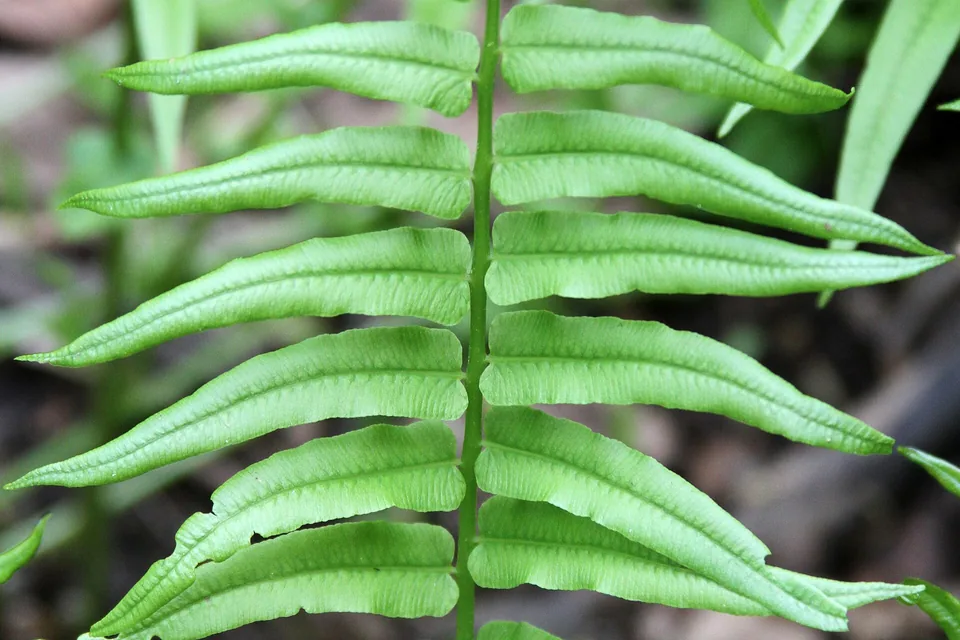
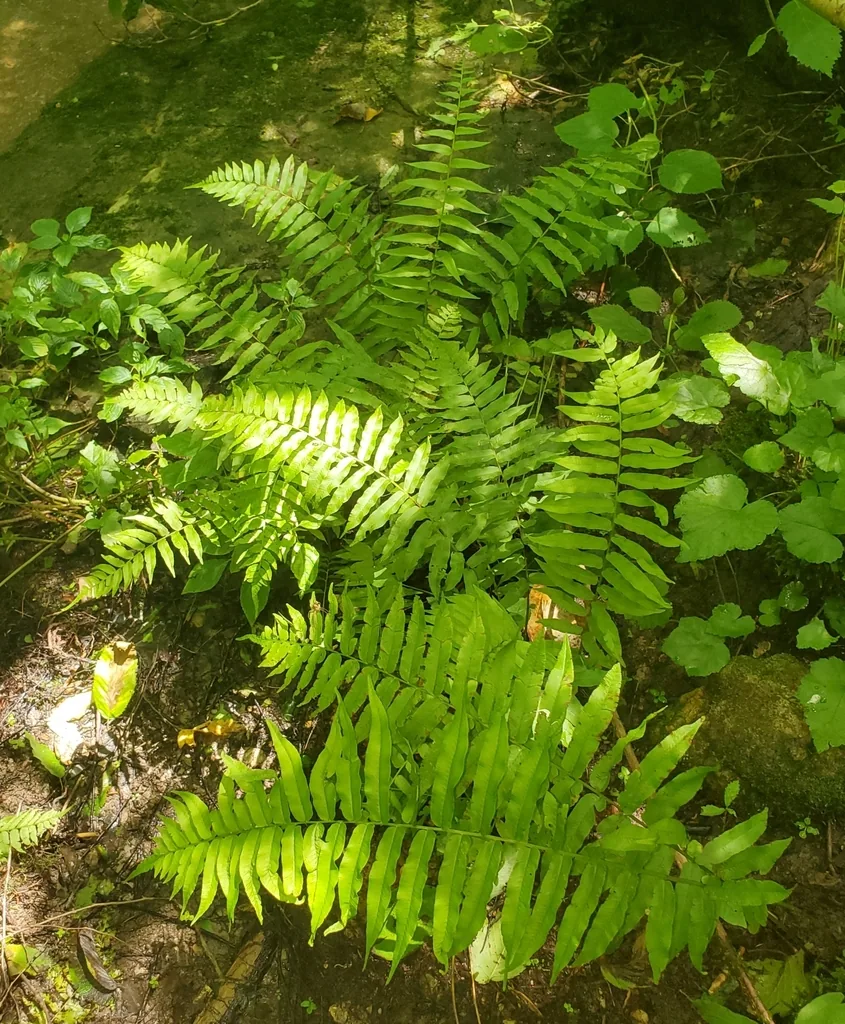
Glade fern is a large deciduous fern native to eastern Canada and the eastern United States. [1] It likes dappled to deep shade and prefers continuous moisture. [1] It can be grown in native, shade or water gardens. [1]
This record is incomplete: the sources we read do not cover every field yet.
Not yet covered by our sources: Pruning
Glade Fern care
How to water Glade Fern
Watering
Continuous moisture
What the sources say (1)
It spreads by creeping rhizomes and prefers continuous moisture.Watering notes
Fronds turn brown in low moisture or if the soil stays dry for extended periods
What the sources say (2)
The fronds will turn brown in low moisture conditions.The foliage can turn brown if the soil is allowed to remain dry for extended periods.How much light Glade Fern needs
Dappled shade to deep shade
What the sources say (1)
The glade fern likes dappled shade to deep shade.How much cold Glade Fern can take
Hardiness, coldest zone
3a [winter low −40 to −37.2 °C (−40 to −35 °F)]
What the sources say (1)
USDA Plant Hardiness Zone:
3a, 3b, 4a, 4b, 5a, 5b, 6a, 6b, 7a, 7b, 8a, 8bHardiness, warmest zone
8b [winter low −9.4 to −6.7 °C (15 to 20 °F)]
What the sources say (1)
USDA Plant Hardiness Zone:
3a, 3b, 4a, 4b, 5a, 5b, 6a, 6b, 7a, 7b, 8a, 8bHow to propagate Glade Fern
Division
What the sources say (1)
Recommended Propagation Strategy:
Division
Country Or Region Of Origin:How to grow Glade Fern
The plant
Life cycle
perennial
What the sources say (1)
Family:
Aspleniaceae
Uses (Ethnobotany):
A great addition to a woodland garden
Life Cycle:
PerennialFamily
Aspleniaceae
What the sources say (1)
The glade fern is a large deciduous plant in the spleenwort family (Aspleniaceae).Mature height
60.96-91.44 cm (2-3 ft)
What the sources say (1)
Dimensions:
Height: 2 ft. 0 in. - 3 ft. 0 in.
Width: 2 ft. 0 in. - 3 ft. 0 in.Mature width
60.96-91.44 cm (2-3 ft)
What the sources say (1)
Dimensions:
Height: 2 ft. 0 in. - 3 ft. 0 in.
Width: 2 ft. 0 in. - 3 ft. 0 in.Pests and diseases
Pests
slugs, snails
What the sources say (1)
No serious issues, however, tender fronds can be damaged by slugs and snails.Glade Fern pests and problems
Slugs and snails
Symptom: Tender fronds can be damaged.
What to do: No management given.
What the sources say (1)
tender fronds can be damaged by slugs and snails.
— Homalosorus pycnocarpos (Glade Fern, Narrow Leaf Spleenwort, Narrow-leaved glade fern, Narrow-leaved spleenwort, Silvery Spleenwort) | North Carolina Extension Gardener Plant Toolbox [1] Browning foliage from dry soil
Symptom: The foliage can turn brown.
What to do: Keep the soil from remaining dry for extended periods.
What the sources say (1)
The foliage can turn brown if the soil is allowed to remain dry for extended periods.
— Homalosorus pycnocarpos (Glade Fern, Narrow Leaf Spleenwort, Narrow-leaved glade fern, Narrow-leaved spleenwort, Silvery Spleenwort) | North Carolina Extension Gardener Plant Toolbox [1]
Remedies
Each remedy shows what official sources say about it; traditional remedies without an official source are marked as such. Harmful ones are listed so you know to avoid them.
Treating the plant
slugs and snails
handpicking Official source, not independently tested
How: Remove the slugs and snails by handpicking.
When found, these pests can be removed by handpicking or by making simple, effective traps.
— hgic.clemson.edu [2] stale beer trap Partly works
How: Sink shallow pans of stale beer so the lip of the container is even with the soil surface; replace the beer when it dries up or is diluted by rain.
Trap snails and slugs in shallow pans of stale beer sunken so that the lip of the container is even with the soil surface. Replace beer as necessary when it dries up or becomes diluted by rainfall.
— hgic.clemson.edu [2] What the evidence says Beer or yeast traps, placed at ground level, are also recommended to capture slugs and snails. These traps are not particularly effective for the time and labor involved.
— extension.wvu.edu [3] copper foil barrier Works
How: Wrap copper foil around garden bed frames, planting boxes and trees.
Copper foil wrapped around garden bed frames, planting boxes and trees is effective.
— extension.wvu.edu [3] What the evidence says Copper foil wrapped around garden bed frames, planting boxes and trees is effective.
— extension.wvu.edu [3] diatomaceous earth Official source, not independently tested
It must be reapplied after rain or watering.
— hgic.clemson.edu [2] How: Sprinkle diatomaceous earth around the plants; reapply after rain or watering.
Protect young seedlings by sprinkling diatomaceous earth around the plants. Diatomaceous earth is very sharp and scratches the skin of these soft-bodied critters, resulting in dehydration and death.
— hgic.clemson.edu [2]
Calendar
Pruning
Not stated in the sources we read.
Months as given by the sources, which are mostly from the United States (northern hemisphere). In the southern hemisphere they shift by about six months.
Indicative values
Values from a secondary source, not checked word for word like the rest of this page. Use them as a starting point.
- Drought tolerant
- yesIndicative value, adapt it to your climate · Secondary source
- Soil pH
- 5.5-6.5Indicative value, adapt it to your climate · Secondary source
- Care level
- MediumIndicative value, adapt it to your climate · Secondary source
- Growth rate
- LowIndicative value, adapt it to your climate · Secondary source
- Pruning
- February, June, July, August, February, May, June, July, AugustIndicative value, adapt it to your climate · Secondary source
Similar plants
- Asplenium ceterach Asplenium ceterach
- Brittle Bladder Fern Cystopteris fragilis
- Broad Beech Fern Phegopteris hexagonoptera
- Bulblet Bladder Fern Cystopteris bulbifera
- Cliff Fern Woodsia obtusa
- Deer Fern Blechnum spicant
- Ebony Spleenwort Asplenium platyneuron
- Kunth's Maiden Fern Thelypteris kunthii
Sources
Every value above is quoted from these documents. Links lead to the original publisher.
- Homalosorus pycnocarpos (Glade Fern, Narrow Leaf Spleenwort, Narrow-leaved glade fern, Narrow-leaved spleenwort, Silvery Spleenwort) | North Carolina Extension Gardener Plant Toolbox · plants.ces.ncsu.edu, consulted
- hgic.clemson.edu · hgic.clemson.edu
- extension.wvu.edu · extension.wvu.edu
Written by Emilio Marruso · last checked