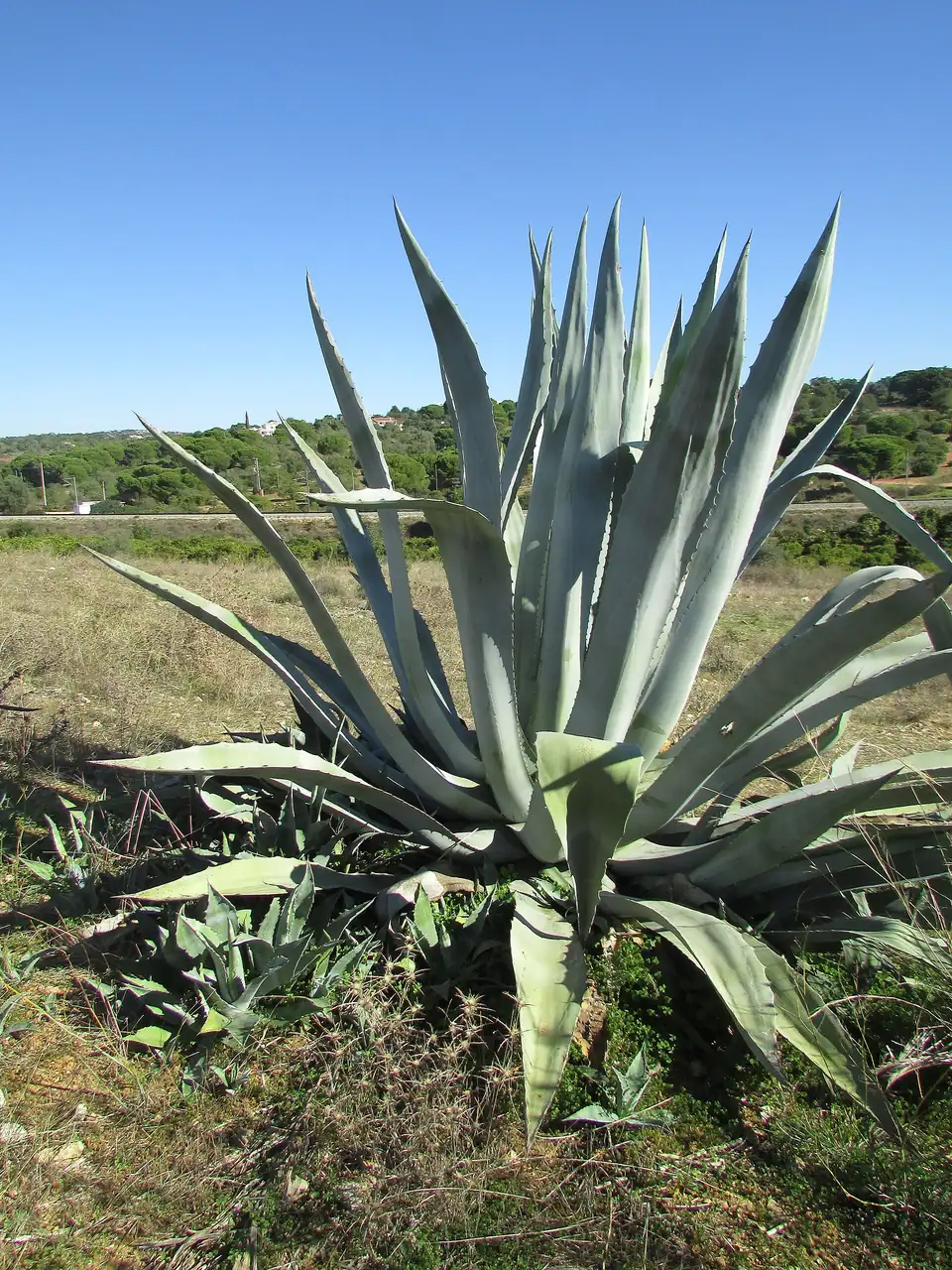


How to Grow and Care for Century Plant
Agave americana
Written by Emilio Marruso · last checked
Toxic to: People · Why
At a glance
Agave americana is a tough, drought-tolerant perennial that asks for very little: well-drained soil and just occasional water in summer. It grows happily in containers too, and you can make new plants from its offsets or from seeds. Its striking life story ends with a single bloom, after which the main plant dies, so enjoy every season with it.
- Water
Drought tolerant: water only now and then in summer
What the sources say (5)
Watering: Drought tolerant; occasional water in summer
According to UC Master Gardeners of Sonoma County: This species tolerates some shade and is drought tolerant with occasional water in summer.
— Agave | UC Master Gardener Program of Sonoma County [7] container plants (UC Master Gardeners of Sonoma County): Periodic water for container plants in summer is required, with frequency depending on variety and size and placement of the pot.
— Agave | UC Master Gardener Program of Sonoma County [7] North Carolina (genus Agave): respond well to fertilizer and water in the summer. Keep their feet from staying wet; agaves require very good drainage, especially during our cool, wet winters.
— Agaves Provide Structural Impact & Boldness - Extension Gardener | NC State Extension [6] According to UF/IFAS Charlotte County: Agave are very drought tolerant plants and can take a moderate amount of salt. Well-drained soils are essential
— Agave – get the point! - UF/IFAS Extension Charlotte County [4] This species tolerates some shade and is drought tolerant with occasional water in summer.
— Agave | UC Master Gardener Program of Sonoma County [7] - Soil
Well-drained soil is a must to prevent root rot
What the sources say (7)
Watering notes: Well-drained soil is important to prevent root rot
Planting in well-drained soil is particularly important in preventing root rot, especially in North Florida where cooler winter temperatures may add stress to your plant.
— Century Plant – Gardening Solutions [8] No serious insect or disease problems. Agave weevil can be troublesome. Slugs and snails may damage foliage. Root rot may occur, particularly in poorly drained or overly moist soils.
— Agave americana (American Aloe, American Century Plant, Century Plant, Maguey, Mexican Soap Plant) | North Carolina Extension Gardener Plant Toolbox [1] Watering: Drought tolerant; occasional water in summer
According to UC Master Gardeners of Sonoma County: This species tolerates some shade and is drought tolerant with occasional water in summer.
— Agave | UC Master Gardener Program of Sonoma County [7] container plants (UC Master Gardeners of Sonoma County): Periodic water for container plants in summer is required, with frequency depending on variety and size and placement of the pot.
— Agave | UC Master Gardener Program of Sonoma County [7] North Carolina (genus Agave): respond well to fertilizer and water in the summer. Keep their feet from staying wet; agaves require very good drainage, especially during our cool, wet winters.
— Agaves Provide Structural Impact & Boldness - Extension Gardener | NC State Extension [6] According to UF/IFAS Charlotte County: Agave are very drought tolerant plants and can take a moderate amount of salt. Well-drained soils are essential
— Agave – get the point! - UF/IFAS Extension Charlotte County [4] This species tolerates some shade and is drought tolerant with occasional water in summer.
— Agave | UC Master Gardener Program of Sonoma County [7] - Feeding
Feed it in summer
What the sources say (1)
When: Summer
Agaves will benefit from as much sunshine as you can afford and respond well to fertilizer and water in the summer.
— Agaves Provide Structural Impact & Boldness - Extension Gardener | NC State Extension [6] - Harvest
A sweet liquid gathers in the heart of the plant and can be fermented
- Pests
Agave weevils, slugs and snails; soggy soil causes root rot
What the sources say (2)
Pests: agave weevil, slugs, snails
Insects, Diseases, and Other Plant Problems: No serious insect or disease problems. Agave weevil can be troublesome. Slugs and snails may damage foliage. Root rot may occur, particularly in poorly drained or overly moist soils.
— Agave americana (American Aloe, American Century Plant, Century Plant, Maguey, Mexican Soap Plant) | North Carolina Extension Gardener Plant Toolbox [1] Diseases: root rot
Insects, Diseases, and Other Plant Problems: No serious insect or disease problems. Agave weevil can be troublesome. Slugs and snails may damage foliage. Root rot may occur, particularly in poorly drained or overly moist soils.
— Agave americana (American Aloe, American Century Plant, Century Plant, Maguey, Mexican Soap Plant) | North Carolina Extension Gardener Plant Toolbox [1] - Watch out
After it flowers, the main plant dies
What the sources say (2)
Life cycle: perennial (monocarpic: the main plant dies after flowering)
American century plant is a rosette-forming herbaceous perennial succulent in the asparagus family (Asparagaceae).
— Agave americana (American Aloe, American Century Plant, Century Plant, Maguey, Mexican Soap Plant) | North Carolina Extension Gardener Plant Toolbox [1] It can take 10-25 years to bloom but once it does flower the main plant dies.
— Agave americana (American Aloe, American Century Plant, Century Plant, Maguey, Mexican Soap Plant) | North Carolina Extension Gardener Plant Toolbox [1] - Propagation
From seeds or from offsets
What the sources say (1)
Propagation: Seeds and offsets
Propagation can be done with seeds and offsets. Remove lower leaves as needed.
— Agave americana (American Aloe, American Century Plant, Century Plant, Maguey, Mexican Soap Plant) | North Carolina Extension Gardener Plant Toolbox [1] - Containers
Grows in containers too
What the sources say (1)
In containers: Yes
If your in-ground conditions are not ideal for growing century plant, try growing it in a container where you can control the soil conditions.
— Century Plant – Gardening Solutions [8] - Safety
The sap can cause a skin rash: be careful when pruning
Overview
Agave americana is a rosette-forming succulent perennial used as a specimen or accent plant in drought-tolerant gardens. [1] It needs well-drained soil and at least 6 hours of direct sun, and is drought tolerant with occasional summer water. [1][7][8] It can be grown in a container and propagated by seeds and offsets. [8][1]
This record is incomplete: the sources we read do not cover every field yet.
Not yet covered by our sources: Pruning
Century Plant care
How to water Century Plant
Watering
Drought tolerant; occasional water in summer
What each source says
According to UC Master Gardeners of Sonoma County: Drought tolerant with occasional water in summer
container plants (UC Master Gardeners of Sonoma County): Periodic water in summer, frequency depending on variety, size and placement of the pot
North Carolina (genus Agave): Respond well to fertilizer and water in the summer; very good drainage required, especially in cool, wet winters
According to UF/IFAS Charlotte County: Very drought tolerant; well-drained soils essential
What the sources say (5)
According to UC Master Gardeners of Sonoma County: This species tolerates some shade and is drought tolerant with occasional water in summer.container plants (UC Master Gardeners of Sonoma County): Periodic water for container plants in summer is required, with frequency depending on variety and size and placement of the pot.North Carolina (genus Agave): respond well to fertilizer and water in the summer. Keep their feet from staying wet; agaves require very good drainage, especially during our cool, wet winters.According to UF/IFAS Charlotte County: Agave are very drought tolerant plants and can take a moderate amount of salt. Well-drained soils are essentialThis species tolerates some shade and is drought tolerant with occasional water in summer.Watering notes
Well-drained soil is important to prevent root rot
What the sources say (2)
Planting in well-drained soil is particularly important in preventing root rot, especially in North Florida where cooler winter temperatures may add stress to your plant.No serious insect or disease problems. Agave weevil can be troublesome. Slugs and snails may damage foliage. Root rot may occur, particularly in poorly drained or overly moist soils.How much light Century Plant needs
The sources give different values depending on region, zone or growing conditions.
What each source says
According to NC State Extension: Full sun (6 or more hours of direct sunlight a day)
According to UC Master Gardeners of Sonoma County (Agave americana): Tolerates some shade
According to UF/IFAS Gardening Solutions: At least 6 hours of direct sun
What the sources say (5)
According to NC State Extension: Light:
Full sun (6 or more hours of direct sunlight a day)According to UC Master Gardeners of Sonoma County (Agave americana): This species tolerates some shade and is drought tolerantAccording to UF/IFAS Gardening Solutions: They need at least 6 hours of direct sun and well-drained soils.Full sun (6 or more hours of direct sunlight a day)This species tolerates some shade and is drought tolerant with occasional water in summer.How much cold Century Plant can take
Hardiness, coldest zone
The sources give different values depending on region, zone or growing conditions.
What each source says
According to NC State Extension: 8a [winter low −12.2 to −9.4 °C (10 to 15 °F)]
According to UF/IFAS Gardening Solutions: 9 [winter low −6.7 to −1.1 °C (20 to 30 °F)]
What the sources say (3)
According to NC State Extension: USDA Plant Hardiness Zone:
8a, 8b, 9a, 9b, 10a, 10b, 11a, 11bAccording to UF/IFAS Gardening Solutions: grows well in zones 9 – 11. Agave8a, 8b, 9a, 9b, 10a, 10b, 11a, 11bHardiness, warmest zone
11b [winter low 7.2 to 10 °C (45 to 50 °F)]
What the sources say (1)
8a, 8b, 9a, 9b, 10a, 10b, 11a, 11bWhere to grow Century Plant
Yes
What the sources say (1)
If your in-ground conditions are not ideal for growing century plant, try growing it in a container where you can control the soil conditions.How to propagate Century Plant
Seeds and offsets
What the sources say (1)
Propagation can be done with seeds and offsets. Remove lower leaves as needed.How to grow Century Plant
The plant
Life cycle
perennial (monocarpic: the main plant dies after flowering)
What the sources say (2)
American century plant is a rosette-forming herbaceous perennial succulent in the asparagus family (Asparagaceae).It can take 10-25 years to bloom but once it does flower the main plant dies.Family
Asparagaceae
What the sources say (1)
American century plant is a rosette-forming herbaceous perennial succulent in the asparagus family (Asparagaceae).Mature height
The sources disagree:
Mature width
The sources disagree:
Pests and diseases
Pests
agave weevil, slugs, snails
What the sources say (1)
Insects, Diseases, and Other Plant Problems: No serious insect or disease problems. Agave weevil can be troublesome. Slugs and snails may damage foliage. Root rot may occur, particularly in poorly drained or overly moist soils.Diseases
root rot
What the sources say (1)
Insects, Diseases, and Other Plant Problems: No serious insect or disease problems. Agave weevil can be troublesome. Slugs and snails may damage foliage. Root rot may occur, particularly in poorly drained or overly moist soils.Fertilizing
When
Summer
What the sources say (1)
Agaves will benefit from as much sunshine as you can afford and respond well to fertilizer and water in the summer.Century Plant pests and problems
Agave weevil, slugs and snails, root rot
Symptom: Weevil can be troublesome; slugs and snails may damage foliage; root rot may occur in poorly drained or overly moist soils
What to do: Plant in well-drained soil
What the sources say (2)
No serious insect or disease problems. Agave weevil can be troublesome. Slugs and snails may damage foliage. Root rot may occur, particularly in poorly drained or overly moist soils.
— Agave americana (American Aloe, American Century Plant, Century Plant, Maguey, Mexican Soap Plant) | North Carolina Extension Gardener Plant Toolbox [1] Planting in well-drained soil is particularly important in preventing root rot, especially in North Florida where cooler winter temperatures may add stress to your plant.
— Century Plant – Gardening Solutions [8] Sap dermatitis
Symptom: Rash after contact with a freshly pruned leaf
What to do: Take the sap into consideration when pruning and maintaining the plant
What the sources say (1)
this rash occurred due to the sap of the plant which contains calcium oxalate crystals, or raphides which are needle sharp crystals that can pierce the skin and cause dermatitis.
— Plant Spotlight: Agave americana | Chadwick Arboretum & Learning Gardens [5]
Remedies
Each remedy shows what official sources say about it; traditional remedies without an official source are marked as such. Harmful ones are listed so you know to avoid them.
First aid
First aid: not a substitute for a doctor
sap skin contact
wash skin with soap and warm water Official source, not independently tested
If the pain continues, contact your child's physician.
— chop.edu [9] How: Lather the exposed area repeatedly with soap and rinse with warm running water to ease the irritation.
When the juices of the plant come in contact with the skin, burning, pain and swelling may occur. Lather the exposed area repeatedly with soap and rinse with warm running water to ease the irritation.
— chop.edu [9]
sap ingestion
wipe out the mouth and offer a cool drink or snack Official source, not independently tested
If there is swelling that prevents the child taking anything by mouth or causes difficulty breathing, go to the nearest emergency department immediately.
— chop.edu [9] How: If a child eats any part of an oxalate-containing plant, wipe out the residue of the plant from the mouth and offer a cool drink or snack.
If a child eats any part of an oxalate-containing plant, wipe out the residue of the plant from the mouth and offer a cool drink or snack such as a popsicle, applesauce or yogurt.
— chop.edu [9]
Treating the plant
spider-mites
diluted rubbing alcohol wash Not verified
Traditional remedy, not verified by an official source.
How: Wash the leaves with diluted rubbing alcohol at least three times per week until the mites disappear.
mites
strong blast of water Not verified
Traditional remedy, not verified by an official source.
How: Dislodge aphids, mites and spittlebug nymphs with a strong blast of water.
slugs
scratchy barrier of coffee grounds, eggshells or pine needles Not verified
Traditional remedy, not verified by an official source.
Always purchase natural diatomaceous earth because swimming-pool grade contains crystalline silica, a respiratory hazard.
— finegardening.com [10] How: Pine needles, coffee grounds, crushed eggshells or diatomaceous earth make a scratchy barrier; reapply after rain.
bait traps and soapy water Not verified
Traditional remedy, not verified by an official source.
How: Lay empty flowerpots or milk cartons on their sides in a shady area, then scrape the slugs and snails into soapy water in the morning.
Is Century Plant poisonous?
Reported by the source, quoted verbatim. This is not medical or veterinary advice: if a person or an animal may have eaten this plant, contact a poison control centre or a veterinarian.
this rash occurred due to the sap of the plant which contains calcium oxalate crystals, or raphides which are needle sharp crystals that can pierce the skin and cause dermatitis.
[5]- Poisonous parts
Poison Symptoms: Poison part: Plant sap from leaves
[1]- Toxic principle
Poison Toxic Principle: calcium oxalate crystals Causes Contact
[1]- Symptoms
needle sharp crystals that can pierce the skin and cause dermatitis.
[5]- Severity
Poison Severity: Low Poison Symptoms: Poison part: Plant
[1]
Calendar
Pruning
Not stated in the sources we read.
Months as given by the sources, which are mostly from the United States (northern hemisphere). In the southern hemisphere they shift by about six months.
Edibility
Reported by the source, quoted verbatim. Do not eat a plant on the basis of this page alone: identification mistakes can be dangerous.
a sweet liquid gathers in the hollowed heart of the plant which can be fermented
[5]
Indicative values
Values from a secondary source, not checked word for word like the rest of this page. Use them as a starting point.
- Hours of sun
- 6-8 hoursIndicative value, adapt it to your climate · Secondary source
- Drought tolerant
- yesIndicative value, adapt it to your climate · Secondary source
- Soil
- Acidic, Well-drainedIndicative value, adapt it to your climate · Secondary source
- Soil pH
- 6-7.5Indicative value, adapt it to your climate · Secondary source
- Care level
- MediumIndicative value, adapt it to your climate · Secondary source
- Growth rate
- LowIndicative value, adapt it to your climate · Secondary source
- Pruning
- February, March, AprilIndicative value, adapt it to your climate · Secondary source
Similar plants
- American Agave Agave virginica
- Century Plant Agave salmiana
- Coastal agave Agave shawii
- Henequen Agave fourcroydes
- Parry's Agave Agave parryi
- Tuberose Agave amica
- Agave ovatifolia Agave ovatifolia
- Foxtail agave Agave attenuata
Sources
Every value above is quoted from these documents. Links lead to the original publisher.
- Agave americana (American Aloe, American Century Plant, Century Plant, Maguey, Mexican Soap Plant) | North Carolina Extension Gardener Plant Toolbox · plants.ces.ncsu.edu, consulted
- Agave (Agave, Century Plant) | North Carolina Extension Gardener Plant Toolbox · plants.ces.ncsu.edu, consulted
- American Century Plant - Agave americana | North Carolina Extension Gardener Plant Toolbox · plants.ces.ncsu.edu, consulted
- Agave – get the point! - UF/IFAS Extension Charlotte County · blogs.ifas.ufl.edu, consulted
- Plant Spotlight: Agave americana | Chadwick Arboretum & Learning Gardens · chadwickarboretum.osu.edu, consulted
- Agaves Provide Structural Impact & Boldness - Extension Gardener | NC State Extension · extensiongardener.ces.ncsu.edu, consulted
- Agave | UC Master Gardener Program of Sonoma County · ucanr.edu, consulted
- Century Plant – Gardening Solutions · gardeningsolutions.ifas.ufl.edu, consulted
- chop.edu · chop.edu
- finegardening.com · finegardening.com
Written by Emilio Marruso · last checked