
How to Grow and Care for Agave ovatifolia
Agave ovatifolia
Written by Emilio Marruso · last checked
At a glance
This agave makes a bold statement in the garden: it grows 3–4 ft tall and 4–6 ft wide and is happy anywhere from full sun to dappled shade. It tolerates drought, asking only for occasional water in summer and very good drainage. Plant it from May through July, keep it dry in winter, and it even grows in a container.
- Sun
Full sun to dappled shade
What the sources say (3)
Light: Full sun to dappled shade
Whale’s tongue grows happily in soil with average to low fertility in settings with full sun to dappled shade.
— UT Gardens’ March 2020 Plant of the Month: Whale’s Tongue Agave – Institute News [1] A drought tolerant agave that benefits from occasional supplemental water. Plant in full sun in a well drained soil.
— Find plants - Whale's Tongue Agave [2] This agave seems pretty hardy in hot, blazing sun, but does great in very light filtered sun, it grows also quite well under the shade of small trees.
— Agave ovatifolia [4] - Water
Drought tolerant: water now and then in summer, let the soil dry out fully; very little in winter
What the sources say (8)
Watering: Drought tolerant; occasional supplemental water in summer, letting the soil dry thoroughly between waterings
According to Southern Nevada Water Authority: This is a wide cupped leaf plant as its common name suggests. A drought tolerant agave that benefits from occasional supplemental water.
— Find plants - Whale's Tongue Agave [2] winter months: During the winter months, one should only water enough to keep the leaves from shrivelling.
— Agave ovatifolia [4] They are drought tolerant, but grow much faster with supplemental water in the summer.
— UT Gardens’ March 2020 Plant of the Month: Whale’s Tongue Agave – Institute News [1] This is a wide cupped leaf plant as its common name suggests. A drought tolerant agave that benefits from occasional supplemental water.
— Find plants - Whale's Tongue Agave [2] It grows fairly fast in summer if provided with copious water but allows to dry thoroughly before watering again (the more water and fertilizer this plant gets the faster it will grow).
— Agave ovatifolia [4] Watering notes: Good drainage is essential; shield young plants from winter rain for the first two winters; minimal water in winter
Even though they are more adaptable to damp, cool climates than other agaves, good draining soil is the key to success.
— UT Gardens’ March 2020 Plant of the Month: Whale’s Tongue Agave – Institute News [1] The young plant should be shielded from winter rain for the first and second winters.
— UT Gardens’ March 2020 Plant of the Month: Whale’s Tongue Agave – Institute News [1] During the winter months, one should only water enough to keep the leaves from shrivelling.
— Agave ovatifolia [4] - Cold
Long cold spells at 18 °F (−8 °C) can burn the leaves; keep it dry in winter
- Soil
Good drainage is a must: plant on a slope or in a bed mixed with gravel
What the sources say (3)
Watering notes: Good drainage is essential; shield young plants from winter rain for the first two winters; minimal water in winter
Even though they are more adaptable to damp, cool climates than other agaves, good draining soil is the key to success.
— UT Gardens’ March 2020 Plant of the Month: Whale’s Tongue Agave – Institute News [1] The young plant should be shielded from winter rain for the first and second winters.
— UT Gardens’ March 2020 Plant of the Month: Whale’s Tongue Agave – Institute News [1] During the winter months, one should only water enough to keep the leaves from shrivelling.
— Agave ovatifolia [4] - Planting
Plant from May through July
What the sources say (1)
Planting: May through July
It is best to plant the zone 6b agave during the months of May through July, which allows time for the roots to become established before the following winter.
— UT Gardens’ March 2020 Plant of the Month: Whale’s Tongue Agave – Institute News [1] - Watch out
Keep young plants out of winter rain for their first two winters, December to early April
What the sources say (3)
Watering notes: Good drainage is essential; shield young plants from winter rain for the first two winters; minimal water in winter
Even though they are more adaptable to damp, cool climates than other agaves, good draining soil is the key to success.
— UT Gardens’ March 2020 Plant of the Month: Whale’s Tongue Agave – Institute News [1] The young plant should be shielded from winter rain for the first and second winters.
— UT Gardens’ March 2020 Plant of the Month: Whale’s Tongue Agave – Institute News [1] During the winter months, one should only water enough to keep the leaves from shrivelling.
— Agave ovatifolia [4] - Size
3–4 ft tall and 4–6 ft wide
What the sources say (2)
Mature height: 91.44-121.92 cm (3-4 ft)
Agave ovatifolia will grow to 3 to 4 feet tall and 4 to 6 feet wide in 5 to 8 years, especially with summer water.
— UT Gardens’ March 2020 Plant of the Month: Whale’s Tongue Agave – Institute News [1] Mature width: 121.92-182.88 cm (4-6 ft)
Agave ovatifolia will grow to 3 to 4 feet tall and 4 to 6 feet wide in 5 to 8 years, especially with summer water.
— UT Gardens’ March 2020 Plant of the Month: Whale’s Tongue Agave – Institute News [1] - Propagation
Grows from seed; nurseries also multiply it in the lab
What the sources say (2)
Propagation: Seed; tissue culture
Whale’s tongue is grown from seed or tissue culture. Those grown from tissue culture (for example, ‘Frosty Blue’ and ‘Vanzie’) are genetic clones and look exactly alike.
— UT Gardens’ March 2020 Plant of the Month: Whale’s Tongue Agave – Institute News [1] When grown hard, the plant will stay on the smaller end while those grown with ample moisture will attain maximum size. Propagation: Seeds.
— Agave ovatifolia [4] - Containers
Grows in containers too
What the sources say (1)
In containers: Yes
During the winter months, one should only water enough to keep the leaves from shrivelling. It does great in containers or in the ground.
— Agave ovatifolia [4]
Overview
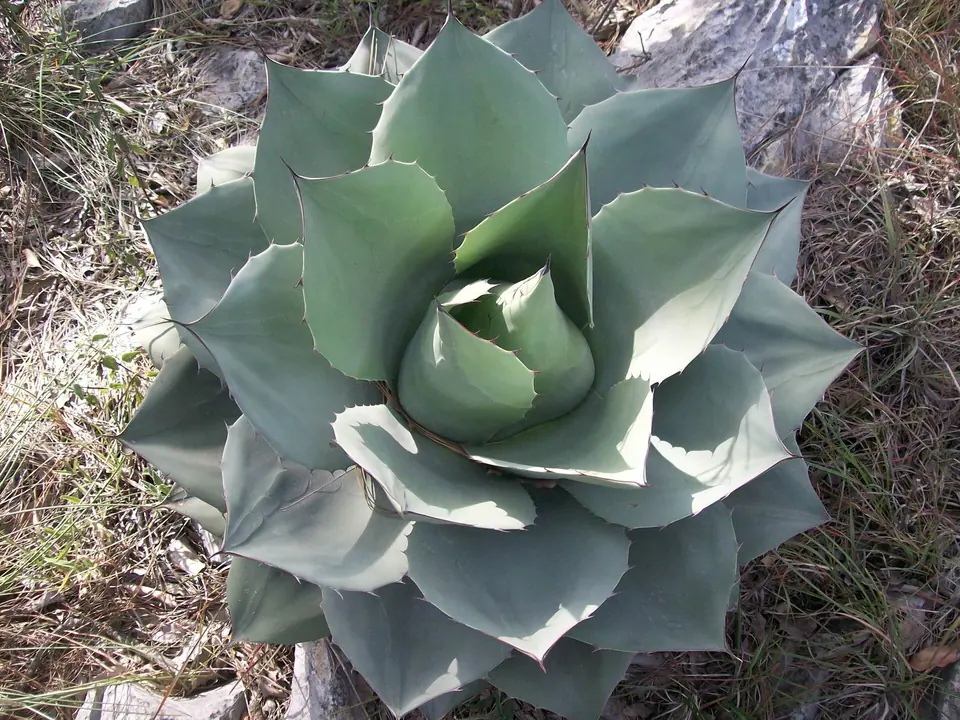
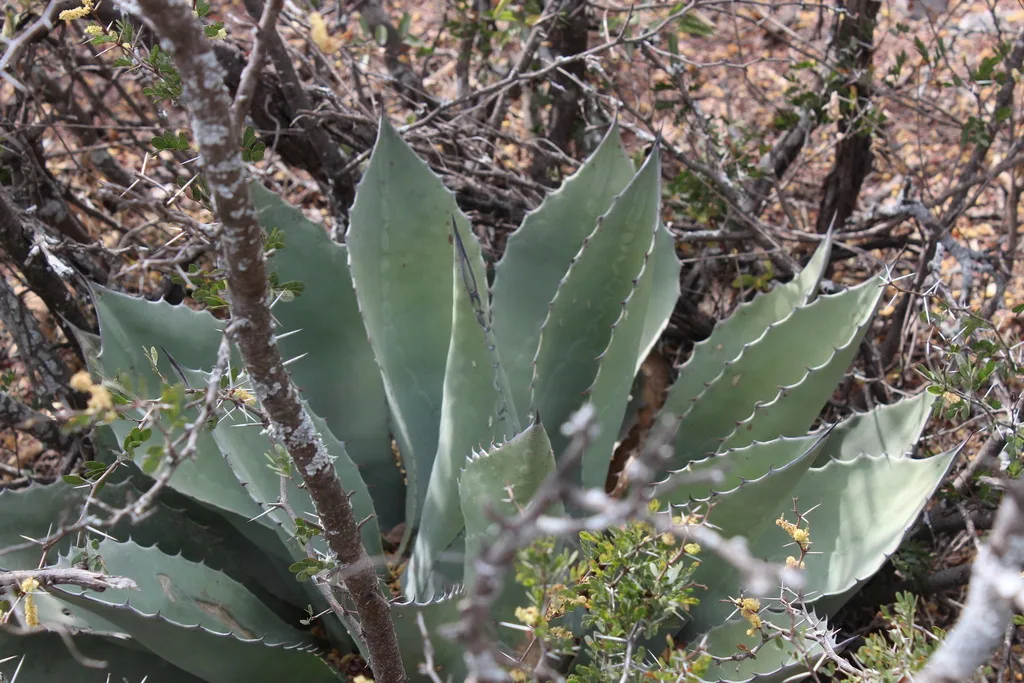
Whale's tongue agave was found in the mid 1980s in the Sierra de Lampazos mountains of Mexico at 3,700 to 7,000 feet [1,127.8–2,133.6 m] and forms a single symmetrical rosette of blue leaves. [1] The rosette is monocarpic and normally makes no offsets, so the plant ends its life after flowering. [3][1] It is drought tolerant and needs very well-drained soil, growing faster with summer water. [1]
This record is incomplete: the sources we read do not cover every field yet.
Not yet covered by our sources: Pruning
Agave ovatifolia care
Measurements in square brackets are our conversion into the other unit system; the quoted text is unchanged.
How to water Agave ovatifolia
Watering
Drought tolerant; occasional supplemental water in summer, letting the soil dry thoroughly between waterings
What each source says
According to Southern Nevada Water Authority: Low
winter months: Only enough to keep the leaves from shrivelling
What the sources say (5)
According to Southern Nevada Water Authority: This is a wide cupped leaf plant as its common name suggests. A drought tolerant agave that benefits from occasional supplemental water.winter months: During the winter months, one should only water enough to keep the leaves from shrivelling.They are drought tolerant, but grow much faster with supplemental water in the summer.This is a wide cupped leaf plant as its common name suggests. A drought tolerant agave that benefits from occasional supplemental water.It grows fairly fast in summer if provided with copious water but allows to dry thoroughly before watering again (the more water and fertilizer this plant gets the faster it will grow).Watering notes
Good drainage is essential; shield young plants from winter rain for the first two winters; minimal water in winter
What the sources say (3)
Even though they are more adaptable to damp, cool climates than other agaves, good draining soil is the key to success.The young plant should be shielded from winter rain for the first and second winters.During the winter months, one should only water enough to keep the leaves from shrivelling.How much light Agave ovatifolia needs
Full sun to dappled shade
What the sources say (3)
Whale’s tongue grows happily in soil with average to low fertility in settings with full sun to dappled shade.A drought tolerant agave that benefits from occasional supplemental water. Plant in full sun in a well drained soil.This agave seems pretty hardy in hot, blazing sun, but does great in very light filtered sun, it grows also quite well under the shade of small trees.How much cold Agave ovatifolia can take
Hardiness, coldest zone
The sources give different values depending on region, zone or growing conditions.
What each source says
According to University of Tennessee Gardens: 6b [winter low −20.6 to −17.8 °C (−5 to 0 °F)]
According to Southern Nevada Water Authority: 8b-10b [winter low −9.4 to 4.4 °C (15 to 40 °F)]
What the sources say (2)
According to University of Tennessee Gardens: It is best to plant the zone 6b agave during the months of May through July, which allows time for the roots to become established before the following winter.According to Southern Nevada Water Authority: USDA hardiness zone:
8b, 9a, 9b, 10a, 10bHardiness, warmest zone
10b [winter low 1.7 to 4.4 °C (35 to 40 °F)]
What the sources say (1)
USDA hardiness zone:
8b, 9a, 9b, 10a, 10bWhere to grow Agave ovatifolia
Yes
What the sources say (1)
During the winter months, one should only water enough to keep the leaves from shrivelling. It does great in containers or in the ground.How to propagate Agave ovatifolia
Seed; tissue culture
What the sources say (2)
Whale’s tongue is grown from seed or tissue culture. Those grown from tissue culture (for example, ‘Frosty Blue’ and ‘Vanzie’) are genetic clones and look exactly alike.When grown hard, the plant will stay on the smaller end while those grown with ample moisture will attain maximum size.
Propagation: Seeds.How to grow Agave ovatifolia
The plant
Mature height
91.44-121.92 cm (3-4 ft)
What the sources say (1)
Agave ovatifolia will grow to 3 to 4 feet tall and 4 to 6 feet wide in 5 to 8 years, especially with summer water.Mature width
121.92-182.88 cm (4-6 ft)
What the sources say (1)
Agave ovatifolia will grow to 3 to 4 feet tall and 4 to 6 feet wide in 5 to 8 years, especially with summer water.Agave ovatifolia pests and problems
Winter wet
Symptom: Young plants exposed to winter rain
What to do: Cover young plants with a raised, ventilated clear tub from December to early April to keep them dry; plant on a slope or in gravel-amended beds
What the sources say (2)
At the UT Gardens, Jackson, we place a shallow clear tub (18 inches x 24 inches) upside down over the plants from December to early April.
— UT Gardens’ March 2020 Plant of the Month: Whale’s Tongue Agave – Institute News [1] They are best planted on a slope or in a bed amended with crushed gravel.
— UT Gardens’ March 2020 Plant of the Month: Whale’s Tongue Agave – Institute News [1] Debris around the rosette
Symptom: Fallen leaves and debris collect on or around the plant
What to do: Remove them in fall and winter
What the sources say (1)
In the fall and winter, be sure to remove any fallen leaves and debris that collect on or around it.
— UT Gardens’ March 2020 Plant of the Month: Whale’s Tongue Agave – Institute News [1] Cold leaf burn
Symptom: Leaf burn after extended cold around -8°C
What to do: Keep plants dry in winter
What the sources say (1)
It is quite cold hardy for an Agave -8° for an extended period can burn some leaves (but can survive to at least -12°, particularly when dry)
— Agave ovatifolia [4]
Remedies
The sources we checked give no remedies for this plant.
Calendar
May through July
What the sources say (1)
It is best to plant the zone 6b agave during the months of May through July, which allows time for the roots to become established before the following winter.Not stated in the sources we read.
Months as given by the sources, which are mostly from the United States (northern hemisphere). In the southern hemisphere they shift by about six months.
Indicative values
Values from a secondary source, not checked word for word like the rest of this page. Use them as a starting point.
- Life cycle
- Herbaceous PerennialIndicative value, adapt it to your climate · Secondary source
- Hours of sun
- 6-8 hoursIndicative value, adapt it to your climate · Secondary source
- Drought tolerant
- yesIndicative value, adapt it to your climate · Secondary source
- Soil pH
- 6-7.5Indicative value, adapt it to your climate · Secondary source
- Care level
- MediumIndicative value, adapt it to your climate · Secondary source
- Growth rate
- LowIndicative value, adapt it to your climate · Secondary source
- Pruning
- May, June, July, June, JulyIndicative value, adapt it to your climate · Secondary source
Similar plants
- American Agave Agave virginica
- Century Plant Agave salmiana
- Coastal agave Agave shawii
- Henequen Agave fourcroydes
- Parry's Agave Agave parryi
- Sisal Agave sisalana
- Tuberose Agave amica
- Century Plant Agave americana
Sources
Every value above is quoted from these documents. Links lead to the original publisher.
- UT Gardens’ March 2020 Plant of the Month: Whale’s Tongue Agave – Institute News · utianews.tennessee.edu, consulted
- Find plants - Whale's Tongue Agave · snwa.com, consulted
- Agave ovatifolia - The Ruth Bancroft Garden & Nursery · ruthbancroftgarden.org, consulted
- Agave ovatifolia · llifle.com, consulted
Written by Emilio Marruso · last checked