
Cómo cultivar y cuidar Agave ovatifolia
Agave ovatifolia
Escrito por Emilio Marruso · última revisión
De un vistazo
Este agave llena el jardín de carácter: alcanza 0,9–1,2 m de alto y 1,2–1,8 m de ancho, y vive feliz desde el sol pleno hasta la sombra ligera. Tolera la sequía y solo te pide algún riego en verano y un drenaje excelente. Plántalo de mayo a julio, mantenlo seco en invierno y disfrútalo incluso en maceta.
- Sol
Sol pleno o sombra ligera
Qué dicen las fuentes (3)
Luz: Pleno sol a sombra moteada
Whale’s tongue grows happily in soil with average to low fertility in settings with full sun to dappled shade.
— UT Gardens’ March 2020 Plant of the Month: Whale’s Tongue Agave – Institute News [1] A drought tolerant agave that benefits from occasional supplemental water. Plant in full sun in a well drained soil.
— Find plants - Whale's Tongue Agave [2] This agave seems pretty hardy in hot, blazing sun, but does great in very light filtered sun, it grows also quite well under the shade of small trees.
— Agave ovatifolia [4] - Riego
Tolera la sequía: riega de vez en cuando en verano, deja secar bien la tierra; muy poco en invierno
Qué dicen las fuentes (8)
Riego: Tolerante a la sequía; riego suplementario ocasional en verano, dejando que el suelo se seque por completo entre riegos.
Según Southern Nevada Water Authority: This is a wide cupped leaf plant as its common name suggests. A drought tolerant agave that benefits from occasional supplemental water.
— Find plants - Whale's Tongue Agave [2] los meses de invierno: During the winter months, one should only water enough to keep the leaves from shrivelling.
— Agave ovatifolia [4] They are drought tolerant, but grow much faster with supplemental water in the summer.
— UT Gardens’ March 2020 Plant of the Month: Whale’s Tongue Agave – Institute News [1] This is a wide cupped leaf plant as its common name suggests. A drought tolerant agave that benefits from occasional supplemental water.
— Find plants - Whale's Tongue Agave [2] It grows fairly fast in summer if provided with copious water but allows to dry thoroughly before watering again (the more water and fertilizer this plant gets the faster it will grow).
— Agave ovatifolia [4] Notas sobre el riego: El buen drenaje es esencial; protege las plantas jóvenes de la lluvia invernal durante los dos primeros inviernos; riego mínimo en invierno
Even though they are more adaptable to damp, cool climates than other agaves, good draining soil is the key to success.
— UT Gardens’ March 2020 Plant of the Month: Whale’s Tongue Agave – Institute News [1] The young plant should be shielded from winter rain for the first and second winters.
— UT Gardens’ March 2020 Plant of the Month: Whale’s Tongue Agave – Institute News [1] During the winter months, one should only water enough to keep the leaves from shrivelling.
— Agave ovatifolia [4] - Frío
El frío prolongado a −8 °C puede quemar las hojas; mantenla seca en invierno
- Suelo
El buen drenaje es imprescindible: plántala en pendiente o en un bancal con grava
Qué dicen las fuentes (3)
Notas sobre el riego: El buen drenaje es esencial; protege las plantas jóvenes de la lluvia invernal durante los dos primeros inviernos; riego mínimo en invierno
Even though they are more adaptable to damp, cool climates than other agaves, good draining soil is the key to success.
— UT Gardens’ March 2020 Plant of the Month: Whale’s Tongue Agave – Institute News [1] The young plant should be shielded from winter rain for the first and second winters.
— UT Gardens’ March 2020 Plant of the Month: Whale’s Tongue Agave – Institute News [1] During the winter months, one should only water enough to keep the leaves from shrivelling.
— Agave ovatifolia [4] - Plantación
Planta de mayo a julio
Qué dicen las fuentes (1)
Plantación: De mayo a julio
It is best to plant the zone 6b agave during the months of May through July, which allows time for the roots to become established before the following winter.
— UT Gardens’ March 2020 Plant of the Month: Whale’s Tongue Agave – Institute News [1] - Atención
Protege las plantas jóvenes de la lluvia invernal sus dos primeros inviernos, de diciembre a principios de abril
Qué dicen las fuentes (3)
Notas sobre el riego: El buen drenaje es esencial; protege las plantas jóvenes de la lluvia invernal durante los dos primeros inviernos; riego mínimo en invierno
Even though they are more adaptable to damp, cool climates than other agaves, good draining soil is the key to success.
— UT Gardens’ March 2020 Plant of the Month: Whale’s Tongue Agave – Institute News [1] The young plant should be shielded from winter rain for the first and second winters.
— UT Gardens’ March 2020 Plant of the Month: Whale’s Tongue Agave – Institute News [1] During the winter months, one should only water enough to keep the leaves from shrivelling.
— Agave ovatifolia [4] - Tamaño
0,9–1,2 m de alto y 1,2–1,8 m de ancho
Qué dicen las fuentes (2)
Altura adulta: 91.44-121.92 cm (3-4 pies)
Agave ovatifolia will grow to 3 to 4 feet tall and 4 to 6 feet wide in 5 to 8 years, especially with summer water.
— UT Gardens’ March 2020 Plant of the Month: Whale’s Tongue Agave – Institute News [1] Anchura adulta: 121.92-182.88 cm (4-6 pies)
Agave ovatifolia will grow to 3 to 4 feet tall and 4 to 6 feet wide in 5 to 8 years, especially with summer water.
— UT Gardens’ March 2020 Plant of the Month: Whale’s Tongue Agave – Institute News [1] - Multiplicación
Se reproduce por semilla; los viveros también la multiplican en laboratorio
Qué dicen las fuentes (2)
Propagación: Semilla; cultivo de tejidos
Whale’s tongue is grown from seed or tissue culture. Those grown from tissue culture (for example, ‘Frosty Blue’ and ‘Vanzie’) are genetic clones and look exactly alike.
— UT Gardens’ March 2020 Plant of the Month: Whale’s Tongue Agave – Institute News [1] When grown hard, the plant will stay on the smaller end while those grown with ample moisture will attain maximum size. Propagation: Seeds.
— Agave ovatifolia [4] - Maceta
Crece también en maceta
Qué dicen las fuentes (1)
En maceta: Sí
During the winter months, one should only water enough to keep the leaves from shrivelling. It does great in containers or in the ground.
— Agave ovatifolia [4]
Resumen
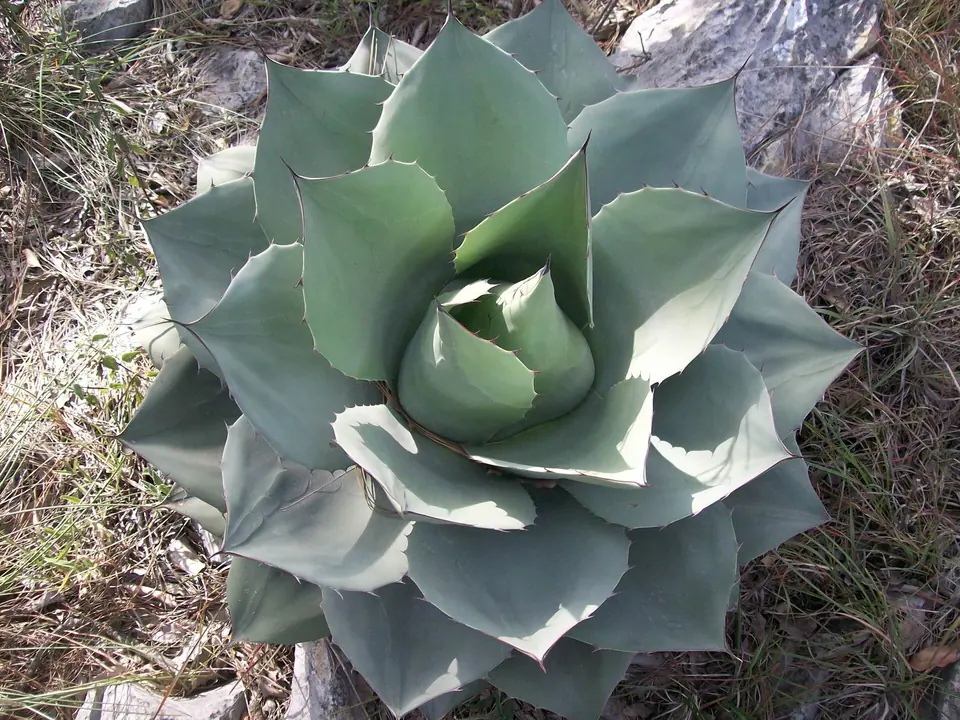
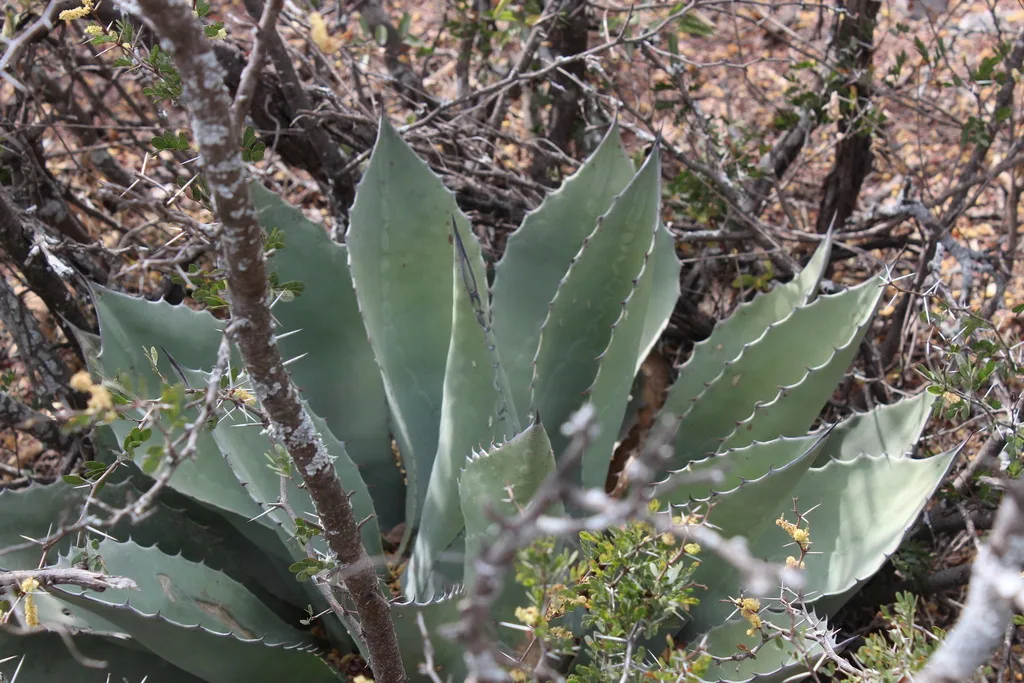
El agave lengua de ballena se encontró a mediados de la década de 1980 en la Sierra de Lampazos, en México, a una altitud de 3,700 a 7,000 pies [1127,8–2133,6 m], y forma una roseta única y simétrica de hojas azules. [1] La roseta es monocárpica y normalmente no produce hijuelos, por lo que la planta termina su vida después de la floración. [3][1] Es tolerante a la sequía y necesita un suelo muy bien drenado; crece más rápido con riego en verano. [1]
Citado en inglés, como en la fuente.
Esta ficha está incompleta: las fuentes consultadas aún no cubren todos los campos.
Aún no cubierto por nuestras fuentes: Poda
Cuidados
Las medidas entre corchetes son nuestra conversión al otro sistema de unidades; el texto citado no cambia.
Riego
Riego
Tolerante a la sequía; riego suplementario ocasional en verano, dejando que el suelo se seque por completo entre riegos.
Lo que dice cada fuente
Según Southern Nevada Water Authority: Bajo
los meses de invierno: Solo lo suficiente para evitar que las hojas se marchiten
Qué dicen las fuentes (5)
Según Southern Nevada Water Authority: This is a wide cupped leaf plant as its common name suggests. A drought tolerant agave that benefits from occasional supplemental water.los meses de invierno: During the winter months, one should only water enough to keep the leaves from shrivelling.They are drought tolerant, but grow much faster with supplemental water in the summer.This is a wide cupped leaf plant as its common name suggests. A drought tolerant agave that benefits from occasional supplemental water.It grows fairly fast in summer if provided with copious water but allows to dry thoroughly before watering again (the more water and fertilizer this plant gets the faster it will grow).Notas sobre el riego
El buen drenaje es esencial; protege las plantas jóvenes de la lluvia invernal durante los dos primeros inviernos; riego mínimo en invierno
Qué dicen las fuentes (3)
Even though they are more adaptable to damp, cool climates than other agaves, good draining soil is the key to success.The young plant should be shielded from winter rain for the first and second winters.During the winter months, one should only water enough to keep the leaves from shrivelling.Luz
Pleno sol a sombra moteada
Qué dicen las fuentes (3)
Whale’s tongue grows happily in soil with average to low fertility in settings with full sun to dappled shade.A drought tolerant agave that benefits from occasional supplemental water. Plant in full sun in a well drained soil.This agave seems pretty hardy in hot, blazing sun, but does great in very light filtered sun, it grows also quite well under the shade of small trees.Clima y frío
Rusticidad, zona más fría
Las fuentes dan valores distintos según la región, la zona o las condiciones de cultivo.
Lo que dice cada fuente
Según University of Tennessee Gardens: 6b [mínima invernal de −20,6 a −17,8 °C (de −5 a 0 °F)]
Según Southern Nevada Water Authority: 8b-10b [mínima invernal de −9,4 a 4,4 °C (de 15 a 40 °F)]
Qué dicen las fuentes (2)
Según University of Tennessee Gardens: It is best to plant the zone 6b agave during the months of May through July, which allows time for the roots to become established before the following winter.Según Southern Nevada Water Authority: USDA hardiness zone:
8b, 9a, 9b, 10a, 10bRusticidad, zona más cálida
10b [mínima invernal de 1,7 a 4,4 °C (de 35 a 40 °F)]
Qué dicen las fuentes (1)
USDA hardiness zone:
8b, 9a, 9b, 10a, 10bDónde cultivarla
Sí
Qué dicen las fuentes (1)
During the winter months, one should only water enough to keep the leaves from shrivelling. It does great in containers or in the ground.Propagación
Semilla; cultivo de tejidos
Qué dicen las fuentes (2)
Whale’s tongue is grown from seed or tissue culture. Those grown from tissue culture (for example, ‘Frosty Blue’ and ‘Vanzie’) are genetic clones and look exactly alike.When grown hard, the plant will stay on the smaller end while those grown with ample moisture will attain maximum size.
Propagation: Seeds.Cultivo
La planta
Altura adulta
91.44-121.92 cm (3-4 pies)
Qué dicen las fuentes (1)
Agave ovatifolia will grow to 3 to 4 feet tall and 4 to 6 feet wide in 5 to 8 years, especially with summer water.Anchura adulta
121.92-182.88 cm (4-6 pies)
Qué dicen las fuentes (1)
Agave ovatifolia will grow to 3 to 4 feet tall and 4 to 6 feet wide in 5 to 8 years, especially with summer water.Problemas
Invierno húmedo
Síntoma: Plantas jóvenes expuestas a la lluvia invernal
Qué hacer: Cubre las plantas jóvenes con un túnel transparente elevado y ventilado desde diciembre hasta principios de abril para mantenerlas secas; planta en una pendiente o en camas con grava
Qué dicen las fuentes (2)
At the UT Gardens, Jackson, we place a shallow clear tub (18 inches x 24 inches) upside down over the plants from December to early April.
— UT Gardens’ March 2020 Plant of the Month: Whale’s Tongue Agave – Institute News [1] They are best planted on a slope or in a bed amended with crushed gravel.
— UT Gardens’ March 2020 Plant of the Month: Whale’s Tongue Agave – Institute News [1] Residuos alrededor de la roseta
Síntoma: Las hojas caídas y los residuos se acumulan sobre o alrededor de la planta
Qué hacer: Retíralos en otoño e invierno
Qué dicen las fuentes (1)
In the fall and winter, be sure to remove any fallen leaves and debris that collect on or around it.
— UT Gardens’ March 2020 Plant of the Month: Whale’s Tongue Agave – Institute News [1] Quemadura por frío en las hojas
Síntoma: Quemadura de las hojas tras un frío prolongado de alrededor de -8°C
Qué hacer: Mantén las plantas secas en invierno
Qué dicen las fuentes (1)
It is quite cold hardy for an Agave -8° for an extended period can burn some leaves (but can survive to at least -12°, particularly when dry)
— Agave ovatifolia [4]
Remedios
Las fuentes consultadas no dan remedios para esta planta.
Calendario
De mayo a julio
Qué dicen las fuentes (1)
It is best to plant the zone 6b agave during the months of May through July, which allows time for the roots to become established before the following winter.No figura en las fuentes consultadas.
Meses tal como los dan las fuentes, en su mayoría de Estados Unidos (hemisferio norte). En el hemisferio sur se desplazan unos seis meses.
Valores orientativos
Valores de una fuente secundaria, no comprobados palabra por palabra como el resto de esta página. Úselos como punto de partida.
- Ciclo de vida
- Perenne herbáceaValor orientativo, adáptalo a tu clima · Fuente secundaria
- Horas de sol
- 6-8 horasValor orientativo, adáptalo a tu clima · Fuente secundaria
- Resiste la sequía
- SíValor orientativo, adáptalo a tu clima · Fuente secundaria
- pH del suelo
- 6-7.5Valor orientativo, adáptalo a tu clima · Fuente secundaria
- Nivel de cuidado
- MedioValor orientativo, adáptalo a tu clima · Fuente secundaria
- Crecimiento
- BajoValor orientativo, adáptalo a tu clima · Fuente secundaria
- Poda
- Mayo, junio, julio, junio, julioValor orientativo, adáptalo a tu clima · Fuente secundaria
Plantas similares
- American Agave Agave virginica
- Maguey pulquero Agave salmiana
- Coastal agave Agave shawii
- Henequén Agave fourcroydes
- Mezcal Agave parryi
- Sisal Agave sisalana
- Anteriormente Polianthes tuberosa Agave amica
- Agave amarillo Agave americana
Fuentes
Cada valor anterior se cita de estos documentos. Los enlaces llevan al editor original.
- UT Gardens’ March 2020 Plant of the Month: Whale’s Tongue Agave – Institute News · utianews.tennessee.edu, consultado
- Find plants - Whale's Tongue Agave · snwa.com, consultado
- Agave ovatifolia - The Ruth Bancroft Garden & Nursery · ruthbancroftgarden.org, consultado
- Agave ovatifolia · llifle.com, consultado
Escrito por Emilio Marruso · última revisión