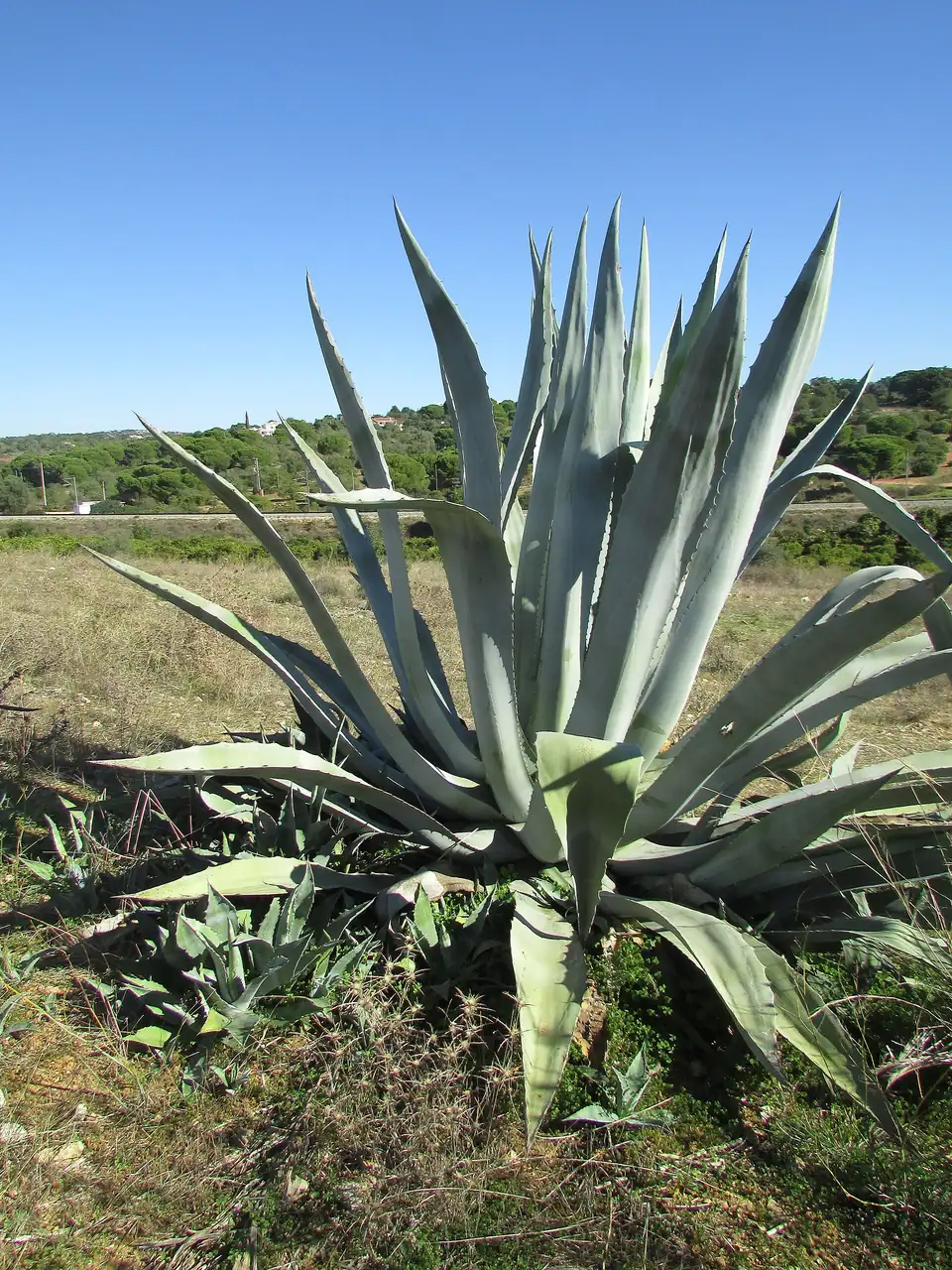


Cómo cultivar y cuidar Agave amarillo
Agave americana
Escrito por Emilio Marruso · última revisión
Tóxica para: Personas · Por qué
De un vistazo
El agave americano es una vivaz resistente a la sequía que pide muy poco: un suelo con buen drenaje y algún riego ocasional en verano. Crece a gusto también en maceta, y puedes sacar plantas nuevas de sus hijuelos o de semillas. Su vida termina con una única floración, tras la cual la planta madre muere, así que disfruta de cada temporada con ella.
- Riego
Resiste la sequía: riega solo de vez en cuando en verano
Qué dicen las fuentes (5)
Riego: Tolerante a la sequía; riego ocasional en verano
Según UC Master Gardeners of Sonoma County: This species tolerates some shade and is drought tolerant with occasional water in summer.
— Agave | UC Master Gardener Program of Sonoma County [7] plantas de contenedor (UC Master Gardeners del Condado de Sonoma): Periodic water for container plants in summer is required, with frequency depending on variety and size and placement of the pot.
— Agave | UC Master Gardener Program of Sonoma County [7] Carolina del Norte (género Agave): respond well to fertilizer and water in the summer. Keep their feet from staying wet; agaves require very good drainage, especially during our cool, wet winters.
— Agaves Provide Structural Impact & Boldness - Extension Gardener | NC State Extension [6] Según UF/IFAS Charlotte County: Agave are very drought tolerant plants and can take a moderate amount of salt. Well-drained soils are essential
— Agave – get the point! - UF/IFAS Extension Charlotte County [4] This species tolerates some shade and is drought tolerant with occasional water in summer.
— Agave | UC Master Gardener Program of Sonoma County [7] - Suelo
Suelo con buen drenaje, imprescindible para evitar que se pudran las raíces
Qué dicen las fuentes (7)
Notas sobre el riego: El suelo bien drenado es importante para prevenir la pudrición de las raíces
Planting in well-drained soil is particularly important in preventing root rot, especially in North Florida where cooler winter temperatures may add stress to your plant.
— Century Plant – Gardening Solutions [8] No serious insect or disease problems. Agave weevil can be troublesome. Slugs and snails may damage foliage. Root rot may occur, particularly in poorly drained or overly moist soils.
— Agave americana (American Aloe, American Century Plant, Century Plant, Maguey, Mexican Soap Plant) | North Carolina Extension Gardener Plant Toolbox [1] Riego: Tolerante a la sequía; riego ocasional en verano
Según UC Master Gardeners of Sonoma County: This species tolerates some shade and is drought tolerant with occasional water in summer.
— Agave | UC Master Gardener Program of Sonoma County [7] plantas de contenedor (UC Master Gardeners del Condado de Sonoma): Periodic water for container plants in summer is required, with frequency depending on variety and size and placement of the pot.
— Agave | UC Master Gardener Program of Sonoma County [7] Carolina del Norte (género Agave): respond well to fertilizer and water in the summer. Keep their feet from staying wet; agaves require very good drainage, especially during our cool, wet winters.
— Agaves Provide Structural Impact & Boldness - Extension Gardener | NC State Extension [6] Según UF/IFAS Charlotte County: Agave are very drought tolerant plants and can take a moderate amount of salt. Well-drained soils are essential
— Agave – get the point! - UF/IFAS Extension Charlotte County [4] This species tolerates some shade and is drought tolerant with occasional water in summer.
— Agave | UC Master Gardener Program of Sonoma County [7] - Abonado
Abona en verano
Qué dicen las fuentes (1)
Cuándo: Verano
Agaves will benefit from as much sunshine as you can afford and respond well to fertilizer and water in the summer.
— Agaves Provide Structural Impact & Boldness - Extension Gardener | NC State Extension [6] - Cosecha
En el corazón de la planta se acumula un líquido dulce que se puede fermentar
- Plagas
Picudo del agave, babosas y caracoles; el suelo encharcado pudre las raíces
Qué dicen las fuentes (2)
Plagas: picudo del agave, babosas, caracoles
Insects, Diseases, and Other Plant Problems: No serious insect or disease problems. Agave weevil can be troublesome. Slugs and snails may damage foliage. Root rot may occur, particularly in poorly drained or overly moist soils.
— Agave americana (American Aloe, American Century Plant, Century Plant, Maguey, Mexican Soap Plant) | North Carolina Extension Gardener Plant Toolbox [1] Enfermedades: pudrición de la raíz
Insects, Diseases, and Other Plant Problems: No serious insect or disease problems. Agave weevil can be troublesome. Slugs and snails may damage foliage. Root rot may occur, particularly in poorly drained or overly moist soils.
— Agave americana (American Aloe, American Century Plant, Century Plant, Maguey, Mexican Soap Plant) | North Carolina Extension Gardener Plant Toolbox [1] - Atención
Después de florecer, la planta madre muere
Qué dicen las fuentes (2)
Ciclo de vida: perenne (monocárpica: la planta principal muere después de la floración)
American century plant is a rosette-forming herbaceous perennial succulent in the asparagus family (Asparagaceae).
— Agave americana (American Aloe, American Century Plant, Century Plant, Maguey, Mexican Soap Plant) | North Carolina Extension Gardener Plant Toolbox [1] It can take 10-25 years to bloom but once it does flower the main plant dies.
— Agave americana (American Aloe, American Century Plant, Century Plant, Maguey, Mexican Soap Plant) | North Carolina Extension Gardener Plant Toolbox [1] - Multiplicación
Por semillas o por hijuelos
Qué dicen las fuentes (1)
Propagación: Semillas y brotes
Propagation can be done with seeds and offsets. Remove lower leaves as needed.
— Agave americana (American Aloe, American Century Plant, Century Plant, Maguey, Mexican Soap Plant) | North Carolina Extension Gardener Plant Toolbox [1] - Maceta
Crece también en maceta
Qué dicen las fuentes (1)
En maceta: Sí
If your in-ground conditions are not ideal for growing century plant, try growing it in a container where you can control the soil conditions.
— Century Plant – Gardening Solutions [8] - Seguridad
La savia puede irritar la piel: ten cuidado al podar
Resumen
El Agave americana es una suculenta perenne que forma rosetas y se utiliza como planta de especimen o acento en jardines tolerantes a la sequía. [1] Necesita suelo bien drenado y al menos 6 horas de sol directo, y es tolerante a la sequía con riego ocasional en verano. [1][7][8] Se puede cultivar en contenedor y propagarse por semillas y brotes. [8][1]
Citado en inglés, como en la fuente.
Esta ficha está incompleta: las fuentes consultadas aún no cubren todos los campos.
Aún no cubierto por nuestras fuentes: Poda
Cuidados
Riego
Riego
Tolerante a la sequía; riego ocasional en verano
Lo que dice cada fuente
Según UC Master Gardeners of Sonoma County: Tolerante a la sequía con riego ocasional en verano
plantas de contenedor (UC Master Gardeners del Condado de Sonoma): Riego periódico en verano, frecuencia según la variedad, el tamaño y la ubicación de la maceta
Carolina del Norte (género Agave): Responden bien al fertilizante y al agua en verano; se requiere muy buen drenaje, especialmente en inviernos frescos y húmedos
Según UF/IFAS Charlotte County: Muy tolerante a la sequía; los suelos bien drenados son esenciales
Qué dicen las fuentes (5)
Según UC Master Gardeners of Sonoma County: This species tolerates some shade and is drought tolerant with occasional water in summer.plantas de contenedor (UC Master Gardeners del Condado de Sonoma): Periodic water for container plants in summer is required, with frequency depending on variety and size and placement of the pot.Carolina del Norte (género Agave): respond well to fertilizer and water in the summer. Keep their feet from staying wet; agaves require very good drainage, especially during our cool, wet winters.Según UF/IFAS Charlotte County: Agave are very drought tolerant plants and can take a moderate amount of salt. Well-drained soils are essentialThis species tolerates some shade and is drought tolerant with occasional water in summer.Notas sobre el riego
El suelo bien drenado es importante para prevenir la pudrición de las raíces
Qué dicen las fuentes (2)
Planting in well-drained soil is particularly important in preventing root rot, especially in North Florida where cooler winter temperatures may add stress to your plant.No serious insect or disease problems. Agave weevil can be troublesome. Slugs and snails may damage foliage. Root rot may occur, particularly in poorly drained or overly moist soils.Luz
Las fuentes dan valores distintos según la región, la zona o las condiciones de cultivo.
Lo que dice cada fuente
Según NC State Extension: Pleno sol (6 o más horas de luz solar directa al día)
Según UC Master Gardeners of Sonoma County (Agave americana): Tolera algo de sombra
Según UF/IFAS Gardening Solutions: Al menos 6 horas de sol directo
Qué dicen las fuentes (5)
Según NC State Extension: Light:
Full sun (6 or more hours of direct sunlight a day)Según UC Master Gardeners of Sonoma County (Agave americana): This species tolerates some shade and is drought tolerantSegún UF/IFAS Gardening Solutions: They need at least 6 hours of direct sun and well-drained soils.Full sun (6 or more hours of direct sunlight a day)This species tolerates some shade and is drought tolerant with occasional water in summer.Clima y frío
Rusticidad, zona más fría
Las fuentes dan valores distintos según la región, la zona o las condiciones de cultivo.
Lo que dice cada fuente
Según NC State Extension: 8a [mínima invernal de −12,2 a −9,4 °C (de 10 a 15 °F)]
Según UF/IFAS Gardening Solutions: 9 [mínima invernal de −6,7 a −1,1 °C (de 20 a 30 °F)]
Qué dicen las fuentes (3)
Según NC State Extension: USDA Plant Hardiness Zone:
8a, 8b, 9a, 9b, 10a, 10b, 11a, 11bSegún UF/IFAS Gardening Solutions: grows well in zones 9 – 11. Agave8a, 8b, 9a, 9b, 10a, 10b, 11a, 11bRusticidad, zona más cálida
11b [mínima invernal de 7,2 a 10 °C (de 45 a 50 °F)]
Qué dicen las fuentes (1)
8a, 8b, 9a, 9b, 10a, 10b, 11a, 11bDónde cultivarla
Sí
Qué dicen las fuentes (1)
If your in-ground conditions are not ideal for growing century plant, try growing it in a container where you can control the soil conditions.Propagación
Semillas y brotes
Qué dicen las fuentes (1)
Propagation can be done with seeds and offsets. Remove lower leaves as needed.Cultivo
La planta
Ciclo de vida
perenne (monocárpica: la planta principal muere después de la floración)
Qué dicen las fuentes (2)
American century plant is a rosette-forming herbaceous perennial succulent in the asparagus family (Asparagaceae).It can take 10-25 years to bloom but once it does flower the main plant dies.Familia
Asparagáceas
Qué dicen las fuentes (1)
American century plant is a rosette-forming herbaceous perennial succulent in the asparagus family (Asparagaceae).Altura adulta
Las fuentes no coinciden:
Anchura adulta
Las fuentes no coinciden:
Plagas y enfermedades
Plagas
picudo del agave, babosas, caracoles
Qué dicen las fuentes (1)
Insects, Diseases, and Other Plant Problems: No serious insect or disease problems. Agave weevil can be troublesome. Slugs and snails may damage foliage. Root rot may occur, particularly in poorly drained or overly moist soils.Enfermedades
pudrición de la raíz
Qué dicen las fuentes (1)
Insects, Diseases, and Other Plant Problems: No serious insect or disease problems. Agave weevil can be troublesome. Slugs and snails may damage foliage. Root rot may occur, particularly in poorly drained or overly moist soils.Abonado
Cuándo
Verano
Qué dicen las fuentes (1)
Agaves will benefit from as much sunshine as you can afford and respond well to fertilizer and water in the summer.Problemas
Picudo del agave, babosas y caracoles, pudrición de raíces
Síntoma: El picudo puede ser problemático; las babosas y los caracoles pueden dañar el follaje; la pudrición de raíces puede ocurrir en suelos con mal drenaje o demasiado húmedos
Qué hacer: Planta en suelo bien drenado
Qué dicen las fuentes (2)
No serious insect or disease problems. Agave weevil can be troublesome. Slugs and snails may damage foliage. Root rot may occur, particularly in poorly drained or overly moist soils.
— Agave americana (American Aloe, American Century Plant, Century Plant, Maguey, Mexican Soap Plant) | North Carolina Extension Gardener Plant Toolbox [1] Planting in well-drained soil is particularly important in preventing root rot, especially in North Florida where cooler winter temperatures may add stress to your plant.
— Century Plant – Gardening Solutions [8] Dermatitis por savia
Síntoma: Erupción cutánea tras el contacto con una hoja recién podada
Qué hacer: Ten en cuenta la savia al podar y mantener la planta
Qué dicen las fuentes (1)
this rash occurred due to the sap of the plant which contains calcium oxalate crystals, or raphides which are needle sharp crystals that can pierce the skin and cause dermatitis.
— Plant Spotlight: Agave americana | Chadwick Arboretum & Learning Gardens [5]
Remedios
Cada remedio indica qué dicen las fuentes oficiales; los remedios tradicionales sin fuente oficial aparecen marcados. Los perjudiciales están para que sepas evitarlos.
Primeros auxilios
Primeros auxilios: no sustituyen al médico
contacto de la savia con la piel
lava la piel con jabón y agua tibia Fuente oficial, sin prueba independiente
If the pain continues, contact your child's physician.
— chop.edu [9] Cómo: Enjabona la zona expuesta repetidamente con jabón y enjuaga con agua tibia corriente para aliviar la irritación.
When the juices of the plant come in contact with the skin, burning, pain and swelling may occur. Lather the exposed area repeatedly with soap and rinse with warm running water to ease the irritation.
— chop.edu [9]
ingestión de la savia
limpia la boca y ofrece una bebida fría o un bocadillo Fuente oficial, sin prueba independiente
If there is swelling that prevents the child taking anything by mouth or causes difficulty breathing, go to the nearest emergency department immediately.
— chop.edu [9] Cómo: Si un niño come cualquier parte de una planta que contenga oxalatos, limpia los restos de la planta de la boca y ofrece una bebida fría o un bocadillo.
If a child eats any part of an oxalate-containing plant, wipe out the residue of the plant from the mouth and offer a cool drink or snack such as a popsicle, applesauce or yogurt.
— chop.edu [9]
Cuidar la planta
arañitas rojas
lavado con alcohol isopropílico diluido No verificado
Remedio tradicional, no verificado por una fuente oficial.
Cómo: Lava las hojas con alcohol isopropílico diluido al menos tres veces por semana hasta que los ácaros desaparezcan.
ácaros
chorro fuerte de agua No verificado
Remedio tradicional, no verificado por una fuente oficial.
Cómo: Desaloja pulgones, ácaros y ninfas de espumaderas con un chorro fuerte de agua.
babosas
barrera áspera de granos de café, cáscaras de huevo o agujas de pino No verificado
Remedio tradicional, no verificado por una fuente oficial.
Always purchase natural diatomaceous earth because swimming-pool grade contains crystalline silica, a respiratory hazard.
— finegardening.com [10] Cómo: Las agujas de pino, los granos de café, las cáscaras de huevo trituradas o la tierra de diatomeas forman una barrera áspera; vuelve a aplicarla después de la lluvia.
trampas con cebo y agua jabonosa No verificado
Remedio tradicional, no verificado por una fuente oficial.
Cómo: Coloca macetas vacías o cartones de leche de lado en una zona sombreada, luego por la mañana recoge las babosas y caracoles y sumérgelos en agua jabonosa.
Toxicidad
Según la fuente, citada textualmente. No es un consejo médico ni veterinario: si una persona o un animal pudo haber ingerido esta planta, contacta con un centro de toxicología o con un veterinario.
this rash occurred due to the sap of the plant which contains calcium oxalate crystals, or raphides which are needle sharp crystals that can pierce the skin and cause dermatitis.
[5]- Partes venenosas
Poison Symptoms: Poison part: Plant sap from leaves
[1]- Principio tóxico
Poison Toxic Principle: calcium oxalate crystals Causes Contact
[1]- Síntomas
needle sharp crystals that can pierce the skin and cause dermatitis.
[5]- Gravedad
Poison Severity: Low Poison Symptoms: Poison part: Plant
[1]
Calendario
Poda
No figura en las fuentes consultadas.
Meses tal como los dan las fuentes, en su mayoría de Estados Unidos (hemisferio norte). En el hemisferio sur se desplazan unos seis meses.
Comestibilidad
Según la fuente, citada textualmente. No comas una planta basándote solo en esta página: los errores de identificación pueden ser peligrosos.
a sweet liquid gathers in the hollowed heart of the plant which can be fermented
[5]
Valores orientativos
Valores de una fuente secundaria, no comprobados palabra por palabra como el resto de esta página. Úselos como punto de partida.
- Horas de sol
- 6-8 horasValor orientativo, adáptalo a tu clima · Fuente secundaria
- Resiste la sequía
- SíValor orientativo, adáptalo a tu clima · Fuente secundaria
- Suelo
- Ácido, Bien drenadoValor orientativo, adáptalo a tu clima · Fuente secundaria
- pH del suelo
- 6-7.5Valor orientativo, adáptalo a tu clima · Fuente secundaria
- Nivel de cuidado
- MedioValor orientativo, adáptalo a tu clima · Fuente secundaria
- Crecimiento
- BajoValor orientativo, adáptalo a tu clima · Fuente secundaria
- Poda
- Febrero, marzo, abrilValor orientativo, adáptalo a tu clima · Fuente secundaria
Plantas similares
- American Agave Agave virginica
- Maguey pulquero Agave salmiana
- Coastal agave Agave shawii
- Henequén Agave fourcroydes
- Mezcal Agave parryi
- Anteriormente Polianthes tuberosa Agave amica
- Agave ovatifolia Agave ovatifolia
- Ágave atenuado Agave attenuata
Fuentes
Cada valor anterior se cita de estos documentos. Los enlaces llevan al editor original.
- Agave americana (American Aloe, American Century Plant, Century Plant, Maguey, Mexican Soap Plant) | North Carolina Extension Gardener Plant Toolbox · plants.ces.ncsu.edu, consultado
- Agave (Agave, Century Plant) | North Carolina Extension Gardener Plant Toolbox · plants.ces.ncsu.edu, consultado
- American Century Plant - Agave americana | North Carolina Extension Gardener Plant Toolbox · plants.ces.ncsu.edu, consultado
- Agave – get the point! - UF/IFAS Extension Charlotte County · blogs.ifas.ufl.edu, consultado
- Plant Spotlight: Agave americana | Chadwick Arboretum & Learning Gardens · chadwickarboretum.osu.edu, consultado
- Agaves Provide Structural Impact & Boldness - Extension Gardener | NC State Extension · extensiongardener.ces.ncsu.edu, consultado
- Agave | UC Master Gardener Program of Sonoma County · ucanr.edu, consultado
- Century Plant – Gardening Solutions · gardeningsolutions.ifas.ufl.edu, consultado
- chop.edu · chop.edu
- finegardening.com · finegardening.com
Escrito por Emilio Marruso · última revisión