
How to Grow and Care for Parry's Agave
Agave parryi
Written by Emilio Marruso · last checked
At a glance
This agave is a perennial that asks for very little: full sun and soil left to dry out completely between waterings, with no water at all in winter. It stays compact, 1 to 3 feet tall and wide, so it is happy in a container too. Its leaves and stalk are even edible, and you can make new plants by division.
- Sun
Full sun
What the sources say (1)
Light: Full sun
The plant grows 1-3 feet tall and wide in full sun and well-drained sandy or rocky soil
— Agave parryi (Artichoke Agave, Mescal Agave, Parry's Agave) | North Carolina Extension Gardener Plant Toolbox [1] - Water
Let the soil dry out completely between waterings; no water in winter
What the sources say (2)
Watering: Allow the soil to completely dry between waterings; do not water in the winter
It is very drought tolerant so allow the soil to completely dry between waterings and do not water in the winter.
— Agave parryi (Artichoke Agave, Mescal Agave, Parry's Agave) | North Carolina Extension Gardener Plant Toolbox [1] Watering notes: Root rot can occur in overly moist soils
Insects, Diseases, and Other Plant Problems: root-rot can occur in overly moist soils.
— Agave parryi (Artichoke Agave, Mescal Agave, Parry's Agave) | North Carolina Extension Gardener Plant Toolbox [1] - Cold
Survives winters down to −10 °F (−23.3 °C)
Very hardy · USDA 6a · RHS H7 · Z6
What the sources say (2)
Hardiness, coldest zone: 6a [winter low −23.3 to −20.6 °C (−10 to −5 °F)]
USDA Plant Hardiness Zone: 6a, 6b, 7a, 7b, 8a, 8b, 9a, 9b, 10a, 10b
— Agave parryi (Artichoke Agave, Mescal Agave, Parry's Agave) | North Carolina Extension Gardener Plant Toolbox [1] Hardiness, warmest zone: 10b [winter low 1.7 to 4.4 °C (35 to 40 °F)]
USDA Plant Hardiness Zone: 6a, 6b, 7a, 7b, 8a, 8b, 9a, 9b, 10a, 10b
— Agave parryi (Artichoke Agave, Mescal Agave, Parry's Agave) | North Carolina Extension Gardener Plant Toolbox [1] - Harvest
Leaves and stalk are edible; the sap of a plant about to flower is fermented into pulque
- Pests
Root rot in soil that stays too wet
What the sources say (1)
Diseases: root rot
Insects, Diseases, and Other Plant Problems: root-rot can occur in overly moist soils.
— Agave parryi (Artichoke Agave, Mescal Agave, Parry's Agave) | North Carolina Extension Gardener Plant Toolbox [1] - Size
1 to 3 ft tall and wide
What the sources say (2)
Mature height: 30-91 cm (1 to 3 ft)
The plant grows 1-3 feet tall and wide in full sun
— Agave parryi (Artichoke Agave, Mescal Agave, Parry's Agave) | North Carolina Extension Gardener Plant Toolbox [1] Mature width: 30-91 cm (1 to 3 ft)
The plant grows 1-3 feet tall and wide in full sun
— Agave parryi (Artichoke Agave, Mescal Agave, Parry's Agave) | North Carolina Extension Gardener Plant Toolbox [1] - Propagation
Make new plants by division
What the sources say (1)
Propagation: Division
It is cold tolerant to -5 degrees as long as it is dry and salt tolerant for coastal areas. Propagation is by division.
— Agave parryi (Artichoke Agave, Mescal Agave, Parry's Agave) | North Carolina Extension Gardener Plant Toolbox [1] - Containers
Grows in containers too
What the sources say (1)
In containers: Yes
Being a smaller agave makes it useful for the home drought-tolerant or rock garden. It can also be grown in a container.
— Agave parryi (Artichoke Agave, Mescal Agave, Parry's Agave) | North Carolina Extension Gardener Plant Toolbox [1]
Overview
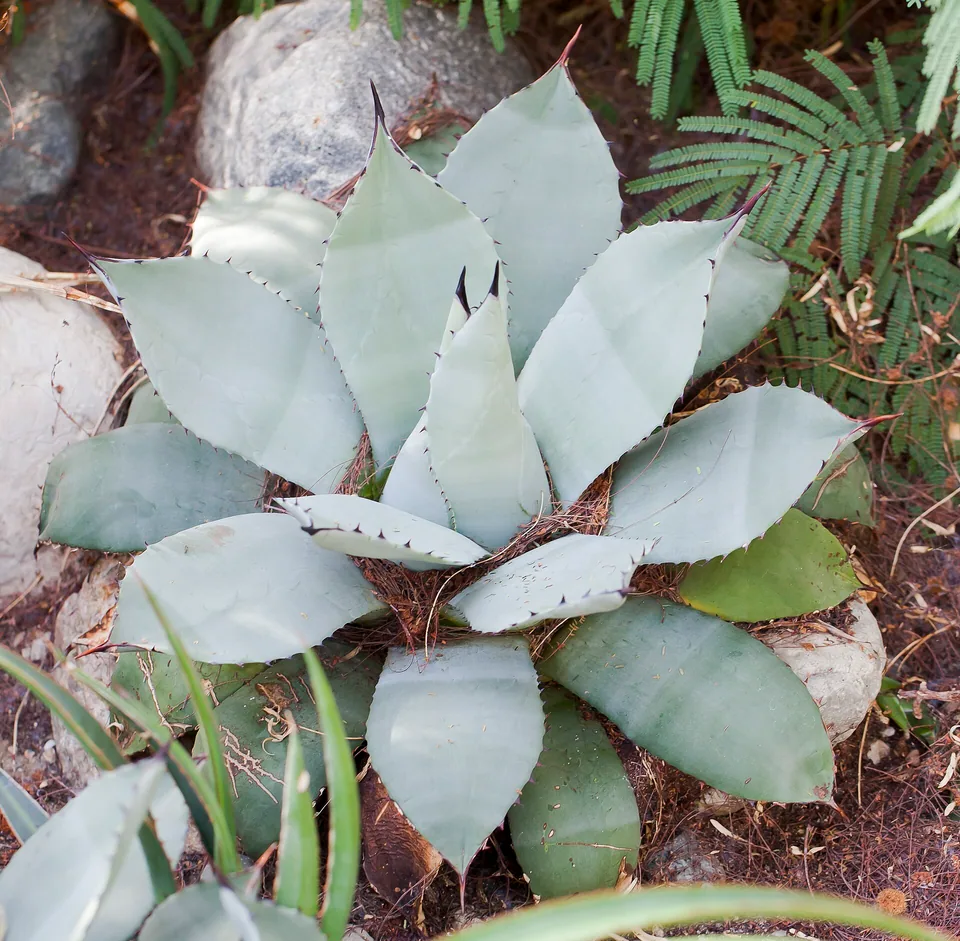
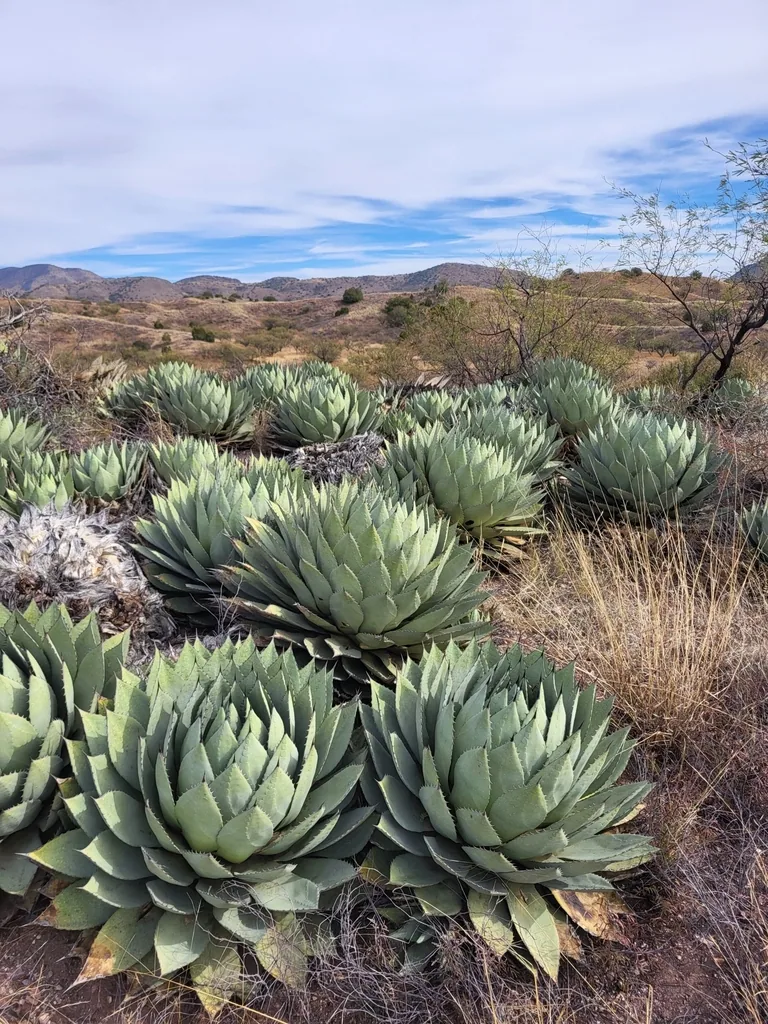
Parry's agave is a rosette-forming perennial native to the deserts of Arizona, New Mexico, Texas and northern Mexico. [1] It grows in full sun and well-drained sandy or rocky soil, and the soil should dry completely between waterings. [1] It can be grown in a container and is propagated by division. [1]
This record is incomplete: the sources we read do not cover every field yet.
Not yet covered by our sources: Pruning
Parry's Agave care
How to water Parry's Agave
Watering
Allow the soil to completely dry between waterings; do not water in the winter
What the sources say (1)
It is very drought tolerant so allow the soil to completely dry between waterings and do not water in the winter.Watering notes
Root rot can occur in overly moist soils
What the sources say (1)
Insects, Diseases, and Other Plant Problems: root-rot can occur in overly moist soils.How much light Parry's Agave needs
Full sun
What the sources say (1)
The plant grows 1-3 feet tall and wide in full sun and well-drained sandy or rocky soilHow much cold Parry's Agave can take
Hardiness, coldest zone
6a [winter low −23.3 to −20.6 °C (−10 to −5 °F)]
What the sources say (1)
USDA Plant Hardiness Zone:
6a, 6b, 7a, 7b, 8a, 8b, 9a, 9b, 10a, 10bHardiness, warmest zone
10b [winter low 1.7 to 4.4 °C (35 to 40 °F)]
What the sources say (1)
USDA Plant Hardiness Zone:
6a, 6b, 7a, 7b, 8a, 8b, 9a, 9b, 10a, 10bWhere to grow Parry's Agave
Yes
What the sources say (1)
Being a smaller agave makes it useful for the home drought-tolerant or rock garden. It can also be grown in a container.How to propagate Parry's Agave
Division
What the sources say (1)
It is cold tolerant to -5 degrees as long as it is dry and salt tolerant for coastal areas. Propagation is by division.How to grow Parry's Agave
The plant
Life cycle
perennial
What the sources say (1)
Parry's agave is a rosette-forming perennial in the asparagus family (Asparagaceae) native to the deserts of Arizona, New Mexico, TX and northern Mexico.Family
Asparagaceae
What the sources say (1)
Parry's agave is a rosette-forming perennial in the asparagus family (Asparagaceae) native to the deserts of Arizona, New Mexico, TX and northern Mexico.Mature height
30-91 cm (1 to 3 ft)
What the sources say (1)
The plant grows 1-3 feet tall and wide in full sunMature width
30-91 cm (1 to 3 ft)
What the sources say (1)
The plant grows 1-3 feet tall and wide in full sunPests and diseases
Diseases
root rot
What the sources say (1)
Insects, Diseases, and Other Plant Problems: root-rot can occur in overly moist soils.Parry's Agave pests and problems
Root rot
Symptom: Root rot in overly moist soils.
What to do: Allow the soil to completely dry between waterings and do not water in the winter.
What the sources say (1)
Insects, Diseases, and Other Plant Problems: root-rot can occur in overly moist soils.
— Agave parryi (Artichoke Agave, Mescal Agave, Parry's Agave) | North Carolina Extension Gardener Plant Toolbox [1]
Remedies
Each remedy shows what official sources say about it; traditional remedies without an official source are marked as such. Harmful ones are listed so you know to avoid them.
Treating the plant
root rot
letting the soil dry completely between waterings Official source, not independently tested
How: Allow the soil to completely dry between waterings and do not water in the winter.
allow the soil to completely dry between waterings and do not water in the winter.
— Agave parryi (Artichoke Agave, Mescal Agave, Parry's Agave) | North Carolina Extension Gardener Plant Toolbox [1]
agave snout weevil
removing infested plants and discarding the soil Official source, not independently tested
How: Remove infested plants and discard the soil around the roots to remove any remaining weevils, their larvae and pupae.
Remove infested plants and discard the soil around the roots to remove any remaining weevils, their larvae and pupae.
— ucanr.edu [2]
agave mite
removing infested plants Official source, not independently tested
How: Remove infested agave plants and be careful when moving them, because the mites may be spread by the wind.
Strongly consider removing infested agave plants and be careful when moving them since like aloe mites, agave mites may be spread by the wind.
— ucanr.edu [2] insecticidal soap on nearby agave (preventive) Partly works
How: Apply insecticidal soap to agave close to infested agave as a preventative treatment.
home gardeners can consider applying insecticidal soap to agave close to infested agave as a preventative treatment
— ucanr.edu [2] What the evidence says home gardeners can consider applying insecticidal soap to agave close to infested agave as a preventative treatment
— ucanr.edu [2]
mealybugs
rubbing alcohol dabbed on the insects Partly works
Test the solution out on a small part of the plant 1 to 2 days beforehand to make sure it does not cause leaf burn (phytotoxicity).
— ipm.ucanr.edu [3] How: Dab a solution of 70% or less isopropyl alcohol in water directly on the mealybugs with a cotton swab; repeat every week until the infestation is gone.
On small infestations on houseplants, a 70% or less solution of isopropyl (rubbing) alcohol in water may be dabbed directly on mealybugs with a cotton swab to kill them or remove them.
— ipm.ucanr.edu [3] What the evidence says On small infestations on houseplants, a 70% or less solution of isopropyl (rubbing) alcohol in water may be dabbed directly on mealybugs with a cotton swab to kill them or remove them.
— ipm.ucanr.edu [3] strong stream of water Partly works
How: Spray large, exposed populations with a strong stream of water, repeating every few days as needed.
Reduce large, exposed populations by spraying with a strong stream of water, repeating this every few days as needed.
— ipm.ucanr.edu [3] What the evidence says Reduce large, exposed populations by spraying with a strong stream of water, repeating this every few days as needed.
— ipm.ucanr.edu [3] hand-picking Official source, not independently tested
How: Physically remove the insects by handpicking or prune them out.
If you find an infestation, physically remove the insects by handpicking or prune them out.
— ipm.ucanr.edu [3] insecticidal soap spray Partly works
Be sure to test for phytotoxicity of these materials prior to treatment as well.
— ipm.ucanr.edu [3] How: Apply insecticidal soap directly on the mealybugs; it works best on younger nymphs.
Insecticidal soaps , horticultural oil , or neem oil insecticides applied directly on mealybugs can provide some suppression, especially against younger nymphs that have less wax accumulation.
— ipm.ucanr.edu [3] What the evidence says Insecticidal soaps , horticultural oil , or neem oil insecticides applied directly on mealybugs can provide some suppression, especially against younger nymphs that have less wax accumulation.
— ipm.ucanr.edu [3]
Calendar
Pruning
Not stated in the sources we read.
Months as given by the sources, which are mostly from the United States (northern hemisphere). In the southern hemisphere they shift by about six months.
Edibility
Reported by the source, quoted verbatim. Do not eat a plant on the basis of this page alone: identification mistakes can be dangerous.
Indicative values
Values from a secondary source, not checked word for word like the rest of this page. Use them as a starting point.
- Hours of sun
- 6-8 hoursIndicative value, adapt it to your climate · Secondary source
- Drought tolerant
- yesIndicative value, adapt it to your climate · Secondary source
- Soil pH
- 6-7.5Indicative value, adapt it to your climate · Secondary source
- Care level
- MediumIndicative value, adapt it to your climate · Secondary source
- Growth rate
- LowIndicative value, adapt it to your climate · Secondary source
- Pruning
- May, June, JulyIndicative value, adapt it to your climate · Secondary source
Similar plants
- American Agave Agave virginica
- Century Plant Agave salmiana
- Coastal agave Agave shawii
- Henequen Agave fourcroydes
- Tuberose Agave amica
- Century Plant Agave americana
- Agave ovatifolia Agave ovatifolia
- Sisal Agave sisalana
Sources
Every value above is quoted from these documents. Links lead to the original publisher.
- Agave parryi (Artichoke Agave, Mescal Agave, Parry's Agave) | North Carolina Extension Gardener Plant Toolbox · plants.ces.ncsu.edu, consulted
- ucanr.edu · ucanr.edu
- ipm.ucanr.edu · ipm.ucanr.edu
Written by Emilio Marruso · last checked