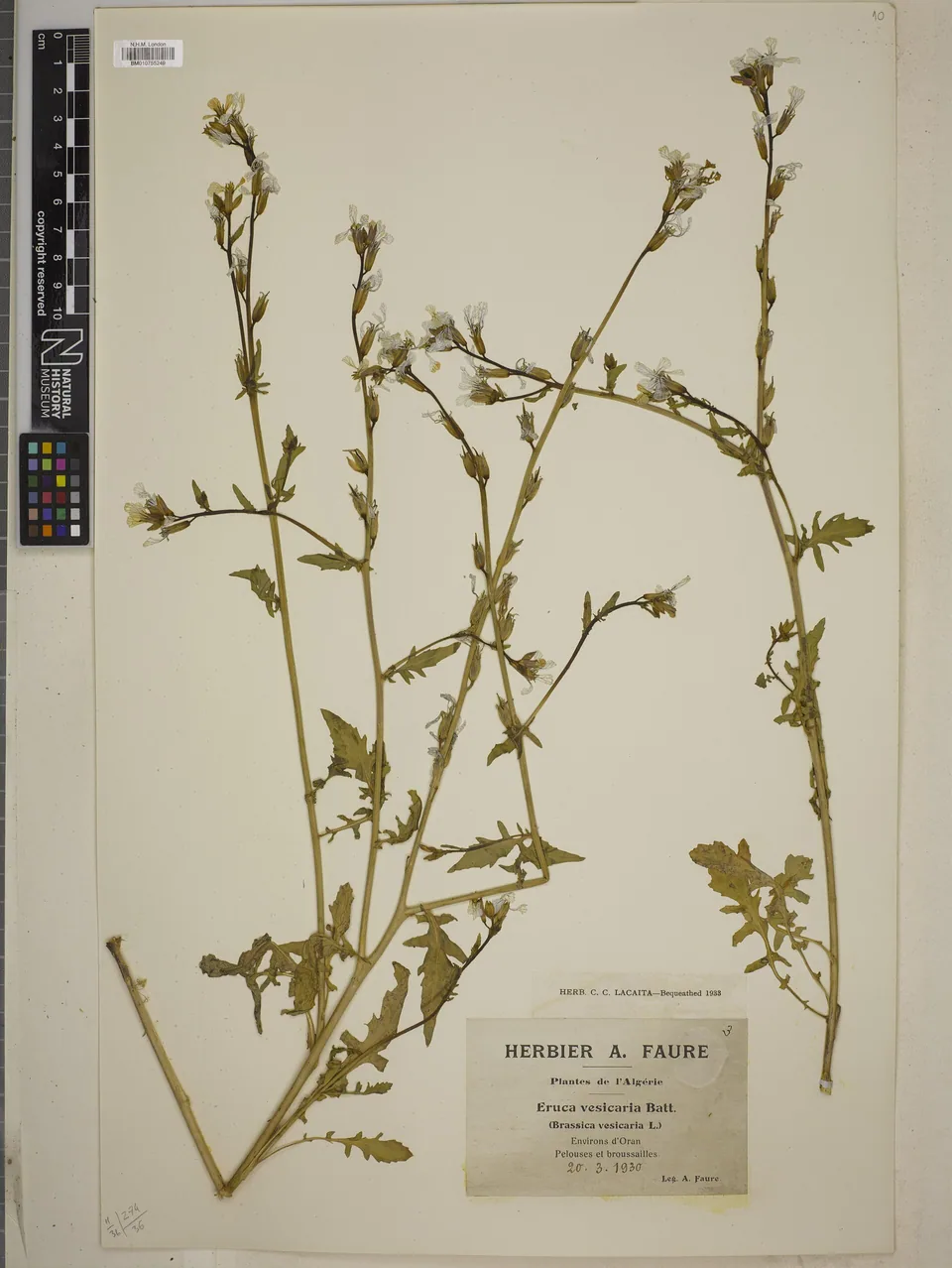
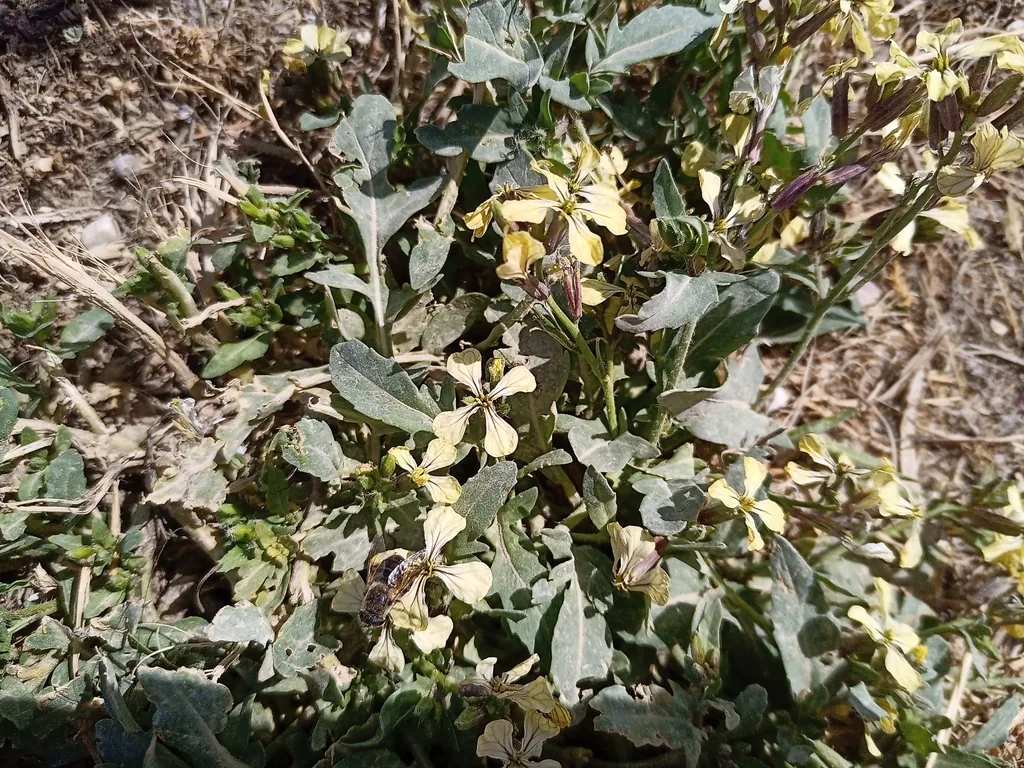

How to Grow and Care for Rocketsalad
Eruca vesicaria
Written by Emilio Marruso · last checked
At a glance
Arugula is one of the quickest greens you can grow: the seeds sprout in 5–7 days, and you can pick young leaves as early as 4 weeks after sowing. Sow as soon as the soil can be worked in spring, then again every 2–3 weeks for a steady supply. Leaves, flowers and seed pods are all edible.
- Sun
Full sun to partial shade; some shade helps in hot climates
What the sources say (3)
Light: Full sun to partial shade
Hot climates: Because of this, some shade can be beneficial in hot climates to deter bolting.
— Eruca vesicaria (Arugula, Eruca, Garden Rocket, Gharghir, Mediterranean Salad, Rocket, Rocket Salad, Roquette, Ruchtetta, Rucola, Rucoli, Rugula, Rugulas, Salad Rocket) | North Carolina Extension Gardener Plant Toolbox [1] Warm-season plantings: Slow bolting by reducing heat and moisture stress. Provide some shade for warm-season plantings.
— Arugula growing guide | Cornell Garden-Based Learning [5] Arugula grows best in full sun to partial shade and moist, rich soil.
— Eruca vesicaria (Arugula, Eruca, Garden Rocket, Gharghir, Mediterranean Salad, Rocket, Rocket Salad, Roquette, Ruchtetta, Rucola, Rucoli, Rugula, Rugulas, Salad Rocket) | North Carolina Extension Gardener Plant Toolbox [1] - Water
Copes with wet soil; avoiding heat and dry spells keeps it from flowering early
What the sources say (2)
Watering notes: Tolerates wet, mucky soil to some degree; reducing heat and moisture stress slows bolting
It also tolerates wet, mucky soil to some degree as well as light frosts.
— Eruca vesicaria (Arugula, Eruca, Garden Rocket, Gharghir, Mediterranean Salad, Rocket, Rocket Salad, Roquette, Ruchtetta, Rucola, Rucoli, Rugula, Rugulas, Salad Rocket) | North Carolina Extension Gardener Plant Toolbox [1] Slow bolting by reducing heat and moisture stress. Provide some shade for warm-season plantings.
— Arugula growing guide | Cornell Garden-Based Learning [5] - Cold
Survives winters down to −50 °F (−45.6 °C)
Very hardy · USDA 2a · RHS H7 · Z2
What the sources say (2)
Hardiness, coldest zone: 2a [winter low −45.6 to −42.8 °C (−50 to −45 °F)]
2a, 2b, 3a, 3b, 4a, 4b, 5a, 5b, 6a, 6b, 7a, 7b, 8a, 8b, 9a, 9b, 10a, 10b, 11a, 11b
— Eruca vesicaria (Arugula, Eruca, Garden Rocket, Gharghir, Mediterranean Salad, Rocket, Rocket Salad, Roquette, Ruchtetta, Rucola, Rucoli, Rugula, Rugulas, Salad Rocket) | North Carolina Extension Gardener Plant Toolbox [1] Hardiness, warmest zone: 11b [winter low 7.2 to 10 °C (45 to 50 °F)]
2a, 2b, 3a, 3b, 4a, 4b, 5a, 5b, 6a, 6b, 7a, 7b, 8a, 8b, 9a, 9b, 10a, 10b, 11a, 11b
— Eruca vesicaria (Arugula, Eruca, Garden Rocket, Gharghir, Mediterranean Salad, Rocket, Rocket Salad, Roquette, Ruchtetta, Rucola, Rucoli, Rugula, Rugulas, Salad Rocket) | North Carolina Extension Gardener Plant Toolbox [1] - Soil
Soil pH 6.0–8.0
What the sources say (2)
Soil pH, minimum: 6.0
High Organic Matter Loam (Silt) Sand Soil pH: Neutral (6.0-8.0)
— Eruca vesicaria (Arugula, Eruca, Garden Rocket, Gharghir, Mediterranean Salad, Rocket, Rocket Salad, Roquette, Ruchtetta, Rucola, Rucoli, Rugula, Rugulas, Salad Rocket) | North Carolina Extension Gardener Plant Toolbox [1] Soil pH, maximum: 8.0
High Organic Matter Loam (Silt) Sand Soil pH: Neutral (6.0-8.0)
— Eruca vesicaria (Arugula, Eruca, Garden Rocket, Gharghir, Mediterranean Salad, Rocket, Rocket Salad, Roquette, Ruchtetta, Rucola, Rucoli, Rugula, Rugulas, Salad Rocket) | North Carolina Extension Gardener Plant Toolbox [1] - Spacing
6 in between plants
What the sources say (1)
Spacing: 15.2 cm (6 in)
Gradually thin to 6-inch spacings using thinnings for salads.
— Arugula growing guide | Cornell Garden-Based Learning [5] - Harvest
Pick young leaves from 4 weeks after sowing; older leaves turn bitter
What the sources say (3)
Harvest: As early as 4 weeks after seeding; plants mature within 40 to 50 days and can be harvested after 6 weeks; pick young leaves
often ready to harvest as early as 4 weeks after seeding
— Arugula growing guide | Cornell Garden-Based Learning [5] Plants mature quickly, within 40 to 50 days, and can be harvested after 6 weeks. Pick young leaves as older leaves have a bitter flavor.
— Eruca vesicaria (Arugula, Eruca, Garden Rocket, Gharghir, Mediterranean Salad, Rocket, Rocket Salad, Roquette, Ruchtetta, Rucola, Rucoli, Rugula, Rugulas, Salad Rocket) | North Carolina Extension Gardener Plant Toolbox [1] How to harvest: Pick young leaves; older leaves have a bitter flavor
Pick young leaves as older leaves have a bitter flavor.
— Eruca vesicaria (Arugula, Eruca, Garden Rocket, Gharghir, Mediterranean Salad, Rocket, Rocket Salad, Roquette, Ruchtetta, Rucola, Rucoli, Rugula, Rugulas, Salad Rocket) | North Carolina Extension Gardener Plant Toolbox [1] - Pests
Aphids and flea beetles; powdery mildew, downy mildew and leaf spot
What the sources say (5)
Pests: aphids, flea beetles
Aphids and flea beetles may cause problems.
— Eruca vesicaria (Arugula, Eruca, Garden Rocket, Gharghir, Mediterranean Salad, Rocket, Rocket Salad, Roquette, Ruchtetta, Rucola, Rucoli, Rugula, Rugulas, Salad Rocket) | North Carolina Extension Gardener Plant Toolbox [1] ## Pests Flea beetles
— Arugula growing guide | Cornell Garden-Based Learning [5] Diseases: bacterial leaf spot, powdery mildew, damping off, downy mildew
Few serious problems, though minor diseases may occur such as bacterial leaf spot and powdery mildew.
— Eruca vesicaria (Arugula, Eruca, Garden Rocket, Gharghir, Mediterranean Salad, Rocket, Rocket Salad, Roquette, Ruchtetta, Rucola, Rucoli, Rugula, Rugulas, Salad Rocket) | North Carolina Extension Gardener Plant Toolbox [1] Damping off of seedlings is infrequent but possible.
— Eruca vesicaria (Arugula, Eruca, Garden Rocket, Gharghir, Mediterranean Salad, Rocket, Rocket Salad, Roquette, Ruchtetta, Rucola, Rucoli, Rugula, Rugulas, Salad Rocket) | North Carolina Extension Gardener Plant Toolbox [1] ## Diseases Downy mildew
— Arugula growing guide | Cornell Garden-Based Learning [5] - Watch out
Hot weather makes it flower, changing the flavor and stopping new leaves: grow it in spring and fall
- Size
8 in to 3 ft tall, 8–18 in wide
What the sources say (2)
Mature height: 20-91 cm (8 in to 3 ft)
Growing 8 inches to 3 feet tall and 8 to 18 inches wide, arugula resembles tall lettuce.
— Eruca vesicaria (Arugula, Eruca, Garden Rocket, Gharghir, Mediterranean Salad, Rocket, Rocket Salad, Roquette, Ruchtetta, Rucola, Rucoli, Rugula, Rugulas, Salad Rocket) | North Carolina Extension Gardener Plant Toolbox [1] Mature width: 20-46 cm (8 to 18 in)
Growing 8 inches to 3 feet tall and 8 to 18 inches wide, arugula resembles tall lettuce.
— Eruca vesicaria (Arugula, Eruca, Garden Rocket, Gharghir, Mediterranean Salad, Rocket, Rocket Salad, Roquette, Ruchtetta, Rucola, Rucoli, Rugula, Rugulas, Salad Rocket) | North Carolina Extension Gardener Plant Toolbox [1] - Propagation
From seed, sown in the garden or started indoors
What the sources say (2)
Propagation: Seed (direct sown or started indoors)
Propagate by seed - Germination temperature: 40 F to 55 F - Days to emergence: 5 to 7
— Arugula growing guide | Cornell Garden-Based Learning [5] Seeds may be planted directly into the soil or started indoors before the last frost date for later transplanting.
— Eruca vesicaria (Arugula, Eruca, Garden Rocket, Gharghir, Mediterranean Salad, Rocket, Rocket Salad, Roquette, Ruchtetta, Rucola, Rucoli, Rugula, Rugulas, Salad Rocket) | North Carolina Extension Gardener Plant Toolbox [1] - Sowing
Sow ¼ in deep as soon as the soil can be worked in spring; repeat every 2–3 weeks
What the sources say (4)
Sowing: As soon as soil can be worked in spring; repeat every 2 to 3 weeks until about a month before the average first frost date
Seeds germinate quickly even in cold soil. Plant as soon as soil can be worked in spring.
— Arugula growing guide | Cornell Garden-Based Learning [5] Make new plantings every 2 to 3 weeks for a continuous supply until about a month before your average first frost date.
— Arugula growing guide | Cornell Garden-Based Learning [5] Sowing depth: 0.6 cm [0.2 in] (¼ in)
Plant ¼ inch deep and 1 inch apart in rows, or broadcast alone or mixed with other greens.
— Arugula growing guide | Cornell Garden-Based Learning [5] Days to germination: 5 to 7
Days to emergence: 5 to 7
— Arugula growing guide | Cornell Garden-Based Learning [5] - Containers
Grows in containers too
What the sources say (1)
In containers: Yes
If growing in containers, use a minimum pot size of 3 gallons and a minimum depth of 4 to 6 inches.
— Eruca vesicaria (Arugula, Eruca, Garden Rocket, Gharghir, Mediterranean Salad, Rocket, Rocket Salad, Roquette, Ruchtetta, Rucola, Rucoli, Rugula, Rugulas, Salad Rocket) | North Carolina Extension Gardener Plant Toolbox [1]
Overview
Arugula is an annual cool-season vegetable grown for its peppery-tasting leaves. [1] It grows best in full sun to partial shade and moist, rich soil, in the cooler spring and fall, and tends to bolt in hot weather. [1] Leaves, flowers, seed pods and seeds are edible. [1]
This record is incomplete: the sources we read do not cover every field yet.
Not yet covered by our sources: Watering
Rocketsalad care
How to water Rocketsalad
Watering
Under review: our second check questioned this value.
Watering notes
Tolerates wet, mucky soil to some degree; reducing heat and moisture stress slows bolting
What the sources say (2)
It also tolerates wet, mucky soil to some degree as well as light frosts.Slow bolting by reducing heat and moisture stress. Provide some shade for warm-season plantings.How much light Rocketsalad needs
Full sun to partial shade
What each source says
Hot climates: Some shade can be beneficial to deter bolting
Warm-season plantings: Some shade
What the sources say (3)
Hot climates: Because of this, some shade can be beneficial in hot climates to deter bolting.Warm-season plantings: Slow bolting by reducing heat and moisture stress. Provide some shade for warm-season plantings.Arugula grows best in full sun to partial shade and moist, rich soil.How much cold Rocketsalad can take
Hardiness, coldest zone
2a [winter low −45.6 to −42.8 °C (−50 to −45 °F)]
What the sources say (1)
2a, 2b, 3a, 3b, 4a, 4b, 5a, 5b, 6a, 6b, 7a, 7b, 8a, 8b, 9a, 9b, 10a, 10b, 11a, 11bHardiness, warmest zone
11b [winter low 7.2 to 10 °C (45 to 50 °F)]
What the sources say (1)
2a, 2b, 3a, 3b, 4a, 4b, 5a, 5b, 6a, 6b, 7a, 7b, 8a, 8b, 9a, 9b, 10a, 10b, 11a, 11bBest soil for Rocketsalad
Soil pH, minimum
6.0
What the sources say (1)
High Organic Matter
Loam (Silt)
Sand
Soil pH:
Neutral (6.0-8.0)Soil pH, maximum
8.0
What the sources say (1)
High Organic Matter
Loam (Silt)
Sand
Soil pH:
Neutral (6.0-8.0)Where to grow Rocketsalad
In containers
Yes
What the sources say (1)
If growing in containers, use a minimum pot size of 3 gallons and a minimum depth of 4 to 6 inches.Spacing
15.2 cm (6 in)
What the sources say (1)
Gradually thin to 6-inch spacings using thinnings for salads.How to propagate Rocketsalad
Seed (direct sown or started indoors)
What the sources say (2)
Propagate by seed
- Germination temperature: 40 F to 55 F
- Days to emergence: 5 to 7Seeds may be planted directly into the soil or started indoors before the last frost date for later transplanting.How to grow Rocketsalad
The plant
Life cycle
annual
What the sources say (1)
Arugula is an annual cool-season vegetable in the mustard family (Brassicaceae) that is grown for its peppery-tasting leaves.Family
Brassicaceae
What the sources say (1)
Eruca vesicaria (Brassicaceae Family)Mature height
20-91 cm (8 in to 3 ft)
What the sources say (1)
Growing 8 inches to 3 feet tall and 8 to 18 inches wide, arugula resembles tall lettuce.Mature width
20-46 cm (8 to 18 in)
What the sources say (1)
Growing 8 inches to 3 feet tall and 8 to 18 inches wide, arugula resembles tall lettuce.Sowing and growth
Days to germination
5 to 7
What the sources say (1)
Days to emergence: 5 to 7Sowing depth
0.6 cm [0.2 in] (¼ in)
What the sources say (1)
Plant ¼ inch deep and 1 inch apart in rows, or broadcast alone or mixed with other greens.Days to maturity
40 to 50 days (plants mature); can be harvested after 6 weeks
What the sources say (1)
Plants mature quickly, within 40 to 50 days, and can be harvested after 6 weeks.Harvest and storage
How to harvest
Pick young leaves; older leaves have a bitter flavor
What the sources say (1)
Pick young leaves as older leaves have a bitter flavor.Storage
Leaves do not keep long in the refrigerator; harvest only as needed
What the sources say (1)
Harvest only as needed as leaves do not keep long in the refrigerator after harvesting.Saving seeds
Seed can be saved 5 years
What the sources say (1)
Seed can be saved 5 years.Pests and diseases
Pests
aphids, flea beetles
What the sources say (2)
Aphids and flea beetles may cause problems.## Pests
Flea beetlesDiseases
bacterial leaf spot, powdery mildew, damping off, downy mildew
What the sources say (3)
Few serious problems, though minor diseases may occur such as bacterial leaf spot and powdery mildew.Damping off of seedlings is infrequent but possible.## Diseases
Downy mildewRocketsalad pests and problems
Bolting in hot weather
Symptom: Plants bolt and flower in hot weather, changing the flavor and stopping leaf growth.
What to do: Grow in cooler spring and fall; some shade can be beneficial in hot climates to deter bolting.
What the sources say (2)
Grow it in the cooler spring and fall as it tends to bolt and flower in hot weather, changing the flavor and stopping leaf growth.
— Eruca vesicaria (Arugula, Eruca, Garden Rocket, Gharghir, Mediterranean Salad, Rocket, Rocket Salad, Roquette, Ruchtetta, Rucola, Rucoli, Rugula, Rugulas, Salad Rocket) | North Carolina Extension Gardener Plant Toolbox [1] Because of this, some shade can be beneficial in hot climates to deter bolting.
— Eruca vesicaria (Arugula, Eruca, Garden Rocket, Gharghir, Mediterranean Salad, Rocket, Rocket Salad, Roquette, Ruchtetta, Rucola, Rucoli, Rugula, Rugulas, Salad Rocket) | North Carolina Extension Gardener Plant Toolbox [1] Leaf spot, powdery mildew and insects
Symptom: Minor diseases such as bacterial leaf spot and powdery mildew; aphids and flea beetles may cause problems; damping off of seedlings is infrequent.
What to do: Not stated in the source.
What the sources say (1)
Few serious problems, though minor diseases may occur such as bacterial leaf spot and powdery mildew.
— Eruca vesicaria (Arugula, Eruca, Garden Rocket, Gharghir, Mediterranean Salad, Rocket, Rocket Salad, Roquette, Ruchtetta, Rucola, Rucoli, Rugula, Rugulas, Salad Rocket) | North Carolina Extension Gardener Plant Toolbox [1] Flea beetles and downy mildew
Symptom: Listed as the pest and disease of arugula.
What to do: Not stated in the source.
What the sources say (1)
## Pests Flea beetles ## Diseases Downy mildew
— Arugula growing guide | Cornell Garden-Based Learning [5]
Remedies
Each remedy shows what official sources say about it; traditional remedies without an official source are marked as such. Harmful ones are listed so you know to avoid them.
Treating the plant
aphids
strong jet of water Not verified
Traditional remedy, not verified by an official source.
How: Rinse plants with a strong jet of water.
insecticidal soap spray Works
When “oils and soaps” are mentioned in UC IPM publications, we are referring to commercially available oils and soaps that are formulated specifically for use as pesticides- not household oils and soaps meant for cooking, cleaning, or other purposes.
— ucanr.edu [8] How: Spray with a mild solution of insecticidal soap.
Rinse plants with a strong jet of water, introduce ladybugs, or spray with a mild solution of neem or insecticidal soap.
— harvesttotable.com [6] What the evidence says For example, insecticidal soap is a safe, effective organic insecticide with minimal environmental impact.
— extension.psu.edu [7] dish detergent soapsuds Harmful
Most dish soaps are not naturally occurring substances nor are they biodegradable.
— ucanr.edu [8] How: Douse with mild dish detergent soapsuds.
Natural remedies include: - Handpicking insects and pruning affected foliage. - Spraying with a steady stream of water. - Dousing with mild dish detergent soapsuds.
— gardenerspath.com [11] What the evidence says For example, spraying home remedies that contain dish detergent on plants on a sunny day can injure the plant, essentially burning it.
— extension.psu.edu [12] food-grade diatomaceous earth Not verified
Traditional remedy, not verified by an official source.
How: Apply food-grade diatomaceous earth to the foliage and the soil around the plants.
flea beetles
neem oil Partly works
Despite these being biological pesticides, it is important to read the directions on the label and wear safety equipment.
— extension.illinois.edu [10] How: Apply neem oil if infestations are heavy.
Cover seedlings with floating row covers, interplant with strong-scented herbs (like basil or dill), and apply neem oil or insecticidal soap if infestations are heavy.
— harvesttotable.com [6] What the evidence says However, neem oil is not effective against every insect and disease, and often must be frequently reapplied to reach the desired outcome.
— extension.unh.edu [9] row covers Partly works
How: Use row covers to keep flea beetles off the plants.
Row covers can be used to keep flea beetles off the plants, but since these insects overwinter in the soil they could emerge under the covers rather than be excluded by it if put on too early.
— hort.extension.wisc.edu [13] What the evidence says Row covers can be used to keep flea beetles off the plants, but since these insects overwinter in the soil they could emerge under the covers rather than be excluded by it if put on too early.
— hort.extension.wisc.edu [13]
caterpillars
hand-picking caterpillars Works
How: Handpick caterpillars early in the morning.
Handpick caterpillars early in the morning, encourage predatory wasps, and use Bacillus thuringiensis (Bt) as an organic spray.
— harvesttotable.com [6] What the evidence says Many insect and disease issues can be solved in the home garden by hand-picking insects or clipping and disposing of diseased plant parts.
— extension.unh.edu [9]
slugs
beer traps Not verified
Traditional remedy, not verified by an official source.
How: Set beer traps.
copper tape Not verified
Traditional remedy, not verified by an official source.
How: Use copper tape around beds.
powdery mildew
milk spray Not verified
Traditional remedy, not verified by an official source.
How: Spray with a homemade milk solution (1 part milk to 9 parts water).
pests
companion planting with onions, garlic or nasturtiums Not verified
Traditional remedy, not verified by an official source.
How: Grow arugula near onions, garlic, or nasturtiums.
Calendar
Sowing
As soon as soil can be worked in spring; repeat every 2 to 3 weeks until about a month before the average first frost date
What the sources say (2)
Seeds germinate quickly even in cold soil. Plant as soon as soil can be worked in spring.Make new plantings every 2 to 3 weeks for a continuous supply until about a month before your average first frost date.Harvest
As early as 4 weeks after seeding; plants mature within 40 to 50 days and can be harvested after 6 weeks; pick young leaves
What the sources say (2)
often ready to harvest as early as 4 weeks after seedingPlants mature quickly, within 40 to 50 days, and can be harvested after 6 weeks. Pick young leaves as older leaves have a bitter flavor.Months as given by the sources, which are mostly from the United States (northern hemisphere). In the southern hemisphere they shift by about six months.
Edibility
Reported by the source, quoted verbatim. Do not eat a plant on the basis of this page alone: identification mistakes can be dangerous.
Similar plants
- American Yellow Rocket Barbarea orthoceras
- Black Mustard Brassica nigra
- Broadleaved pepperweed Lepidium latifolium
- Brown Mustard Brassica juncea
- Cabbage Brassica oleracea
- Crested wartycabbage Bunias erucago
- Cultivated radish Raphanus sativus
- Dame's Rocket Hesperis matronalis
Sources
Every value above is quoted from these documents. Links lead to the original publisher.
- Eruca vesicaria (Arugula, Eruca, Garden Rocket, Gharghir, Mediterranean Salad, Rocket, Rocket Salad, Roquette, Ruchtetta, Rucola, Rucoli, Rugula, Rugulas, Salad Rocket) | North Carolina Extension Gardener Plant Toolbox · plants.ces.ncsu.edu, consulted
- Eruca - Eruca vesicaria | North Carolina Extension Gardener Plant Toolbox · plants.ces.ncsu.edu, consulted
- Arugula - Eruca vesicaria | North Carolina Extension Gardener Plant Toolbox · plants.ces.ncsu.edu, consulted
- Rucola - Eruca vesicaria | North Carolina Extension Gardener Plant Toolbox · plants.ces.ncsu.edu, consulted
- Arugula growing guide | Cornell Garden-Based Learning · gardening.cals.cornell.edu, consulted
- harvesttotable.com · harvesttotable.com
- extension.psu.edu · extension.psu.edu
- ucanr.edu · ucanr.edu
- extension.unh.edu · extension.unh.edu
- extension.illinois.edu · extension.illinois.edu
- gardenerspath.com · gardenerspath.com
- extension.psu.edu · extension.psu.edu
- hort.extension.wisc.edu · hort.extension.wisc.edu
Written by Emilio Marruso · last checked