
How to Grow and Care for Brown Mustard
Brassica juncea
Written by Emilio Marruso · last checked
Toxic to: Horses · Why
At a glance
Mustard greens are a generous crop: the leaves, seeds, flowers and stems are all edible, raw or cooked. Pick the young leaves for mixed salads and cook the older ones as greens. Give the plant full sun or partial shade and evenly moist soil, and sow again every 2–3 weeks to keep the harvest coming.
- Sun
Full sun to partial shade
What the sources say (1)
Light: Full sun to partial shade
Mustard grows best in full sun to part shade and well-drained, rich, consistently moist soil.
— Brassica juncea (Brown Mustard, Brown Mustards, Chinese Mustard, Chinese Mustards, Giant Red Mustard, Indian Mustard, Indian Mustards, Leaf Mustard, Leaf Mustards, Mustard Greens, Oriental Mustard, Oriental Mustards, Vegetable Mustard, Vegetable Mustards) | North Carolina Extension Gardener Plant Toolbox [1] - Water
Keep the soil evenly moist; water early in the day so the plant dries before night
What the sources say (3)
Watering: Consistently moist soil; water early in the day
Mustard grows best in full sun to part shade and well-drained, rich, consistently moist soil. Watering early in the day will allow the plant to dry before nightfall and reduce the chance of fungal diseases.
— Brassica juncea (Brown Mustard, Brown Mustards, Chinese Mustard, Chinese Mustards, Giant Red Mustard, Indian Mustard, Indian Mustards, Leaf Mustard, Leaf Mustards, Mustard Greens, Oriental Mustard, Oriental Mustards, Vegetable Mustard, Vegetable Mustards) | North Carolina Extension Gardener Plant Toolbox [1] Watering notes: Watering early in the day lets the plant dry before nightfall and reduces fungal disease; moisture and temperature stress give a spicier, unpleasantly strong flavor
Watering early in the day will allow the plant to dry before nightfall and reduce the chance of fungal diseases.
— Brassica juncea (Brown Mustard, Brown Mustards, Chinese Mustard, Chinese Mustards, Giant Red Mustard, Indian Mustard, Indian Mustards, Leaf Mustard, Leaf Mustards, Mustard Greens, Oriental Mustard, Oriental Mustards, Vegetable Mustard, Vegetable Mustards) | North Carolina Extension Gardener Plant Toolbox [1] Moisture and temperature stress lead to a spicier, unpleasantly strong flavor as well.
— Brassica juncea (Brown Mustard, Brown Mustards, Chinese Mustard, Chinese Mustards, Giant Red Mustard, Indian Mustard, Indian Mustards, Leaf Mustard, Leaf Mustards, Mustard Greens, Oriental Mustard, Oriental Mustards, Vegetable Mustard, Vegetable Mustards) | North Carolina Extension Gardener Plant Toolbox [1] - Soil
Soil with pH 6.0–8.0
What the sources say (2)
Soil pH, minimum: 6.0
Soil Texture: High Organic Matter Soil pH: Neutral (6.0-8.0)
— Brassica juncea (Brown Mustard, Brown Mustards, Chinese Mustard, Chinese Mustards, Giant Red Mustard, Indian Mustard, Indian Mustards, Leaf Mustard, Leaf Mustards, Mustard Greens, Oriental Mustard, Oriental Mustards, Vegetable Mustard, Vegetable Mustards) | North Carolina Extension Gardener Plant Toolbox [1] Soil pH, maximum: 8.0
Soil Texture: High Organic Matter Soil pH: Neutral (6.0-8.0)
— Brassica juncea (Brown Mustard, Brown Mustards, Chinese Mustard, Chinese Mustards, Giant Red Mustard, Indian Mustard, Indian Mustards, Leaf Mustard, Leaf Mustards, Mustard Greens, Oriental Mustard, Oriental Mustards, Vegetable Mustard, Vegetable Mustards) | North Carolina Extension Gardener Plant Toolbox [1] - Planting
Set out seedlings in fall, 3 weeks before the last frost
What the sources say (1)
Planting: Seedlings in the fall, 3 weeks before the last frost
Plant seed or seedlings in the fall 3 weeks before the last frost. Additional seeds can be planted every 2-3 weeks to extend harvest.
— Brassica juncea (Brown Mustard, Brown Mustards, Chinese Mustard, Chinese Mustards, Giant Red Mustard, Indian Mustard, Indian Mustards, Leaf Mustard, Leaf Mustards, Mustard Greens, Oriental Mustard, Oriental Mustards, Vegetable Mustard, Vegetable Mustards) | North Carolina Extension Gardener Plant Toolbox [1] - Feeding
Feed before planting, then again 4 weeks after transplanting or thinning
What the sources say (4)
When: Worked into the soil before planting, then a side-dressing 4 weeks after transplanting or thinning
Texas guidance: Turnipsandmustardsneedadequate nitrogen todevelopa darkgreen color. When theplantsare4 to5 inchestall, apply½ cupof fertilizerforeach 10feetof row.
— [5] Before planting, determine fertilizer needs with a soil test and then follow the recommendations given with the test report.
— [6] Apply ½ cup per 10 feet of row of a nitrogen-based fertilizer (21-0-0) 4 weeks after transplanting or thinning to encourage rapid plant growth.
— [6] Avoid: Fertilizer or water stress during growth, which interrupts growth
Minimize water or fertilizer stress during growth to ensure uninterrupted growth.
— [6] - Harvest
Young leaves raw in salads, older ones cooked; picked leaves keep 3–5 days in the fridge
What the sources say (1)
Storage: Harvested leaves keep in the fridge for 3-5 days
Harvested leaves can be stored in the fridge for 3-5 days.
— Brassica juncea (Brown Mustard, Brown Mustards, Chinese Mustard, Chinese Mustards, Giant Red Mustard, Indian Mustard, Indian Mustards, Leaf Mustard, Leaf Mustards, Mustard Greens, Oriental Mustard, Oriental Mustards, Vegetable Mustard, Vegetable Mustards) | North Carolina Extension Gardener Plant Toolbox [1] - Pests
Flea beetles, caterpillars, aphids, slugs and snails
What the sources say (1)
Pests: flea beetles, caterpillars, aphids, slugs, snails
Insects affecting this plant include flea beetles, caterpillars, aphids, slugs, and snails.
— Brassica juncea (Brown Mustard, Brown Mustards, Chinese Mustard, Chinese Mustards, Giant Red Mustard, Indian Mustard, Indian Mustards, Leaf Mustard, Leaf Mustards, Mustard Greens, Oriental Mustard, Oriental Mustards, Vegetable Mustard, Vegetable Mustards) | North Carolina Extension Gardener Plant Toolbox [1] - Watch out
Heat makes it bolt and taste too strong: grow it in fall and spring, with some shade when hot
What the sources say (2)
Watering notes: Watering early in the day lets the plant dry before nightfall and reduces fungal disease; moisture and temperature stress give a spicier, unpleasantly strong flavor
Watering early in the day will allow the plant to dry before nightfall and reduce the chance of fungal diseases.
— Brassica juncea (Brown Mustard, Brown Mustards, Chinese Mustard, Chinese Mustards, Giant Red Mustard, Indian Mustard, Indian Mustards, Leaf Mustard, Leaf Mustards, Mustard Greens, Oriental Mustard, Oriental Mustards, Vegetable Mustard, Vegetable Mustards) | North Carolina Extension Gardener Plant Toolbox [1] Moisture and temperature stress lead to a spicier, unpleasantly strong flavor as well.
— Brassica juncea (Brown Mustard, Brown Mustards, Chinese Mustard, Chinese Mustards, Giant Red Mustard, Indian Mustard, Indian Mustards, Leaf Mustard, Leaf Mustards, Mustard Greens, Oriental Mustard, Oriental Mustards, Vegetable Mustard, Vegetable Mustards) | North Carolina Extension Gardener Plant Toolbox [1] - Size
1–1.5 ft tall and wide
What the sources say (2)
Mature height: 30-46 cm (1-1.5 ft)
Dimensions: Height: 1 ft. 0 in. - 1 ft. 6 in. Width: 1 ft. 0 in. - 1 ft. 6 in.
— Brassica juncea (Brown Mustard, Brown Mustards, Chinese Mustard, Chinese Mustards, Giant Red Mustard, Indian Mustard, Indian Mustards, Leaf Mustard, Leaf Mustards, Mustard Greens, Oriental Mustard, Oriental Mustards, Vegetable Mustard, Vegetable Mustards) | North Carolina Extension Gardener Plant Toolbox [1] Mature width: 30-46 cm (1-1.5 ft)
Dimensions: Height: 1 ft. 0 in. - 1 ft. 6 in. Width: 1 ft. 0 in. - 1 ft. 6 in.
— Brassica juncea (Brown Mustard, Brown Mustards, Chinese Mustard, Chinese Mustards, Giant Red Mustard, Indian Mustard, Indian Mustards, Leaf Mustard, Leaf Mustards, Mustard Greens, Oriental Mustard, Oriental Mustards, Vegetable Mustard, Vegetable Mustards) | North Carolina Extension Gardener Plant Toolbox [1] - Propagation
Grows from seed
What the sources say (1)
Propagation: Seed
Plant seed or seedlings in the fall 3 weeks before the last frost. Additional seeds can be planted every 2-3 weeks to extend harvest.
— Brassica juncea (Brown Mustard, Brown Mustards, Chinese Mustard, Chinese Mustards, Giant Red Mustard, Indian Mustard, Indian Mustards, Leaf Mustard, Leaf Mustards, Mustard Greens, Oriental Mustard, Oriental Mustards, Vegetable Mustard, Vegetable Mustards) | North Carolina Extension Gardener Plant Toolbox [1] - Sowing
Sow in fall, 3 weeks before the last frost; sow again every 2–3 weeks for a longer harvest
What the sources say (1)
Sowing: Fall, 3 weeks before the last frost; additional seeds every 2-3 weeks to extend harvest
Plant seed or seedlings in the fall 3 weeks before the last frost. Additional seeds can be planted every 2-3 weeks to extend harvest.
— Brassica juncea (Brown Mustard, Brown Mustards, Chinese Mustard, Chinese Mustards, Giant Red Mustard, Indian Mustard, Indian Mustards, Leaf Mustard, Leaf Mustards, Mustard Greens, Oriental Mustard, Oriental Mustards, Vegetable Mustard, Vegetable Mustards) | North Carolina Extension Gardener Plant Toolbox [1] - Containers
Grows in containers too
What the sources say (1)
In containers: Yes
Use this plant in the edible garden or in a container.
— Brassica juncea (Brown Mustard, Brown Mustards, Chinese Mustard, Chinese Mustards, Giant Red Mustard, Indian Mustard, Indian Mustards, Leaf Mustard, Leaf Mustards, Mustard Greens, Oriental Mustard, Oriental Mustards, Vegetable Mustard, Vegetable Mustards) | North Carolina Extension Gardener Plant Toolbox [1] - Safety
Keep it away from horses: it is a problem for them
Overview
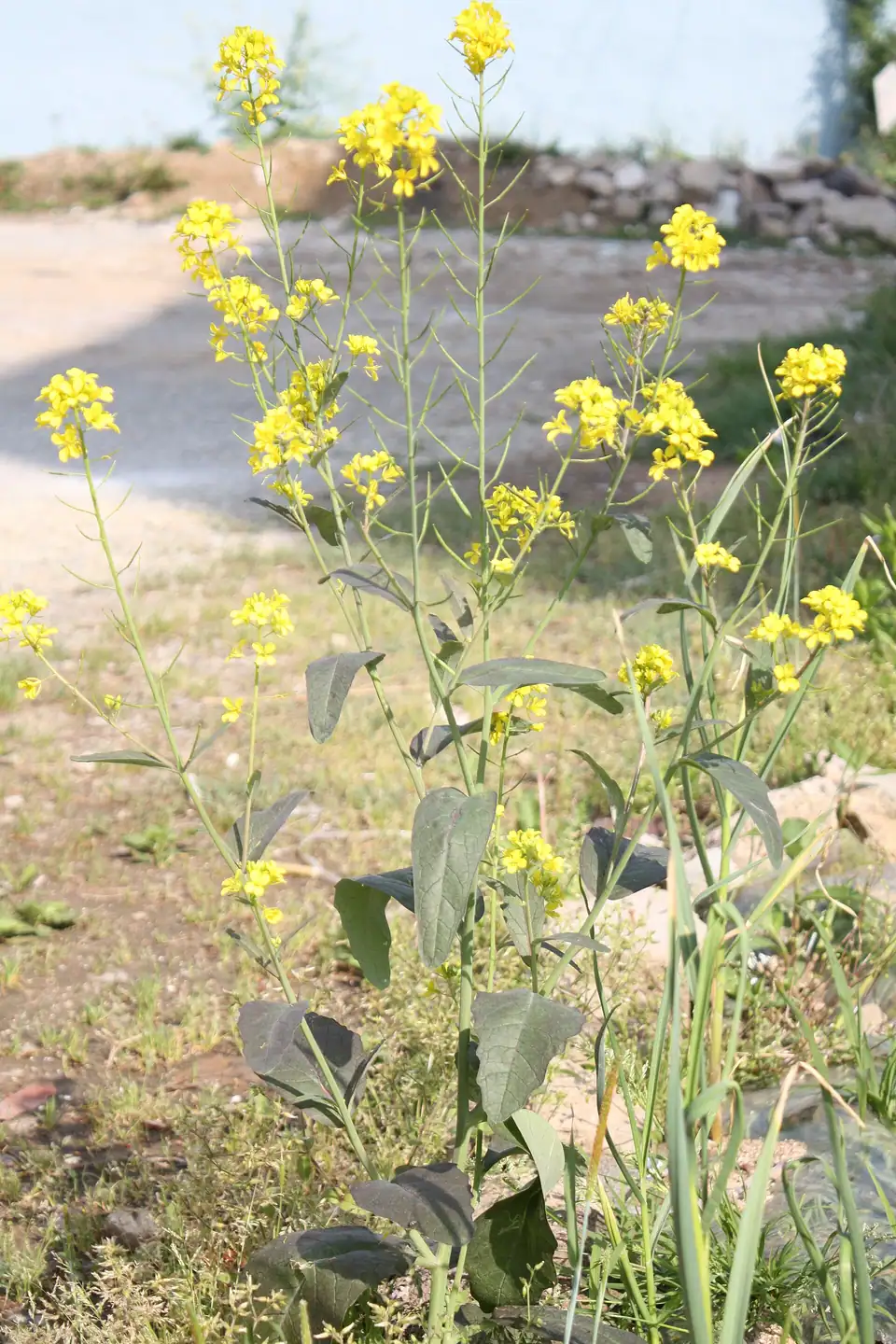
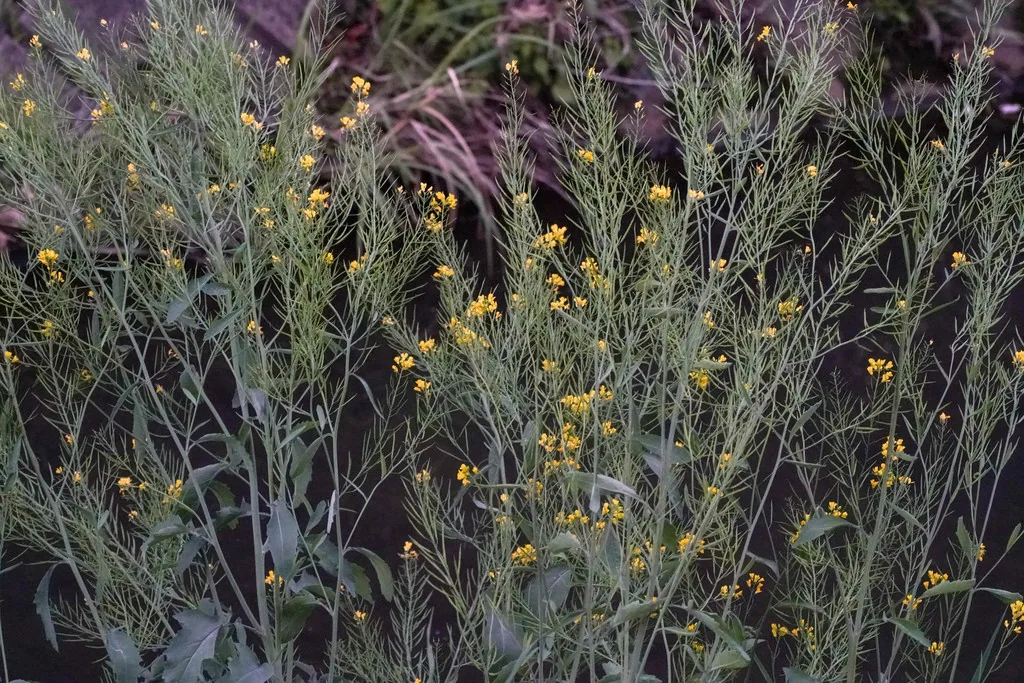
Brown mustard is an annual herb grown for edible leaves and flowers that has a hot mustard flavor. [1] It grows best in full sun to part shade and consistently moist soil, as a cool-season plant that bolts in summer. [1]
This record is incomplete: the sources we read do not cover every field yet.
Not yet covered by our sources: Harvest, Spacing
Brown Mustard care
How to water Brown Mustard
Watering
Consistently moist soil; water early in the day
What the sources say (1)
Mustard grows best in full sun to part shade and well-drained, rich, consistently moist soil. Watering early in the day will allow the plant to dry before nightfall and reduce the chance of fungal diseases.Watering notes
Watering early in the day lets the plant dry before nightfall and reduces fungal disease; moisture and temperature stress give a spicier, unpleasantly strong flavor
What the sources say (2)
Watering early in the day will allow the plant to dry before nightfall and reduce the chance of fungal diseases.Moisture and temperature stress lead to a spicier, unpleasantly strong flavor as well.How much light Brown Mustard needs
Full sun to partial shade
What the sources say (1)
Mustard grows best in full sun to part shade and well-drained, rich, consistently moist soil.Best soil for Brown Mustard
Soil pH, minimum
6.0
What the sources say (1)
Soil Texture:
High Organic Matter
Soil pH:
Neutral (6.0-8.0)Soil pH, maximum
8.0
What the sources say (1)
Soil Texture:
High Organic Matter
Soil pH:
Neutral (6.0-8.0)Where to grow Brown Mustard
In containers
Yes
What the sources say (1)
Use this plant in the edible garden or in a container.Spacing
Not stated in the sources we read.
How to propagate Brown Mustard
Seed
What the sources say (1)
Plant seed or seedlings in the fall 3 weeks before the last frost. Additional seeds can be planted every 2-3 weeks to extend harvest.How to grow Brown Mustard
The plant
Life cycle
annual
What the sources say (1)
Brown Mustard is an annual herb in the mustard family (Brassicaceae).Family
Brassicaceae
What the sources say (1)
Brown Mustard is an annual herb in the mustard family (Brassicaceae).Mature height
30-46 cm (1-1.5 ft)
What the sources say (1)
Dimensions:
Height: 1 ft. 0 in. - 1 ft. 6 in.
Width: 1 ft. 0 in. - 1 ft. 6 in.Mature width
30-46 cm (1-1.5 ft)
What the sources say (1)
Dimensions:
Height: 1 ft. 0 in. - 1 ft. 6 in.
Width: 1 ft. 0 in. - 1 ft. 6 in.Harvest and storage
Storage
Harvested leaves keep in the fridge for 3-5 days
What the sources say (1)
Harvested leaves can be stored in the fridge for 3-5 days.Pests and diseases
Pests
flea beetles, caterpillars, aphids, slugs, snails
What the sources say (1)
Insects affecting this plant include flea beetles, caterpillars, aphids, slugs, and snails.Fertilizing
When
Worked into the soil before planting, then a side-dressing 4 weeks after transplanting or thinning
What each source says
Texas guidance: side-dress when plants are 10.2–12.7 cm [4–5 in] tall
What the sources say (3)
Texas guidance: Turnipsandmustardsneedadequate
nitrogen todevelopa darkgreen color.
When theplantsare4 to5 inchestall,
apply½ cupof fertilizerforeach 10feetof
row.Before planting, determine fertilizer needs with a soil test and then follow the recommendations given with the test report.Apply ½ cup per 10 feet of row of a nitrogen-based fertilizer (21-0-0) 4 weeks after transplanting or thinning to encourage rapid plant growth.Natural fertilizers
Well-composted organic matter, no more than 2.54 cm [1 in] per 9.29 m² of garden
What the sources say (1)
If you fertilize with compost, apply no more than 1 inch of well-composted organic matter per 100 square feet of garden area.Mineral fertilizers
Nitrogen fertilizer (21-0-0) side-dressed at 119 mL per 3.05 m [10 ft] of row, placed beside the plants and watered in; fertilizer needs before planting set by a soil test
What each source says
before planting, Arkansas guidance: complete fertilizer at 48.8 g/m² worked into the bed
before planting, Texas guidance: complete garden fertilizer such as 10-20-10 at 97.6–146 g/m²
What the sources say (4)
before planting, Arkansas guidance: Prepare the soil by broadcasting
and working in one pound of a
complete fertilizer, such as 131313,
per 100 square feet of bed.before planting, Texas guidance: Figure 4. Scatter 2 to 3 pounds of complete gar-
den fertilizer such as 10-20-10 over each 100
square feet.Apply ½ cup per 10 feet of row of a nitrogen-based fertilizer (21-0-0) 4 weeks after transplanting or thinning to encourage rapid plant growth. Place the fertilizer to the side of the plants and irrigate it into the soil.If fertilizer applications are warranted, work the fertilizer into the top 6 inches of soil.Avoid
Fertilizer or water stress during growth, which interrupts growth
What the sources say (1)
Minimize water or fertilizer stress during growth to ensure uninterrupted growth.Brown Mustard pests and problems
Bolting and strong flavor in heat
Symptom: Bolting and a strong flavor in summer; moisture and temperature stress give a spicier, unpleasantly strong flavor.
What to do: Grow in fall and spring; provide some shade as the weather turns hot.
What the sources say (2)
As a cool-season plant, it does best in the fall and spring, bolting and developing a strong flavor in the summer.
— Brassica juncea (Brown Mustard, Brown Mustards, Chinese Mustard, Chinese Mustards, Giant Red Mustard, Indian Mustard, Indian Mustards, Leaf Mustard, Leaf Mustards, Mustard Greens, Oriental Mustard, Oriental Mustards, Vegetable Mustard, Vegetable Mustards) | North Carolina Extension Gardener Plant Toolbox [1] Some shade is appreciated as the weather turns hot, especially for growing baby greens.
— Brassica juncea (Brown Mustard, Brown Mustards, Chinese Mustard, Chinese Mustards, Giant Red Mustard, Indian Mustard, Indian Mustards, Leaf Mustard, Leaf Mustards, Mustard Greens, Oriental Mustard, Oriental Mustards, Vegetable Mustard, Vegetable Mustards) | North Carolina Extension Gardener Plant Toolbox [1] Insect pests
Symptom: Flea beetles, caterpillars, aphids, slugs and snails affect the plant.
What the sources say (1)
Insects affecting this plant include flea beetles, caterpillars, aphids, slugs, and snails.
— Brassica juncea (Brown Mustard, Brown Mustards, Chinese Mustard, Chinese Mustards, Giant Red Mustard, Indian Mustard, Indian Mustards, Leaf Mustard, Leaf Mustards, Mustard Greens, Oriental Mustard, Oriental Mustards, Vegetable Mustard, Vegetable Mustards) | North Carolina Extension Gardener Plant Toolbox [1] Fungal diseases
Symptom: Fungal diseases can occur.
What to do: Water early in the day so the plant dries before nightfall.
What the sources say (1)
Watering early in the day will allow the plant to dry before nightfall and reduce the chance of fungal diseases.
— Brassica juncea (Brown Mustard, Brown Mustards, Chinese Mustard, Chinese Mustards, Giant Red Mustard, Indian Mustard, Indian Mustards, Leaf Mustard, Leaf Mustards, Mustard Greens, Oriental Mustard, Oriental Mustards, Vegetable Mustard, Vegetable Mustards) | North Carolina Extension Gardener Plant Toolbox [1]
Remedies
Each remedy shows what official sources say about it; traditional remedies without an official source are marked as such. Harmful ones are listed so you know to avoid them.
Treating the plant
insect pests
hand-picking insects Works
How: Hand-pick insects from the plants.
Many insect and disease issues can be solved in the home garden by hand-picking insects or clipping and disposing of diseased plant parts.
— extension.unh.edu [8] What the evidence says Many insect and disease issues can be solved in the home garden by hand-picking insects or clipping and disposing of diseased plant parts.
— extension.unh.edu [8]
fungal diseases
watering early in the day Works
How: Water early in the day so the plant dries before nightfall.
Watering early in the day will allow the plant to dry before nightfall and reduce the chance of fungal diseases.
— Brassica juncea (Brown Mustard, Brown Mustards, Chinese Mustard, Chinese Mustards, Giant Red Mustard, Indian Mustard, Indian Mustards, Leaf Mustard, Leaf Mustards, Mustard Greens, Oriental Mustard, Oriental Mustards, Vegetable Mustard, Vegetable Mustards) | North Carolina Extension Gardener Plant Toolbox [1] What the evidence says Watering early in the day will allow the plant to dry before nightfall and reduce the chance of fungal diseases.
— Brassica juncea (Brown Mustard, Brown Mustards, Chinese Mustard, Chinese Mustards, Giant Red Mustard, Indian Mustard, Indian Mustards, Leaf Mustard, Leaf Mustards, Mustard Greens, Oriental Mustard, Oriental Mustards, Vegetable Mustard, Vegetable Mustards) | North Carolina Extension Gardener Plant Toolbox [1]
Is Brown Mustard toxic to pets?
Reported by the source, quoted verbatim. This is not medical or veterinary advice: if a person or an animal may have eaten this plant, contact a poison control centre or a veterinarian.
Landscape Theme: Edible Garden Design Feature: Mass Planting Problems: Problem for Horses
[1]The source flags the risk for this animal but does not explain why.
Calendar
Sowing
Fall, 3 weeks before the last frost; additional seeds every 2-3 weeks to extend harvest
What the sources say (1)
Plant seed or seedlings in the fall 3 weeks before the last frost. Additional seeds can be planted every 2-3 weeks to extend harvest.Planting
Seedlings in the fall, 3 weeks before the last frost
What the sources say (1)
Plant seed or seedlings in the fall 3 weeks before the last frost. Additional seeds can be planted every 2-3 weeks to extend harvest.Harvest
Not stated in the sources we read.
Months as given by the sources, which are mostly from the United States (northern hemisphere). In the southern hemisphere they shift by about six months.
Relative to frost
Less precise estimate: there is no weather station within 300 km.
Find frost dates by ZIP code or city
Plant: 3 weeks before the last frost
Plant seed or seedlings in the fall 3 weeks before the last frost.
— Brassica juncea (Brown Mustard, Brown Mustards, Chinese Mustard, Chinese Mustards, Giant Red Mustard, Indian Mustard, Indian Mustards, Leaf Mustard, Leaf Mustards, Mustard Greens, Oriental Mustard, Oriental Mustards, Vegetable Mustard, Vegetable Mustards) | North Carolina Extension Gardener Plant Toolbox [1]
Count from the average frost dates where you live.
Edibility
Reported by the source, quoted verbatim. Do not eat a plant on the basis of this page alone: identification mistakes can be dangerous.
Indicative values
Values from a secondary source, not checked word for word like the rest of this page. Use them as a starting point.
- Hours of sun
- 6-8 hoursIndicative value, adapt it to your climate · Secondary source
- Drought tolerant
- yesIndicative value, adapt it to your climate · Secondary source
- USDA hardiness zones
- 2-11 [winter low −45.6 to 10 °C (−50 to 50 °F)]Indicative value, adapt it to your climate · Secondary source
- Care level
- MediumIndicative value, adapt it to your climate · Secondary source
- Growth rate
- LowIndicative value, adapt it to your climate · Secondary source
Similar plants
- Black Mustard Brassica nigra
- Cabbage Brassica oleracea
- Rape Brassica napus
- Field mustard Brassica rapa
- Mediterranean cabbage Brassica fruticulosa
- American Yellow Rocket Barbarea orthoceras
- Broadleaved pepperweed Lepidium latifolium
- Crested wartycabbage Bunias erucago
Sources
Every value above is quoted from these documents. Links lead to the original publisher.
- Brassica juncea (Brown Mustard, Brown Mustards, Chinese Mustard, Chinese Mustards, Giant Red Mustard, Indian Mustard, Indian Mustards, Leaf Mustard, Leaf Mustards, Mustard Greens, Oriental Mustard, Oriental Mustards, Vegetable Mustard, Vegetable Mustards) | North Carolina Extension Gardener Plant Toolbox · plants.ces.ncsu.edu, consulted
- Brown Mustards - Brassica juncea | North Carolina Extension Gardener Plant Toolbox · plants.ces.ncsu.edu, consulted
- Mustard Greens - Brassica juncea | North Carolina Extension Gardener Plant Toolbox · plants.ces.ncsu.edu, consulted
- Oriental Mustards - Brassica juncea | North Carolina Extension Gardener Plant Toolbox · plants.ces.ncsu.edu, consulted
- aggie-horticulture.tamu.edu · aggie-horticulture.tamu.edu
- extension.usu.edu · extension.usu.edu
- uaex.uada.edu · uaex.uada.edu
- extension.unh.edu · extension.unh.edu
Written by Emilio Marruso · last checked