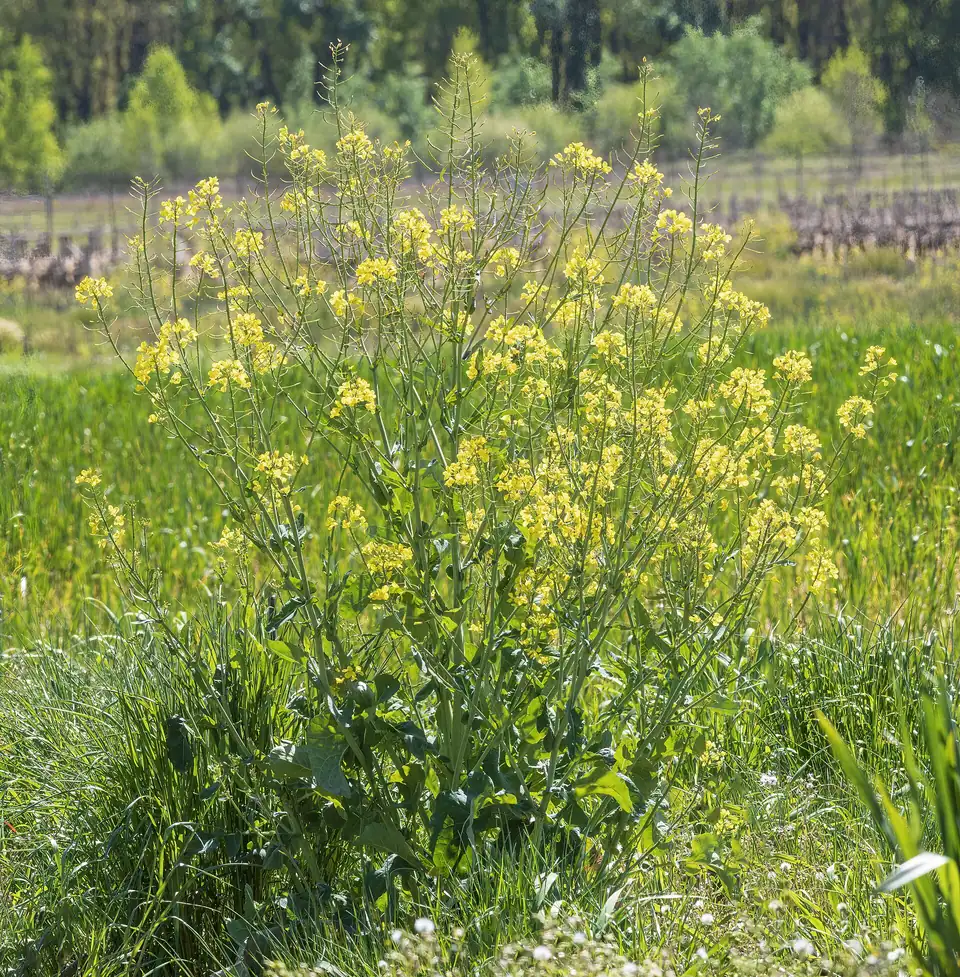
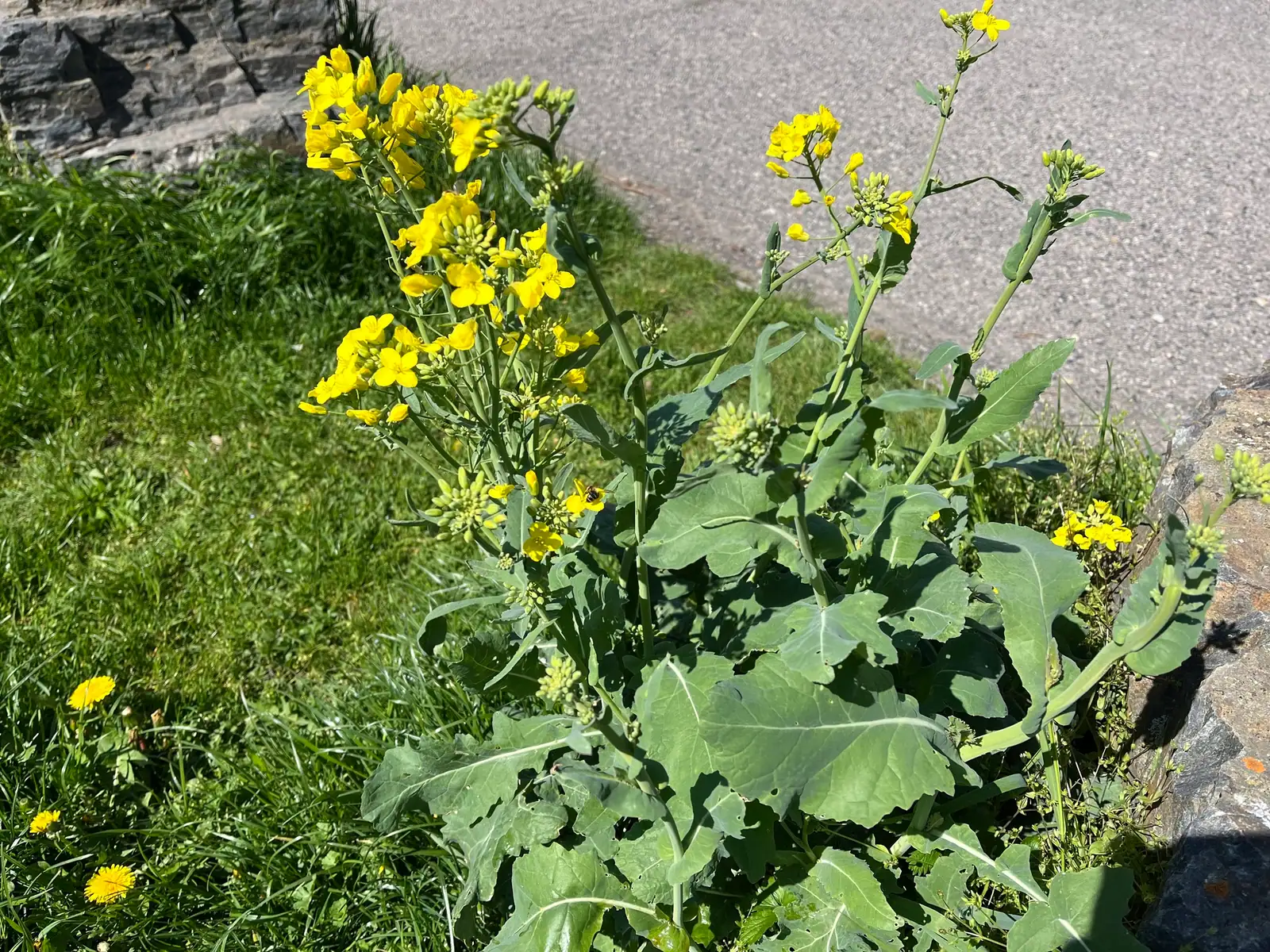
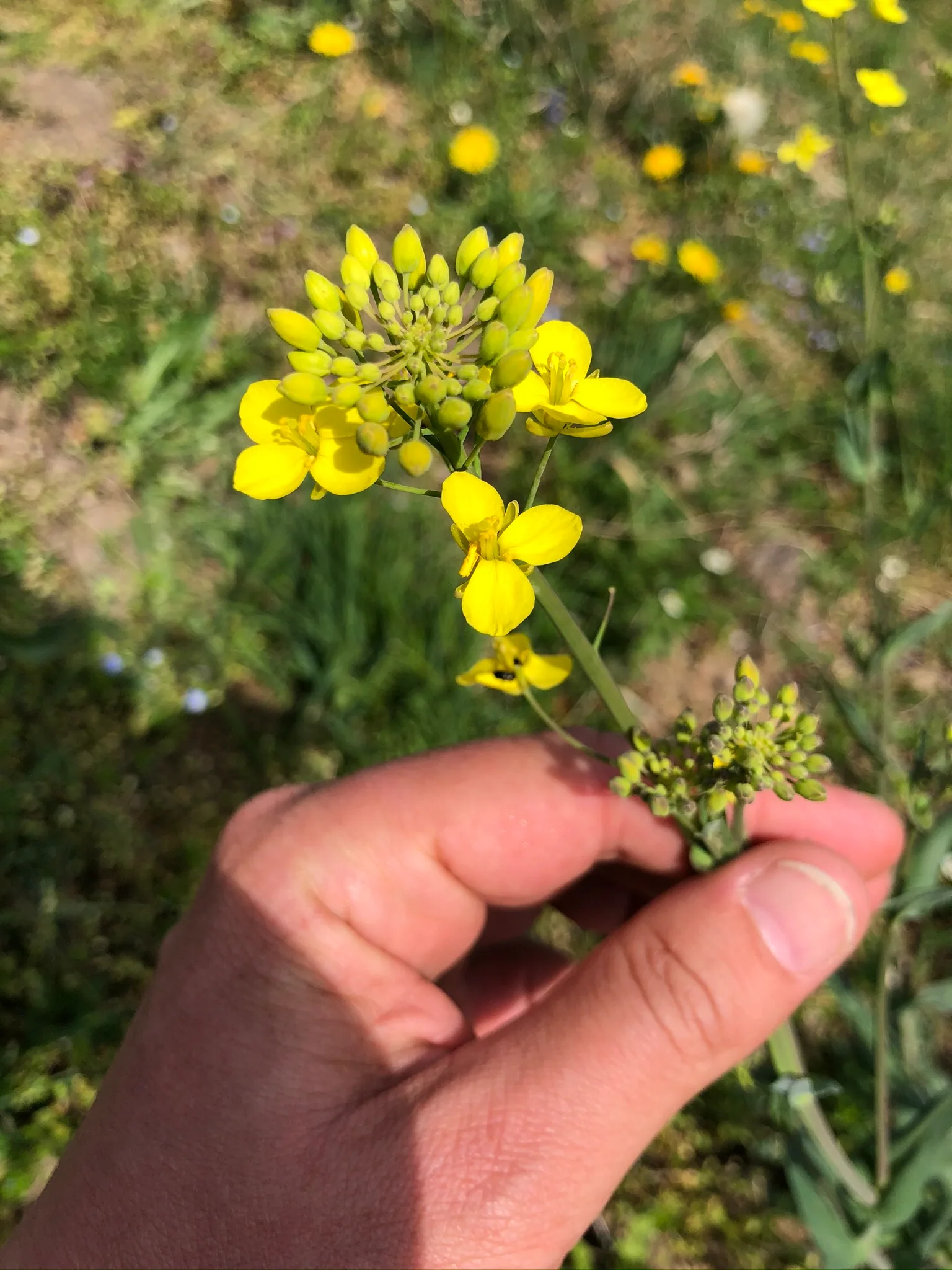

How to Grow and Care for Rape
Brassica napus
Written by Emilio Marruso · last checked
Toxic to: People · Why
At a glance
Rapeseed is an easy annual that grows straight from seed, sown in spring or autumn in a sunny spot. It accepts a wide range of soils, from pH 5.5 to 8, as long as water never stands. By summer you can harvest, and the leaves are edible raw or cooked, a fresh green bonus from a plant better known for its oil.
- Sun
Full sun
What the sources say (1)
Light: Full sun
Succeeds in full sun in a well-drained fertile preferably alkaline soil
— Brassica napus napus - Useful Temperate Plants [4] - Water
Never let water stand; it handles dry spells poorly, and seeds need moist soil to sprout
What the sources say (2)
Watering notes: Cannot tolerate standing water or waterlogged soils; less tolerant of drought than small-grain crops; seed-to-soil moisture contact is critical for emergence
Canola is less tolerant to drought than small-grain crops.
— Canola Production | NDSU Agriculture [5] Seed and soil moisture contact is critical for rapid emergence, so seeding canola into dry soil is not recommended.
— Canola Production | NDSU Agriculture [5] - Soil
Well-drained soil, pH 5.5–8
What the sources say (4)
Soil pH, minimum: 5.5
Prefers a pH in the range 6.5 - 7.6, tolerating 5.5 - 8
— Brassica napus napus - Useful Temperate Plants [4] Soil pH, maximum: 8
Prefers a pH in the range 6.5 - 7.6, tolerating 5.5 - 8
— Brassica napus napus - Useful Temperate Plants [4] Watering notes: Cannot tolerate standing water or waterlogged soils; less tolerant of drought than small-grain crops; seed-to-soil moisture contact is critical for emergence
Canola is less tolerant to drought than small-grain crops.
— Canola Production | NDSU Agriculture [5] Seed and soil moisture contact is critical for rapid emergence, so seeding canola into dry soil is not recommended.
— Canola Production | NDSU Agriculture [5] - Spacing
Rows 6–10 in apart if watered, 12–16 in apart in dry ground
What the sources say (1)
Row spacing: 15-25 cm (6-10 in) in high-moisture or irrigated conditions; 30-41 cm (12-16 in) in dryland
In high-moisture areas or under irrigation, a row width of 6 to 10 inches normally is used. In dryland conditions, row width should be increased to 12 to 16 inches.
— Oilseed crops: Canola | OSU Extension Service [2] - Feeding
Feed at sowing, keeping fertilizer 2 in from the seed; too much boron is toxic
What the sources say (11)
When: At sowing, with nitrogen available in the soil before the rapid growth that precedes bolting; phosphorus and sulfur before or at planting
winter oilseed rape (Italy): Considerando l’apporto azotato primaverile normalmente si preferisce un unico intervento di concimazione azotata verso la fine di febbraio con un concime che presenti N e S come solfato ammonico.
— UNIVERSITA' DEGLI STUDI DI PADOVA [1] winter oilseed rape (Italy), weak crop after winter: un primo intervento precoce alla ripresa vegetativa, a fine gennaio - inizio febbraio, con apporto di N rapidamente utilizzabile dalla coltura per far si che riprenda vigore
— UNIVERSITA' DEGLI STUDI DI PADOVA [1] winter oilseed rape (Italy), weak crop after winter: un secondo intervento, invece, a metà marzo in corrispondenza dell’inizio della levata con le restanti 60-70 unità di N ha-1
— UNIVERSITA' DEGLI STUDI DI PADOVA [1] Fertilizer is commonly applied at time of sowing.
— Rapeseed (colza) | Diseases and Pests, Description, Uses, Propagation [6] Since most nitrogen uptake in canola occurs before bolting, adequate N must be available in the soil prior to the crop’s rapid growth period.
— Oilseed crops: Canola | OSU Extension Service [2] Phosphorus is generally most effective when applied prior to seeding.
— Oilseed crops: Canola | OSU Extension Service [2] Providing adequate sulfur before or at planting is best.
— Canola Production | NDSU Agriculture [5] Avoid: Excess boron, which is toxic; nitrogen and potash in direct contact with the seed (keep them at least 5.08 cm [2 in] away); elemental sulfur forms
winter oilseed rape (Italy): In ogni caso la dose non deve superare le 30-40 unità di N ha-1, da somministrare alla semina o in copertura autunnale perché altrimenti l’azoto andrebbe incontro a fenomeni di lisciviazione ed inquinamento delle falde.
— UNIVERSITA' DEGLI STUDI DI PADOVA [1] Avoid overapplication, since excess boron is toxic to canola.
— Oilseed crops: Canola | OSU Extension Service [2] Nitrogen and potash fertilizer should not be placed in direct contact with the seeds but should be broadcast or applied in a band at least 2 inches away from the seed.
— Canola Production | NDSU Agriculture [5] Elemental sulfur forms have not performed well in regional trials and are not recommended because these S sources have little value in the year of application.
— Canola Production | NDSU Agriculture [5] - Harvest
Harvest in summer; the leaves are edible raw or cooked
What the sources say (4)
Harvest: Summer; 85-160 days from sowing for spring-sown annual rape, 160-340 days for autumn-sown winter rape
Spring-sown annual rape: Annual rape, or summer rape, (sometimes classified as Brassica napus annua (Schubl. & G. Martens) Thell.) is a spring-sown crop harvested in the summer.
— Brassica napus napus - Useful Temperate Plants [4] Autumn-sown winter rape: Winter rape, canola or colza (sometimes classified as Brassica napus napus) is generally sown in the autumn and harvested in early to late summer.
— Brassica napus napus - Useful Temperate Plants [4] Annual rape, or summer rape, (sometimes classified as Brassica napus annua (Schubl. & G. Martens) Thell.) is a spring-sown crop harvested in the summer. It can take from 85 - 160 days from sowing to harvesting the seed
— Brassica napus napus - Useful Temperate Plants [4] Winter rape, canola or colza (sometimes classified as Brassica napus napus) is generally sown in the autumn and harvested in early to late summer.It can take from 160 - 340 days from sowing to harvest
— Brassica napus napus - Useful Temperate Plants [4] - Pests
Aphids, flea beetles, white mold and blackleg; wait 4 years before planting it in the same spot
What the sources say (4)
Pests: cabbage seedpod weevil, aphids (cabbage aphid, turnip aphid, green peach aphid), flea beetles
Cabbage seedpod weevil ( Ceutorynchus assimilis ) is the most important insect pest of canola.
— Oilseed crops: Canola | OSU Extension Service [2] Several species of aphids (cabbage aphid, turnip aphid and green peach aphid) are found on canola in the PNW.
— Oilseed crops: Canola | OSU Extension Service [2] Adult flea beetles sometimes damage canola seedlings by feeding on cotyledons and young leaves, causing a shothole appearance.
— Oilseed crops: Canola | OSU Extension Service [2] Diseases: sclerotinia stem rot (white mold), blackleg
Plant diseases are one of the most serious canola production problems. The two most important diseases are sclerotinia stem rot and blackleg.
— Oilseed crops: Canola | OSU Extension Service [2] - Propagation
Grows from seed
What the sources say (2)
- Sowing
Sow in spring or autumn, ½–1 in deep
What the sources say (7)
Sowing: Spring or autumn
Western Oregon (winter canola): In Western Oregon, winter canola typically is planted in mid-September.
— Oilseed crops: Canola | OSU Extension Service [2] Eastern Oregon (winter canola): In Eastern Oregon, begin planting winter canola in mid-August.
— Oilseed crops: Canola | OSU Extension Service [2] North Dakota (spring canola): Canola should be planted in late April to early May to achieve the highest yields.
— Canola Production | NDSU Agriculture [5] Seed - sow spring or autumn in situ.
— Brassica napus napus - Useful Temperate Plants [4] Like all brassicas, they are cool weather crops, and growing rape plants in the spring or autumn is preferable.
— Rapeseed Information - Learn About Growing Rape Plants In The Garden | Gardening Know How [7] - Safety
Seed oil from some varieties is rich in erucic acid, which is toxic if eaten
Overview
Rapeseed and canola are closely related mustard-family crops grown as oilseeds, all current varieties being developed from Brassica napus and Brassica rapa. [2] It is a cool-weather crop that needs well-drained soil and does not tolerate waterlogging. [7][5] It is propagated from seed, sown in spring or autumn depending on whether a spring or winter type is grown. [4][2]
This record is incomplete: the sources we read do not cover every field yet.
Not yet covered by our sources: Watering, Spacing
Rape care
How to water Rape
Watering
Not stated in the sources we read.
Watering notes
Cannot tolerate standing water or waterlogged soils; less tolerant of drought than small-grain crops; seed-to-soil moisture contact is critical for emergence
How much light Rape needs
Full sun
What the sources say (1)
Succeeds in full sun in a well-drained fertile preferably alkaline soilBest soil for Rape
Soil pH, minimum
5.5
What the sources say (1)
Prefers a pH in the range 6.5 - 7.6, tolerating 5.5 - 8Soil pH, maximum
8
What the sources say (1)
Prefers a pH in the range 6.5 - 7.6, tolerating 5.5 - 8Where to grow Rape
Not stated in the sources we read.
How to propagate Rape
How to grow Rape
The plant
Life cycle
annual (spring and winter types)
What the sources say (1)
Canola (Brassica napus L.) varieties have been developed as spring and winter annuals.Family
Brassicaceae
What the sources say (1)
Rapeseed and canola are closely related members of the mustard family (Brassicaceae) that are both grown as oilseed crops.Sowing and growth
Sowing depth
1.3-2.5 cm (½-1 in)
Row spacing
15-25 cm (6-10 in) in high-moisture or irrigated conditions; 30-41 cm (12-16 in) in dryland
What the sources say (1)
In high-moisture areas or under irrigation, a row width of 6 to 10 inches normally is used. In dryland conditions, row width should be increased to 12 to 16 inches.Days to maturity
about 95 days (Argentine type, B. napus)
What the sources say (1)
Argentine varieties require about 95 days to reach maturity, while Polish varieties need approximately 80 days to reach maturity.Harvest and storage
How to harvest
Swath when seeds have turned brown on the lower third of the main stem, then combine; or direct combine
What the sources say (1)
Begin swathing when seeds have turned brown on the lower third of the main stem.Storage
Store harvested dry and cooled with aeration; monitor for heating
What the sources say (1)
Canola storage can be done successfully when harvested dry and cooled with aeration.Pests and diseases
Pests
cabbage seedpod weevil, aphids (cabbage aphid, turnip aphid, green peach aphid), flea beetles
What the sources say (3)
Cabbage seedpod weevil ( Ceutorynchus assimilis ) is the most important insect pest of canola.Several species of aphids (cabbage aphid, turnip aphid and green peach aphid) are found on canola in the PNW.Adult flea beetles sometimes damage canola seedlings by feeding on cotyledons and young leaves, causing a shothole appearance.Diseases
sclerotinia stem rot (white mold), blackleg
What the sources say (1)
Plant diseases are one of the most serious canola production problems. The two most important diseases are sclerotinia stem rot and blackleg.Fertilizing
When
At sowing, with nitrogen available in the soil before the rapid growth that precedes bolting; phosphorus and sulfur before or at planting
What each source says
winter oilseed rape (Italy): Nitrogen in a single dressing at the end of February, with a fertilizer supplying both nitrogen and sulfur
winter oilseed rape (Italy), weak crop after winter: First nitrogen dressing at regrowth, late January to early February
winter oilseed rape (Italy), weak crop after winter: Second nitrogen dressing at the start of stem elongation, mid-March
What the sources say (7)
winter oilseed rape (Italy): Considerando l’apporto azotato primaverile normalmente si preferisce un unico intervento di concimazione azotata verso la fine di febbraio con un concime che presenti N e S come solfato ammonico.winter oilseed rape (Italy), weak crop after winter: un primo intervento precoce alla ripresa vegetativa, a fine gennaio - inizio febbraio, con apporto di N rapidamente utilizzabile dalla coltura per far si che riprenda vigorewinter oilseed rape (Italy), weak crop after winter: un secondo intervento, invece, a metà marzo in corrispondenza dell’inizio della levata con le restanti 60-70 unità di N ha-1Fertilizer is commonly applied at time of sowing.Since most nitrogen uptake in canola occurs before bolting, adequate N must be available in the soil prior to the crop’s rapid growth period.Phosphorus is generally most effective when applied prior to seeding.Providing adequate sulfur before or at planting is best.How often
The sources give different values depending on region, zone or growing conditions.
What each source says
winter oilseed rape (Italy): One spring nitrogen dressing
winter oilseed rape (Italy), weak crop after winter: Two spring nitrogen dressings
What the sources say (2)
winter oilseed rape (Italy): Considerando l’apporto azotato primaverile normalmente si preferisce un unico intervento di concimazione azotata verso la fine di febbraio con un concime che presenti N e S come solfato ammonico.winter oilseed rape (Italy), weak crop after winter: Nel caso in cui alla fine dell’inverno la coltura sia debolmente sviluppata, si necessitano due concimazioni azotateMineral fertilizers
Nitrogen 50–60 kg [110.2–132.3 lb]/ha for spring-sown crops and 70 kg [154.3 lb]/ha for winter crops; phosphorus when the soil test is below 5 ppm and potassium below 75 ppm; sulfur 22.4–33.6 kg [49.4–74 lb]/ha as ammonium sulfate or another sulfate fertilizer; fertilizer placed to the side of the seed furrows
What each source says
winter oilseed rape (Italy): Nitrogen 80–100 kg [176.4–220.5 lb]/ha
winter oilseed rape (Italy): Potassium as potassium sulfate, which also supplies sulfur
winter oilseed rape (Italy), neutral to alkaline soils: Phosphorus as triple superphosphate
What the sources say (9)
winter oilseed rape (Italy): le concimazioni azotate, tenendo presente l’elevata richiesta di N del colza all’uscita dell’inverno, si aggirano attorno alle 80-100 unità per ettarowinter oilseed rape (Italy): Per il colza il concime potassico da utilizzare è il solfato di potassio (titolo 48-52%), anche se più costoso rispetto al cloruro di potassio, perché contiene il 18% di zolfowinter oilseed rape (Italy), neutral to alkaline soils: Per i nostri terreni, solitamente con pH tra il neutro e l’alcalino, è consigliabile il perfosfato triploNitrogen fertilizer should be applied at a basic rate of 50–60 kg per hectare for spring planted rapeseed and 70 kg per hectare for winter crops.Both winter and spring canola often benefit from application of phosphorus when soil test levels are below 5 ppm.Soil potassium levels normally are adequate for canola in the PNW, but apply potassium when soil test values are below 75 ppm.The recommended sulfur application rates are 20 to 30 pounds of S per acre.The form of sulfur fertilizer may be ammonium sulfate (21-0-0-24S) or other sulfate fertilizers, such as ammonium thiosulfate or potassium thiosulfate.fertilizers are most successfully applied to the side of the seed furrows to prevent damage to the plants.Micronutrients
Sulfur: a key element, best supplied before or at planting; boron: 1.12–2.24 kg [2.5–4.9 lb]/ha when soil tests are below 0.5 ppm, as winter canola needs more boron than many crops; magnesium may also be needed, by soil test
What the sources say (5)
Nitrogen and sulfur are the key elements for high canola yields.Providing adequate sulfur before or at planting is best.Winter canola generally requires more boron than many other crops grown in rotation with it.Apply 1 to 2 lb boron/acre if soil tests indicate levels below 0.5 ppm.in addition to nitrogen, rapeseed may also require the addition of phosphorus, potassium, sulfur and magnesium to the soil.Avoid
Excess boron, which is toxic; nitrogen and potash in direct contact with the seed (keep them at least 5.08 cm [2 in] away); elemental sulfur forms
What each source says
winter oilseed rape (Italy): More than 30–40 kg [66.1–88.2 lb] N/ha in autumn, which leaches to groundwater
What the sources say (4)
winter oilseed rape (Italy): In ogni caso la dose non deve superare le 30-40 unità di N ha-1, da somministrare alla semina o in copertura autunnale perché altrimenti l’azoto andrebbe incontro a fenomeni di lisciviazione ed inquinamento delle falde.Avoid overapplication, since excess boron is toxic to canola.Nitrogen and potash fertilizer should not be placed in direct contact with the seeds but should be broadcast or applied in a band at least 2 inches away from the seed.Elemental sulfur forms have not performed well in regional trials and are not recommended because these S sources have little value in the year of application.Signs of deficiency
Phosphorus: pale green leaves with reddened margins; nutrient-stressed crops mature unevenly; sulfur shortage can worsen green seed in cool, wet weather
What the sources say (3)
La carenza di fosforo si manifesta con foglie di colore verde pallido e margini arrossati (caratteristica specifica).Canola stressed from nutrient deficiency will not mature evenly.Cool, wet and overcast weather during the growing season promotes green seed problems in all canola varieties, and these problems can be made worse by sulfur deficiency in some cases.Signs of excess
Delayed maturity in cool years on highly fertile fields
What the sources say (1)
Know that fields with high fertility levels can be expected to delay maturity in years with below-normal growing degree-days accumulation or heat units (cool years).Rape pests and problems
Sclerotinia stem rot and blackleg
Symptom: Infection weakens the plant stem, causing losses from lodging and early ripening (sclerotinia); blackleg is the most serious disease of canola
What to do: Minimum 4-year crop rotation; seed treatment with fungicides is very effective in controlling blackleg
What the sources say (2)
Plant diseases are one of the most serious canola production problems. The two most important diseases are sclerotinia stem rot and blackleg.
— Oilseed crops: Canola | OSU Extension Service [2] Infection weakens the plant stem, causing losses from lodging and early ripening.
— Oilseed crops: Canola | OSU Extension Service [2] Aphids and flea beetles
Symptom: Aphid feeding on rosettes reduces rosette size and vigor; flea beetles cause a shothole appearance on cotyledons and young leaves
What the sources say (2)
Aphid feeding on rosettes can reduce rosette size and vigor, adversely affecting winter survival and yield.
— Oilseed crops: Canola | OSU Extension Service [2] Adult flea beetles sometimes damage canola seedlings by feeding on cotyledons and young leaves, causing a shothole appearance.
— Oilseed crops: Canola | OSU Extension Service [2]
Remedies
Each remedy shows what official sources say about it; traditional remedies without an official source are marked as such. Harmful ones are listed so you know to avoid them.
Treating the plant
blackleg
crop rotation of at least 4 years Works
How: Since fungicides have limited effectiveness on many canola diseases, it’s important to practice a minimum 4-year crop rotation.
Since fungicides have limited effectiveness on many canola diseases, it’s important to practice a minimum 4-year crop rotation.
— Oilseed crops: Canola | OSU Extension Service [2] What the evidence says Since fungicides have limited effectiveness on many canola diseases, it’s important to practice a minimum 4-year crop rotation.
— Oilseed crops: Canola | OSU Extension Service [2]
flea beetles
firm, well-fertilized seedbed Partly works
How: A firm seedbed that is fertilized adequately will help plants outgrow beetle damage during the susceptible seedling stage in the spring.
A firm seedbed that is fertilized adequately will help plants outgrow beetle damage during the susceptible seedling stage in the spring.
— ag.ndsu.edu [9] What the evidence says A firm seedbed that is fertilized adequately will help plants outgrow beetle damage during the susceptible seedling stage in the spring.
— ag.ndsu.edu [9]
Getting rid of it
volunteer canola
avoid deep tillage after harvest Not verified
Traditional remedy, not verified by an official source.
How: Following harvest, producers should not deep till their fields as canola seed that remains near the soil surface does not persist as long.
Is Rape poisonous?
Reported by the source, quoted verbatim. This is not medical or veterinary advice: if a person or an animal may have eaten this plant, contact a poison control centre or a veterinarian.
The oil contained in the seed of some varieties of this species can be rich in erucic acid which is used in industry but is toxic if consumed.
[4]- Poisonous parts
The oil contained in the seed of some varieties of this species can be rich in erucic acid which is used in industry but is toxic if consumed.
[4]- Toxic principle
Rapeseed oil is naturally high in erucic acid and glucosinolates, both of which have anti-nutritional properties but have industrial uses.
[4]
Calendar
Sowing
Spring or autumn
What each source says
Western Oregon (winter canola): Mid-September
Eastern Oregon (winter canola): From mid-August
North Dakota (spring canola): Late April to early May
What the sources say (5)
Western Oregon (winter canola): In Western Oregon, winter canola typically is planted in mid-September.Eastern Oregon (winter canola): In Eastern Oregon, begin planting winter canola in mid-August.North Dakota (spring canola): Canola should be planted in late April to early May to achieve the highest yields.Seed - sow spring or autumn in situ.Like all brassicas, they are cool weather crops, and growing rape plants in the spring or autumn is preferable.Harvest
Summer; 85-160 days from sowing for spring-sown annual rape, 160-340 days for autumn-sown winter rape
What each source says
Spring-sown annual rape: Summer, 85-160 days from sowing
Autumn-sown winter rape: Early to late summer, 160-340 days from sowing
What the sources say (4)
Spring-sown annual rape: Annual rape, or summer rape, (sometimes classified as Brassica napus annua (Schubl. & G. Martens) Thell.) is a spring-sown crop harvested in the summer.Autumn-sown winter rape: Winter rape, canola or colza (sometimes classified as Brassica napus napus) is generally sown in the autumn and harvested in early to late summer.Annual rape, or summer rape, (sometimes classified as Brassica napus annua (Schubl. & G. Martens) Thell.) is a spring-sown crop harvested in the summer. It can take from 85 - 160 days from sowing to harvesting the seedWinter rape, canola or colza (sometimes classified as Brassica napus napus) is generally sown in the autumn and harvested in early to late summer.It can take from 160 - 340 days from sowing to harvestMonths as given by the sources, which are mostly from the United States (northern hemisphere). In the southern hemisphere they shift by about six months.
Edibility
Reported by the source, quoted verbatim. Do not eat a plant on the basis of this page alone: identification mistakes can be dangerous.
Similar plants
- Black Mustard Brassica nigra
- Brown Mustard Brassica juncea
- Cabbage Brassica oleracea
- Field mustard Brassica rapa
- Mediterranean cabbage Brassica fruticulosa
- American Yellow Rocket Barbarea orthoceras
- Broadleaved pepperweed Lepidium latifolium
- Crested wartycabbage Bunias erucago
Sources
Every value above is quoted from these documents. Links lead to the original publisher.
- UNIVERSITA' DEGLI STUDI DI PADOVA · thesis.unipd.it, consulted
- Oilseed crops: Canola | OSU Extension Service · extension.oregonstate.edu, consulted
- View crop · ecocrop.apps.fao.org, consulted
- Brassica napus napus - Useful Temperate Plants · temperate.theferns.info, consulted
- Canola Production | NDSU Agriculture · ndsu.edu, consulted
- Rapeseed (colza) | Diseases and Pests, Description, Uses, Propagation · plantvillage.psu.edu, consulted
- Rapeseed Information - Learn About Growing Rape Plants In The Garden | Gardening Know How · gardeningknowhow.com, consulted
- Use of Brassica Crops to Extend the Grazing Season · extension.psu.edu, consulted
- ag.ndsu.edu · ag.ndsu.edu
Written by Emilio Marruso · last checked