
How to Grow and Care for Field mustard
Brassica rapa
Written by Emilio Marruso · last checked
At a glance
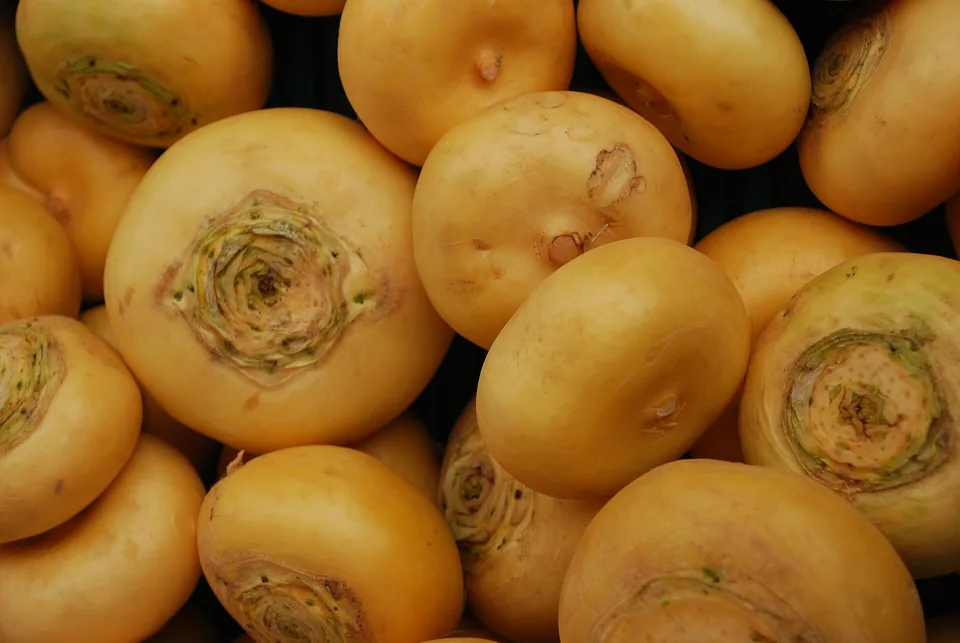
Turnips give you two crops in one: you can eat both the leaves and the roots. Sow them in late winter or early spring, or in late summer for a fall and winter crop, keep the soil moist, and pick the roots once they reach the size of a tennis ball. Without their leaves, they keep in the fridge for up to 4 months.
- Water
Keep the soil moist but not soggy, especially for seedlings; never let the leaves wilt
What the sources say (3)
Watering: In dry weather irrigate to keep the soil moist but not saturated; do not let the leaves wilt between waterings
When the weather is dry, irrigate to keep the soil moist but not saturated.
— Turnips & Rutabagas | Home & Garden Information Center [1] Avoid allowing the leaves to wilt in between watering.
— Turnips & Rutabagas | Home & Garden Information Center [1] Watering notes: Watering is critical during the seedling stage and the root development stage
Watering is critical during the seedling stage and the root development stage.
— Turnips & Rutabagas | Home & Garden Information Center [1] - Soil
Slightly acidic soil, pH 6.0–6.5
What the sources say (2)
Soil pH, minimum: 6.0
Follow the results of soil test recommendations to maintain a soil pH between 6.0 and 6.5.
— Turnips & Rutabagas | Home & Garden Information Center [1] Soil pH, maximum: 6.5
Follow the results of soil test recommendations to maintain a soil pH between 6.0 and 6.5.
— Turnips & Rutabagas | Home & Garden Information Center [1] - Spacing
2–3 in apart in the row
What the sources say (1)
Spacing: 5.1-7.6 cm (2-3 in) apart in the row
Space plants 2 to 3 inches apart in the row.
— Turnips & Rutabagas | Home & Garden Information Center [1] - Feeding
Feed before planting and again 3–4 weeks later; too much nitrogen means smaller roots
What the sources say (6)
When: Before planting, following the soil test, then a side-dressing three to four weeks after planting
broccoli raab (cima di rapa): phosphorus and potassium: In caso di concimazione fosfatica l’elemento P deve essere fornito al 50% durante i lavori di preparazione del terreno e 50% in pre-semina o pre-trapianto e solo in caso di scarsa dotazione del terreno
— Per la rapa ci si riferisce alla Brassica rapa subsp. rapa mentre per la cima di rapa alla Brassica rapa subsp. sylvestris. [2] Apply lime and pre-plant fertilizer according to soil test recommendations.
— Turnips & Rutabagas | Home & Garden Information Center [1] Side dress 1 pound of calcium nitrate (15.5-0-0) per 100 square feet (30 feet of row) three to four weeks after planting.
— Turnips & Rutabagas | Home & Garden Information Center [1] Avoid: Nitrogen over-fertilization, which can reduce root formation; fertilizer placed too close to the plants, which burns the roots; granules left on the leaves after broadcasting
broccoli raab (cima di rapa): In caso di concimazione azotata l’elemento N deve essere fornito solo in caso di scarsa dotazione del terreno considerando anche che questo ortaggio può accumulare nitrati (soprattutto nello stelo e nelle foglie)
— Per la rapa ci si riferisce alla Brassica rapa subsp. rapa mentre per la cima di rapa alla Brassica rapa subsp. sylvestris. [2] If fertilizer is broadcast, avoid burning the plant foliage by watering overhead to wash fertilizer granules off the leaves. Over-fertilization of nitrogen may reduce root formation.
— Turnips & Rutabagas | Home & Garden Information Center [1] Side-dress fertilizer 4 to 6 inches away from the plants to avoid burning the roots.
— Turnips & Rutabagas | Home & Garden Information Center [1] - Harvest
Pull roots at tennis-ball size, 2.5 in or more across; the leaves are good to eat too
What the sources say (1)
How to harvest: harvest turnip roots when they reach the size of a tennis ball or larger (2.5 to 2.75 inches / 6.4 to 7 cm in diameter)
Harvest turnip roots when they reach the size of a tennis ball or larger (2½ to 2¾ inches in diameter).
— Turnips & Rutabagas | Home & Garden Information Center [1] - Watch out
Harvest before hot weather and before a hard freeze, or roots turn pithy and strong-tasting
- Propagation
From seed, sown in rows or scattered and lightly raked in
What the sources say (1)
Propagation: Seed, sown in rows or broadcast and lightly raked in
Alternately, seeds may be broadcast and lightly raked in.
— Turnips & Rutabagas | Home & Garden Information Center [1] - Sowing
Sow in late winter or early spring, or in late summer for a fall and winter crop
What the sources say (2)
Sowing: Late winter/early spring for a spring crop, or late summer for a fall/winter crop
According to Regione Marche: Rapa: se coltivata per la produzione autunno-invernale, viene in genere impiantata da luglio a settembre in successione ad una coltura primaverile - estiva.
— Per la rapa ci si riferisce alla Brassica rapa subsp. rapa mentre per la cima di rapa alla Brassica rapa subsp. sylvestris. [2] Plant in late winter/early spring for a spring crop or in the late summer for a fall/winter crop.
— Turnips & Rutabagas | Home & Garden Information Center [1]
Overview
Turnip (Brassica rapa) is grown for edible leaves and roots as a cool-weather crop that tolerates some heat. [1] It needs well-drained soil at pH 6.0 to 6.5 and moisture kept even through the seedling and root development stages. [1]
This record is incomplete: the sources we read do not cover every field yet.
Not yet covered by our sources: Light
Field mustard care
How to water Field mustard
Watering
In dry weather irrigate to keep the soil moist but not saturated; do not let the leaves wilt between waterings
Watering notes
Watering is critical during the seedling stage and the root development stage
What the sources say (1)
Watering is critical during the seedling stage and the root development stage.How much light Field mustard needs
Not stated in the sources we read.
Best soil for Field mustard
Soil pH, minimum
6.0
What the sources say (1)
Follow the results of soil test recommendations to maintain a soil pH between 6.0 and 6.5.Soil pH, maximum
6.5
What the sources say (1)
Follow the results of soil test recommendations to maintain a soil pH between 6.0 and 6.5.Where to grow Field mustard
5.1-7.6 cm (2-3 in) apart in the row
What the sources say (1)
Space plants 2 to 3 inches apart in the row.How to propagate Field mustard
Seed, sown in rows or broadcast and lightly raked in
What the sources say (1)
Alternately, seeds may be broadcast and lightly raked in.How to grow Field mustard
Sowing and growth
Sowing depth
Harvest and storage
How to harvest
harvest turnip roots when they reach the size of a tennis ball or larger (2.5 to 2.75 inches / 6.4 to 7 cm in diameter)
What the sources say (1)
Harvest turnip roots when they reach the size of a tennis ball or larger (2½ to 2¾ inches in diameter).Storage
roots store well in plastic bags in the refrigerator or a cold root cellar; roots without leaves can be kept in the refrigerator for up to 4 months
What the sources say (2)
These roots store well in plastic bags in the refrigerator or a cold root cellar.Rapa: f Le radici private delle foglie possono essere conservate in frigo per un periodo massimo di 4 mesiFertilizing
When
Before planting, following the soil test, then a side-dressing three to four weeks after planting
What each source says
broccoli raab (cima di rapa): phosphorus and potassium: Phosphorus half during soil preparation and half before sowing or transplanting; potassium before sowing or transplanting; both only on poorly supplied soils
What the sources say (3)
broccoli raab (cima di rapa): phosphorus and potassium: In caso di concimazione fosfatica l’elemento P deve essere fornito al 50% durante i lavori di preparazione del terreno e 50% in pre-semina o pre-trapianto e solo in caso di scarsa dotazione del terrenoApply lime and pre-plant fertilizer according to soil test recommendations.Side dress 1 pound of calcium nitrate (15.5-0-0) per 100 square feet (30 feet of row) three to four weeks after planting.How often
A single side-dressing three to four weeks after planting
What the sources say (1)
Side dress 1 pound of calcium nitrate (15.5-0-0) per 100 square feet (30 feet of row) three to four weeks after planting.Natural fertilizers
The sources give different values depending on region, zone or growing conditions.
What each source says
broccoli raab (cima di rapa): Grown after a crop that received manure, to use the residual soil fertility
What the sources say (1)
broccoli raab (cima di rapa): Si consiglia di coltivare la cima di rapa in successione ad una coltura letamata perché possa usufruire della fertilità residua del terreno.Mineral fertilizers
Pre-plant fertilizer following the soil test, broadcast evenly and worked into the top 15.2 cm [6 in]; side-dressing with calcium nitrate (15.5-0-0), 48.8 g/m², three to four weeks after planting, 10.2–15.2 cm [4–6 in] from the plants
What the sources say (3)
Broadcast the fertilizer evenly and incorporate it into the soil by tilling or disking to a depth of around 6 inches.Side dress 1 pound of calcium nitrate (15.5-0-0) per 100 square feet (30 feet of row) three to four weeks after planting.Side-dress fertilizer 4 to 6 inches away from the plants to avoid burning the roots.Avoid
Nitrogen over-fertilization, which can reduce root formation; fertilizer placed too close to the plants, which burns the roots; granules left on the leaves after broadcasting
What each source says
broccoli raab (cima di rapa): Nitrogen only on poorly supplied soils, since the plant can accumulate nitrates in stems and leaves
What the sources say (3)
broccoli raab (cima di rapa): In caso di concimazione azotata l’elemento N deve essere fornito solo in caso di scarsa dotazione del terreno considerando anche che questo ortaggio può accumulare nitrati (soprattutto nello stelo e nelle foglie)If fertilizer is broadcast, avoid burning the plant foliage by watering overhead to wash fertilizer granules off the leaves.
Over-fertilization of nitrogen may reduce root formation.Side-dress fertilizer 4 to 6 inches away from the plants to avoid burning the roots.Signs of excess
Reduced root formation from excess nitrogen
What the sources say (1)
If fertilizer is broadcast, avoid burning the plant foliage by watering overhead to wash fertilizer granules off the leaves.
Over-fertilization of nitrogen may reduce root formation.Field mustard pests and problems
Excess nitrogen
Symptom: Reduced root formation
What to do: Fertilize according to soil test results
What the sources say (1)
Over-fertilization of nitrogen may reduce root formation.
— Turnips & Rutabagas | Home & Garden Information Center [1] Pithiness in hot weather
Symptom: Pithiness and a strong flavor develop when left in the ground during hot weather
What to do: Harvest before hot weather and before a hard freeze
What the sources say (1)
Pithiness and a strong flavor can develop if these crops are left in the ground during hot weather.
— Turnips & Rutabagas | Home & Garden Information Center [1]
Remedies
Each remedy shows what official sources say about it; traditional remedies without an official source are marked as such. Harmful ones are listed so you know to avoid them.
Treating the plant
flea beetles
floating row covers Works
If you decide to use row covers, be sure to set them up just before the crop emerges or immediately after transplanting to prevent flea beetles from getting in.
— hort.extension.wisc.edu [4] How: Use floating row covers before the beetles emerge in the spring to protect young plants.
You may be able to protect the young plants if you use floating row covers before the beetles emerge in the spring.
— gardenerspath.com [3] What the evidence says When growing susceptible crops, floating row covers can prevent adults from feeding on leaves and laying eggs around plants.
— hort.extension.wisc.edu [4] thick mulch Not verified
Traditional remedy, not verified by an official source.
How: Apply a thick layer of mulch.
neem oil or diatomaceous earth Not verified
Traditional remedy, not verified by an official source.
How: Organic growers can use oil like neem or diatomaceous earth.
aphids
neem oil, canola oil or insecticidal soap Not verified
Traditional remedy, not verified by an official source.
If you do apply insecticidal soap, do so in cloudy weather that is less than 90 F.
— gardenerspath.com [3] How: Oils like neem or canola oil or insecticidal soaps will generally work to control the cabbage aphids infesting turnips.
root maggots
floating row covers Not verified
Traditional remedy, not verified by an official source.
How: Seal the edges with soil to keep the females out. Row covers work best with spring crops.
slugs
beer traps Not verified
Traditional remedy, not verified by an official source.
How: Options range from beer traps to baits and beneficial nematodes.
Calendar
Sowing
Late winter/early spring for a spring crop, or late summer for a fall/winter crop
What each source says
According to Regione Marche: July to September for autumn-winter production (Brassica rapa subsp. rapa)
What the sources say (2)
According to Regione Marche: Rapa: se coltivata per la produzione autunno-invernale, viene in genere impiantata da luglio a settembre in successione ad una coltura primaverile - estiva.Plant in late winter/early spring for a spring crop or in the late summer for a fall/winter crop.Harvest
When roots reach the size of a tennis ball or larger
What the sources say (1)
Harvest turnip roots when they reach the size of a tennis ball or largerMonths as given by the sources, which are mostly from the United States (northern hemisphere). In the southern hemisphere they shift by about six months.
Edibility
Reported by the source, quoted verbatim. Do not eat a plant on the basis of this page alone: identification mistakes can be dangerous.
Turnips ( Brassica rapa ) and rutabagas ( Brassica napus ) have edible leaves and roots, though turnip greens are more commonly eaten than rutabaga greens.
[1]
Similar plants
- Black Mustard Brassica nigra
- Brown Mustard Brassica juncea
- Cabbage Brassica oleracea
- Mediterranean cabbage Brassica fruticulosa
- Rape Brassica napus
- Abyssinian banana Ensete ventricosum
- Agretti Soda inermis
- Aji Capsicum chinense
Sources
Every value above is quoted from these documents. Links lead to the original publisher.
- Turnips & Rutabagas | Home & Garden Information Center · hgic.clemson.edu, consulted
- Per la rapa ci si riferisce alla Brassica rapa subsp. rapa mentre per la cima di rapa alla Brassica rapa subsp. sylvestris. · meteo.regione.marche.it, consulted
- gardenerspath.com · gardenerspath.com
- hort.extension.wisc.edu · hort.extension.wisc.edu
Written by Emilio Marruso · last checked