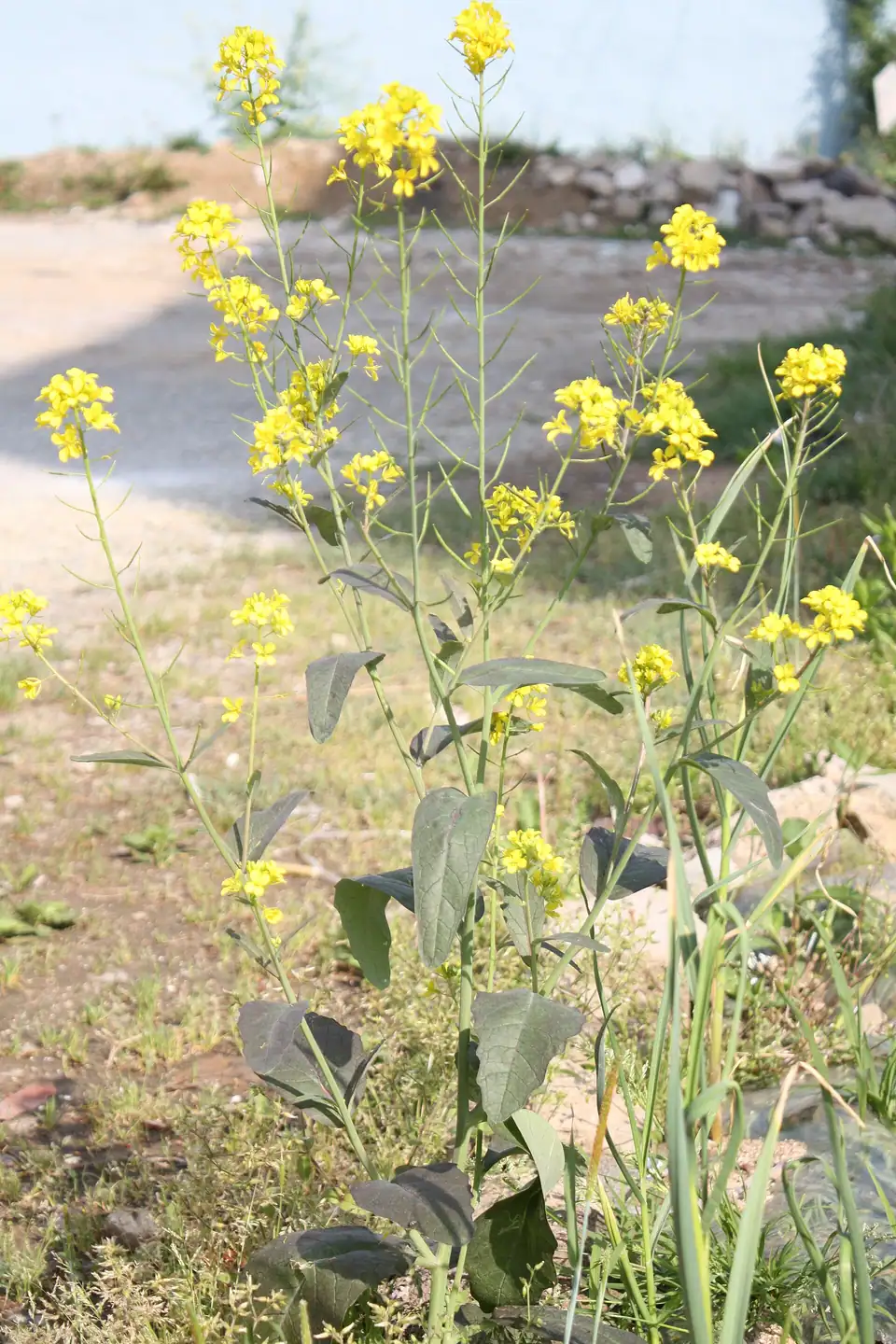
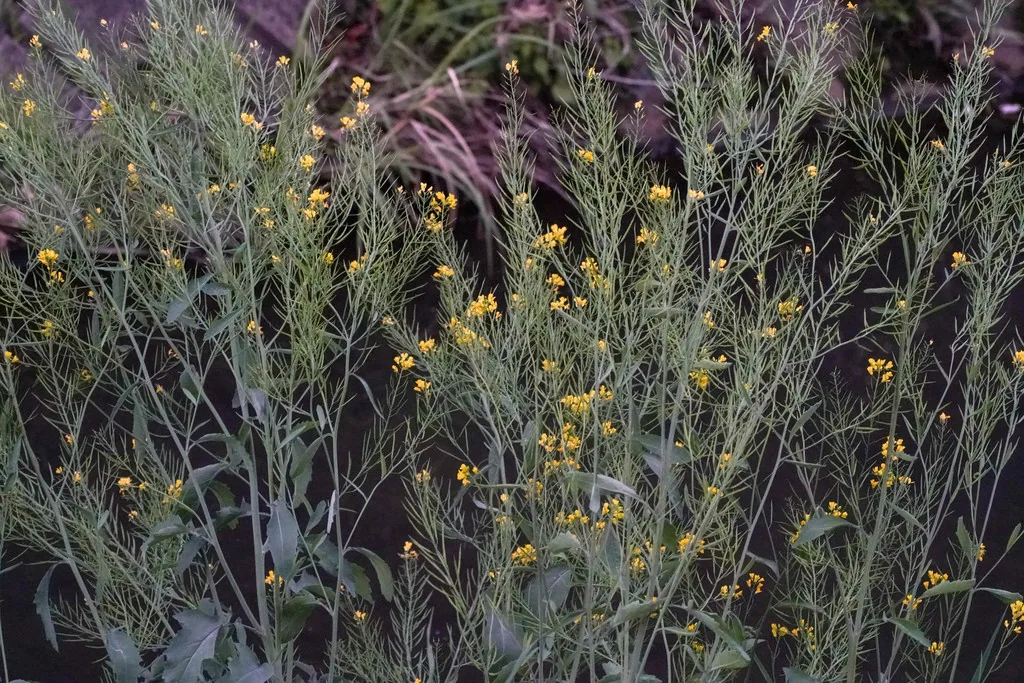

Cómo cultivar y cuidar Mostaza castaña
Brassica juncea
Escrito por Emilio Marruso · última revisión
Tóxica para: Caballos · Por qué
De un vistazo
La mostaza es un cultivo generoso: sus hojas, semillas, flores y tallos se comen crudos o cocinados. Recoge las hojas jóvenes para ensaladas variadas y cocina las más maduras como verdura. Dale sol pleno o semisombra y una tierra siempre húmeda, y vuelve a sembrar cada 2–3 semanas para tener cosecha durante más tiempo.
- Sol
Sol pleno o semisombra
Qué dicen las fuentes (1)
Luz: Pleno sol a semisombra
Mustard grows best in full sun to part shade and well-drained, rich, consistently moist soil.
— Brassica juncea (Brown Mustard, Brown Mustards, Chinese Mustard, Chinese Mustards, Giant Red Mustard, Indian Mustard, Indian Mustards, Leaf Mustard, Leaf Mustards, Mustard Greens, Oriental Mustard, Oriental Mustards, Vegetable Mustard, Vegetable Mustards) | North Carolina Extension Gardener Plant Toolbox [1] - Riego
Mantén la tierra siempre húmeda; riega temprano para que la planta se seque antes de la noche
Qué dicen las fuentes (3)
Riego: Suelo constantemente húmedo; riega temprano por la mañana
Mustard grows best in full sun to part shade and well-drained, rich, consistently moist soil. Watering early in the day will allow the plant to dry before nightfall and reduce the chance of fungal diseases.
— Brassica juncea (Brown Mustard, Brown Mustards, Chinese Mustard, Chinese Mustards, Giant Red Mustard, Indian Mustard, Indian Mustards, Leaf Mustard, Leaf Mustards, Mustard Greens, Oriental Mustard, Oriental Mustards, Vegetable Mustard, Vegetable Mustards) | North Carolina Extension Gardener Plant Toolbox [1] Notas sobre el riego: Riega por la mañana temprano para que la planta se seque antes de la noche y reduce las enfermedades fúngicas; el estrés por humedad y temperatura produce un sabor más picante y desagradablemente fuerte.
Watering early in the day will allow the plant to dry before nightfall and reduce the chance of fungal diseases.
— Brassica juncea (Brown Mustard, Brown Mustards, Chinese Mustard, Chinese Mustards, Giant Red Mustard, Indian Mustard, Indian Mustards, Leaf Mustard, Leaf Mustards, Mustard Greens, Oriental Mustard, Oriental Mustards, Vegetable Mustard, Vegetable Mustards) | North Carolina Extension Gardener Plant Toolbox [1] Moisture and temperature stress lead to a spicier, unpleasantly strong flavor as well.
— Brassica juncea (Brown Mustard, Brown Mustards, Chinese Mustard, Chinese Mustards, Giant Red Mustard, Indian Mustard, Indian Mustards, Leaf Mustard, Leaf Mustards, Mustard Greens, Oriental Mustard, Oriental Mustards, Vegetable Mustard, Vegetable Mustards) | North Carolina Extension Gardener Plant Toolbox [1] - Suelo
Suelo con pH 6,0–8,0
Qué dicen las fuentes (2)
pH del suelo, mínimo: 6.0
Soil Texture: High Organic Matter Soil pH: Neutral (6.0-8.0)
— Brassica juncea (Brown Mustard, Brown Mustards, Chinese Mustard, Chinese Mustards, Giant Red Mustard, Indian Mustard, Indian Mustards, Leaf Mustard, Leaf Mustards, Mustard Greens, Oriental Mustard, Oriental Mustards, Vegetable Mustard, Vegetable Mustards) | North Carolina Extension Gardener Plant Toolbox [1] pH del suelo, máximo: 8.0
Soil Texture: High Organic Matter Soil pH: Neutral (6.0-8.0)
— Brassica juncea (Brown Mustard, Brown Mustards, Chinese Mustard, Chinese Mustards, Giant Red Mustard, Indian Mustard, Indian Mustards, Leaf Mustard, Leaf Mustards, Mustard Greens, Oriental Mustard, Oriental Mustards, Vegetable Mustard, Vegetable Mustards) | North Carolina Extension Gardener Plant Toolbox [1] - Plantación
Trasplanta las plántulas en otoño, 3 semanas antes de la última helada
Qué dicen las fuentes (1)
Plantación: Plántulas en otoño, 3 semanas antes de la última helada
Plant seed or seedlings in the fall 3 weeks before the last frost. Additional seeds can be planted every 2-3 weeks to extend harvest.
— Brassica juncea (Brown Mustard, Brown Mustards, Chinese Mustard, Chinese Mustards, Giant Red Mustard, Indian Mustard, Indian Mustards, Leaf Mustard, Leaf Mustards, Mustard Greens, Oriental Mustard, Oriental Mustards, Vegetable Mustard, Vegetable Mustards) | North Carolina Extension Gardener Plant Toolbox [1] - Abonado
Abona antes de plantar y otra vez 4 semanas después del trasplante o del aclareo
Qué dicen las fuentes (4)
Cuándo: Se incorpora al suelo antes de plantar, luego un abono lateral 4 semanas después del trasplante o aclareo
Guía de Texas: Turnipsandmustardsneedadequate nitrogen todevelopa darkgreen color. When theplantsare4 to5 inchestall, apply½ cupof fertilizerforeach 10feetof row.
— [5] Before planting, determine fertilizer needs with a soil test and then follow the recommendations given with the test report.
— [6] Apply ½ cup per 10 feet of row of a nitrogen-based fertilizer (21-0-0) 4 weeks after transplanting or thinning to encourage rapid plant growth.
— [6] Evitar: Estrés por fertilizante o agua durante el crecimiento, que interrumpe el crecimiento
Minimize water or fertilizer stress during growth to ensure uninterrupted growth.
— [6] - Cosecha
Hojas jóvenes crudas en ensalada, las maduras cocinadas; se conservan 3–5 días en la nevera
Qué dicen las fuentes (1)
Conservación: Las hojas cosechadas se conservan en el refrigerador durante 3-5 días
Harvested leaves can be stored in the fridge for 3-5 days.
— Brassica juncea (Brown Mustard, Brown Mustards, Chinese Mustard, Chinese Mustards, Giant Red Mustard, Indian Mustard, Indian Mustards, Leaf Mustard, Leaf Mustards, Mustard Greens, Oriental Mustard, Oriental Mustards, Vegetable Mustard, Vegetable Mustards) | North Carolina Extension Gardener Plant Toolbox [1] - Plagas
Pulguillas, orugas, pulgones, babosas y caracoles
Qué dicen las fuentes (1)
Plagas: escarabajos pulga, orugas, pulgones, babosas, caracoles
Insects affecting this plant include flea beetles, caterpillars, aphids, slugs, and snails.
— Brassica juncea (Brown Mustard, Brown Mustards, Chinese Mustard, Chinese Mustards, Giant Red Mustard, Indian Mustard, Indian Mustards, Leaf Mustard, Leaf Mustards, Mustard Greens, Oriental Mustard, Oriental Mustards, Vegetable Mustard, Vegetable Mustards) | North Carolina Extension Gardener Plant Toolbox [1] - Atención
Con calor se espiga y sabe demasiado fuerte: cultívala en otoño y primavera, con algo de sombra
Qué dicen las fuentes (2)
Notas sobre el riego: Riega por la mañana temprano para que la planta se seque antes de la noche y reduce las enfermedades fúngicas; el estrés por humedad y temperatura produce un sabor más picante y desagradablemente fuerte.
Watering early in the day will allow the plant to dry before nightfall and reduce the chance of fungal diseases.
— Brassica juncea (Brown Mustard, Brown Mustards, Chinese Mustard, Chinese Mustards, Giant Red Mustard, Indian Mustard, Indian Mustards, Leaf Mustard, Leaf Mustards, Mustard Greens, Oriental Mustard, Oriental Mustards, Vegetable Mustard, Vegetable Mustards) | North Carolina Extension Gardener Plant Toolbox [1] Moisture and temperature stress lead to a spicier, unpleasantly strong flavor as well.
— Brassica juncea (Brown Mustard, Brown Mustards, Chinese Mustard, Chinese Mustards, Giant Red Mustard, Indian Mustard, Indian Mustards, Leaf Mustard, Leaf Mustards, Mustard Greens, Oriental Mustard, Oriental Mustards, Vegetable Mustard, Vegetable Mustards) | North Carolina Extension Gardener Plant Toolbox [1] - Tamaño
30–46 cm de alto y de ancho
Qué dicen las fuentes (2)
Altura adulta: 30-46 cm (1-1,5 pies)
Dimensions: Height: 1 ft. 0 in. - 1 ft. 6 in. Width: 1 ft. 0 in. - 1 ft. 6 in.
— Brassica juncea (Brown Mustard, Brown Mustards, Chinese Mustard, Chinese Mustards, Giant Red Mustard, Indian Mustard, Indian Mustards, Leaf Mustard, Leaf Mustards, Mustard Greens, Oriental Mustard, Oriental Mustards, Vegetable Mustard, Vegetable Mustards) | North Carolina Extension Gardener Plant Toolbox [1] Anchura adulta: 30-46 cm (1-1,5 pies)
Dimensions: Height: 1 ft. 0 in. - 1 ft. 6 in. Width: 1 ft. 0 in. - 1 ft. 6 in.
— Brassica juncea (Brown Mustard, Brown Mustards, Chinese Mustard, Chinese Mustards, Giant Red Mustard, Indian Mustard, Indian Mustards, Leaf Mustard, Leaf Mustards, Mustard Greens, Oriental Mustard, Oriental Mustards, Vegetable Mustard, Vegetable Mustards) | North Carolina Extension Gardener Plant Toolbox [1] - Multiplicación
Se multiplica por semilla
Qué dicen las fuentes (1)
Propagación: Semilla
Plant seed or seedlings in the fall 3 weeks before the last frost. Additional seeds can be planted every 2-3 weeks to extend harvest.
— Brassica juncea (Brown Mustard, Brown Mustards, Chinese Mustard, Chinese Mustards, Giant Red Mustard, Indian Mustard, Indian Mustards, Leaf Mustard, Leaf Mustards, Mustard Greens, Oriental Mustard, Oriental Mustards, Vegetable Mustard, Vegetable Mustards) | North Carolina Extension Gardener Plant Toolbox [1] - Siembra
Siembra en otoño, 3 semanas antes de la última helada; repite cada 2–3 semanas para cosechar más tiempo
Qué dicen las fuentes (1)
Siembra: Otoño, 3 semanas antes de la última helada; siembras adicionales cada 2-3 semanas para extender la cosecha
Plant seed or seedlings in the fall 3 weeks before the last frost. Additional seeds can be planted every 2-3 weeks to extend harvest.
— Brassica juncea (Brown Mustard, Brown Mustards, Chinese Mustard, Chinese Mustards, Giant Red Mustard, Indian Mustard, Indian Mustards, Leaf Mustard, Leaf Mustards, Mustard Greens, Oriental Mustard, Oriental Mustards, Vegetable Mustard, Vegetable Mustards) | North Carolina Extension Gardener Plant Toolbox [1] - Maceta
Crece también en maceta
Qué dicen las fuentes (1)
En maceta: Sí
Use this plant in the edible garden or in a container.
— Brassica juncea (Brown Mustard, Brown Mustards, Chinese Mustard, Chinese Mustards, Giant Red Mustard, Indian Mustard, Indian Mustards, Leaf Mustard, Leaf Mustards, Mustard Greens, Oriental Mustard, Oriental Mustards, Vegetable Mustard, Vegetable Mustards) | North Carolina Extension Gardener Plant Toolbox [1] - Seguridad
Mantenla lejos de los caballos: les resulta perjudicial
Resumen
La mostaza marrón es una hierba anual cultivada por sus hojas y flores comestibles que tiene un sabor picante a mostaza. [1] Crece mejor a pleno sol o semisombra y en suelo constantemente húmedo, como planta de estación fresca que se espiga en verano. [1]
Citado en inglés, como en la fuente.
Esta ficha está incompleta: las fuentes consultadas aún no cubren todos los campos.
Aún no cubierto por nuestras fuentes: Cosecha, Distancia de plantación
Cuidados
Riego
Riego
Suelo constantemente húmedo; riega temprano por la mañana
Qué dicen las fuentes (1)
Mustard grows best in full sun to part shade and well-drained, rich, consistently moist soil. Watering early in the day will allow the plant to dry before nightfall and reduce the chance of fungal diseases.Notas sobre el riego
Riega por la mañana temprano para que la planta se seque antes de la noche y reduce las enfermedades fúngicas; el estrés por humedad y temperatura produce un sabor más picante y desagradablemente fuerte.
Qué dicen las fuentes (2)
Watering early in the day will allow the plant to dry before nightfall and reduce the chance of fungal diseases.Moisture and temperature stress lead to a spicier, unpleasantly strong flavor as well.Luz
Pleno sol a semisombra
Qué dicen las fuentes (1)
Mustard grows best in full sun to part shade and well-drained, rich, consistently moist soil.Suelo
pH del suelo, mínimo
6.0
Qué dicen las fuentes (1)
Soil Texture:
High Organic Matter
Soil pH:
Neutral (6.0-8.0)pH del suelo, máximo
8.0
Qué dicen las fuentes (1)
Soil Texture:
High Organic Matter
Soil pH:
Neutral (6.0-8.0)Dónde cultivarla
En maceta
Sí
Qué dicen las fuentes (1)
Use this plant in the edible garden or in a container.Distancia de plantación
No figura en las fuentes consultadas.
Propagación
Semilla
Qué dicen las fuentes (1)
Plant seed or seedlings in the fall 3 weeks before the last frost. Additional seeds can be planted every 2-3 weeks to extend harvest.Cultivo
La planta
Ciclo de vida
anual
Qué dicen las fuentes (1)
Brown Mustard is an annual herb in the mustard family (Brassicaceae).Familia
Brassicaceae
Qué dicen las fuentes (1)
Brown Mustard is an annual herb in the mustard family (Brassicaceae).Altura adulta
30-46 cm (1-1,5 pies)
Qué dicen las fuentes (1)
Dimensions:
Height: 1 ft. 0 in. - 1 ft. 6 in.
Width: 1 ft. 0 in. - 1 ft. 6 in.Anchura adulta
30-46 cm (1-1,5 pies)
Qué dicen las fuentes (1)
Dimensions:
Height: 1 ft. 0 in. - 1 ft. 6 in.
Width: 1 ft. 0 in. - 1 ft. 6 in.Cosecha y conservación
Conservación
Las hojas cosechadas se conservan en el refrigerador durante 3-5 días
Qué dicen las fuentes (1)
Harvested leaves can be stored in the fridge for 3-5 days.Plagas y enfermedades
Plagas
escarabajos pulga, orugas, pulgones, babosas, caracoles
Qué dicen las fuentes (1)
Insects affecting this plant include flea beetles, caterpillars, aphids, slugs, and snails.Abonado
Cuándo
Se incorpora al suelo antes de plantar, luego un abono lateral 4 semanas después del trasplante o aclareo
Lo que dice cada fuente
Guía de Texas: abona lateralmente cuando las plantas midan 10.2–12.7 cm [4–5 in] de alto
Qué dicen las fuentes (3)
Guía de Texas: Turnipsandmustardsneedadequate
nitrogen todevelopa darkgreen color.
When theplantsare4 to5 inchestall,
apply½ cupof fertilizerforeach 10feetof
row.Before planting, determine fertilizer needs with a soil test and then follow the recommendations given with the test report.Apply ½ cup per 10 feet of row of a nitrogen-based fertilizer (21-0-0) 4 weeks after transplanting or thinning to encourage rapid plant growth.Abonos naturales
Materia orgánica bien compostada, no más de 2,54 cm [1 in] por 9,29 m² de jardín
Qué dicen las fuentes (1)
If you fertilize with compost, apply no more than 1 inch of well-composted organic matter per 100 square feet of garden area.Abonos minerales
Fertilizante nitrogenado (21-0-0) aplicado lateralmente a 119 mL por 3.05 m [10 ft] de hilera, colocado junto a las plantas y regado; las necesidades de fertilizante antes de plantar se determinan con un análisis de suelo
Lo que dice cada fuente
antes de plantar, Guía de Arkansas: fertilizante completo a 48.8 g/m² incorporado al lecho
antes de plantar, Guía de Texas: fertilizante completo para jardín como 10-20-10 a 97.6–146 g/m²
Qué dicen las fuentes (4)
antes de plantar, Guía de Arkansas: Prepare the soil by broadcasting
and working in one pound of a
complete fertilizer, such as 131313,
per 100 square feet of bed.antes de plantar, Guía de Texas: Figure 4. Scatter 2 to 3 pounds of complete gar-
den fertilizer such as 10-20-10 over each 100
square feet.Apply ½ cup per 10 feet of row of a nitrogen-based fertilizer (21-0-0) 4 weeks after transplanting or thinning to encourage rapid plant growth. Place the fertilizer to the side of the plants and irrigate it into the soil.If fertilizer applications are warranted, work the fertilizer into the top 6 inches of soil.Evitar
Estrés por fertilizante o agua durante el crecimiento, que interrumpe el crecimiento
Qué dicen las fuentes (1)
Minimize water or fertilizer stress during growth to ensure uninterrupted growth.Problemas
Espigado y sabor fuerte con el calor
Síntoma: Espigado y sabor fuerte en verano; el estrés por humedad y temperatura produce un sabor más picante y desagradablemente fuerte.
Qué hacer: Cultiva en otoño y primavera; proporciona algo de sombra cuando el clima se vuelve caluroso.
Qué dicen las fuentes (2)
As a cool-season plant, it does best in the fall and spring, bolting and developing a strong flavor in the summer.
— Brassica juncea (Brown Mustard, Brown Mustards, Chinese Mustard, Chinese Mustards, Giant Red Mustard, Indian Mustard, Indian Mustards, Leaf Mustard, Leaf Mustards, Mustard Greens, Oriental Mustard, Oriental Mustards, Vegetable Mustard, Vegetable Mustards) | North Carolina Extension Gardener Plant Toolbox [1] Some shade is appreciated as the weather turns hot, especially for growing baby greens.
— Brassica juncea (Brown Mustard, Brown Mustards, Chinese Mustard, Chinese Mustards, Giant Red Mustard, Indian Mustard, Indian Mustards, Leaf Mustard, Leaf Mustards, Mustard Greens, Oriental Mustard, Oriental Mustards, Vegetable Mustard, Vegetable Mustards) | North Carolina Extension Gardener Plant Toolbox [1] Insectos plaga
Síntoma: Escarabajos de la pulga, orugas, pulgones, babosas y caracoles afectan la planta.
Qué dicen las fuentes (1)
Insects affecting this plant include flea beetles, caterpillars, aphids, slugs, and snails.
— Brassica juncea (Brown Mustard, Brown Mustards, Chinese Mustard, Chinese Mustards, Giant Red Mustard, Indian Mustard, Indian Mustards, Leaf Mustard, Leaf Mustards, Mustard Greens, Oriental Mustard, Oriental Mustards, Vegetable Mustard, Vegetable Mustards) | North Carolina Extension Gardener Plant Toolbox [1] Enfermedades fúngicas
Síntoma: Pueden ocurrir enfermedades fúngicas.
Qué hacer: Riega por la mañana temprano para que la planta se seque antes de la noche.
Qué dicen las fuentes (1)
Watering early in the day will allow the plant to dry before nightfall and reduce the chance of fungal diseases.
— Brassica juncea (Brown Mustard, Brown Mustards, Chinese Mustard, Chinese Mustards, Giant Red Mustard, Indian Mustard, Indian Mustards, Leaf Mustard, Leaf Mustards, Mustard Greens, Oriental Mustard, Oriental Mustards, Vegetable Mustard, Vegetable Mustards) | North Carolina Extension Gardener Plant Toolbox [1]
Remedios
Cada remedio indica qué dicen las fuentes oficiales; los remedios tradicionales sin fuente oficial aparecen marcados. Los perjudiciales están para que sepas evitarlos.
Cuidar la planta
plagas de insectos
recolección manual de insectos Funciona
Cómo: Recoge los insectos a mano de las plantas.
Many insect and disease issues can be solved in the home garden by hand-picking insects or clipping and disposing of diseased plant parts.
— extension.unh.edu [8] Qué dicen las pruebas Many insect and disease issues can be solved in the home garden by hand-picking insects or clipping and disposing of diseased plant parts.
— extension.unh.edu [8]
enfermedades fúngicas
Riega temprano en el día. Funciona
Cómo: Riega por la mañana temprano para que la planta se seque antes de la noche.
Watering early in the day will allow the plant to dry before nightfall and reduce the chance of fungal diseases.
— Brassica juncea (Brown Mustard, Brown Mustards, Chinese Mustard, Chinese Mustards, Giant Red Mustard, Indian Mustard, Indian Mustards, Leaf Mustard, Leaf Mustards, Mustard Greens, Oriental Mustard, Oriental Mustards, Vegetable Mustard, Vegetable Mustards) | North Carolina Extension Gardener Plant Toolbox [1] Qué dicen las pruebas Watering early in the day will allow the plant to dry before nightfall and reduce the chance of fungal diseases.
— Brassica juncea (Brown Mustard, Brown Mustards, Chinese Mustard, Chinese Mustards, Giant Red Mustard, Indian Mustard, Indian Mustards, Leaf Mustard, Leaf Mustards, Mustard Greens, Oriental Mustard, Oriental Mustards, Vegetable Mustard, Vegetable Mustards) | North Carolina Extension Gardener Plant Toolbox [1]
Venenosa para los animales
Según la fuente, citada textualmente. No es un consejo médico ni veterinario: si una persona o un animal pudo haber ingerido esta planta, contacta con un centro de toxicología o con un veterinario.
Landscape Theme: Edible Garden Design Feature: Mass Planting Problems: Problem for Horses
[1]La fuente señala el riesgo para este animal pero no explica por qué.
Calendario
Siembra
Otoño, 3 semanas antes de la última helada; siembras adicionales cada 2-3 semanas para extender la cosecha
Qué dicen las fuentes (1)
Plant seed or seedlings in the fall 3 weeks before the last frost. Additional seeds can be planted every 2-3 weeks to extend harvest.Plantación
Plántulas en otoño, 3 semanas antes de la última helada
Qué dicen las fuentes (1)
Plant seed or seedlings in the fall 3 weeks before the last frost. Additional seeds can be planted every 2-3 weeks to extend harvest.Cosecha
No figura en las fuentes consultadas.
Meses tal como los dan las fuentes, en su mayoría de Estados Unidos (hemisferio norte). En el hemisferio sur se desplazan unos seis meses.
Respecto a las heladas
Estimación menos precisa: no hay ninguna estación meteorológica a menos de 300 km.
Busca las fechas de heladas por código postal o ciudad
Plantación: 3 semanas antes de la última helada
Plant seed or seedlings in the fall 3 weeks before the last frost.
— Brassica juncea (Brown Mustard, Brown Mustards, Chinese Mustard, Chinese Mustards, Giant Red Mustard, Indian Mustard, Indian Mustards, Leaf Mustard, Leaf Mustards, Mustard Greens, Oriental Mustard, Oriental Mustards, Vegetable Mustard, Vegetable Mustards) | North Carolina Extension Gardener Plant Toolbox [1]
Cuenta desde las fechas medias de las heladas de tu zona.
Comestibilidad
Según la fuente, citada textualmente. No comas una planta basándote solo en esta página: los errores de identificación pueden ser peligrosos.
Valores orientativos
Valores de una fuente secundaria, no comprobados palabra por palabra como el resto de esta página. Úselos como punto de partida.
- Horas de sol
- 6-8 horasValor orientativo, adáptalo a tu clima · Fuente secundaria
- Resiste la sequía
- SíValor orientativo, adáptalo a tu clima · Fuente secundaria
- Zonas de rusticidad USDA
- 2-11 [mínima invernal de −45,6 a 10 °C (de −50 a 50 °F)]Valor orientativo, adáptalo a tu clima · Fuente secundaria
- Nivel de cuidado
- MedioValor orientativo, adáptalo a tu clima · Fuente secundaria
- Crecimiento
- BajoValor orientativo, adáptalo a tu clima · Fuente secundaria
Plantas similares
- Mostaza negra Brassica nigra
- Col Silvestre Brassica oleracea
- Colza Brassica napus
- Nabo silvestre Brassica rapa
- Mediterranean cabbage Brassica fruticulosa
- American Yellow Rocket Barbarea orthoceras
- Mastuerzo silvestre Lepidium latifolium
- Muñidor Bunias erucago
Fuentes
Cada valor anterior se cita de estos documentos. Los enlaces llevan al editor original.
- Brassica juncea (Brown Mustard, Brown Mustards, Chinese Mustard, Chinese Mustards, Giant Red Mustard, Indian Mustard, Indian Mustards, Leaf Mustard, Leaf Mustards, Mustard Greens, Oriental Mustard, Oriental Mustards, Vegetable Mustard, Vegetable Mustards) | North Carolina Extension Gardener Plant Toolbox · plants.ces.ncsu.edu, consultado
- Brown Mustards - Brassica juncea | North Carolina Extension Gardener Plant Toolbox · plants.ces.ncsu.edu, consultado
- Mustard Greens - Brassica juncea | North Carolina Extension Gardener Plant Toolbox · plants.ces.ncsu.edu, consultado
- Oriental Mustards - Brassica juncea | North Carolina Extension Gardener Plant Toolbox · plants.ces.ncsu.edu, consultado
- aggie-horticulture.tamu.edu · aggie-horticulture.tamu.edu
- extension.usu.edu · extension.usu.edu
- uaex.uada.edu · uaex.uada.edu
- extension.unh.edu · extension.unh.edu
Escrito por Emilio Marruso · última revisión