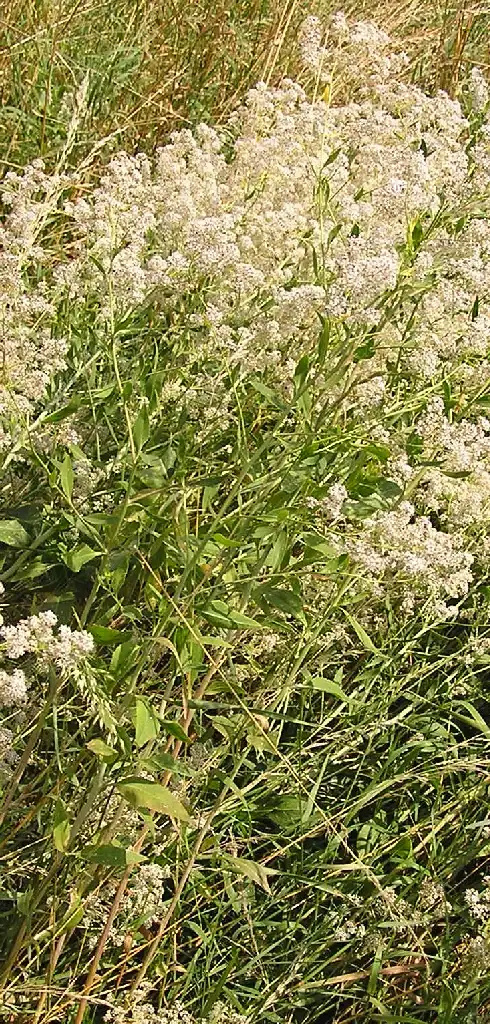
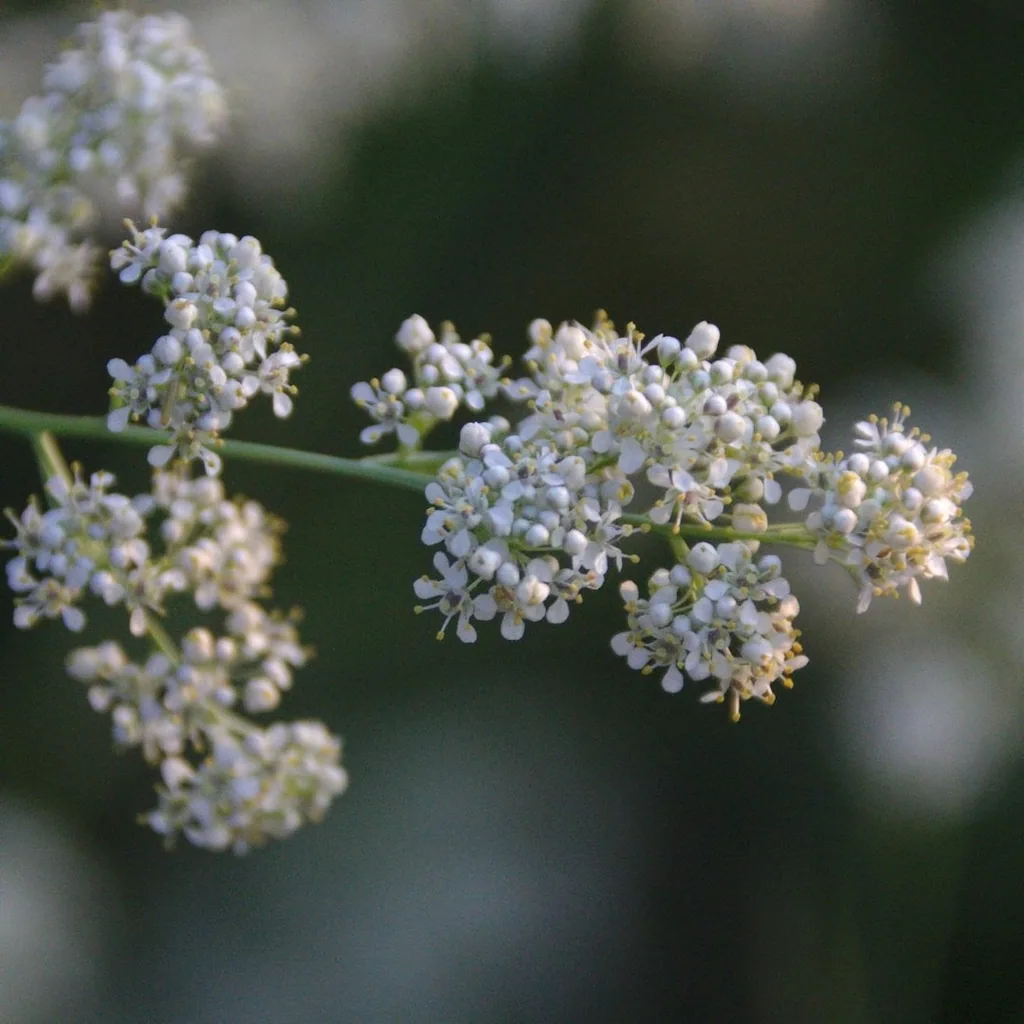

Cómo cultivar y cuidar Mastuerzo silvestre
Lepidium latifolium
Escrito por Emilio Marruso · última revisión
De un vistazo
Esta planta perenne lleva a tu cocina un sabor muy picante, parecido al del berro: las hojas jóvenes alegran las ensaladas a finales del invierno y la raíz rallada da una salsa que sustituye al rábano picante. Le gusta el sol pleno o la sombra ligera, con riego moderado, y hasta tolera el suelo salino. Eso sí, dale espacio: sus raíces se extienden y echan brotes nuevos.
- Sol
Sol pleno o sombra ligera
Qué dicen las fuentes (2)
- Riego
Riego moderado; no soporta la sequía, pero tolera el suelo salino
Qué dicen las fuentes (2)
Riego: Moderado
Light full sun Shade tolerance light shade Water moderate Hardiness Zone 6+
— Dittander (Lepidium latifolium) — Practical Plants [2] Notas sobre el riego: Intolerante a la sequía; tolerante a la salinidad
Tolerates Nutritionally Poor Soil No Drought intolerant Salinity tolerant
— Dittander (Lepidium latifolium) — Practical Plants [2] - Frío
Aguanta inviernos de hasta −23,3 °C (−10 °F)
Muy rústica · USDA 6 · RHS H7 · Z6
Qué dicen las fuentes (1)
Rusticidad, zona más fría: 6 [mínima invernal de −23,3 a −17,8 °C (de −10 a 0 °F)]
Light full sun Shade tolerance light shade Water moderate Hardiness Zone 6+
— Dittander (Lepidium latifolium) — Practical Plants [2] - Plantación
Planta en primavera
Qué dicen las fuentes (2)
Plantación: Primavera
Seed - sow spring in a cold frame. When they are large enough to handle, prick the seedlings out into individual pots and plant them out in the spring.
— Dittander (Lepidium latifolium) — Practical Plants [2] Division in spring. Plant them out direct into their permanent positions. Division is very simple and succeeds at almost any time of the year[K].
— Dittander (Lepidium latifolium) — Practical Plants [2] - Cosecha
Recoge las hojas jóvenes a finales del invierno para ensaladas; ralla la raíz como rábano picante
Qué dicen las fuentes (2)
Cosecha: Hojas jóvenes a fines del invierno, muy temprano en el año
It produces new growth early in the year and so can be a useful salad ingredient in late winter[K].
— Dittander (Lepidium latifolium) — Practical Plants [2] though they have always seemed to be too strong for us to want to try this[K]. The leaves are available very early in the year[K].
— Dittander (Lepidium latifolium) — Practical Plants [2] - Atención
Las raíces se extienden hasta 3 m a los lados y sus trozos dan plantas nuevas
Qué dicen las fuentes (4)
Sistema radicular: Sistema de raíces extenso que almacena energía, con raíces largas y mínimamente ramificadas que se ensanchan en la superficie del suelo formando una corona semileñosa; las raíces rastreras se extienden lateralmente hasta 3.05 m [10 ft] y los segmentos de raíz producen brotes que forman nuevos tallos
Established perennial pepperweed plants develop an extensive root system capable of storing large amounts of energy.
— Perennial Pepperweed / Home and Landscape / UC Statewide IPM Program (UC IPM) [3] Roots are long, minimally branched, and enlarged at the soil surface forming a semi-woody crown.
— Perennial Pepperweed / Home and Landscape / UC Statewide IPM Program (UC IPM) [3] It is important to extend the plastic tarp at least 10 feet on all sides of the infested area as creeping roots can spread laterally up to 10 feet.
— Perennial Pepperweed / Home and Landscape / UC Statewide IPM Program (UC IPM) [3] Root segments also produce random buds capable of generating new shoots .
— Perennial Pepperweed / Home and Landscape / UC Statewide IPM Program (UC IPM) [3] - Multiplicación
Multiplícala por semilla, dividiendo la mata o con trozos de raíz
Qué dicen las fuentes (2)
Propagación: Semilla; división; fragmentos de raíz
Division in spring. Plant them out direct into their permanent positions. Division is very simple and succeeds at almost any time of the year[K].
— Dittander (Lepidium latifolium) — Practical Plants [2] It reproduces both by seed and vegetatively from its roots and small root fragments.
— Lepidium latifolium Profile – California Invasive Plant Council [4] - Siembra
Siembra en primavera en cajonera fría
Qué dicen las fuentes (1)
Siembra: Primavera, en un marco frío
Seed - sow spring in a cold frame. When they are large enough to handle, prick the seedlings out into individual pots and plant them out in the spring.
— Dittander (Lepidium latifolium) — Practical Plants [2]
Resumen
El pimentero perenne es una hierba perenne de la familia de las mostazas, nativa de Eurasia, que está catalogada como maleza nociva en California y otros estados del oeste de EE. UU. [4] Se reproduce por semilla y por sus raíces y pequeños fragmentos de raíz, formando colonias densas que excluyen a las especies nativas. [4] Sus hojas jóvenes tienen un sabor picante parecido al del berro y se han comido crudas o cocidas, y la raíz rallada se ha usado como sustituto del rábano picante. [2]
Citado en inglés, como en la fuente.
Esta ficha está incompleta: las fuentes consultadas aún no cubren todos los campos.
Aún no cubierto por nuestras fuentes: Rusticidad, zona más cálida
Cuidados
Riego
Riego
Moderado
Qué dicen las fuentes (1)
Light
full sun
Shade tolerance
light shade
Water
moderate
Hardiness
Zone 6+Notas sobre el riego
Intolerante a la sequía; tolerante a la salinidad
Qué dicen las fuentes (1)
Tolerates Nutritionally Poor Soil
No
Drought
intolerant
Salinity
tolerantLuz
Pleno sol a semisombra
Clima y frío
Rusticidad, zona más fría
6 [mínima invernal de −23,3 a −17,8 °C (de −10 a 0 °F)]
Qué dicen las fuentes (1)
Light
full sun
Shade tolerance
light shade
Water
moderate
Hardiness
Zone 6+Rusticidad, zona más cálida
No figura en las fuentes consultadas.
Propagación
Semilla; división; fragmentos de raíz
Qué dicen las fuentes (2)
Division in spring. Plant them out direct into their permanent positions. Division is very simple and succeeds at almost any time of the year[K].It reproduces both by seed and vegetatively from its roots and small root fragments.Cultivo
La planta
Ciclo de vida
perenne
Qué dicen las fuentes (1)
Perennial pepperweed is a long-lived herbaceous perennial that thrives in seasonally wet areas or areas with a high water table.Familia
Brassicaceae
Qué dicen las fuentes (1)
Perennial pepperweed is a member of the mustard family, Brassicaceae.Raíces
Sistema radicular
Sistema de raíces extenso que almacena energía, con raíces largas y mínimamente ramificadas que se ensanchan en la superficie del suelo formando una corona semileñosa; las raíces rastreras se extienden lateralmente hasta 3.05 m [10 ft] y los segmentos de raíz producen brotes que forman nuevos tallos
Qué dicen las fuentes (4)
Established perennial pepperweed plants develop an extensive root system capable of storing large amounts of energy.Roots are long, minimally branched, and enlarged at the soil surface forming a semi-woody crown.It is important to extend the plastic tarp at least 10 feet on all sides of the infested area as creeping roots can spread laterally up to 10 feet.Root segments also produce random buds capable of generating new shoots .Remedios
Cada remedio indica qué dicen las fuentes oficiales; los remedios tradicionales sin fuente oficial aparecen marcados. Los perjudiciales están para que sepas evitarlos.
Cómo eliminarla
propagación invasiva
Arranca a mano con la mayor cantidad de raíz posible Funciona en parte
New and very small patches can be hand-pulled but this species has a huge root system that is difficult to remove once established. Plants can grow back from root fragments.
— kingcounty.gov [5] Removal is not recommended; may spread by breaking off root fragments
— jeffco.us [6] Cómo: Arranca de inmediato las plantas dispersas en áreas ajardinadas, quitando la mayor cantidad de raíz posible.
Pulling plants (try and remove as much of the root as possible) is an effective way of controlling a few scattered plants growing within landscaped areas.
— Perennial Pepperweed / Home and Landscape / UC Statewide IPM Program (UC IPM) [3] Qué dicen las pruebas Seedlings are easily controlled by hand pulling or tillage, but these techniques do not control established plants because shoots quickly resprout from the vast root reserves.
— Perennial Pepperweed / Home and Landscape / UC Statewide IPM Program (UC IPM) [3] excavación profunda repetida No verificado
Remedio tradicional, no verificado por una fuente oficial.
New plants readily sprout from root fragments, so hand-pulled or dug areas must be monitored frequently and new growth pulled or dug as soon as it appears.
— carsonnow.org [7] Cómo: Donde la infestación sea pequeña, excava profundo y de forma repetida durante dos o tres años; funciona mejor en suelos húmedos y sueltos.
cubrimiento con plástico negro grueso Funciona en parte
It is important to extend the plastic tarp at least 10 feet on all sides of the infested area as creeping roots can spread laterally up to 10 feet.
— Perennial Pepperweed / Home and Landscape / UC Statewide IPM Program (UC IPM) [3] Cómo: Cubre la zona infestada con plástico negro grueso durante dos temporadas de crecimiento, extendiéndolo al menos 10 pies más allá del parche; si cortas y labras primero, mejora el control.
The best control with tarping was obtained using thick, black plastic secured over the infested area for two growing seasons.
— Perennial Pepperweed / Home and Landscape / UC Statewide IPM Program (UC IPM) [3] Qué dicen las pruebas Perennial pepperweed is less affected by tarping and solarization than annual species due to its large perennial root structure.
— Perennial Pepperweed / Home and Landscape / UC Statewide IPM Program (UC IPM) [3] solarización en carpa de las plantas arrancadas Fuente oficial, sin prueba independiente
Cómo: Después de arrancar a mano, solariza las plantas arrancadas bajo una carpa de plástico para matar semillas y raíces cuando no puedan desecharse.
Tent solarization can be used to kill seeds and roots after hand pulling if disposal of pulled plants is not possible.
— Perennial Pepperweed / Home and Landscape / UC Statewide IPM Program (UC IPM) [3] solo segar No demostrado
Mowing also stimulates perennial pepperweed plants to resprout and produce new growth.
— Perennial Pepperweed / Home and Landscape / UC Statewide IPM Program (UC IPM) [3] Cómo: La siega solo elimina las plantas temporalmente. Córtalas primero y trata los rebrotes.
Mowing or cutting alone is not effective. Plants will only be gone temporarily and may come back even worse.
— kingcounty.gov [5] Qué dicen las pruebas Mowing and burning are not effective in reducing perennial pepperweed stands, but they are helpful in removing accumulated thatch.
— Perennial Pepperweed / Home and Landscape / UC Statewide IPM Program (UC IPM) [3] tela de jardinería o mantillo y plantación densa Fuente oficial, sin prueba independiente
Cómo: Una vez que la planta deje de rebrotar, coloca tela de jardinería o mantillo y planta herbáceas muy juntas; arranca a mano cualquier rebrote.
Once perennial pepperweed ceases to resprout, apply landscape fabric or mulch and transplant closely spaced herbaceous plants to prevent invasion.
— Perennial Pepperweed / Home and Landscape / UC Statewide IPM Program (UC IPM) [3] eliminación de plantas florecidas en la basura Fuente oficial, sin prueba independiente
Plants may re-root in an at-home compost if it doesn’t get hot enough to completely compost the tough roots and stems.
— kingcounty.gov [5] Cómo: Coloca las plantas con flores o semillas en la basura; las partes sin flores van al compost municipal o al residuo de jardín, no a una pila de compost casera.
If the plant is flowering or in seed, dispose of all plant parts in the garbage. If the plant is seeding, be very careful not to spread seeds.
— kingcounty.gov [5]
Calendario
Siembra
Primavera, en un marco frío
Qué dicen las fuentes (1)
Seed - sow spring in a cold frame. When they are large enough to handle, prick the seedlings out into individual pots and plant them out in the spring.Plantación
Primavera
Qué dicen las fuentes (2)
Seed - sow spring in a cold frame. When they are large enough to handle, prick the seedlings out into individual pots and plant them out in the spring.Division in spring. Plant them out direct into their permanent positions. Division is very simple and succeeds at almost any time of the year[K].Cosecha
Hojas jóvenes a fines del invierno, muy temprano en el año
Qué dicen las fuentes (2)
It produces new growth early in the year and so can be a useful salad ingredient in late winter[K].though they have always seemed to be too strong for us to want to try this[K]. The leaves are available very early in the year[K].Meses tal como los dan las fuentes, en su mayoría de Estados Unidos (hemisferio norte). En el hemisferio sur se desplazan unos seis meses.
Comestibilidad
Según la fuente, citada textualmente. No comas una planta basándote solo en esta página: los errores de identificación pueden ser peligrosos.
Young leaves - raw or cooked [5] [8] [9] . A very hot cress-like flavour[K]. The leaves are nice when used in small quantities as a flavouring in salads[K].
[2]Root - it can be grated and made into a sauce which is used as a horseradish substitute [5] [7] [4] . It has a pungently hot flavour.
[2]It has a pungently hot flavour. Seed - used as a condiment [3] [4] .
[2]
Plantas similares
- Mastuerzo Lepidium sativum
- American Yellow Rocket Barbarea orthoceras
- Mostaza negra Brassica nigra
- Mostaza castaña Brassica juncea
- Col Silvestre Brassica oleracea
- Muñidor Bunias erucago
- Rábano Raphanus sativus
- Juliana Hesperis matronalis
Fuentes
Cada valor anterior se cita de estos documentos. Los enlaces llevan al editor original.
-  · renzweedscience.cals.wisc.edu, consultado
- Dittander (Lepidium latifolium) — Practical Plants · practicalplants.org, consultado
- Perennial Pepperweed / Home and Landscape / UC Statewide IPM Program (UC IPM) · ipm.ucanr.edu, consultado
- Lepidium latifolium Profile – California Invasive Plant Council · cal-ipc.org, consultado
- kingcounty.gov · kingcounty.gov
- jeffco.us · jeffco.us
- carsonnow.org · carsonnow.org
Escrito por Emilio Marruso · última revisión