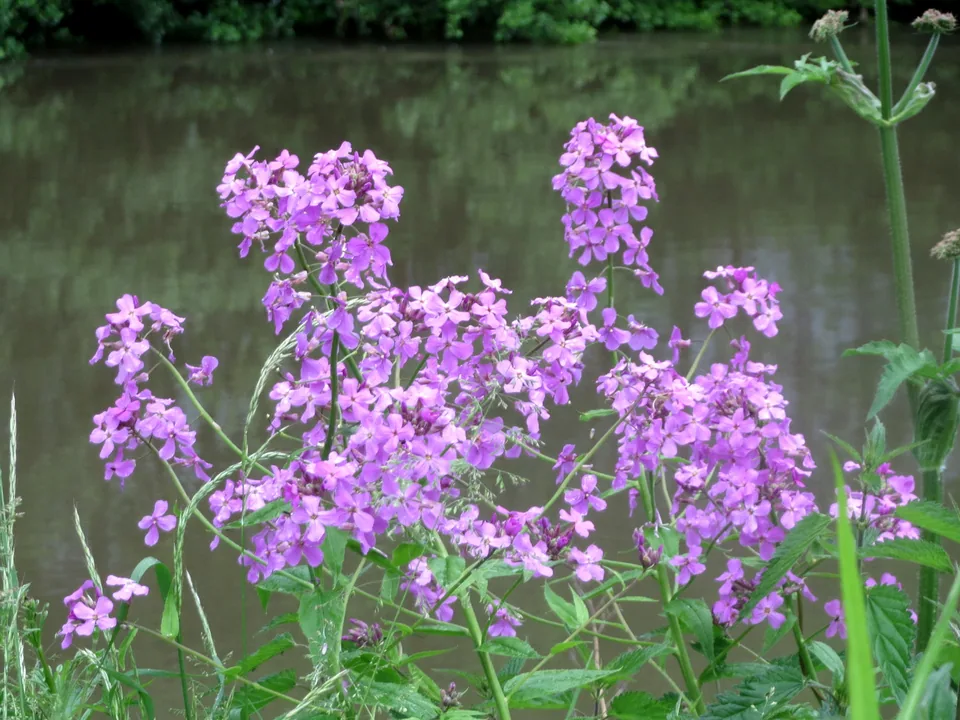


How to Grow and Care for Dame's Rocket
Hesperis matronalis
Written by Emilio Marruso · last checked
At a glance
Dame's rocket is an easygoing biennial that grows in full sun or partial shade and handles drought in average, well-drained soil. Its young leaves are rich in vitamin C and add a slightly bitter bite to salads, and the seeds can be sprouted too. Just cut off the flowers as soon as they fade, so it doesn't spread all over your garden.
- Sun
Full sun to partial shade
What the sources say (2)
Light: Full sun to partial shade
It will grow well in average, well-drained soil in full or partial sun.
— Hesperis matronalis (Damask Violet, Dame's Rocket, Dame's Violet, Garden Rocket, Mother-Of-The-Evening, Sweet Rocket) | North Carolina Extension Gardener Plant Toolbox [1] Frequently found in open fields, wetlands, disturbed areas, forest edges, and lightly shaded woodlands, it prefers to grow in moist soil and light shade, but is adaptable to a wide range of growing conditions.
— Dame's Rocket – Give This Lady a Miss [4] - Water
Handles drought well
What the sources say (2)
Watering notes: Grows in average, well-drained soil; listed as resistant to drought
It will grow well in average, well-drained soil in full or partial sun.
— Hesperis matronalis (Damask Violet, Dame's Rocket, Dame's Violet, Garden Rocket, Mother-Of-The-Evening, Sweet Rocket) | North Carolina Extension Gardener Plant Toolbox [1] Resistance To Challenges: Deer Drought Poor Soil Problems: Weedy
— Hesperis matronalis (Damask Violet, Dame's Rocket, Dame's Violet, Garden Rocket, Mother-Of-The-Evening, Sweet Rocket) | North Carolina Extension Gardener Plant Toolbox [1] - Cold
Survives winters down to −40 °F (−40 °C)
Very hardy · USDA 3a · RHS H7 · Z3
What the sources say (2)
Hardiness, coldest zone: 3a [winter low −40 to −37.2 °C (−40 to −35 °F)]
USDA Plant Hardiness Zone: 3a, 3b, 4a, 4b, 5a, 5b, 6a, 6b, 7a, 7b, 8a, 8b
— Hesperis matronalis (Damask Violet, Dame's Rocket, Dame's Violet, Garden Rocket, Mother-Of-The-Evening, Sweet Rocket) | North Carolina Extension Gardener Plant Toolbox [1] Hardiness, warmest zone: 8b [winter low −9.4 to −6.7 °C (15 to 20 °F)]
USDA Plant Hardiness Zone: 3a, 3b, 4a, 4b, 5a, 5b, 6a, 6b, 7a, 7b, 8a, 8b
— Hesperis matronalis (Damask Violet, Dame's Rocket, Dame's Violet, Garden Rocket, Mother-Of-The-Evening, Sweet Rocket) | North Carolina Extension Gardener Plant Toolbox [1] - Soil
Average, well-drained soil
What the sources say (2)
Watering notes: Grows in average, well-drained soil; listed as resistant to drought
It will grow well in average, well-drained soil in full or partial sun.
— Hesperis matronalis (Damask Violet, Dame's Rocket, Dame's Violet, Garden Rocket, Mother-Of-The-Evening, Sweet Rocket) | North Carolina Extension Gardener Plant Toolbox [1] Resistance To Challenges: Deer Drought Poor Soil Problems: Weedy
— Hesperis matronalis (Damask Violet, Dame's Rocket, Dame's Violet, Garden Rocket, Mother-Of-The-Evening, Sweet Rocket) | North Carolina Extension Gardener Plant Toolbox [1] - Pruning
Cut off faded flowers right away, before they make seed
What the sources say (1)
Pruning: Deadhead as soon as the flowers fade, before it goes to seed
If you do choose to include it in your garden, deadhead it as soon as the flowers fade, before it goes to seed.
— Dame's Rocket – Give This Lady a Miss [4] - Harvest
Pick young leaves while it blooms for salads; the seeds can be sprouted
What the sources say (2)
Harvest: Leaves are best picked when the flowers are blooming
Leaves are antiscorbutic, diaphoretic and diuretic, and are best picked when the flowers are blooming. Oil from the seeds is used in making perfume.
— Hesperis matronalis (Damask Violet, Dame's Rocket, Dame's Violet, Garden Rocket, Mother-Of-The-Evening, Sweet Rocket) | North Carolina Extension Gardener Plant Toolbox [1] How to harvest: Leaves are best picked when the flowers are blooming.
Leaves are antiscorbutic, diaphoretic and diuretic, and are best picked when the flowers are blooming.
— Hesperis matronalis (Damask Violet, Dame's Rocket, Dame's Violet, Garden Rocket, Mother-Of-The-Evening, Sweet Rocket) | North Carolina Extension Gardener Plant Toolbox [1] - Watch out
Spreads by seed and crowds out native plants; pull extras while small, with the whole root
- Size
1–2 ft wide
What the sources say (1)
Mature width: 30-61 cm (1-2 ft)
Dimensions: Height: 1 ft. 0 in. - 3 ft. 0 in. Width: 1 ft. 0 in. - 2 ft. 0 in.
— Hesperis matronalis (Damask Violet, Dame's Rocket, Dame's Violet, Garden Rocket, Mother-Of-The-Evening, Sweet Rocket) | North Carolina Extension Gardener Plant Toolbox [1] - Propagation
A biennial that grows from seed
What the sources say (3)
Propagation: Seed
It is a biennial or short-lived perennial with foliage only for the first year before blooming in the second year. Easily propagated by seeds.
— Hesperis matronalis (Damask Violet, Dame's Rocket, Dame's Violet, Garden Rocket, Mother-Of-The-Evening, Sweet Rocket) | North Carolina Extension Gardener Plant Toolbox [1] Life cycle: biennial (sometimes a short-lived perennial)
It is a biennial or short-lived perennial with foliage only for the first year before blooming in the second year.
— Hesperis matronalis (Damask Violet, Dame's Rocket, Dame's Violet, Garden Rocket, Mother-Of-The-Evening, Sweet Rocket) | North Carolina Extension Gardener Plant Toolbox [1] Dame's rocket usually grows as a biennial, two to four feet in height, producing a rosette of basal foliage in the first year
— Dame's Rocket – Give This Lady a Miss [4]
Overview
Dame's rocket is a biennial or short-lived perennial of the mustard family, native to Europe and Central Asia, with fragrant four-petaled flowers. [1][4] It grows well in average, well-drained soil in full or partial sun. [1] It is highly weedy and invasive in many places, and the sources advise against planting it in the landscape. [1][4]
Dame's Rocket care
How to water Dame's Rocket
Watering
The sources give different values depending on region, zone or growing conditions.
What each source says
According to Penn State Extension: Prefers moist soil and light shade; adaptable to a wide range of growing conditions
According to NC State Extension: Average, well-drained soil; listed as resistant to drought
What the sources say (3)
According to Penn State Extension: it prefers to grow in moist soil and light shade, but is adaptable to a wide range of growing conditions.According to NC State Extension: It will grow well in average, well-drained soil in full or partial sun.Frequently found in open fields, wetlands, disturbed areas, forest edges, and lightly shaded woodlands, it prefers to grow in moist soil and light shade, but is adaptable to a wide range of growing conditions.Watering notes
Grows in average, well-drained soil; listed as resistant to drought
What the sources say (2)
It will grow well in average, well-drained soil in full or partial sun.Resistance To Challenges: Deer Drought Poor Soil Problems: WeedyHow much light Dame's Rocket needs
Full sun to partial shade
What the sources say (2)
It will grow well in average, well-drained soil in full or partial sun.Frequently found in open fields, wetlands, disturbed areas, forest edges, and lightly shaded woodlands, it prefers to grow in moist soil and light shade, but is adaptable to a wide range of growing conditions.How much cold Dame's Rocket can take
Hardiness, coldest zone
3a [winter low −40 to −37.2 °C (−40 to −35 °F)]
What the sources say (1)
USDA Plant Hardiness Zone: 3a, 3b, 4a, 4b, 5a, 5b, 6a, 6b, 7a, 7b, 8a, 8bHardiness, warmest zone
8b [winter low −9.4 to −6.7 °C (15 to 20 °F)]
What the sources say (1)
USDA Plant Hardiness Zone: 3a, 3b, 4a, 4b, 5a, 5b, 6a, 6b, 7a, 7b, 8a, 8bHow to propagate Dame's Rocket
Seed
What the sources say (1)
It is a biennial or short-lived perennial with foliage only for the first year before blooming in the second year. Easily propagated by seeds.How to grow Dame's Rocket
The plant
Life cycle
biennial (sometimes a short-lived perennial)
What the sources say (2)
It is a biennial or short-lived perennial with foliage only for the first year before blooming in the second year.Dame's rocket usually grows as a biennial, two to four feet in height, producing a rosette of basal foliage in the first yearFamily
Brassicaceae
What the sources say (1)
It is a member of the mustard family (Brassicaceae).Mature height
The sources disagree:
Mature width
30-61 cm (1-2 ft)
What the sources say (1)
Dimensions: Height: 1 ft. 0 in. - 3 ft. 0 in. Width: 1 ft. 0 in. - 2 ft. 0 in.Harvest and storage
How to harvest
Leaves are best picked when the flowers are blooming.
What the sources say (1)
Leaves are antiscorbutic, diaphoretic and diuretic, and are best picked when the flowers are blooming.Dame's Rocket pests and problems
Invasiveness / heavy self-seeding
Symptom: Highly weedy, crowds out native plants, difficult to manage once established.
What to do: Deadhead as soon as flowers fade; dig or pull unwanted plants while small and get the entire taproot; do not compost plants pulled in bloom.
What the sources say (3)
No known serious insect pests or diseases. Can become weedy and aggressive in the landscape. Difficult to manage once established.
— Hesperis matronalis (Damask Violet, Dame's Rocket, Dame's Violet, Garden Rocket, Mother-Of-The-Evening, Sweet Rocket) | North Carolina Extension Gardener Plant Toolbox [1] If it begins to spread, dig or pull unwanted plants while still small in their first year
— Dame's Rocket – Give This Lady a Miss [4] If plants are pulled while in bloom, do not compost them, as the seeds can still ripen and spread.
— Dame’s Rocket – Wisconsin Horticulture [2] Confusion with phlox
Symptom: Often mistaken for phlox or a native wildflower.
What to do: Dame's rocket has four petals, phlox has five.
What the sources say (1)
Often, this plant is confused with phlox; however, phlox has 5-petaled flowers.
— Hesperis matronalis (Damask Violet, Dame's Rocket, Dame's Violet, Garden Rocket, Mother-Of-The-Evening, Sweet Rocket) | North Carolina Extension Gardener Plant Toolbox [1]
Remedies
Each remedy shows what official sources say about it; traditional remedies without an official source are marked as such. Harmful ones are listed so you know to avoid them.
Treating the plant
aphids
hand-picking Works
How: Handpick pests.
Organic pest control methods, such as handpicking pests or using insecticidal soaps, are recommended.
— plantiary.com [5] What the evidence says Many insect and disease issues can be solved in the home garden by hand-picking insects or clipping and disposing of diseased plant parts.
— extension.unh.edu [6] insecticidal soap Works
How: Use insecticidal soaps.
Organic pest control methods, such as handpicking pests or using insecticidal soaps, are recommended.
— plantiary.com [5] What the evidence says For example, insecticidal soap is a safe, effective organic insecticide with minimal environmental impact.
— extension.psu.edu [7]
Getting rid of it
invasive spread
hand pulling Works
If plants are pulled while in bloom, do not compost them, as the seeds can still ripen and spread.
— Dame’s Rocket – Wisconsin Horticulture [2] How: You can hand pull the plants; if pulled while in bloom, do not compost them, bag them for landfilling or burn them.
You can cut the flower heads off established plants after bloom so the plants do not set seed, or hand pull the plants.
— Dame’s Rocket – Wisconsin Horticulture [2] What the evidence says Regularly pulling, hoeing or mowing weeds and encouraging grass to grow and out-compete the weeds is an excellent solution.
— extension.usu.edu [8] pulling or digging out young plants with the entire taproot Works
just be sure to get the entire taproot to prevent resprouting.
— Dame's Rocket – Give This Lady a Miss [4] How: Dig or pull unwanted plants while still small in their first year, which is easier when the soil is moist; get the entire taproot to prevent resprouting.
If it begins to spread, dig or pull unwanted plants while still small in their first year, which is easier to do when the soil is moist; just be sure to get the entire taproot to prevent resprouting.
— Dame's Rocket – Give This Lady a Miss [4] What the evidence says Regularly pulling, hoeing or mowing weeds and encouraging grass to grow and out-compete the weeds is an excellent solution.
— extension.usu.edu [8] burning pulled plants or infested areas Official source, not independently tested
Do not allow the plants to dry before burning, as seedpods may burst open and spread seeds when dried.
— Dame’s Rocket – Wisconsin Horticulture [2] How: Bag the plants for landfilling, or burn them; if appropriate, burn infested areas where allowed. Repeat control measures for a few years until seeds in the soil are depleted.
Bag the plants for landfilling, or burn them. Do not allow the plants to dry before burning, as seedpods may burst open and spread seeds when dried. If appropriate, burn infested areas where allowed.
— Dame’s Rocket – Wisconsin Horticulture [2] thick organic mulch layer Works
How: Spread a thick layer (3-4 inches) of organic mulch over the area where the plants were removed, covering the soil completely to prevent new seeds from germinating.
Spread a thick layer (3-4 inches) of mulch around your plants and over the area where Dame’s Rocket was previously removed. Ensure the mulch covers the soil completely to prevent new seeds from germinating.
— healthy-juice.co [9] What the evidence says Lay the material down to prevent sunlight from reaching the unwanted plants, and cover with mulch or other plant-resistant material.
— extension.usu.edu [8]
self-seeding
cutting off flower heads before seed set Works
How: Cut the flower heads off established plants after bloom so the plants do not set seed.
You can cut the flower heads off established plants after bloom so the plants do not set seed
— Dame’s Rocket – Wisconsin Horticulture [2] What the evidence says You can cut the flower heads off established plants after bloom so the plants do not set seed
— Dame’s Rocket – Wisconsin Horticulture [2]
Calendar
Harvest
Leaves are best picked when the flowers are blooming
What the sources say (1)
Leaves are antiscorbutic, diaphoretic and diuretic, and are best picked when the flowers are blooming. Oil from the seeds is used in making perfume.Pruning
Deadhead as soon as the flowers fade, before it goes to seed
What the sources say (1)
If you do choose to include it in your garden, deadhead it as soon as the flowers fade, before it goes to seed.Months as given by the sources, which are mostly from the United States (northern hemisphere). In the southern hemisphere they shift by about six months.
Edibility
Reported by the source, quoted verbatim. Do not eat a plant on the basis of this page alone: identification mistakes can be dangerous.
Indicative values
Values from a secondary source, not checked word for word like the rest of this page. Use them as a starting point.
- Soil pH
- 6-7.5Indicative value, adapt it to your climate · Secondary source
- Care level
- MediumIndicative value, adapt it to your climate · Secondary source
- Growth rate
- HighIndicative value, adapt it to your climate · Secondary source
Similar plants
- American Yellow Rocket Barbarea orthoceras
- Annual Candytuft Iberis umbellata
- Basket-of-Gold Aurinia saxatilis
- Black Mustard Brassica nigra
- Broadleaved pepperweed Lepidium latifolium
- Brown Mustard Brassica juncea
- Cabbage Brassica oleracea
- Candytuft Iberis amara
Sources
Every value above is quoted from these documents. Links lead to the original publisher.
- Hesperis matronalis (Damask Violet, Dame's Rocket, Dame's Violet, Garden Rocket, Mother-Of-The-Evening, Sweet Rocket) | North Carolina Extension Gardener Plant Toolbox · plants.ces.ncsu.edu, consulted
- Dame’s Rocket – Wisconsin Horticulture · hort.extension.wisc.edu, consulted
- Mother-Of-The-Evening - Hesperis matronalis | North Carolina Extension Gardener Plant Toolbox · plants.ces.ncsu.edu, consulted
- Dame's Rocket – Give This Lady a Miss · extension.psu.edu, consulted
- plantiary.com · plantiary.com
- extension.unh.edu · extension.unh.edu
- extension.psu.edu · extension.psu.edu
- extension.usu.edu · extension.usu.edu
- healthy-juice.co · healthy-juice.co
Written by Emilio Marruso · last checked