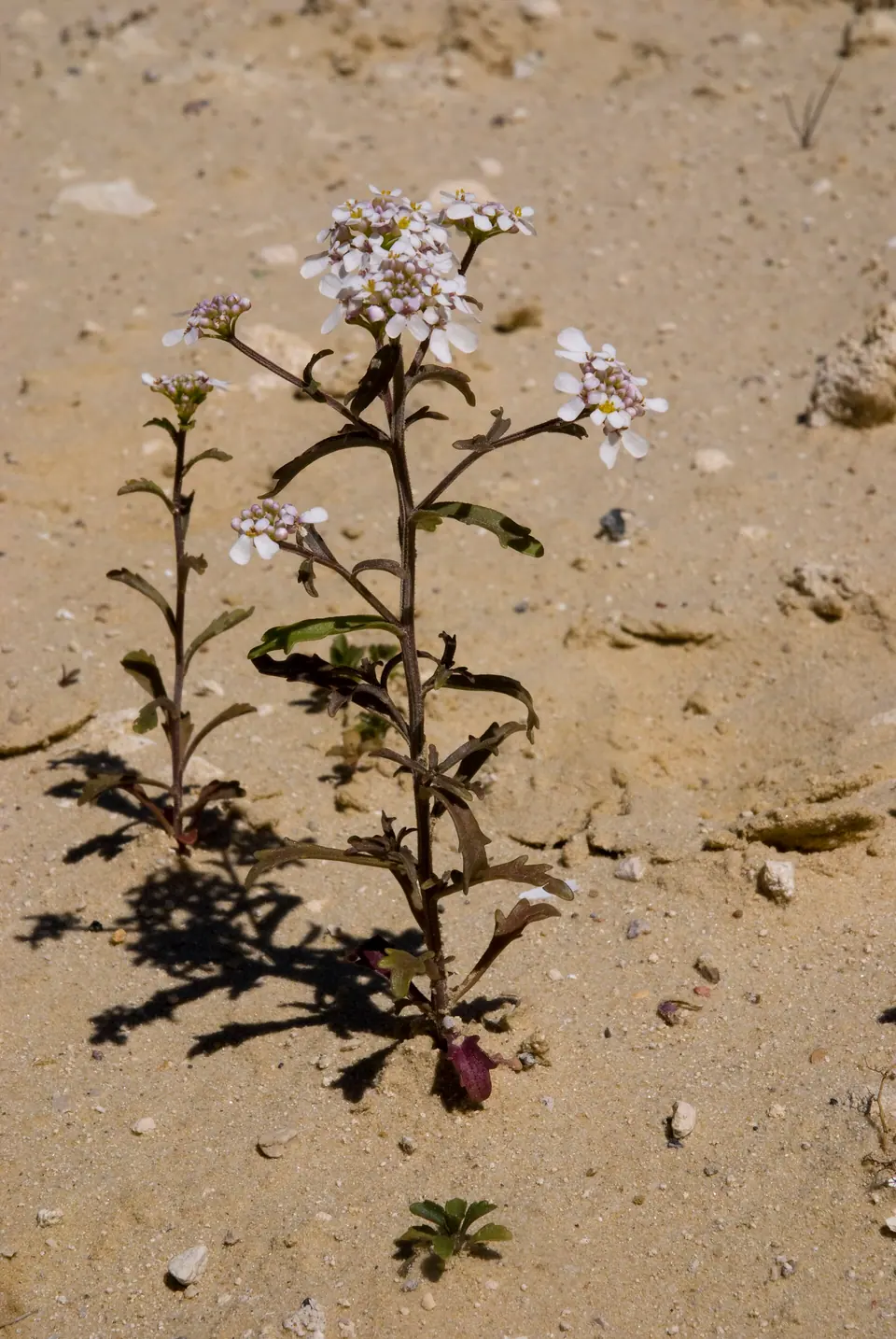


How to Grow and Care for Candytuft
Iberis amara
Written by Emilio Marruso · last checked
At a glance
This easygoing annual candytuft starts from seed and asks for very little: full sun or partial shade and moist, well-drained soil. It even forgives the occasional dry spell, so a missed watering is no drama. If your garden has alkaline soil, with a pH of 8.0 or higher, this cheerful plant is a natural match for it.
- Sun
Full sun to partial shade
What the sources say (1)
Light: Full sun to partial shade
Plant in moist, well-drained garden soil in full sun. It prefers soil high in calcium but tolerates mildly acidic or low-nutrient soils. It also tolerates partial shade, but will produce fewer flowers.
— Iberis amara (Annual Candytuft, Bitter Candytuft, Candytuft, Rocket Candytuft) | North Carolina Extension Gardener Plant Toolbox [1] - Water
Keep the soil moist; it handles a dry spell now and then
What the sources say (1)
Watering notes: Grows in moist, well-drained soil; tolerates occasionally dry conditions
Soil Drainage: Good Drainage Moist Occasionally Dry Available
— Iberis amara (Annual Candytuft, Bitter Candytuft, Candytuft, Rocket Candytuft) | North Carolina Extension Gardener Plant Toolbox [1] - Cold
Survives winters down to −10 °F (−23.3 °C)
Very hardy · USDA 6a · RHS H7 · Z6
What the sources say (2)
Hardiness, coldest zone: 6a [winter low −23.3 to −20.6 °C (−10 to −5 °F)]
USDA Plant Hardiness Zone: 6a, 6b, 7a, 7b, 8a, 8b, 9a, 9b
— Iberis amara (Annual Candytuft, Bitter Candytuft, Candytuft, Rocket Candytuft) | North Carolina Extension Gardener Plant Toolbox [1] Hardiness, warmest zone: 9b [winter low −3.9 to −1.1 °C (25 to 30 °F)]
USDA Plant Hardiness Zone: 6a, 6b, 7a, 7b, 8a, 8b, 9a, 9b
— Iberis amara (Annual Candytuft, Bitter Candytuft, Candytuft, Rocket Candytuft) | North Carolina Extension Gardener Plant Toolbox [1] - Soil
Well-drained, alkaline soil, pH 8.0 or higher
What the sources say (2)
Soil pH, minimum: 8.0
Soil pH: Alkaline (>8.0) Soil Drainage: Good Drainage
— Iberis amara (Annual Candytuft, Bitter Candytuft, Candytuft, Rocket Candytuft) | North Carolina Extension Gardener Plant Toolbox [1] Watering notes: Grows in moist, well-drained soil; tolerates occasionally dry conditions
Soil Drainage: Good Drainage Moist Occasionally Dry Available
— Iberis amara (Annual Candytuft, Bitter Candytuft, Candytuft, Rocket Candytuft) | North Carolina Extension Gardener Plant Toolbox [1] - Propagation
An annual you grow from seed
What the sources say (3)
Propagation: Seed
Propagation is by seed. It is a fast-growing,
— Iberis amara (Annual Candytuft, Bitter Candytuft, Candytuft, Rocket Candytuft) | North Carolina Extension Gardener Plant Toolbox [1] Recommended Propagation Strategy: Seed Country Or Region Of
— Iberis amara (Annual Candytuft, Bitter Candytuft, Candytuft, Rocket Candytuft) | North Carolina Extension Gardener Plant Toolbox [1] Life cycle: annual
Rocket candytuft is a small, ornamental flowering annual in the mustard (Brassicaceae) family native to western and southern Europe, from Britain to North Africa,
— Iberis amara (Annual Candytuft, Bitter Candytuft, Candytuft, Rocket Candytuft) | North Carolina Extension Gardener Plant Toolbox [1]
Overview
Rocket candytuft is a small, fast-growing ornamental annual in the mustard family with sweetly scented flowers. [1] It is planted in moist, well-drained garden soil in full sun, and tolerates partial shade with fewer flowers. [1] It is propagated by seed. [1]
This record is incomplete: the sources we read do not cover every field yet.
Not yet covered by our sources: Watering, Pruning
Candytuft care
How to water Candytuft
Watering
Not stated in the sources we read.
Watering notes
Grows in moist, well-drained soil; tolerates occasionally dry conditions
What the sources say (1)
Soil Drainage:
Good Drainage
Moist
Occasionally Dry
AvailableHow much light Candytuft needs
Full sun to partial shade
What the sources say (1)
Plant in moist, well-drained garden soil in full sun. It prefers soil high in calcium but tolerates mildly acidic or low-nutrient soils. It also tolerates partial shade, but will produce fewer flowers.How much cold Candytuft can take
Hardiness, coldest zone
6a [winter low −23.3 to −20.6 °C (−10 to −5 °F)]
What the sources say (1)
USDA Plant Hardiness Zone:
6a, 6b, 7a, 7b, 8a, 8b, 9a, 9bHardiness, warmest zone
9b [winter low −3.9 to −1.1 °C (25 to 30 °F)]
What the sources say (1)
USDA Plant Hardiness Zone:
6a, 6b, 7a, 7b, 8a, 8b, 9a, 9bBest soil for Candytuft
8.0
What the sources say (1)
Soil pH:
Alkaline (>8.0)
Soil Drainage:
Good DrainageHow to propagate Candytuft
Seed
What the sources say (2)
Propagation is by seed.
It is a fast-growing,Recommended Propagation Strategy:
Seed
Country Or Region OfHow to grow Candytuft
The plant
Life cycle
annual
What the sources say (1)
Rocket candytuft is a small, ornamental flowering annual in the mustard (Brassicaceae) family native to western and southern Europe, from Britain to North Africa,Family
Brassicaceae
What the sources say (1)
Rocket candytuft is a small, ornamental flowering annual in the mustard (Brassicaceae) family native to western and southern Europe, from Britain to North Africa,Remedies
Each remedy shows what official sources say about it; traditional remedies without an official source are marked as such. Harmful ones are listed so you know to avoid them.
Treating the plant
aphids
insecticidal soap spray Official source, not independently tested
How: spray of insecticidal soap if an insecticide is necessary
If an insecticide is necessary for control, use a spray of horticultural summer oil or insecticidal soap.
— hgic.clemson.edu [3] horticultural summer oil spray Official source, not independently tested
How: spray of horticultural summer oil if an insecticide is necessary
If an insecticide is necessary for control, use a spray of horticultural summer oil or insecticidal soap.
— hgic.clemson.edu [3] natural predators Official source, not independently tested
How: green lacewing larvae, ladybird beetles (adults and larvae) and parasitic wasps
There are several naturally occurring predators for aphid control, such as green lacewing larvae, ladybird beetles (adults and larvae), and parasitic wasps.
— hgic.clemson.edu [3]
fungal leaf spots
proper spacing and drip irrigation Partly works
How: proper spacing to encourage air movement, removal of dead plant material, and drip irrigation instead of sprinkler irrigation
so cultural practices, such as proper spacing to encourage air movement, removal of dead plant material, and utilizing drip irrigation instead of sprinkler irrigation, will reduce the risk for infection.
— hgic.clemson.edu [3] What the evidence says so cultural practices, such as proper spacing to encourage air movement, removal of dead plant material, and utilizing drip irrigation instead of sprinkler irrigation, will reduce the risk for infection.
— hgic.clemson.edu [3]
Calendar
Pruning
Not stated in the sources we read.
Months as given by the sources, which are mostly from the United States (northern hemisphere). In the southern hemisphere they shift by about six months.
Similar plants
- Annual Candytuft Iberis umbellata
- Candytuft Iberis sempervirens
- Iberis semperflorens Iberis semperflorens
- American Yellow Rocket Barbarea orthoceras
- Basket-of-Gold Aurinia saxatilis
- Cabbage Brassica oleracea
- Caucasian Rockcress Arabis caucasica
- Cut-leafed Toothwort Cardamine concatenata
Sources
Every value above is quoted from these documents. Links lead to the original publisher.
- Iberis amara (Annual Candytuft, Bitter Candytuft, Candytuft, Rocket Candytuft) | North Carolina Extension Gardener Plant Toolbox · plants.ces.ncsu.edu, consulted
- Annual Candytuft - Iberis amara | North Carolina Extension Gardener Plant Toolbox · plants.ces.ncsu.edu, consulted
- hgic.clemson.edu · hgic.clemson.edu
Written by Emilio Marruso · last checked