

How to Grow and Care for Candytuft
Iberis sempervirens
Written by Emilio Marruso · last checked
At a glance
Candytuft is an easygoing perennial for beginners: it grows in full sun or partial shade, tolerates drought and stays low, just 6–12 inches tall. Give it well-drained soil, a light trim after the flowers fade and a feeding in March and September, and it will keep coming back year after year. It even grows happily in a container.
- Sun
Full sun to partial shade
What the sources say (2)
Light: Full sun to partial shade
This plant prefers full sun but will tolerate light shade; however, flowering is more profuse in full sun.
— Iberis sempervirens (Candytuft, Edging Candytuft, Evergreen Candytuft, Garrex's Candytuft, Perennial Candytuft) | North Carolina Extension Gardener Plant Toolbox [1] prefer full sun (greater than 6 hours of direct sunlight) but will tolerate partial shade
— Iberis (Candytuft) | Home & Garden Information Center [3] - Water
Handles drought; keep soil moist to slightly dry and water the soil, not the leaves
What the sources say (4)
Watering: Moist to slightly dry, well-drained soil; drought-tolerant; does not tolerate wet soil
The plant requires moist to slightly dry well-drained soils, and they are intolerant to wet or poorly drained soils.
— Iberis sempervirens (Candytuft, Edging Candytuft, Evergreen Candytuft, Garrex's Candytuft, Perennial Candytuft) | North Carolina Extension Gardener Plant Toolbox [1] Iberis prefer moist to slightly dry conditions but do not tolerate excessive moisture.
— Iberis (Candytuft) | Home & Garden Information Center [3] Watering notes: Drip irrigation instead of sprinklers keeps leaves dry; amend poor soils with organic matter to improve drainage
utilizing drip irrigation instead of sprinkler irrigation, will reduce the risk for infection
— Iberis (Candytuft) | Home & Garden Information Center [3] Poor soils should be enriched with organic matter to enhance drainage.
— Iberis (Candytuft) | Home & Garden Information Center [3] - Soil
Well-drained soil; mix compost into poor soil so water drains away
What the sources say (4)
Watering: Moist to slightly dry, well-drained soil; drought-tolerant; does not tolerate wet soil
The plant requires moist to slightly dry well-drained soils, and they are intolerant to wet or poorly drained soils.
— Iberis sempervirens (Candytuft, Edging Candytuft, Evergreen Candytuft, Garrex's Candytuft, Perennial Candytuft) | North Carolina Extension Gardener Plant Toolbox [1] Iberis prefer moist to slightly dry conditions but do not tolerate excessive moisture.
— Iberis (Candytuft) | Home & Garden Information Center [3] Watering notes: Drip irrigation instead of sprinklers keeps leaves dry; amend poor soils with organic matter to improve drainage
utilizing drip irrigation instead of sprinkler irrigation, will reduce the risk for infection
— Iberis (Candytuft) | Home & Garden Information Center [3] Poor soils should be enriched with organic matter to enhance drainage.
— Iberis (Candytuft) | Home & Garden Information Center [3] - Spacing
12–18 in between plants
What the sources say (1)
Spacing: 30.5-45.7 cm (12-18 in)
Proper spacing (12 - 18 inches) between plants increases air circulation
— Iberis (Candytuft) | Home & Garden Information Center [3] - Planting
Plant in early fall, the best time, or in mid-April
What the sources say (1)
Planting: Early fall (best); also mid-April
Early fall is the best time to plant Iberis ; however, they can also be planted in mid-April.
— Iberis (Candytuft) | Home & Garden Information Center [3] - Feeding
Slow-release fertilizer twice a year: early to mid-March and September
What the sources say (4)
When: Early to mid-March, when new leaves begin to emerge, and again in September
with an application of a 12-6-6 slow release fertilizer at a rate of 1 pound per 100 square feet in early to mid-March, when new leaves begin to emerge, and again in September
— Iberis (Candytuft) | Home & Garden Information Center [3] How often: Twice a year: early to mid-March and September
with an application of a 12-6-6 slow release fertilizer at a rate of 1 pound per 100 square feet in early to mid-March, when new leaves begin to emerge, and again in September
— Iberis (Candytuft) | Home & Garden Information Center [3] Mineral fertilizers: 12-6-6 slow-release, 48.8 g/m² in March and 24.4 g/m² in September, when no soil test is available
In than absence of a soil test, they can be maintained with an application of a 12-6-6 slow release fertilizer at a rate of 1 pound per 100 square feet
— Iberis (Candytuft) | Home & Garden Information Center [3] in early to mid-March, when new leaves begin to emerge, and again in September at a ½ pound per 100 square feet.
— Iberis (Candytuft) | Home & Garden Information Center [3] - Pruning
Trim after flowering, when the flowers fade
What the sources say (2)
Pruning: After flowering, when flowers fade
Cut or sheer candytuft back by 1/3 after flowering to encourage new growth.
— Iberis sempervirens (Candytuft, Edging Candytuft, Evergreen Candytuft, Garrex's Candytuft, Perennial Candytuft) | North Carolina Extension Gardener Plant Toolbox [1] A light trim (shearing 2 - 3 leaves below the flowers) when flowers have begun to fade will encourage the plant to re-bloom.
— Iberis (Candytuft) | Home & Garden Information Center [3] - Pests
Caterpillars, slugs, snails and aphids; powdery mildew, downy mildew and leaf spots
What the sources say (4)
Pests: caterpillars, slugs, snails, aphids
Candytuft has no serious insect or disease issues. Caterpillars, slugs, and snails can be a problem.
— Iberis sempervirens (Candytuft, Edging Candytuft, Evergreen Candytuft, Garrex's Candytuft, Perennial Candytuft) | North Carolina Extension Gardener Plant Toolbox [1] Iberis are typically not subject to high levels of insect pests; however, aphids can occasionally be a problem.
— Iberis (Candytuft) | Home & Garden Information Center [3] Diseases: downy mildew, powdery mildew, fungal leaf spots, rust, crown rot, bacterial leaf spots, botrytis
Downey mildew, powdery mildew, fungal leaf spots, and rust occasionally occur. Wet soils lead to crown rot.
— Iberis sempervirens (Candytuft, Edging Candytuft, Evergreen Candytuft, Garrex's Candytuft, Perennial Candytuft) | North Carolina Extension Gardener Plant Toolbox [1] Iberis are infrequently subject to a few disease problems, such as bacterial leaf spots, fungal leaf spots, crown and root rots, powdery mildew, botrytis, and downy mildew.
— Iberis (Candytuft) | Home & Garden Information Center [3] - Watch out
Wet soil rots the base of the plant: avoid soggy spots
What the sources say (2)
Watering: Moist to slightly dry, well-drained soil; drought-tolerant; does not tolerate wet soil
The plant requires moist to slightly dry well-drained soils, and they are intolerant to wet or poorly drained soils.
— Iberis sempervirens (Candytuft, Edging Candytuft, Evergreen Candytuft, Garrex's Candytuft, Perennial Candytuft) | North Carolina Extension Gardener Plant Toolbox [1] Iberis prefer moist to slightly dry conditions but do not tolerate excessive moisture.
— Iberis (Candytuft) | Home & Garden Information Center [3] - Size
6–12 in tall and 6–18 in wide
What the sources say (2)
Mature height: 15-30 cm (6-12 in)
It has a mounding and sprawling habit and measures 6 to 12 inches in height and 6 to 18 inches in width.
— Iberis sempervirens (Candytuft, Edging Candytuft, Evergreen Candytuft, Garrex's Candytuft, Perennial Candytuft) | North Carolina Extension Gardener Plant Toolbox [1] Mature width: 15-46 cm (6-18 in)
It has a mounding and sprawling habit and measures 6 to 12 inches in height and 6 to 18 inches in width.
— Iberis sempervirens (Candytuft, Edging Candytuft, Evergreen Candytuft, Garrex's Candytuft, Perennial Candytuft) | North Carolina Extension Gardener Plant Toolbox [1] - Propagation
From seed or stem cuttings; stems also root where they touch the soil
What the sources say (2)
Propagation: Seed; stem cuttings; stems root where they touch the soil
Stems easily root when they are in contact with the soil thereby creating new plants.
— Iberis sempervirens (Candytuft, Edging Candytuft, Evergreen Candytuft, Garrex's Candytuft, Perennial Candytuft) | North Carolina Extension Gardener Plant Toolbox [1] Recommended Propagation Strategy: Seed Stem Cutting
— Iberis sempervirens (Candytuft, Edging Candytuft, Evergreen Candytuft, Garrex's Candytuft, Perennial Candytuft) | North Carolina Extension Gardener Plant Toolbox [1] - Containers
Grows in containers too
What the sources say (2)
In containers: Yes
It is attractive as a groundcover, cascading over the edge of raised beds or containers, and sprawling over a rock wall.
— Iberis sempervirens (Candytuft, Edging Candytuft, Evergreen Candytuft, Garrex's Candytuft, Perennial Candytuft) | North Carolina Extension Gardener Plant Toolbox [1] Their spreading nature can also be used as a "spiller" or "filler" in container gardens
— Iberis (Candytuft) | Home & Garden Information Center [3]
Overview
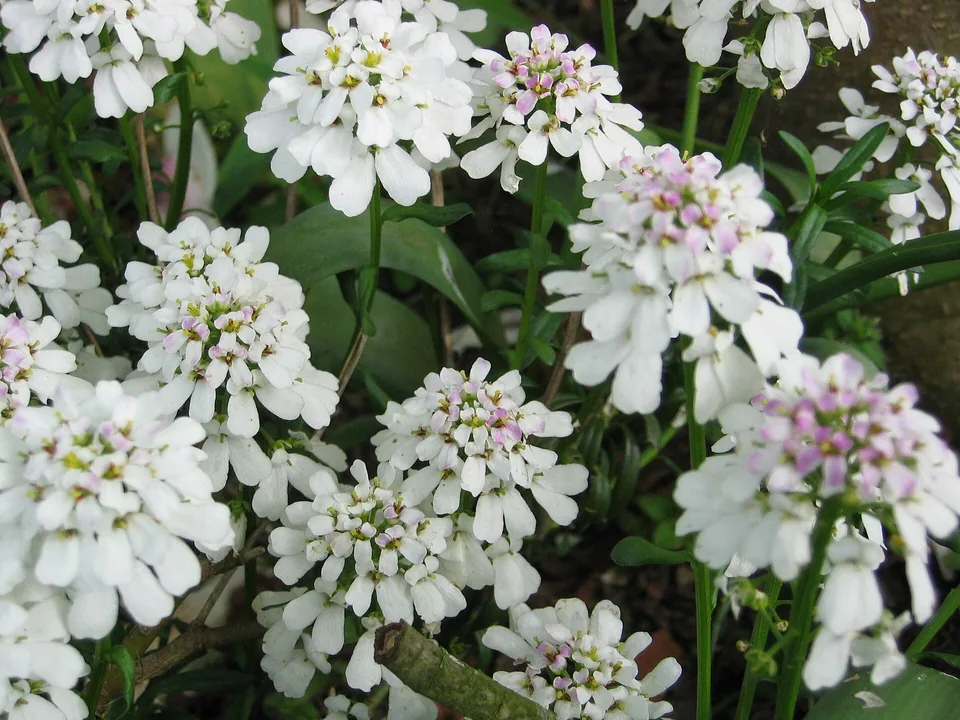
Evergreen candytuft is a low, spreading evergreen groundcover with dense clusters of small white spring flowers. [1] It prefers full sun and moist to slightly dry, well-drained soil, and is intolerant of wet soil. [1] It is suited to borders, rock gardens, groundcover and containers. [3]
Candytuft care
How to water Candytuft
Watering
Moist to slightly dry, well-drained soil; drought-tolerant; does not tolerate wet soil
What the sources say (2)
The plant requires moist to slightly dry well-drained soils, and they are intolerant to wet or poorly drained soils.Iberis prefer moist to slightly dry conditions but do not tolerate excessive moisture.Watering notes
Drip irrigation instead of sprinklers keeps leaves dry; amend poor soils with organic matter to improve drainage
What the sources say (2)
utilizing drip irrigation instead of sprinkler irrigation, will reduce the risk for infectionPoor soils should be enriched with organic matter to enhance drainage.How much light Candytuft needs
Full sun to partial shade
What the sources say (2)
This plant prefers full sun but will tolerate light shade; however, flowering is more profuse in full sun.prefer full sun (greater than 6 hours of direct sunlight) but will tolerate partial shadeHow much cold Candytuft can take
Hardiness, coldest zone
The sources give different values depending on region, zone or growing conditions.
What each source says
According to NC State Extension: 3a [winter low −40 to −37.2 °C (−40 to −35 °F)]
According to University of Illinois Extension: 4 [winter low −34.4 to −28.9 °C (−30 to −20 °F)]
According to Clemson Extension: 3 [winter low −40 to −34.4 °C (−40 to −30 °F)]
What the sources say (3)
According to NC State Extension: 3a, 3b, 4a, 4b, 5a, 5b, 6a, 6b, 7a, 7b, 8a, 8bAccording to University of Illinois Extension: USDA Hardiness Zone
4 - 8According to Clemson Extension: is a low growing, flowering perennial plant that is hardy to Zones 3 - 9Hardiness, warmest zone
The sources give different values depending on region, zone or growing conditions.
What each source says
According to NC State Extension: 8b [winter low −9.4 to −6.7 °C (15 to 20 °F)]
According to University of Illinois Extension: 8 [winter low −12.2 to −6.7 °C (10 to 20 °F)]
According to Clemson Extension: 9 [winter low −6.7 to −1.1 °C (20 to 30 °F)]
What the sources say (3)
According to NC State Extension: 3a, 3b, 4a, 4b, 5a, 5b, 6a, 6b, 7a, 7b, 8a, 8bAccording to University of Illinois Extension: USDA Hardiness Zone
4 - 8According to Clemson Extension: is a low growing, flowering perennial plant that is hardy to Zones 3 - 9Where to grow Candytuft
In containers
Yes
What the sources say (2)
It is attractive as a groundcover, cascading over the edge of raised beds or containers, and sprawling over a rock wall.Their spreading nature can also be used as a "spiller" or "filler" in container gardensSpacing
30.5-45.7 cm (12-18 in)
What the sources say (1)
Proper spacing (12 - 18 inches) between plants increases air circulationHow to propagate Candytuft
Seed; stem cuttings; stems root where they touch the soil
What the sources say (2)
Stems easily root when they are in contact with the soil thereby creating new plants.Recommended Propagation Strategy:
Seed
Stem CuttingHow to grow Candytuft
The plant
Life cycle
perennial
What the sources say (1)
Life Cycle: Perennial Recommended Propagation Strategy: Seed Stem CuttingFamily
Brassicaceae
What the sources say (1)
Genus: Iberis Species: sempervirens Family: BrassicaceaeMature height
15-30 cm (6-12 in)
What the sources say (1)
It has a mounding and sprawling habit and measures 6 to 12 inches in height and 6 to 18 inches in width.Mature width
15-46 cm (6-18 in)
What the sources say (1)
It has a mounding and sprawling habit and measures 6 to 12 inches in height and 6 to 18 inches in width.Pests and diseases
Pests
caterpillars, slugs, snails, aphids
What the sources say (2)
Candytuft has no serious insect or disease issues. Caterpillars, slugs, and snails can be a problem.Iberis are typically not subject to high levels of insect pests; however, aphids can occasionally be a problem.Diseases
downy mildew, powdery mildew, fungal leaf spots, rust, crown rot, bacterial leaf spots, botrytis
What the sources say (2)
Downey mildew, powdery mildew, fungal leaf spots, and rust occasionally occur. Wet soils lead to crown rot.Iberis are infrequently subject to a few disease problems, such as bacterial leaf spots, fungal leaf spots, crown and root rots, powdery mildew, botrytis, and downy mildew.Fertilizing
When
Early to mid-March, when new leaves begin to emerge, and again in September
What the sources say (1)
with an application of a 12-6-6 slow release fertilizer at a rate of 1 pound per 100 square feet in early to mid-March, when new leaves begin to emerge, and again in SeptemberHow often
Twice a year: early to mid-March and September
What the sources say (1)
with an application of a 12-6-6 slow release fertilizer at a rate of 1 pound per 100 square feet in early to mid-March, when new leaves begin to emerge, and again in SeptemberMineral fertilizers
12-6-6 slow-release, 48.8 g/m² in March and 24.4 g/m² in September, when no soil test is available
What the sources say (2)
In than absence of a soil test, they can be maintained with an application of a 12-6-6 slow release fertilizer at a rate of 1 pound per 100 square feetin early to mid-March, when new leaves begin to emerge, and again in September at a ½ pound per 100 square feet.Candytuft pests and problems
Crown rot
Symptom: Rot at the crown in wet soil
What to do: Avoid wet or poorly drained sites; improve drainage
What the sources say (1)
Wet soils lead to crown rot. Cold winters can cause leaves to get sun-scorched.
— Iberis sempervirens (Candytuft, Edging Candytuft, Evergreen Candytuft, Garrex's Candytuft, Perennial Candytuft) | North Carolina Extension Gardener Plant Toolbox [1] Fungal and mildew diseases
Symptom: Leaf spots, powdery and downy mildew
What to do: Space plants for air movement, remove dead plant material, use drip irrigation
What the sources say (1)
proper spacing to encourage air movement, removal of dead plant material, and utilizing drip irrigation instead of sprinkler irrigation, will reduce the risk for infection
— Iberis (Candytuft) | Home & Garden Information Center [3] Caterpillars, slugs and snails
Symptom: Feeding damage
What to do: Not specified in the documents
What the sources say (1)
Caterpillars, slugs, and snails can be a problem.
— Iberis sempervirens (Candytuft, Edging Candytuft, Evergreen Candytuft, Garrex's Candytuft, Perennial Candytuft) | North Carolina Extension Gardener Plant Toolbox [1]
Remedies
Each remedy shows what official sources say about it; traditional remedies without an official source are marked as such. Harmful ones are listed so you know to avoid them.
Treating the plant
slugs
beer trap Works
Cover the top of the container to keep pets from drinking the beer!
— extension.oregonstate.edu [4] How: Bury a container with the hole slightly above ground, add 2 or 3 inches of beer, cover the top, remove dead slugs each day and add more beer.
To make a beer trap, use an empty margarine or yogurt container.
— extension.oregonstate.edu [4] What the evidence says Beer smells of yeast, and this smell attracts slugs.
— extension.oregonstate.edu [4] copper barrier Works
How: Surround raised beds or individual plants with a 3-inch-wide band of copper.
Surround raised beds or individual plants with a 3-inch-wide band of copper.
— extension.oregonstate.edu [4] What the evidence says When a slug touches copper, it receives an electric shock and backs up.
— extension.oregonstate.edu [4]
Calendar
Planting
Early fall (best); also mid-April
What the sources say (1)
Early fall is the best time to plant Iberis ; however, they can also be planted in mid-April.Pruning
After flowering, when flowers fade
What the sources say (2)
Cut or sheer candytuft back by 1/3 after flowering to encourage new growth.A light trim (shearing 2 - 3 leaves below the flowers) when flowers have begun to fade will encourage the plant to re-bloom.Months as given by the sources, which are mostly from the United States (northern hemisphere). In the southern hemisphere they shift by about six months.
Indicative values
Values from a secondary source, not checked word for word like the rest of this page. Use them as a starting point.
- Drought tolerant
- yesIndicative value, adapt it to your climate · Secondary source
- Soil
- Alkaline, Well-drainedIndicative value, adapt it to your climate · Secondary source
- Soil pH
- 6-7.5Indicative value, adapt it to your climate · Secondary source
- Care level
- MediumIndicative value, adapt it to your climate · Secondary source
- Growth rate
- HighIndicative value, adapt it to your climate · Secondary source
Similar plants
- Annual Candytuft Iberis umbellata
- Candytuft Iberis amara
- Iberis semperflorens Iberis semperflorens
- American Yellow Rocket Barbarea orthoceras
- Basket-of-Gold Aurinia saxatilis
- Cabbage Brassica oleracea
- Caucasian Rockcress Arabis caucasica
- Cut-leafed Toothwort Cardamine concatenata
Sources
Every value above is quoted from these documents. Links lead to the original publisher.
- Iberis sempervirens (Candytuft, Edging Candytuft, Evergreen Candytuft, Garrex's Candytuft, Perennial Candytuft) | North Carolina Extension Gardener Plant Toolbox · plants.ces.ncsu.edu, consulted
- Candytuft, Evergreen (Iberis sempervirens)-Hort Answers - University of Illinois Extension · web.extension.illinois.edu, consulted
- Iberis (Candytuft) | Home & Garden Information Center · hgic.clemson.edu, consulted
- extension.oregonstate.edu · extension.oregonstate.edu
Written by Emilio Marruso · last checked