

Cómo cultivar y cuidar Canasta de plata
Iberis sempervirens
Escrito por Emilio Marruso · última revisión
De un vistazo
El carraspique perenne es una vivaz agradecida para quien empieza: crece a pleno sol o en semisombra, tolera la sequía y se mantiene baja, de solo 15–30 cm de alto. Dale un suelo con buen drenaje, recórtala cuando se marchiten las flores y abónala en marzo y septiembre, y volverá año tras año. Incluso crece a gusto en maceta.
- Sol
De pleno sol a semisombra
Qué dicen las fuentes (2)
Luz: Pleno sol a semisombra
This plant prefers full sun but will tolerate light shade; however, flowering is more profuse in full sun.
— Iberis sempervirens (Candytuft, Edging Candytuft, Evergreen Candytuft, Garrex's Candytuft, Perennial Candytuft) | North Carolina Extension Gardener Plant Toolbox [1] prefer full sun (greater than 6 hours of direct sunlight) but will tolerate partial shade
— Iberis (Candytuft) | Home & Garden Information Center [3] - Riego
Tolera la sequía; mantén la tierra entre húmeda y algo seca y riega la tierra, no las hojas
Qué dicen las fuentes (4)
Riego: Suelo húmedo a ligeramente seco, bien drenado; tolerante a la sequía; no tolera suelo húmedo
The plant requires moist to slightly dry well-drained soils, and they are intolerant to wet or poorly drained soils.
— Iberis sempervirens (Candytuft, Edging Candytuft, Evergreen Candytuft, Garrex's Candytuft, Perennial Candytuft) | North Carolina Extension Gardener Plant Toolbox [1] Iberis prefer moist to slightly dry conditions but do not tolerate excessive moisture.
— Iberis (Candytuft) | Home & Garden Information Center [3] Notas sobre el riego: El riego por goteo en lugar de aspersores mantiene las hojas secas; mejora los suelos pobres con materia orgánica para mejorar el drenaje
utilizing drip irrigation instead of sprinkler irrigation, will reduce the risk for infection
— Iberis (Candytuft) | Home & Garden Information Center [3] Poor soils should be enriched with organic matter to enhance drainage.
— Iberis (Candytuft) | Home & Garden Information Center [3] - Suelo
Suelo con buen drenaje; mezcla materia orgánica en la tierra pobre para que drene mejor
Qué dicen las fuentes (4)
Riego: Suelo húmedo a ligeramente seco, bien drenado; tolerante a la sequía; no tolera suelo húmedo
The plant requires moist to slightly dry well-drained soils, and they are intolerant to wet or poorly drained soils.
— Iberis sempervirens (Candytuft, Edging Candytuft, Evergreen Candytuft, Garrex's Candytuft, Perennial Candytuft) | North Carolina Extension Gardener Plant Toolbox [1] Iberis prefer moist to slightly dry conditions but do not tolerate excessive moisture.
— Iberis (Candytuft) | Home & Garden Information Center [3] Notas sobre el riego: El riego por goteo en lugar de aspersores mantiene las hojas secas; mejora los suelos pobres con materia orgánica para mejorar el drenaje
utilizing drip irrigation instead of sprinkler irrigation, will reduce the risk for infection
— Iberis (Candytuft) | Home & Garden Information Center [3] Poor soils should be enriched with organic matter to enhance drainage.
— Iberis (Candytuft) | Home & Garden Information Center [3] - Distancia
30–46 cm entre plantas
Qué dicen las fuentes (1)
Distancia de plantación: 30.5-45.7 cm (12-18 pulgadas)
Proper spacing (12 - 18 inches) between plants increases air circulation
— Iberis (Candytuft) | Home & Garden Information Center [3] - Plantación
Planta a principios de otoño, el mejor momento, o a mediados de abril
Qué dicen las fuentes (1)
Plantación: Inicio de otoño (mejor); también mediados de abril
Early fall is the best time to plant Iberis ; however, they can also be planted in mid-April.
— Iberis (Candytuft) | Home & Garden Information Center [3] - Abonado
Abono de liberación lenta dos veces al año: de principios a mediados de marzo y en septiembre
Qué dicen las fuentes (4)
Cuándo: A principios o mediados de marzo, cuando las hojas nuevas comienzan a brotar, y nuevamente en septiembre
with an application of a 12-6-6 slow release fertilizer at a rate of 1 pound per 100 square feet in early to mid-March, when new leaves begin to emerge, and again in September
— Iberis (Candytuft) | Home & Garden Information Center [3] Frecuencia: Dos veces al año: desde principios hasta mediados de marzo y en septiembre
with an application of a 12-6-6 slow release fertilizer at a rate of 1 pound per 100 square feet in early to mid-March, when new leaves begin to emerge, and again in September
— Iberis (Candytuft) | Home & Garden Information Center [3] Abonos minerales: Fertilizante de liberación lenta 12-6-6, 48,8 g/m² en marzo y 24,4 g/m² en septiembre, cuando no se dispone de un análisis del suelo
In than absence of a soil test, they can be maintained with an application of a 12-6-6 slow release fertilizer at a rate of 1 pound per 100 square feet
— Iberis (Candytuft) | Home & Garden Information Center [3] in early to mid-March, when new leaves begin to emerge, and again in September at a ½ pound per 100 square feet.
— Iberis (Candytuft) | Home & Garden Information Center [3] - Poda
Recórtala después de la floración, cuando se marchiten las flores
Qué dicen las fuentes (2)
Poda: Después de la floración, cuando las flores se marchitan
Cut or sheer candytuft back by 1/3 after flowering to encourage new growth.
— Iberis sempervirens (Candytuft, Edging Candytuft, Evergreen Candytuft, Garrex's Candytuft, Perennial Candytuft) | North Carolina Extension Gardener Plant Toolbox [1] A light trim (shearing 2 - 3 leaves below the flowers) when flowers have begun to fade will encourage the plant to re-bloom.
— Iberis (Candytuft) | Home & Garden Information Center [3] - Plagas
Orugas, babosas, caracoles y pulgón; oídio, mildiu y manchas en las hojas
Qué dicen las fuentes (4)
Plagas: orugas, babosas, caracoles, pulgones
Candytuft has no serious insect or disease issues. Caterpillars, slugs, and snails can be a problem.
— Iberis sempervirens (Candytuft, Edging Candytuft, Evergreen Candytuft, Garrex's Candytuft, Perennial Candytuft) | North Carolina Extension Gardener Plant Toolbox [1] Iberis are typically not subject to high levels of insect pests; however, aphids can occasionally be a problem.
— Iberis (Candytuft) | Home & Garden Information Center [3] Enfermedades: mildiu velloso, oídio, manchas foliares por hongos, roya, pudrición de la corona, manchas foliares bacterianas, botritis
Downey mildew, powdery mildew, fungal leaf spots, and rust occasionally occur. Wet soils lead to crown rot.
— Iberis sempervirens (Candytuft, Edging Candytuft, Evergreen Candytuft, Garrex's Candytuft, Perennial Candytuft) | North Carolina Extension Gardener Plant Toolbox [1] Iberis are infrequently subject to a few disease problems, such as bacterial leaf spots, fungal leaf spots, crown and root rots, powdery mildew, botrytis, and downy mildew.
— Iberis (Candytuft) | Home & Garden Information Center [3] - Atención
La tierra encharcada pudre la base de la planta: evita los sitios encharcados
Qué dicen las fuentes (2)
Riego: Suelo húmedo a ligeramente seco, bien drenado; tolerante a la sequía; no tolera suelo húmedo
The plant requires moist to slightly dry well-drained soils, and they are intolerant to wet or poorly drained soils.
— Iberis sempervirens (Candytuft, Edging Candytuft, Evergreen Candytuft, Garrex's Candytuft, Perennial Candytuft) | North Carolina Extension Gardener Plant Toolbox [1] Iberis prefer moist to slightly dry conditions but do not tolerate excessive moisture.
— Iberis (Candytuft) | Home & Garden Information Center [3] - Tamaño
15–30 cm de alto y 15–46 cm de ancho
Qué dicen las fuentes (2)
Altura adulta: 15-30 cm (6-12 pulgadas)
It has a mounding and sprawling habit and measures 6 to 12 inches in height and 6 to 18 inches in width.
— Iberis sempervirens (Candytuft, Edging Candytuft, Evergreen Candytuft, Garrex's Candytuft, Perennial Candytuft) | North Carolina Extension Gardener Plant Toolbox [1] Anchura adulta: 15-46 cm (6-18 pulg)
It has a mounding and sprawling habit and measures 6 to 12 inches in height and 6 to 18 inches in width.
— Iberis sempervirens (Candytuft, Edging Candytuft, Evergreen Candytuft, Garrex's Candytuft, Perennial Candytuft) | North Carolina Extension Gardener Plant Toolbox [1] - Multiplicación
Por semilla o esquejes de tallo; los tallos también enraízan donde tocan la tierra
Qué dicen las fuentes (2)
Propagación: Semilla; esquejes de tallo; los tallos enraízan donde tocan el suelo
Stems easily root when they are in contact with the soil thereby creating new plants.
— Iberis sempervirens (Candytuft, Edging Candytuft, Evergreen Candytuft, Garrex's Candytuft, Perennial Candytuft) | North Carolina Extension Gardener Plant Toolbox [1] Recommended Propagation Strategy: Seed Stem Cutting
— Iberis sempervirens (Candytuft, Edging Candytuft, Evergreen Candytuft, Garrex's Candytuft, Perennial Candytuft) | North Carolina Extension Gardener Plant Toolbox [1] - Maceta
Crece también en maceta
Qué dicen las fuentes (2)
En maceta: Sí
It is attractive as a groundcover, cascading over the edge of raised beds or containers, and sprawling over a rock wall.
— Iberis sempervirens (Candytuft, Edging Candytuft, Evergreen Candytuft, Garrex's Candytuft, Perennial Candytuft) | North Carolina Extension Gardener Plant Toolbox [1] Their spreading nature can also be used as a "spiller" or "filler" in container gardens
— Iberis (Candytuft) | Home & Garden Information Center [3]
Resumen
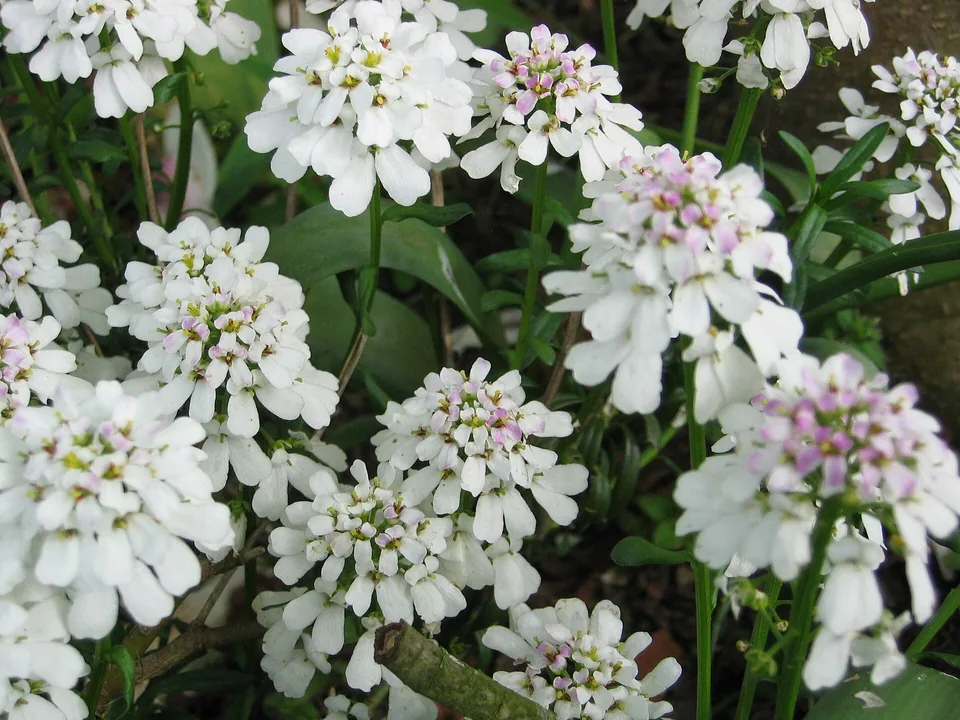
El carraspique siempreverde es una cubierta vegetal baja y extendida, con densos racimos de pequeñas flores blancas en primavera. [1] Prefiere pleno sol y suelo húmedo a ligeramente seco, bien drenado, y es intolerante al suelo húmedo. [1] Es adecuado para bordes, jardines de rocas, cubierta vegetal y contenedores. [3]
Citado en inglés, como en la fuente.
Cuidados
Riego
Riego
Suelo húmedo a ligeramente seco, bien drenado; tolerante a la sequía; no tolera suelo húmedo
Qué dicen las fuentes (2)
The plant requires moist to slightly dry well-drained soils, and they are intolerant to wet or poorly drained soils.Iberis prefer moist to slightly dry conditions but do not tolerate excessive moisture.Notas sobre el riego
El riego por goteo en lugar de aspersores mantiene las hojas secas; mejora los suelos pobres con materia orgánica para mejorar el drenaje
Qué dicen las fuentes (2)
utilizing drip irrigation instead of sprinkler irrigation, will reduce the risk for infectionPoor soils should be enriched with organic matter to enhance drainage.Luz
Pleno sol a semisombra
Qué dicen las fuentes (2)
This plant prefers full sun but will tolerate light shade; however, flowering is more profuse in full sun.prefer full sun (greater than 6 hours of direct sunlight) but will tolerate partial shadeClima y frío
Rusticidad, zona más fría
Las fuentes dan valores distintos según la región, la zona o las condiciones de cultivo.
Lo que dice cada fuente
Según NC State Extension: 3a [mínima invernal de −40 a −37,2 °C (de −40 a −35 °F)]
Según University of Illinois Extension: 4 [mínima invernal de −34,4 a −28,9 °C (de −30 a −20 °F)]
Según Clemson Extension: 3 [mínima invernal de −40 a −34,4 °C (de −40 a −30 °F)]
Qué dicen las fuentes (3)
Según NC State Extension: 3a, 3b, 4a, 4b, 5a, 5b, 6a, 6b, 7a, 7b, 8a, 8bSegún University of Illinois Extension: USDA Hardiness Zone
4 - 8Según Clemson Extension: is a low growing, flowering perennial plant that is hardy to Zones 3 - 9Rusticidad, zona más cálida
Las fuentes dan valores distintos según la región, la zona o las condiciones de cultivo.
Lo que dice cada fuente
Según NC State Extension: 8b [mínima invernal de −9,4 a −6,7 °C (de 15 a 20 °F)]
Según University of Illinois Extension: 8 [mínima invernal de −12,2 a −6,7 °C (de 10 a 20 °F)]
Según Clemson Extension: 9 [mínima invernal de −6,7 a −1,1 °C (de 20 a 30 °F)]
Qué dicen las fuentes (3)
Según NC State Extension: 3a, 3b, 4a, 4b, 5a, 5b, 6a, 6b, 7a, 7b, 8a, 8bSegún University of Illinois Extension: USDA Hardiness Zone
4 - 8Según Clemson Extension: is a low growing, flowering perennial plant that is hardy to Zones 3 - 9Dónde cultivarla
En maceta
Sí
Qué dicen las fuentes (2)
It is attractive as a groundcover, cascading over the edge of raised beds or containers, and sprawling over a rock wall.Their spreading nature can also be used as a "spiller" or "filler" in container gardensDistancia de plantación
30.5-45.7 cm (12-18 pulgadas)
Qué dicen las fuentes (1)
Proper spacing (12 - 18 inches) between plants increases air circulationPropagación
Semilla; esquejes de tallo; los tallos enraízan donde tocan el suelo
Qué dicen las fuentes (2)
Stems easily root when they are in contact with the soil thereby creating new plants.Recommended Propagation Strategy:
Seed
Stem CuttingCultivo
La planta
Ciclo de vida
perenne
Qué dicen las fuentes (1)
Life Cycle: Perennial Recommended Propagation Strategy: Seed Stem CuttingFamilia
Brassicaceae
Qué dicen las fuentes (1)
Genus: Iberis Species: sempervirens Family: BrassicaceaeAltura adulta
15-30 cm (6-12 pulgadas)
Qué dicen las fuentes (1)
It has a mounding and sprawling habit and measures 6 to 12 inches in height and 6 to 18 inches in width.Anchura adulta
15-46 cm (6-18 pulg)
Qué dicen las fuentes (1)
It has a mounding and sprawling habit and measures 6 to 12 inches in height and 6 to 18 inches in width.Plagas y enfermedades
Plagas
orugas, babosas, caracoles, pulgones
Qué dicen las fuentes (2)
Candytuft has no serious insect or disease issues. Caterpillars, slugs, and snails can be a problem.Iberis are typically not subject to high levels of insect pests; however, aphids can occasionally be a problem.Enfermedades
mildiu velloso, oídio, manchas foliares por hongos, roya, pudrición de la corona, manchas foliares bacterianas, botritis
Qué dicen las fuentes (2)
Downey mildew, powdery mildew, fungal leaf spots, and rust occasionally occur. Wet soils lead to crown rot.Iberis are infrequently subject to a few disease problems, such as bacterial leaf spots, fungal leaf spots, crown and root rots, powdery mildew, botrytis, and downy mildew.Abonado
Cuándo
A principios o mediados de marzo, cuando las hojas nuevas comienzan a brotar, y nuevamente en septiembre
Qué dicen las fuentes (1)
with an application of a 12-6-6 slow release fertilizer at a rate of 1 pound per 100 square feet in early to mid-March, when new leaves begin to emerge, and again in SeptemberFrecuencia
Dos veces al año: desde principios hasta mediados de marzo y en septiembre
Qué dicen las fuentes (1)
with an application of a 12-6-6 slow release fertilizer at a rate of 1 pound per 100 square feet in early to mid-March, when new leaves begin to emerge, and again in SeptemberAbonos minerales
Fertilizante de liberación lenta 12-6-6, 48,8 g/m² en marzo y 24,4 g/m² en septiembre, cuando no se dispone de un análisis del suelo
Qué dicen las fuentes (2)
In than absence of a soil test, they can be maintained with an application of a 12-6-6 slow release fertilizer at a rate of 1 pound per 100 square feetin early to mid-March, when new leaves begin to emerge, and again in September at a ½ pound per 100 square feet.Problemas
Pudrición de la corona
Síntoma: Pudrición en la corona en suelo húmedo
Qué hacer: Evita sitios húmedos o con mal drenaje; mejora el drenaje
Qué dicen las fuentes (1)
Wet soils lead to crown rot. Cold winters can cause leaves to get sun-scorched.
— Iberis sempervirens (Candytuft, Edging Candytuft, Evergreen Candytuft, Garrex's Candytuft, Perennial Candytuft) | North Carolina Extension Gardener Plant Toolbox [1] Enfermedades fúngicas y de mildiu
Síntoma: Manchas foliares, mildiu polvoriento y mildiu velloso
Qué hacer: Separa las plantas para la circulación del aire, retira material vegetal muerto, usa riego por goteo
Qué dicen las fuentes (1)
proper spacing to encourage air movement, removal of dead plant material, and utilizing drip irrigation instead of sprinkler irrigation, will reduce the risk for infection
— Iberis (Candytuft) | Home & Garden Information Center [3] Orugas, babosas y caracoles
Síntoma: Daño por alimentación
Qué hacer: No especificado en los documentos
Qué dicen las fuentes (1)
Caterpillars, slugs, and snails can be a problem.
— Iberis sempervirens (Candytuft, Edging Candytuft, Evergreen Candytuft, Garrex's Candytuft, Perennial Candytuft) | North Carolina Extension Gardener Plant Toolbox [1]
Remedios
Cada remedio indica qué dicen las fuentes oficiales; los remedios tradicionales sin fuente oficial aparecen marcados. Los perjudiciales están para que sepas evitarlos.
Cuidar la planta
babosas
trampa de cerveza Funciona
Cover the top of the container to keep pets from drinking the beer!
— extension.oregonstate.edu [4] Cómo: Entierra un recipiente con el agujero ligeramente por encima del suelo, añade 2 o 3 pulgadas de cerveza, cubre la parte superior, retira las babosas muertas cada día y añade más cerveza.
To make a beer trap, use an empty margarine or yogurt container.
— extension.oregonstate.edu [4] Qué dicen las pruebas Beer smells of yeast, and this smell attracts slugs.
— extension.oregonstate.edu [4] barrera de cobre Funciona
Cómo: Rodea los bancales elevados o las plantas individuales con una banda de cobre de 3 pulgadas de ancho.
Surround raised beds or individual plants with a 3-inch-wide band of copper.
— extension.oregonstate.edu [4] Qué dicen las pruebas When a slug touches copper, it receives an electric shock and backs up.
— extension.oregonstate.edu [4]
Calendario
Plantación
Inicio de otoño (mejor); también mediados de abril
Qué dicen las fuentes (1)
Early fall is the best time to plant Iberis ; however, they can also be planted in mid-April.Poda
Después de la floración, cuando las flores se marchitan
Qué dicen las fuentes (2)
Cut or sheer candytuft back by 1/3 after flowering to encourage new growth.A light trim (shearing 2 - 3 leaves below the flowers) when flowers have begun to fade will encourage the plant to re-bloom.Meses tal como los dan las fuentes, en su mayoría de Estados Unidos (hemisferio norte). En el hemisferio sur se desplazan unos seis meses.
Valores orientativos
Valores de una fuente secundaria, no comprobados palabra por palabra como el resto de esta página. Úselos como punto de partida.
- Resiste la sequía
- SíValor orientativo, adáptalo a tu clima · Fuente secundaria
- Suelo
- Alcalino, Bien drenadoValor orientativo, adáptalo a tu clima · Fuente secundaria
- pH del suelo
- 6-7.5Valor orientativo, adáptalo a tu clima · Fuente secundaria
- Nivel de cuidado
- MedioValor orientativo, adáptalo a tu clima · Fuente secundaria
- Crecimiento
- AltaValor orientativo, adáptalo a tu clima · Fuente secundaria
Plantas similares
- Annual Candytuft Iberis umbellata
- Carraspique Iberis amara
- Iberis semperflorens Iberis semperflorens
- American Yellow Rocket Barbarea orthoceras
- Cesto de oro Aurinia saxatilis
- Col Silvestre Brassica oleracea
- Caucasian Rockcress Arabis caucasica
- Cut-leafed Toothwort Cardamine concatenata
Fuentes
Cada valor anterior se cita de estos documentos. Los enlaces llevan al editor original.
- Iberis sempervirens (Candytuft, Edging Candytuft, Evergreen Candytuft, Garrex's Candytuft, Perennial Candytuft) | North Carolina Extension Gardener Plant Toolbox · plants.ces.ncsu.edu, consultado
- Candytuft, Evergreen (Iberis sempervirens)-Hort Answers - University of Illinois Extension · web.extension.illinois.edu, consultado
- Iberis (Candytuft) | Home & Garden Information Center · hgic.clemson.edu, consultado
- extension.oregonstate.edu · extension.oregonstate.edu
Escrito por Emilio Marruso · última revisión