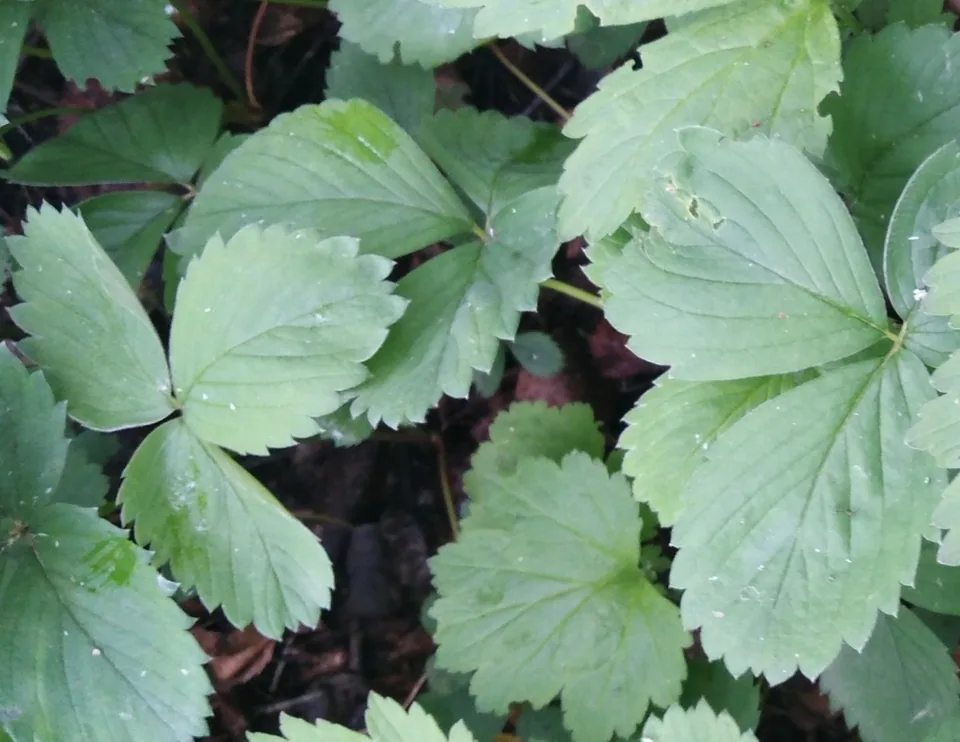
How to Grow and Care for Strawberry
Fragaria × ananassa
Written by Emilio Marruso · last checked
Not toxic to cats and dogs, according to the sources · Sources
At a glance
Strawberries reward a little care with berries you can eat raw or cooked, and even the flower petals are edible. Give them full sun to partial shade and frequent watering, since their roots are short. They set fruit on their own, and bees help make it better. In 90–110 days after planting, you could be picking your first berries.
- Sun
Full sun to partial shade
What the sources say (1)
Light: Full sun to partial shade
Plant strawberries in full sun to partial shade and 1 to 2.5 feet apart in rows that are spaced 3 to 5 feet apart.
— Fragaria x ananassa (Strawberries, Strawberry) | North Carolina Extension Gardener Plant Toolbox [1] - Water
Water often with 1 inch of water; roots are short, so plant near a water source
What the sources say (3)
Watering: Water frequently with 1 inch [2.5 cm] of water, as the roots are short
Since the roots of strawberry plants are short, they need to be watered frequently with 1 inch of water.
— Fragaria x ananassa (Strawberries, Strawberry) | North Carolina Extension Gardener Plant Toolbox [1] Watering notes: Irrigation is either strongly recommended or a necessity, depending on the production system, because of the shallow root system and spring frost risk to blossoms; choose a site close to an irrigation source
Because of this shallow root system, and because flower blossoms can be killed by spring frosts, irrigation is either strongly recommended or a necessity, depending on the production system.
— Strawberry Production [3] Choose a well-drained site that receives plenty of sun and is close to an irrigation source.
— Strawberry Production [3] - Cold
Survives winters down to −20 °F (−28.9 °C)
Very hardy · USDA 5a · RHS H7 · Z5
What the sources say (2)
Hardiness, coldest zone: 5a [winter low −28.9 to −26.1 °C (−20 to −15 °F)]
5a, 5b, 6a, 6b, 7a, 7b, 8a, 8b, 9a, 9b
— Fragaria x ananassa (Strawberries, Strawberry) | North Carolina Extension Gardener Plant Toolbox [1] Hardiness, warmest zone: 9b [winter low −3.9 to −1.1 °C (25 to 30 °F)]
5a, 5b, 6a, 6b, 7a, 7b, 8a, 8b, 9a, 9b
— Fragaria x ananassa (Strawberries, Strawberry) | North Carolina Extension Gardener Plant Toolbox [1] - Soil
Slightly acidic soil, pH 6.0–6.5
What the sources say (2)
Soil pH, minimum: 6.0
Soil should have a pH of 6.0 to 6.5 and should be tested the fall before planting is intended.
— Strawberry Production [3] Soil pH, maximum: 6.5
Soil should have a pH of 6.0 to 6.5 and should be tested the fall before planting is intended.
— Strawberry Production [3] - Spacing
3–5 ft between rows
What the sources say (2)
Row spacing: 91-152 cm (3 to 5 ft)
matted-row production of June-bearing types (Penn State): In matted-row production, dormant crown strawberry plants are usually planted 18 to 24 inches apart in rows 36 to 48 inches apart.
— Strawberry Production [3] Plant strawberries in full sun to partial shade and 1 to 2.5 feet apart in rows that are spaced 3 to 5 feet apart.
— Fragaria x ananassa (Strawberries, Strawberry) | North Carolina Extension Gardener Plant Toolbox [1] - Planting
Plant in April, as soon as the soil can be worked; in Florida, in early fall
What the sources say (9)
Planting: Matted-row dormant crowns: April, as soon as the soil can be worked (Pennsylvania); Florida: early fall, North Florida September 15-October 15, Central Florida September 25-October 25, South Florida October 1 until the first of December
North Florida: Gardeners in North Florida can plant between September 15–October 15, those in Central Florida between September 25–October 25, and South Florida gardeners can plant between October 1 until the first of December.
— Strawberries – Gardening Solutions [4] Central Florida: Gardeners in North Florida can plant between September 15–October 15, those in Central Florida between September 25–October 25, and South Florida gardeners can plant between October 1 until the first of December.
— Strawberries – Gardening Solutions [4] South Florida: Gardeners in North Florida can plant between September 15–October 15, those in Central Florida between September 25–October 25, and South Florida gardeners can plant between October 1 until the first of December.
— Strawberries – Gardening Solutions [4] Matted-row production (Pennsylvania): These plants should be set in April as soon as the soil can be worked.
— Strawberry Production [3] Plasticulture, plug plants, USDA zones 7a and warmer: This is early to mid-September in warmer locations (USDA hardiness zones 7a and warmer) and mid- to late August for colder sites (zone 6b).
— Strawberry Production [3] Plasticulture, plug plants, zone 6b: This is early to mid-September in warmer locations (USDA hardiness zones 7a and warmer) and mid- to late August for colder sites (zone 6b).
— Strawberry Production [3] Day-neutral strawberries: Planting occurs in late spring rather than summer as with June bearers on plastic
— Strawberry Production [3] These plants should be set in April as soon as the soil can be worked.
— Strawberry Production [3] Gardeners in North Florida can plant between September 15–October 15, those in Central Florida between September 25–October 25, and South Florida gardeners can plant between October 1 until the first of December.
— Strawberries – Gardening Solutions [4] - Harvest
Pick when at least 3/4 of the berry is red; first berries 90–110 days after planting
What the sources say (6)
Harvest: First berries ready to pick 90-110 days after planting (Florida); fruit matures 26 to 30 days after flowering (Pennsylvania matted row)
Florida: The first berries should be ready to pick roughly 90-110 days after planting.
— Strawberries – Gardening Solutions [4] Matted-row production (Pennsylvania): Fruit matures 26 to 30 days after flowering.
— Strawberry Production [3] The first berries should be ready to pick roughly 90-110 days after planting.
— Strawberries – Gardening Solutions [4] Plants flower from April to May, depending on location. Fruit matures 26 to 30 days after flowering.
— Strawberry Production [3] How to harvest: Pick when at least three-fourths of the surface has turned red; berries do not sweeten after picking; pick and handle very carefully, firm, well-colored fruit free from rot
Pick berries when at least three-fourths of their surface has turned red. Once picked, the berries will not sweeten any further.
— Strawberries – Gardening Solutions [4] Strawberries must be picked and handled very carefully. Berries are harvested at least three times per week. The fruit must be firm, well-colored, and free from rot.
— Strawberry Production [3] - Pollination
Self-fertile, but insects like honey bees and hover flies improve fruit quality
What the sources say (6)
Fruit set: Self-fertile: sets fruit with its own pollen
Most commercially bred strawberries are self-fertile but insect pollination is important for fruit quality.
— [6] What it needs: Flowers are self-fertile, but insect pollination is important for fruit quality: with self-pollination only, most fruits are not marketable.
Most commercially bred strawberries are self-fertile but insect pollination is important for fruit quality.
— [6] in a case where you only have self pollination, you're gonna get mostly nonmarketable fruits.
— [7] Carried by: Insects and wind
Now if you have open pollination that's gonna allow wind and insects to kind of vector pollen around.
— [7] - Pests
Root grubs, plant bugs, birds, deer, rabbits; watch for wilt and leaf spots
What the sources say (8)
Pests: root-feeding grubs, tarnished plant bug, birds, deer, rabbits
Do not use a site in undisturbed sod because it can harbor root-feeding grubs that can damage the strawberry roots.
— Strawberry Production [3] Nice size, shape, and flavor. Very susceptible to foliar diseases and fruit anthracnose, and attractive to tarnished plant bug.
— Strawberry Production [3] Birds can be a serious problem on many strawberry farms. Netting, chemical repellents, scare tactics, and noise devices may be required to protect the crop.
— Strawberry Production [3] Deer also can cause extensive damage to the plants by trampling and eating the plants and ripening berries.
— Strawberry Production [3] If you have trouble with birds or rabbits stealing fruit, try using netting to protect the plants.
— Strawberries – Gardening Solutions [4] Diseases: verticillium wilt, red stele, anthracnose (fruit anthracnose), angular leaf spot, foliar diseases
Growers should purchase cultivars resistant to red stele and verticillum wilt from a reputable nursery (table 1).
— Strawberry Production [3] Nice size, shape, and flavor. Very susceptible to foliar diseases and fruit anthracnose, and attractive to tarnished plant bug.
— Strawberry Production [3] Older cultivar. Productive. Berries light in color and of good size and shape. Susceptible to angular leaf spot.
— Strawberry Production [3] - Watch out
Shallow roots compete poorly with weeds; use netting to protect fruit from birds
- Size
6–12 in tall, 1–2 ft wide
What the sources say (2)
Mature height: 15-30 cm (6 to 12 in)
They grow 6 to 12 inches high and 1 to 2 feet wide and are generally classed as either June bearing or ever-bearing types.
— Fragaria x ananassa (Strawberries, Strawberry) | North Carolina Extension Gardener Plant Toolbox [1] Mature width: 30-61 cm (1 to 2 ft)
They grow 6 to 12 inches high and 1 to 2 feet wide and are generally classed as either June bearing or ever-bearing types.
— Fragaria x ananassa (Strawberries, Strawberry) | North Carolina Extension Gardener Plant Toolbox [1] - Propagation
Runners root easily
What the sources say (1)
Propagation: Runners that easily root
The plants reproduce by sending out runners that easily root.
— Fragaria x ananassa (Strawberries, Strawberry) | North Carolina Extension Gardener Plant Toolbox [1] - Containers
Grows in containers too
What the sources say (1)
In containers: Yes
Strawberries can be grown as a groundcover or a mass planting in beds, in raised beds, or in containers on a sunny patio.
— Fragaria x ananassa (Strawberries, Strawberry) | North Carolina Extension Gardener Plant Toolbox [1] - Safety
Non-toxic to cats, dogs, and horses
Overview
Strawberries are rosette-forming, broadleaf evergreen perennials grown for their sweet red fruits. [1] They grow in full sun to partial shade in moist, well-drained soil and are watered frequently because of short roots. [1] Plants spread by runners that root easily, and they can be grown in containers. [1]
Strawberry care
Measurements in square brackets are our conversion into the other unit system; the quoted text is unchanged.
How to water Strawberry
Watering
Water frequently with 1 inch [2.5 cm] of water, as the roots are short
What the sources say (1)
Since the roots of strawberry plants are short, they need to be watered frequently with 1 inch of water.Watering notes
Irrigation is either strongly recommended or a necessity, depending on the production system, because of the shallow root system and spring frost risk to blossoms; choose a site close to an irrigation source
What the sources say (2)
Because of this shallow root system, and because flower blossoms can be killed by spring frosts, irrigation is either strongly recommended or a necessity, depending on the production system.Choose a well-drained site that receives plenty of sun and is close to an irrigation source.How much light Strawberry needs
Full sun to partial shade
What the sources say (1)
Plant strawberries in full sun to partial shade and 1 to 2.5 feet apart in rows that are spaced 3 to 5 feet apart.How much cold Strawberry can take
Hardiness, coldest zone
5a [winter low −28.9 to −26.1 °C (−20 to −15 °F)]
What the sources say (1)
5a, 5b, 6a, 6b, 7a, 7b, 8a, 8b, 9a, 9bHardiness, warmest zone
9b [winter low −3.9 to −1.1 °C (25 to 30 °F)]
What the sources say (1)
5a, 5b, 6a, 6b, 7a, 7b, 8a, 8b, 9a, 9bBest soil for Strawberry
Soil pH, minimum
6.0
What the sources say (1)
Soil should have a pH of 6.0 to 6.5 and should be tested the fall before planting is intended.Soil pH, maximum
6.5
What the sources say (1)
Soil should have a pH of 6.0 to 6.5 and should be tested the fall before planting is intended.Where to grow Strawberry
In containers
Yes
What the sources say (1)
Strawberries can be grown as a groundcover or a mass planting in beds, in raised beds, or in containers on a sunny patio.Spacing
The sources give different values depending on region, zone or growing conditions.
What each source says
According to NC State Extension: 30.5-76.2 cm (1 to 2.5 feet) apart in rows 91.4-152.4 cm (3 to 5 feet) apart
Florida: 25.4-45.7 cm (10-18 in)
Matted-row production, dormant crowns: 45.7-61.0 cm (18-24 in) apart in rows 91.4-121.9 cm (36-48 in) apart
Day-neutral strawberries: 12.7-25.4 cm (5-10 in) apart in the row
Plasticulture production: Double rows 30.5 cm (12 in) apart, plants staggered 30.5 cm (12 in) apart within each row
What the sources say (6)
According to NC State Extension: Plant strawberries in full sun to partial shade and 1 to 2.5 feet apart in rows that are spaced 3 to 5 feet apart.Florida: Buy transplants from local garden centers in late fall or early winter and plant them 10 to 18 inches apart.Matted-row production, dormant crowns: In matted-row production, dormant crown strawberry plants are usually planted 18 to 24 inches apart in rows 36 to 48 inches apart.Day-neutral strawberries: so day-neutral strawberry plants are planted at a close spacing, with plants 5 to 10 inches apart in the row.Plasticulture production: A good spacing for plants is in double rows 12 inches apart on each bed, with plants staggered 12 inches apart within each row.Plant strawberries in full sun to partial shade and 1 to 2.5 feet apart in rows that are spaced 3 to 5 feet apart.How to propagate Strawberry
Runners that easily root
What the sources say (1)
The plants reproduce by sending out runners that easily root.How to grow Strawberry
The plant
Life cycle
perennial
What each source says
Florida (UF/IFAS): annual
What the sources say (2)
Florida (UF/IFAS): Strawberries are normally grown as annuals here in Florida because they usually decline once temperatures heat up in the summer.Strawberries are a rosette-forming, broadleaf evergreen perennial in the Rosaceae (rose) family and originated in Europe as an accidental cross between a North American species and one from Chile.Family
Rosaceae
What the sources say (1)
Strawberries are a rosette-forming, broadleaf evergreen perennial in the Rosaceae (rose) family and originated in Europe as an accidental cross between a North American species and one from Chile.Mature height
15-30 cm (6 to 12 in)
What the sources say (1)
They grow 6 to 12 inches high and 1 to 2 feet wide and are generally classed as either June bearing or ever-bearing types.Mature width
30-61 cm (1 to 2 ft)
What the sources say (1)
They grow 6 to 12 inches high and 1 to 2 feet wide and are generally classed as either June bearing or ever-bearing types.Sowing and growth
Row spacing
91-152 cm (3 to 5 ft)
What each source says
matted-row production of June-bearing types (Penn State): 91-122 cm (36 to 48 in)
What the sources say (2)
matted-row production of June-bearing types (Penn State): In matted-row production, dormant crown strawberry plants are usually planted 18 to 24 inches apart in rows 36 to 48 inches apart.Plant strawberries in full sun to partial shade and 1 to 2.5 feet apart in rows that are spaced 3 to 5 feet apart.Days to maturity
90-110 days after planting (Florida)
What each source says
Pennsylvania matted row, counted from flowering: 26-30 days after flowering
What the sources say (2)
Pennsylvania matted row, counted from flowering: Plants flower from April to May, depending on location. Fruit matures 26 to 30 days after flowering.The first berries should be ready to pick roughly 90-110 days after planting.Harvest and storage
How to harvest
Pick when at least three-fourths of the surface has turned red; berries do not sweeten after picking; pick and handle very carefully, firm, well-colored fruit free from rot
What the sources say (2)
Pick berries when at least three-fourths of their surface has turned red. Once picked, the berries will not sweeten any further.Strawberries must be picked and handled very carefully. Berries are harvested at least three times per week. The fruit must be firm, well-colored, and free from rot.Storage
Refrigerate unwashed with the green caps attached, loosely covered with plastic wrap; use within 3 to 4 days; surplus berries can be frozen
What the sources say (3)
Store in the refrigerator, unwashed, with the green caps attached, and loosely covered with plastic wrap. Rinse gently under slightly warm water just before using.Use within 3 to 4 days because they spoil quickly.Freshly picked strawberries generally keep for only a few days, so be sure to eat them soon after harvest. If you have a surplus of berries, you can freeze them.Pests and diseases
Pests
root-feeding grubs, tarnished plant bug, birds, deer, rabbits
What the sources say (5)
Do not use a site in undisturbed sod because it can harbor root-feeding grubs that can damage the strawberry roots.Nice size, shape, and flavor. Very susceptible to foliar diseases and fruit anthracnose, and attractive to tarnished plant bug.Birds can be a serious problem on many strawberry farms. Netting, chemical repellents, scare tactics, and noise devices may be required to protect the crop.Deer also can cause extensive damage to the plants by trampling and eating the plants and ripening berries.If you have trouble with birds or rabbits stealing fruit, try using netting to protect the plants.Diseases
verticillium wilt, red stele, anthracnose (fruit anthracnose), angular leaf spot, foliar diseases
What the sources say (3)
Growers should purchase cultivars resistant to red stele and verticillum wilt from a reputable nursery (table 1).Nice size, shape, and flavor. Very susceptible to foliar diseases and fruit anthracnose, and attractive to tarnished plant bug.Older cultivar. Productive. Berries light in color and of good size and shape. Susceptible to angular leaf spot.Fertilizing
When
After fruiting, when the beds are renovated (mowed, thinned), to encourage new growth.
What the sources say (2)
After fruiting is complete, the beds are renovated (mowed, narrowed, fertilized, and treated with herbicides in conventional production) and the fruiting cycle begins again.Plantings are renovated by mowing off the leaves, thinning the crowns, and resuming watering and fertilization to encourage new growth.How often
Regularly.
What the sources say (1)
For best results, put the plants in a rich soil or potting media, water them often, and fertilize regularly with a balanced fertilizer.Mineral fertilizers
Balanced fertilizer.
What each source says
day-neutral cultivars: Higher fertilizer requirements than June-bearing cultivars.
What the sources say (2)
day-neutral cultivars: In cooler areas, plants may produce more consistently throughout the year. Fertilizer requirements are higher than for June bearers.For best results, put the plants in a rich soil or potting media, water them often, and fertilize regularly with a balanced fertilizer.Spacing
Between plants
The sources give different values depending on region, zone or growing conditions.
What each source says
in the ground, home garden (UK): 35-40 cm [14–16 in]
in containers: 20 cm [7.9 in]
garden rows (North Carolina): 30.5-76.2 cm [12–30 in]
matted-row production: 45.7-61 cm [18–24 in]
plasticulture, day-neutral cultivars: 30.5 cm [12 in], staggered in double rows 30.5 cm [12 in] apart
transplants (Florida): 25.4-45.7 cm [10–18 in]
What the sources say (6)
in the ground, home garden (UK): Space plants 35–40cm (14–16in) apart, in rows about 75cm (30in) apart.in containers: Plant with the crown just level with the surface. Space plants about 20cm (8in) apart.garden rows (North Carolina): Plant strawberries in full sun to partial shade and 1 to 2.5 feet apart in rows that are spaced 3 to 5 feet apart.matted-row production: In matted-row production, dormant crown strawberry plants are usually planted 18 to 24 inches apart in rows 36 to 48 inches apart.plasticulture, day-neutral cultivars: A good spacing for plants is in double rows 12 inches apart on each bed, with plants staggered 12 inches apart within each row.transplants (Florida): Buy transplants from local garden centers in late fall or early winter and plant them 10 to 18 inches apart.Between rows
The sources give different values depending on region, zone or growing conditions.
What each source says
in the ground, home garden (UK): 75 cm [30 in]
garden rows (North Carolina): 91.4-152 cm [36–60 in]
matted-row production: 91.4-122 cm [36–48 in]
What the sources say (3)
in the ground, home garden (UK): Space plants 35–40cm (14–16in) apart, in rows about 75cm (30in) apart.garden rows (North Carolina): Plant strawberries in full sun to partial shade and 1 to 2.5 feet apart in rows that are spaced 3 to 5 feet apart.matted-row production: In matted-row production, dormant crown strawberry plants are usually planted 18 to 24 inches apart in rows 36 to 48 inches apart.Roots
Root system
Extremely shallow root system: roots reach only 15.2 cm [6 in] deep in clay loam soils.
What the sources say (1)
The strawberry plant has an extremely shallow root system, with roots extending only about 6 inches deep in clay loam soils.After harvest
Storage
In the home refrigerator, unwashed, with the green caps attached and loosely covered.
What each source says
freshly picked, at home: Keeps only a few days
What the sources say (2)
freshly picked, at home: Freshly picked strawberries generally keep for only a few days, so be sure to eat them soon after harvest.Store in the refrigerator, unwashed, with the green caps attached, and loosely covered with plastic wrap.Heat and drought
Heat
Plants usually decline once summer temperatures rise; high temperatures can stop flowering or impair pollination.
What each source says
cultivar 'Honeoye': Quickly loses flavor during hot weather
What the sources say (3)
cultivar 'Honeoye': Older cultivar. Large fruit, high yields, “perfumy" flavor. Better in cooler regions. Quickly loses flavor during hot weather.Strawberries are normally grown as annuals here in Florida because they usually decline once temperatures heat up in the summer.it is best suited to cooler areas of the region, as high temperatures can cause plants to cease flowering or negatively affect pollination.Drought
Because of the shallow roots, irrigation is strongly recommended or necessary; water all plants during prolonged dry periods in the growing season.
What the sources say (2)
Because of this shallow root system, and because flower blossoms can be killed by spring frosts, irrigation is either strongly recommended or a necessity, depending on the production system.Water new plants regularly while they are establishing, and water all strawberry plants during prolonged dry periods in the growing seasonPollination
Fruit set
Self-fertile: sets fruit with its own pollen
What the sources say (1)
Most commercially bred strawberries are self-fertile but insect pollination is important for fruit quality.What it needs
Flowers are self-fertile, but insect pollination is important for fruit quality: with self-pollination only, most fruits are not marketable.
Carried by
Insects and wind
What the sources say (1)
Now if you have open pollination that's gonna allow wind and insects to kind of vector pollen around.Pollinators
honey bees, Syrphid flies
What the sources say (2)
So there's a lot of different options but a lot of growers in our region are gonna rely on honey bees.Something like a bumblebee shows very little interest in strawberry flowers. Interestingly, in Japan, they actually use Syrphid flies.Winter chill
Chill hours
100–400 hours between 0 and 7.2 °C [32–45 °F]
What each source says
specie «Strawberry»: 100–300 hours
specie «Strawberry»: 200–400 hours
What the sources say (6)
specie «Strawberry»: Strawberry Chill hours: 100 to 300 Strawberries grow best with 6 hours per day of sunspecie «Strawberry»: Pecan 300–500 Persimmon 200–400 Plum 400–700 Pomegranate 100–200 Strawberry 200–400Strawberry Chill hours: 100 to 300 Strawberries grow best with 6 hours per day of sunPecan 300–500 Persimmon 200–400 Plum 400–700 Pomegranate 100–200 Strawberry 200–400Chill hours are accumulated from November through February when temperatures are between 32° and 45°F.Different models exist to estimate chilling. One model defines a chill hour as each hour below 45°F starting on October 1.Strawberry pests and problems
Multiple pests and diseases
Symptom: Strawberry plants have multiple pest and disease problems.
What to do: Consult the Strawberry Diagnostic Key for a visual diagnostic guide; monitor and control pests, using site selection, crop rotation and disease-free plants.
What the sources say (2)
Strawberry plants have multiple pest and disease problems.
— Fragaria x ananassa (Strawberries, Strawberry) | North Carolina Extension Gardener Plant Toolbox [1] Many pest problems can be avoided or greatly reduced by proper site selection, crop rotation, judicious timing of various operations, and the use of disease-free plants.
— Strawberry Production [3] Birds and rabbits
Symptom: Birds and rabbits steal fruit.
What to do: Use netting to protect the plants.
What the sources say (1)
If you have trouble with birds or rabbits stealing fruit, try using netting to protect the plants.
— Strawberries – Gardening Solutions [4] Weeds
Symptom: Strawberries have shallow root systems and compete poorly with weeds for water and nutrients.
What to do: Avoid sites with persistent weed problems and eliminate weeds before planting; shallow cultivation controls weeds after establishment.
What the sources say (1)
Weeds must be controlled, as strawberries have shallow root systems that put them at a disadvantage when competing for water and nutrients.
— Strawberry Production [3]
Remedies
Each remedy shows what official sources say about it; traditional remedies without an official source are marked as such. Harmful ones are listed so you know to avoid them.
Treating the plant
aphids
strong jet of water Official source, not independently tested
How: Sturdy plants can be sprayed with a strong jet of water to knock aphids from leaves.
sturdy plants can be sprayed with a strong jet of water to knock aphids from leaves
— plantvillage.psu.edu [10] companion planting with garlic, chives, nasturtiums or onions Not verified
Traditional remedy, not verified by an official source.
How: Companion plant with garlic, chives, nasturtiums, or onions to repel colonization.
slugs
beer trap Official source, not independently tested
How: Sink shallow dishes filled with beer into the soil to attract and drown the molluscs.
sink shallow dishes filled with beer into the soil to attract and drown the molluscs
— plantvillage.psu.edu [10] wood ashes or crushed eggshells around plants Official source, not independently tested
How: Spread wood ashes or eggshells around plants.
handpick slugs at night to decrease population; spread wood ashes or eggshells around plants
— plantvillage.psu.edu [10] hand-picking at night Official source, not independently tested
How: Handpick slugs at night to decrease population.
handpick slugs at night to decrease population; spread wood ashes or eggshells around plants
— plantvillage.psu.edu [10]
gray-mold
straw mulch Partly works
How: Mulch the planting with straw to keep the berries off the ground.
Mulch with straw or plastic mulch to keep berries off moist soil
— thegroundedhomestead.com [11] What the evidence says Mulch the planting with straw to keep the berries off the ground. Berries resting on damp or wet soil are more susceptible to gray mold.
— yardandgarden.extension.iastate.edu [12]
spider-mites
water spray on the plants Official source, not independently tested
How: Spraying plants with a strong jet of water can help reduce buildup of spider mite populations.
In the home garden, spraying plants with a strong jet of water can help reduce buildup of spider mite populations
— plantvillage.psu.edu [10]
tarnished-plant-bug
hand removal Partly works
How: Depending on the number of plants, hand removal of the insects may be the easiest option.
Depending on the number of strawberry plants you have, you may find that hand removal of these insects is the easiest option.
— extension.illinois.edu [13] What the evidence says Depending on the number of strawberry plants you have, you may find that hand removal of these insects is the easiest option.
— extension.illinois.edu [13]
Is Strawberry poisonous?
Reported by the source, quoted verbatim. This is not medical or veterinary advice: if a person or an animal may have eaten this plant, contact a poison control centre or a veterinarian.
#non-toxic for cats #non-toxic for horses #non-toxic for dogs #edible garden
[1]The source flags the risk for this animal but does not explain why.
Calendar
Planting
Matted-row dormant crowns: April, as soon as the soil can be worked (Pennsylvania); Florida: early fall, North Florida September 15-October 15, Central Florida September 25-October 25, South Florida October 1 until the first of December
What each source says
North Florida: September 15-October 15
Central Florida: September 25-October 25
South Florida: October 1 until the first of December
Matted-row production (Pennsylvania): April, as soon as the soil can be worked
Plasticulture, plug plants, USDA zones 7a and warmer: Early to mid-September
Plasticulture, plug plants, zone 6b: Mid- to late August
Day-neutral strawberries: Late spring
What the sources say (9)
North Florida: Gardeners in North Florida can plant between September 15–October 15, those in Central Florida between September 25–October 25, and South Florida gardeners can plant between October 1 until the first of December.Central Florida: Gardeners in North Florida can plant between September 15–October 15, those in Central Florida between September 25–October 25, and South Florida gardeners can plant between October 1 until the first of December.South Florida: Gardeners in North Florida can plant between September 15–October 15, those in Central Florida between September 25–October 25, and South Florida gardeners can plant between October 1 until the first of December.Matted-row production (Pennsylvania): These plants should be set in April as soon as the soil can be worked.Plasticulture, plug plants, USDA zones 7a and warmer: This is early to mid-September in warmer locations (USDA hardiness zones 7a and warmer) and mid- to late August for colder sites (zone 6b).Plasticulture, plug plants, zone 6b: This is early to mid-September in warmer locations (USDA hardiness zones 7a and warmer) and mid- to late August for colder sites (zone 6b).Day-neutral strawberries: Planting occurs in late spring rather than summer as with June bearers on plasticThese plants should be set in April as soon as the soil can be worked.Gardeners in North Florida can plant between September 15–October 15, those in Central Florida between September 25–October 25, and South Florida gardeners can plant between October 1 until the first of December.Harvest
First berries ready to pick 90-110 days after planting (Florida); fruit matures 26 to 30 days after flowering (Pennsylvania matted row)
What each source says
Florida: First berries ready to pick roughly 90-110 days after planting
Matted-row production (Pennsylvania): Fruit matures 26 to 30 days after flowering
What the sources say (4)
Florida: The first berries should be ready to pick roughly 90-110 days after planting.Matted-row production (Pennsylvania): Fruit matures 26 to 30 days after flowering.The first berries should be ready to pick roughly 90-110 days after planting.Plants flower from April to May, depending on location. Fruit matures 26 to 30 days after flowering.Months as given by the sources, which are mostly from the United States (northern hemisphere). In the southern hemisphere they shift by about six months.
Edibility
Reported by the source, quoted verbatim. Do not eat a plant on the basis of this page alone: identification mistakes can be dangerous.
Indicative values
Values from a secondary source, not checked word for word like the rest of this page. Use them as a starting point.
- Soil
- Humus rich, Well-drainedIndicative value, adapt it to your climate · Secondary source
- Growth rate
- HighIndicative value, adapt it to your climate · Secondary source
- Pruning
- February, March, April, March, April, MayIndicative value, adapt it to your climate · Secondary source
Similar plants
- Beach strawberry Fragaria chiloensis
- Green Strawberry Fragaria viridis
- Scarlett Strawberry Fragaria virginiana
- Woodland strawberry Fragaria vesca
- Hautbois Strawberry Fragaria moschata
- Afghan Cherry Prunus jacquemontii
- American Plum Prunus americana
- Apple Malus sylvestris
Sources
Every value above is quoted from these documents. Links lead to the original publisher.
- Fragaria x ananassa (Strawberries, Strawberry) | North Carolina Extension Gardener Plant Toolbox · plants.ces.ncsu.edu, consulted
- Strawberry Basics | Home & Garden Information Center · hgic.clemson.edu, consulted
- Strawberry Production · extension.psu.edu, consulted
- Strawberries – Gardening Solutions · gardeningsolutions.ifas.ufl.edu, consulted
- rhs.org.uk · rhs.org.uk
- uvm.edu · uvm.edu
- extension.psu.edu · extension.psu.edu
- escholarship.org · escholarship.org
- extension.msstate.edu · extension.msstate.edu
- plantvillage.psu.edu · plantvillage.psu.edu
- thegroundedhomestead.com · thegroundedhomestead.com
- yardandgarden.extension.iastate.edu · yardandgarden.extension.iastate.edu
- extension.illinois.edu · extension.illinois.edu
Written by Emilio Marruso · last checked