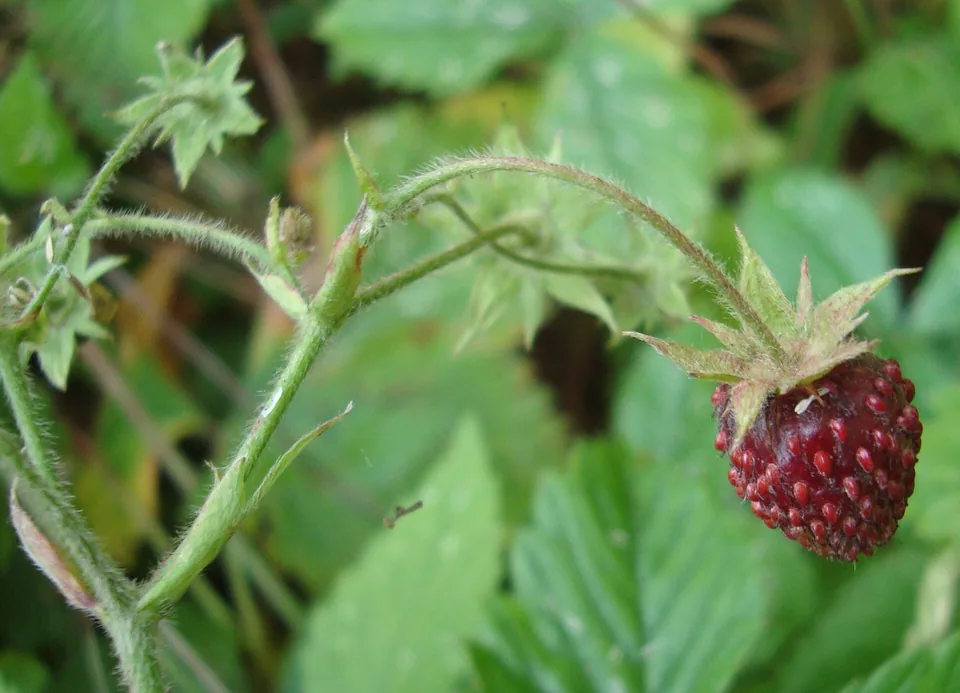

How to Grow and Care for Hautbois Strawberry
Fragaria moschata
Written by Emilio Marruso · last checked
Toxic to: People · Why
At a glance
The musk strawberry gives small fruits with a big personality: sweet, juicy and very fragrant, with hints of raspberry and pineapple. Sow it in early spring in a greenhouse or divide the runners in midsummer, then give it fertile, well-drained soil that holds moisture. Feed it in spring and after harvest, and enjoy the berries fresh from the plant.
- Soil
Fertile, well-drained soil that still holds moisture
What the sources say (1)
Watering notes: Fertile, well-drained, moisture-retentive soil
Prefers a fertile, well-drained, moisture retentive soil in a sunny position
— Fragaria moschata - Useful Temperate Plants [3] - Planting
Plant seedlings in summer; move divided runners in midsummer or the next spring
What the sources say (3)
Planting: Summer (seedlings); runners divided in mid summer or moved the following spring
Prick them out into individual pots when they are large enough to handle and plant them out during the summer.
— Fragaria moschata - Useful Temperate Plants [3] Division of runners, preferably done in mid summer in order to allow the plants to become established for the following years crop
— Fragaria moschata - Useful Temperate Plants [3] They can also be moved in the following spring if required, though should not then be allowed to fruit in their first year.
— Fragaria moschata - Useful Temperate Plants [3] - Feeding
Bone meal in the bed before planting, then feed twice a year: in spring and after harvest
What the sources say (4)
When: Before planting, then in spring and after harvest
Prior to planting incorporate a phosphorus based fertilizer (bone meal or equivalent) ½ pound/100 square ft. of bed.
— Co-operative Extension Tahoe Basin Master Gardeners [2] Fertilize with a balanced fertilizer (10-10-10) 1 pound / 100 sq. ft. spring ½ pound / 100 sq. ft. after harvest.
— Co-operative Extension Tahoe Basin Master Gardeners [2] How often: Twice a year, in spring and after harvest
Plant Care and maintenance year two Remove mulch from around plants Fertilize with a balanced fertilizer (10-10-10) 1 pound / 100 sq. ft. spring ½ pound / 100 sq. ft. after harvest.
—  [5] Natural fertilizers: Bone meal before planting, 24.4 g/m², worked into the bed
Bone meal, at ½ pound per 100 square feet of planting area is a good alternative if going organic.
—  [5] - Harvest
June-bearing; eat the small berries raw: sweet, with hints of raspberry and pineapple
What the sources say (1)
Harvest: June-bearing
It is usually found growing along the edges of woodlands. They’re June-bearing plants.
— A Study in Scarlet | Fulton From the Ground Up [1] - Pollination
Few berries? Add male plants every couple of years
- Propagation
From seed or by dividing the runners
What the sources say (2)
Propagation: Seed; division of runners
Seed - sow early spring in a greenhouse. The seed can take 4 weeks or more to germinate.
— Fragaria moschata - Useful Temperate Plants [3] Division of runners, preferably done in mid summer in order to allow the plants to become established for the following years crop
— Fragaria moschata - Useful Temperate Plants [3] - Sowing
Sow in early spring in a greenhouse
What the sources say (1)
Sowing: Early spring, in a greenhouse
Seed - sow early spring in a greenhouse. The seed can take 4 weeks or more to germinate.
— Fragaria moschata - Useful Temperate Plants [3] - Safety
No known hazards to people
Overview
Musk strawberry is a European strawberry species whose fruits are sweet and highly fragrant. [1] Plants are dioecious, needing male and female plants to set berries. [1] It prefers fertile, well-drained, moisture-retentive soil in a sunny position and spreads by runners. [3]
This record is incomplete: the sources we read do not cover every field yet.
Not yet covered by our sources: Watering, Spacing
Hautbois Strawberry care
How to water Hautbois Strawberry
Watering
Not stated in the sources we read.
Watering notes
Fertile, well-drained, moisture-retentive soil
What the sources say (1)
Prefers a fertile, well-drained, moisture retentive soil in a sunny positionHow much light Hautbois Strawberry needs
The sources disagree:
Another report says that this species prefers shade
[3]
Where to grow Hautbois Strawberry
Not stated in the sources we read.
How to propagate Hautbois Strawberry
Seed; division of runners
What the sources say (2)
Seed - sow early spring in a greenhouse. The seed can take 4 weeks or more to germinate.Division of runners, preferably done in mid summer in order to allow the plants to become established for the following years cropHow to grow Hautbois Strawberry
Fertilizing
When
Before planting, then in spring and after harvest
What the sources say (2)
Prior to planting incorporate a phosphorus based fertilizer (bone meal or equivalent) ½ pound/100 square ft. of bed.Fertilize with a balanced fertilizer (10-10-10) 1 pound / 100 sq. ft. spring ½ pound / 100 sq. ft. after harvest.How often
Twice a year, in spring and after harvest
What the sources say (1)
Plant Care and maintenance year two Remove mulch from around plants Fertilize with a balanced fertilizer (10-10-10) 1 pound / 100 sq. ft. spring ½ pound / 100 sq. ft. after harvest.Natural fertilizers
Bone meal before planting, 24.4 g/m², worked into the bed
What the sources say (1)
Bone meal, at ½ pound per 100 square feet of planting area is a good alternative if going organic.Mineral fertilizers
Before planting a phosphorus fertilizer at 24.4 g/m² worked into the bed; then a balanced 10-10-10 at 48.8 g/m² in spring and 24.4 g/m² after harvest
What the sources say (2)
Prior to planting incorporate a phosphorus based fertilizer (bone meal or equivalent) ½ pound/100 square ft. of bed.Fertilize with a balanced fertilizer (10-10-10) 1 pound / 100 sq. ft. spring ½ pound / 100 sq. ft. after harvest.Hautbois Strawberry pests and problems
Poor fruit set
Symptom: Berries are few
What to do: Add male plants every couple of years
What the sources say (1)
Berries tend to be precious and few; improve fruit set by adding male plants every couple of years.
— How to Grow Strawberries – Mother Earth News [6]
Remedies
The sources we checked give no remedies for this plant.
Is Hautbois Strawberry poisonous?
Reported by the source, quoted verbatim. This is not medical or veterinary advice: if a person or an animal may have eaten this plant, contact a poison control centre or a veterinarian.
## Known Hazards None known ## Botanical References
[3]
Calendar
Early spring, in a greenhouse
What the sources say (1)
Seed - sow early spring in a greenhouse. The seed can take 4 weeks or more to germinate.Summer (seedlings); runners divided in mid summer or moved the following spring
What the sources say (3)
Prick them out into individual pots when they are large enough to handle and plant them out during the summer.Division of runners, preferably done in mid summer in order to allow the plants to become established for the following years cropThey can also be moved in the following spring if required, though should not then be allowed to fruit in their first year.June-bearing
What the sources say (1)
It is usually found growing along the edges of woodlands. They’re June-bearing plants.Months as given by the sources, which are mostly from the United States (northern hemisphere). In the southern hemisphere they shift by about six months.
Edibility
Reported by the source, quoted verbatim. Do not eat a plant on the basis of this page alone: identification mistakes can be dangerous.
Similar plants
- Beach strawberry Fragaria chiloensis
- Green Strawberry Fragaria viridis
- Scarlett Strawberry Fragaria virginiana
- Strawberry Fragaria × ananassa
- Woodland strawberry Fragaria vesca
- Afghan Cherry Prunus jacquemontii
- Alaska blueberry Vaccinium ovalifolium
- Algerita Mahonia trifoliolata
Sources
Every value above is quoted from these documents. Links lead to the original publisher.
- A Study in Scarlet | Fulton From the Ground Up · site.extension.uga.edu, consulted
- Co-operative Extension Tahoe Basin Master Gardeners · class.ucanr.edu, consulted
- Fragaria moschata - Useful Temperate Plants · temperate.theferns.info, consulted
- We are IntechOpen, · growingfruit.org, consulted
-  · ccfruitandnuts.ucanr.edu, consulted
- How to Grow Strawberries – Mother Earth News · motherearthnews.com, consulted
Written by Emilio Marruso · last checked