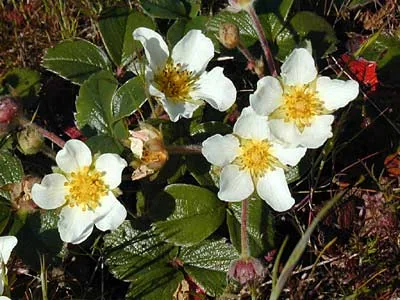
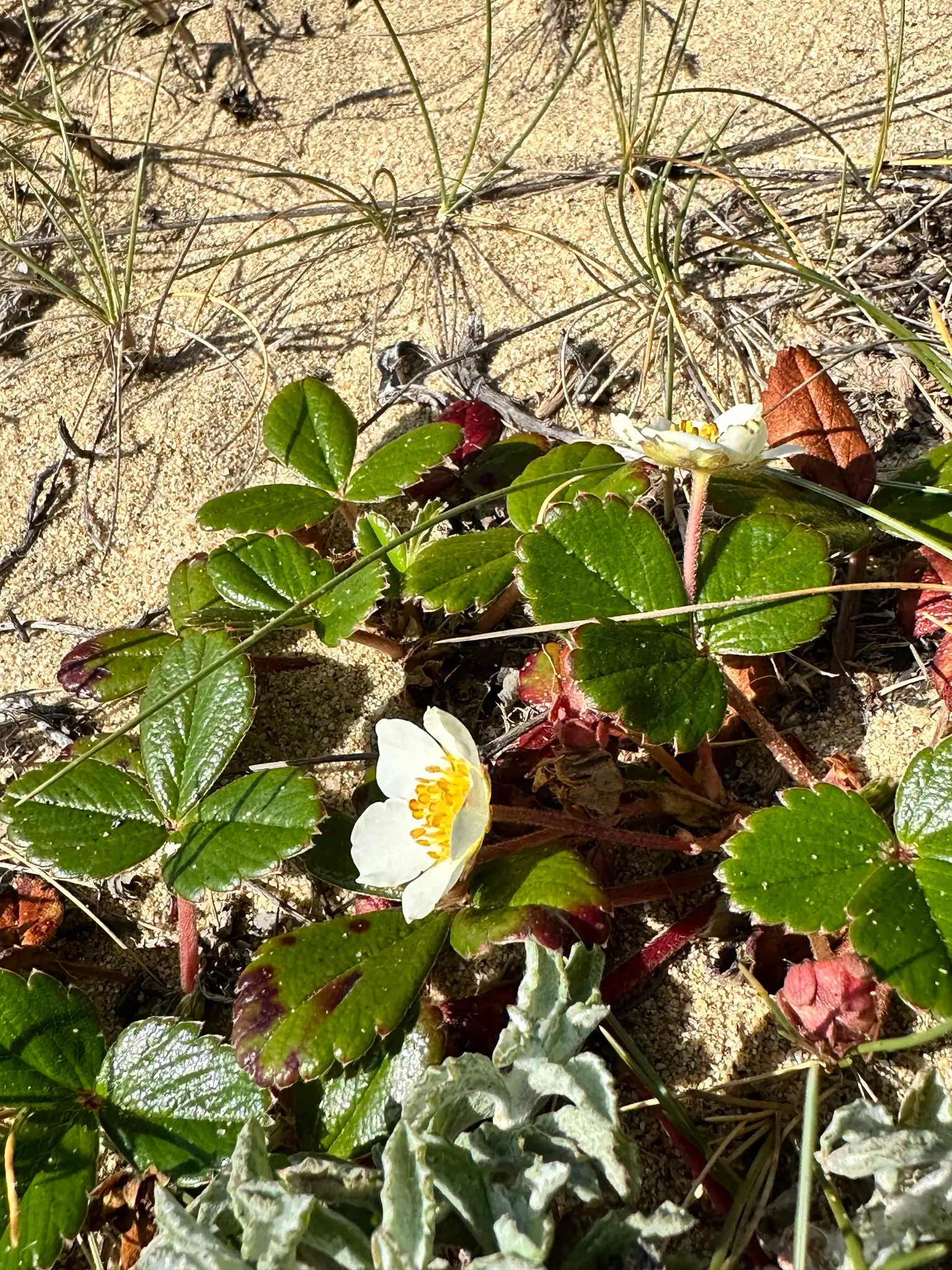

How to Grow and Care for Beach strawberry
Fragaria chiloensis
Written by Emilio Marruso · last checked
Toxic to: People · Why
At a glance
This strawberry is easy to love: it tolerates drought and grows in full sun or partial shade. Its fruit ripens in June and July and can be eaten raw or cooked, and the leaves even make a tea. Start it from seed in a greenhouse in early spring, or plant suckers anytime from fall to early spring.
- Sun
Full sun to partial shade
What the sources say (3)
Light: Full sun to partial shade
Full sun or partial shade.
— Groundcovers for Water-Conserving Landscapes [4] Full sun to semi-shade (Pettinger, 1996).
— Fragaria Chiloensis [3] Sun, mow in spring to force new growth and prevent stem buildup.
— Fragaria × chiloensis | Landscape Plants | Oregon State University [1] - Water
Tolerates drought: little watering needed
- Cold
Survives winters down to −30 °F (−34.4 °C)
Very hardy · USDA 4 · RHS H7 · Z4
What the sources say (1)
Hardiness, coldest zone: 4 [winter low −34.4 to −28.9 °C (−30 to −20 °F)]
Hardy to USDA Zone 4
— Fragaria × chiloensis | Landscape Plants | Oregon State University [1] - Soil
Slightly acidic to slightly alkaline soil, pH 5.8–7.8
- Planting
Plant seedlings in summer; plant suckers from fall to early spring
What the sources say (2)
Planting: Summer (seedlings); fall to early spring (suckers)
According to Native Plant Propagation Guidelines: Propagate by sucker in fall to early spring, and by plant division in fall (Hebda; Young, 2001).
— Fragaria Chiloensis [3] Prick them out into individual pots when they are large enough to handle and plant them out during the summer.
— Fragaria chiloensis - Useful Temperate Plants [2] - Pruning
Mow it down in spring
What the sources say (2)
- Harvest
Fruit ripens June to July; eat it raw or cooked, and use the leaves for tea
What the sources say (1)
Harvest: Fruit ripens June to July
fruit ripening time June to July
— Fragaria Chiloensis [3] - Propagation
From seed, runners, suckers or by dividing the plant
What the sources say (3)
Propagation: Seed; division of runners; suckers and plant division
Division of runners, preferably done in mid summer in order to allow the plants to become established for the following years crop
— Fragaria chiloensis - Useful Temperate Plants [2] Propagates easily by sucker and plant division.
— Fragaria Chiloensis [3] Seed - sow early spring in a greenhouse.
— Fragaria chiloensis - Useful Temperate Plants [2] - Sowing
Sow in a greenhouse in early spring
What the sources say (1)
Sowing: Early spring, in a greenhouse
Seed - sow early spring in a greenhouse.
— Fragaria chiloensis - Useful Temperate Plants [2] - Safety
No known hazards for people
Overview
Beach strawberry is an evergreen ground cover that spreads by runners and is grown for sun in well-drained soil. [1][4] It is drought tolerant and hardy to USDA zone 4. [3][1] The fruit is edible and new plants are made from runners, suckers or division. [2][3]
This record is incomplete: the sources we read do not cover every field yet.
Not yet covered by our sources: Hardiness, warmest zone
Beach strawberry care
How to water Beach strawberry
How much light Beach strawberry needs
Full sun to partial shade
What the sources say (3)
Full sun or partial shade.Full sun to semi-shade (Pettinger, 1996).Sun, mow in spring to force new growth and prevent stem buildup.How much cold Beach strawberry can take
Hardiness, coldest zone
4 [winter low −34.4 to −28.9 °C (−30 to −20 °F)]
What the sources say (1)
Hardy to USDA Zone 4Hardiness, warmest zone
Not stated in the sources we read.
Best soil for Beach strawberry
How to propagate Beach strawberry
Seed; division of runners; suckers and plant division
What the sources say (3)
Division of runners, preferably done in mid summer in order to allow the plants to become established for the following years cropPropagates easily by sucker and plant division.Seed - sow early spring in a greenhouse.How to grow Beach strawberry
The plant
Family
Rosaceae
What the sources say (1)
Fragaria × chiloensis Common name: Beach Strawberry Sand Strawberry Chilean Strawberry Pronunciation: fra-GARE-ree-a chil-oh-EN-sis Family: RosaceaeRemedies
Each remedy shows what official sources say about it; traditional remedies without an official source are marked as such. Harmful ones are listed so you know to avoid them.
Treating the plant
leaf spot
removing affected leaves over winter Partly works
Without photos to identify the exact problems your plant has, we can't recommend measures to control or eliminate them
— ask.extension.org [5] How: Removing leaves over the winter can reduce fungal growth in the spring; it must be supplemented with a fungicide.
removing leaves over the winter can reduce the fungal growth in the spring, but this must be supplemented with a fungicide.
— ask.extension.org [5] What the evidence says removing leaves over the winter can reduce the fungal growth in the spring, but this must be supplemented with a fungicide.
— ask.extension.org [5]
Is Beach strawberry poisonous?
Reported by the source, quoted verbatim. This is not medical or veterinary advice: if a person or an animal may have eaten this plant, contact a poison control centre or a veterinarian.
Known Hazards None known
[2]
Calendar
Early spring, in a greenhouse
What the sources say (1)
Seed - sow early spring in a greenhouse.Summer (seedlings); fall to early spring (suckers)
What each source says
According to Native Plant Propagation Guidelines: Fall to early spring (suckers)
What the sources say (2)
According to Native Plant Propagation Guidelines: Propagate by sucker in fall to early spring, and by plant division in fall (Hebda; Young, 2001).Prick them out into individual pots when they are large enough to handle and plant them out during the summer.Fruit ripens June to July
What the sources say (1)
fruit ripening time
June to JulyMonths as given by the sources, which are mostly from the United States (northern hemisphere). In the southern hemisphere they shift by about six months.
Edibility
Reported by the source, quoted verbatim. Do not eat a plant on the basis of this page alone: identification mistakes can be dangerous.
Indicative values
Values from a secondary source, not checked word for word like the rest of this page. Use them as a starting point.
- Life cycle
- Herbaceous PerennialIndicative value, adapt it to your climate · Secondary source
- Hours of sun
- 4-6 hoursIndicative value, adapt it to your climate · Secondary source
- Drought tolerant
- yesIndicative value, adapt it to your climate · Secondary source
- Soil
- Humus rich, Rocky, gravelly, dry, Well-drainedIndicative value, adapt it to your climate · Secondary source
- Growth rate
- LowIndicative value, adapt it to your climate · Secondary source
- Pests
- Fungal leaf spot, Mites, Mold, Wilt, Drought resistantIndicative value, adapt it to your climate · Secondary source
Similar plants
- Strawberry Fragaria × ananassa
- Green Strawberry Fragaria viridis
- Scarlett Strawberry Fragaria virginiana
- Woodland strawberry Fragaria vesca
- Hautbois Strawberry Fragaria moschata
- Afghan Cherry Prunus jacquemontii
- Alabama Snow Wreath Neviusia alabamensis
- American Plum Prunus americana
Sources
Every value above is quoted from these documents. Links lead to the original publisher.
- Fragaria × chiloensis | Landscape Plants | Oregon State University · landscapeplants.oregonstate.edu, consulted
- Fragaria chiloensis - Useful Temperate Plants · temperate.theferns.info, consulted
- Fragaria Chiloensis · goert.ca, consulted
- Groundcovers for Water-Conserving Landscapes · public.archive.wsu.edu, consulted
- ask.extension.org · ask.extension.org
Written by Emilio Marruso · last checked