
How to Grow and Care for Woodland strawberry
Fragaria vesca
Written by Emilio Marruso · last checked
At a glance
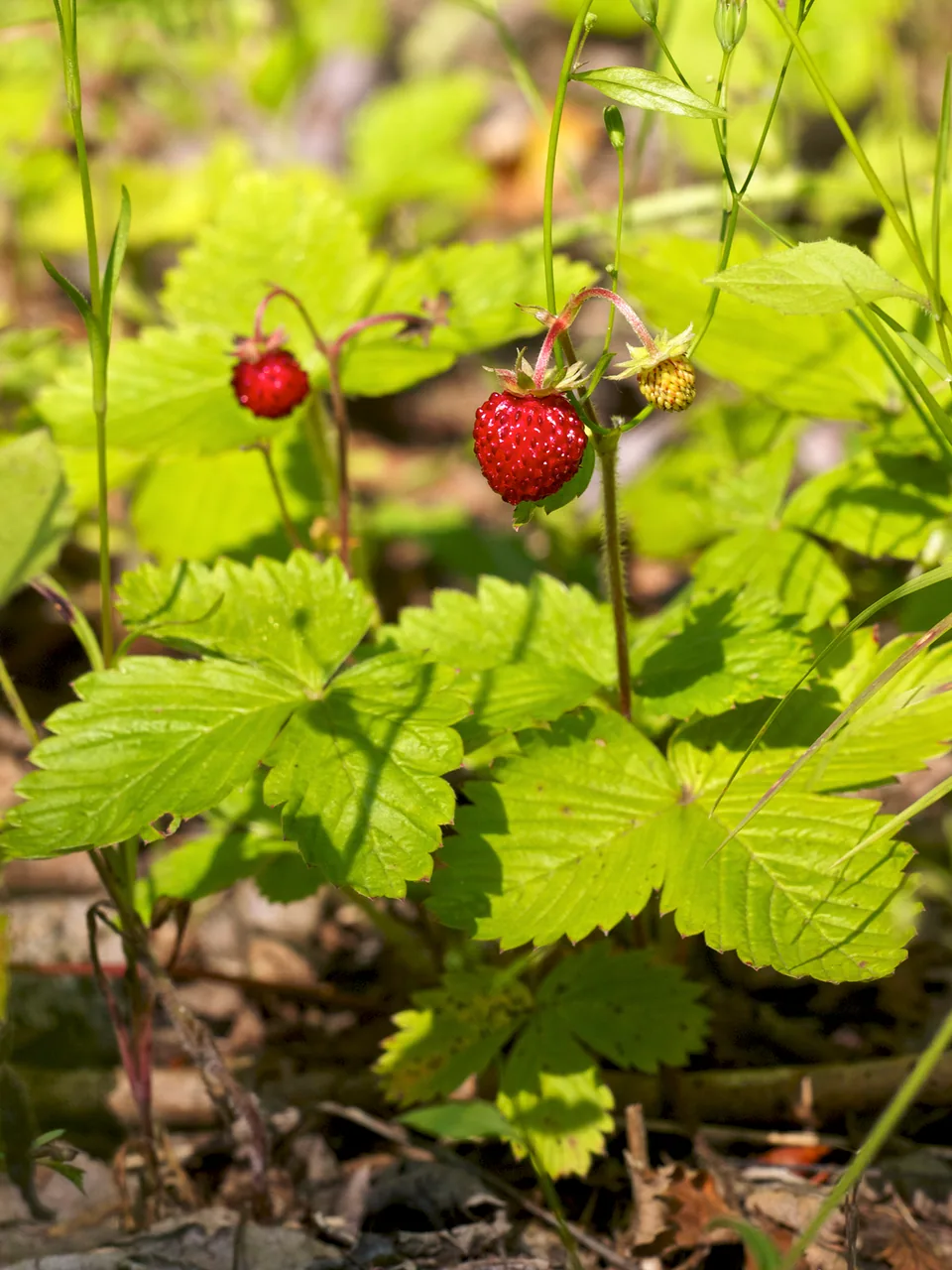
Wild strawberry is a perennial that keeps on giving: its berries are smaller than cultivated ones but said to be sweeter, and you pick them in June and July. The leaves are edible too, raw, cooked or brewed into a tea, all season long. It grows in full sun or partial shade and spreads on its own by runners.
- Sun
Full sun to partial shade
What the sources say (1)
Light: Full sun to partial shade
great use to fill bare ground in full sun to partially shaded areas of the yard
— Woodland Strawberry | Natural Resources [1] - Water
Keep it out of wet spots: it does not tolerate them
What the sources say (1)
Watering notes: Does not tolerate wet locations
Will not tolerate wet locations.
— Woodland Strawberry | Natural Resources [1] - Harvest
Berries in June and July; leaves all season, raw, cooked or as a tea
What the sources say (1)
Harvest: Berries June to July; leaves throughout the growing season
Berries ripen from June to July, leaves throughout the growing season.
— Woodland Strawberry | Natural Resources [1] - Propagation
Spreads on its own by runners and underground stems
What the sources say (1)
Propagation: Spreads by stolons and rhizomes
Low growing cover spreads by stolons and rhizomes, semi-evergreen
— Woodland Strawberry | Natural Resources [1]
Overview
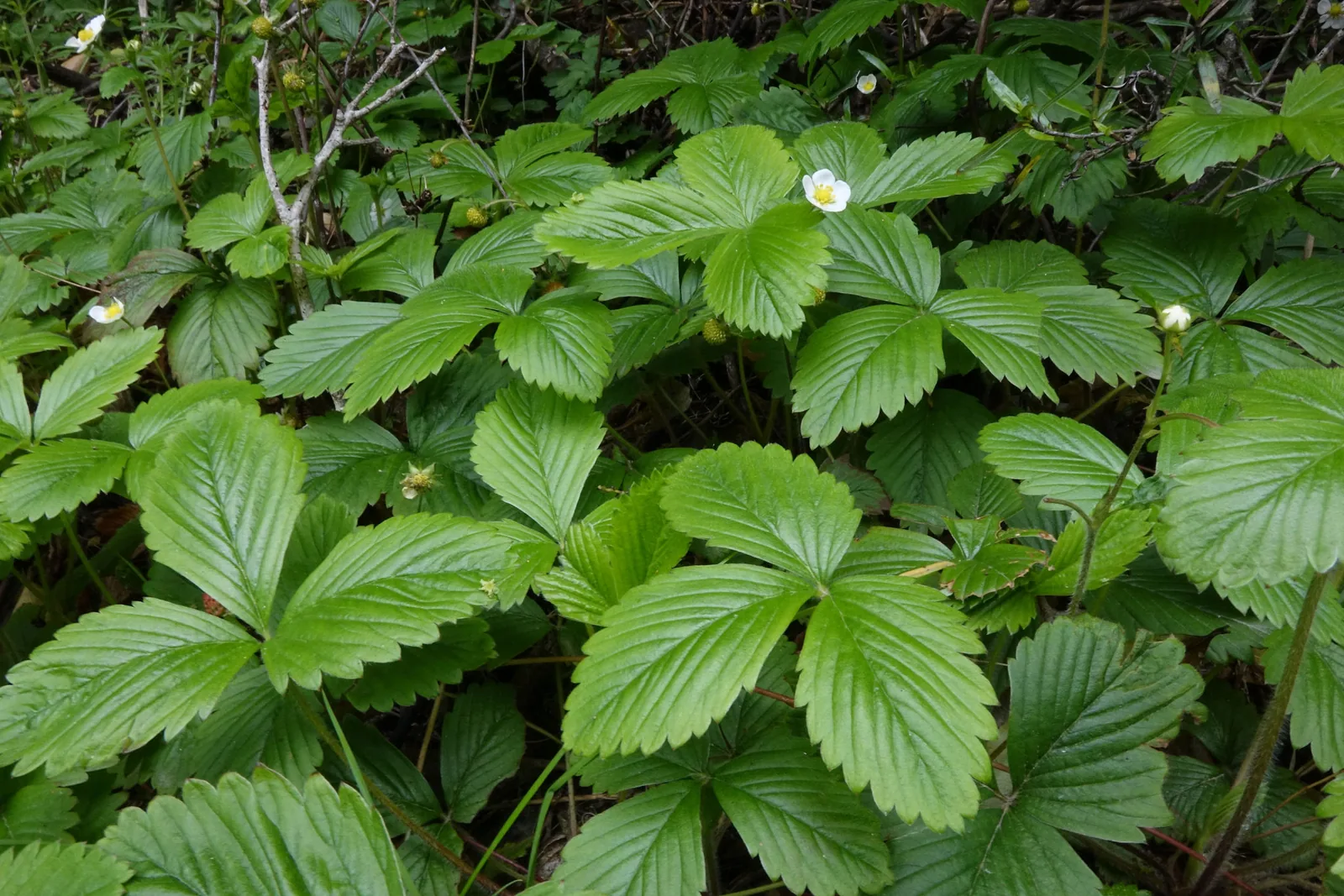
Woodland strawberry is a low-growing native perennial that spreads by stolons and rhizomes and produces berries in summer. [1] It suits full sun to partial shade and fertile, well-drained soil, and does not tolerate wet locations. [1]
This record is incomplete: the sources we read do not cover every field yet.
Not yet covered by our sources: Watering, Planting, Spacing
Woodland strawberry care
How to water Woodland strawberry
Watering
Not stated in the sources we read.
Watering notes
Does not tolerate wet locations
What the sources say (1)
Will not tolerate wet locations.How much light Woodland strawberry needs
Full sun to partial shade
What the sources say (1)
great use to fill bare ground in full sun to partially shaded areas of the yardWhere to grow Woodland strawberry
Not stated in the sources we read.
How to propagate Woodland strawberry
Spreads by stolons and rhizomes
What the sources say (1)
Low growing cover spreads by stolons and rhizomes, semi-evergreenHow to grow Woodland strawberry
The plant
Life cycle
perennial
What the sources say (1)
Overview: Low growing native perennial, produces berries in the summer, found in woodlands but highly adaptable to different environments.Remedies
The sources we checked give no remedies for this plant.
Calendar
Planting
Not stated in the sources we read.
Harvest
Berries June to July; leaves throughout the growing season
What the sources say (1)
Berries ripen from June to July, leaves throughout the growing season.Months as given by the sources, which are mostly from the United States (northern hemisphere). In the southern hemisphere they shift by about six months.
Edibility
Reported by the source, quoted verbatim. Do not eat a plant on the basis of this page alone: identification mistakes can be dangerous.
Indicative values
Values from a secondary source, not checked word for word like the rest of this page. Use them as a starting point.
- Mature height
- 7.6-22.9 cm (0.25-0.75 ft)Indicative value, adapt it to your climate · Secondary source
- Watering
- AverageIndicative value, adapt it to your climate · Secondary source
- Drought tolerant
- yesIndicative value, adapt it to your climate · Secondary source
- Soil pH
- 5.5-6.5Indicative value, adapt it to your climate · Secondary source
- USDA hardiness zones
- 5-9 [winter low −28.9 to −1.1 °C (−20 to 30 °F)]Indicative value, adapt it to your climate · Secondary source
- Care level
- MediumIndicative value, adapt it to your climate · Secondary source
- Growth rate
- LowIndicative value, adapt it to your climate · Secondary source
- Pruning
- February, March, AprilIndicative value, adapt it to your climate · Secondary source
Similar plants
- Beach strawberry Fragaria chiloensis
- Green Strawberry Fragaria viridis
- Scarlett Strawberry Fragaria virginiana
- Strawberry Fragaria × ananassa
- Hautbois Strawberry Fragaria moschata
- Abies grandis Abies grandis
- Abraham Trachystemon orientalis
- Abyssinian banana Ensete ventricosum
Sources
Every value above is quoted from these documents. Links lead to the original publisher.
- Woodland Strawberry | Natural Resources · naturalresources.extension.iastate.edu, consulted
Written by Emilio Marruso · last checked